REVIEW · MARRAKECH
Full Day Trip to the Three Valleys in the Atlas Mountain From Marrakech ‘Shared’
Book on Viator →Operated by Marrakech Sweet Travel · Bookable on Viator
Once you leave Marrakech, this trip trades traffic for mountain views and Berber villages you can actually picture. I like that it’s not just a drive-by: you stop for a Berber family visit in Asni, hear how people live, and move through High Atlas valleys where orchards are part of everyday scenery. One thing to consider is that it’s a long day—8 to 9 hours—and most of the “activity” is based on scenic stops and viewpoints, not a long guided hike.
In This Review
- What you’ll love most on the Three Valleys route
- A realistic heads-up before you go
- Key moments that make this trip worth your time
- Why the Three Valleys day trip works so well from Marrakech
- Marrakech to Tahanaoute: the day starts with a change of altitude
- Asni and the Berber family visit: the cultural anchor
- Rolling through Berber villages and orchards: more than pretty stops
- The Toubkal photo break: big views, short time
- Ourika Valley: where the day turns calmer
- Lunch by the Ourika River: the break you’ll remember
- Shared group logistics: small enough to feel personal
- What I’d pack for an Atlas day that includes Toubkal viewpoints
- Price and value: is $53 fair for this day?
- Who should book this trip (and who might skip it)
- Should you book the Three Valleys from Marrakech?
- FAQ
- How long is the Three Valleys trip from Marrakech?
- Where do you start, and do you offer pickup?
- What’s included with the day trip price?
- How many people are in the group?
- Can I take the trip year-round?
- What is the cancellation policy?
What you’ll love most on the Three Valleys route
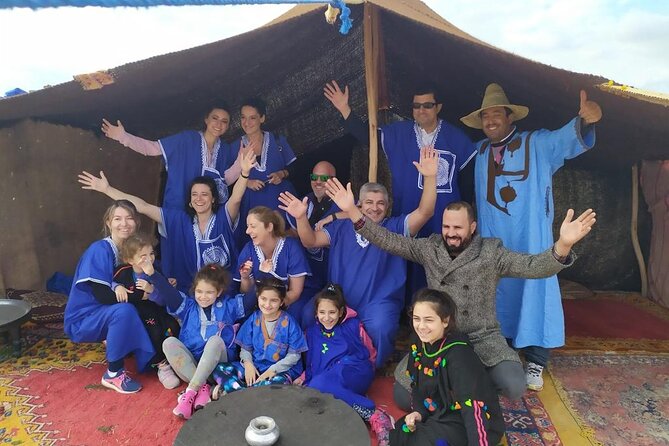
The first highlight for me is the human side: learning customs and daily life during a family visit, then continuing through Berber villages (including one described as about 200 years old). It’s the kind of cultural stop that makes the drive feel purposeful, not random.
A realistic heads-up before you go
The second thing to keep in mind: the trip includes a photo break around Toubkal, and that area sits at very high elevation (Toubkal reaches 4165 m). Even if it’s only a stop, plan for cooler, windier moments at altitude and bring layers, just in case.
A few more Marrakech tours and experiences worth a look


Key moments that make this trip worth your time
- Berber family visit in Asni for a direct look at customs and traditional life
- Toubkal photo stop with big panoramic views toward the Atlas peaks
- Orchard-heavy route featuring olive, fig, walnut, quince, plum, apple, and almond trees
- Ourika Valley time for photos with high mountain scenery rising up to 1800 m
- Lunch by the Ourika River during the valley portion of the day
- Small shared group (max 17) so the day feels coordinated rather than chaotic
Why the Three Valleys day trip works so well from Marrakech
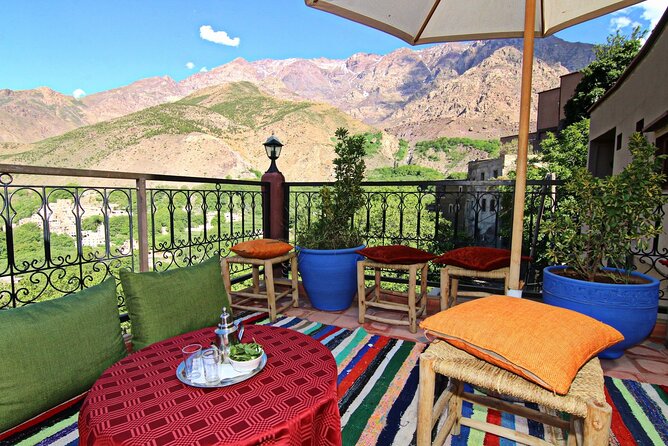
Marrakech is loud in a good way, but after a couple days you’ll probably crave quieter rhythms. This “three valleys” style outing does that by turning the Atlas Mountains into the main character of the day—villages, terraces, orchards, rivers, and viewpoints instead of souks and shop fronts.
The best part is how the day is built around layers of experience. You start near the Tahanaoute area at the foot of the High Atlas, then gradually climb into mountain territory where Berber settlements appear scattered along the valleys. By the time you reach Ourika, you’re not just seeing a pretty place—you’ve been moving through the same kind of environment people live in.
And because it’s a shared minibus format (with a group cap of 17), you get a balance. You’re not stuck in a huge bus with no room to move, but you’re also not paying for a private charter.
Marrakech to Tahanaoute: the day starts with a change of altitude
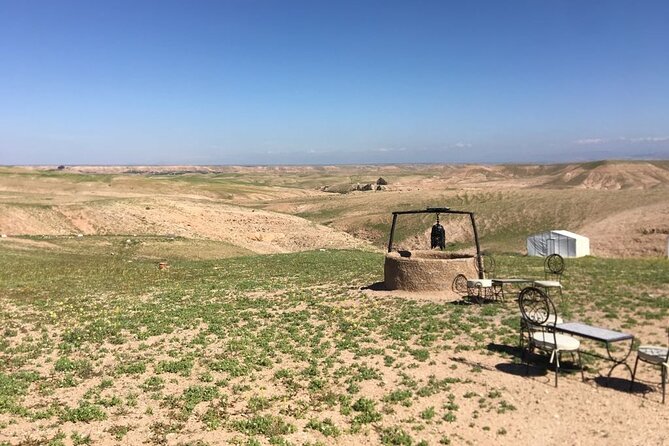
Morning pick-up is part of the deal, and you’ll head out of Marrakech toward Tahanaoute, a village about 35 km away at the foot of the High Atlas. That distance matters because it quickly shifts the air, the road conditions, and the overall feel of the trip. You go from city routines to mountain geography fast.
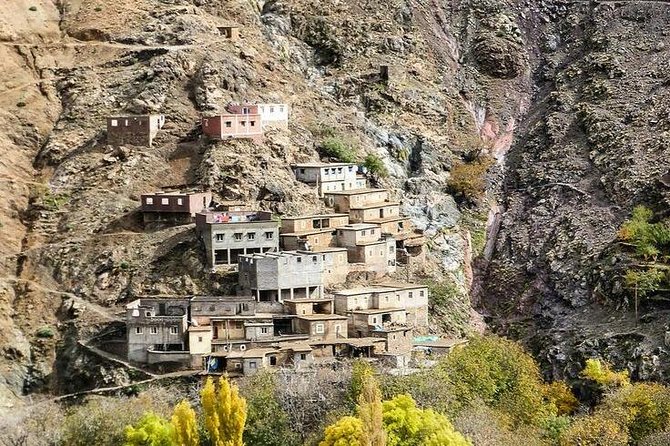
Soon after leaving the city, the scenery changes in a way that keeps your attention. Berber villages begin to appear along the Atlas slopes, scattered rather than grouped. This is a good sign for the day: it means the drive is not filler. It’s setting the stage for the cultural stops and the valley scenery that come next.
If you’re the type who likes seeing how a region is laid out, you’ll enjoy this first stretch. The mountains are the map, and you start to “read” the terrain: ridges, valleys, and settlement patterns that make sense once you’re actually out there.
Asni and the Berber family visit: the cultural anchor
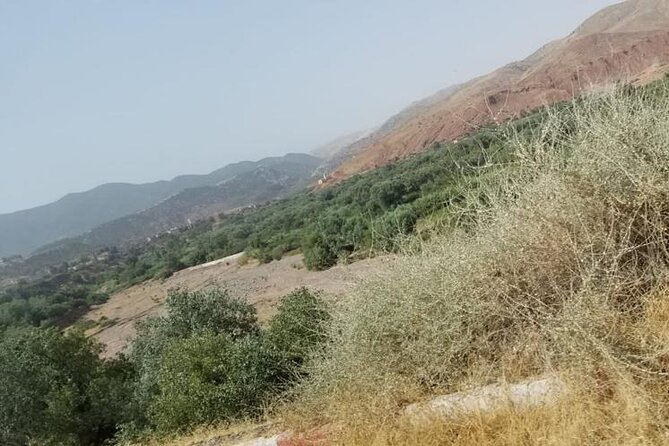
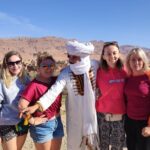
Your first major stop is Asni, where you get the chance to visit a Berber family. This is the one moment that makes the whole day feel more grounded. Instead of treating the Atlas like a photo background, you get a direct look at customs and the traditional way of life.
What I like about this stop is its practicality. You’re not forced through a script or a checklist. You can ask questions, absorb how daily life fits into mountain geography, and then carry that context forward as the scenery gets more dramatic.
Asni is also a smart starting point because it sits right in the transition zone—still close enough to Marrakech to make sense as an early stop, but far enough into High Atlas territory that you feel the cultural change immediately.
A few more Marrakech tours and experiences worth a look

Rolling through Berber villages and orchards: more than pretty stops
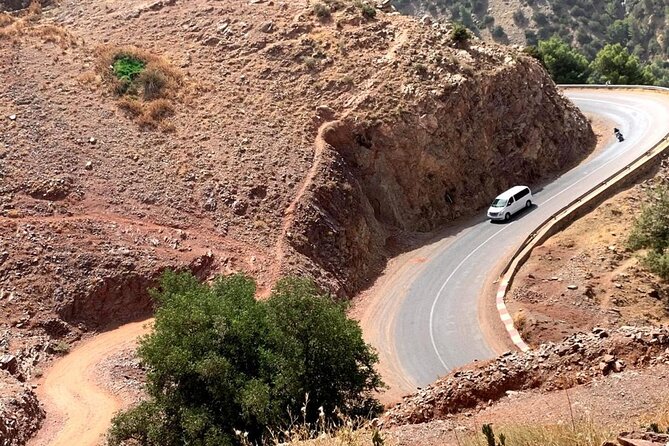
After Asni, the route continues through Berber villages spread out in the mountains. One of the stops includes a village described as being built around 200 years ago. That kind of age isn’t just trivia—it helps you understand that these communities didn’t pop up for tourism. They’re tied to water, farming, and the simple logic of where land can support people.
Along the way, you’ll pass through areas featuring fruit trees and agriculture that shape the day’s color and smell (yes, even in a car). The tour description calls out olive, fig, walnut, quince (cognassiers), plum, apple, and almond trees. Even if you’re not a botanist, you’ll recognize how orchard farming fits the valley life here.
You’ll also notice the general pattern: valleys support crops, slopes shape where villages can sit, and mountain passes control views. It’s a scenic drive, but it’s also a quick education in how people make a living in this terrain.
The Toubkal photo break: big views, short time
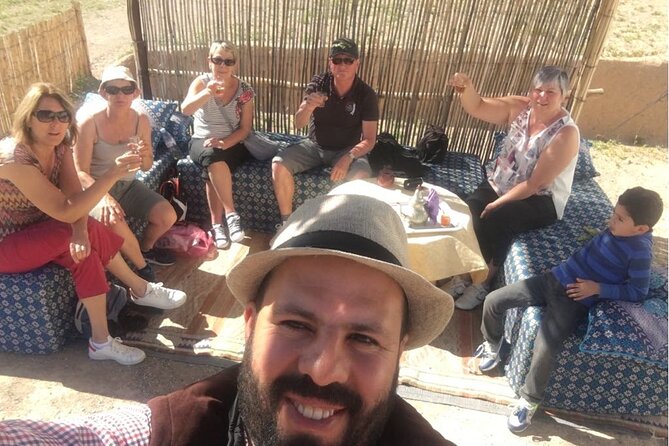
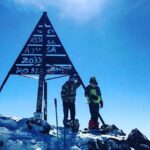
A key moment is the photo break at the top of Toubkal. The summit rises to 4165 m, and the description notes that you can see Toubkal’s peaks from Marrakech and Imlil. That matters because it sets expectations: you’re not arriving in a random high point—you’re aiming for a signature Atlas viewpoint.
To be clear, this is described as a stop for pictures rather than a full summit hike. That makes it realistic for an 8–9 hour day. You get the drama of altitude views without the time and stamina commitment of a longer trek.
Still, this is where you’ll want to be sensible. High elevation can feel colder and windier than you expect, even in fair weather. Bring a light layer and keep your hands ready for phone-camera fiddling. And if you’re prone to altitude discomfort, take it slow during the short time outdoors.
Ourika Valley: where the day turns calmer
After the Toubkal viewpoint, the route continues through valleys, forests, and orchards toward the Ourika Valley. The trip describes it as a trail in the heart of the High Atlas Mountains, with mountains rising about 1800 m above sea level.
When you reach Ourika, the pace shifts from “look back at the road” to “look around at the valley.” You’ll have time to stop in the valley and mountains for photos. This part is where the scenery starts to feel less like a series of roadside moments and more like a place you could linger.
The Ourika area also makes sense as a second “anchor” after the Asni family visit: it’s natural beauty tied to everyday life. A river valley supports agriculture, settlements, and the kind of greenery that makes the Atlas feel almost world apart from Marrakech.
Lunch by the Ourika River: the break you’ll remember
Lunch is built into the day with a stop to enjoy a meal by the Ourika River. I like this timing because it gives you something real to do halfway through a long day. It’s not just “we stop because we’re driving.” You stop in a valley setting so the meal feels like part of the landscape and mood.
One caution: the tour description doesn’t specify what’s included (type of meal, drink options, or whether it’s fully covered in your price). So treat lunch as a planned meal stop, but keep modest flexibility with budget expectations.
If you enjoy simple food with a view, this is the moment that turns the day from sightseeing into a memory. The sound of water and the shift into river-valley calm can reset your energy for the drive back.
Shared group logistics: small enough to feel personal
This is a shared experience, with a maximum of 17 travelers. That size is big enough for organization but small enough that you won’t feel like a ticket number in a herd.
Duration is listed as about 8 to 9 hours, and the routing suggests it’s a “whole day away from Marrakech” plan. That means you’ll want to treat it as your main outing—don’t stack it with another big evening plan unless you enjoy rush-hour fatigue.
Pickup is offered, and the day starts from Marrakech in the direction of Tahanaoute. The tour also lists a start point in Imlil, so if you’re cross-checking details, pay attention to the exact meeting instructions you receive after booking.
What I’d pack for an Atlas day that includes Toubkal viewpoints
The tour calls for multiple stops, photo moments, and time in mountain valleys. So pack for changing conditions, not just for Marrakech weather.
Bring:
- A light jacket or layer for higher elevation photo breaks
- Comfortable shoes for uneven ground near viewpoints and valley stops
- Sun protection (the High Atlas sun can feel strong)
- Water for the ride and stops
- A charged phone/camera (Toubkal and Ourika are photo magnets)
If you’re sensitive to cold, bring something warmer than you think you need. The description points to very high elevation, and even short time outside can feel different.
Price and value: is $53 fair for this day?
At $53.01 per person, this trip sits in a “good value day tour” zone for Marrakech. What makes it feel worth the money is the mix of elements you get within a single outing:
- Mountain scenery with multiple valley viewpoints
- A cultural stop with a Berber family in Asni
- A Toubkal photo break that uses the Atlas drama effectively
- A lunch stop by the Ourika River
You’re not paying for a private guide experience, and you’re not buying a long trek where you’re on your feet for hours. But you are buying time: a coordinated route, transport from Marrakech, and structured stops across three valleys in one day.
If you only have a few days in Morocco and want an Atlas day that hits both culture and scenery, this is the kind of plan that tends to make people feel satisfied rather than rushed.
Who should book this trip (and who might skip it)
This day trip is a great fit if you want:
- A single-day taste of the High Atlas beyond Marrakech
- Cultural context through a Berber family visit
- Big viewpoint moments like the Toubkal photo stop
- A river-valley setting and a proper lunch break
It may be less ideal if you’re looking for:
- A full-day hike with lots of trail time
- A deeply timed itinerary with zero waiting
- A highly detailed history lecture (this tour focuses more on seeing places and meeting people than on formal museum-style explanations)
Should you book the Three Valleys from Marrakech?
If you like a well-paced day that mixes Berber village life with standout mountain scenery, I’d book it. It’s one of those trips where each stop supports the next one: Asni gives you the human anchor, orchards and villages add the agriculture and tradition context, and Ourika Valley rounds it out with river-valley calm.
Book it if your goal is a memorable day outside the city without having to plan details yourself. Skip it if you’re chasing a strenuous trek or you hate long stretches in a vehicle.
If you go, aim to show up with a flexible attitude for photo stops and changing mountain air. That’s when the day clicks.
FAQ
How long is the Three Valleys trip from Marrakech?
The trip runs about 8 to 9 hours.
Where do you start, and do you offer pickup?
Pickup from your accommodation in Marrakech is offered. The start point listed is Imlil, Morocco, so you’ll want to follow the specific meeting details provided at booking.
What’s included with the day trip price?
The price is listed as $53.01 per person. The day includes stops for viewpoints, a Berber family visit in Asni, and a lunch stop by the Ourika River.
How many people are in the group?
The tour is shared and has a maximum group size of 17 travelers.
Can I take the trip year-round?
The tour description says it can be made throughout the year by minibus.
What is the cancellation policy?
You can cancel up to 24 hours in advance for a full refund. If you cancel less than 24 hours before the start time, the amount paid is not refunded.