Fez cooks fast, but the lessons stick. This small-group Moroccan cooking class turns the old Medina into a classroom: you start at the souk to learn ingredients, then head to a historic family-owned riad to cook a full traditional menu and sit down to eat it, with Moroccan tea to close.
I especially like the market first approach and the hands-on pace—there’s a clear reason you shop for ingredients before you cook. I also like the group size cap of 12 travelers, which keeps things interactive instead of watching from the sidelines. One consideration: at $74.33 per person, it’s priced on the higher side for Morocco, so you’ll want to go in expecting a guided, food-focused experience, not just a casual cooking demo.
In This Review
- Key highlights worth prioritizing
- Market Shopping First: Why the Souk Stop Matters
- Choosing a Menu That Fits Your Preferences
- The Historic Riad Kitchen: Where Technique Gets Real
- What You Cook (and What You’ll Actually Eat)
- Price and Logistics: Is $74.33 Good Value?
- The “Half-Day Free Time” Advantage in Fez
- A Quick Word on Quality Signals (and One Concern)
- Who This Cooking Class Is Best For
- Should You Book the Fez Cooking Class?
- FAQ
- How long is the Fez cooking class?
- What group size should I expect?
- Where do I meet the guide?
- What’s included in the price?
- Is transportation included?
- Can I cancel for a full refund?
Key highlights worth prioritizing
- Souk shopping with a guide: you learn what ingredients matter and how locals shop for flavor.
- Historic riad kitchen setting: a family-run space adds context to the techniques you use.
- Pick your preferences, then choose your menu: you’re not stuck with a one-size-fits-all template.
- Hands-on cooking for a full menu: appetizers through dessert, followed by what you made at the table.
- Small group (max 12): more time for questions and less time waiting around.
- Half-day format: about 3 hours of class, then you’re free to explore Fez afterward.
Market Shopping First: Why the Souk Stop Matters
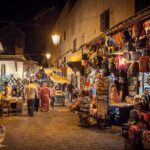
Most cooking classes start when the chopping begins. This one starts earlier—at the local market in Fez’s old Medina—and that’s the smart part.
You’ll meet your guide at the meeting point in Fez (Hotel Batha on Ave de La Liberte). From there, you’ll head out with a plan: learn about the ingredients on offer, how they’re used, and what traditions shape the cooking. Even if your experience with Moroccan food is limited, this step helps you connect names you’ve heard (spices, staples, herbs) with what they actually look like and how they’re selected.
Two practical benefits for you:
- You get a clearer shopping lens. After a market walk with guidance, it’s easier to choose ingredients later without guessing.
- You understand why the menu makes sense. When you shop first, you see how the final dishes are built around availability and preference—not just a pre-set script.
A possible snag: markets can be busy and a bit chaotic. If you’re sensitive to crowds or noise, go in with a calm mindset. The guide’s job is to keep you moving and focused on food, but the souk is still the souk.
You can also read our reviews of more cooking classes in Fez

Choosing a Menu That Fits Your Preferences
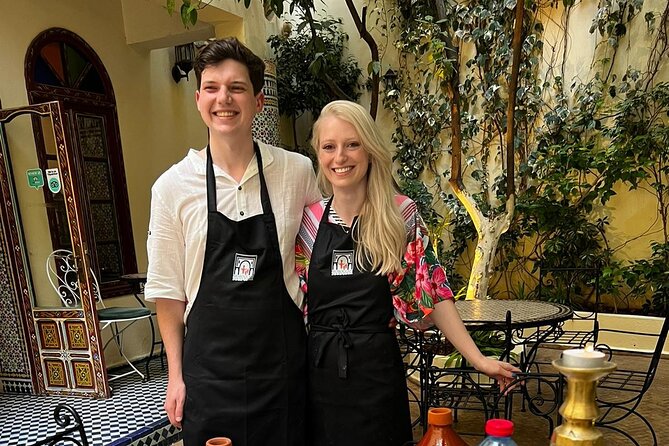
One of the most useful parts of this class is that you don’t just follow instructions. Your host asks about what you like and recommends a menu based on those preferences. Then you make the decision and shop for the ingredients to match.
This matters because Moroccan cooking isn’t one flavor. It’s a mix-and-match system—different spice blends, different textures, and different cooking methods depending on the dish. When you select what you want to cook, you’re more likely to remember the “why” behind each step later, instead of only remembering the steps.
Also, this is where value shows up. Many tours charge for “learning,” but the learning is vague. Here, your preferences directly shape the shopping and the menu you’ll prepare. That turns the $74.33 price into something more concrete: you’re paying for a guided ingredient plan and a structured cooking session, not just a kitchen visit.
The Historic Riad Kitchen: Where Technique Gets Real
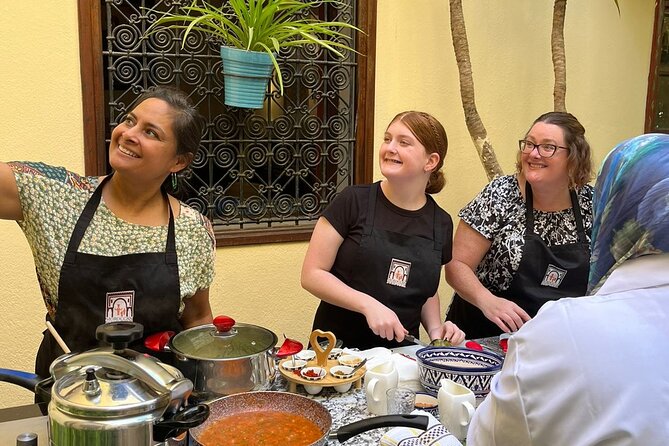
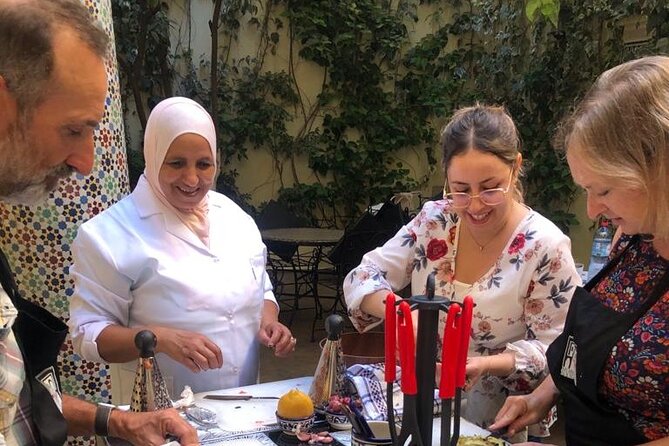
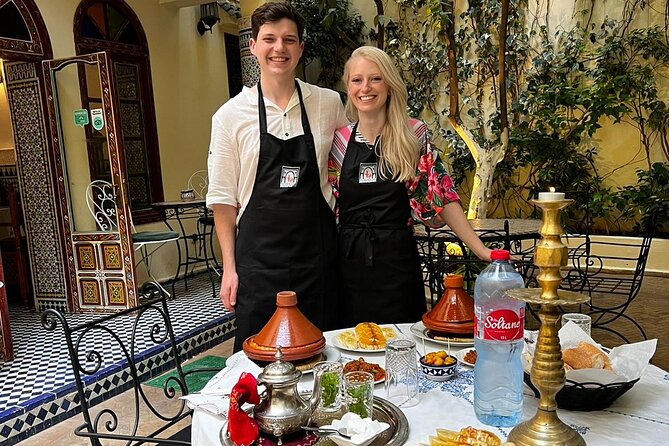
After the market, you’ll head to the cooking venue: a historic family-owned riad. The setting is more than decoration. A riad is part of how Moroccans organize daily life and hospitality—courtyard rhythms, practical space, and traditions that feel built into the house.
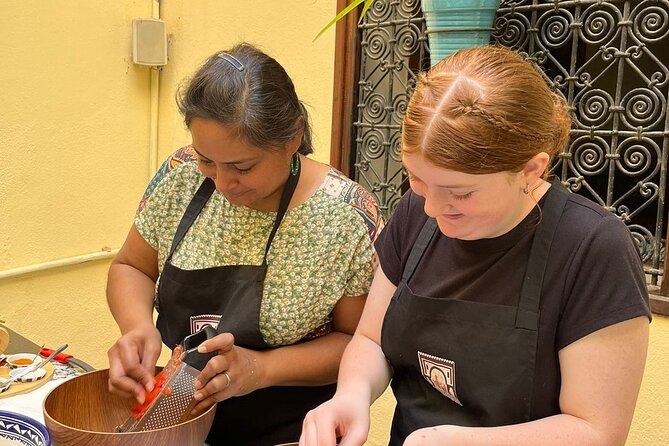
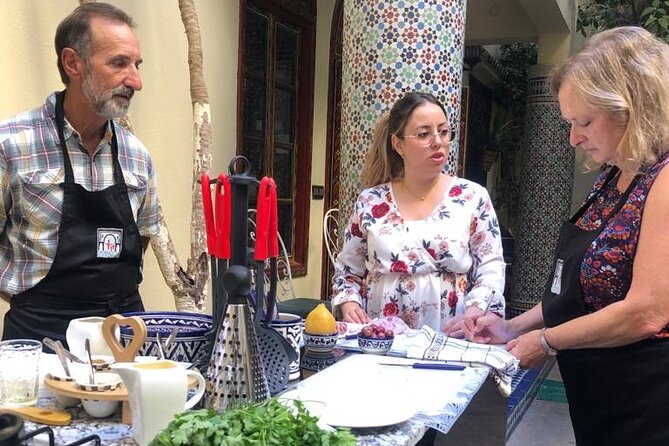
In the kitchen, you’ll join the chef’s brigade and learn traditional Moroccan cooking techniques in a lively, interactive setup. The key word is interactive. With a max group size of 12, you’re far more likely to get personal attention and corrections than in big groups.
What I think you’ll appreciate is that this class is structured like a real meal production chain:
- ingredients come from the market,
- dishes are prepared in sequence,
- you learn methods as you go,
- and then you eat everything you made.
That flow reduces the usual “tour fatigue,” where you’re herded from one stop to another without connection. Here, each stage links to the next.
What You Cook (and What You’ll Actually Eat)
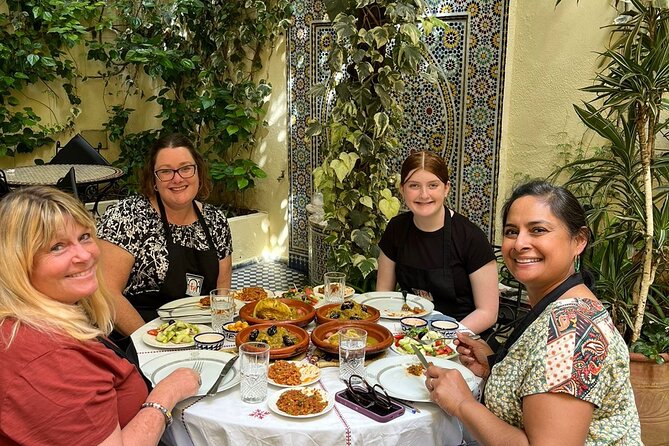
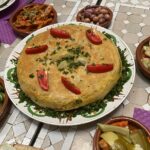
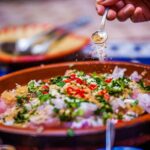
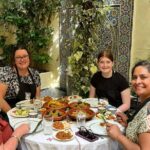
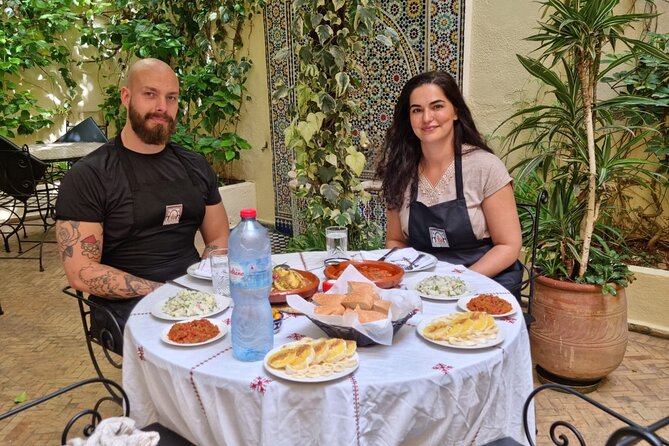
This isn’t a single-dish class. You’ll create a traditional menu that can run from appetizers to dessert. After the workshop, you sit down and enjoy the full menu you crafted, served with Moroccan hospitality.
Then you get the finishing touch: a joyful Moroccan tea. It’s a simple add-on, but it’s also part of the cultural pacing. In Morocco, tea isn’t just a drink—it’s a social marker. In this class, it helps you shift from “doing” to “savoring.”
One more practical note: your class booking can include lunch or dinner depending on what you choose. The inclusions list is explicit about this: lunch if you book for lunch, dinner if you book for dinner. Either way, the ticket includes coffee and/or tea, snacks, and bottled water, plus all fees and taxes.
What you’ll likely take away:
- how Moroccan flavors layer (spice + herb + method),
- how a menu is built as a sequence,
- and what roles common ingredients play across multiple dishes.
And yes—you’ll probably feel the difference between eating Moroccan food and cooking Moroccan food. When you cook it, you notice texture and timing. That’s where the memory sticks.
Price and Logistics: Is $74.33 Good Value?
At $74.33 per person, this class isn’t a budget activity. In Morocco, you can find plenty of cheaper food experiences. So the question isn’t whether it costs money. It’s whether you get your money’s worth.
Here’s the value case, based on what’s included and how it’s structured:
- You’re paying for a guided souq ingredient tour plus the shopping-to-cooking workflow.
- You’re paying for hands-on instruction in a historic riad setting with a chef team.
- The ticket includes coffee/tea, snacks, bottled water, and all fees and taxes.
- You’ll eat what you cook via a full menu.
- Group size stays small (max 12), so the experience doesn’t turn into a passive show.
The main drawback is the price ceiling. If you’re expecting a simple cooking taste with minimal guidance, the cost may feel steep. If you want a guided culinary lesson with market context and a full meal payoff, the price looks much easier to justify.
Also consider what’s not included:
- alcoholic drinks are not included,
- transportation is not included,
- so you’ll need to plan to get yourself to the meeting point near public transportation.
A few more Fez tours and experiences worth a look

The “Half-Day Free Time” Advantage in Fez
The class is about 3 hours. That timing is a gift, because it gives you the best of both worlds: a structured food activity and a lot of leftover energy to explore Fez on your own afterward.
After your meal and tea, you’re done and the activity ends back at the meeting point. That keeps the day from turning into a logistics puzzle.
How I’d use that free time:
- If you still have appetite for wandering, use the momentum. Your market stop will help you spot ingredients and shops later.
- If you want a break, take it. Cooking gets hands-on; your brain and hands both need downtime.
- Don’t overbook dinner plans right away, since your class may already include lunch or dinner depending on your booking option.
This is the kind of tour format that fits well when you want one “anchor activity” but don’t want your whole day boxed in.
A Quick Word on Quality Signals (and One Concern)
The overall ratings are strong: 4.8 out of 5 based on 33 reviews, with 94% recommending the experience. That’s a meaningful signal that most people are happy with the market-to-plate structure, the small group feel, and the value of eating what they cook.
There is, however, at least one low rating that raises a serious concern—someone claimed the class looked duplicated across listings and suggested the pricing felt high unless the experience was delivered as advertised. I can’t verify that claim from the details provided here. But it does suggest a sensible move for you: double-check you’ve booked the right provider and the right meeting point details before paying and keep your confirmation handy.
Bottom line: treat this as a high-likelihood win, but do your basic due diligence like you would for any paid tour.
Who This Cooking Class Is Best For
This experience is a great match if you:
- want Moroccan food culture, not just recipes,
- like learning by doing, especially through market shopping and technique practice,
- prefer small groups (max 12) and interactive instruction,
- want one activity that also gives you a real meal.
It may be less ideal if you:
- expect a super-cheap local bargain (this is priced as a guided experience),
- hate crowded markets and prefer calm indoor activities only,
- don’t want to travel without included transportation.
If you’re traveling with a foodie mindset and you like context—how ingredients are chosen and why dishes are built a certain way—this class will feel satisfying.
Should You Book the Fez Cooking Class?
I’d book it if you want a structured, hands-on Moroccan food lesson in Fez with a market stop and a full menu meal. The small group size, the market-to-riad workflow, and the fact that you eat what you cook are the main reasons the experience makes sense.
I’d pause and double-check before booking if price is your top priority, or if you’re worried about tour-provider consistency. One low review is enough to justify caution, even when the average rating is high.
If you do book, plan to arrive with an appetite for learning. And after the class, give yourself time to wander. You’ll notice more when you’ve just learned what to look for.
FAQ
How long is the Fez cooking class?
It lasts about 3 hours (approx.).
What group size should I expect?
The class has a maximum of 12 travelers.
Where do I meet the guide?
You meet at Hotel Batha, Ave de La Liberte, Fes 30000, Morocco.
What’s included in the price?
Included are coffee and/or tea, snacks, bottled water, and all fees and taxes. Lunch or dinner is included if you book for lunch or dinner.
Is transportation included?
No. Transportation isn’t included.
Can I cancel for a full refund?
Yes—free cancellation is available, and you can cancel up to 24 hours in advance for a full refund.
If you want, tell me when you’re visiting Fez and whether you’re choosing lunch or dinner, and I’ll suggest a simple day plan around the class.