REVIEW · MARRAKECH
DIY Moroccan Leather Slippers Babouche
Book on Viator →Operated by kechart · Bookable on Viator
Leatherwork you can touch beats museum talk. This Marrakech slipper workshop lets you create a custom-designed babouche with a master who has 35+ years in the craft, so it’s more than watching—it’s making. I love that you choose leather and design details yourself, and I also like the small, guided setup that keeps you from feeling lost. The one drawback: the meeting spot is a little tricky to find, so I’d plan a few extra minutes and get your map ready.
You’ll start with an expert-led process that covers the full build, step by step, from selecting premium Moroccan leather to stitching your final shape. The result is a one-of-a-kind souvenir you’ll actually wear, not just something that sits in a drawer. I think it’s a great value for the time too: you’re paying $89 for about four hours of hands-on instruction and materials, ending with your own finished slippers.
In This Review
- Key highlights to know before you go
- Price and what you’re really paying for
- Finding the coop and settling in (your 4-hour rhythm)
- Choosing leather, color, and your babouche style
- From cutting to stitching: the traditional steps you’ll learn
- The small details that make it feel personal
- What you take home (and how to use it well)
- Who this Marrakech workshop suits best
- A quick balanced reality check
- Should you book DIY Moroccan Leather Slippers in Marrakech?
- FAQ
- How long is the DIY Moroccan Leather Slippers workshop?
- How much does it cost?
- Is the workshop private?
- What’s included?
- Do I need prior experience to make babouche slippers?
- Can I choose the leather and customize the design?
- Where is the workshop meeting point?
- What time does it run?
- Will I receive a ticket on my phone?
- Are service animals allowed?
Key highlights to know before you go
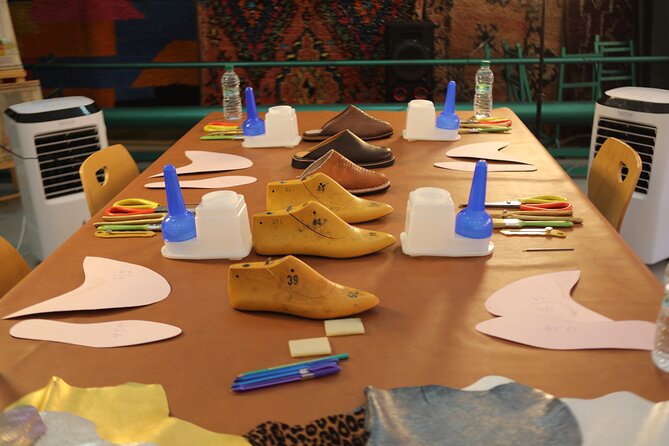
- Custom from scratch: you design and handcraft your own babouche, not a paint-by-numbers version
- Pick your leather and color: you get choices in materials and the look of your slippers
- Guidance throughout: you’re not left alone with tools; the slipper master helps along the way
- A real artisan setting: the workshop is held at a coop where you can see Moroccan handcrafts in action
- Small-group feel: it’s private for your group, so your questions don’t get lost in the shuffle
Price and what you’re really paying for
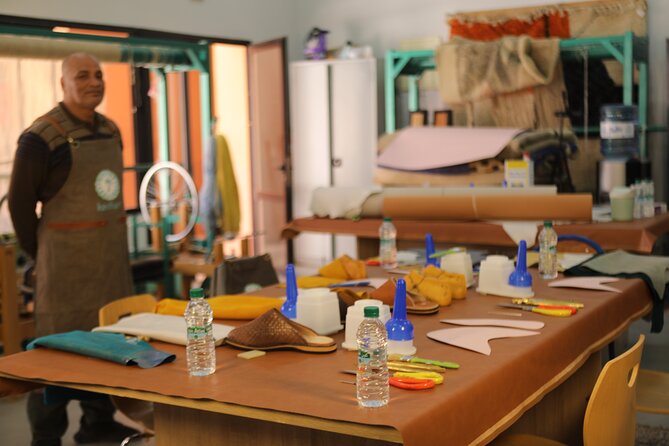
At $89 per person for about four hours, this sits in the middle of the “doable day activity” range in Marrakech. The smart part is what’s included in that price: bottled water and snacks, plus the materials and tools you need to build your own slippers from scratch. You’re also paying for guidance from a master craftsman with decades of experience, so you don’t just get a souvenir—you get a process you can be proud of.
If you’re the type who likes experiences you’ll remember every time your feet hit the floor, the math works in your favor. Most leather souvenirs are shop-bought and mass-produced. Here, you put your hands on the steps and make choices about the look. That turns the “souvenir cost” into something closer to a short class that ends with usable footwear.
The other pricing angle: this is booked often enough that people plan ahead. The average booking window is about 27 days, which is a hint to lock in your slot early if you’re traveling in peak season or have a tight schedule.
You can also read our reviews of more tours and experiences in Marrakech.


Finding the coop and settling in (your 4-hour rhythm)
The workshop runs roughly between 11:00 AM and 2:00 PM, Monday through Saturday (for the listed operating dates). Expect about four hours total from start to finish. It’s not a long day tour, which is exactly why it works well in Marrakech: you can do this, then still have energy for a souk wander or a dinner plan.
The meeting point is listed on Rue Kbour Chou, at a center connected with traditional arts. One review flagged that the venue can be hard to find. So here’s my practical approach: arrive early, confirm the exact spot using the address, and don’t assume the closest landmark will be obvious from the street. Once you’re there, the workshop vibe is calm and friendly.
Also note the format: it’s a private tour/activity, so only your group participates. That matters more than you might think in a hands-on craft class. Fewer people means more time for questions, help with fit, and attention as you work.
Choosing leather, color, and your babouche style
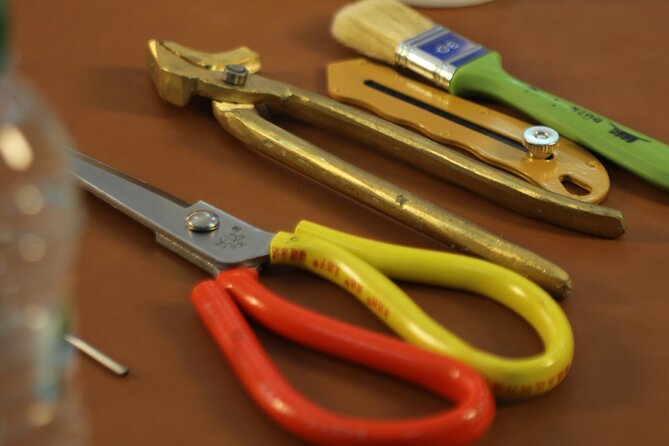
This is one of the best parts of the experience, because it’s where your slippers start to feel personal. You’ll choose from different high-quality leathers and customize the color and design. In plain terms: you’re making design decisions early, and those choices shape the whole build.
What I like about this for practical travelers is that you’re not stuck with a one-style-fits-all product. You can pick what you’ll actually want to wear at home: darker tones if you want easy wear, brighter shades if you want something that looks great right away. Even if you don’t know anything about leatherwork, the staff and the master guide you through what to expect.
No prior experience is required. That doesn’t mean it’s effortless. It means the workshop assumes you’re learning, and you’ll get what you need: tools, materials, and step-by-step instruction.
From cutting to stitching: the traditional steps you’ll learn
You’ll learn the process of Moroccan slipper making in order, not in random snippets. The build starts with the leather selection you made earlier, then moves into shaping and assembling the pieces. Throughout, the master craftsman guides your hands and helps at key moments where mistakes would be frustrating.
One of the strongest points from the experience is that you make the slippers 100% from scratch. That means you’re not just doing a final assembly stage after someone else does the hard work. You get to see each step, and you get to do each step, with a little help when the process gets technical.
If you’re wondering what this feels like: it’s part classroom and part studio. There’s time to learn what each step is for, then time to do it. You’ll likely see the benefit of the traditional method as you go—especially once stitching and fitting come into play. The craft is detailed, and that’s also why the finished result feels meaningful.
In one standout account, the instructor and local guide included Belaid, described as lovely and giving lots of guidance and context about Moroccan slippers and daily life. Even if your session has different helpers, you can expect that same mix: you’re learning the craft and also hearing how artisans think about their work.
The small details that make it feel personal
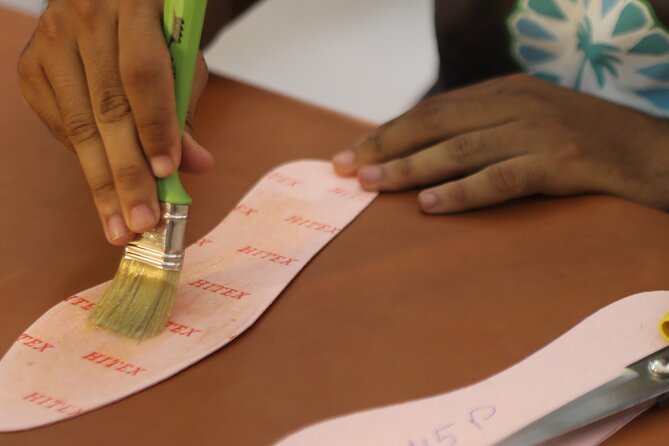
This workshop is held in a small, intimate setting. That shows up in how you get supported. When your hands are on leather and your tools are out, you need real-time feedback. The staff and translator (when language support is needed) help you follow along so the steps make sense, not just so you can finish.
Bottled water and snacks are included, which is helpful because you’ll be focused and using your energy. It’s also a nice comfort in Marrakech, where even a short session can feel warm. The breaks are built into the flow rather than happening at weird times.
One extra bonus: the workshop is in a coop-like space where you can see other Moroccan handcrafts being made. That turns your class into a mini studio tour, which helps you understand where slipper making fits in the bigger artisan world. It’s a good way to connect craft to place without going on a generic “look at this artisan” stop.


What you take home (and how to use it well)
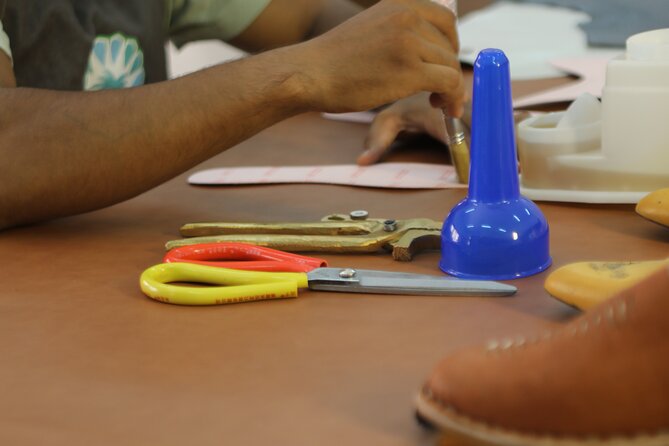
You leave with a pair of custom-designed Moroccan leather slippers that you made yourself. That’s the whole point: it’s wearable, personal, and unlike most shop souvenirs because your choices and your hands are part of the final product.
A practical thing to keep in mind: handmade leather items may vary slightly from what you expect from factory-made footwear. That’s not a problem—it’s often the charm. If you want a very standardized shape, you might need to choose details carefully and ask for fit guidance during the build. The good news is that you’re guided through the process, so you’re not guessing in the dark.
Also consider packing. You’re bringing home leather, and you’ll probably want to protect it from getting crushed in your bag. If you’re doing this early in your trip, plan an extra way to carry or store them so they arrive looking sharp.
Who this Marrakech workshop suits best
This is a great match if you want:
- A hands-on experience instead of another guided walk
- A memorable souvenir that connects directly to a Moroccan craft tradition
- A class setting with guidance, even if you have zero experience
- A private format that keeps things comfortable and question-friendly
It also works well for couples or family groups. Multiple participants came with someone—like a mom-and-child visit—and ended up with matching babouches. That kind of outcome isn’t guaranteed, but the format supports it because you can customize design choices while you work.
If you’re short on time, it’s also a win. Four hours is long enough to make something real, but short enough to fit into a day with browsing and dinner plans.
A quick balanced reality check
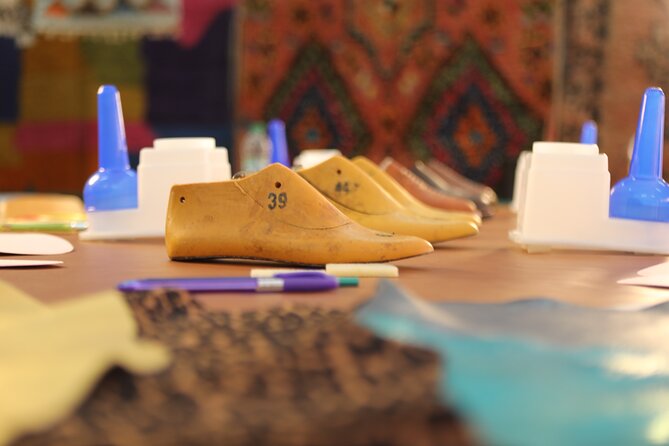
No craft class is completely effortless. Leatherwork needs attention, and the process is hands-on enough that you should wear clothes you don’t mind getting a bit busy. Bring your patience too: the venue can be a little hard to spot at first, and starting smoothly matters.
That’s it for the downsides. The rest is the upside: you’ll make something practical, with expert help, in a setting tied to real artisan work—plus you’ll learn the steps along the way.
Should you book DIY Moroccan Leather Slippers in Marrakech?
I’d book it if you want a souvenir with story and skill behind it. The price makes sense because you’re paying for instruction, materials, and a finished pair that’s custom because you helped create it. I’d especially consider booking if you care about artisan craft as a lived practice, not just a photo stop.
Skip it only if you’re looking for something passive or fast. This is about making. If you want a sit-and-watch tour, you’ll probably feel restless. But if you enjoy learning with your hands, this is one of those Marrakech experiences that turns a craft into a memory you can wear.
FAQ
How long is the DIY Moroccan Leather Slippers workshop?
It lasts about 4 hours.
How much does it cost?
The price is $89.00 per person.
Is the workshop private?
Yes. It’s a private tour/activity, so only your group participates.
What’s included?
Bottled water and snacks are included.
Do I need prior experience to make babouche slippers?
No. No prior experience is necessary, and materials and tools are provided.
Can I choose the leather and customize the design?
Yes. You can choose from a variety of high-quality leathers and customize your color and design.
Where is the workshop meeting point?
The start location is listed at Cqpat: Center Qualification Business Des Arts Traditionnels_marrakechJ2R4+8RW, Rue Kbour Chou, Marrakesh 40000, Morocco.
What time does it run?
The listed opening hours are Monday through Saturday from 11:00 AM to 2:00 PM (for the provided operating dates).
Will I receive a ticket on my phone?
Yes. The tour includes a mobile ticket.
Are service animals allowed?
Yes, service animals are allowed.