REVIEW · MARRAKECH
Atlas Mountains, Imlil valley, waterfalls, & Camel ride Day trip from Marrakech
Book on Viator →Operated by Marrakech Outdoor Trips · Bookable on Viator
Can you hear the mountains breathe? This 7.5-hour Atlas day trip from Marrakech mixes camel riding in Moulay Brahim Gorges with a hike through Imlil Valley’s Berber villages up to Armed, then finishes with a Berber family lunch in Ait Souka. The only real drawback is the walking: you’ll go uphill for about 1.5 hours, so comfy shoes matter.
I like that the day doesn’t feel like a rushed drive-by. You’ll start around 09:00, pass waterfalls and terrace fields, stop for mint tea, and visit a working argan oil co-operative in Tahnaout (plus a traditional Berber souk in Asni on certain days). In the best moments, a local guide like Omar turns the scenery into context—what you’re seeing, how people live there, and why these places are still important.
In This Review
- Key highlights
- How the Atlas Day Trip Flows From Marrakech to Imlil
- Moulay Brahim Gorges Camel Ride: Scenic, Short, and Actually Fun
- Imlil Valley Welcome: Mint Tea, Waterfalls, and Terraced Fields
- The Hike to Armed: Your Real Workout, With Real Payoff
- Tamatert Views and Ait Souka: Terraces, Then Lunch in a Home
- The Camel Ride Back Via Moulay Gorges (and What to Expect)
- Stops Along the Route: Argan Oil in Tahnaout and Berber Souks in Asni
- Timing, Groups, and Comfort: Making the Most of a Long Day
- Price Check: Why $25.90 Feels Fair (and When It Might Not)
- Who This Tour Suits Best (and Who Should Rethink It)
- My Booking Advice: How to Decide in 60 Seconds
- FAQ
- What time does the day trip start from Marrakech?
- How long is the trip, and when do you return?
- What’s included in the price?
- Where do you go during the day?
- Is alcohol included with lunch?
- What are the cancellation rules if the weather is bad?
Key highlights
- Camel ride at Moulay Brahim Gorges: dramatic scenery right at the start, before the hike.
- Mint tea in Imlil: a classic Berber welcome that sets the tone for the day.
- Hike to Armed, the highest village: a steady uphill stretch with big payoff views.
- Berber family stop in Ait Souka: lunch in a real home setting, not a tourist hall.
- Argan oil co-operative in Tahnaout: learn how women turn argan nuts into products Morocco is known for.
- Small-group pace (up to 12 people): easier to ask questions and keep moving together.
How the Atlas Day Trip Flows From Marrakech to Imlil
This is a classic “one big day” Atlas itinerary with a straightforward rhythm: drive out, do the gorges and camel ride, reach Imlil, hike into the valley villages, then return before evening.
The day starts at about 09:00 from Argana Café in the main square (Jemaa el-Fnaa area), with pickup offered if that’s arranged for you. The first big travel block is around one hour to Moulay Brahim Gorges, where you’ll step onto the main trail area with streams and multiple paths. After that, you continue toward Imlil Valley, passing through Berber village areas and getting your first real look at how irrigation shapes the land.
Total time is about 7 hours 30 minutes, and you’re typically dropped back around 17:00. I like that you’re not trying to cram in half a dozen hikes—you’re doing one meaningful climb and then living off the views and village stops for the rest of the day.
A few more Marrakech tours and experiences worth a look
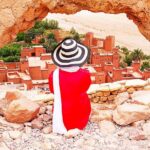
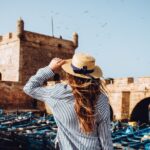
Moulay Brahim Gorges Camel Ride: Scenic, Short, and Actually Fun
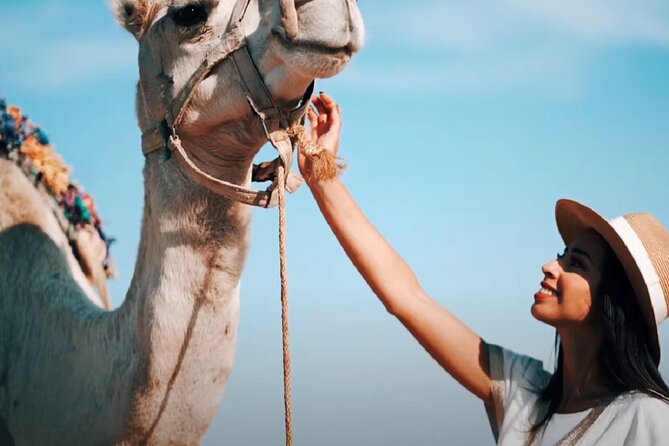
The camel ride is built early on purpose. You’re still fresh, and the gorges feel like the right kind of dramatic after a city morning.
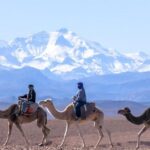
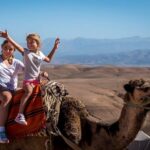
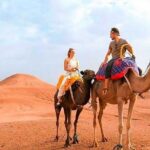
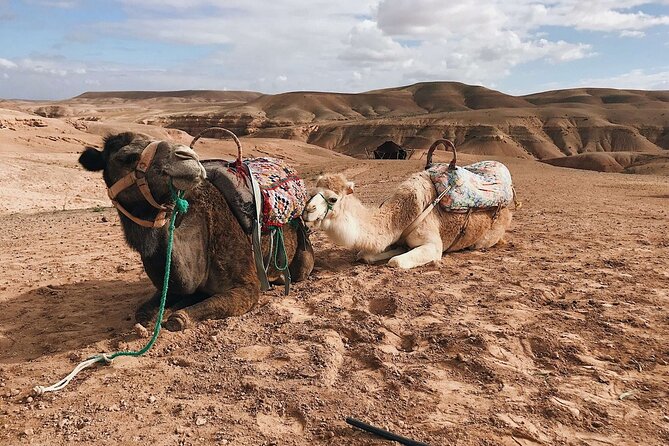
Moulay Brahim Gorges is where you get the “okay, we really are in the mountains” moment. You’ll arrive at a trail head with streams and branching paths, then experience the scenery from the back of a camel. One review specifically called out a ride of about 15 minutes, which lines up with how these rides usually work in the area: enough time for the novelty and photos, not enough time to become exhausting.
Practical tip: treat the camel ride like part of your transport, not an athletic event. You’ll still want good grip and shoes you can walk in after you dismount, because the day continues right away with village scenery and hiking later.
Imlil Valley Welcome: Mint Tea, Waterfalls, and Terraced Fields
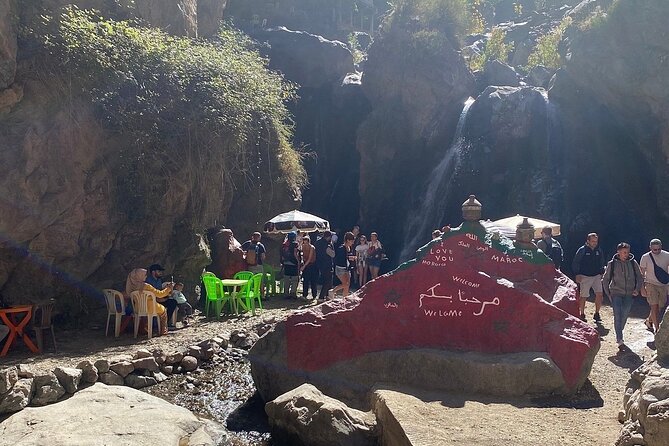
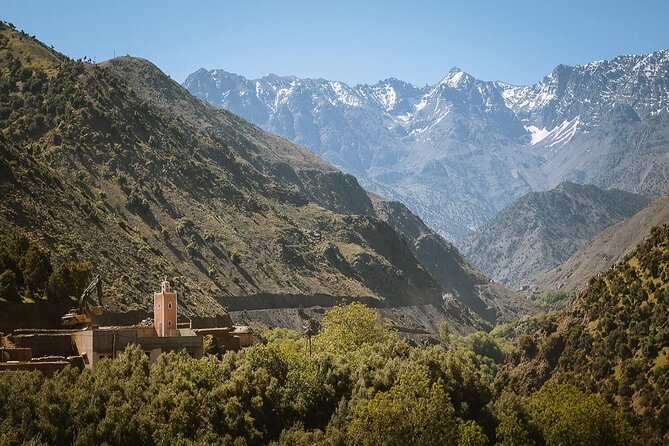
Once the drive brings you into Imlil Valley, the experience shifts from “ride and scenery” to “slow down and notice.” You’ll pass waterfalls along the way, and the route includes hamlets like Ait Mizan, which helps break up the journey into smaller scenic beats instead of one long bus ride.
When you reach Imlil, you’re welcomed with a glass of mint tea. It sounds simple, but it’s a useful pause. It gives you a mental reset before the hike and helps you understand the local rhythm: hospitality first, then moving.
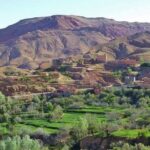
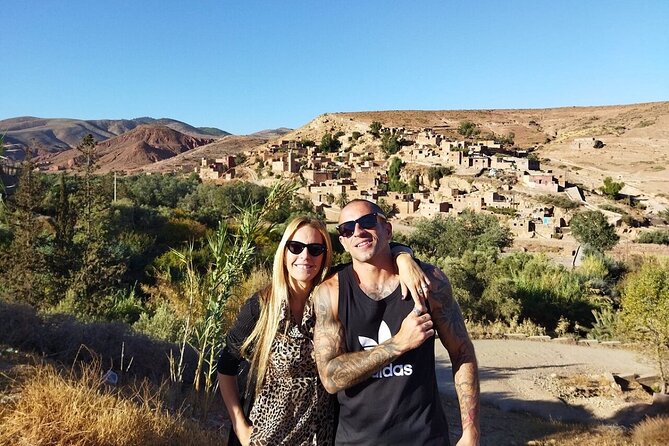
Then there’s the visual story—ancient irrigated terrace fields growing barley, corn, and vegetables, surrounded by cherry and walnut trees. Those terraces aren’t just “pretty.” They’re the reason hillside farming can work here, and they’re part of why the valley looks organized even though it’s steep and rugged.
If you’re the type who takes photos every time the view changes, you’ll appreciate that the day keeps offering new angles—water, terraces, village clusters—without demanding that you rush.
The Hike to Armed: Your Real Workout, With Real Payoff
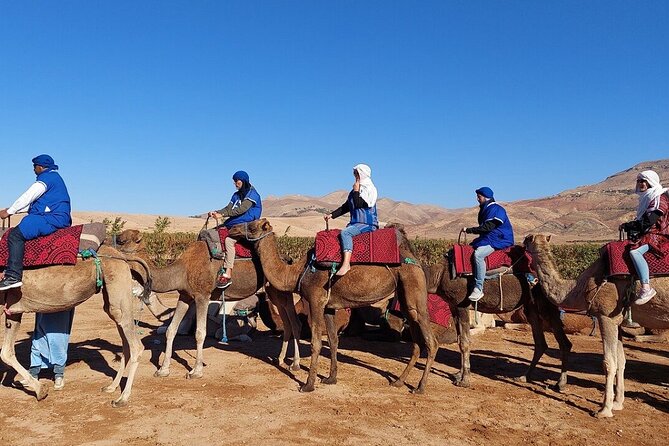
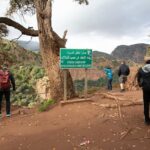
The main hike climbs to Armed, described as the highest village in the Imlil Valley. You’ll hike for about 1 hour 30 minutes uphill, which is long enough to feel like you did something, but short enough that most people can manage it with a steady pace.
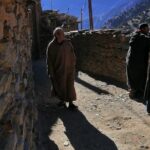
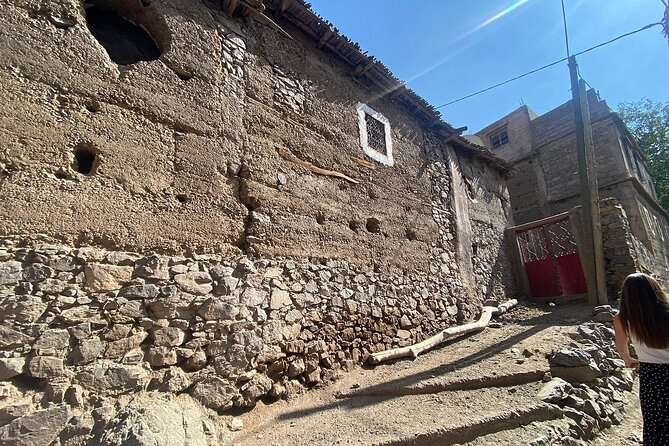
On the trail, you’ll follow the route through village pockets and hamlets. The trek connects you with places like Ait Souka and passes Ait Mizan along the way. You’ll also be guided with explanations, including Berber culture and heritage, which makes the walk more meaningful than just getting your legs moving.
What to watch: the uphill portion. If you’re sensitive to steep grades, plan to go slow and take breaks early rather than fighting through them. Bring water, and don’t plan on sprinting for summit photos. The best photos usually come from pausing naturally, letting others catch up.
One more tip: dress for changing mountain conditions. Even on a good weather day, it can feel warmer in the sun and cooler where shade and gorge winds move.
Tamatert Views and Ait Souka: Terraces, Then Lunch in a Home
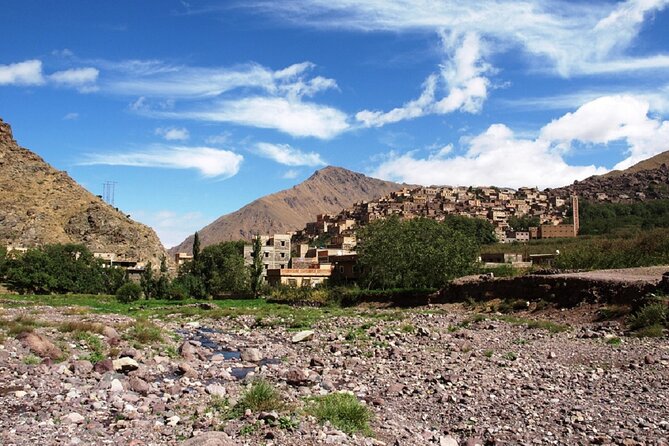
After the uphill portion, you continue through the valley toward Ait Souka. Along the way you stop at Tamatert, where you can see expansive views over ancient irrigated terraces of barley and vegetables, framed by cherry and walnut trees. This stop matters because it gives your eyes a “breathing space” moment before you arrive at the family home.
From Tamatert, the itinerary continues for about 30 minutes to reach the home of a Berber family in Ait Souka. This is where the day becomes more personal. You’re not just observing villages from a distance—you share time inside a home space.
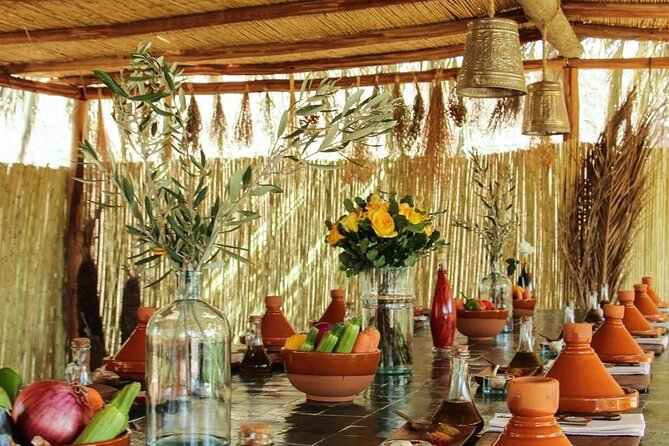
Lunch is included, and it’s described as a traditional Moroccan meal with options like couscous, tajine, salad, and fruit. That’s a lot of food for a day trip, and I think that’s one of the reasons this excursion feels worth doing rather than just ticking off a viewpoint. You’re eating what’s cooked locally, not a rebranded tourist version.
If you’re curious about daily life, this is the moment to ask questions. The guide’s role here is often more than translation; it’s helping you understand what you’re seeing and how people make choices in a place shaped by terrain.
The Camel Ride Back Via Moulay Gorges (and What to Expect)
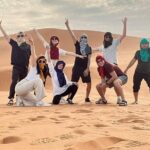
The day doesn’t end when you finish lunch. You’ll head back down the other side of the valley, and the itinerary includes another chance to ride a camel on the way back via Moulay Gorges.
This part can be a highlight if you liked the earlier ride, and it can also be a good way to rest your legs during the longer return. Again, the ride time can be short—expect it to be more about experience and photos than long saddle time.
What I’d do in your shoes: keep your walking pace for the hike and save your energy for the valley segments where you’re actually on foot. Once you’re back on camel, it’s easier to relax and enjoy the scenery without constantly thinking about footing.
Stops Along the Route: Argan Oil in Tahnaout and Berber Souks in Asni
One smart element of this tour is that it doesn’t treat Marrakech as a one-way departure. You stop in the region as you travel, including a visit to an argan oil co-operative in Tahnaout.
This is where you learn how women take argan nuts and turn them into argon oil-based products. If you think that sounds too industrial for a mountain day, give it a chance anyway. It adds a practical understanding of local livelihoods and why this region matters beyond scenery.
There’s also mention of a traditional Berber souk and market in Asni on Saturdays or Tuesday. That’s a nice bonus because it gives you a cultural texture—handicrafts, everyday goods, and the sense of a community marketplace. Even if you don’t shop much, it’s often the best place to see daily life happening at normal speed.
Timing, Groups, and Comfort: Making the Most of a Long Day
This is a 7.5-hour day trip, and the schedule is built around morning travel and an afternoon return. That means you’ll likely feel it in your legs by the end, even though the walking is only clearly timed for the uphill stretch.
The trip uses an air-conditioned vehicle, and that matters because the drive from Marrakech can feel warm. Once you’re out of the vehicle, though, it’s a mountain day: sun, wind, shade, and steps.
Group size is capped at 12 people, which usually makes it more manageable. You’ll still need to share the schedule—tea stops and viewpoint pauses happen when the group is there—but smaller groups tend to mean fewer long waits.
I also like that coffee and/or tea are included, and you’ll have lunch waiting when you reach Ait Souka. Just remember: alcoholic beverages aren’t included, so if that matters to you, plan accordingly.
Price Check: Why $25.90 Feels Fair (and When It Might Not)
At $25.90 per person, this is positioned as a value-packed day. You’re getting: guided time, transport by air-conditioned vehicle, camel ride(s), mint tea, lunch (couscous/tajine with salad and fruit), plus route stops like the argan co-operative.
For the money, the best deal is not the camel ride itself—it’s the combination of a real hike plus an included meal plus a local livelihood stop. Many “cheap” trips cover scenery only. Here you get the food and the culture explanation, which is what makes the day feel complete.
When it might not feel fair: if you’re expecting a huge amount of time on a long, rugged trek, this isn’t that kind of adventure. It’s more of a valley walk with one main uphill segment. For pure hikers, it can feel moderate. For most people, it’s a good balance.
Who This Tour Suits Best (and Who Should Rethink It)
This works especially well if you want a guided day that combines mountain views with local Berber life. It’s a strong fit for first-time visitors to Morocco who don’t want to plan logistics, but still want authenticity: tea welcome, village pathways, terrace views, and a home lunch.
It also fits well if you like learning in small doses. With a local guide like Omar (known for being helpful and for taking photos as much as you want), the day isn’t just moving. You get context about Berber heritage and daily life while walking.
Rethink it if you have limited mobility or you’re not comfortable with a 1.5-hour uphill walk. The camel ride can help with later pacing, but the hike portion is still required in the standard flow.
My Booking Advice: How to Decide in 60 Seconds
Book this tour if you want one day that feels like Morocco beyond Marrakech: Berber villages, irrigation terraces, a home-cooked lunch, and a camel ride in the gorges. It’s also a good choice if you like being guided—someone will point out what you’re seeing and keep the day organized.
Skip it if you hate hills, or if you’re hoping for a longer, more rugged trek. This is a “see and taste” day with one solid climb, not an all-day high-alpine expedition.
If weather is questionable, note that the experience requires good weather. When conditions are off, you’ll be offered another date or a full refund.
FAQ
What time does the day trip start from Marrakech?
It departs Marrakech in the morning around 09:00, starting at Argana Café in the main square area.
How long is the trip, and when do you return?
The total duration is about 7 hours 30 minutes, and the return drop-off is around 17:00.
What’s included in the price?
Lunch, camel ride, air-conditioned vehicle, coffee and/or tea, a tour guide, and all fees and taxes are included.
Where do you go during the day?
You drive from Marrakech to Moulay Brahim Gorges for a camel ride, continue to Imlil Valley for tea and hiking to Armed and Ait Souka, with stops that include waterfalls and terraces, plus an argan oil co-operative in Tahnaout and possibly a Berber souk in Asni.
Is alcohol included with lunch?
No. Alcoholic beverages are not included.
What are the cancellation rules if the weather is bad?
You can cancel for a full refund up to 24 hours in advance. If the experience is canceled due to poor weather, you’ll be offered a different date or a full refund.