REVIEW · MHAMID
6 days trekking To The heart of Desert
Book on Viator →Operated by Desertbrise Travel · Bookable on Viator
Big dunes and quiet nights do the work. This 6-day trek through southern Morocco blends camel caravan comfort (your luggage rides) with real walking time, under the steady rule of the sun. I like how the route shifts between Tamaris shade, dune walks, and camp life, so you feel the desert instead of just looking at it. I also love the human side: a professional nomadic guide plus camel drivers who help make the days feel calm and lived-in, not rushed. One drawback to weigh: you do need moderate physical fitness, and the days start early with a long road transfer to the desert.
From Marrakech, you roll over the High Atlas via the Tichka Pass (2260 m), then swing through places like Ait Benhaddou and the palm-lined Draa Valley before you finally step into M’Hamid. That mix matters. It means the desert doesn’t drop on you out of nowhere—it builds, with views, kasbahs, and date-country vibes on the way.
By the time you’re walking in the sand, you’ll be following the desert rhythm. Sunrise and sunsets are built into the experience, and camp nights are designed for silence and stargazing. Still, don’t expect city-style convenience—this is camp life, with limited comforts.
In This Review
- Key highlights you’ll actually notice
- From Marrakech to the desert gate: Tichka Pass and Ait Benhaddou
- Day 2 in M’Hamid: walking with a camel caravan and Tamaris shade
- Day 3: Erg Zahar dunes, sunrise pace, and tajin by campfire
- Day 4: Kraat jamal, Draa Valley crossing, and wild camels at night
- Day 5 back toward M’Hamid: shorter walking and a shower
- Day 6: back north to Marrakech by retracing the road
- What you’re really paying for: guides, camel drivers, and sun-managed pacing
- Price and value: $999.74 for 6 days that include real meals and 5 camp nights
- Practical tips so you enjoy the dunes (not just survive them)
- Who should book this trek, and who might want a different style
- Should you book this 6-day heart of the desert trek?
- FAQ
- FAQ
- How long is the trek and where does it begin and end?
- What level of physical fitness do I need?
- Does the camel caravan carry luggage?
- What kind of terrain should I expect during the hike?
- What meals and drinks are included?
- Are accommodations included during the trek?
- Is this a group tour or private?
Key highlights you’ll actually notice
- Tichka Pass to Ait Benhaddou: big-road views and a famous kasbah stop before desert walking starts
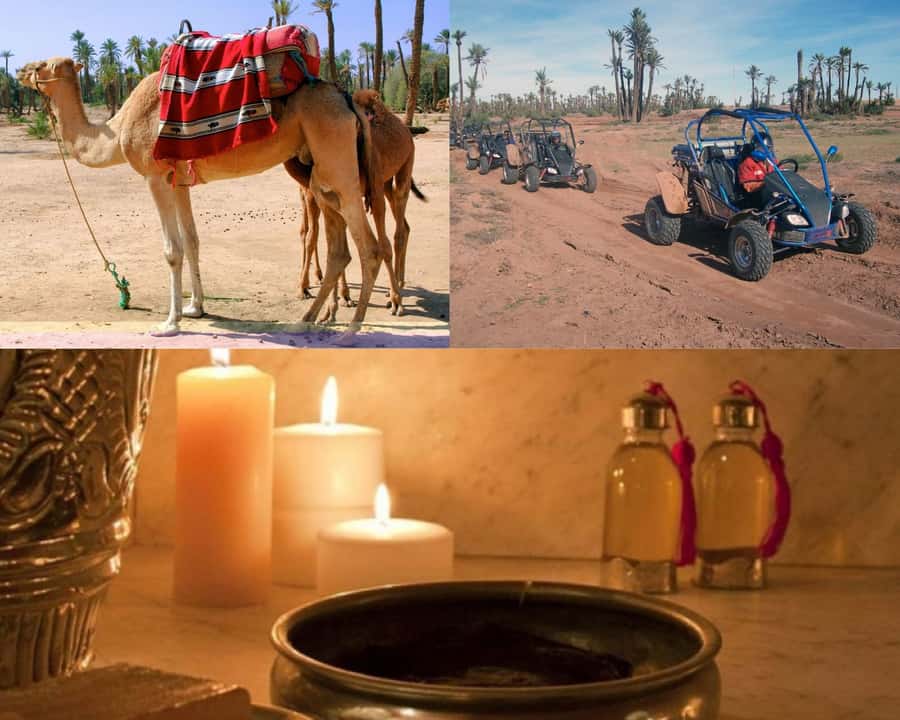
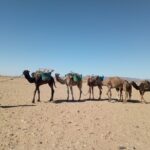
- Camel caravan carries luggage: less back-strain, more time to enjoy the hike
- Tamaris-shade breaks: tea and lunch planned around comfort and heat management
- Erg Zahar dune day: a 4-hour walking block split morning and evening, plus sunset dune riding
- Wild camels in the area: you get a chance to spot animals near the last desert night
- Real camp routine: you sleep in a bivouac/nomadic setting, with mornings shaped by sunrise light
From Marrakech to the desert gate: Tichka Pass and Ait Benhaddou
Your day starts with an early departure from the riad/hotel area in Marrakech (meeting point at Hôtel Restaurant Café de France). You’ll drive through the High Atlas Mountains via the Tichka Pass, which sits at 2260 m and is known for panoramic mountain-and-valley views. The road is described as snaky, and that fits the feel—lots of turns, changing colors, and Berber villages along the way.
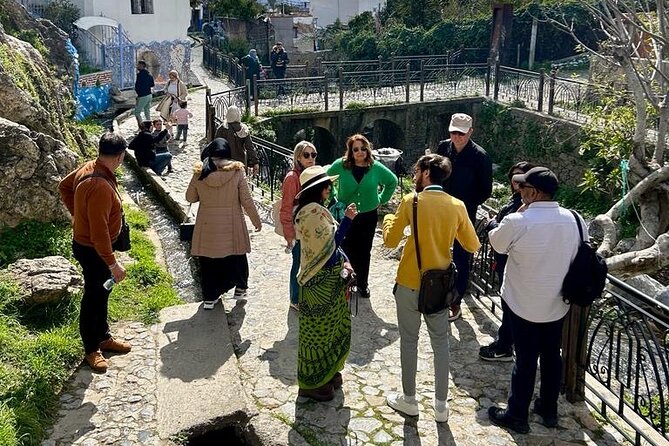
A major stop is Ait Benhaddou, a 16th-century UNESCO kasbah. This place is famous for Hollywood film work, but you don’t have to care about movies to enjoy it. The advantage is the texture: you see how people built for heat, wind, and distance, and you can walk around and get a clear sense of why this site became a global screen favorite.
You’ll also pass other kasbahs on the route, including Tamnougalte, then continue through the palm-lined Draa river valley. Zagora—capital of dates—shows up as a break in the long drive, and it helps reset your expectations before you head toward the desert gate at M’Hamid (with Khalil).
Practical note: this first day is a classic “travel day + first desert night.” That’s good if you like momentum. It can feel long if you prefer a slow start, so pack patience for the road.
You can also read our reviews of more hiking tours in MHamid
Day 2 in M’Hamid: walking with a camel caravan and Tamaris shade
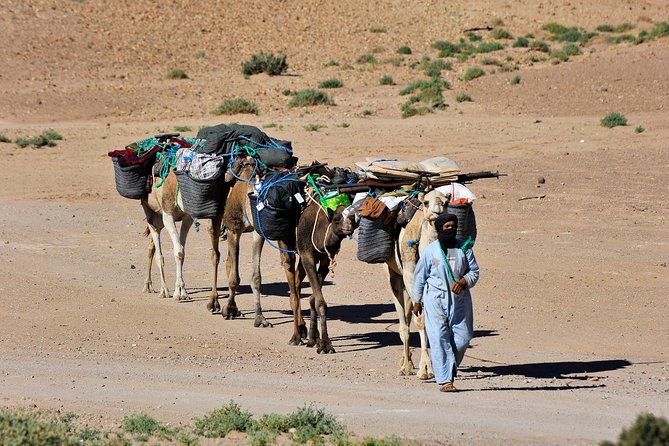
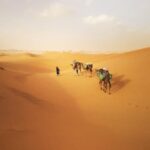
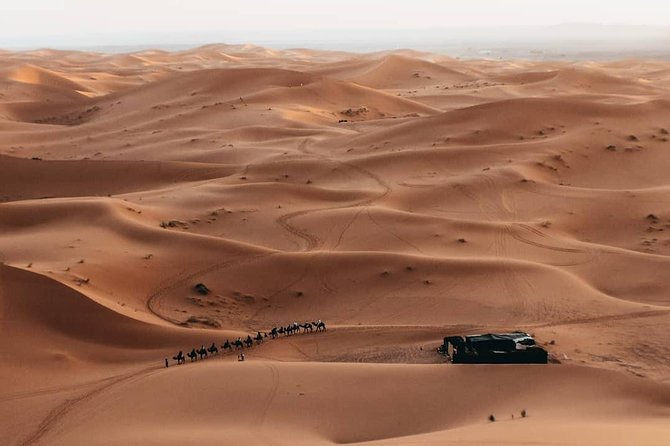
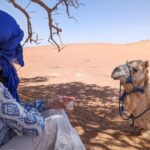
After breakfast at camp, you leave M’Hamid on foot with your guide and the camel caravan. This is where the trek stops being just transport and starts becoming an experience you steer with your own steps.
You head toward a palm grove, and the day is built around small pauses that matter in desert heat. Tea and lunch are served in the shade of Tamaris trees, with time to rest before moving on. That shade detail is one of those things that sounds minor until you’re actually walking under sun. It’s the difference between feeling strained and feeling like you’re in control.
Then you shift to the sanctuary of Sidi Naji. The oral tradition connected to this marabout is told in the experience as living there for 18 grandfathers. Even if you don’t know the full local background, the point is the atmosphere: a calm spot tied to local custom and storytelling.
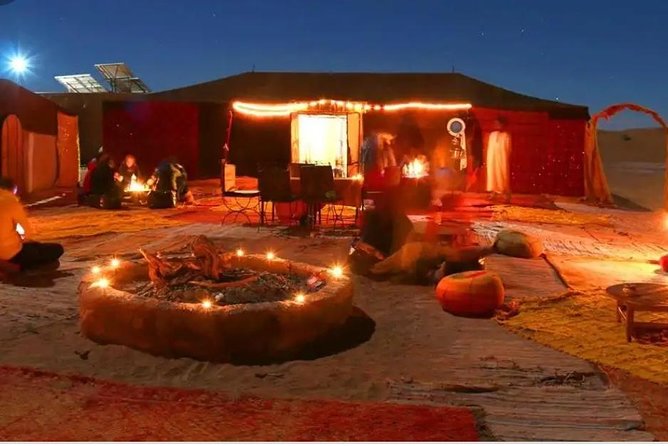
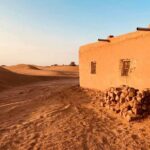
Night happens in a bivouac set at the foot of the dunes. If you want proof that the Sahara is not just a photo backdrop, this is it. You’re positioned where the wind, silence, and darkness do most of the talking.
Day 3: Erg Zahar dunes, sunrise pace, and tajin by campfire
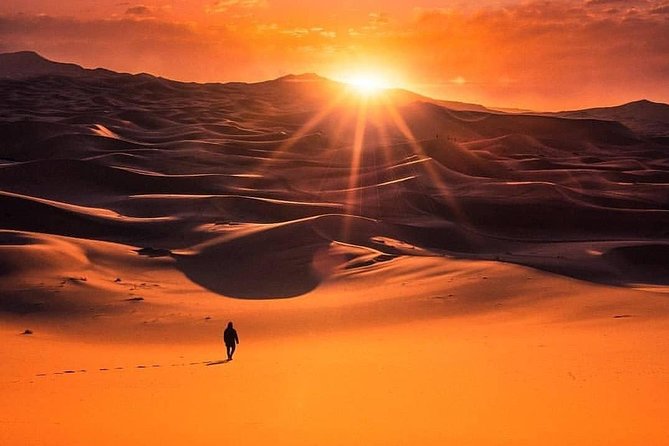
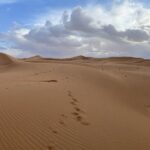
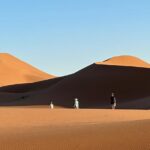
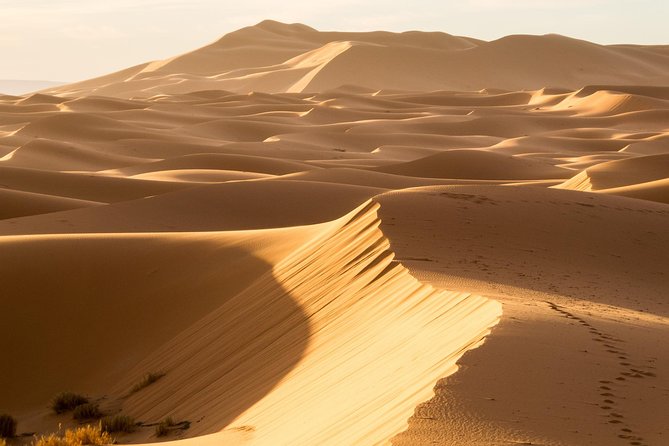
Day 3 is the big walking-and-dune day. After leaving the holy place, you head toward Erg Zahar, described as the third biggest dune in the M’Hamid desert. The walking is planned as 4 hours total, split into two blocks: about 2 hours in the morning and 2 hours in the evening.
The trail is a mix of plateau and sand, so your feet do real work. The experience specifically points you to bring good shoes for alignment. That’s not fluff. Sand changes how your ankle and foot handle each step, and the plateau sections keep you from getting stuck in only deep grit.
Lunch is again planned under Tamaris shade, followed by a nap before continuing to the erg where the camp is set. Then you get dune riding at sunset. You’ll also see the Algerian border area from this setting, which adds a sense of geography beyond your immediate group and camp.
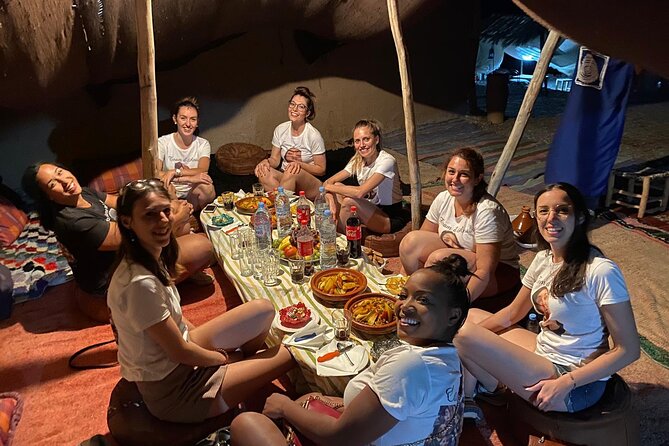
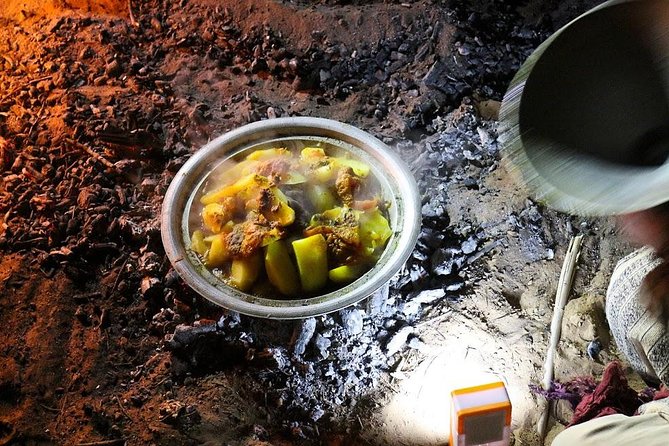
One of the most memorable parts here is food-making. The day includes sandbread and tajin preparation. That matters because it gives you a role in camp life instead of just watching from the sidelines. You learn by doing, and you taste the result while the light fades.
Day 4: Kraat jamal, Draa Valley crossing, and wild camels at night
The morning starts with the day’s rhythm and then shifts through varied terrain. You head to Kraat jamal across Lahdybat, with lunch planned along the route in an area full of tamarisk trees. Those trees come up again and again for a reason: they help the route stay humane.
After lunch, you cross the Daraa Valley to spend the last night in the desert, in a place described as full of wild camels. I love this moment for one simple reason: it reminds you that you’re not alone in the desert. You’re visiting a place that supports animals adapted to it.
A gentle reminder: keep your space and don’t push toward wildlife. If you see camels, enjoy the moment from where your guide places you.
This is also a day where you might feel the trek’s total rhythm clicking into place. After a few days, you tend to walk smarter: you stop when you should, you save energy for the sand, and you don’t rush the quiet.
Day 5 back toward M’Hamid: shorter walking and a shower
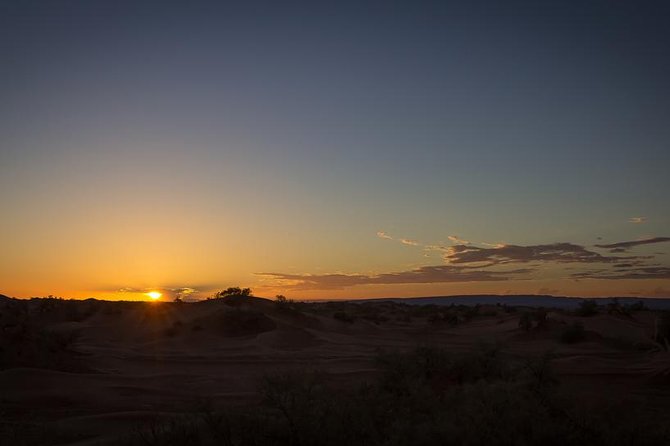
With the breeze of morning, you start the return toward M’Hamid. The walking is described as 3 hours back to the camp where you can shower and have lunch, then spend the night in M’Hamid.
That shower is a big deal in trek-land, even if you don’t get a hotel-style setup. It gives your body a reset and makes the final day feel easier. Also, having lunch again built into the return plan helps you avoid that end-of-trek slump where everyone is just trying to get it over with.
Night in M’Hamid gives you a different kind of quiet—still desert-adjacent, but with the comfort of knowing you’re close to the finish.
Day 6: back north to Marrakech by retracing the road
On day 6, you leave early from your guest-house and head back north, retracing the journey from day 1. Expect arrival in Marrakech late afternoon, which is a realistic finish time after a big first day and two days of dune walking.
This final transfer is your decompression window. You’ll have time to think about what stuck: the pacing, the silence, and the fact that the desert days are built around light—sunrise mornings, sunset camps, and nights under stars.
It also means you’re not left stranded in the desert after the trek ends. You get back to city life while you’re still fully aware of what you experienced.
What you’re really paying for: guides, camel drivers, and sun-managed pacing
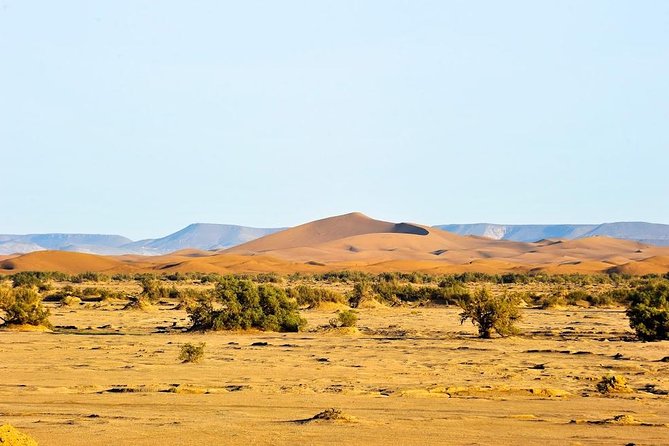
The price here isn’t just for a walking route. It’s for how that route is made livable.
First, you’re traveling with a professional nomadic guide plus camel drivers, and you’ll have a camel caravan carrying luggage. That removes a lot of the burden that usually makes desert treks exhausting for beginners. Your body can focus on walking, not on hauling everything on your back.
Second, the itinerary is structured around heat and timing. The experience notes that you live according to the rhythm and intensity of the sun. You feel that most on days like Erg Zahar, where walking is split and shade breaks are clearly built in.
Third, it’s private. The tour is listed as a private tour/activity, which usually means less waiting, fewer awkward dynamics, and more flexibility for your group.
From the guide names shared in feedback, I’d keep an eye out for Khalil as the organizer/manager and guides such as Abdo, Ali, and Mohamed. The common thread is competence and kindness—people who know how to keep the day smooth and your questions answered around the fire.
Price and value: $999.74 for 6 days that include real meals and 5 camp nights
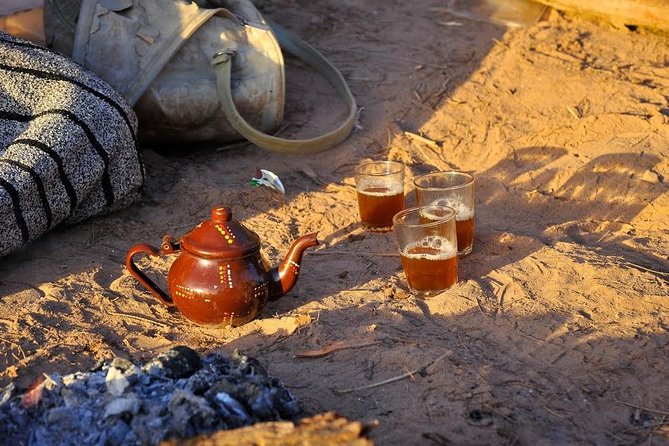
At about $999.74 per person, you’re paying for a guided, multi-day desert movement with accommodations and multiple meals built in.
Included costs cover:
- 5 nights accommodation
- driver/guide support and accommodation per the itinerary
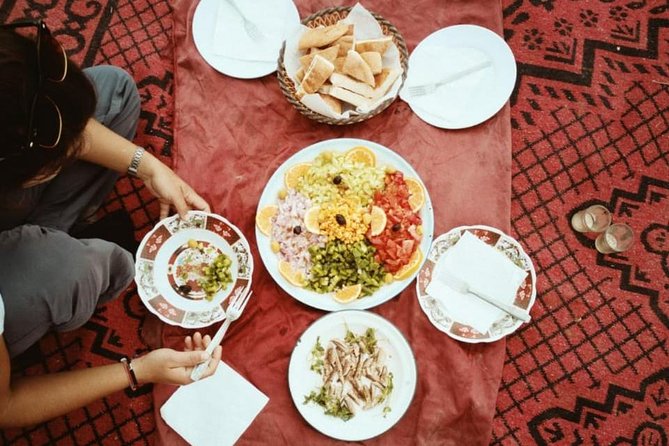
- 6 dinners, 6 breakfasts, and 5 lunches
- bottled water
- coffee and/or tea
- local taxes
Food and drinks beyond what’s listed are not included, so plan to budget for any extra cravings you want to grab on the road back in cities.
Is it good value? For me, yes—because you’re not just buying “a walk.” You’re buying the infrastructure: transport from Marrakech, desert guide work, camel drivers, camp setup, and planned meal breaks at the right times. If you tried to assemble this yourself, you’d spend time and effort just to match the level of coordination you get here.
Practical tips so you enjoy the dunes (not just survive them)
A few things matter most on this trek:
Shoes are not optional. The route explicitly warns you to bring good shoes for alignment because the mix of plateau and sand can stress feet and ankles. Wear broken-in footwear, not brand new stuff.
Plan around the sun. Walking is timed, and shade breaks are part of the schedule. Still, your comfort depends on you cooperating with the heat: take rests seriously and drink when you’re offered water.
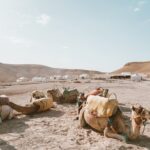
Expect camp life. Night is spent in nomadic standard camp and bivouacs, including a night near the dunes’ foot and another at Erg Zahar’s camp setting. That’s part of the appeal, but you should go in expecting a rustic vibe, not hotel comfort.
Bring a mindset for quiet. One promise of this experience is relaxation and silence in the heart of the Moroccan Sahara, especially around sunrise and sunset. If you treat it like a race, it won’t feel as magical.
Use your downtime well. The schedule includes naps and shade lunches. Those aren’t filler. They help you keep your energy for the next walking block.
Who should book this trek, and who might want a different style
This trek fits you if:
- you can handle 3 to 4 hours of walking on desert days (with some days split into morning/evening)
- you want sunrise/sunset moments built into the schedule
- you like authentic desert camp life with a guide and camel drivers
- you prefer a private setup over a big group scramble
It may not fit you if:
- you strongly prefer hotel-grade comfort every night
- you want a very light day with no sand walking
- you’re sensitive to long driving days at the start and finish (Marrakech is a big part of the trip)
Should you book this 6-day heart of the desert trek?
If your dream is to walk into Morocco’s dunes with the right pace, the right people, and meals handled for you, I think this is a smart booking. The best part isn’t one single photo moment—it’s the way the days are paced around shade, sun, and camp nights, with camel-carried luggage doing real work behind the scenes.
Book it if you’re willing to meet the desert on its terms: moderate walking, camp rhythm, and sunrise/sunset attention. Skip it if you want a cushy experience or you dislike early starts and long transfers.
FAQ
FAQ
How long is the trek and where does it begin and end?
It runs for about 6 days. It starts at the meeting point in Marrakech (Hôtel Restaurant Café de France) at 8:00 am and ends back at the meeting point in Marrakech late afternoon on day 6.
What level of physical fitness do I need?
The experience is described as suitable for travelers with a moderate physical fitness level. The walking days include set walking times (including 4 hours on one dune day and 3 hours on the return day).
Does the camel caravan carry luggage?
Yes. The camel caravan carries the luggage while you walk with your guide and camel drivers.
What kind of terrain should I expect during the hike?
You’ll walk through a mix of plateau and sand, especially during the Erg Zahar dune day. Good shoes are specifically recommended for the sand walking.
What meals and drinks are included?
You get 6 dinners, 6 breakfasts, and 5 lunches. Bottled water is included, and there is coffee and/or tea included as well. Food and drinks beyond those are not included.
Are accommodations included during the trek?
Yes. The tour includes 5 nights of accommodation (in camp/nomadic standard settings as per the itinerary).
Is this a group tour or private?
It’s listed as a private tour/activity, meaning only your group participates.