REVIEW · MHAMID
4 Days Hiking To Desert
Book on Viator →Operated by Desertbrise Travel · Bookable on Viator
Atlas roads, desert dunes, nomad stories in four days. I like this trip for two big reasons: Ait Benhaddou and the High Atlas pass views on Day 1, plus the camel trek through Saharan dunes with nomad-style nights. One drawback to plan for: you start early and spend a lot of time in transit, and the camp is basic by design.
You’ll also enjoy the human side. People coordinate well from Marrakech pickup through the desert days, and your trek time focuses on walking, tea, and shared moments rather than rushing from stop to stop. With a maximum group size of 50, you’ll get a tour vibe without it feeling like a factory line—though in the long drive day, it can still feel “group-paced.”
In This Review
- Key things to know before you go
- Day 1: Marrakech to Ait Benhaddou and over the Tichka Pass
- Ait Benhaddou, Tamnougalte, and the kasbah vibe you can actually walk in
- Draa River to Zagora, then into M’Hamid
- Day 2 trek: from M’Hamid toward Sidi Naji, with tea and shade
- Day 3 trek: Sidi Naji to Hananesh and back to M’Hamid
- Nomadic-standard camp: what to expect and how to pack smart
- Guides and pacing: why this trip feels cared for
- Price and value: does $506.55 make sense?
- Who should book this 4-day hike from M’Hamid
- Should you book it? My practical call
- FAQ
- How long is the 4 days hiking to desert experience?
- What time does the tour start in Marrakech?
- Where does the tour start and end?
- How much does it cost?
- What meals are included?
- What isn’t included?
- Are hotel pickup and drop-off included?
- What is the maximum group size?
- Is there a minimum age?
- Is there free cancellation?
Key things to know before you go
- High Atlas views via the Tichka Pass (2260 m): big mountain panoramas early in the trip
- Ait Benhaddou (UNESCO) + kasbah stops: time to see the classic fortified village feel up close
- Palm-lined valleys on the way to Zagora: Draa River route breaks up the long drive
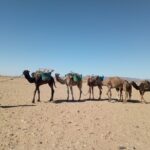
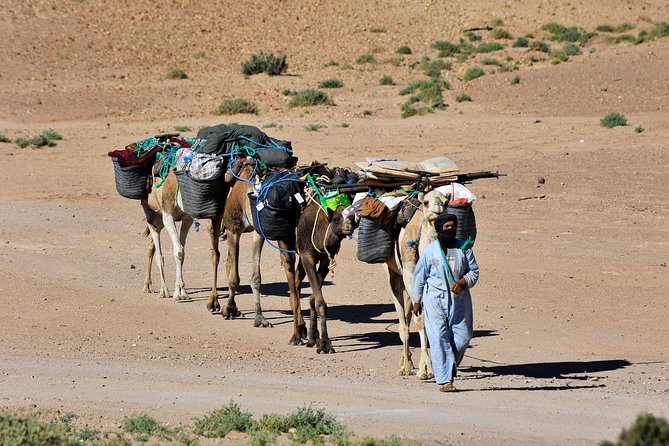
- M’Hamid camel trekking with a caravan: walking days led by your guide and camel team
- Sidi Naji sanctuary + dunes bivouac: history, tea, and nights near sand dunes
- Meals are mostly covered: 3 breakfasts, 2 lunches, 3 dinners included
Day 1: Marrakech to Ait Benhaddou and over the Tichka Pass
Most good desert trips start with a “wow” day, and this one does. You leave Marrakech early from your riad or hotel and head into the High Atlas Mountains via the Tichka Pass (2260 m). Expect steep road stretches, sharp turns, and wide open views—very “road-trip Morocco,” with mountain colors and valleys changing as you climb.
On the way, you’ll stop for kasbahs and Berber villages, including Tamnougalte and Ait Benhaddou. This is the part of the journey that makes the later desert feel earned. You go from busy city energy to mountain quiet, then fortified walls, then palms, and finally sand.
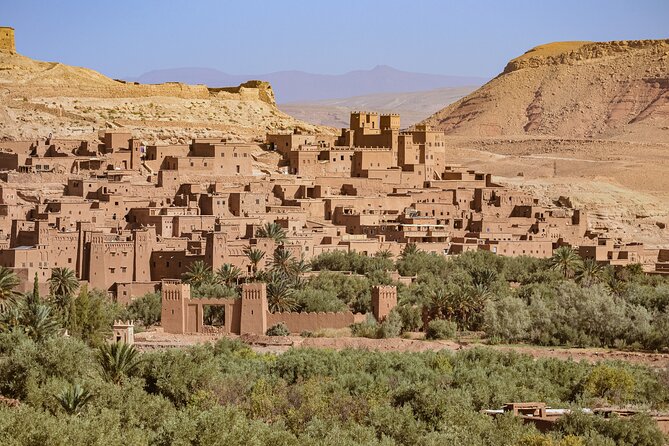
Ait Benhaddou is a 16th-century UNESCO site and one of the Morocco kasbahs that really holds its shape over time. If you’ve ever seen it in films, you’ll understand why it gets called cinematic: compact buildings, earthen textures, and the feeling of a whole town built to last.
Practical note: the pass and drive day are the long one. If you’re sensitive to motion or want photos without rushing, sit where you can see ahead and take breaks when your driver suggests them.
You can also read our reviews of more hiking tours in MHamid
Ait Benhaddou, Tamnougalte, and the kasbah vibe you can actually walk in
Kasbahs can turn into “photo-and-go” stops on some tours. Here, the flow is built around seeing them as places, not just backdrops. Ait Benhaddou is the anchor, and the route also includes Tamnougalte, so you get a clearer picture of the fortified village style across the region.
What makes these stops valuable isn’t just architecture. It’s the location and the “why” of it: thick walls, compact layouts, and the way settlements relate to routes through the mountains and valleys. Even if you don’t geek out on building style, you’ll feel how these places were designed for daily life—survival, storage, defense, and community all in one.
Drawback? If you want slow museum-style time, you might wish for extra hours. But for a 4-day desert hike, the pacing makes sense: you’re using this day to set context before the desert strips everything down to sky, sand, and foot travel.
Draa River to Zagora, then into M’Hamid
After kasbah time, the drive keeps rolling through the palm-lined Draa River valley. This is your “breather” stretch. Instead of climbing and winding, you start seeing date palms and the river corridor, and the colors soften.
Then you reach Zagora, described as the capital of dates. It’s a useful stop in the story of this trip because it signals that you’re leaving the mountain-and-valley Morocco world behind and moving toward the Saharan edge.
The day finishes at the gate to the Sahara near M’Hamid, where you’re met by Khalil (mentioned as a key person in the desert-side experience). Dinner and your first night happen in a nomadic standard camp.
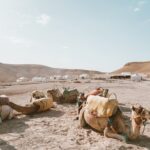
One thing to know: “nomadic standard” usually means practical. You should expect simple comforts rather than hotel polish. It’s not a deal-breaker for most people—it’s part of why the desert feels real—but bring a good attitude and dress for cool desert evenings.
Day 2 trek: from M’Hamid toward Sidi Naji, with tea and shade
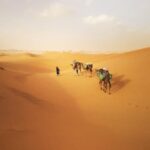
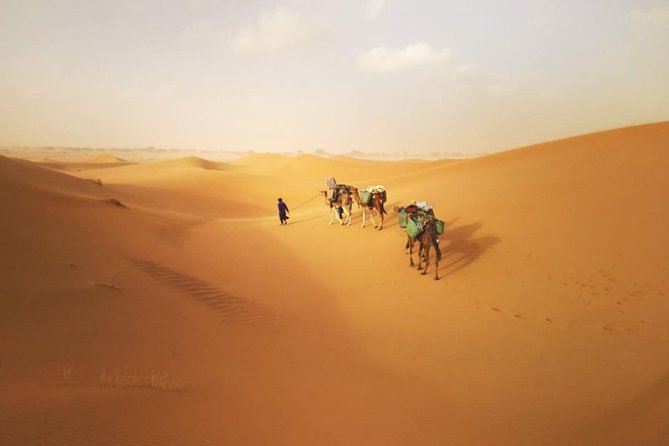
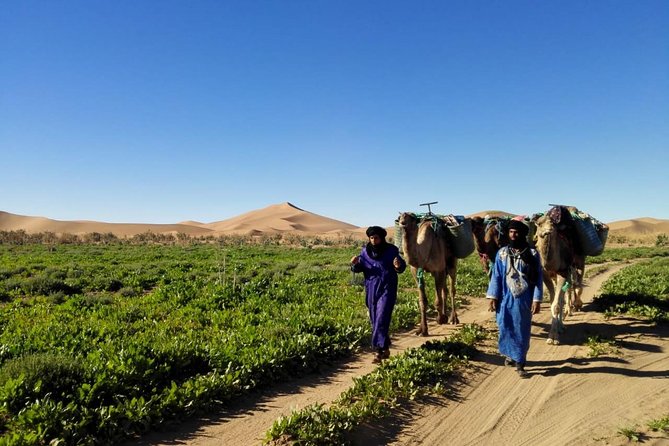
The desert part starts after breakfast. You leave M’Hamid on foot, accompanied by your guide and the camel caravan. This isn’t a “sit on a 4×4 and look around” stop. You’re walking in the Saharan area, with the camels carrying the practical side of camp life.
The route heads toward the Palm Grove, where tea and lunch are served in the shade of Tamaris. That shade detail matters more than it sounds. Tamaris trees create the rare cool moment where you can slow your breathing, eat without rushing, and reset for the rest of the day.
After the rest, you go to the sanctuary of Sidi Naji. Local oral tradition says a marabout lived there, and the story is that it involved 18 grandfathers. Even if you only take away the setting and the meaning, it’s a powerful stop: you’re watching how faith, memory, and place overlap.
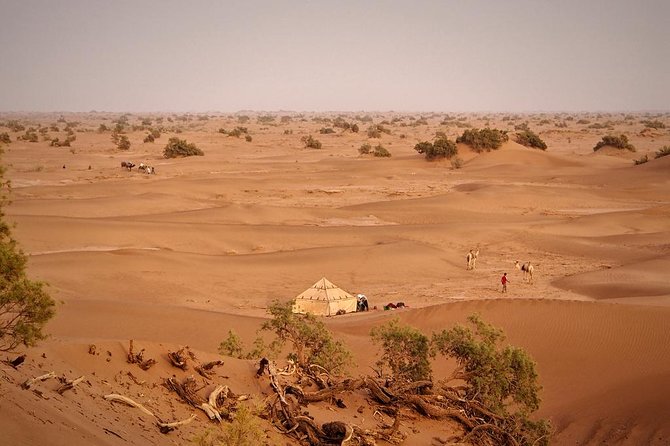
Then it’s time for the bivouac at the foot of the sand dunes. This is where the desert changes from scenery to atmosphere. The sky does its thing. The silence does its thing. And for many people, this is the “I came here for this” moment.
Day 3 trek: Sidi Naji to Hananesh and back to M’Hamid
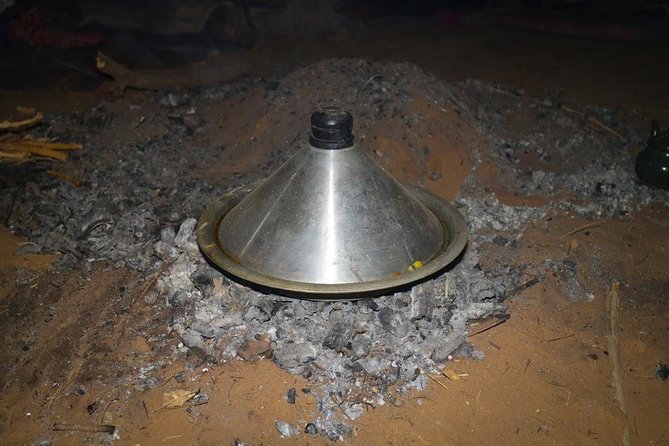
Day 3 keeps the rhythm of walking. The tents get packed away as you move, and you head toward a place called Hananesh (sometimes written similarly across travel materials). The route goes through rocky plateaus, so not every step is flat sand.
Lunch happens near a Tamaris, again emphasizing that the day is about comfort when comfort is available—shade, water timing, and taking breaks without turning it into a march.
By late afternoon, you return to M’Hamid for your last night. That timing is smart. You finish trekking while daylight still helps your bearings, then you can enjoy the final evening without needing to “camp and walk” in the dark.
If you like a trip that mixes guided structure with real time outdoors, this is where it hits. You get time with nomad life, but you also get the physical payoff of walking.
Nomadic-standard camp: what to expect and how to pack smart
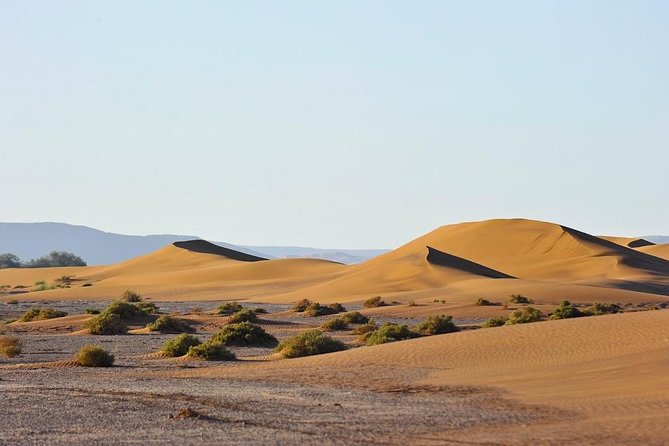
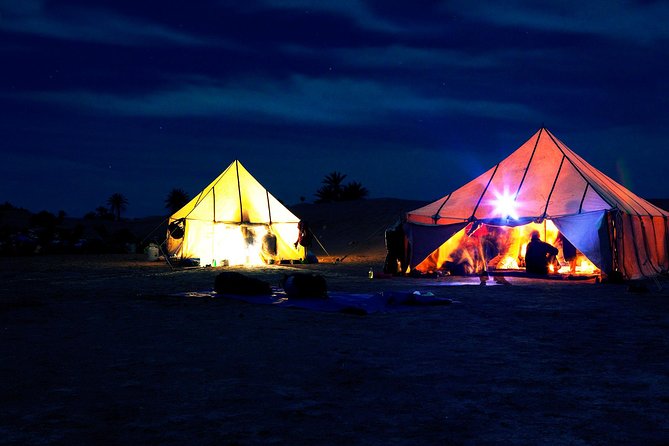
You’ll sleep in a nomadic standard camp for three nights (dinner is included for 3 nights, and breakfasts for 3 mornings). The key word is standard: you’re not going to be living in a luxury tent.
Plan around the reality of the desert:
- Nights can feel cool compared to day temperatures.
- Sand can get into everything, even if you’re careful.
- Basic bedding and facilities mean you should be organized about comfort.
Pack to make the simple stuff pleasant:
- A light layer for evening, plus something for wind.
- Sunscreen and sunglasses. Desert glare is real.
- A refillable water bottle. You’ll want it for walks and breaks.
- A headscarf or buff for dust, plus socks you’re willing to sacrifice.
If you arrive with the right mindset, the camp becomes part of the story: lantern light, shared meals, and the sense that you’re living at the pace of the desert rather than your smartphone.
Guides and pacing: why this trip feels cared for
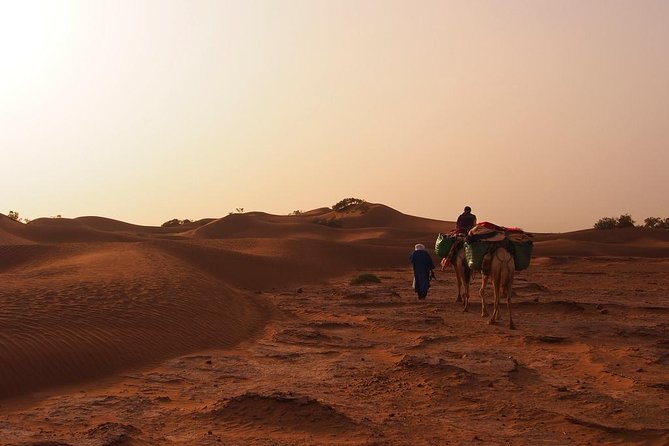
What really improves a desert trek isn’t the map. It’s the people who run it day after day. In this experience, Khalil is repeatedly mentioned as a key contact, and other names that show up include Ali, Ahmad, and Said. When guides like this are involved, you tend to get two things: calmer logistics and more relaxed conversation.
The structure also helps. Your days balance driving time, then trekking, then camp life. You’re not stuck constantly traveling in the vehicle. The trek days build toward the bivouac nights, with tea, lunch breaks, and stops like Sidi Naji that give the walk meaning beyond distance.
Group size is capped at 50, and that matters in practice. It usually keeps things organized enough that you can still find your place in the rhythm of the day, especially once you’re off the main road.
Price and value: does $506.55 make sense?
At $506.55 per person, the value depends on what you compare it to. This isn’t just a camel ride. You’re getting:
- Private vehicle transport and hotel pickup/drop-off
- A local guide
- Dinner (3), Breakfast (3), Lunch (2) included
- Trekking days with a camel caravan and camp nights
Also notice what’s not included: lunch to and from Marrakech on the road. That’s a fair gap to plan for.
So where does the money land? A lot of cost goes into moving you from Marrakech to the desert edge and keeping the trek operation running (transport, guiding, meals, camp). When a trip covers most meals and includes pickup/drop-off, you’re not left juggling snacks and logistics every few hours.
For me, the best way to judge value here is simple: if you want the full arc—Atlas pass to kasbahs, then palms, then a real foot trek with nomad-style nights—this price looks like a reasonable packaged deal for Morocco.
Who should book this 4-day hike from M’Hamid
This trip is a strong fit if you want:
- A real Sahara walking experience (not just a day excursion)
- A classic Morocco route: Marrakech → High Atlas → Ait Benhaddou → Zagora → M’Hamid → desert
- Cultural stops that are tied to the geography, like Sidi Naji and palm groves
It may not be ideal if:
- You dislike long drives. Day 1 is early and packed.
- You expect hotel-level camp comfort. This is desert life, basic by nature.
- You want a slow, unhurried day with no schedule. This trip keeps momentum.
Good to know: minimum age is 6, and the tour notes that most people can participate. Service animals are allowed too, which is worth checking if that applies to your group.
Should you book it? My practical call
If your goal is to stitch together Morocco’s most famous “route moments” and end with genuine desert trekking, I’d book this kind of 4-day plan without hesitation. Ait Benhaddou plus the drive over Tichka Pass gives you the big visual Morocco. Then the camel caravan trek and dunes bivouac give you the meaningful payoff.
Do one thing before you confirm: plan for the early start and the camp basics. If you do that, you’ll likely find the experience feels like a complete arc, not just a desert photo stop.
FAQ
How long is the 4 days hiking to desert experience?
It runs for about 4 days.
What time does the tour start in Marrakech?
The start time is 9:00 am.
Where does the tour start and end?
It starts in Marrakesh, Morocco and ends back at the meeting point (after the return ride).
How much does it cost?
The price is $506.55 per person.
What meals are included?
You get 3 breakfasts, 2 lunches, and 3 dinners.
What isn’t included?
Lunch to and from Marrakech on the road is not included.
Are hotel pickup and drop-off included?
Yes. The tour includes hotel pickup and drop-off.
What is the maximum group size?
The tour has a maximum of 50 travelers.
Is there a minimum age?
Yes, the minimum age is 6 years.
Is there free cancellation?
Yes. You can cancel for a full refund up to 24 hours before the experience’s start time.