REVIEW · FEZ
5-Hour Private Walking Tour of the Medina in Fez
Book on Viator →Operated by Bouaouina Private Tours · Bookable on Viator
Fez feels endless, until you get a good guide. I love how the local guide helps you move through the medina’s maze-like lanes, and I love photo-friendly stops like Bab Boujloud and the Chouara Tannery. One catch: it’s a lot of walking on uneven streets, so plan for comfort shoes.
This is also genuinely private, so your pace is your pace. In the past, guides such as Hassan, Rachid, and Kamal are praised for patience and for reshaping the walk when you want less of a rigid route and more real-life Fez, including artisan areas and good photo moments.
At $30 per person for about 5–6 hours, it’s a strong value if this is your first day in Fez el-Bali and you want context quickly. Just note that meals are on your own, and the entrance situation varies by stop.
In This Review
- Key takeaways before you book this Fez Medina walk
- Why Fez el-Bali makes more sense with a private guide
- Royal Palace of Fez (Dar el-Makhzen): the dramatic exterior you can actually see
- Mellah of Fez: the oldest Jewish quarter and its layered stories
- Bab Boujloud (Blue Gate): a photogenic entry point into UNESCO Fez el-Bali
- Bou Inania Medersa: Islamic art built for study and worship
- Museo Nejjarine: from caravanserai to woodcraft museum views
- Al-Qarawiyyin Mosque and University: a living center of learning
- Chouara Tannery: medieval dyeing technique plus the smell reality
- How private pacing helps you avoid medina missteps
- Price and value: why $30 per person can make sense here
- What to wear, bring, and plan for (so the 5–6 hours feel good)
- Who this tour is best for
- Should you book this private walking tour?
- FAQ
- How long is the 5-Hour Private Walking Tour of the Medina in Fez?
- Is this a private tour?
- How much does the tour cost?
- Is pickup offered?
- Are entrance fees included?
- What level of fitness do I need?
- Does the tour run in all weather?
- Can I cancel and get a full refund?
- Are service animals allowed?
- Can the tour include children?
Key takeaways before you book this Fez Medina walk
- A private route you can steer: the walk is flexible, so you can spend extra time where you care most.
- Big-name sights, but with street-level guidance for navigating the medina without wasting time.
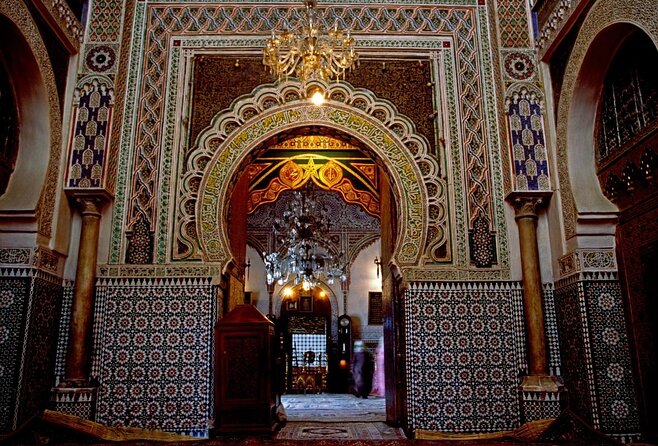
- UNESCO-listed madrasas and schools plus spaces that show how Fez taught, prayed, and lived.
- Mellah history with specific landmarks like Ibn Danan Synagogue and the Jewish Cemetery.
- Chouara Tannery is a sensory stop (watch for the smell and use the mint sprigs your guide may offer).
Why Fez el-Bali makes more sense with a private guide
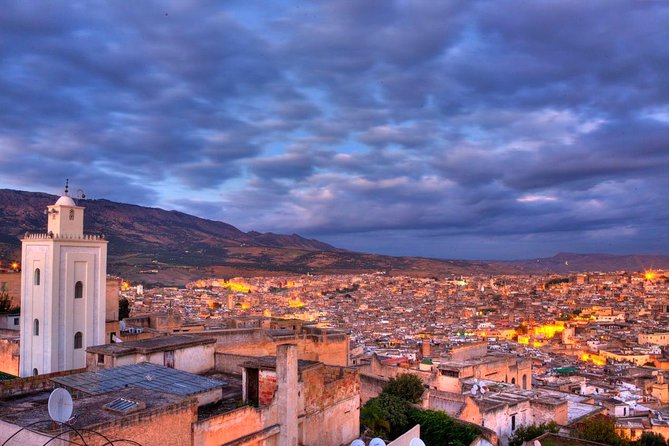
Fez’s medina is the kind of place where you can walk in circles without meaning to. That’s why a guide matters here. You’re not just ticking off monuments—you’re learning the logic of the city so the streets start to feel readable.
On this tour, you get a structured flow through major themes: power and architecture (the palace), religious learning (medersas and al-Qarawiyyin), plural communities (the Mellah), and Fez’s working crafts (the tannery and woodcraft traditions). For many first-timers, that order is the difference between a “sightseeing day” and an actual understanding of the city.
You can also read our reviews of more walking tours in Fez

Royal Palace of Fez (Dar el-Makhzen): the dramatic exterior you can actually see
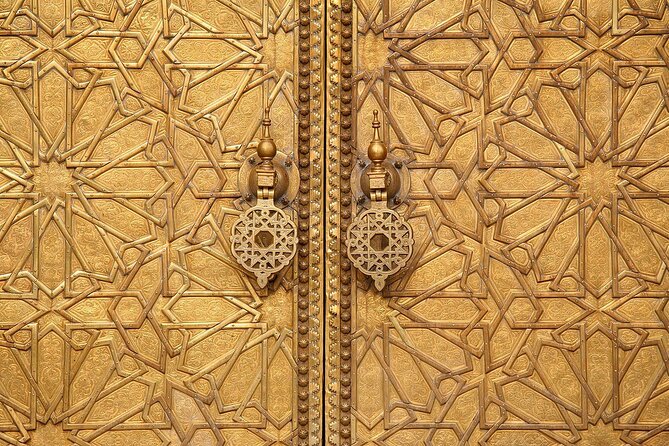
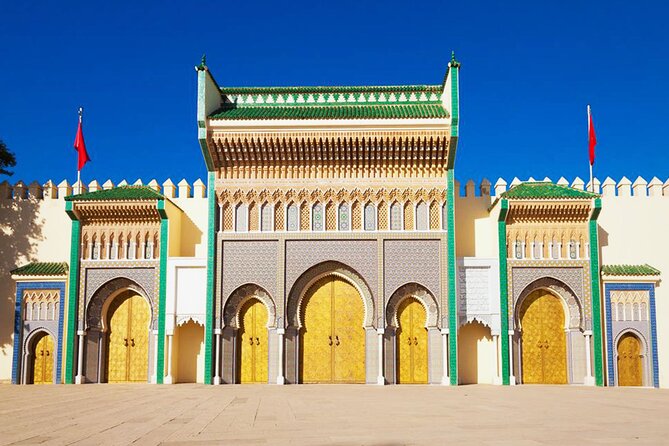
The Royal Palace sits in the Fes el-Jdid district and traces back to the 13th-century Marinid dynasty. Since it’s a functional royal residence, you won’t tour the interior. But you can still appreciate what matters: the palace’s grand exterior, including iconic golden bronze gates decorated with intricate zellij tilework and traditional materials like carved cedar wood and stucco detailing.
This is a smart first stop. You’re setting visual expectations for what Moroccan craftsmanship looks like—before you head into the medina’s tighter, more human-scale spaces. It’s also a low-pressure moment, so if you arrive with jet lag or just want to ease in, you’re not thrown into an intense schedule right away.
Mellah of Fez: the oldest Jewish quarter and its layered stories
Next comes the Mellah, Fez’s oldest Jewish quarter, dating to the 15th century under the Marinid dynasty. This neighborhood formed near the Royal Palace area, and over time it became a key hub for the Jewish community in trade and crafts.
You’ll hear about the architectural contrast too: multi-story homes with outward-facing wooden balconies beside more traditional Islamic design elements. The stop also points you toward specific sites such as the 17th-century Ibn Danan Synagogue and the Jewish Cemetery, including tombs facing Jerusalem. That level of detail helps you understand this wasn’t just a “historic neighborhood,” but part of Morocco’s long-running story of community life and change.
A practical thing to know: the Mellah today is quieter in feel than some of Fez el-Bali’s busiest lanes. That makes it easier to focus, take photos, and ask questions without constantly competing with crowds—useful if you care about context more than speed.
Bab Boujloud (Blue Gate): a photogenic entry point into UNESCO Fez el-Bali
Bab Boujloud is Fez’s iconic western entrance to the UNESCO-listed Fes el-Bali. Built in 1913 under the Alaouite dynasty, it’s visually memorable for its cobalt-blue zellij tiles on the outside and a green interior theme linked with Islam. You’ll also notice the geometric patterns and the triple horseshoe arches.
Why start here? Because the gate acts like a visual threshold. One minute you’re thinking architecture and dates; the next, you’re walking into the medina’s day-to-day movement and craft economy. It’s a natural moment to reset expectations: your guide can explain what you’re about to see and how not to lose time.
If you like photography, this is also where you’ll likely get the cleanest “framing” shots—because the gate gives you symmetry and strong color before the medina’s smaller, busier angles take over.
Bou Inania Medersa: Islamic art built for study and worship
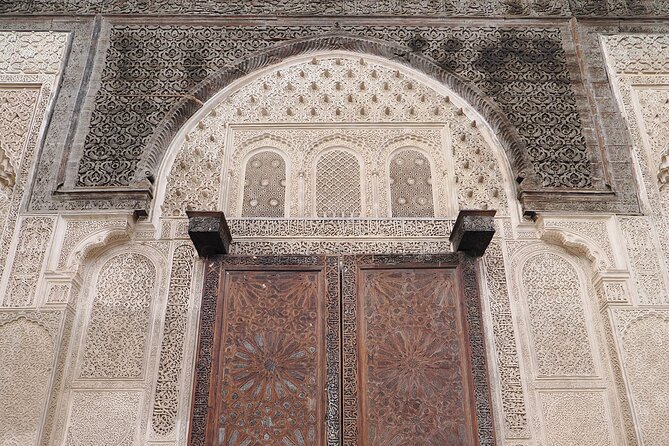
Bou Inania Medersa is a 14th-century Marinid-era theological college (1351–1356). It’s also one of the few religious sites open to non-Muslims, which makes it a standout if you’re visiting with mixed groups.
What makes the stop worth your time is how the space connects learning and prayer. You’ll see zellij mosaics, carved cedar wood, stucco arabesques, and Quranic calligraphy—plus the courtyard centerpiece with a marble ablution fountain. The complex includes a green-tiled minaret and a prayer hall with a gold-leaf mihrab.
This is one of the places where a guide really improves your visit. Without context, it’s easy to treat it as beautiful decoration. With context, you start noticing how the design supports education—how the courtyard works, how the prayer hall directs attention, and how craftsmanship is tied to scholarship.
You can also read our reviews of more private tours in Fez

Museo Nejjarine: from caravanserai to woodcraft museum views
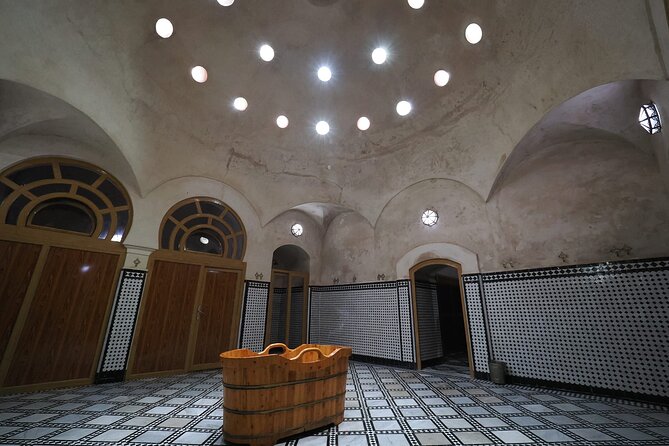
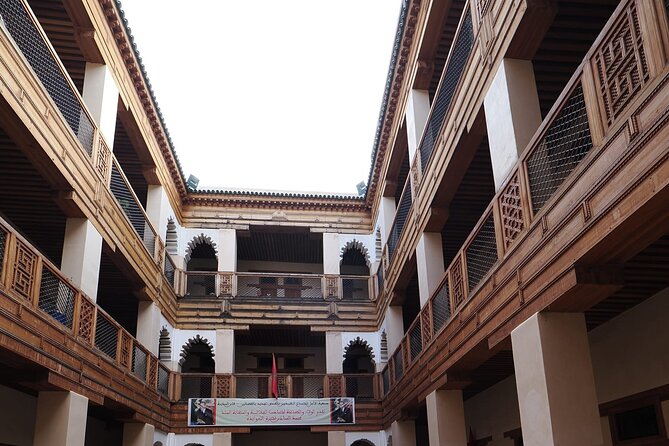
Museo Nejjarine occupies a restored 18th-century funduq, a caravanserai that once hosted traveling merchants. After restoration work in 1998, it shifted into a museum focused on Morocco’s woodcraft heritage.
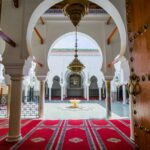
You’ll see exhibits of traditional tools, furniture, and even musical instruments. The building itself does the storytelling: an Andalusian-style courtyard with carved cedar wood, zellij mosaics, and a marble fountain. There’s also a rooftop terrace with panoramic medina views, which is a good break point if the walking has you tired.
One reason I like this stop for first-time visitors: it connects Fez’s “monument” side with its working-skill side. You stop thinking only about schools and palaces, and you start seeing how craft and trade supported the city’s long-term life.
Al-Qarawiyyin Mosque and University: a living center of learning
Al-Qarawiyyin (Karaouine) is one of the most historically significant places in Fez. Founded in 859 CE by Fatima al-Fihri, it’s recognized by UNESCO and Guinness World Records as the oldest existing degree-granting university globally.
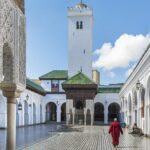
You’ll also get a sense of what that scholarship included: theology, law, astronomy, and linguistics. The complex’s architecture matters here, too—there’s a large courtyard, a hypostyle prayer hall, ornate stucco, carved cedar wood, and a green-tiled minaret. There’s also an attached ancient library with priceless manuscripts, including 9th-century Qurans.
This stop is brief by design (about 15 minutes), but it’s powerful. A guide helps you notice what to look for quickly and how to respect the fact that this is still a functioning mosque and university. If you only have a limited amount of time in Fez el-Bali, I think this is one of the best “impact per minute” sites on the route.
Chouara Tannery: medieval dyeing technique plus the smell reality
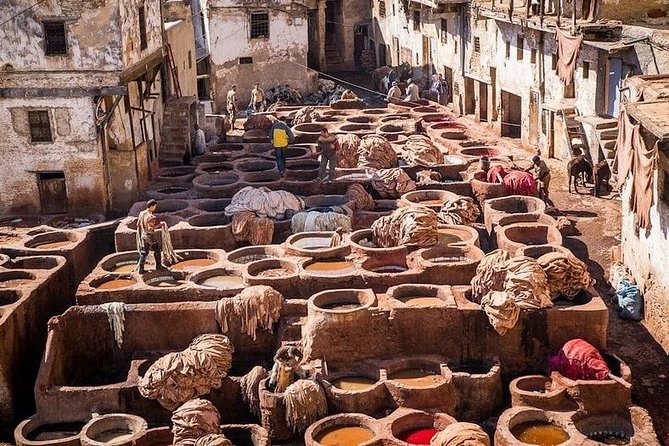
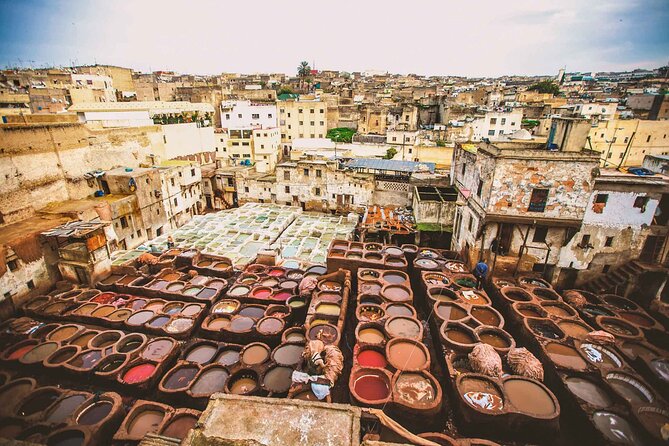
Then you get to the Chouara Tannery, one of the oldest tanneries in the world, operating since the 11th-century Almoravid era. This is the kind of stop you remember because it’s visual, hands-on in concept, and very sensory in practice.
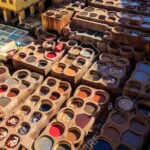
The dyeing process uses natural dyes—saffron for yellow, poppy for red, and indigo for blue—and older methods are part of the tradition, including pigeon-dung softening. From surrounding terraces, the honeycombed pits create a multicolored mosaic that looks like it belongs in an art book.
Now the practical side: it smells. The experience commonly includes guides offering mint sprigs, which helps you manage the odor while you take in the colors. Plan for that and don’t treat it like a quick photo stop. If you enjoy textures, process, and “how things get made,” you’ll love this.
How private pacing helps you avoid medina missteps
One of the biggest hidden values of a private tour is time-saving. In Fez, a small detour can become an hour. With a guide, you’re not just getting explanations—you’re getting routing decisions.
This tour’s structure also supports flexibility. Some guides (like Hassan, Rachid, and Kamal) have been praised for adjusting the itinerary toward what you want—like spending more time on photography or finding craft workshops rather than forcing a fixed sequence. That matters if you care about artisan culture or if your interests are specific and you don’t want to feel rushed.
Price and value: why $30 per person can make sense here
At $30 per person, you’re paying for a local guide, a private walking experience, and built-in time at major sites. You’re not just hiring someone to point at buildings—you’re paying for interpretation in a place where getting your bearings takes real effort.
Entrance fees vary. Some stops show admission included (like the Mellah, Bou Inania Medersa, and Museo Nejjarine), and others are listed as free (like al-Qarawiyyin and the Chouara Tannery). The Royal Palace exterior stop also notes that admission isn’t included, since the complex is closed to the public. So you should treat this as a mix: part included, part not—depending on the site.
Bottom line: if you’d otherwise spend time trying to plan a route and figure out what’s worth your limited hours, this can be a good bargain—especially because it’s private.
What to wear, bring, and plan for (so the 5–6 hours feel good)
This is a walking tour through the medina, and it’s listed for moderate physical fitness. That means you should come ready for uneven surfaces and lots of movement.
Plan for:
- Comfortable shoes (non-negotiable in a medina)
- Weather-appropriate clothing, since it operates in all weather
- Time to pause for photos, especially at Bab Boujloud and the tannery viewpoints
Food and drinks are not included, so schedule a meal on your own before or after. If you’re the type who gets hungry mid-walk, you might want to eat something light first so you can focus on the sites during the main route.
Who this tour is best for
This is a strong fit if you:
- Want a guided introduction to Fez el-Bali with a clear route
- Care about architecture and craftsmanship (palace gates, woodcraft, medersas, and the tannery)
- Like photography and want help reaching the right angles
- Appreciate learning from a local who can tailor pacing and interests
It may be less ideal if you have limited mobility or a low tolerance for long walks, since the tour is built around wandering on foot through the medina.
Should you book this private walking tour?
I’d book it if you want Fez to make sense quickly. The combination of major UNESCO-linked education sites, the Mellah’s specific landmarks, and working-craft stops like Museo Nejjarine and the Chouara Tannery gives you a balanced picture of how Fez worked in the past and still works today.
Skip it only if you hate walking or you already know your way through the medina and just want a self-guided monument list. Otherwise, paying for a private local guide is one of the smartest ways to get real value out of a short stay.
FAQ
How long is the 5-Hour Private Walking Tour of the Medina in Fez?
The tour is listed as about 5 hours, and the experience overview and itinerary describe it as approximately 6 hours.
Is this a private tour?
Yes. It’s a private tour/activity, and only your group participates.
How much does the tour cost?
The price is $30.00 per person.
Is pickup offered?
Pickup is offered.
Are entrance fees included?
Entrance fees are not listed as universally included. Some stops specify admission tickets included, while others are listed as free, so it depends on which sites you enter.
What level of fitness do I need?
You should have a moderate physical fitness level.
Does the tour run in all weather?
Yes, it operates in all weather conditions. You should dress appropriately.
Can I cancel and get a full refund?
You can cancel for free, and you must cancel at least 24 hours in advance for a full refund.
Are service animals allowed?
Service animals are allowed.
Can the tour include children?
Children must be accompanied by an adult.