REVIEW · MARRAKECH
4- Day Imperial Cities Cultural & Nature Exploration
Book on Viator →Operated by Marrakech Sweet Travel · Bookable on Viator
Big Morocco in four days needs good timing. This tour strings together the Imperial Cities of Morocco with guided walking-and-driving visits, plus the kind of scheduling that keeps you moving without burning a whole day on logistics.
I really like the medina-focused sightseeing—you get real orientation in Marrakech’s old lanes and then do it again in Fes, where the scale can be intimidating. I also like the practical comfort: pickup from your hotel, 4-star hotels in Casablanca and Fez, and dinners included so you’re not hunting for food after long days.
One possible drawback: the pace is busy, and access to religious sites can be restricted for non-Muslims, so expect some outside views rather than full interior visits at certain mosques.
In This Review
- Key Highlights You’ll Feel Right Away
- From Marrakech to Fes: The Smart Way to Cover Imperial Morocco
- Marrakech’s Best First Day: Majorelle Garden and the Old-City Run
- The sights that matter most on the Marrakech medina route
- A quick Marrakech practicality tip
- Casablanca at Night: The Included Dinner Makes It Feel Easier
- Hassan II Mosque: what you should expect
- Why the “Casablanca first” approach works
- Rabat + Meknes in One Day: Palaces, Towers, and Imperial Gates
- The Meknes portion: where the imperial style shows up
- Consideration: lunch is on you
- Fes on Foot: Gates, Medersas, and the Qarawiyyin Area
- Bou Inania Madrasa and the medina “map”
- Zaouia of Moulay Idriss II and the medina’s cultural rhythm
- Blue Gate and Fez el-Jdid outside views
- Fes tip that will save your sanity
- The Final Transfer Back to Marrakech: A Scenic Payoff
- Price and Value: What You’re Really Paying For
- Who Should Book This Tour (and Who Might Not)
- Should You Book This 4-Day Imperial Cities Tour?
- FAQ
- What cities are included on this tour?
- How long is the tour?
- Where does the tour start and end?
- Are hotels included?
- What meals are included?
- Is the tour private?
- Are admission tickets included?
- Can I cancel for a full refund?
Key Highlights You’ll Feel Right Away
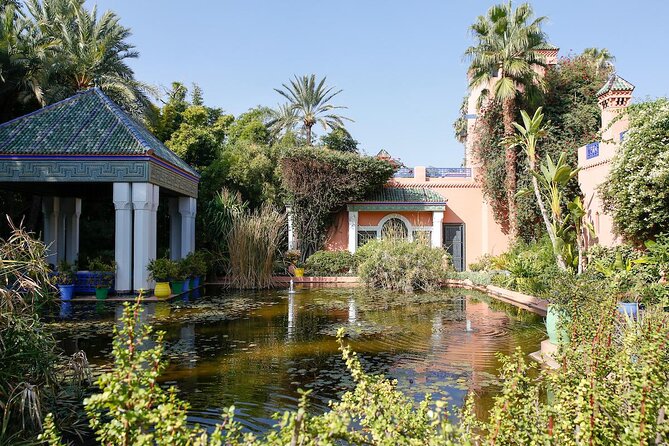
- Majorelle Garden + the Yves Saint Laurent Museum as your Marrakech opener, with admission included.
- Guided medina time in Marrakech that sets you up for better wandering later.
- One dedicated Casablanca evening with dinner at your hotel, then a rest before the next leg.
- Rabat + Meknes as a single day with palace areas, fortifications, panoramic viewpoints, and imperial gates.
- Fez sightseeing by walking plus driving, including major sights around the old city gates and medersas.
- Private tour format for just your group, so you can move at your preferred pace.
From Marrakech to Fes: The Smart Way to Cover Imperial Morocco
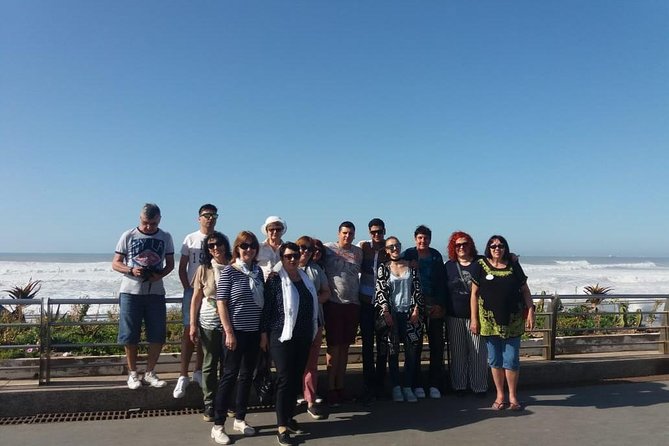
If you’re coming to Morocco for its big-city history, this route is built for efficiency. You start in Marrakech, then work your way through Casablanca and Rabat, branch into Meknes, and land in Fes for the deepest old-city feel. Even with lots of driving, the day structure keeps you from feeling like you’re stuck in a car all day.
The value isn’t just that you visit many places. It’s that you get guided context in the moments that matter most—when you’re looking at gates, palaces, tombs, and medersas and trying to understand what you’re seeing. In places like Fes, that helps you stop feeling lost and start noticing patterns.
This tour is also realistic about time. You’ll have set sightseeing blocks, meal guidance (like lunch timing around 1:00pm), and hotel check-in targets (often aiming for the evening). That rhythm is a big deal if you want Morocco without the constant question of what happens next.
You can also read our reviews of more tours and experiences in Marrakech.



Marrakech’s Best First Day: Majorelle Garden and the Old-City Run
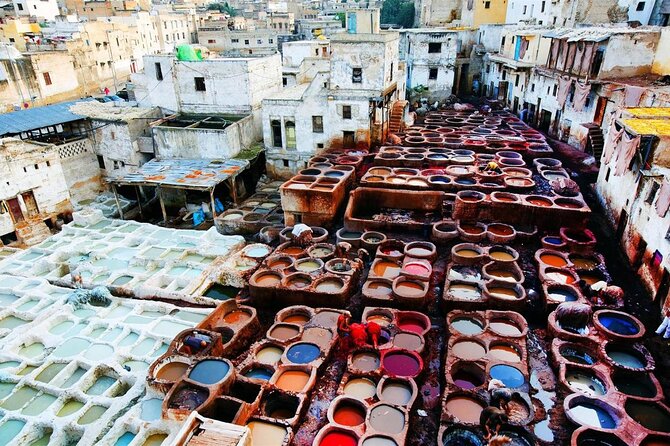
Your Marrakech day is designed like a two-stage warm-up. You begin with Jardin Majorelle, which is a perfect “first visual” in a city full of sensory overload. You’ll also see the Yves Saint Laurent Museum there, and the itinerary includes admission—so you can spend your time inside rather than figuring out tickets on the fly.
After that, your sightseeing shifts into the medina and the surrounding historic highlights. You’re not just checking off names. You’re getting a guided route through the places that explain how Marrakesh grew into a walled power center—citadels, palaces, tombs, and souks all in one arc.
The sights that matter most on the Marrakech medina route
This is the kind of day where you’ll see how Marrakesh’s beauty and restrictions work together.
- Jemaa el-Fnaa area sets the stage for the city’s public life. Even when you don’t hang out in the square for long, you’ll understand why it’s famous.
- Kutubiyya Mosque: one doorway on the east wall is often open so you can peek toward the prayer hall, while most interior access is off-limits for non-Muslims. You’ll still get architectural context without expecting to go in.
- Dar el-Makhzen and El Badi Palace: you get to appreciate what you can from the outside, and the plan includes viewpoints from the ramparts at El Badi Palace.
- Saadian Tombs: these are a key historic necropolis stop. It’s one of those places that makes the story feel physical.
- Palais Bahia: a classic palace stop for understanding Marrakesh’s courtly craft.
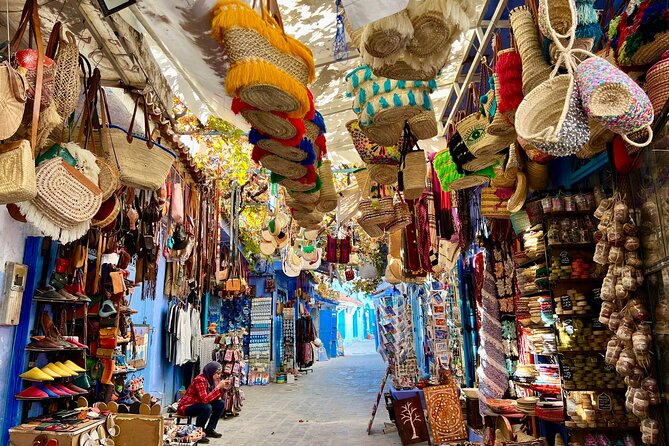
- Souk Semarin and the spice-souk style markets near Bab Mellah: this is where the medina becomes practical. You’ll see enough to understand the layout logic of markets—what’s nearby, what tends to cluster, and why some lanes are more trade-focused.
A quick Marrakech practicality tip
Wear comfortable shoes and expect small changes in pace. This route includes walking and driving, and some stops run on “best vantage available” rather than strict inside access. If you want photos, build in a little patience. The best angles often mean stepping slightly aside, waiting for foot traffic, and taking your time.
Casablanca at Night: The Included Dinner Makes It Feel Easier
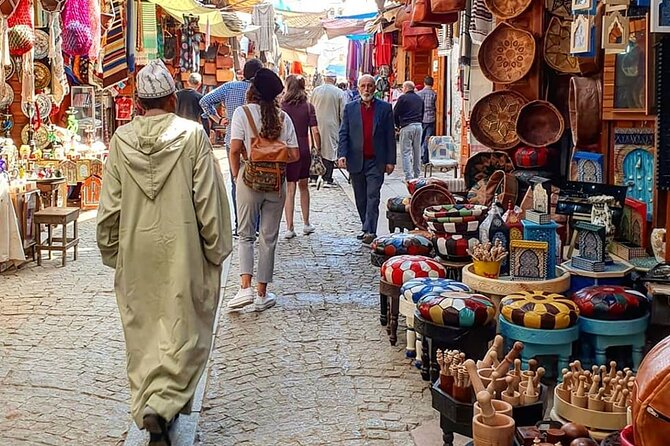
Once your Marrakech sightseeing wraps, the tour drives you to Casablanca and targets arrival at your hotel around 8:00pm. That timing matters because it keeps the first Casablanca night from turning into a late-night scramble.
Dinner is included at the hotel around 9:00pm. I like this setup because Morocco can be great for food but not always great for decision-making after a full day. Having the dinner handled means you can focus on recovery and sleep instead of debating where to go.


Hassan II Mosque: what you should expect
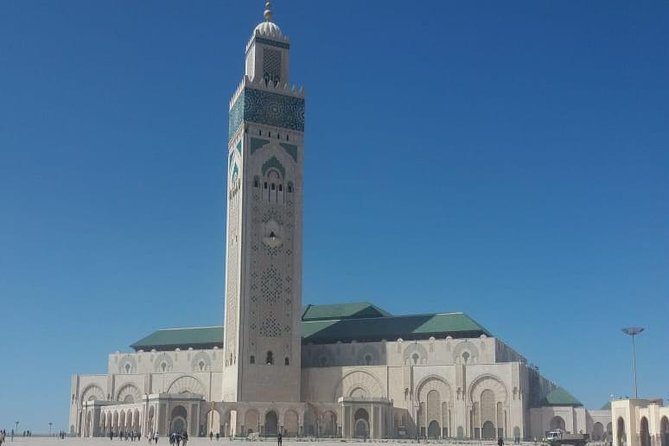
On the next day’s Casablanca segment, you’ll visit Hassan II Mosque area as part of the walking-and-driving city coverage. The itinerary also explicitly notes that some mosque interiors aren’t open to non-Muslims, so don’t plan your expectations around entering. Even if you don’t go inside, the exterior presence and the overall city layout are the point here.
Why the “Casablanca first” approach works
Casablanca is easy to think of as just a modern port city, but the way this tour schedules it helps. You get a shot of the city’s major landmarks early in the trip, then you move into older, imperial-focused areas afterward. It creates a sense of Morocco shifting gears—from modern energy to historical depth.
Rabat + Meknes in One Day: Palaces, Towers, and Imperial Gates
Day two is where the trip earns its “imperial cities” reputation. You start with Casablanca and Rabat guided touring, then continue the broader historic theme as you cross into Meknes.
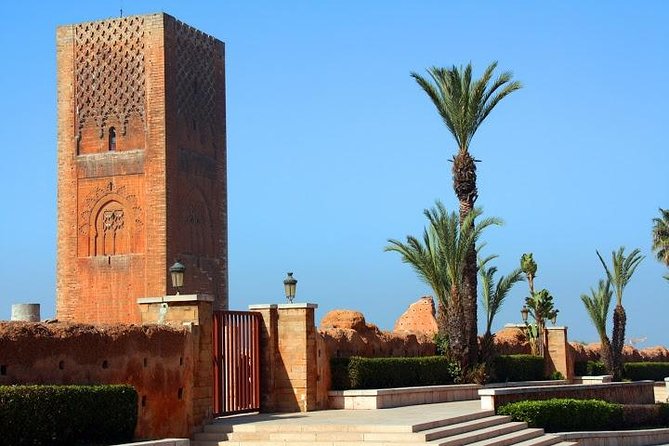
In Rabat, you focus on political and coastal-panoramic Morocco. The plan includes the Royal Palace (Dar el-Makhzen) area, plus Kasbah of Oudayas with a panoramic view over the Bouregreg estuary. You’ll also visit the Mausoleum Mohamed V, and then continue toward the Unfinished Mosque Hassan Tower.
That Unfinished Mosque stop is a good example of why guided context helps. It turns a “random structure you pass” into a story point about ambition and history.
The Meknes portion: where the imperial style shows up
After Rabat, you go to Meknes with a guided imperial sweep. You’ll start with walls and major gates—especially places like Bab el Mansur. You’ll also visit Agdal pond (a reminder that power wasn’t just about buildings; it was also about water systems).
The day ends with the mausoleum of Moulay-Ismail, described in the itinerary as beautifully ornamented with materials like stucco, stone, and fine porcelain. This is the moment where Morocco’s “craft” becomes part of the sightseeing, not just the architecture.
Consideration: lunch is on you
Lunch isn’t included today. The itinerary suggests lunch around 12:00pm in Casablanca and then again on later travel days. If you’re the type who likes choosing restaurants, plan to use that time to reset before the next guided stretch. If you don’t like choosing, pick something simple and nearby to save energy.
Fes on Foot: Gates, Medersas, and the Qarawiyyin Area
This is the heart of the trip. Fes can be overwhelming if you’re roaming without a plan, but the tour hits it with the right mix: guided walking and driving, plus targeted stops around the medina’s most important institutions and entrances.
You start the Fes day with pickup from your hotel and a 9:00am lobby meeting. The plan includes guidance to purchase lunch around 1:00pm, and you should be back at your hotel around 3:30pm. That early return gives you breathing room for the rest of the evening—exactly what you want after walking lots of narrow streets.
Bou Inania Madrasa and the medina “map”
One of the core stops is Bou Inania Medersa. This area isn’t only about admiring architecture. It helps you understand how neighborhoods connect—especially around the former Jewish quarter area (Mellah) and the economic and spiritual heart references built into the route.
You’ll also see:
- Rue Bou Ksissat (jewelry shops in the area today)
- Kasbah Cherarda Fortress and nearby cemeteries/mausoleum
- multiple gates such as Bab Ftouh and Grand Mechouar Gate
- Al-Attarine Madrasa, including a view from its terrace toward the Qarawiyyin Mosque courtyard
- Musee des Armes, housed in a 16th-century fortress
That mix matters. Medersas teach you Morocco’s education-and-religion link. Gates teach you movement and defense. Fortresses and museums teach you how the city protected itself and what it preserved.
Zaouia of Moulay Idriss II and the medina’s cultural rhythm
You also visit the Zaouia of Moulay Idriss II, a shrine tied to the founder of Fes. The itinerary notes that doors are often open for tourists to peek into the prayer hall, while the rest is not accessible for non-Muslims. It’s a good reminder to keep your expectations flexible on worship spaces.
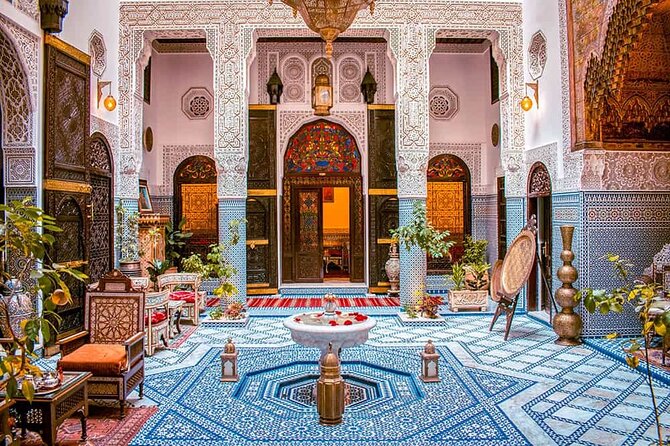
Then the tour includes Funduq al-Najjariyyin (Museo Nejjarine), which focuses on wooden arts. This is an excellent change of pace from stone gates and madrasa terraces. You get to notice material culture, not only monument size.
Blue Gate and Fez el-Jdid outside views
Later you’ll pass Bab Bou Jeloud (the Blue Gate), then reach the Grand Mosque of Fez el-Jdid. The plan is outside-only unless you are Muslim, and it specifically mentions the necropolis of Abu Inan in that area. Finally, you finish with Marinid Tombs, which are positioned as city-view territory.
Fes tip that will save your sanity
Bring water and take breaks before you feel tired. The route is structured, but the medina itself doesn’t slow down just because you’re on a tour. By pacing your energy, you’ll enjoy the fine details—doors, tilework, inscriptions—without rushing.
The Final Transfer Back to Marrakech: A Scenic Payoff

On day four, you’ll have breakfast and check out. The tour then schedules a return drive to Marrakech with a target arrival around 5:00pm, and it suggests lunch at 1:00pm in a restaurant of your choice.
This final leg is long enough that you’ll want to treat it as recovery time, not “one more sightseeing day.” If you’re traveling with someone who loves photos, the drive itself is part of the experience, but the real win is arriving back with enough daylight to decompress.
Price and Value: What You’re Really Paying For

At $610.84 per person, the main question is whether you’re getting more than transportation and checklists. In this case, you are.
You’re paying for:
- Hotel comfort: 4-star accommodations for 1 night in Casablanca and 2 nights in Fez.
- Meal coverage: 3 breakfasts and 3 dinners. That’s often where tours quietly save you money and time.
- Guiding where it counts: Fez has a local tour guide included, and you get guided sightseeing in the other major cities as well.
- Admission ticket inclusion in key stops: the itinerary explicitly includes admission tickets for Jardin Majorelle, and multiple Fes and Marrakech segments list admission as included.
- Private tour format: it’s only your group.
Lunch and drinks are not included, so budget for that. Still, when meals and a couple of admission-heavy stops are included, the overall feel is good value for a tight schedule that covers a lot of geography.
Also, this tour includes pickup and drop-off from your hotel, and the itinerary repeatedly targets being at your hotel in the evening. That’s not glamorous, but it’s exactly how you avoid wasting a trip.
Who Should Book This Tour (and Who Might Not)
You should book if you want an organized introduction to Morocco’s Imperial Cities without doing the route-planning homework yourself. It’s especially good for first-timers who want guided orientation in Marrakech and then a structured way to see Fes.
You might reconsider if you love long, unstructured wandering in just one city. This itinerary gives you less “solo time” in each place than a slower trip would. It’s also not built for deep inside access to every religious site, since the plan notes that some interiors are closed to non-Muslims.
If you like good pacing more than nonstop “rush,” you’ll probably enjoy the balance. The tour includes downtime after sightseeing, particularly evenings in Casablanca and your return time in Fes.
Should You Book This 4-Day Imperial Cities Tour?
I’d book it if your goal is Morocco’s big historical picture—Marrakech, Casablanca, Rabat, Meknes, and Fes—without leaving you stuck on logistics. The included hotels, the dinner coverage, and the fact that Fez is handled with a local guide are the big reasons this works.
If you do book, plan for outside views at certain mosques and be ready for a busy rhythm. Pack comfortable shoes, expect lunch and drinks to be on you, and use the guided time to learn how the cities connect.
If that sounds like your style, this tour is a solid way to get the most out of a limited number of days.
FAQ
What cities are included on this tour?
You’ll visit Marrakech, Casablanca, Rabat, Meknes, and Fes.
How long is the tour?
It’s listed as a 4-day experience, with approximately 3 days 10 hours of activity time.
Where does the tour start and end?
It starts in Marrakesh, Morocco and ends back at the meeting point.
Are hotels included?
Yes. You get 1 night accommodation in Casablanca (4 stars) and 2 nights accommodation in Fez (4 stars).
What meals are included?
The tour includes 3 breakfasts and 3 dinners. Lunch and drinks are not included.
Is the tour private?
Yes, it’s a private tour/activity, and only your group will participate.
Are admission tickets included?
Some stops include admission tickets, including Jardin Majorelle and segments in Marrakech and Fez where admission is listed as included.
Can I cancel for a full refund?
Yes. You can cancel up to 24 hours in advance for a full refund. If you cancel less than 24 hours before the experience’s start time, no refund is provided.