REVIEW · MARRAKECH
3 Days Tour From Marrakech to Merzouga Desert
Book on Viator →Operated by Morocco Tours · Bookable on Viator
Three days can cover a lot. You start with the High Atlas climb, pass the UNESCO stars of Ait Ben Haddou, and end sleeping under desert skies near Merzouga. This is the kind of trip that trades extra hanging out for big Morocco hits: kasbahs, mountain valleys, and those sand dunes you’ve seen in photos.
I especially like two things. First, you get a real UNESCO stop at Ait Ben Haddou with time to walk up and see it dominating the dried riverbed valley. Second, the trip builds in a full overnight in the Dades area and then a desert camp night with camel riding and sand-boarding plus dinner and breakfast.
The main drawback is the pace. You’ll be on the road for long stretches, and lunches and drinks aren’t included—so you’ll need to plan meals and stay flexible about timing.
In This Review
- Key things to know before you go
- Setting off from Marrakech: what the 7:30 start really means
- Tizi n’Tichka pass and Ait Ben Haddou: UNESCO without the rush
- Ouarzazate, Skoura oasis, and the Hollywood of Africa vibe
- Dades Gorge at golden hour: the hotel night that makes the trip feel complete
- Todra Gorge to Tinghir oasis: canyon views plus a palm-grove walk
- Rissani and the dates market: a night that connects desert routes to real life
- Into Merzouga: pool break, camel caravan at sunset, and sand-boarding
- Day 3 sunrise over Erg Chebbi: early trek, breakfast in the lodge, and time to reset
- Ouarzazate return: Kasbah Taourirte and the Cinema Museum option
- Price and what $149 buys you (and what it doesn’t)
- Who should book this Marrakech to Merzouga tour?
- Should you book this 3-day Marrakech to Merzouga desert tour?
- FAQ
- What time does the tour start from Marrakech?
- How long is the 3-day tour?
- Where does the tour start and where does it end?
- What’s included in the price?
- What’s not included?
- Is sand-boarding included in the desert camp activities?
- How big is the group?
- Is free cancellation available?
- Is the tour accessible for most people?
Key things to know before you go
- Ait Ben Haddou UNESCO time with a guided walk and free entry ticket included
- Two overnight stays: one in the Dades Valley hotel area, one in a Merzouga desert camp (dinner + breakfast included both nights)
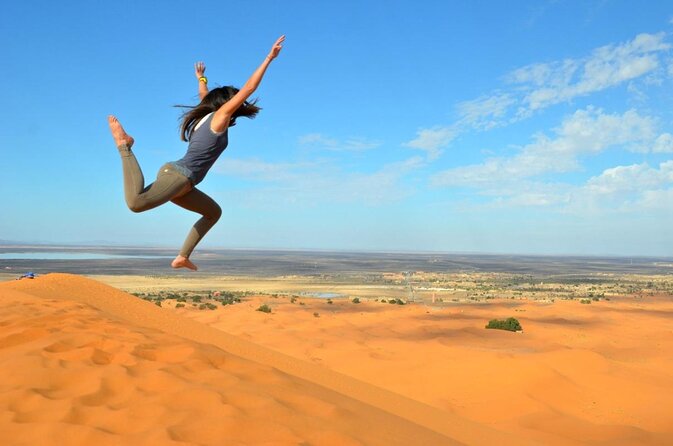
- Erg Chebbi camel and sand-boarding at sunset, then another camel trek at sunrise
- Max 20 people in the group, which keeps the van from feeling chaotic
- Long driving days with early starts (7:30 am departure) and lunches on you
- Stops include Film-Set Morocco in Ouarzazate, plus Kasbah Taourirte and an optional Cinema Museum visit
Setting off from Marrakech: what the 7:30 start really means
This tour runs on an early schedule. You depart at 7:30 am from the Marrakech start point (listed as Menara Airport). That’s helpful because the High Atlas drive feels best when you aren’t fighting fatigue and missed daylight.
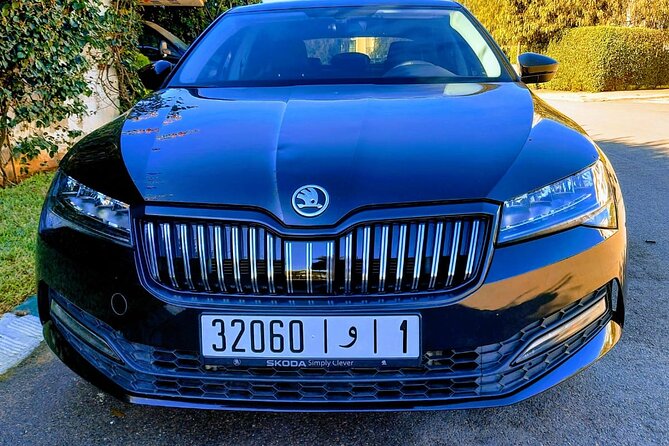
You’ll ride in an air-conditioned vehicle, and the group stays capped at 20 travelers. That matters because this itinerary has several timed stops. A small group makes it easier to regroup, ask questions, and actually use the time you’re paying for.
One more practical note: the tour ends back in Marrakech, finishing around 19:00 on Day 3. So even though it’s described as a one-way transfer toward Merzouga in the overview, your full trip is a round trip back to the city.
A few more Marrakech tours and experiences worth a look
Tizi n’Tichka pass and Ait Ben Haddou: UNESCO without the rush
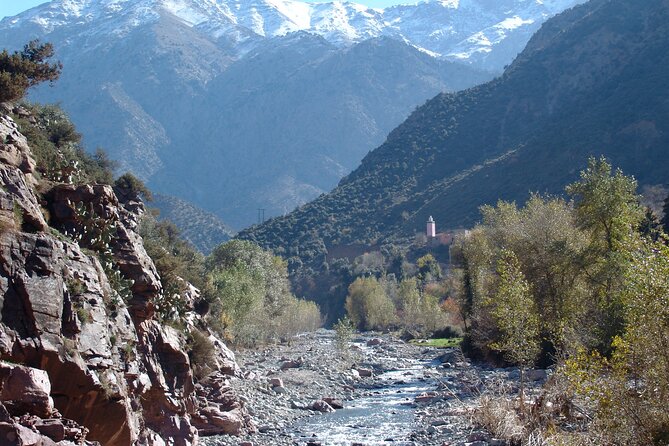
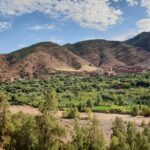
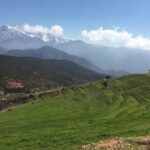
Day 1 starts with the Tizi n’Tichka Pass at about 2,260 meters. This is where Morocco starts feeling big and dramatic fast: steep climbs, sharp turns, and Berber hamlets tucked into the mountain slopes. You’ll get a chance to stop along the way, soak up the views, and take quick photo breaks.
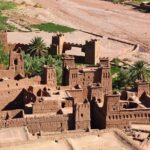
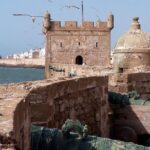
Then you hit Kasbah Ait Ben Haddou, a UNESCO site. What I like here is the structure: you don’t just look from afar—you take a guided walk across the dried river area and up toward the top where the kasbah dominates the hill. The site is also tied to filmmaking history, including Lawrence of Arabia and Jesus of Nazareth, so it’s easy to connect what you see with what you’ve watched.
A small optional add-on is mentioned for the kasbah: an optional guide tour at Ait Ben Haddou (maximum €3 per person). If you care about architecture details and how the place functioned beyond movie sets, it can be a worthwhile supplement. If you’re happy with the built-in guide and the self-guided walking, skip it and spend your time just absorbing the site.
Tip for your comfort: plan for uneven ground and stairs. This isn’t a flat “museum stroll.”
Ouarzazate, Skoura oasis, and the Hollywood of Africa vibe
After Ait Ben Haddou, you head toward Ouarzazate, often nicknamed the Hollywood of Africa. The stop includes time at Taourirt Kasbah and the Atlas Studios area. Even if you’re not a film buff, this part helps you see why the region gets used as a movie location: the terrain, the color, the stark forms—everything photographs well.
From there, the route crosses the Skoura Oasis, described as a lush stop with olive groves and fruit trees. It’s a nice emotional reset after the mountain and kasbah textures, and it’s also a reminder that Morocco isn’t only desert and stone—people farm and live here.
Depending on your travel month, you may or may not care about the short stop in El Kelaa M’gouna (Kelaa Magouna), known for the Rose Festival held during the first week of May. If you’re traveling near that time, it adds local flavor. If not, treat it as a quick cultural waypoint.
You’ll finish the day in the Dades Valley area, with arrival in the late afternoon and an overnight at a hotel in Dades.
Dades Gorge at golden hour: the hotel night that makes the trip feel complete
The drive through the Dades area is part of why this tour works. You follow the Dades River on winding roads lined with fortified kasbahs, then reach the Dades Gorges viewpoint area. The itinerary frames this as a late-afternoon arrival, which is exactly when those canyon views start to look their best without you having to hike for hours.
Check-in happens at your hotel in Dades, and dinner is included. After a long Day 1, this is the right move. You’re not paying to find a restaurant or worrying about transportation. You eat, you rest, and you’re ready for an early start Day 2.
Practical expectation: this is not a resort-style luxury itinerary. It’s a classic sightseeing + desert format with a comfortable base. So bring patience for the schedule, and you’ll enjoy the rhythm more.
Todra Gorge to Tinghir oasis: canyon views plus a palm-grove walk
Day 2 begins with the scenic “Road of 1001 Kasbahs.” You’ll pass many fortified dwellings and have stops along the way to explore a few and learn about their past. The goal here isn’t to marathon every kasbah—your guide focuses on selected stops and viewpoints so you don’t waste time on places that don’t add much.
Next comes Gargantas del Todra (Todra Gorge). This is one of those canyon settings where the walls feel close and the light changes fast. You’ll have the chance to take it in and move at a comfortable pace.
In the afternoon you reach Tinghir, an oasis town with palm groves and date plantations. There’s time for a walk through the oasis. What I like about this stop is that it adds everyday life into the mix, not just dramatic rock formations. It also breaks up the long driving with something more human-scale.
Rissani and the dates market: a night that connects desert routes to real life
After Tinghir, you drive toward Rissani. It’s known for its dates market and as a historic starting point for commercial caravans crossing the Sahara toward Timbuktu. That’s more than trivia—it helps you understand why Merzouga matters. The desert wasn’t just a blank space on a map; it was a route.
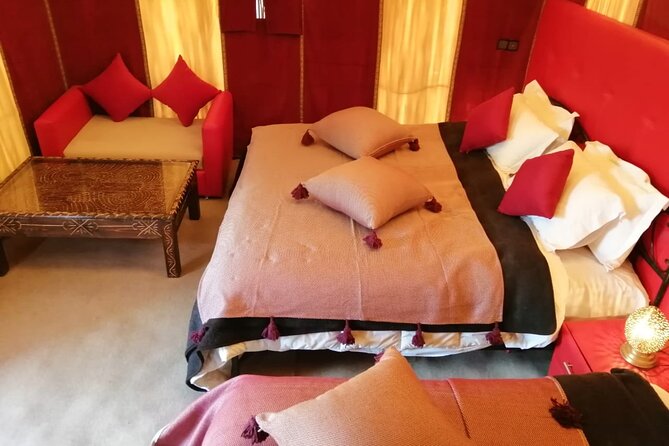
You arrive late afternoon and check into your hotel. Dinner is included and there’s a traditional Moroccan performance in the evening.
One consideration: if you’re looking for a quiet night with no show, this might not be your favorite part of the itinerary. But if you like music and local performance, it’s a nice culture anchor before the desert.
Into Merzouga: pool break, camel caravan at sunset, and sand-boarding
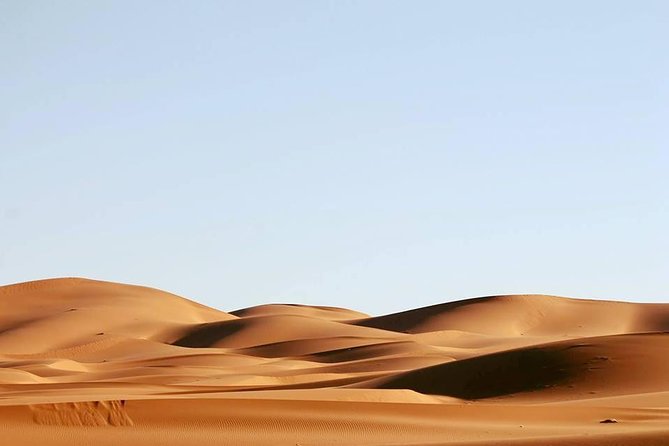
When you reach Merzouga, you’re at the edge of Erg Chebbi. The plan includes a cooling break—your itinerary notes a refreshing pool—before you head out at dusk.
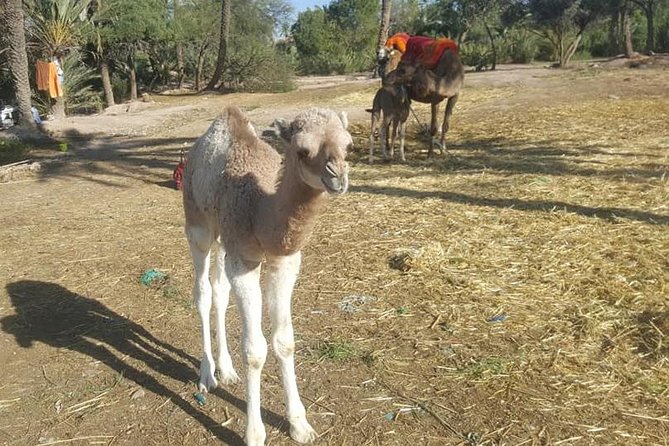
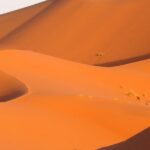
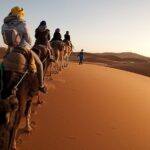
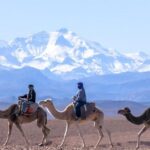
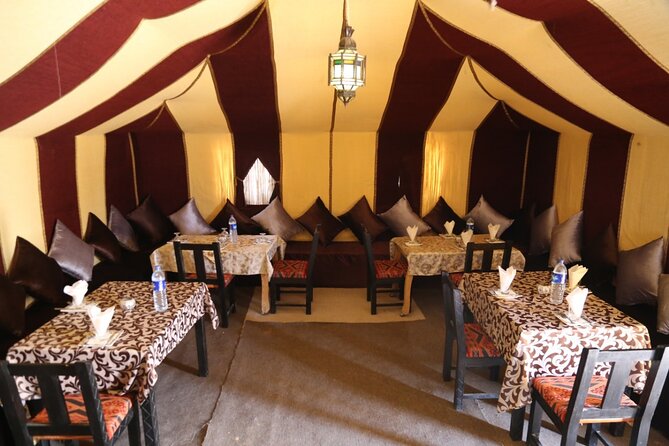
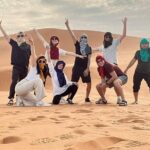
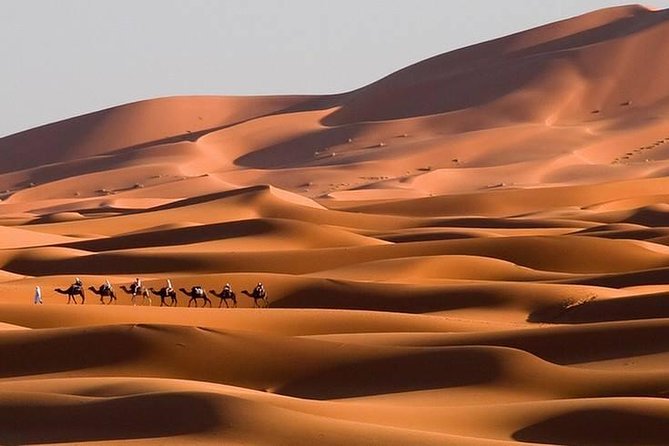
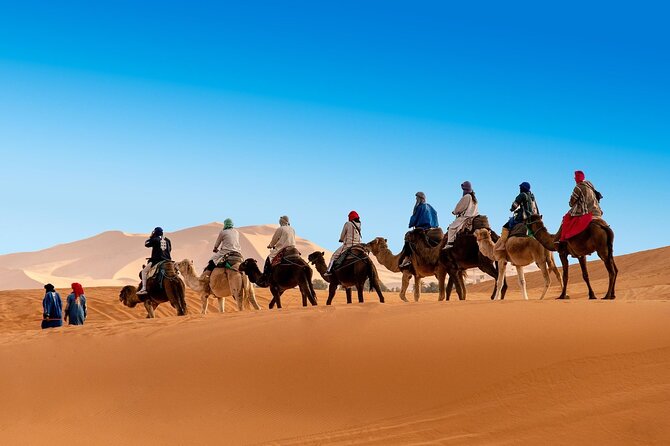
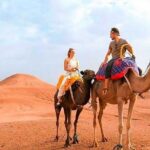
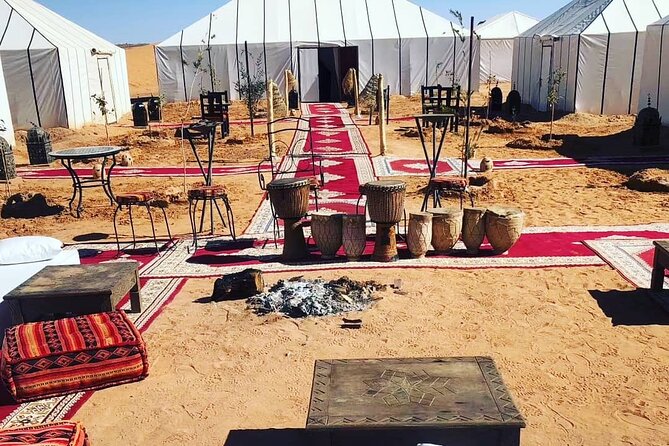
Then comes the heart of this tour: the camel caravan across color-changing dunes with the sunset setting behind them. You’ll arrive at your Sahara tent just before dark. Dinner is included at the desert camp, and you’ll fall asleep with that very specific desert soundscape—wind, silence, and the sense that you left the city rules behind.
Sand-boarding is also included. That’s not only fun; it’s one of the best ways to understand the dunes’ feel in motion—how the sand behaves, and how much effort it takes to climb back up after your first run.
Important practical tip: temperatures can shift fast once the sun goes down. The itinerary doesn’t spell out clothing layers, so bring what you need to stay comfortable for nighttime outdoors.
Day 3 sunrise over Erg Chebbi: early trek, breakfast in the lodge, and time to reset
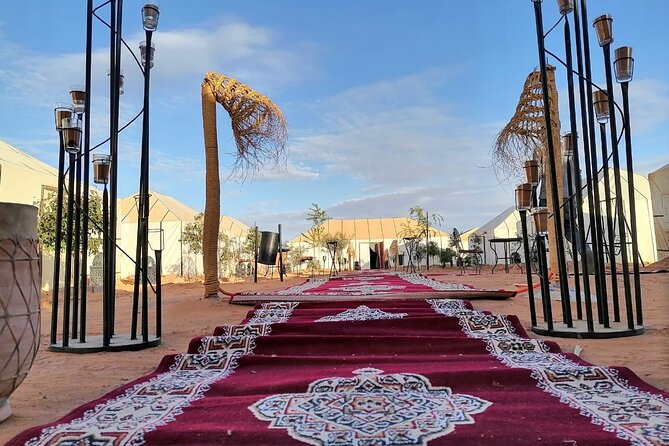
Day 3 starts with an early morning camel trek across the Erg Chebbi dunes. The goal is sunrise, when the sand turns warmer and the shadows stretch. This is the part many people remember most, because it feels less like a photo stop and more like a slow shift in the world.
After the trek, you return to the camp operator’s lodge for breakfast. The itinerary mentions you can shower and—if you have time—take a brief dip in the lodge pool. That’s a welcome comfort after a night in the tent.
Then you switch gears back to cultural sightseeing. The desert night is the climax, but the morning sets you up for a smoother return rather than rushing straight into another full day of travel while tired.
Ouarzazate return: Kasbah Taourirte and the Cinema Museum option
You head back toward Ouarzazate and visit Kasbah Taourirte. It’s one of those places where the structure and history connect with the region’s broader story. You also get free time for lunch.
If you want one more stop, the itinerary offers the Cinema Museum, located opposite Taourirt Kasbah. It’s described as a collection of old film sets, props, and cinematic equipment. If you enjoyed the Hollywood-of-Africa angle on Day 1, this museum is an easy match.
After lunch, you continue over the High Atlas Mountains back to Marrakech. The tour finishes back in Marrakech around 19:00.
Price and what $149 buys you (and what it doesn’t)
At $149 per person for a 3-day trip, the value comes from packing transportation, lodging, and key activities into one ticket. Here’s what’s included:
- Air-conditioned vehicle for long-distance travel
- 1 night in Dades with breakfast + dinner
- 1 night in a Merzouga desert camp with breakfast + dinner
- Camel ride and sand-boarding in the desert
- Admission tickets are listed as free for the main stops (including Ait Ben Haddou)
What’s not included is lunch and drinks. So your real cost depends on how you handle meals each day. If you budget for lunch in advance (and keep water handy), the total stays predictable. If you don’t, it’s easy for “just grab something” to add up quickly.
Also, this tour is commonly booked in advance (the listing shows an average booking time of 56 days). If you’re traveling during peak seasons, earlier booking often means better chance of getting your dates.
Cancellation is described as free up to 24 hours before the experience starts, which gives you some breathing room if plans shift.
Who should book this Marrakech to Merzouga tour?
This one is best for you if you want a clear itinerary with major highlights and you don’t mind a faster pace. It suits:
- First-time Morocco visitors who want Marrakech + Atlas Mountains + Sahara in one go
- People who like guided structure, especially at places like Ait Ben Haddou
- Anyone who wants the desert experience with camp dinner, camel rides, and sand-boarding without doing logistics on their own
It may feel like too much if you prefer slow travel, long museum sits, or lots of free time each day. Day 1 and Day 2 are packed, and the biggest “free time” moments are mostly short breaks rather than hours on your own.
Group size stays reasonable at up to 20, and guides are part of the product—names like Abdelkbir and Yassine show up in feedback. Expect friendly support and a focus on getting you to the right stops on time.
Should you book this 3-day Marrakech to Merzouga desert tour?
I’d book it if you want the classic Morocco storyline: mountain pass, UNESCO kasbah, canyon valleys, then Erg Chebbi at sunset and sunrise. The included meals and overnight stays make it feel more complete than the budget-only options that leave you hunting for dinner and taxis.
I’d think twice if you hate early starts, dislike being in a vehicle for long stretches, or want lunches and drinks handled for you automatically. In that case, you might feel more comfortable choosing a slower itinerary.
If you’re in the middle—curious, ready to move, and happy to trade some free time for iconic sights—this tour is a strong value way to reach the Sahara from Marrakech.
FAQ
What time does the tour start from Marrakech?
The start time is 7:30 am.
How long is the 3-day tour?
It’s listed as 3 days (approx.).
Where does the tour start and where does it end?
It starts at the Menara Airport, Marrakech meeting point and ends back at the same meeting point in Marrakech, finishing around 19:00 on Day 3.
What’s included in the price?
The price includes an air-conditioned vehicle, 1 night in Dades and 1 night at a desert camp (with breakfast and dinner), plus a camel ride and sand-boarding. Two breakfasts and two dinners are included.
What’s not included?
Lunch and drinks are not included.
Is sand-boarding included in the desert camp activities?
Yes. Camel Ride and Sand Boarding in Desert are included.
How big is the group?
The tour has a maximum of 20 travelers.
Is free cancellation available?
Yes. You can cancel up to 24 hours in advance for a full refund.
Is the tour accessible for most people?
It’s listed as most travelers can participate.