REVIEW · MARRAKECH
12 Days Tour to the Heart of Morocco
Book on Viator →Operated by Morocco Sahara Desert Travel · Bookable on Viator
Morocco can feel huge and chaotic. This 12-day route turns that sprawl into a clear line from Marrakech to the Sahara, then back to the Atlantic coast. I like the mix of guided city time and big-drive scenery, especially the Atlas Mountains and gorges. I also like that the trip keeps the group small, with a maximum of 8 people, so the schedule feels less like cattle herding and more like a plan you can actually enjoy.
The best part is how the “big-name” sights come with real context: Ait Benhaddou is UNESCO and has hosted major films, Fes is a living medina maze you walk with a local guide, and Erg Chebbi is the kind of desert night you remember. For guidance, the company’s feedback includes responsive operators and drivers such as Hamid (planning) and drivers like Khalid or Mostapha, which is a reassuring sign if you value smooth logistics.
One consideration: you’ll spend a lot of hours on the road. That’s normal for Morocco’s scale, but if you’re the type who hates early starts and long drives, plan to balance those days with slower evenings in each town.
In This Review
- Key highlights worth your attention
- Why this Marrakech-to-Sahara itinerary works so well
- Day 1: Airport pickup and an easy start in Marrakech
- Day 2: Marrakech Medina with an official guide, plus time to roam
- Day 3: High Atlas, Tizi-n-Tichka views, and Ait Benhaddou to Ouarzazate
- Day 4: Dades valley, Todra Gorges, and into Erg Chebbi dunes
- Day 5: Sunrise in the dunes, palm groves, and on to Fez
- Day 6: Fez Medina with a local guide, plus panoramas from Fes Jdid and the Merinid Tombs
- Day 7: Chefchaouen’s blue streets in the Rif Mountains
- Day 8: Tangier beach and Hercules Caves, then Asilah’s art and ocean views
- Day 9: Rabat’s landmarks and Casablanca’s Hassan II Mosque
- Day 10: El Jadida UNESCO stop and relaxed Essaouira on the Atlantic
- Day 11: Argan oil cooperative stop and back to Marrakech
- Day 12: Airport transfer, and what you’ll likely remember most
- Price and value: does $2,117.89 make sense?
- Who this tour fits best (and who should think twice)
- Should you book this 12-day Morocco tour from Marrakech?
- FAQ
- Where does the tour start and end?
- Is airport pickup included?
- Are breakfast and dinner included?
- Are food and drinks included during the trip?
- Do I get an overnight in the Sahara desert?
- Will there be guided tours in Marrakech and Fez?
- What are the main cities included on the route?
- How large is the group?
- Can I cancel for a full refund?
Key highlights worth your attention
- Small-group feel (max 8 travelers), which helps with pacing and making changes if needed.
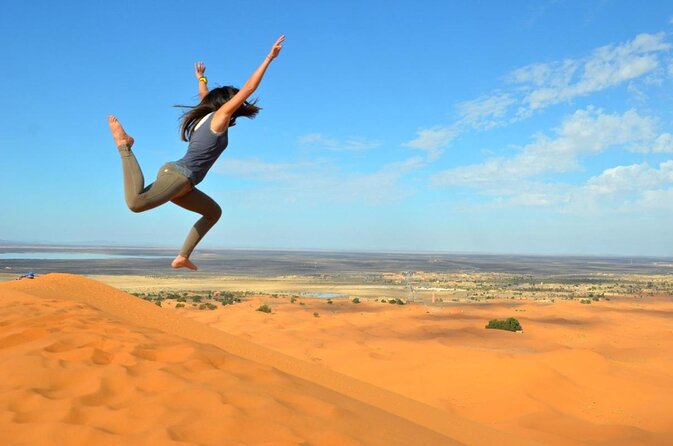
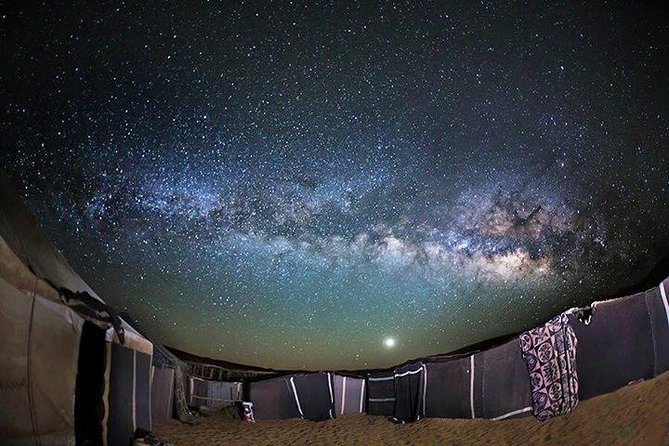
- Erg Chebbi desert night in a Berber camp, with a sunrise stop that’s treated as a must-do moment.
- Real guided time in Marrakech and Fes Medina, including major landmarks and major institutions like medersas and mosques.
- Atlas + gorge day trips, with Tizi-N-Tichka views and the dramatic Todra Gorges walk.
- Major “port city” contrast: Tangier/Asilah before Rabat/Casablanca, then Essaouira on the coast.
Why this Marrakech-to-Sahara itinerary works so well
This is the kind of Morocco trip that tries to hit the classics without turning every day into a rushed checklist. You start with Marrakech, then build northward through desert and imperial cities, then shift to the coast with Essaouira. That flow matters. It reduces backtracking and keeps the scenery changing enough that long drives feel like part of the journey instead of wasted time.
I also like how the trip gives you both guided and free time. Marrakech Medina is handled with a proper local guide, so you get the right landmarks and the street-level context. Later, you’re given breathing room to wander souks and squares on your own, so you can choose your pace instead of always following a guide.
Finally, the small group limit is the quiet quality boost. When you’re not with a huge crowd, pickup timing and route adjustments feel more human. That matches what shows up repeatedly in feedback: clear communication, easy access if something changes, and drivers who show up when they say they will.
You can also read our reviews of more tours and experiences in Marrakech.


Day 1: Airport pickup and an easy start in Marrakech
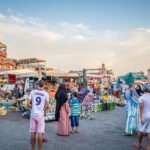
You’ll begin with a transfer from the Marrakech airport to your hotel or riad. The driver waits outside the airport exit holding a sign with your name. If you arrive in the morning or around midday, you’ll have time to do two of Marrakech’s best first-night activities: sit with the atmosphere at Jamaa-Lfna and take an early walk through the Marrakech souks.
This matters for jet lag. You’re not thrown straight into a full-day plan. You get a gentle on-ramp to the city, which helps you enjoy Marrakech later when the schedule gets busy.
Practical tip: if you land midday, use the time to get your bearings fast—especially around the main square and souk entrances. Then you’ll spend the next days walking with more confidence and less guesswork.
Day 2: Marrakech Medina with an official guide, plus time to roam
After breakfast, you’ll get a private guided tour of the Marrakech Medina starting around 09:00. The highlights listed are strong and varied: Koutoubia Tower, the Saadian tombs, the Bahia Palace, and the Majorelle Gardens. That’s a good mix of architecture, power, and culture, and it avoids the common problem of seeing only one type of place.
Lunch happens near Jamaa-Lfna at a local restaurant, then you get free time to wander. This is where I think you’ll get your best memories: strolling through the souks at your own speed, watching crafts happen, and picking up small things you can actually use back home.
Possible drawback: Marrakech is crowded, even when you do everything right. Wear shoes you can walk in all day, and keep your expectations realistic for getting around narrow lanes.
Day 3: High Atlas, Tizi-n-Tichka views, and Ait Benhaddou to Ouarzazate
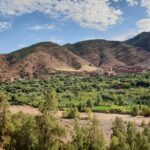
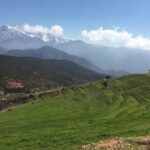
Today is about the drive, and in Morocco, that’s a feature, not a bug. You’ll leave Marrakech around 8:00, then travel toward Dades with scenic stops along the way. The route includes the High Atlas and the Tizi-n-Tichka pass, plus small Berber villages and long panoramic photo moments.
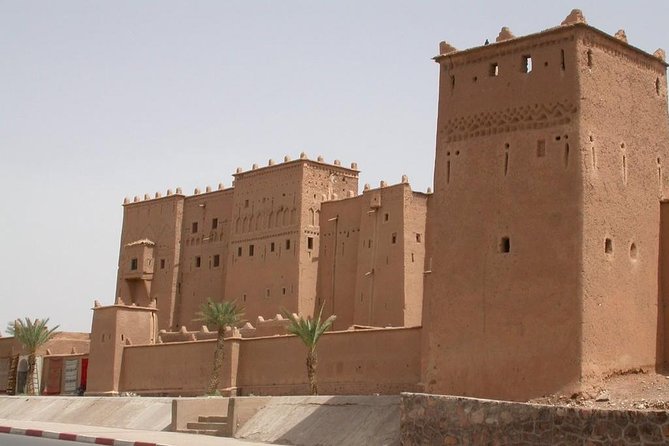
Then you hit the star: Kasbah Ait Benhaddou. It’s UNESCO-listed (not just a pretty ruin), and the itinerary notes major film shoots there, including movies like Gladiator and The Mummy of the Nile, among others. Even if you’re not a film buff, it helps you understand why filmmakers keep returning to this place. The kasbahs look dramatic because they were built for dramatic survival—defensible walls, desert-ready forms.
You’ll continue to Ouarzazate afterward, where you get free time for lunch in the village area before moving on.
Real talk: this day can feel long because the views keep pulling you in. If you’re prone to motion sickness, consider travel-friendly steps (hydration, ginger options, and sitting where you can steady your gaze).
Day 4: Dades valley, Todra Gorges, and into Erg Chebbi dunes
The route shifts from Atlas drama to gorge drama. After breakfast, you head back through the valley and stop for striking rock scenery like the “monkey toes” formation. You also visit Ait Yul kasbah, described as still standing and dating to the 19th century.
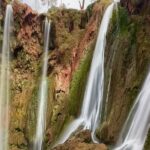
Then comes the main event: Todra Gorges. The walk happens under red cliffs around 300 meters high, and this is one of those places where your photos won’t fully explain the scale. Local rock climbers come here, and you’ll see evidence of how people use the cliffs year-round.
From Todra, you continue to Erfoud and Rissani for lunch, then press onward toward the desert village area and your overnight stop. That night is at a Berber camp inside the big dunes of Sahara Desert Erg Chebbi.
What I like about this setup: you’re not just dropped into a desert sunset. You earn the desert with gorges and valley scenery first, so the sand night feels like a natural payoff.


Day 5: Sunrise in the dunes, palm groves, and on to Fez
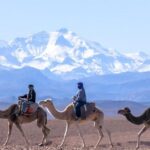
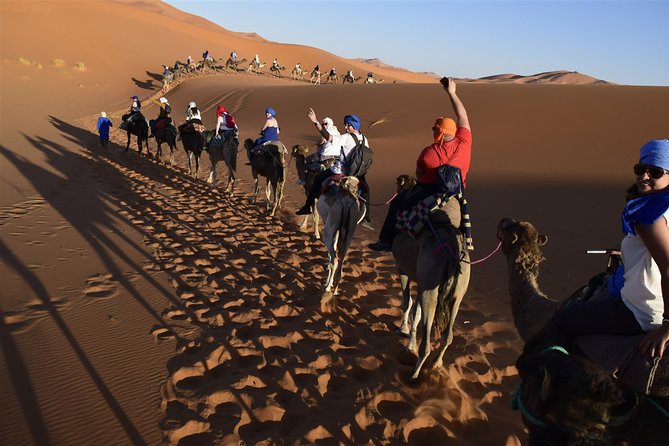
You start with a “date with sunrise,” and the itinerary treats it as a must. You’ll watch the sky change from the top of a dune close to the camp. Then you’ll have breakfast and return toward camp with camel rides, followed by a drive north.
Two specific nature beats make this day special. First is the Tafilalet palm grove, described as one of the largest in the world, with about 20 km of palm-lined road. Then you pass through the Ziz Valley, where the river feeds the palm grove. There’s also a viewpoint stop where you can take in the valley and the town of Aoufous.
Eventually, you continue onward toward Fez.
Heads up: sunrise days are early. But if you’re the kind of person who hates sleeping through the moment, this is a day you’ll be glad you got up.
Day 6: Fez Medina with a local guide, plus panoramas from Fes Jdid and the Merinid Tombs
After breakfast, you meet your local guide at your hotel/riad in Fez and explore the Fez Medina. The itinerary describes it as a living, 2,000-year-old maze, full of markets, craftsmen, and donkeys/mules hauling loads. That’s not just atmosphere. It’s also why a guided route is so valuable here. Without one, it’s easy to get lost in the middle of a beautiful labyrinth and end up seeing the wrong streets.
You’ll visit institutions like the Attarine and Bou Anania Medersas, then landmarks including the Nejjarine fountain, the Moulay Idriss Mausoleum, and the Karaouine Mosque. The tour also includes Fes Jdid and the Merenid Tombs for a panoramic view of Fez.
Accommodation is listed as standard overnight in Fez.
Possible drawback: Fez Medina streets can be physically tiring. Take breaks when you can. If you need to, ask your guide to pace you and keep you moving through the most important lanes first.
Day 7: Chefchaouen’s blue streets in the Rif Mountains
Today is a change of tone. You’ll drive from Fez to Chefchaouen, described as in the Rif Mountains. Once you arrive, you get free time to explore the “blue city” at your own pace.
Chefchaouen’s iconic part is the faded-blue tones across old-town buildings. The itinerary also points out steep cobbled alleys with leather and weaving workshops, plus the central square of Outa el Hammam with its kasbah and red walls. You’ll also see the octagonal minaret of the Great Mosque not far from the square.
This is one of those places where you can slow down and just walk. It’s less about conquering landmarks and more about absorbing the feel.
Practical tip: bring a light layer. Mountain towns can feel cooler in the evening, and you’ll likely be outside for photos.
Day 8: Tangier beach and Hercules Caves, then Asilah’s art and ocean views
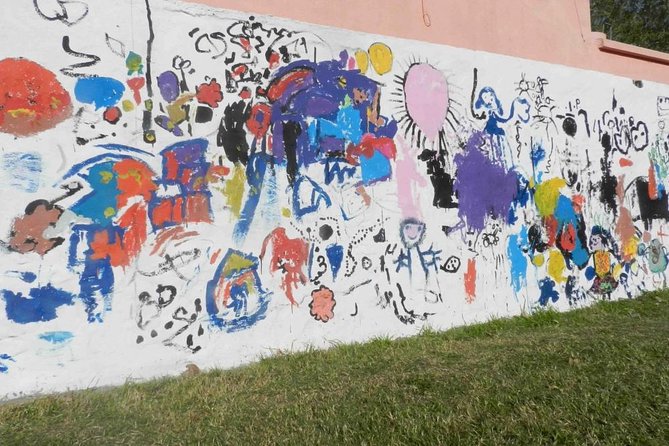
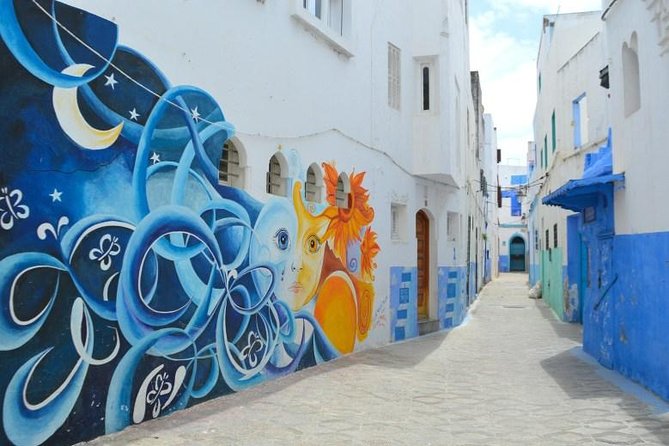
You’ll head to Tangier and visit Tangier beach, Cap Spartel, and the Hercules Caves. Then you continue to Asilah, where you’ll have time to explore a smaller, calmer medina. The itinerary mentions an art festival tradition where walls are painted by artists from around the world, and your visit includes Scala fortress for views over the ocean and the medina.
This day is a contrast day: from mountain town vibes to sea breezes, with enough “things to see” to justify the driving.
Possible drawback: if you dislike tight schedules, this is one of the days where you’ll feel the time moving. Still, it’s not rushed to the point where you can’t enjoy the stops; you just need to stay flexible.
Day 9: Rabat’s landmarks and Casablanca’s Hassan II Mosque
After breakfast in Asilah, you travel to Rabat, Morocco’s capital. The planned sights cover a lot of state and heritage markers: Hassan Tower, the Mausoleum of Mohammed V, Bab Challah, the Oudaya Kasbah, and one of the main gates of the royal palace.
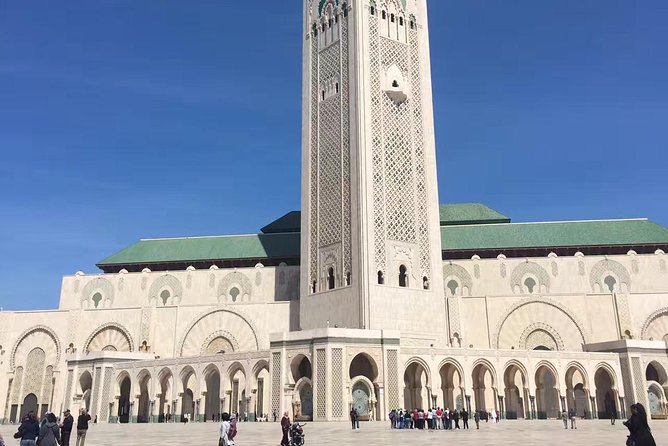
Then you head to Casablanca, and the center piece is Hassan II Mosque, built in 1993 by a workforce of over 6,000 craftsmen. It’s also noted as one of the few mosques in Morocco where foreigners can enter, which is a big practical plus if you want to see the interior rather than only an exterior viewpoint.
Accommodation is standard overnight in Casablanca.
Real talk: Casablanca can feel modern compared to the older medinas, so it helps to keep your camera ready but also keep your attention on the architecture and the scale.
Day 10: El Jadida UNESCO stop and relaxed Essaouira on the Atlantic
From Casablanca, you move to the Atlantic coast with a stop at El Jadida, a small port city. It’s noted as UNESCO World Heritage and historically controlled by the Portuguese.
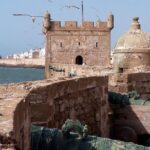
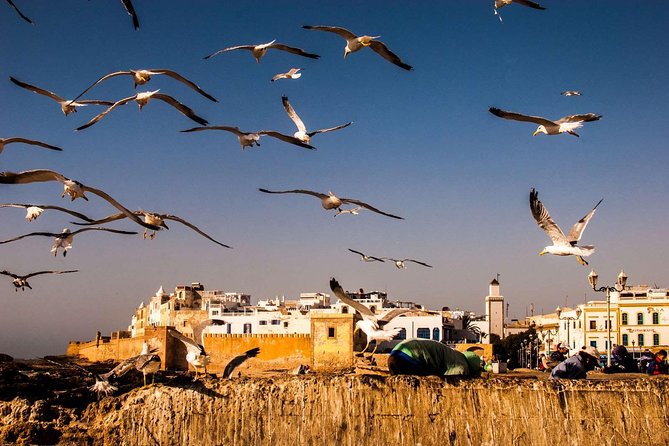
Then you continue to Essaouira, also UNESCO-listed. The plan includes the windswept fishing port, broad beaches, and an ancient walled medina with ramparts built into the cliffs. There’s time to wander the medina, stroll the ramparts or beach, and visit the port to see the day’s catch.
This day is the payoff for the driving days. If you’ve been thinking, when do we slow down, this is where the trip gives you permission to breathe.
Practical tip: Essaouira is windy. Bring something that blocks wind a bit and expect your hair and clothes to have their own opinions.
Day 11: Argan oil cooperative stop and back to Marrakech
You head back toward Marrakech with a stop at argan oil cooperatives. The itinerary calls out that you’ll have the opportunity to visit one of these cooperatives, which is a good reminder that Morocco’s culture isn’t only in palaces and monuments. It’s also in everyday rural economies.
Then you arrive in Marrakech and check in for overnight accommodation.
This is also a smart final day because it breaks up the return drive with a meaningful local stop rather than just rolling back into the city.
Day 12: Airport transfer, and what you’ll likely remember most
Your final day is simple: you transfer to the Marrakech airport up to your departure time, and the service ends.
If you reflect on the whole arc, you’ll probably remember the visual sequence: Marrakech’s liveliest squares, then fortress kasbahs and Atlas passes, then Erg Chebbi sand and a sunrise, then blue Chefchaouen, and finally the coastal calm of Essaouira.
That’s a lot for 12 days, but the pacing is built to keep moving without feeling like a blur.
Price and value: does $2,117.89 make sense?
At $2,117.89 per person for roughly 12 days, the value mostly comes from what’s included and how it’s structured.
You’re paying for:
- Pickup service and transfers across multiple cities
- Overnight desert camp experience in Erg Chebbi
- Guided tours in Marrakech Medina and Fez Medina
- A route that covers Marrakech, Ouarzazate, desert areas, Fez, Chefchaouen, Tangier, Asilah, Rabat, Casablanca, Essaouira, and back to Marrakech
What you should budget extra for is food and drinks, because those aren’t included. The itinerary lists breakfasts (11) and dinners (2), but meals beyond that are on you. That’s where you can control costs by eating at places that fit your comfort level and choosing water/soft drinks accordingly.
Also consider the small-group maximum of 8. Even when a tour is “cheap,” big groups often mean delays and a less personal experience. Here, the group size helps justify the price.
Who this tour fits best (and who should think twice)
This tour is a strong match if you want:
- A classic Morocco route with the main cities and major natural stops
- Guided time in the toughest places to navigate on your own, like Fez Medina
- Desert time with sunrise built into the plan
- A manageable group size that makes logistics feel smoother
You might think twice if:
- You’re easily exhausted by long car days
- You prefer to stay in one base town and do slow day trips only
- You want lots of downtime with no structured stops
Should you book this 12-day Morocco tour from Marrakech?
If you want a clear, organized route that still leaves room to wander, I’d say this is worth considering. The itinerary combines the big, iconic stops with guided help where it counts most, and the small-group size is a real advantage. The desert night at Erg Chebbi and the sunrise add a “one of those memories” factor that you can’t really replicate on a short trip.
Book it if you’re comfortable with early starts and road time. If you’re not, you might prefer a shorter Morocco plan that focuses on fewer regions. But for a first trip that tries to cover Marrakech, the Atlas-to-Sahara arc, and the Atlantic coast, this one hits the right notes.
FAQ
Where does the tour start and end?
It starts with a transfer from the airport of Marrakech to your hotel or riad, and it ends with a transfer to the Marrakech airport on day 12.
Is airport pickup included?
Yes. The first day includes a driver transfer from the Marrakech airport to your accommodation.
Are breakfast and dinner included?
Yes. Breakfast is included on 11 days, and dinner is included on 2 days. Food and drinks are not included otherwise.
Are food and drinks included during the trip?
No. The tour lists food and drinks as not included, so you’ll pay for meals beyond the included breakfasts and dinners.
Do I get an overnight in the Sahara desert?
Yes. You’ll stay overnight in a Berber camp inside the big dunes of Sahara Desert Erg Chebbi.
Will there be guided tours in Marrakech and Fez?
Yes. Marrakech Medina is covered with a private guided tour with an official local guide, and Fez Medina is explored with a local guide.
What are the main cities included on the route?
The itinerary includes Marrakech, Ouarzazate, Merzouga/Erg Chebbi, Fez, Chefchaouen, Tangier, Asilah, Rabat, Casablanca, and Essaouira.
How large is the group?
The tour lists a maximum of 8 travelers.
Can I cancel for a full refund?
Yes. Free cancellation is allowed up to 24 hours in advance of the experience start time for a full refund.