REVIEW · FEZ
Shopping Tour in Fes Medina Souks
Book on Viator →Operated by Fes Discovery Tours · Bookable on Viator
Some places in Fes feel like a map you can’t read. This shopping tour uses landmarks to guide your way through the souks. It mixes craft workshops, iconic sights, and bargaining help in a tight 3–5 hour loop.
I especially like that the guide (Mohammed) is Japanese-fluent and licensed, so you get clear explanations instead of guesswork in the maze. I also like the practical perks: bottled water and free shipping on items you buy (tables, fountains, carpets), which makes bigger purchases feel doable.
One thing to watch: shopping tours can come with small extras if your pickup involves a vehicle outside the medina, and some entrance fees aren’t included. Ask questions up front so the day stays smooth.
In This Review
- Key highlights at a glance
- Why This Fes Medina Shopping Tour Makes Sense (Not Just Shopping)
- Mohammed as Your Guide: Fluent Japanese and a Safer Shopping Pace
- Bab Boujloud to the Karaouiyne Mosque: The Morning Anchor
- Al-Attarine Madrasa Courtyard: Zellige and Cedarwood Details
- Lunch at Restaurant Lazari: A Real Break in the 3–5 Hour Window
- Place Seffarine: Metalwork and the Sound of Craft
- Nejjarine Fountain and Nearby Wooden Arts: Style With a Story
- Coin Berbere Rugs: When Shopping Includes the Weaving Logic
- Chouara Tannery: Leather, Natural Dyes, and Views Over the Medina
- Museo Nejjarine and Art D’Argile: Two Ways to Shop Smarter
- Price and Logistics: $20 for 3–5 Hours, Plus Where Extras Can Appear
- Who This Tour Suits Best
- Should You Book This Shopping Tour in the Fes Souks?
Key highlights at a glance
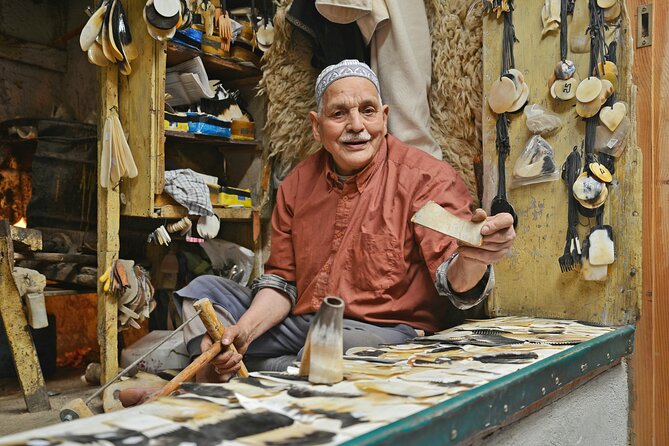
- Mohammed’s Japanese skill helps you shop with confidence and understand what you’re seeing
- Heritage first, shopping second: Bab Boujloud, the Karaouiyne Mosque, and madrasa courtyards anchor the walk
- Most major photo stops are free (Bab Boujloud, Karaouiyne Mosque, Nejjarine Fountain, Chouara Tannery)
- Hands-on craft stops for rugs, leather, metalwork, and pottery/zellige
- Bottled water plus free shipping on tables, fountains, and carpets
- Private tour feel (only your group) with the option of group discounts if you’re traveling together
Why This Fes Medina Shopping Tour Makes Sense (Not Just Shopping)
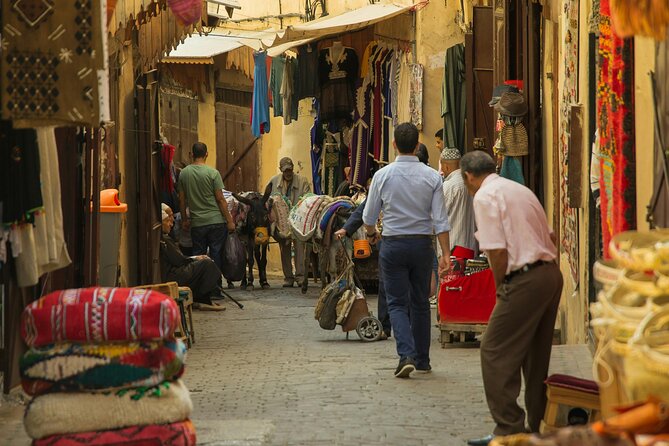
Fes can overwhelm you fast. Streets loop. Shops repeat. You’ll see the same type of goods five times, and it’s hard to tell what’s special versus what’s just being sold. This tour solves a big chunk of that problem by using recognizable landmarks as checkpoints, then steering you into specific workshops where the process matters as much as the product.
The result is a walk that feels more grounded. You’re not only buying stuff; you’re learning what the craft is trying to do and why the materials look the way they do. That matters in Morocco, because “handmade” can mean many things. Seeing the steps in front of you makes it easier to judge quality and pricing.
That structure also helps with negotiation. When you understand the craft, you bargain with a clearer goal. You’re not just asking for a lower number. You’re comparing what you’re actually looking at.
You can also read our reviews of more shopping tours in Fez

Mohammed as Your Guide: Fluent Japanese and a Safer Shopping Pace
A big reason this tour earns strong marks is the guide—Mohammed. He’s described as licensed, local to the heart of the Fes medina, and fluent in Japanese. That combination is rare, and it changes the whole tone of the day.
With clear language, you can ask direct questions like:
- What’s the material here?
- How is this piece made?
- What’s a fair price range?
- What should I avoid buying if I’m unsure?
Also, local knowledge isn’t just trivia. It controls timing. In the medina, the “best” shops can feel random if you don’t know where to go first. A guide can help you avoid the most chaotic stretches, keep you moving at a walking pace that fits a 3–5 hour window, and plan the day so you’re not stuck in one workshop too long.
Practical tip: if you have shopping goals (a rug for a specific space, a small pottery set, or a fountain-style mosaic item), tell Mohammed early. The best outcome is when the shopping stops match your list, not when your list slowly disappears during the walk.
Bab Boujloud to the Karaouiyne Mosque: The Morning Anchor
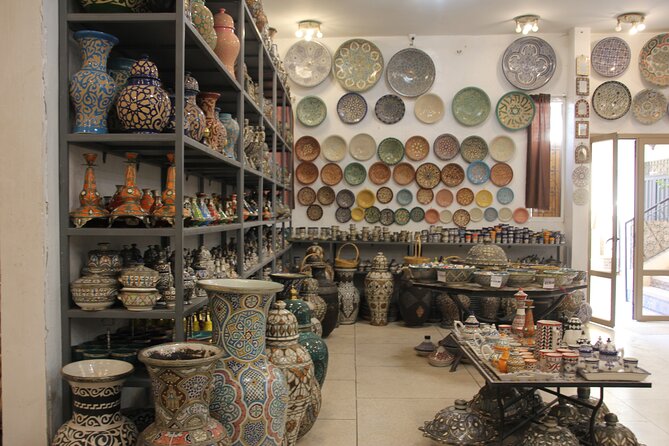
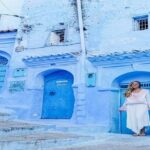
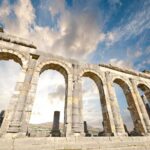
The tour starts at Bab Boujloud, the famous Blue Gate. Even if you’ve seen photos, standing under those tiled arches gives you instant orientation: this is the gateway between different parts of the city, and it sets the rhythm for what’s ahead. It’s also one of the easiest places to snap pictures because you’re not trying to balance a camera in a narrow alley.
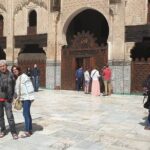
From there, you move to the Karaouiyne (Kairaouine) Mosque area. The big draw here is architectural and spiritual. You can see the carved entrance details, the prayer hall scale, and the cedarwood ceiling described as supported by towering columns. The courtyard is part of the experience too, with greenery and fountains that make the space feel calmer than the streets outside.
A couple of practical notes:
- The tour lists free admission for this stop.
- Mosque visits can mean rules about where you can go and how you should behave, so follow your guide’s cues closely.
Al-Attarine Madrasa Courtyard: Zellige and Cedarwood Details
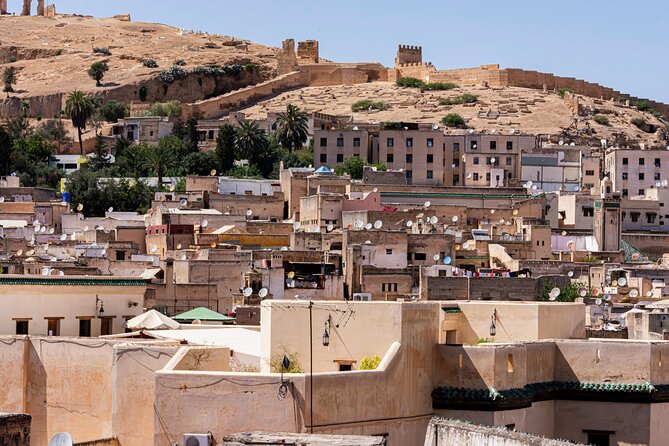
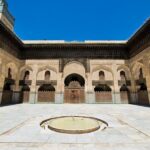
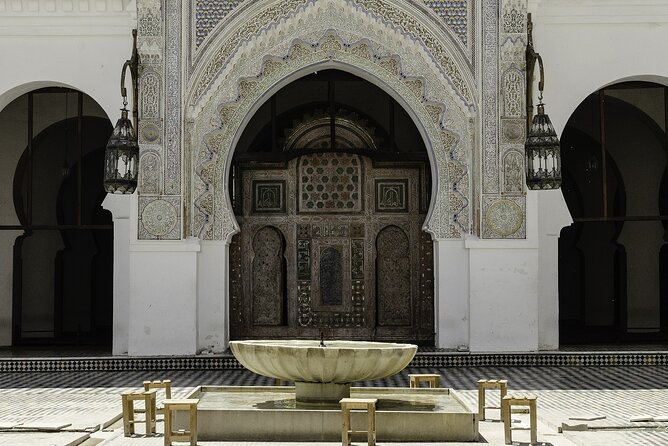
Next up is the Al-Attarine Madrasa, a 14th-century site known for intense decoration—especially zellij tilework and carved cedarwood around the courtyard. This is where your eyes start to notice patterns rather than just color. The medina sells a lot of decorative goods. Seeing where that style comes from helps you shop with taste, not impulse.
The courtyard is also a good pause point in the schedule. It’s the kind of stop that slows you down just enough to reset. In a shopping tour, that matters. If you only walk, you miss details and you rush decisions later.
Worth knowing: the information provided says the Al-Attarine Madrasa entry fee is not included. So if you want to step inside where the decoration is strongest, keep a little cash aside.
Lunch at Restaurant Lazari: A Real Break in the 3–5 Hour Window
Shopping in Fes adds up. Even when individual stops are short, you’re constantly moving, scanning, and negotiating. That’s why the scheduled lunch stop at Restaurant Lazari is more than a perk—it helps you keep your energy for the craft-heavy parts later.
The tour describes it as an opportunity to eat classic Moroccan dishes such as tagine and couscous, plus salads. You also get a break from the medina’s sensory intensity. Think of lunch as your pacing tool.
Since lunch is not included, plan your budget for it. If you’re the type who gets hangry while bargaining, eat early and don’t wait until you’re exhausted.



Place Seffarine: Metalwork and the Sound of Craft
After lunch, the tour heads to Place Seffarine, known for traditional metalworking workshops. This stop works because you’re not only seeing finished objects—you’re hearing the work process. The sound of hammering is described as rhythmic, and that helps you understand that quality is built, not found.
This is a good place to look at:
- how items are shaped (not just polished)
- how consistent the detailing looks across similar pieces
- whether the shop shows the same style at multiple price points
If you’re shopping for metal objects, this is where you’ll start learning the difference between decorative copies and better-made pieces. Your guide can also help you avoid the trap of buying something because it looks impressive from one angle.
Nejjarine Fountain and Nearby Wooden Arts: Style With a Story
Then comes Fontaine Nejjarine, one of the most iconic fountains in Morocco, known for intricate zellij mosaic tilework, carved cedarwood, and ornate stucco. This is a free stop, listed as such, and it’s also a strong photo moment.
The key value here is context. The medina sells many fountains and tile patterns, but seeing the original in-place style helps you understand what artisans are trying to replicate.
There’s also a connection to woodworking through the nearby Nejjarine Museum of Wooden Arts and Crafts, which is described as housed in an 18th-century fondouk (caravanserai). The museum admission is not included, so if you want to spend time inside, you’ll need to budget the entry fee. Even if you skip the museum interior, the fountain alone gives you a style reference you can use while shopping later.
Coin Berbere Rugs: When Shopping Includes the Weaving Logic
One of the shopping stops is Coin Berbere, described as part of rug and carpet weaving. The important part is that it’s not framed as a random store visit. It’s framed as a place to learn how weaving works, which makes your shopping decisions less emotional.
This is also where you’ll likely ask about:
- fiber and weave look
- pattern quality (how clean the design lines appear)
- how the colors look in real light, not just under shop lighting
This stop is listed as admission included, which helps keep the tour predictable cost-wise.
Chouara Tannery: Leather, Natural Dyes, and Views Over the Medina
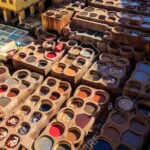
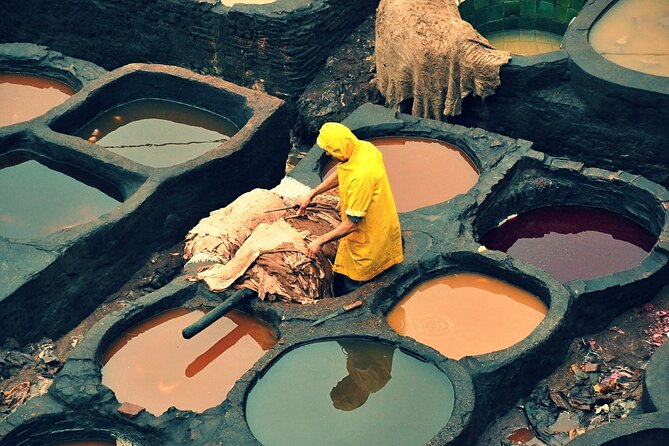
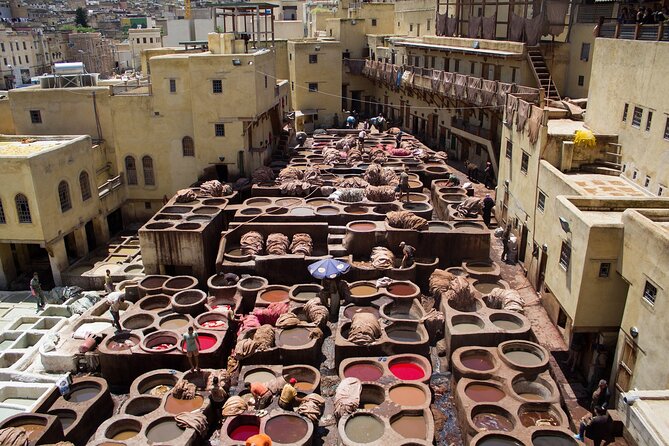
If there’s one stop that can split people into two groups—love it or hate the smell—it’s Chouara Tannery. The tour describes giant stone vats filled with dyes and the pungent aroma of natural dyes. It’s not subtle, so don’t treat it like a quick photo-op.
The value is that you see the process behind the leather goods sold everywhere. You watch artisans working time-honored techniques, and you get a viewpoint from the rooftop where you can look over the medina, with the Atlas Mountains mentioned in the distance.
This stop is listed as free admission. Still, quality varies from tannery to souvenir shops. If you’re buying leather items later (jackets, bags, belts), use this moment to judge craftsmanship and ask how the leather is prepared and treated.
Museo Nejjarine and Art D’Argile: Two Ways to Shop Smarter
After the tannery, the tour includes the Nejjarine Museum of Wooden Arts and Crafts (wood carving and tools are highlighted). Admission is noted as not included, so decide if you want extra time inside or prefer to keep shopping focused.
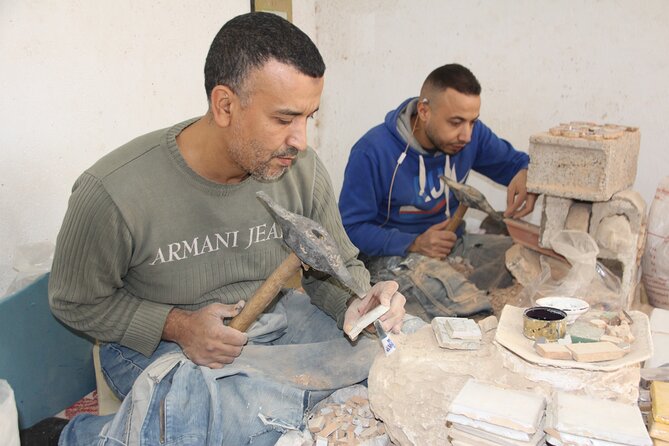
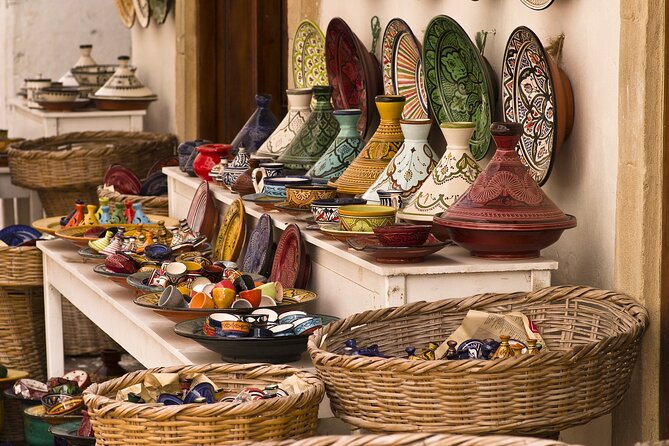
Then comes Art D’Argile, described as the oldest cooperative in Fes where real pottery and Moroccan mosaics zellige are made. This matters because you’re seeing the creation process in a group workshop setting, not just buying finished items from a display case.
That stop is listed as 45 minutes with admission included, so it’s a good time chunk for anyone who wants more than a showroom glance.
Practical shopping angle: zellige and pottery can look very similar across many shops, especially in busy medina lighting. A guided cooperative stop helps you compare what’s truly handmade versus what’s mass-produced.
Price and Logistics: $20 for 3–5 Hours, Plus Where Extras Can Appear
Let’s talk value honestly. The tour price is $20 per person for about 3–5 hours. For that time, you get:
- guided access through key medina sights
- multiple craft stops (rugs, metalwork, leather, pottery/zellige)
- bottled water included
- free shipping on certain purchases (tables, fountains, carpets)
- a private tour format (only your group), with mobile ticket support
That’s a decent deal if you plan to buy at least one meaningful item or if you care about learning what’s behind the goods. If you want zero shopping and only sightseeing, you might find the structure pushes you toward purchases. But if shopping is the point, the price feels more reasonable.
Where you should expect small add-ons:
- Some site entries are explicitly not included (like Al-Attarine Madrasa).
- The non-included list also mentions possible entrance fees tied to other specific sites like Madrasa Bou Inania and Dar Batha Museum. Your final cost depends on exactly what gets visited during your specific route.
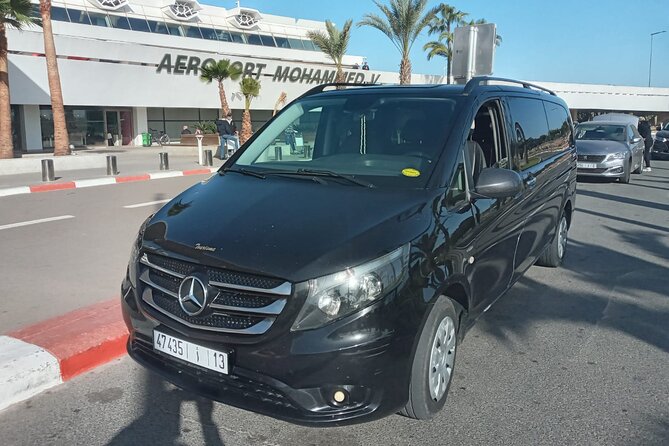
One more logistics note, based on what can go wrong in medina pickup situations: since pickup is listed as offered, clarify up front what’s covered if a vehicle is needed outside the medina. Also make sure bottled water is actually part of what you receive, not just what’s listed.
Who This Tour Suits Best
This is best for:
- you want a guided shopping day where craft stops feel intentional
- you care about quality and want help comparing options
- you prefer clear communication, especially if you’re traveling in Japanese
- you’re interested in rugs, leather goods, pottery, or tile-style decor and like the idea of free shipping for bigger purchases
It may be less ideal if:
- you hate bargaining and shopping pressure, even with a guide
- you want only major monuments and no workshop time
- you need a very slow pace (this is still a walking medina day)
Should You Book This Shopping Tour in the Fes Souks?
If you want to shop in Fes without feeling lost, I’d book it. The combination of Mohammed’s Japanese ability, landmark checkpoints, and hands-on craft stops makes it easier to spend money well instead of spending it quickly.
Do one smart thing before you confirm: ask what’s included for your pickup and which entrance fees you’ll personally need. If you do that, the day usually plays out as a good value—short enough to stay fun, structured enough to keep you from wasting time in random shops.