REVIEW · CASABLANCA
Private Tour Imperial Cities of Morocco from Casablanca 6 Days & 5 Nights
Book on Viator →Operated by carresa.com · Bookable on Viator
Six days, zero planning stress. I love how this private route lines up the top sights without you stitching plans together, and it includes a standout visit to the Hassan II Mosque plus real desert time in the Erg Chebbi dunes. With Casablanca pickup and a small group cap (max 6), you get the convenience of a tour while still keeping the day flexible enough to ask questions and adjust pace.
One thing to keep in mind: this itinerary is full-on, with long road days and early starts, so it’s less for people who want slow sightseeing and more for those who like to cover a lot efficiently.
In This Review
- Quick hits before you go
- How the imperial cities route works (and why it’s a good value)
- Casablanca in one day: markets, the mosque, and that French-era contrast
- A quick practical note
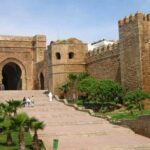
- Rabat stops: Kasbah Oudaya, Mohamed V’s mausoleum, and the Tower of Hassan
- Meknes, the Moroccan Versailles: walls, royal stables, and Place el-Hedim
- Volubilis first, then Fez: how this day sets up the medina
- Fes el-Bali: the UNESCO medina and why car-free streets help
- The French contrast: Ville Nouvelle
- Learning in Fez: Al-Karaouine and Madrasa Bou Inania
- The Mellah in Fez: Jewish quarter details and the Ibn Danan synagogue
- Medina walking tips: how to enjoy Fes without getting tired or lost
- Ifrane and Midelt to Merzouga: from mountain cool to Sahara heat
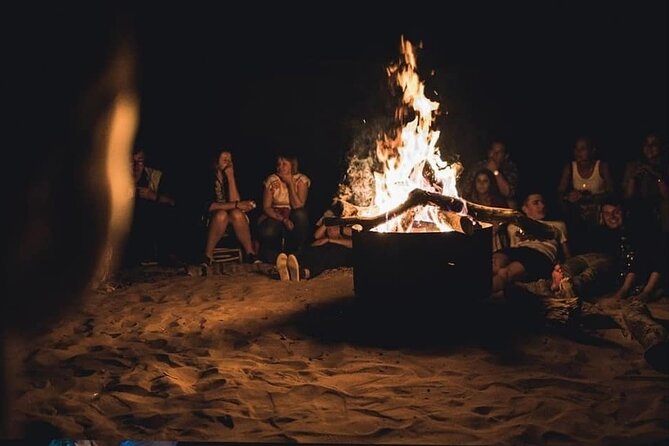
- Camel ride, Moroccan mint tea, and the desert camp idea
- What to expect on the ground
- Desert sunrise and 4×4 time: Day 5’s best blend of comfort and wow
- Todra Gorges, Ouarzazate night, then Ait Ben Haddou to Marrakech
- Meals and what’s included vs. what costs extra
- Price and logistics: what $1,131 buys you in real time
- Is this tour a fit for you? (And who should consider a different style)
- Should you book this Imperial Cities of Morocco tour from Casablanca?
- FAQ
- Does the tour include pickup in Casablanca?
- How many days is this experience?
- Which cities and areas are included?
- Are breakfasts and dinners included?
- Is a camel ride included in the Merzouga desert?
- Is the Hassan II Mosque visit included?
- Is there a vegetarian option?
- Can I cancel for a full refund?
- What’s the maximum group size?
Quick hits before you go
- Casablanca hotel or airport pickup keeps Day 1 from turning into a logistics puzzle
- Hassan II Mosque included with time to see one of Morocco’s few welcoming sites for non-Muslim visitors
- Fes with a real medina focus through the main quarters and key religious/learning sites
- Mid Atlas stops like Ifrane where you might want that light jacket for cooler air
- Merzouga experience built around dunes, camel time, and desert sunrises
- Small-group private feel: your booking maxes at 6 people, with only your group participating
How the imperial cities route works (and why it’s a good value)
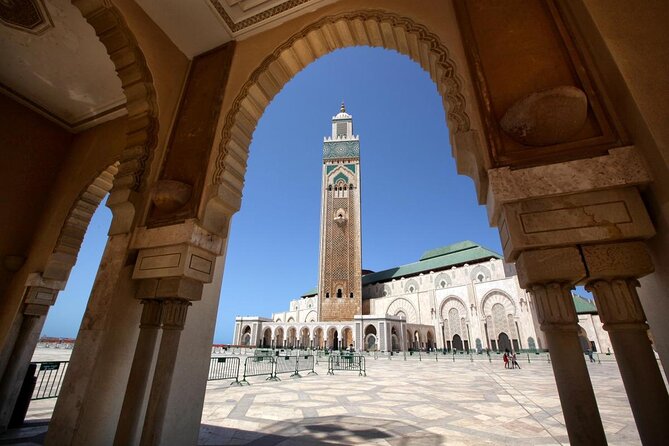
This is the kind of Morocco trip that can feel either magical or chaotic, depending on how it’s planned. The reason I like this one is simple: the big moves are already handled. You’re not trying to figure out which city to do first, how to get between them, or how to line up desert transport on your own. You’re also not doing everything with strangers in a huge bus crowd, since the tour is private for your group and capped at 6.
The price tag is $1,131, and the value comes from stacking a lot into one package: air-conditioned transport, fuel surcharge, pickups in Casablanca, and included breakfasts and dinners (5 of each). You’re also getting entry coverage for several key stops in the schedule. What you’ll still pay extra for is mostly straightforward travel stuff like lunches and drinks, which keeps the main bill from swelling too much.
Also, the pace is not random. The sequence is built to flow from Atlantic Morocco (Casablanca), to political/royal cities (Rabat, Meknes), to the spiritual and craft capital (Fes), then down into the Sahara region (Merzouga), and finally back toward the big-name finale (Marrakech). It’s an efficient loop that makes sense if you want to see the famous highlights without spending days sorting details.
You can also read our reviews of more private tours in Casablanca
Casablanca in one day: markets, the mosque, and that French-era contrast
Your tour begins with Casablanca pickup—either from your hotel or the airport. That matters more than it sounds. Casablanca traffic and distance can eat time fast, and starting with a guide cuts the stress right away.
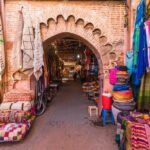
From there, you’ll do a panoramic look at Casablanca as Morocco’s economic capital. You’ll hear how the city was shaped as a commercial center during the French period, and you’ll see the blend of styles—modern and art deco mixed with traditional design. Two named highlights in the plan are the Central Market and the old Mahakma building. If you like seeing how cities actually work (instead of only photographing monuments), these stops add texture.
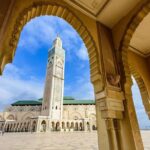
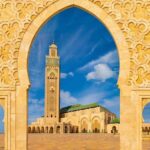
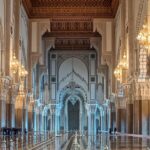
Then comes the big architectural showpiece: Hassan II Mosque. It’s listed as included, and it’s one of only two mosques in Morocco open to non-Islamic believers. The guide also helps set the context—built by King Hassan II near the end of his long reign, and capable of holding 80,000 worshippers. Even if you’re not a “mosque person,” this visit usually lands because it’s not just religious significance; it’s scale, craft, and location with sea views.
A quick practical note
Dress codes can matter at religious sites, and Hassan II is a major one. Bring something that lets you cover shoulders and respect entry rules without turning your day into a wardrobe debate.
Rabat stops: Kasbah Oudaya, Mohamed V’s mausoleum, and the Tower of Hassan
On Day 1, after Casablanca, you head to Rabat. This is Morocco’s political capital, and the sights reflect that: royal power, state-era monuments, and coastal old-town feel.
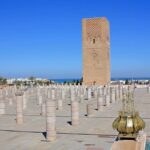
You’ll visit key Rabat landmarks grouped in the same area: the Real Palace, Kasbah Oudaya, the Mausoleum of Mohamed V, and the Tower of Hassan. These stops work well together because they tell one story—how this city projects authority through monuments and how the old and new layers sit side by side.
One nice thing about doing Rabat on the first travel day is that it avoids the later-fatigue problem. By the time you’re ready for the desert, you’ll already have a couple of big “culture” stops under your belt, so the road days feel more like progress than detours.
Meknes, the Moroccan Versailles: walls, royal stables, and Place el-Hedim
Meknes is often less crowded than the more famous cities, which can make it feel more local. The plan calls Meknes the “Moroccan Versailles,” and it earns that comparison by leaning into royal architecture and scale.
You’ll see:
- The city’s famous long walls (listed as 25-mile-long)
- The ancient Royal Stables
- The Mausoleum of Moulay Ismail
- The massive gate Bab Mansour
- Place el-Hedim, a square used by Moulay Ismail for public announcements and even executions
Place el-Hedim is more than a photo stop. It’s also described as a people-watching spot: kids playing soccer, hawkers selling everyday items, and families strolling through shaded space. If you like moments that feel like real life instead of museum logic, this part of Meknes is where it happens.
A few more Casablanca tours and experiences worth a look

Volubilis first, then Fez: how this day sets up the medina
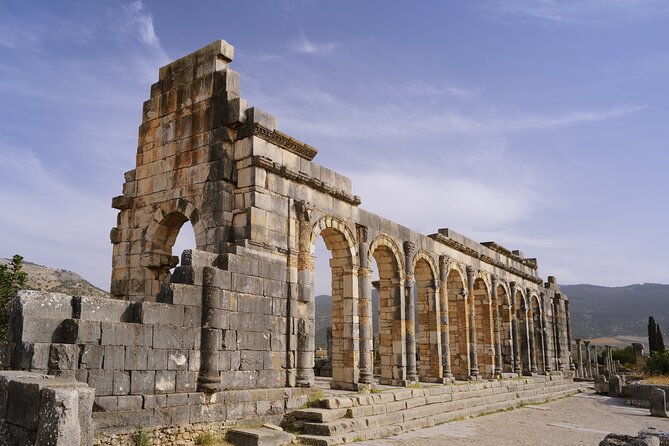
Day 2 starts with Volubilis, Morocco’s most important Roman town. It’s included, and it’s positioned in a wide plain beneath the Zerhoun Mountains. Even if Roman ruins aren’t your main obsession, Volubilis is a good palate cleanser. After Casablanca’s ocean-city feel and Rabat’s monuments, you get hillside ruins and a different kind of history you can walk through.
The ruins come with a clear timeline in the way the day is framed—there was earlier settlement on the fertile plain, but the big political map marker is Juba II in 25 BC. This helps the site make sense instead of feeling like scattered stones.
After Volubilis, you move into Fes in the afternoon. You don’t just arrive—you get orientation. The plan notes Fez is split into zones: old (Fes el-Bali), new (Fes el Idid), and the French district (Ville Nouvelle). That matters because it explains why “Fes medina” can feel confusing at first. You’re not wandering randomly; you’re walking through designed city layers.
Fes el-Bali: the UNESCO medina and why car-free streets help
Day 3 is dedicated to Fes. And honestly, this is the day you shouldn’t rush. Fes el-Bali is described as an UNESCO Heritage Site and also as one of the largest car-free urban areas in the world. Being car-free changes the whole vibe: it’s slower, louder in a human way, and easier to take in crafts and textures without traffic noise slicing your attention.
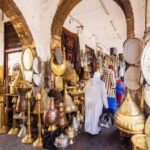
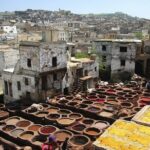
The craft focus is important. The plan highlights artisans and trades like metal and leather working, ceramics, woodwork, silk, and tapestries. If you like watching skills happen in real time, this is where Fes becomes more than a list of buildings.
The French contrast: Ville Nouvelle
You’ll also see the contrast zone, the French-built Ville Nouvelle from the early 20th century. Wide avenues, cafés, restaurants, and shops can feel like a break from the maze alleys of Fes el-Bali. It’s a smart balance because you get a breather while still seeing how the city evolved.
Learning in Fez: Al-Karaouine and Madrasa Bou Inania
Fes is famous for education, and this part of the day focuses there. The plan calls out Al-Karaouine University, founded in 859 by Fatima Al Fihri. It was a major intellectual center, and it’s also connected (in the plan’s explanation) to Pope Silvester II, who is credited with introducing Arab numerals and the use of zero into Europe.
Then you’ll get Madrasa Bou Inania, built in 1357 and regarded as one of the finest examples of Merinid architecture. Inside, the plan highlights calligraphy and ceramic tile work—plus details like marble floors and sculpted cedar. You’re not just seeing a building; you’re seeing the design language of a place built for study and memory.
If you’re the type who likes a city’s “why,” this is the part that gives you the reason Fes mattered for centuries.
The Mellah in Fez: Jewish quarter details and the Ibn Danan synagogue
The plan includes Fez Mellah, the Jewish neighborhood. It explains the name comes from al mallah, meaning saline area, because the quarter was built on that kind of site. It also notes that Mellah was the first officially built Jewish quarter in Morocco, created by the Merinids in 1438.
A standout named detail here is Ibn Danan synagogue, dating from the 17th century and listed as recently restored (with the suggestion it can be visited). Even with limited time, it’s a useful stop because it widens your understanding of how Fes worked socially, not just religiously.
This is also a medina stop where a guide helps you navigate respectfully and efficiently. Fes is famous for turning wrong turns into real adventures. With a knowledgeable guide, you can keep the fun while reducing the risk of getting stuck.
Medina walking tips: how to enjoy Fes without getting tired or lost
I love Fes, but it can punish your schedule if you don’t plan for it. The car-free layout means you’ll do a lot of moving on foot. Wear shoes that handle uneven ground and dust. Bring a small water plan for midday (even if drinks aren’t included, you can purchase where needed).
Also, set expectations: medina sightseeing isn’t like walking through a museum corridor. You’ll see homes and craft spaces, and sometimes it can feel busy. The upside is you get a city that feels lived-in.
One practical perk: the tour includes guidance through the medina’s main pieces, and the value of that is huge. In the experience feedback, the need for a local guide in the medina is specifically called out as a key difference-maker—especially for finding the meaningful corners without wasting hours.
Ifrane and Midelt to Merzouga: from mountain cool to Sahara heat
Day 4 turns from cities into scenery. The plan includes stops in the Mid Atlas Mountains and specifically calls out Ifrane. Ifrane is noted for distinct architecture that can feel more European than expected. Since it’s chillier than many Moroccan towns, a light jacket is suggested.
Then you drive onward toward Midelt, with lunch planned there. The plan mentions camera opportunities during the ride through the Ziz Valley, which makes sense if you’re the type who likes road-trip scenery as a feature, not a transfer.
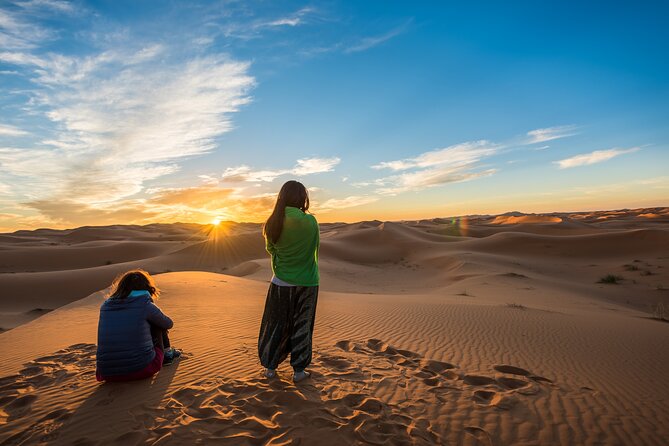
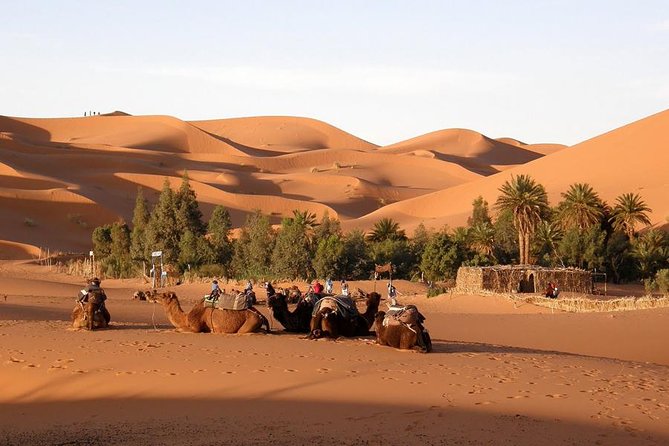
Finally, you reach Merzouga, the small desert town that serves as the gateway to the Sahara’s famous dunes—specifically the Erg Chebbi dunes. These can reach up to 180 meters high in this area, and the tour’s desert structure is built around that scale.
Camel ride, Moroccan mint tea, and the desert camp idea
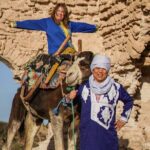
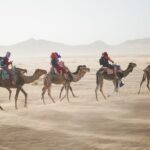
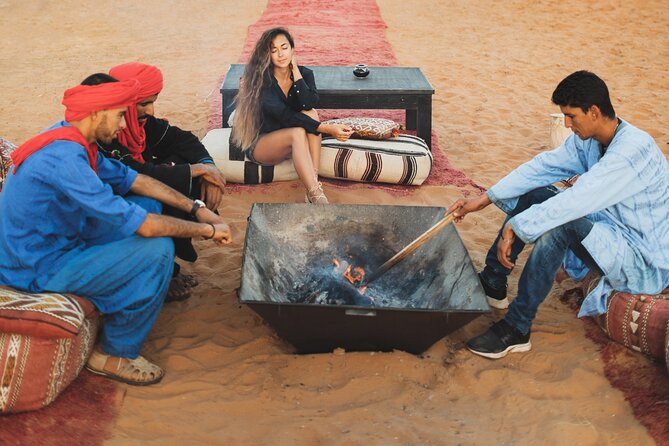
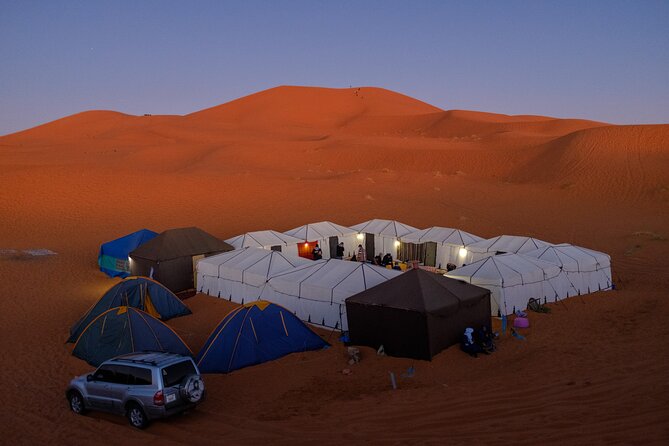
This is where the itinerary becomes more than sightseeing. The highlights include a camel ride in the Merzouga desert, Moroccan mint tea, and a chance to stay in a nomad camp. The itinerary section you’re given focuses on the day’s desert movement and sunrise experience, but the camp and tea are clearly positioned as part of what the tour is designed to deliver.
Camel time is one of those activities that rewards you if you treat it like a cultural experience, not a ride-for-an-instagram photo. Go at the camel’s pace, listen to the guide, and take your time enjoying the light and silence once you’re away from town.
What to expect on the ground
Sand and temperature swings can be real. Even if you don’t know exact climate numbers, you’ll feel the change as you move from mountain region stops into desert conditions. Pack for layers, and plan for dust. You’ll likely want a scarf or something similar for sun and grit.
Desert sunrise and 4×4 time: Day 5’s best blend of comfort and wow
Day 5 starts early. You’ll be awakened to watch the sunrise, and you’ll have breakfast in the middle of the desert. That’s a classic desert combo—morning light over dunes plus the simple comfort of food before the next drive.
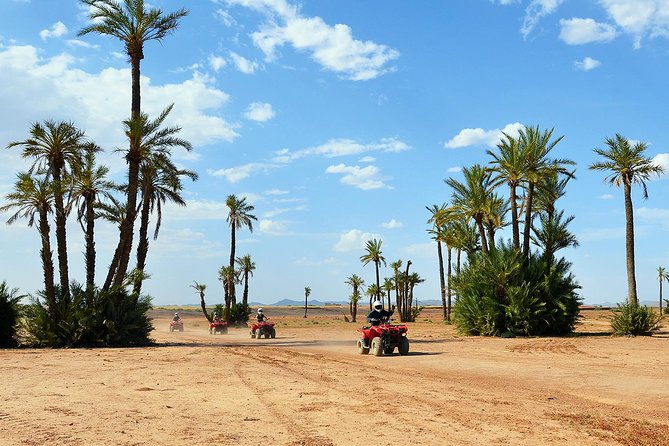
After breakfast, you’ll take a 4X4 ride to discover the dunes of Merzouga. This is a strong choice because it gives you big views without tiring yourself out on foot. If camel riding was your slow-and-sway segment, the 4×4 is the speed-and-scale segment.
Then the day shifts again from desert back into dramatic canyon scenery. The plan says you head toward Ouarzazate for the last night, with a visit to Todra Gorges along the way. Todra is known for narrow, steep rock cuts and a canyon feel, and it breaks up the long-distance drive with a natural pause.
Todra Gorges, Ouarzazate night, then Ait Ben Haddou to Marrakech
On Day 6, you visit Kasbah Ait Ben Haddou with a local guide. The plan keeps it practical: you’ll have a local-guided stop there, then lunch, then continue to Marrakech.
Ait Ben Haddou is one of those Morocco landmarks that people talk about because it looks like a “movie set,” but the real value is how it feels when you walk it with context. A local guide helps you read the site instead of just admiring it.
Once you arrive in Marrakech, your tour ends in the city. You’ll have enough momentum to get settled, but you’ll also be glad you didn’t try to do the Sahara segment as a separate trip tacked on later. Ending here keeps the trip ending on one of Morocco’s most easy-to-spend-your-own-time destinations.
Meals and what’s included vs. what costs extra
The package includes breakfast (5) and dinner (5). It also includes fuel surcharge and an air-conditioned vehicle, which is a big practical comfort upgrade over older, less maintained transport.
Lunch and drinks are listed as not included. Lunch is described as available for purchase, which is usually workable—you’re stopping in towns often enough to grab something simple. The “drinks not included” part means you should plan on paying for water and other non-meal beverages as you go.
One note to double-check: the summary says four nights of accommodations included, but the inclusions list shows 5 breakfasts and 5 dinners. That doesn’t automatically mean something is wrong, but it’s worth confirming which exact nights are covered so there’s no surprise when you check your final details.
Price and logistics: what $1,131 buys you in real time
At $1,131 for a private tour (max 6 people), you’re paying for a lot of friction removal:
- Private transport with fuel surcharge covered
- Air-conditioned vehicle
- Casablanca pickup and drop-off
- Several included admission stops (not every museum-type fee, but key ones like Hassan II Mosque and Volubilis)
- Meals that keep you from budgeting every day for breakfast/dinner
This is the kind of price that makes sense if you value time. If you were to plan the route yourself, the cost would shift from package fee to your own transport and guide sourcing. A private Sahara day can get expensive quickly if you have to piece it together last minute.
The main “pay attention” item isn’t the price—it’s the rhythm. You’ll cover major cities and switch regions fast. If your travel style is slow, this won’t feel slow. If your travel style is active and you want a highlight-heavy trip, this is priced for that.
Is this tour a fit for you? (And who should consider a different style)
This tour is best for you if:
- You want to hit Casablanca, Rabat, Fez, Meknes, Merzouga, Ouarzazate/Ait Ben Haddou, and Marrakech without stitching logistics together
- You like guided walking in the medinas and want help finding the meaningful stops
- You want desert wow moments like camel time and sunrise without handling desert logistics alone
- You can handle early mornings and long driving days
You might choose a different trip if:
- You hate early wake-ups and long road stretches
- You prefer one city at a time with lots of downtime
- You’re very sensitive to walking on uneven surfaces (Fes can be a workout)
Should you book this Imperial Cities of Morocco tour from Casablanca?
If your goal is to get the big Morocco experiences—imperial cities, Roman ruins, a guided medina day, and Merzouga dunes—this is a strong booking option. I especially like the balance of city culture and desert moments, and I like that meals (breakfast and dinner) are handled, so you’re not constantly planning where to eat after travel.
Just go in with the right expectation: it’s an efficient route, not a slow vacation. If that fits your style, book it. If you want breathing room more than packed highlights, you’ll likely feel rushed.
FAQ
Does the tour include pickup in Casablanca?
Yes. The tour offers Casablanca hotel (or airport) pickup and drop-off.
How many days is this experience?
It runs for about 6 days and 5 nights.
Which cities and areas are included?
The route includes Casablanca, Rabat, Meknes, Volubilis, Fez, the Mid Atlas area (including Ifrane and Midelt), Merzouga desert, Todra Gorges, Ouarzazate, Ait Ben Haddou, and Marrakech.
Are breakfasts and dinners included?
Yes. The inclusions list breakfast (5) and dinner (5). Lunch is not included and drinks are not included.
Is a camel ride included in the Merzouga desert?
Yes. Camel riding in the Merzouga desert is listed as a highlight.
Is the Hassan II Mosque visit included?
Yes. Hassan II Mosque entry is included, and it’s noted as open to non-Islamic believers.
Is there a vegetarian option?
Yes. A vegetarian option is available if you advise the provider at time of booking.
Can I cancel for a full refund?
Yes. Free cancellation is available up to 24 hours in advance for a full refund.
What’s the maximum group size?
This is a private tour/activity, and the maximum is 6 people per booking.