REVIEW · CASABLANCA
welcome to Casablanca and Rabat full day
Book on Viator →Operated by Yasska Green Tours · Bookable on Viator
Two cities, one well-timed day. This full-day Casablanca and Rabat trip strings together Morocco’s most iconic coastal landmark with Rabat’s World Heritage old quarters, so you get variety without the hassle of planning. I especially like the stop at Hassan II Mosque, perched partly over the Atlantic, and the chance to walk through Rabat’s historic layers around the Kasbah des Oudaias and medina.
The other big plus is the practical setup: a bilingual driver-guide, private transportation, and hotel pickup/drop-off in Casablanca, which helps you spend more time seeing and less time waiting. The one drawback to keep in mind is that not every major site is included in your ticket price—admission for Hassan II Mosque and Bab Chellah is not included, and drinks aren’t included either.
If you’re the type who enjoys asking questions and keeping a comfortable pace, this tour style fits well. Just remember it’s an 8-hour day, so you’ll be moving and photographing more than you’ll be lingering like a slow Sunday stroll.
In This Review
- Key takeaways before you go
- Casablanca and Rabat, planned as a single story
- Hassan II Mosque: ocean, scale, and a must-see setting
- Casablanca mood shift: Rick’s café and Mohammed Square
- Royal Palace of Rabat: a powerful exterior moment
- Bab Chellah after the 2024 reopening: ruins with new tech
- Mausoleum of Mohammed V and the unfinished Hassan Tower
- Mausoleum of Mohammad V
- Hassan Tower
- Kasbah des Oudaias: old walls with sea and city views
- Medina of Rabat: walking the city’s protected edges
- Price and logistics: what $140.95 really buys you
- What makes this tour feel personal: pace and real answers
- Who should book this Casablanca and Rabat day trip?
- Should you book this one?
- FAQ
- How long is the Casablanca and Rabat day trip?
- What’s included in the price?
- Are tickets included for all stops?
- Is the Royal Palace of Rabat open during the tour?
- Is this tour private or shared?
- What are the operating hours for this tour?
Key takeaways before you go
- Private, hotel-to-hotel convenience: pickup and drop-off in Casablanca with dedicated transportation.
- Hassan II Mosque has ocean views built in: it’s part landmark, part setting.
- UNESCO time in Rabat, not just a drive-by: Bab Chellah, Kasbah des Oudaias, and the old city core.
- You’ll see the Royal Palace zone from outside: the interior is closed, so manage expectations.
- Tickets and drinks are the extra costs: budget for the sites that aren’t included.
Casablanca and Rabat, planned as a single story
Casablanca is Morocco’s economic engine—big avenues, modern business blocks, and that Atlantic edge that makes everything feel slightly open to the horizon. Rabat, by contrast, feels like Morocco’s conversation between older Arab-Muslim roots and Western-era modern planning. Doing both in one day only works if the pacing is smart, and this tour is built around exactly that.
You’ll start in Casablanca and work through the most famous sights first, then shift gears and head to Rabat. Expect an active schedule: you’ll spend time at major monuments, then move on before fatigue sets in. The trip runs about 8 hours, and there’s a significant chunk devoted to the drive between cities, plus a highway break along the way.
Because this is a private tour, you avoid the “wait while everyone catches up” feeling. And with WiFi on board and bottled water included, the day stays more comfortable than the typical group scramble.
A few more Casablanca tours and experiences worth a look

Hassan II Mosque: ocean, scale, and a must-see setting
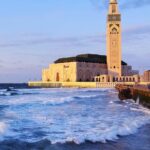
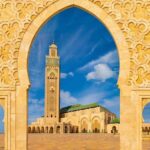
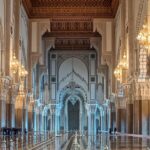
Hassan II Mosque is the headliner for a reason. It was built under King Hassan II’s directives after seven years of work, and it’s designed partly over the sea. That sea placement changes how the mosque feels. Up close, it’s monumental and detailed; from the right angles, it looks like it’s holding onto the coastline.
Your visit is allotted about an hour. Admission for the mosque is not included, so check your budget for the separate ticket. If you’re planning outfits, remember this is a religious site, so dress modestly and keep your shoulders and knees covered.
What you’ll enjoy most is the mix of architectural ambition and the dramatic location. You’re not just viewing a building; you’re watching it sit in a landscape.
One practical note: if you’re sensitive to sun or wind off the Atlantic, plan for it. Even in pleasant weather, the coast can be bracing.
Casablanca mood shift: Rick’s café and Mohammed Square
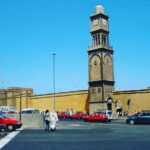
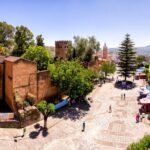
After Hassan II, the tour’s Casablanca phase takes a more atmospheric turn. You’ll pass through the area associated with Rick’s Café and then head toward Mohammed Square, where the city’s historic center vibe comes through.
This part is less about a ticketed monument and more about getting your bearings in Casablanca. If it’s your first time here, a quick stop in these iconic zones helps the rest of the day make sense: you see how Casablanca mixes cinematic nostalgia and real city life in the same frame.
Don’t expect a long museum-style pause here. Think photo breaks and orientation—enough to understand the city’s rhythm before you leave it for Rabat.
Royal Palace of Rabat: a powerful exterior moment
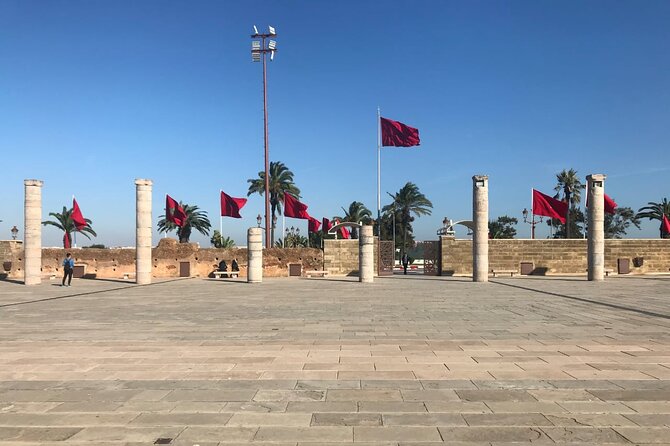
Rabat’s royal zone adds a different tone. The Royal Palace is the home base of Morocco’s royal family—Dar el Makhzen is the main royal palace—and it’s a big symbol of state presence.
Here’s the key thing: the interior is closed to the public. Your stop is short (about 30 minutes), which makes sense. You’re there for the setting, the architecture, and the sense of place, not for walking through rooms.
If you love political geography—how power is physically expressed—this is still worthwhile. You get a snapshot of what makes Rabat feel like the capital, not just another coastal city.
Bab Chellah after the 2024 reopening: ruins with new tech
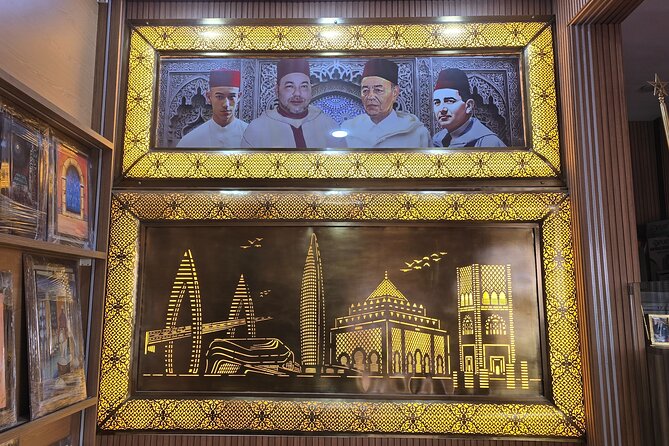
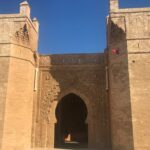
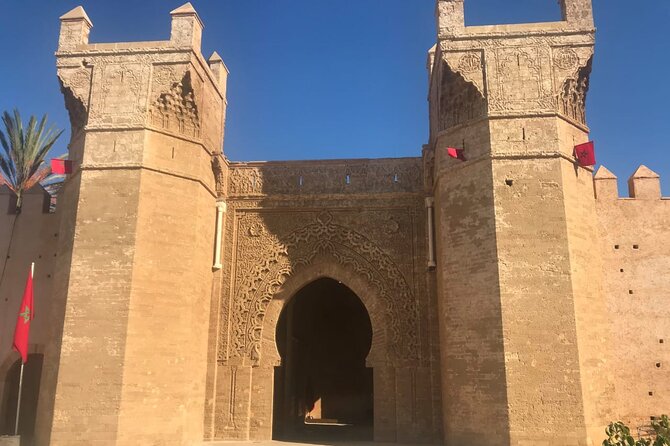
Bab Chellah (often experienced as a necropolis/archaeological site) is one of those Rabat stops that works well for different travel styles. It has the historical weight of an old site, but it also includes a modern layer of visitor experience.
Since 2005, the site has hosted the Jazz au Chellah festival each year. And since 2012, it’s been part of the UNESCO World Heritage list as a cultural property. That festival detail matters because it hints at how the site lives beyond stone. It’s not just a quiet ruin; it’s a place the city knows how to bring to life.
After major restoration, it reopened to the public on May 20, 2024, and offers a new audio-guided tour circuit. Your time here is about 45 minutes. Admission is not included, so this is one of the extra-ticket costs to plan for.
Why this stop is valuable: you get atmosphere plus structure. The ruins don’t feel random; the audio-guided circuit (available after the 2024 reopening) helps you connect the dots as you move through.
Watch for the pace: 45 minutes in a site like this goes fast if the sun is strong or if you’re stopping often for photos.
Mausoleum of Mohammed V and the unfinished Hassan Tower
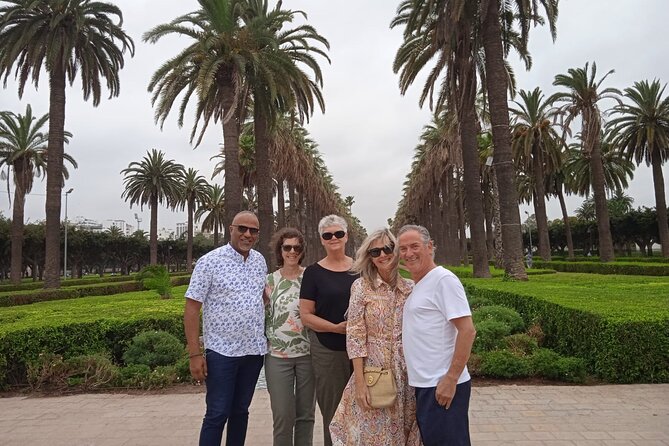
Two Rabat monuments sit close in theme, if not in style: remembrance and unfinished ambition.
Mausoleum of Mohammad V
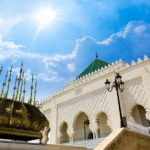
This mausoleum was built between 1961 and 1971 after the death of King Mohammed V. The design is credited to Vietnamese architect Nguyen Viet Thu, and Moroccan artisans carried out the construction. It’s a stop around 30 minutes, and it’s free.
I like this kind of monument because it’s both solemn and readable. Even if you don’t know every detail, you quickly understand what it represents—an official place of memory and national identity.
Hassan Tower
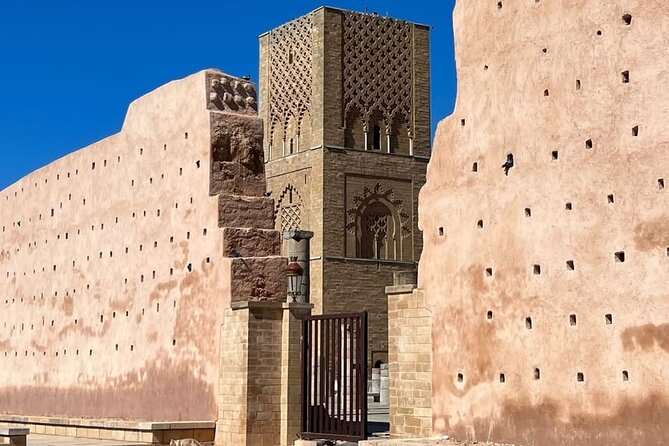
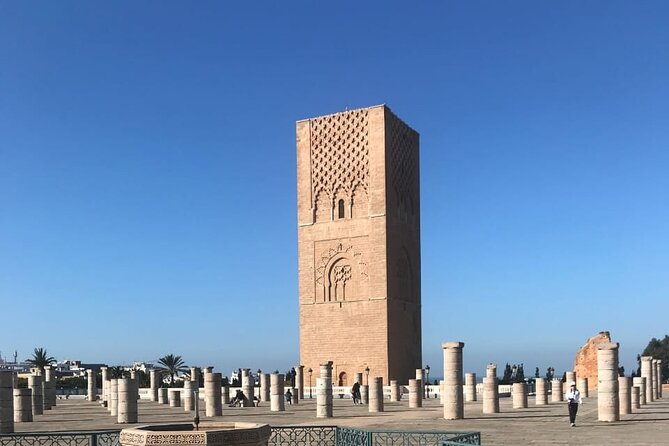
Next is Hassan Tower, the minaret of an unfinished 12th-century mosque. It rises about 44 meters high. Again, about 30 minutes and free admission.
This stop works especially well if you enjoy architectural “what ifs.” You’re looking at a project cut off mid-story, which creates a different emotional feel than a fully completed monument.
Together, these two stops make Rabat’s story click: faith, power, change, and the way history interrupts and reshapes what people build.
Kasbah des Oudaias: old walls with sea and city views
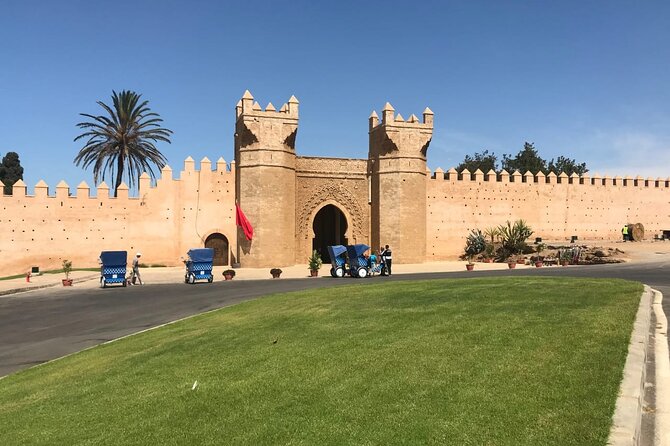
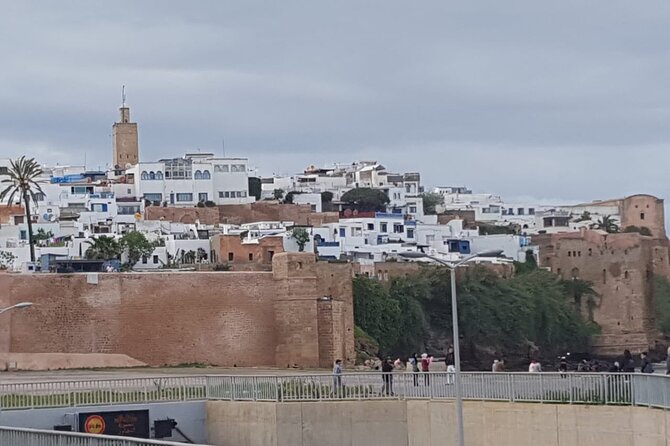
Kasbah des Oudaias is a former fortified military camp that’s been part of the UNESCO world heritage area since 2012. Your visit is about 45 minutes and admission is free.
Even if you’re not chasing every detail, this place is useful because it gives you viewpoints and a clearer sense of Rabat’s structure. You’ll notice how the Kasbah functions like a protective shell, and how it separates and frames spaces rather than just sitting in the middle of them.
If you like photo angles, you’ll have chances here: Rabat’s coastal light and the layered walls make even simple walking paths feel scenic.
Medina of Rabat: walking the city’s protected edges
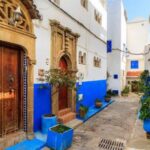
The medina of Rabat is well protected and intentionally organized, which makes it an easier place to wander than some sprawling old towns. Your guided time here is about 1 hour, and it’s free.
What I think you’ll enjoy is the way Rabat’s city walls and boundaries shape the walk. The medina is bordered to the north by the Bouregreg, protected from the ocean by surrounding walls linked to the Kasbah of Oudaya. To the west, you have the Almohad walls. And to the south, the Andalusian wall separates the newer city from the ancient core.
That boundary info sounds technical, but it changes how you experience the streets. You’re not just wandering—you’re reading the city as if it’s a map.
This is also a good moment to ask your bilingual driver-guide about how the city evolved—because Rabat’s blend of old and planned feels more coherent after you’ve seen both the walls and the monuments.
Price and logistics: what $140.95 really buys you
At $140.95 per person, this isn’t a low-cost “hop on a bus” outing. But it can be good value if you count what’s included.
You get:
- Private transportation
- Bilingual driver-guide during the visit
- WiFi on board
- Bottled water
- Hotel pickup/drop-off in Casablanca
On top of that, the tour includes a mobile ticket and offers group discounts. Those aren’t huge perks individually, but together they reduce friction.
What’s not included:
- Ticket admission for Hassan II Mosque
- Ticket admission for Bab Chellah
- To drink (so you’ll want to plan for buying your own beverages during the day)
My practical advice: budget a little extra for those two admission fees and keep a small snack plan too. Even with bottled water provided, a long day across two cities can benefit from an easy mid-afternoon top-up.
Also, because the Royal Palace interior is closed, you shouldn’t budget time or energy for an inside tour there. The value is the exterior zone and the sense of Rabat as capital.
What makes this tour feel personal: pace and real answers
A day like this can go either way: either it’s a rushed checklist or it feels like a guided route you can actually enjoy. The difference is the guide’s handling of your timing and questions.
From the service style associated with guides on this route—people like Yassine and Younes—the recurring strengths are practical: being on time, staying professional, and staying flexible when your group wants a slower moment or a faster photo stop. That flexibility matters most between cities, where delays can snowball.
This is also the kind of tour where a bilingual guide helps you connect the dots. You’re not only seeing monuments; you’re getting the meaning behind them—why a mosque sits by the sea, why an unfinished minaret matters, and why UNESCO status connects specific sites across Rabat.
If you like to understand what you’re looking at, this format works well.
Who should book this Casablanca and Rabat day trip?
This trip is a strong match if:
- You have limited time and want both cities in one day
- You like architecture and city layout as much as standalone landmarks
- You prefer a guided route that keeps logistics under control
- You’re comfortable with a full day and a mix of indoor/outdoor monuments
You might consider something else if:
- You want long, deep museum-style time in every stop
- You need the Royal Palace interior (since it’s closed to the public)
- You’re sensitive to ticket add-ons (because two major sites require separate admission)
Should you book this one?
If your goal is a first-rate introduction to Casablanca’s defining icon plus Rabat’s UNESCO core, I think this is an easy yes. The included private transport and hotel pickup alone make a big difference for comfort, especially when you’re spending hours on the road between two cities.
Just go into it with the right expectations: it’s a full-day plan with separate tickets for Hassan II Mosque and Bab Chellah, plus a short Royal Palace exterior moment rather than an interior tour. If that fits your style, this route gives you a lot of meaningful geography in one go.
FAQ
How long is the Casablanca and Rabat day trip?
It’s about 8 hours (approx.).
What’s included in the price?
The tour includes a bilingual driver-guide, private transportation, WiFi on board, bottled water, and hotel pick-up/drop-off in Casablanca. Admission for Hassan II Mosque and Bab Chellah, and drinks, are not included.
Are tickets included for all stops?
No. Hassan II Mosque and Bab Chellah require separate admission tickets. The other listed stops are free.
Is the Royal Palace of Rabat open during the tour?
The Royal Palace interior is closed to the public. The stop is for the palace zone from the outside.
Is this tour private or shared?
This is a private tour/activity, and only your group participates.
What are the operating hours for this tour?
It runs daily, Monday through Sunday, from 12:00 AM to 11:30 PM (for the date range listed).