REVIEW · TANGIER
Tangier City Tour Bus Hop On – Hop Off
Book on Viator →Operated by JULIA TRAVEL MOROCCO · Bookable on Viator
Two routes, one ticket, your pace in Tangier.
This 48-hour hop-on hop-off ride helps you see Tangier without locking into rigid tour timing, and the built-in audio guide keeps the drive from feeling like a blur.
I especially like the onboard Wi‑Fi—useful when you’re hunting down directions for your next stop (or just keeping the group chat alive). And the bus is a double-decker, so you get easier sightseeing angles without craning your neck.
The main drawback to plan around is that bus frequency can be thin, and on busy moments it may be hard to get back on or find a seat on top. In other words: don’t build your whole day around the bus arriving at the exact minute.
In This Review
- Quick take: what you’ll notice first
- Price and value: $15.10 for a 48-hour sightseeing shortcut
- How the hop-on hop-off system works (and where timing trips people up)
- Route 1: Port, Grand Socco squares, and the city’s big landmarks
- Route 2: Socco Alto, Cape Spartel, and Hercules Caves by bus
- Audio guide reality check: 8 languages, but headphones may be your job
- Best times and tactics: getting the most out of every re-boarding
- Who this hop-on hop-off bus is for (and who should skip it)
- Should you book the Tangier City Tour Bus Hop On – Hop Off?
- FAQ
- What’s included with the Tangier hop-on hop-off bus ticket?
- How long is the ticket valid?
- Do I need to print a ticket?
- How often does the Tangier City route run?
- What are the departure times for the Hercules Caves route?
- Does the bus have onboard Wi‑Fi?
- What hours does the sightseeing bus operate?
- Can I cancel for a refund?
Quick take: what you’ll notice first
- Two routes, 48 hours: Do the city core one day and the coast and caves the next.
- Audio guide in 8 languages: Explanations for key landmarks as you ride.
- Onboard Wi‑Fi: Helpful for maps and timing when the city is moving slowly.
- Fixed cave-route departures: Hercules Caves times vary by season, so plan that stop first.
- Some stop time is built in: On the caves route, there’s a short window to see the area without waiting for the next bus.
- Ticketing and headphones can be messy: A few glitches show up, so bring patience and consider your own earphones.
Price and value: $15.10 for a 48-hour sightseeing shortcut
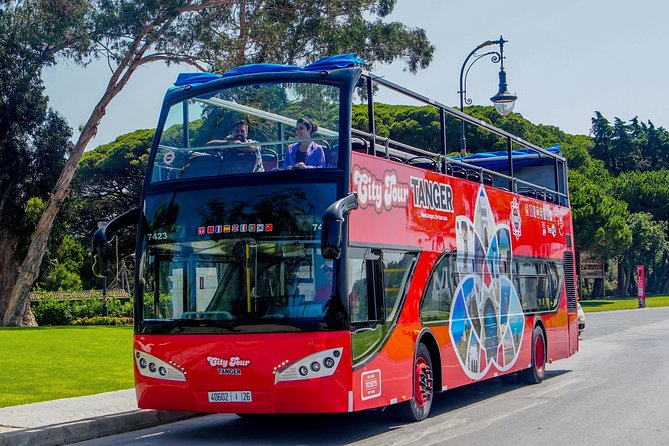
At $15.10 per person for a 48-hour ticket, this is priced like a practical “get oriented fast” tool. You’re not paying for a private driver or timed entrance tickets. You’re paying for flexible transport plus guided context—exactly what makes sense in Tangier, where you’ll want freedom in the medina area, but also want an easier way to reach places spread out along the coast.
The trip is listed as about 2 hours, but the real value is the ability to hop off, wander, and re-board over two days. If your schedule is short, that can be the difference between seeing a handful of sights and seeing enough to understand the city’s layout: harbor and squares up close, then the high points around Cape Spartel and the Hercules Caves.
Is it always perfect? No. The bus system runs daily, and it’s designed to be convenient—not to guarantee seats or perfect headways. Still, if you time it well, you can turn one ticket into multiple mini-outings.
You can also read our reviews of more city tours in Tangier


How the hop-on hop-off system works (and where timing trips people up)

You get a mobile ticket, and when you board you show your voucher. The service runs daily, typically 9:00 AM–5:00 PM (October to March) and 9:00 AM–6:00 PM (April to September). The days feel simpler than many multi-stop urban tours because the bus loops and you decide what to do at each stop.
The biggest practical detail is frequency. The Tangier City route (the city side) runs about every 30 to 60 minutes. That sounds fine—until traffic and crowds slow things down. You’ll also find that the cave-focused route is more “scheduled” than “every 20 minutes” style.
For Hercules Caves departures, the published times change by season:
- October to March: 5 departures daily (12:00, 13:00, 14:00, 15:00, 16:00)
- April to September: 7 departures daily (11:00 through 17:00)
So here’s the move: if Cap Spartel and Hercules Caves are high on your list, don’t treat them as a casual maybe. Check the departure times for the day you plan to go, then build your hopping around that.
Also, don’t assume you’ll always get a top-deck seat. Seat availability depends on passenger load, and one common complaint is that when buses are full, getting on can feel harder than the interval promises.
Route 1: Port, Grand Socco squares, and the city’s big landmarks

Route 1 is your “Tangier in town” loop. It links the harbor area with central squares, government/heritage spots, and scenic coastal viewpoints. Expect a mix of quick photo moments and stops where you can actually step out and walk around.
Start at Port de Tanger Ville, where Tangier’s port world comes into focus. The area is described as a major logistics gateway on the Strait of Gibraltar—handy context if you’re thinking about why Tangier has always been a crossroads city.
Then roll into Place du 9 Avril 1947 (also tied to the Grand Socco). This is the heart-of-town style market-place: large, lively, and historically connected to the medina bazaar tradition. Even if you’re not shopping, this stop is great for orientation because it anchors you in the city’s human scale.
Next up are the Palais des Institutions Italienns, also known as Moulay Hafid Palace. The route lists it twice, so you’ll get at least one good sighting opportunity (and possibly another as the bus loops through Hasnouna). The property is described as covering 32,800 m², with 8,663 m² built—big enough to feel like a landmark district rather than just a building you pass.
From there, you’ll encounter Nécropoles Punicoromaines المقابر البونيقية, positioned close to Café Hafa on the cliff top overlooking the Bay of Tangier. Café Hafa’s opening is given as 1921, which is one of those details that turns a viewpoint stop into a story stop. If you hop off here, it’s a good moment to think about Tangier’s layers: ancient sites, colonial-era landmarks, and modern seaside life in the same frame.
You’ll also pass Mosque Mohammed V, built in 1969 in honor of King Mohammed V, who played a key role in Morocco’s independence. This is a solid “place it on the map” stop because the mosque gives you a clear city reference point.
Another interesting stop is Place Faro, near Boulevard Pasteur. It’s known for several Portuguese-origin cannons—small and specific, but memorable because it’s the kind of physical history that doesn’t need interpretation to land.
Near the seafront you’ll find Place Al Ouman, close to Place des Nations and the British Consulate area. This is one of those “central + coastal” locations where you can step out, stand back, and get a better read on how Tangier faces the water.
For modern Tangier infrastructure, hop at Tanger City Center, in front of TANGER-VILLE railway station at Maghreb Arabe place. The stop references Tangier City Mall, noted as the first shopping center in the region. Even if you skip shopping, it’s a useful re-start point if you’re going to eat, reset, or head to the next loop.
Then get a change of pace with Villa Harris Park. This is tied to Walter Burton Harris, a journalist and Times correspondent who arrived in 1887 and left in 1922 (with burial in Tangier). The house is noted for carved wood and ceilings painted with plaster—so if you care about architecture and interiors, this stop makes sense even for a quick walk-by.
If you’re traveling with kids or you want something less “official,” Manipolios Garden is near the municipal square and the old port. It’s described as having entertainment, children’s clubs, and water sports clubs—more of a family-friendly break than a monument hunt.
Finish this city loop with Tanja Marina Bay, described as the kingdom’s first urban marina, with capacity for more than 1,400 berths across two basins. This stop gives you a modern Tangier shoreline view, useful if you want to end the day with something calmer than the market squares.
Route 2: Socco Alto, Cape Spartel, and Hercules Caves by bus
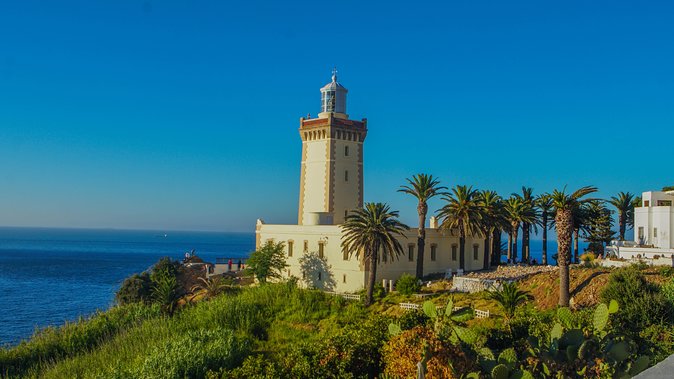
Route 2 is the “coast and viewpoints” half of Tangier. It carries you away from the tight center and toward the edge of the city where the scenery feels more open and windy.
Start at Socco Alto Mall, near the shopping center of the same name. It’s described as the city’s new and largest shopping center, built on a plot over 55,000 m². Even if malls aren’t your thing, this stop is useful because it’s an easy checkpoint before the route moves into parks and lookout territory.
Then you’ll reach Rmilat Park, about 10 minutes from the heart of the city. The description focuses on the feeling of getting lost in a Tangier countryside vibe, even though new constructions are nearby. It’s a nice “breathe for a minute” stop if you’ve been walking all morning.
You can also choose DonaboGardens, described as access to a natural paradise just off the city bustle, part of the protected reserve in Cape Spartel. You’ll see DonaboGardens listed more than once, which is helpful: it means you can pause your day there without needing to guess which direction the bus is taking.
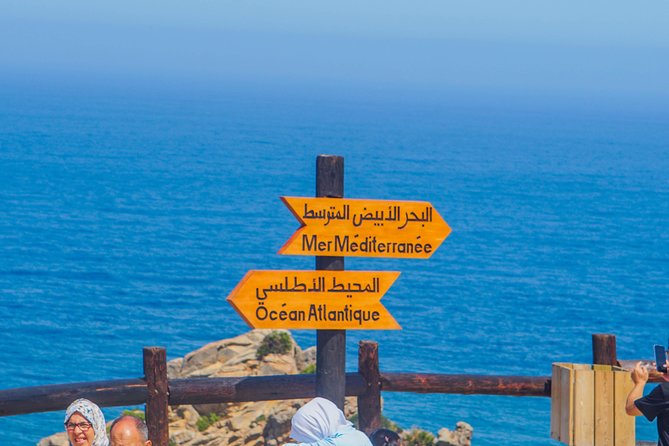
Then comes the star area: Cape Spartel. It’s described as a promontory about 300 m above sea level, at the entrance to the Strait of Gibraltar, about 12 km west of Tangier. If you want the sense of geography—where Atlantic meets Mediterranean and where Europe stares back across the water—this is the stop that gives you the big-picture view.
The route’s main destination is Hercules Caves, described as an archaeological cave complex in Cape Spartel, adjacent to the summer palace of the King of Morocco. The caves area is one of those Tangier attractions where you may not spend hours reading every plaque, but you’ll likely spend time just taking in the setting. One review noted a 15-minute stop to see them without needing to wait for the next bus—so if that timing works for you, it can feel like a decent balance between movement and time on-site.
After that, the route lists DonaboGardens and Rmilat Park again, which makes it flexible if you decide the first sightseeing pass wasn’t enough.
A different kind of stop appears near the end: Tangier Royal Golf Club, founded 1914. It’s described as the first golf club in the Mediterranean basin and one of the oldest courses in Africa. If you’re not into golf, it’s still a calm reference point for how far this route reaches beyond the center.
Finally, Socco Alto appears again, so you can return to a more straightforward re-boarding area if you want to finish your day with less wandering.
Audio guide reality check: 8 languages, but headphones may be your job
The bus includes an audio guide in eight languages, which is the difference between riding past landmarks and actually understanding what you’re seeing. That matters in Tangier, where layers of history can be obvious to locals but not always clear to visitors.
You’ll also likely benefit from the audio while moving between stops—especially on the Route 2 side, where Cape Spartel and the caves are all about the setting. The narration helps you make sense of why specific places are where they are, not just that they exist.
Now for the practical caveat: a few comments point to missing or malfunctioning headphone connections. Don’t assume everything will work smoothly. If audio matters to you, I’d bring your own earphones just in case the supplied setup is out of order.
If your goal is pure sightseeing, the sound level isn’t the only factor. Stop signage can also be an issue, so keep an eye on the route direction and the name of the stop as you approach.





Best times and tactics: getting the most out of every re-boarding
A hop-on hop-off bus works best when you treat it like a tool, not a promise. Here are the tactics that help you avoid wasting your day.
First, pick your priorities early. If Hercules Caves are top priority, build around the published departure times for your season. That avoids the classic frustration of getting off at one stop, then waiting too long for the next ride.
Second, expect crowds to change the experience. Some feedback mentions buses being full and top seats not easy to find. When that happens, the “set your own pace” idea becomes “set your own strategy for getting on.” If you see the bus arriving crowded, consider boarding quickly and locking in a spot rather than aiming for the perfect seat.
Third, aim to ride later in the day when the weather is pleasant, but not so late that you’re rushed. The operating hours end at 5 PM (Oct–Mar) and 6 PM (Apr–Sep), so plan your last key stop with that clock in mind.
Fourth, use the stops that are built for quick wins. Places like Grand Socco / Place du 9 Avril 1947 and Tanger City Center are easy for short walking breaks and re-orientation. If you’re trying to keep your energy up, those are better choices than forcing long walks between far-apart stops.
And finally, if your goal is one big photo stop, you can compare bus value to taxi convenience. One criticism in the feedback is that when frequency disappoints, a taxi can be faster for a single destination afternoon—especially if you’re only going to one area like the caves viewpoint. If you’re doing multiple stops across two days, the bus ticket still makes more financial sense.
Who this hop-on hop-off bus is for (and who should skip it)
This works best for you if:
- You want a low-effort introduction to Tangier over 48 hours
- You like planning loosely, but still want audio guidance
- You’re okay working with schedules that shift with season and traffic
- You want to reach both the city center landmarks and the Cap Spartel / Hercules Caves area without hiring a private driver
It may be a poor fit if:
- You hate waiting and rely on tight timing (the published schedule for the caves route is limited by departures)
- You’re traveling during peak demand and want guaranteed seating
- You expect a smooth ticketing setup with no lines or hiccups—some feedback mentions ticketing queues and headphone issues
Should you book the Tangier City Tour Bus Hop On – Hop Off?
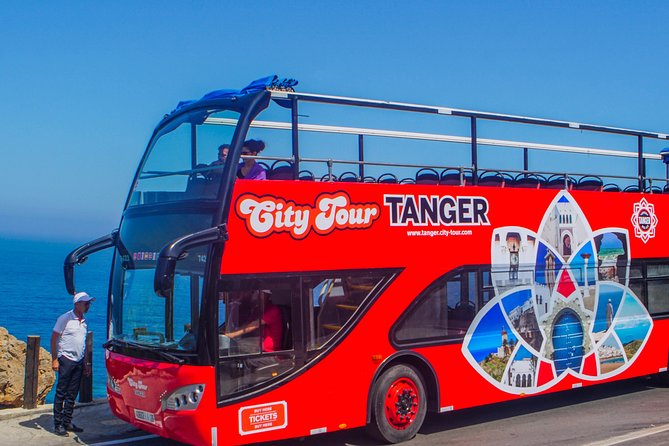
I’d book it if you want an efficient way to learn Tangier’s layout and see both the inner-city landmarks and the coastal scenery with minimal effort. The value is strongest when you actually use the 48-hour freedom to do one route and then the other, rather than trying to cram everything into one quick hop.
If your itinerary is tight and the Hercules Caves are your only must-see, do the math: check the day’s caves departure times and decide if the bus matches your patience level. When it lines up, this ticket can feel like a bargain. When it doesn’t, you’ll be happier using a taxi for the single destination and saving the bus for the rest.
FAQ
What’s included with the Tangier hop-on hop-off bus ticket?
The ticket includes a brochure with a map and stop details, an audio guide in 8 languages, free onboard Wi‑Fi, and 48-hour validity.
How long is the ticket valid?
Your ticket is valid for 48 hours, so you can hop on and off during that window.
Do I need to print a ticket?
No. You can use a mobile ticket, and when you board you show your voucher.
How often does the Tangier City route run?
The Tangier Ville tour frequency is listed as every 30 to 60 minutes.
What are the departure times for the Hercules Caves route?
From October to March, departures are at 12:00, 13:00, 14:00, 15:00, and 16:00. From April to September, departures are at 11:00, 12:00, 13:00, 14:00, 15:00, 16:00, and 17:00.
Does the bus have onboard Wi‑Fi?
Yes, free Wi‑Fi is included on board.
What hours does the sightseeing bus operate?
It operates daily, with schedules varying by season: 9:00 AM–5:00 PM (October to March) and 9:00 AM–6:00 PM (April to September).
Can I cancel for a refund?
Yes. You can cancel up to 24 hours in advance for a full refund.