REVIEW · RABAT
Private Cultural Walking Tour of Rabat with Licensed Tour Guide
Book on Viator →Operated by abdou tours · Bookable on Viator
Rabat comes alive with one sharp guide. This private, licensed guide style walk strings together top Rabat sights like Kasbah des Oudaias with clear explanations and smart photo stops, so the city feels easy to understand fast.
I also love that you cover both the big monument “wow” moments and the smaller lanes of daily life—without racing. The walk links the Hassan Tower area to Rabat’s medina gates, and most site entries are free, which makes the value feel solid. One drawback to plan around: the route can mean a longer walk than you expect, so I’d avoid very late-afternoon starts (and bring water since it is not included).
In This Review
- Key highlights at a glance
- Private Licensed Guide: How the Stories Make Rabat Click
- Value For $59.23: What 3–4 Hours Buys You
- Kasbah des Oudaias First: Cliff Views and Blue-and-White Alleys
- Andalusian Gardens: A Breather Between Big Stops
- Rabat Marina to Hassan Tower: The River Walk That Sets the Tone
- Mohammed V Mausoleum: The Hassan Complex’s Quiet Meaning
- Bab Mellah and Bab Chellah: Gateways That Change the Mood
- Medina of Rabat: Souks, Narrow Lanes, and a Local Pace
- How to Prepare: Shoes, Water, and Best Time to Walk
- Should You Book This Rabat Walking Tour?
- FAQ
- How long is the private cultural walking tour of Rabat?
- What does the tour include?
- Is pickup available?
- Are the main sites included with admission?
- Do I get a mobile ticket?
- Is bottled water provided?
- Where does the tour start?
- Can service animals join the tour?
- What if weather is bad or the minimum number of travelers isn’t met?
Key highlights at a glance
- Private, licensed guide who can handle questions clearly and keep the pace comfortable for your group
- Free admission stops at Kasbah des Oudaias, Andalusian Gardens, Hassan Tower, and Mohammed V mausoleum
- Kasbah des Oudaias cliff views plus tight white-and-blue streets for great pictures
- Rabat Marina + Bouregreg River stroll before the Hassan complex
- Bab Mellah and Bab Chellah gateways that set the tone for Jewish Quarter and Old Medina wandering
- Strong photo help from guides who know where to stand and how to frame shots
Private Licensed Guide: How the Stories Make Rabat Click
A private guide is the real engine here. You’re not just ticking off sights—you’re getting the “why” behind them, with explanations delivered in good, practical English. And the guide experience seems consistent: multiple names came up in past tours, including Salik, Tarik, Mohammed, Hamid, Elias, Hasania, and Mona.
I like the fact that the tour doesn’t treat history like a lecture. You walk, pause, look closely, and then the guide connects architecture, religion, and local tradition to what you’re seeing in front of you. That turns places you might otherwise skim into landmarks that actually make sense.
There’s also an easy, human feel to how guides handle the day. One shared experience described a guide adjusting smoothly when someone’s arrival was delayed. Another noted patience with questions and even stepping in to help with faith-related context—handy if you want explanations that match your background.
You can also read our reviews of more walking tours in Rabat



Value For $59.23: What 3–4 Hours Buys You
At about $59.23 per person, the value comes from three things: (1) a private licensed guide, (2) multiple major sites in one connected route, and (3) several stops with free admission. For a city that can be confusing on your first day, paying for direction and story-telling is often cheaper than paying in wasted time.
This is also the kind of tour that can work whether you’re short on time or just want a calm introduction. The schedule runs about 3 to 4 hours, and it’s private—meaning it’s only your group.
Pickup is offered, and the tour includes a mobile ticket, which is helpful in Morocco where you’ll appreciate not scrambling for paper. One small thing to note: bottled water isn’t included, so you’ll want to plan for that.
Kasbah des Oudaias First: Cliff Views and Blue-and-White Alleys
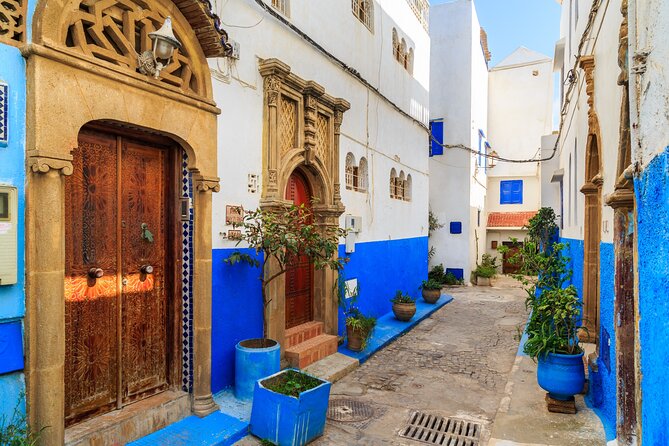
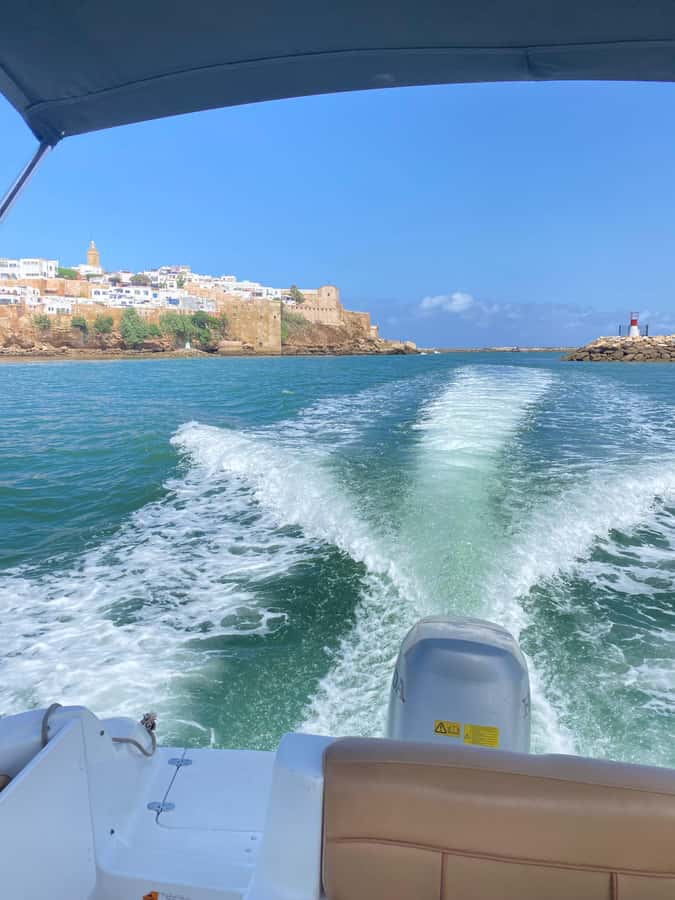
The tour begins at the Kasbah des Oudaias, perched on a cliff above the Atlantic. This is a strong opener because the setting does half the work for you. As soon as you arrive, you’re in that classic Rabat rhythm: narrow lanes, white-washed walls, and blue accents that make everything feel designed for wandering and photos.
You get about 30 minutes here, and the time is enough to notice details without feeling trapped. The main value is that the guide helps you see the place as more than pretty walls—explaining how a fortress area becomes a lived-in neighborhood vibe.
Admission is listed as free for this stop, which matters because it means the tour’s structure doesn’t hinge on paid entry fees. If you’re trying to keep Morocco costs predictable, this is a small win.
Andalusian Gardens: A Breather Between Big Stops
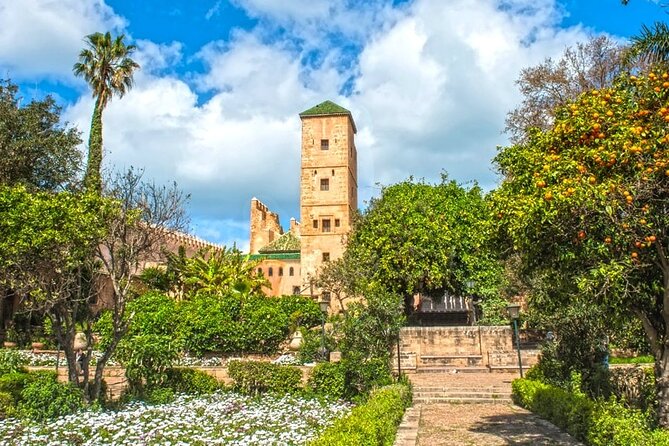
Next comes the Andalusian Gardens, timed at about 20 minutes. This is the reset button after the Kasbah. Expect a quieter pocket of Rabat where the guide points out garden features and connects them to cultural background.
The reason I like this stop is simple: it gives your brain a soft landing. After fortress lanes and waterfront energy, the gardens let you slow down. You’re not forced to rush through; instead, you get a calm moment that makes the rest of the tour feel less intense.
Also, admission is free, so you’re not paying extra to get that mental break.
Rabat Marina to Hassan Tower: The River Walk That Sets the Tone
Between the gardens and the monument area, you’ll take a leisurely walk along Rabat Marina beside the Bouregreg River. This is about 15 minutes, and it’s more than a transfer. It’s your view window—Atlantic breezes, water reflections, and a gradual shift from garden calm to monumental scale.
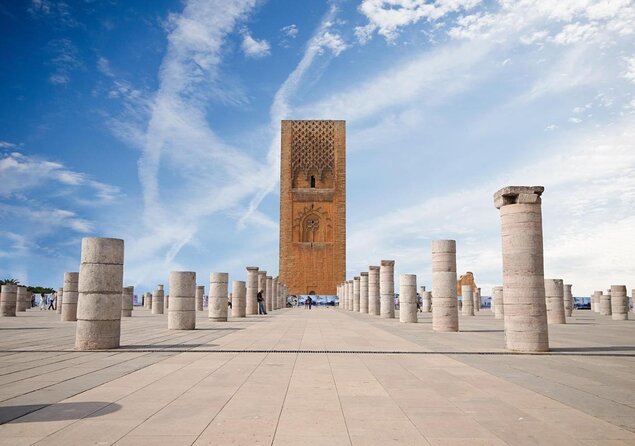
Then you reach Hassan Tower, where you’ll spend around 20 minutes. This is the headline sight, and it has a special kind of power: it was planned to be the largest minaret in the world, but it’s incomplete. That unfinished state matters—it turns the tower into a visible lesson about time, ambition, and the Almohad architectural tradition.
Admission is listed as free here too, so the big spectacle doesn’t come with extra ticket drama. It’s a great moment to slow down and take in the tower’s proportions from different angles, with your guide explaining what you should look for.
You can also read our reviews of more guided tours in Rabat




Mohammed V Mausoleum: The Hassan Complex’s Quiet Meaning
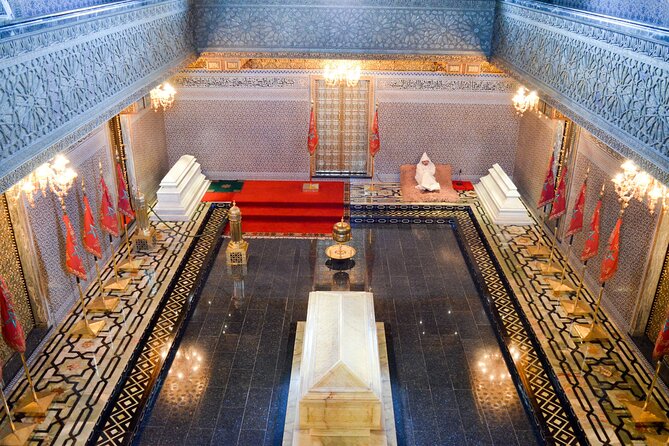
Right next to Hassan Tower is the Mausoleum of Mohammed V, also about 20 minutes and also described as part of the same historic area. The key point: it’s not just another stop. It has a serene presence, and it’s known for being the final resting place of Moroccan majesty kings.
What makes this visit worth your time is how it contrasts with the unfinished minaret. Hassan Tower is the dramatic “big idea” structure. The mausoleum is the composed, reverent one. Your guide’s job is to help you read those differences, and that’s where the tour feels like more than a walk between landmarks.
As for practical strategy: if you’re on a tight schedule, don’t plan to arrive here at the very edge of the day. One past experience flagged that a late start can create timing pressure, especially because site hours can matter. I’d rather you arrive with room to breathe than hustle through sacred spaces.
Bab Mellah and Bab Chellah: Gateways That Change the Mood
After the Hassan complex, the route moves into Rabat’s Old Medina world. The tour passes through Bab Mellah, the entrance to the Jewish Quarter. This is a quick but meaningful photo stop—enough time to appreciate the gate’s presence and then keep moving.
Then you continue to Bab Chellah, another gateway that signals a shift into the medina atmosphere. These gates matter because they help you understand how Rabat’s neighborhoods layer over time. They also give your feet a simple landmark rhythm: walk, pass a gate, notice the street character changes, repeat.
This is where a guide earns their fee. Without help, medina streets can feel random. With the tour structure, you’re guided through key thresholds that make the winding parts feel intentional.
Medina of Rabat: Souks, Narrow Lanes, and a Local Pace
The final stop is the Medina of Rabat, with about 30 minutes set aside for wandering. You’ll get the chance to stroll narrow avenues and spend time around traditional souks, picking up the feel of local life.
What I like about ending here is that it flips the tour’s sequence. You start with monument scale, then you shift to quieter garden calm, then you finish with street-level Rabat. That makes the day feel complete, like you saw both the built icons and the human rhythm around them.
You won’t be trapped in one shop or forced into a shopping script. The goal is walking and context: how people live around these historic structures, and how the city’s story shows up in everyday corners.
How to Prepare: Shoes, Water, and Best Time to Walk
This is a walking-focused itinerary. Even if it’s described as cultural, you should still pack like it’s a real city walk.
- Bring comfortable shoes. The route includes transfers on foot between areas, including the waterfront walk and the medina entrances.
- Carry water. Bottled water is not included, so plan a refill strategy before you start.
- Choose your timing wisely. One highlighted concern was that very late afternoon can make the day feel rushed, especially when some places may close by evening. A morning or early afternoon start tends to keep things relaxed.
Also, Morocco weather matters here. The experience is listed as requiring good weather, and if it’s canceled due to poor weather, you’ll be offered a different date or a full refund. That’s not just fine print—it’s the difference between a pleasant walk and an uncomfortable one.
If you’re the type who loves photos, you’ll probably appreciate guides who know where to frame shots. Past tours called out one guide for excellent photography results, which is a nice bonus if you like documenting architecture and street texture.
Should You Book This Rabat Walking Tour?
If you want a smooth first taste of Rabat—monuments first, then medina—you should strongly consider booking. The private licensed guide, multiple free admission stops, and connected route make it an efficient way to understand what you’re seeing instead of wandering with a map and guesses.
I’d think twice if you hate longer walks or you’re planning a very late-afternoon start. In that situation, the day can feel tight, and you may miss the slower pace that makes these places enjoyable. If you can, start earlier and you’ll get the best mix: fortress beauty, garden calm, Hassan complex scale, and medina atmosphere.
Finally, if you’re visiting with questions—about architecture, religion, or how the city layers across eras—this is the kind of tour where a good guide’s explanations actually pay off.
FAQ
How long is the private cultural walking tour of Rabat?
It runs about 3 to 4 hours.
What does the tour include?
It includes a local licensed tour guide.
Is pickup available?
Pickup is offered, and the activity ends back at the meeting point.
Are the main sites included with admission?
For the stops listed (Kasbah des Oudaias, Andalusian Gardens, Hassan Tower, and the Mausoleum of Mohammed V), admission tickets are marked as free.
Do I get a mobile ticket?
Yes, the tour includes a mobile ticket.
Is bottled water provided?
No. Bottled water is not included.
Where does the tour start?
The start point is قصبة الوداية25J7+PGX, Rabat, Morocco.
Can service animals join the tour?
Yes, service animals are allowed.
What if weather is bad or the minimum number of travelers isn’t met?
This experience requires good weather. If it’s canceled due to poor weather, you’ll be offered a different date or a full refund. It can also be canceled if the minimum number of travelers isn’t met, with the same options.