REVIEW · MARRAKECH
Moroccan Food Tasting Tour and Dinner
Book on Viator →Operated by Sara Morocco Private Tours · Bookable on Viator
Moroccan food tastes better when someone local points at the right stall. This 3-hour VIP-style tour in Marrakech strings together Jemaa el-Fnaa, the medina markets, and a sit-down dinner, so you get both street-level eating and a proper Moroccan meal.
Two things I really like: you try a wide mix of flavors (from pastilla and soups to pancakes, olives, and pastries), and you’re not stuck just eating blindly—you hear stories and get the “why” behind the dishes while you walk.
One possible drawback: there’s a lot of walking and stairs in the medina, so if mobility is an issue, it’s worth thinking about before you commit.
In This Review
- Key things to know before you go
- Why This 6:00 pm Marrakech Food Walk Works
- Meeting at Café de France and Getting Oriented Fast
- Jemaa el-Fnaa: Street Theater Before the First Tastes
- Medina Wandering and the Olives Souk Stop You’ll Actually Use
- Spice Shop Secrets: Argan Oil, Amlou, and Mint Tea Sampling
- Evening Food Stalls + Souk Semmarine Pastries and Olives
- What’s on the Dinner Table: Salad, Tanjia or Tajine, Dessert
- Guide Style: Hassan, Plus Other Local Names You Might Hear
- Price and Value: $174.47 for 3 Hours of Real Eating
- Timing, Weather, and Comfort Considerations
- Should You Book This Moroccan Food Tasting Tour?
- FAQ
- What time does the tour start, and how long is it?
- Where do I meet the guide?
- What food and drinks are included?
- Should I eat before the tour?
- Is this tour private?
- What’s the cancellation rule?
Key things to know before you go
- A 6:00 pm start keeps you in the medina’s evening rhythm, when food stalls and Jemaa el-Fnaa really come alive.
- You’ll sample a stack of specific foods, not generic bites: pastilla, chebbakia, snails (barbouch), Moroccan pancakes, marinated olives, and more.
- The tour is guided by locals (often Hassan), and you’ll hear practical explanations in English.
- You’ll hit the spice store for tastings like argan oil, amlou, and Moroccan mint tea—great for taking ideas home.
- It ends with a real dinner: Moroccan salad, tanjia or tajine, and dessert.
- Even though it’s a group experience, it runs as a private activity for your group.
Why This 6:00 pm Marrakech Food Walk Works
I like food tours that line up with the city’s natural schedule, not a random clock. Starting at 6:00 pm puts you right where Marrakech wants you: evening markets, family-run stalls, and the full-on energy around Jemaa el-Fnaa.
This tour also uses time efficiently. You get several short stops for tastings while you’re already in the middle of things, then you finish with a seated Moroccan dinner. That mix matters because Marrakech can be a lot to self-navigate—especially when you’re hungry.
You can also read our reviews of more food & drink experiences in Marrakech

Meeting at Café de France and Getting Oriented Fast
Your meet-up is at Hôtel Restaurant Café de France near Jemaa el-Fnaa (on Rue des Banques). It’s a handy location because you’re close to the action from minute one, and it’s noted as near public transportation.
Another small but useful detail: the tour uses a mobile ticket and is set up to avoid the crowd crush. Translation: you spend more time eating and asking questions, and less time stuck in lines just to get moving.
Before you head out, wear shoes you’re comfortable with. Even with a guided route, you’re still moving through the medina and dealing with uneven ground.
Jemaa el-Fnaa: Street Theater Before the First Tastes
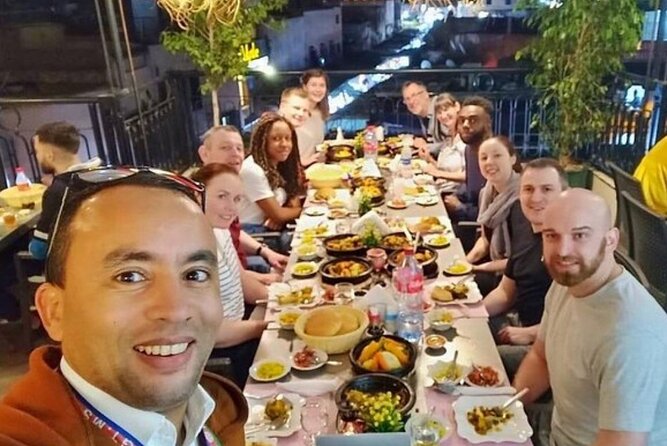
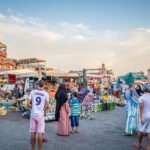
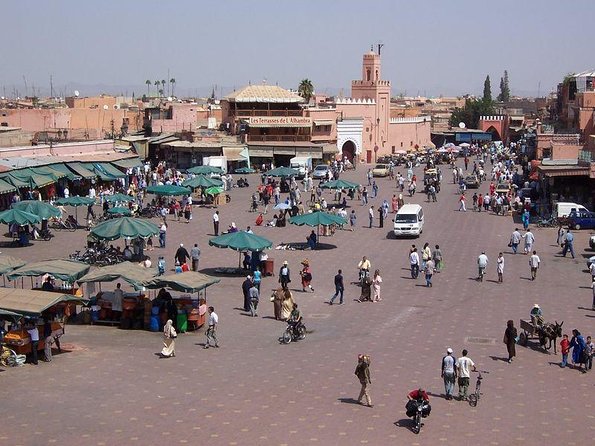
Stop one is Jemaa el-Fnaa, Marrakech’s main square. By evening, this is where the city turns into performance art—street entertainers, acrobats, story tellers, magicians, dancers, and Gnawa musicians showing up alongside food stalls.
This stop isn’t only about atmosphere. It’s a smart warm-up because it helps you understand the “public square” side of Moroccan food culture: eating as a social event, where people gather, snack, and watch things happen around them.
Time on this first leg is about 50 minutes. It’s long enough to settle in, grab your first tastings, and get your bearings—without turning the tour into a wandering marathon.
Medina Wandering and the Olives Souk Stop You’ll Actually Use
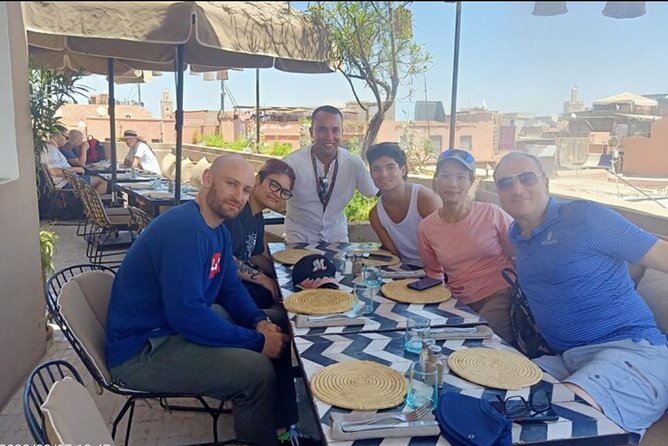
Next you move into the medina of Marrakesh, with a focus on everyday life and practical browsing. You’ll explore different hidden sights and get a feel for how local families live, not just what’s photographed.
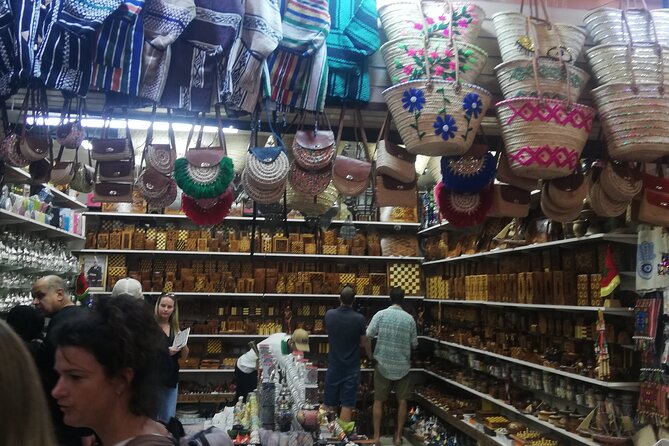
One highlight here is the colorful olives souk. You’ll also pass food shops, and the way the tour is set up, each section of the medina tends to specialize—spices in one area, ingredients in others, and so on. That specialization is exactly what helps you make sense of Moroccan shopping when you’re on your own later.
This segment runs about 1 hour. The trade-off is that it’s active walking time, not just “look and listen.” If you’re someone who gets tired easily, you’ll want to keep hydration and pacing in mind.
Spice Shop Secrets: Argan Oil, Amlou, and Mint Tea Sampling
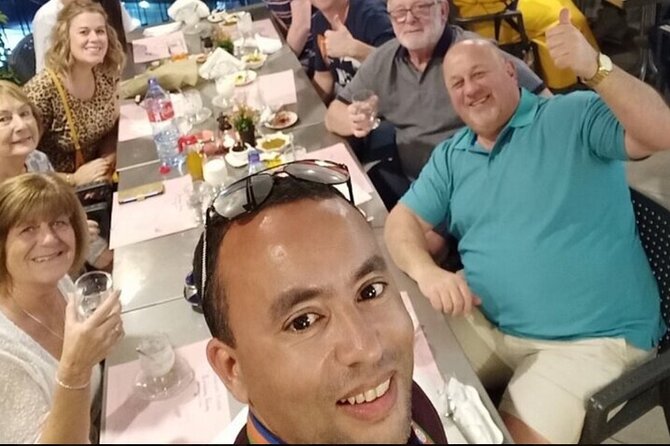
One of the best-value parts of this tour is the deliberate stop for ingredient education. You’ll visit an authentic spices store where locals pick fresh spices—then you get tastings that go beyond “try a little.”
On the list here: pure edible argan oil, amlou, and Moroccan mint tea. Those aren’t random samples. They’re core flavors that show up throughout Moroccan cooking, especially in how households think about quality and texture—smooth, aromatic, and built around ingredients rather than shortcuts.
This portion is about 30 minutes, and it’s tight in the best way. You don’t feel stuck in a shop, and you get enough explanation that the taste makes sense afterward, even if you can’t recreate the exact mix at home.
A few more Marrakech tours and experiences worth a look

Evening Food Stalls + Souk Semmarine Pastries and Olives
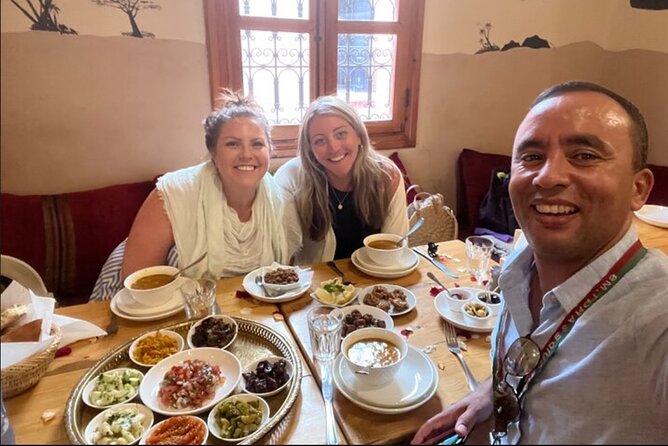
Stop four loops back to Jemaa el-Fnaa for evening food stalls. The point isn’t just variety; it’s getting you tasting the kind of food locals actually go for when the day cools down. You’ll be able to ask questions as you sample, which makes a big difference when you’re trying to identify what you’re eating.
Then comes Souk Semmarine, where the focus shifts to Moroccan pastries and olives. This is a short stop (about 20 minutes), but it’s designed to give you something you can recognize and remember—sweet pastries paired with salty olives is a very Marrakech combo.
A small practical note: these final tastings stack up. The tour is built around multiple courses of sample-sized bites, so you’ll likely want to arrive with an actual empty stomach, not a lightly snacky one.
What’s on the Dinner Table: Salad, Tanjia or Tajine, Dessert
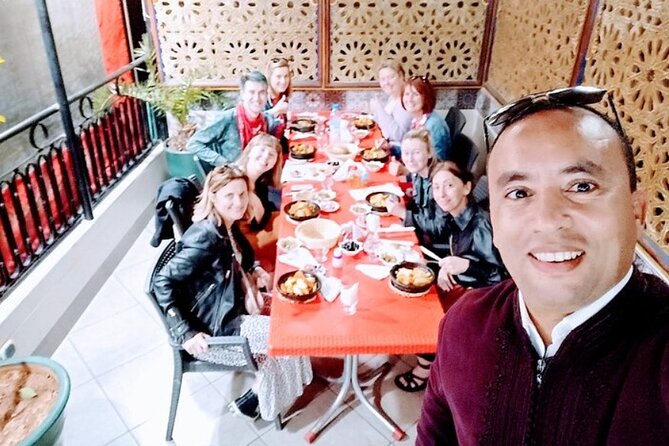
The tasting walk builds to a full dinner. Included is Moroccan salad, followed by tanjia or tajine (you’ll get one or the other), and then dessert.
From the tasting list, you also get the kind of food you typically see in Moroccan households and celebrations, not only street fare. Expect samples such as:
- Pastilla of chicken and almonds
- Moroccan pastries and macaroons
- Moroccan soups with dates and chebbakia
- Barbouch (snails) with spices
- Moroccan pancakes with honey and cheese, or onion and spices
- Marinated olives with olive oil and spices
- Organic dried fruits
- Selected Moroccan pastries
- Coffee and/or tea, plus sparkling water
That’s a lot of variety for one evening. The upside is you leave with a real picture of Moroccan flavor patterns: sweet-and-savory (almonds, honey, dates), warm spices, and olive oil-forward ingredients.
One quick consideration: because you’re sampling a lot, the dinner is more like the finale than the first meal. If you eat a big lunch beforehand, you’ll feel the squeeze.
Guide Style: Hassan, Plus Other Local Names You Might Hear
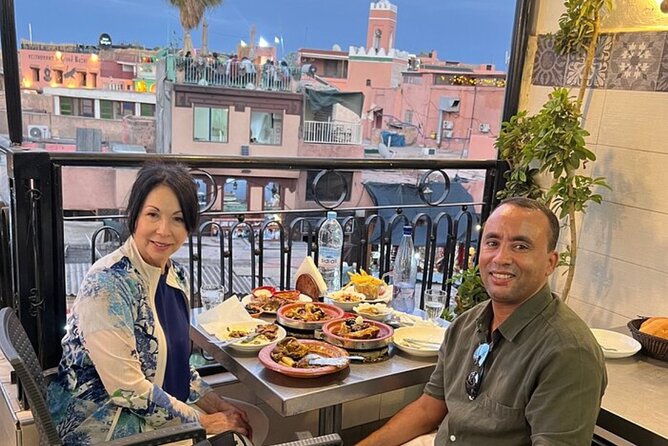
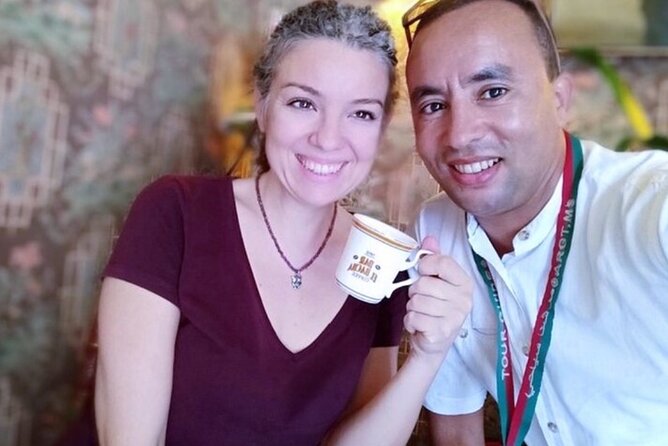
A huge part of why this tour scores so high is the guide. The overview calls out Hassan as the person guiding you through the courses with explanations behind the dishes.
The reviews also mention other guides by name—Ali, Souf, Hussain, and Mohammed—and the common thread is consistent: local knowledge, friendly pacing, and strong English. One review even calls out excellent English specifically, and that matters because food tours go from “tastes good” to “I understand what I’m tasting” when you can ask questions and get clear answers.
This is also a “you don’t feel pushed” kind of tour. You’re given chances to ask what you want to know. If you care about spices, oils, or how something should taste, this style is ideal.
Price and Value: $174.47 for 3 Hours of Real Eating
At $174.47 per person, this isn’t the cheapest option on the Marrakech scene. But you are paying for three things that add up fast if you try to DIY:
1) Guided route through multiple food-focused stops in the medina
2) A large set of tastings (not just two or three small bites)
3) A sit-down dinner with a proper Moroccan meal structure
Also, it’s noted as being booked on average 40 days in advance, which usually means people find it dependable and worth planning around.
If you’re already comfortable wandering medina streets, you could piece together snacks on your own. But if you want the efficiency of guided eating—plus learning why certain foods work together—this price starts to look pretty reasonable.
Timing, Weather, and Comfort Considerations
This tour needs good weather. If conditions aren’t good, you’ll be offered a different date or a full refund.
Even with good weather, expect physical movement. One review specifically mentions lots of stairs and that it may not be easily accessible. Combine that with medina terrain and warm evenings, and you’ve got the main comfort risk.
My practical advice: go in prepared—comfortable shoes, a light layer, and pace yourself on the first tastings. If you’re sensitive to heat, try not to arrive already stressed from walking around before your 6:00 pm start.
Should You Book This Moroccan Food Tasting Tour?
Book it if you want a Marrakech food experience that mixes market browsing, ingredient tastings (argan oil, amlou, mint tea), and a real dinner without you having to figure everything out alone.
Skip or rethink it if you have limited mobility or you’d rather do a slower, less structured medina route. The route has enough walking and stairs that this one is better suited for people who can handle an active evening.
If you’re planning your first days in Marrakech, I think this is a strong pick. You’ll leave with a clearer idea of Moroccan flavors and ingredients, plus a menu you can talk about and search for later when you shop or eat on your own.
FAQ
What time does the tour start, and how long is it?
It starts at 6:00 pm and runs for about 3 hours.
Where do I meet the guide?
You meet at Hôtel Restaurant Café de France, near Jemaa el-Fnaa, Rue des Banques, Marrakech 40000, Morocco.
What food and drinks are included?
You get Moroccan food tastings plus dinner. Included are items like pastilla, Moroccan soups, Moroccan pancakes, marinated olives, pastries/macaroons, organic dried fruits, coffee and/or tea, and sparkling water. Dinner includes Moroccan salad, tanjia or tajine, and dessert.
Should I eat before the tour?
Come with an empty stomach or at least don’t overeat. There’s specific advice in the reviews: don’t eat too much before you go.
Is this tour private?
It’s listed as a private tour/activity, meaning only your group participates.
What’s the cancellation rule?
You can cancel for a full refund if you cancel at least 24 hours before the experience’s start time. If you cancel less than 24 hours before, the amount you paid isn’t refunded.