Marrakech feels different when you go with a local. This private tour mixes the big-name medina sights with quieter corners, then lets you steer the day with a multilingual guide. I like that it stays private (just you and your host) and that it includes a simple local drink or snack while you walk.
Two stops in particular are worth it for the texture of the city: Mellah, where you’ll see how spices and sweets fit into daily Moroccan life, and Bahia Palace, where the architecture tells its own story. One thing to consider: the route can flex, and some guides are more retail-friendly than others—so you’ll want to set clear priorities at the start.
In This Review
- Key things I’d plan for before you go
- A private Marrakech plan that starts with street-level context
- Meeting at Jemaa el-Fna: why this start time helps
- Stop 1: Bab Agnaou and the gate stories you actually remember
- Stop 2: Mellah’s Jewish Quarter, spices, sweets, and bread
- A quick reality check: why Mellah feels different with the right guide
- Stop 3: Bahia Palace and the payoff of architectural context
- The flexible stop(s): what to expect when your route changes
- The food and snack piece: small cost, big morale
- Price and value: what $68.36 per person is really buying
- Carbon-neutral and why I think it matters (even on a short walk)
- How to get the best version of this tour (and avoid the frustrating one)
- Start with a clear wish list
- Use names as clues if you want to choose wisely
- Don’t expect ticketed entry sites
- Who this tour suits best
- Should you book this Marrakech private tour?
- FAQ
- How long is the private Marrakech tour?
- Where is the meeting point?
- Is this tour really private?
- Are entrance tickets included?
- What’s included besides the guide?
- Is the tour carbon neutral?
Key things I’d plan for before you go
- Private time, not a crowd shuffle: you’ll get pace control and attention just for your group
- Mellah details that don’t show up in quick photo stops: spice market scenes plus a local bakery moment
- Bab Agnaou storytelling: a gate you’ll understand more after the history walk-through
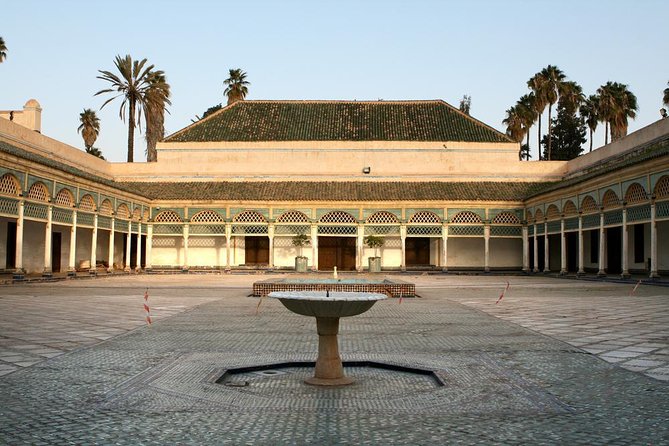
- Bahia Palace views without entrance hassles: you’ll see it from the outside as part of the route
- Your guide should match your interests: food, history, or architecture can steer the stops
- Expect light shopping pressure only if you allow it: some guides may add retail stops depending on the day
A private Marrakech plan that starts with street-level context
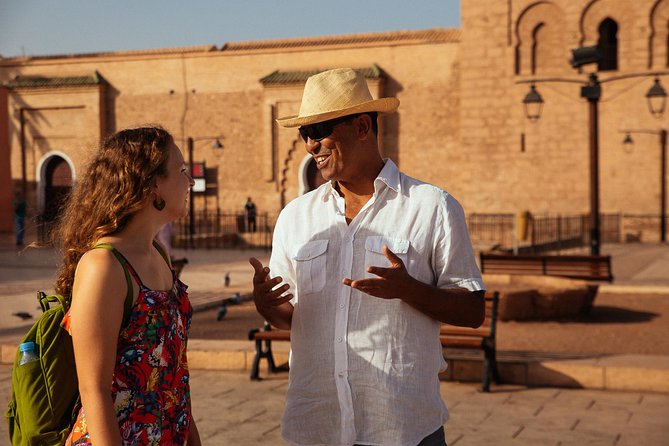
If your first day in Marrakech is when everything feels loud and confusing, this kind of tour is a smart move. You meet in the heart of the medina area near Jemaa el-Fna, then you walk with a local host who can explain what you’re actually looking at. No waiting around for a bus load. No rushing for a checklist.
I really like the way the experience is built around a real local rhythm. Instead of just pointing at sights, your guide ties streets, markets, and architecture to the way Marrakech has worked for centuries. And because you can tailor the day either before you meet or on the spot, you’re not stuck with a one-size script.
One practical note: the tour is about 3 hours (approx.). That’s enough time to get oriented and see major landmarks, but it’s not a full-day deep medina marathon. Plan it as your start point—or your reset day—so you can explore more freely afterward.
You can also read our reviews of more private tours in Marrakech


Meeting at Jemaa el-Fna: why this start time helps
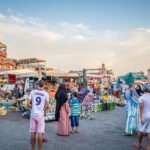
Jemaa el-Fna is where Marrakech energy hits you first. Starting here also means your guide can point out navigation basics right away: which lanes to trust, where the main flows tend to move, and where side streets turn into mini-worlds of their own.
The tour ends back at the meeting point, which is handy. You won’t be stranded across town wondering how to get back. It also means the walking route is designed to stay medina-connected rather than turning the day into long transfers.
Because it’s near public transportation, it’s easier to stitch into your travel plan. If you’re using taxis or rideshare, having a consistent “home base” (Jemaa el-Fna) makes the logistics simpler.
Stop 1: Bab Agnaou and the gate stories you actually remember
Bab Agnaou is one of those Marrakech landmarks that looks impressive even before anyone explains it. But what makes this stop valuable is what the local host does with it: you’ll hear history tied to the gate and its place in the city’s story.
You get about 30 minutes here. That’s long enough to slow down, look closely, and absorb context without turning it into a lecture. The best way to experience Bab Agnaou is to ask a simple question early, like what this gate signaled back then—or what the city used it for.
Because entrance tickets aren’t part of the plan for this experience, you’ll be appreciating it from the outside. That can be a plus: you keep your time moving and you avoid turning the day into ticket lines and paperwork.
Consideration: If you’re the type who wants to go inside every historic site, this tour is more about seeing and understanding from street-level than doing full ticketed visits.
Stop 2: Mellah’s Jewish Quarter, spices, sweets, and bread
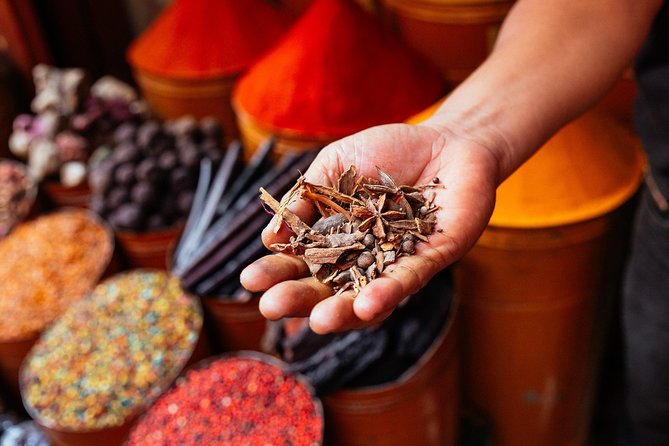
This is the stop where the tour earns its title of highlights plus less-visited corners. Mellah is the old Jewish Quarter area, and your guide helps you connect the location with the role it played in trading. Even if you’ve read about Mellah before, walking through with a host changes the whole experience.
You’ll get about 50 minutes here, and that’s not just for sightseeing. Expect hands-on flavor cues:
- a visit to a spices souk scene, where you’ll understand how Moroccan cuisine gets its intensity
- a taste of Jewish sweets typical for Moroccan childhood, including cou cou
- a local bakery stop where you can see the baker on duty and try warm fresh bread
That last part is small, but it matters. Marrakech markets can be overwhelming fast. A bakery moment gives you a human pause. It also gives you a taste benchmark—so when you later eat in a café or snack in the street, you’ll recognize the style of bread and sweetness more clearly.
A quick reality check: why Mellah feels different with the right guide
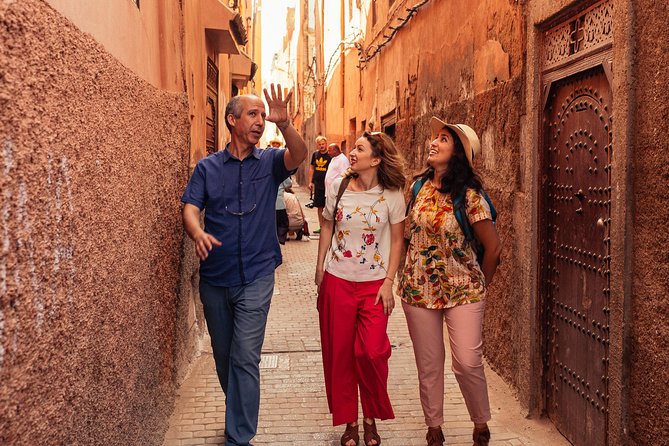
Mellah works best when your guide keeps it narrative, not transactional. The strongest versions of this tour use Mellah to show you how culture, food, and trade link together. You can ask for that straight away.
From guide patterns that show up in real-world feedback, you might run into different approaches:
- Some guides focus on navigation and storytelling, especially helpful for first-timers who worry about getting lost.
- Others can drift toward retail stops if you don’t clearly steer toward food and history.
So at the start of the day, tell your guide what you want to see most. For Mellah, that usually means: spices, sweets, bread, and the meaning behind the lanes.



Stop 3: Bahia Palace and the payoff of architectural context
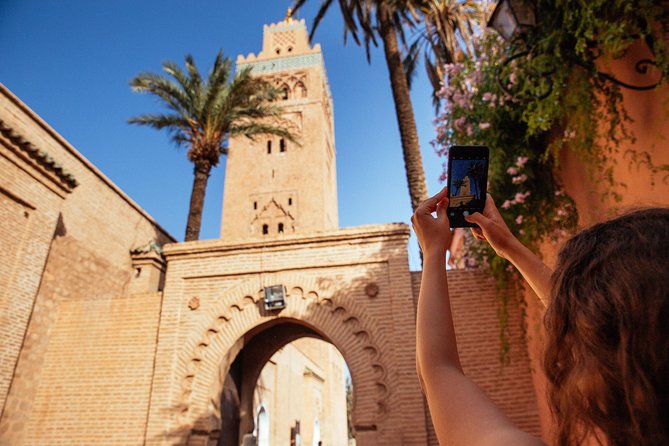
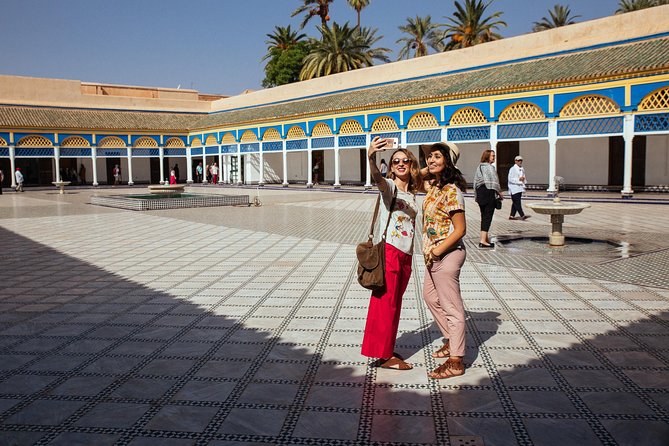
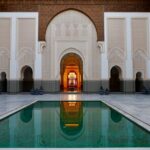
Bahia Palace is a major Marrakech name. The difference here is pacing and explanation. You’ll wander for about 30 minutes, and your local host will guide what to notice in the architecture and how it fits into the palace’s history.
Again, this experience is structured around seeing from the outside, since entrance to attractions isn’t included. That can sound like a limitation. But for many people, it’s a sweet spot. In a medina, time disappears fast. If you’re choosing between one inside ticket and three meaningful street-based stops, this format tends to give you better overall orientation.
What you should do here: slow down. Don’t just take photos. Look at the shapes, the layout clues, and the way the palace communicates status through design. When your guide points out what you’re looking at, it stops feeling like random stonework.
The flexible stop(s): what to expect when your route changes
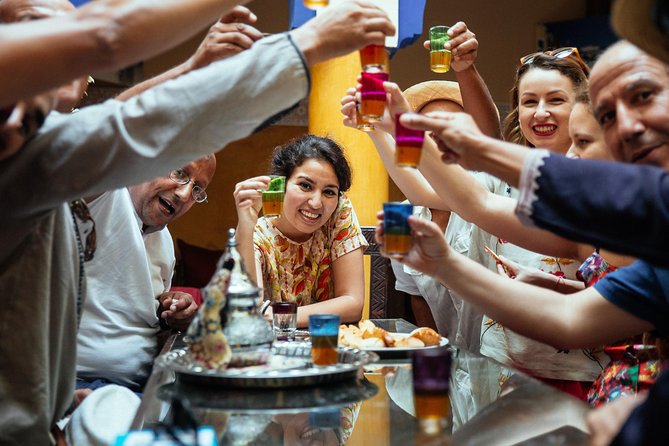
Your tour plan includes a possible extra stop depending on your host’s route. The exact sights aren’t fixed in the info you provided, which is why it’s worth asking on the morning-of or when you confirm.
If your priority is strict sightseeing, don’t be shy. Ask your guide:
- What’s the final stop today besides Bab Agnaou, Mellah, and Bahia Palace?
- Will the extra stop be a market, an indoor attraction, or another historical area?
- Are any sites requiring paid entry, or is everything outside?
This is especially important because entrance to attractions generally isn’t included for this experience. If you want optional indoor time, you’ll want clarity before you commit your day to it.
The food and snack piece: small cost, big morale
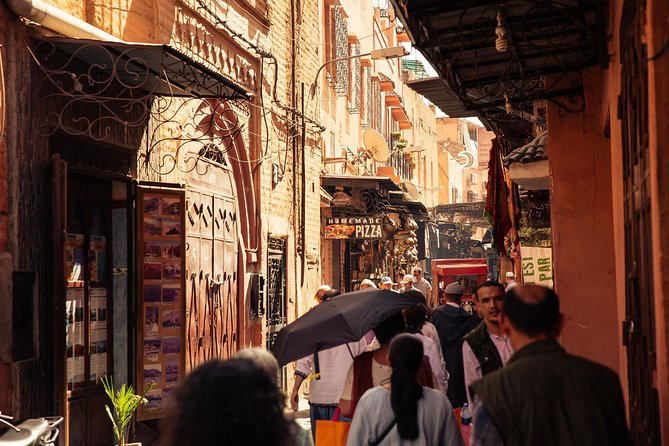
You’ll get one local drink or snack included. This sounds minor, but in Marrakech it’s useful. Walking in heat, navigating alleys, and making sense of market smells can wear you out fast. A planned break keeps the tour from turning into endurance.
Also, it gives you a cue to try local flavors in a guided setting. You’ll get one taste moment that’s intentionally part of the route, rather than leaving you to hunt for something when you’re already tired.
Price and value: what $68.36 per person is really buying
At $68.36 per person for a private 3-hour walking tour, you’re not paying for a big bus or a long ride. You’re paying for two things:
1) a local guide’s attention with no crowd pressure
2) access to context—why places matter, not just what they look like
This is also a private experience, so it’s usually better value when you’re splitting the cost with a companion. The “group discounts” feature can also apply if you book in a way that supports it, though the core experience is private for you and your guide.
Another value point: the tour uses a mobile ticket and aims to be a near-public-transport start, which reduces time spent on logistics. In Marrakech, that time saved can be the difference between seeing one more site or eating early because you’re hungry.
What might not feel like value to you: if your guide spends a lot of time on retail stops you didn’t ask for, the tour can feel less like history and more like shopping facilitation. This varies by guide and by how you steer the day, so it’s worth setting expectations early.
Carbon-neutral and why I think it matters (even on a short walk)
The tour is listed as carbon neutral, with emissions offset, and it’s tagged as a B-Corp sustainable carbon neutral experience. For a 3-hour walking-style itinerary, that may not be the main reason you book.
Still, I appreciate it. When you’re traveling, little choices add up. If you’re already paying for a private experience, it’s nice when the provider also thinks about their footprint instead of treating sustainability like an afterthought.
How to get the best version of this tour (and avoid the frustrating one)
This tour’s success depends heavily on your guide’s approach and your communication. Here’s how I’d handle it.
Start with a clear wish list
Pick your top two:
- food and flavors (spices, sweets, bread)
- history and storytelling (gates, quarters, palace context)
- architecture and design (Bahia Palace focus)
Then say what you don’t want. If you don’t want a shopping-heavy route, say it plainly at the start.
Use names as clues if you want to choose wisely
Some guide names show up in feedback: Mohammed is praised for tailoring and helping families navigate; Rachid gets credit for detailed, patient guidance for first-timers; Chafik and Omar are noted for navigating souks and making the maze manageable; Jaafar and Redouan are praised for an overview with strong pacing. There are also negative experiences tied to guides whose route leaned toward retail demonstrations.
You can’t always pick a specific guide, but seeing patterns like these helps you decide what kind of communication to have on day one.
Don’t expect ticketed entry sites
Your tour plan indicates entrance to attractions isn’t included, and the listed major stops are treated as outside viewing. So if you’re counting on going inside Bahia Palace or other ticketed spots, you’ll need to manage expectations or plan separate visits.
Who this tour suits best
This is a good match for:
- First-time visitors who want a fast orientation without getting swallowed by the medina
- People who like walking tours with local explanations, not just photo stops
- Anyone who wants flexibility for interests like food, history, or architecture
- Travelers who prefer a private pace over group tour timelines
It may not be your best choice if:
- You want a strict, ticketed “see every interior” itinerary
- You’re allergic to any retail pressure and don’t want to steer the day at all
Should you book this Marrakech private tour?
I think you should book it if you want a smart first pass through the city with local context, especially around Mellah’s food culture and Bahia Palace’s architectural storytelling. The structure is short enough to stay manageable, and the private format gives you a real chance to learn how to move through Marrakech without stress.
I wouldn’t book it if you only care about inside-ticket monuments and you dislike the idea of route flexibility. Also, because some past experiences describe retail-heavy detours, you should go in with a simple plan: set your priorities early, ask what the “extra stop” might be, and keep the focus on culture and food.
If you communicate clearly at the start, this tour can be one of the best ways to start Marrakech on the right foot.
FAQ
How long is the private Marrakech tour?
It runs for about 3 hours.
Where is the meeting point?
You meet at Jamaa El-Fna (Jemaa el-Fna) in Marrakech, and the tour ends back at the meeting point.
Is this tour really private?
Yes. It’s a private tour for only you and your multilingual local guide.
Are entrance tickets included?
No. Entrance to attractions is not included, and the plan notes you’ll visit the listed sites from the outside.
What’s included besides the guide?
The tour includes 1 local drink or snack, plus the private multilingual local guidance and an experience without the crowds.
Is the tour carbon neutral?
Yes. The experience is listed as sustainable and carbon neutral, with emissions offset.