REVIEW · MARRAKESH
Marrakech : Ceramic Painting Authentic Experience
Book on GetYourGuide →Operated by Atelier Lamsaty · Bookable on GetYourGuide
Paint your own Marrakech ceramic in calm surroundings. The experience at Atelier Lamsaty is interesting because you get a guided painting session and a guaranteed hand-finished outcome: your piece is glazed and kiln-fired so it’s ready when you come back. I also like that it’s designed for real-life artists and first-timers alike, with staff who help you get results. One thing to consider: the name can sound like it’s only painting—so if you want a strictly paint-only session, check what’s included on the day before you start.
You’re looking at a 2-hour workshop in Marrakesh-Safi that works well with family time, friends, or a quiet solo afternoon. The team keeps things relaxed, you’ll get a drink, and you choose a white ceramic blank (about 11 cm tall and 7 cm wide) to decorate. If you’re short on time, remember the actual takeaway involves a return visit after the firing process.
In This Review
- Key highlights worth your time
- Finding Atelier Lamsaty: Where the workshop actually happens
- Picking your ceramic blank: the 11cm x 7cm starting point
- The 2-hour painting session: what you do, step by step
- Getting real help: instructors, languages, and audio support
- The two-day wait: glazing and kiln firing (and why you should care)
- What you take home: a customized, usable souvenir
- Price and value: is $45 reasonable in Marrakech?
- Who this is perfect for (and who should double-check)
- Practical tips so your ceramic turns out the way you want
- Should you book this Marrakech ceramic painting workshop?
- FAQ
- How long is the Marrakech ceramic painting workshop?
- What ceramic piece do I paint?
- What’s included in the price?
- Is transport included?
- When do I collect my finished ceramic?
- What languages are available during the experience?
Key highlights worth your time
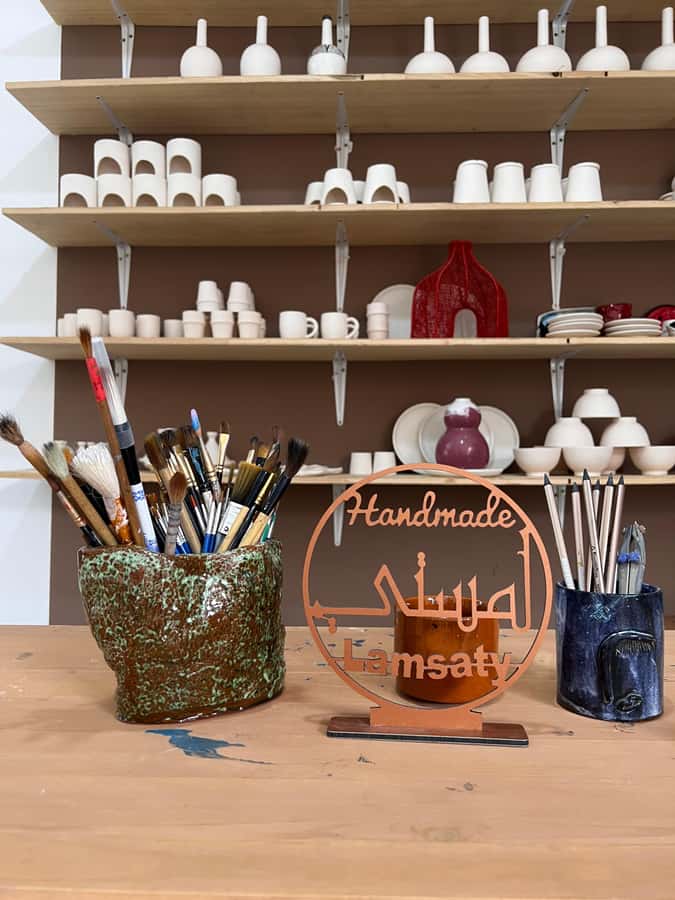
- Instructor-led ceramic painting with brushes and paint, plus step-by-step help as you work
- Choose your own design on a small white ceramic piece you can customize fast
- Two-day turnaround for glazing and kiln firing, then you pick up the finished, enamel-coated item
- Friendly atmosphere that’s welcoming even if you think you have no artistic talent
- Multilingual guidance in English, French, and Arabic, plus matching audio guidance
- Works for families and mixed ages, from kids to adults
Finding Atelier Lamsaty: Where the workshop actually happens
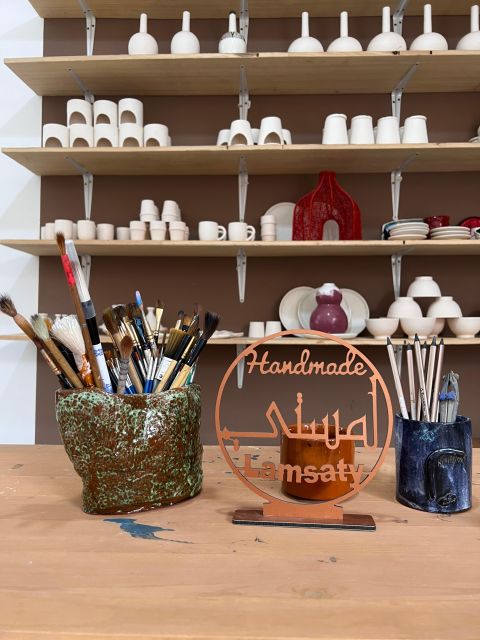
This is the kind of activity that feels better when you know where you’re going and what to expect once you arrive. The meeting point is Atelier Lamsaty, a studio on Lot Elmassar, Rte de Safi, Marrakech 40000. It’s not presented as a big, theatrical show. It’s a work space, which is good news: you’ll spend your time making instead of watching.
When you get there, plan to treat it like a creative pause in your Marrakech day. The tone is calm and friendly, with a team that’s ready to help without making you feel behind. In a city where most experiences are about speed and bargaining, this one is about slowing down and focusing on small details—lines, shapes, and color choices.
You can also read our reviews of more tours and experiences in Marrakesh.



Picking your ceramic blank: the 11cm x 7cm starting point
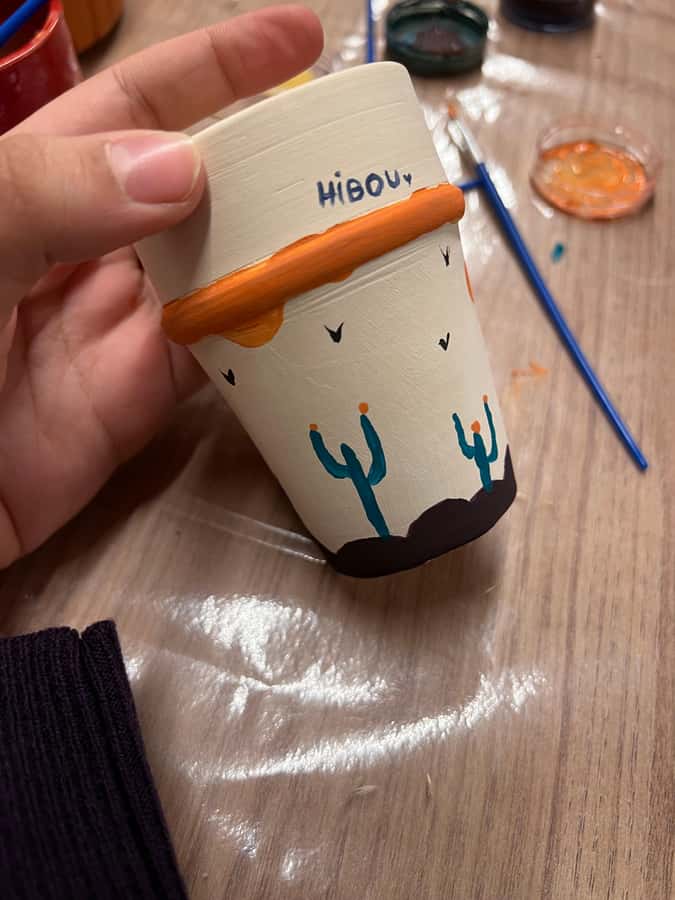
The workshop is built around you choosing a white ceramic piece to paint: about 11 cm in height and 7 cm in diameter. That size matters. It’s small enough to finish in the session, but large enough that your design doesn’t look like it got squeezed onto a postage stamp.
You can also buy larger ceramic items on site, like vases or carafes, if you want something bigger than the included piece. That option is useful if you’re thinking about a gift, or if you want more surface area for a bolder pattern.
If you want the cleanest first-time results, pick a design style that fits the shape. Curves and small surfaces reward simple motifs: repeated dots, bands, stylized flowers, or geometric patterns that flow with the form.
The 2-hour painting session: what you do, step by step
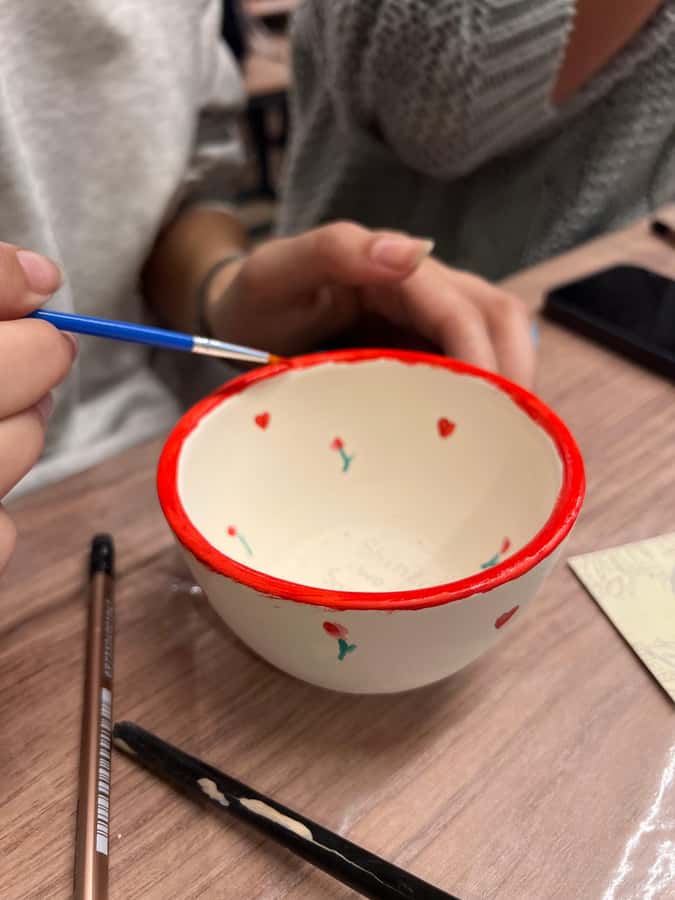
The workshop is only 2 hours, but the structure is clear. Here’s what you can expect during your time at the atelier.
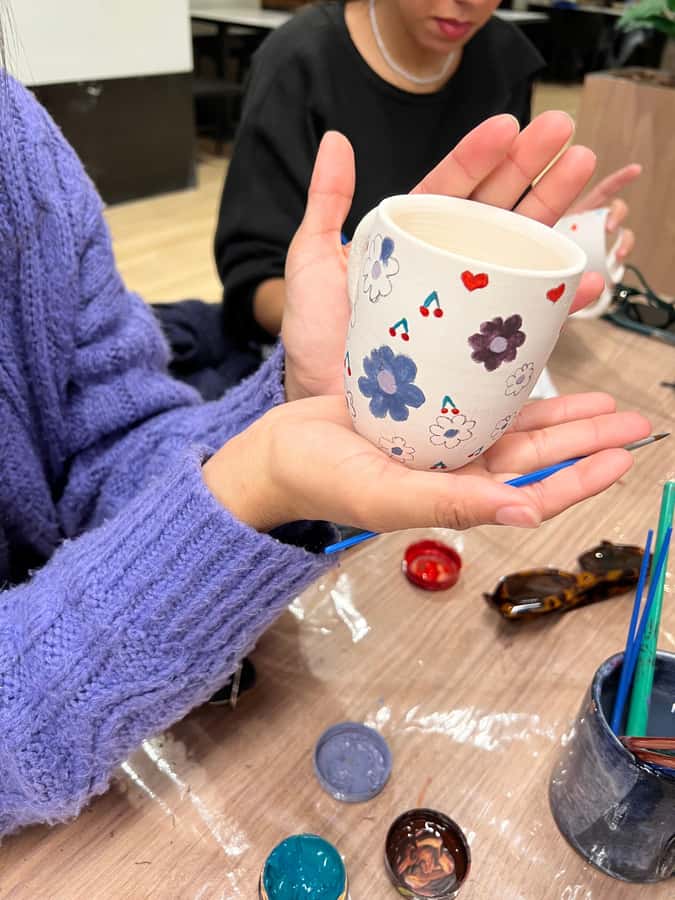
First, you choose your white ceramic piece. Then the studio provides brush and paint, plus a drink to help you settle in. After that, you paint your design with help from the team.
The key is that you’re not left alone with a blank object and a vague instruction sheet. The staff are there while you work, offering practical tips as you go—especially helpful if you’re worried you won’t be “artistic.” I like that this setup gives you a sense of direction without turning it into a rigid class where everyone ends up with the same pattern.
A small note on expectations: one concern that comes up with workshops like this is when people expect “painting only” but discover additional steps. The activity here is framed as ceramic painting, and the included piece is meant for you to decorate. Still, if your priority is purely decoration and you want to avoid anything that feels like pottery prep, ask the team early how the session will run.
Getting real help: instructors, languages, and audio support
Communication can make or break a creative workshop—especially when you’re learning a new process. This one supports multiple languages: the instructor can work in English, French, and Arabic. On top of that, there’s an audio guide available in French, English, and Arabic.
That matters because painting ceramics isn’t only artistic; it’s also technical. You want to know things like how to apply paint smoothly, how much pressure to use, and how to avoid muddy-looking colors. Having support in your language helps you move faster and feel more confident.
I also think the best part is the “help as needed” approach. You don’t need to be a confident artist to enjoy this. The studio environment is set up so people can try, adjust, and still end up with something they’re happy to take home. It’s the kind of class where your skill level matters less than your willingness to have fun with it.
The two-day wait: glazing and kiln firing (and why you should care)
Here’s the magic part you shouldn’t rush: you don’t get the final, enamel finish the same day. After your 2-hour session, you leave your painted piece for 2 days so it can be glazed and kiln fired. That timing is part of the value of paying for a guided workshop rather than buying a pre-finished souvenir.
Glazing and kiln firing are what turn paint into a durable, finished surface. Without that process, ceramics would stay fragile-looking or wear quickly. The studio’s workflow protects your effort: you paint your design, then the atelier handles the chemistry and heat that make it functional as a finished object.
When you return after two days, you collect the enameled piece—the one that looks like it belongs in your home, not like it’s unfinished craft project. It’s also a nice rhythm for a trip: you get the creative payoff now, and the final reveal later.


What you take home: a customized, usable souvenir
The included takeaway is your finished ceramic piece—white when selected, then transformed after glazing and kiln firing into a usable, enamel-coated item. Because the included piece is small, it works well for places like desks, shelves, or bedside tables.
If you choose a larger item on site (like a vase or carafe), you’re essentially upgrading the “souvenir” to something more living-room ready. That option is a good call if you’re decorating your space or you want a gift with a personal story.
Either way, the emotional value is real. You’ll remember the moment you chose the design, and you’ll see those choices every day after the firing. That’s a better souvenir than another object you’ll forget on a counter.
Price and value: is $45 reasonable in Marrakech?
At $45 per person, this workshop isn’t cheap like a street market craft, but it’s also not the kind of price that feels like you’re paying mainly for a show. You’re paying for multiple things at once:
- Your time with an instructor
- The included materials (brush and paint)
- A drink during the session
- A pre-selected ceramic blank in the stated size
- A real production step you can’t DIY on vacation: glazing and kiln firing
That last part is the difference between a quick craft and a real ceramic workshop. Kiln firing is the part that gives you the durable, finished look. So the price makes sense if you value the end result—not just the fun moment of painting.
If you’re traveling as a couple or with kids, the value usually feels even better. It’s one activity that creates a tangible item without needing extra shopping later.
Who this is perfect for (and who should double-check)
This activity fits best when you want something hands-on and low-pressure. I’d steer you toward it if you’re:
- doing a Marrakech day that needs a break from crowds and bargaining
- traveling with kids or mixed ages who want an activity that’s engaging
- someone who thinks they’re not artistic but still wants a satisfying outcome
It also makes sense if you like crafts that come from process, not just decoration. Ceramic painting is physical. It asks you to slow down and make choices with your hands.
One possible mismatch to watch for is the wording around the experience. If you expect a strictly paint-only class every minute, confirm what happens during your session before you begin. That way you won’t end up feeling like you paid for one version of the activity and got another.
Practical tips so your ceramic turns out the way you want
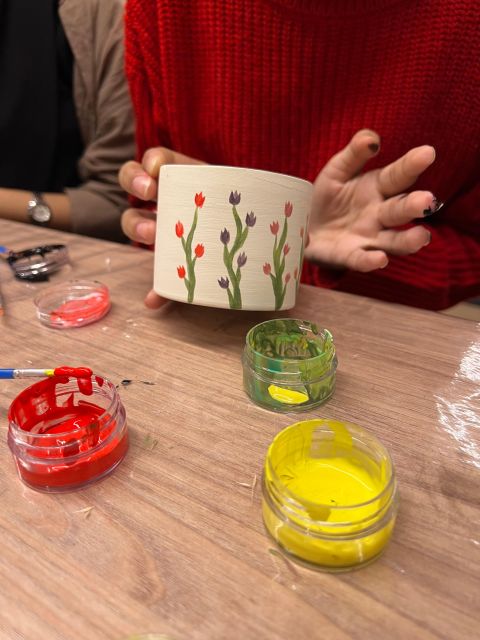
You don’t need “art skills” for this. You do need a little trip-smart thinking.
First, go in with a simple plan. Small ceramics like the included 11 cm piece reward uncomplicated designs. If you try to copy a complex pattern, you may spend the whole session filling tiny spaces.
Second, ask for guidance early rather than waiting until you’re stuck. If the instructor is working in your language, use that chance to clarify technique and how the paint should look while you’re applying it.
Third, decide how you’ll display it after firing. If you want something shelf-ready, keep your main pattern centered and avoid placing details right up near edges. Small adjustments during painting can make the final object feel more intentional later.
And yes, wear or bring something comfortable. It’s a hands-on art session with brushes and paint, so treat it like a studio day, not a “dress for dinner” moment.
Should you book this Marrakech ceramic painting workshop?
If you want a memorable Marrakech craft that you’ll still care about after the trip, I think this is a strong choice. The combination of instructor support, included materials, and the two-day glazing and kiln firing makes it feel like a real ceramic experience rather than a quick souvenir stop.
Book it if you:
- want a calm, structured creative activity
- like the idea of painting now and collecting a finished piece later
- want a take-home item that reflects your own design
I’d hesitate only if your definition of ceramic painting is extremely narrow and you need to be sure there won’t be any unexpected parts beyond painting. Send a quick question to the studio before you go, and you’ll remove that doubt fast.
FAQ
How long is the Marrakech ceramic painting workshop?
The workshop runs for 2 hours.
What ceramic piece do I paint?
You choose a white ceramic piece that’s about 11 cm tall and 7 cm in diameter. You can also buy larger pieces like vases or carafes on site.
What’s included in the price?
The price includes a brush and paint, a drink, and the white ceramic piece (11 cm by 7 cm).
Is transport included?
No. Transport is not included.
When do I collect my finished ceramic?
You leave your painted piece to be glazed and kiln fired, and you collect the finished enameled piece after two days.
What languages are available during the experience?
The instructor works in English, French, and Arabic. There’s also an audio guide available in French, English, and Arabic.