A walk through the Medina can go sideways fast. This Hidden Sights of Marrakech tour trades the obvious stops for off-the-main-street discoveries led by guides like Mohamed and Azim, with the kind of route that’s hard to assemble on your own. I like that you get historical context in real locations, not just a lecture from the curb.
I also like the practical flow: you’re moving at a comfortable pace through gates, mosques, workshops, and markets, with bottled water included so you can keep going without hunting for it. One possible drawback: the title can make it sound like there are totally secret places, but it’s still a mostly walking tour through the Medina’s lesser-visited streets.
In This Review
- Key Things You’ll Care About on This Tour
- Why This Half-Day Walk Works in Marrakech’s Medina
- Timing, Meeting Point, and What 3–4 Hours Feels Like
- Stop-by-Stop: From Bab Ftouh to Jemaa el-Fnaa
- Bab Ftouh: An Old Gate and a Practical Starting Point
- Mouassine: A Local Bakery Stop That Changes How You See Breakfast
- El Mouassine Mosque: An Old 16th-Century Landmark in Its Neighborhood
- Foundouk Sarsar 2: Caravan Inn Life, Before Modern Hotels
- Route Sidi Abdelaziz: Where Tangia Gets Slowly Cooked
- Mausoleum of Sidi Abdel Aziz Tabaa: A Saints Spot With Meaning
- Talaa Souk: The Market Side of Traditions
- Souk Haddadine: Blacksmith Workshops at Street Level
- Rahba Kedima Square and the Spice Market: Smell First, Shop If You Want
- Souk Semmarine and the Return to the Square
- What the Guide Adds (And Why Small Groups Matter)
- Food, Water, and Staying Comfortable
- Value: Is $39 a Good Deal?
- Watch-Out: When Hidden Sights Feels Like a Walk
- Who Should Book This Tour?
- Should You Book Hidden Sights of Marrakech?
- FAQ
- How long is the Hidden Sights of Marrakech tour?
- What is included in the price?
- What isn’t included?
- Where do we meet for the tour?
- Does the tour include hotel pickup and drop-off?
- How many people are in the group?
- Do I need a printed ticket?
- Is this tour suitable for children or mobility limits?
- Can I cancel for a full refund?
Key Things You’ll Care About on This Tour
- Small groups (max 6) make it easier to ask questions and avoid getting split up.
- Free entries are listed for the stops, so you’re not budgeting surprise fees.
- Local oven Tangia stop shows how everyday cooking traditions work inside the medina.
- Caravan inn and souk lanes help you see how commerce ran here long before tourists arrived.
- Spice market experience is optional, so you can shop or simply smell and move on.
Why This Half-Day Walk Works in Marrakech’s Medina
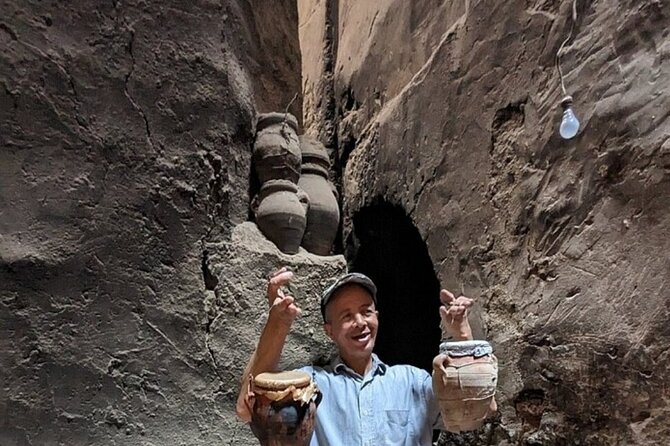
Marrakech’s Medina is famous for good reason, but it can also make you feel like you’re constantly chasing the next landmark. This tour is built to solve that problem. You start in a key gateway area and then follow the city’s working patterns—food, crafts, and prayer spaces—so the old streets feel like a functioning place, not a theme park.
The biggest value is your guide’s street sense. With Mohamed or Azim leading, you’re less likely to waste time circling the same lanes or stepping into the most obvious tourist funnel. And because the group stays small, you can hear explanations clearly while still having freedom to look around.
You can also read our reviews of more tours and experiences in Marrakech.


Timing, Meeting Point, and What 3–4 Hours Feels Like
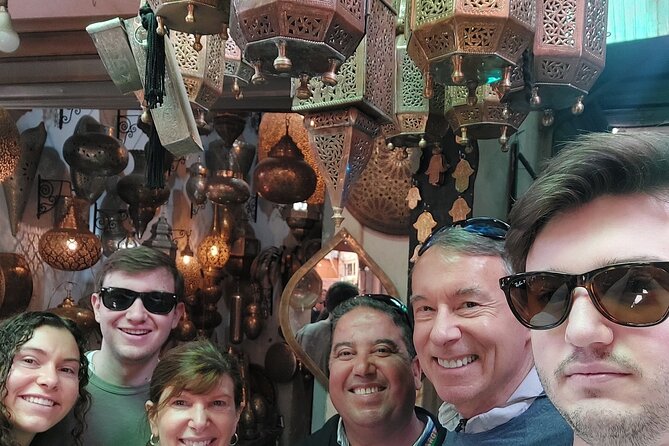
This tour runs about 3 to 4 hours and starts at 10:00 am. Meeting is at Café restaurant Argana in the big square area of Jemaa el-Fna, specifically at the address marked for Argana near Znikat Rahba (Number 18). The walk is long enough to feel like a real orientation, but short enough that it won’t eat your whole day.
You’ll want moderate physical fitness, since you’re walking the medina’s uneven streets. Shoes matter here more than anything else. If you’re traveling with children, they must go with an adult, since the route is outdoors and requires staying close in busy lanes.
Also, plan to finish back around the meeting area vibe: the tour ends in Jemaa el-Fnaa and activity ends back at the meeting point area. That’s handy if you still want to explore the square later on your own.
Stop-by-Stop: From Bab Ftouh to Jemaa el-Fnaa
The itinerary is a sequence of places that connect themes: old boundaries, everyday bread, prayer spaces, caravan trade, home-cooking traditions, saints, and the souks’ craft economy. You don’t just see objects—you see how they fit together in daily life.
Bab Ftouh: An Old Gate and a Practical Starting Point
You begin at Bab Ftouh, one of Marrakech’s older inside gates and an entrance into the souks. It’s a smart first stop because it anchors you right away. Instead of jumping into deep lanes without context, you start where the medina’s street web makes sense.
And because Bab Ftouh connects to souk routes, it sets you up for the rest of the morning. After this, you’ll understand why certain streets feel like they lead somewhere, rather than just winding around.
Mouassine: A Local Bakery Stop That Changes How You See Breakfast
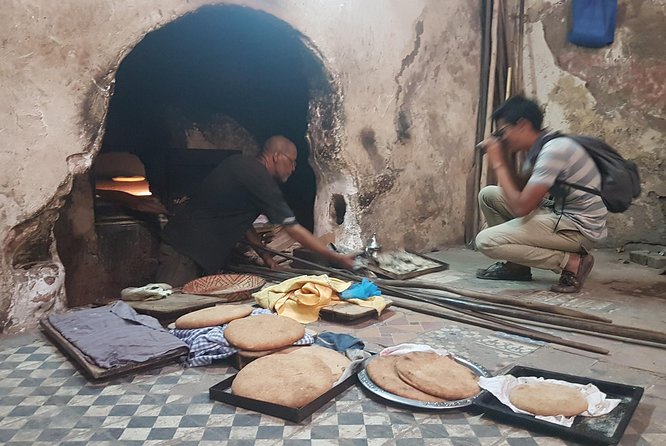
Next comes Mouassine, with time to visit a local bakery. This is one of the parts I most appreciate because it’s not just a photo-op. It’s about daily rhythms—how food is made and where locals go for it.
Even if you don’t plan to buy much, you’ll probably notice how the area works: where ingredients come from, how customers move, and how the bakery connects to nearby lanes. For many first-timers, this is the moment the Medina starts to feel like home rather than a maze.


El Mouassine Mosque: An Old 16th-Century Landmark in Its Neighborhood
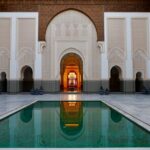
Then you reach El Mouassine Mosque, dating back to the 16th century. What makes it more interesting than a generic “old mosque” stop is the neighborhood context your guide shares—this area was used to be associated with a Moroccan Jewish residential quarter, referenced as Toshavim.
This kind of context helps you read the city better. When you understand that neighborhoods and communities shaped the medina over centuries, the streets feel layered. You stop seeing a single era and start seeing how Marrakech changed.
Foundouk Sarsar 2: Caravan Inn Life, Before Modern Hotels
At Foundouk Sarsar 2, you visit an old caravan inn. These foundouks are key to understanding Marrakech’s trade history. Merchants needed places to store goods and rest safely, and the medina’s architecture reflects that.
If you like history but hate museum-only history, this is the sweet spot. It’s built environment history—real stone, real routes, and a purpose you can grasp quickly.
Route Sidi Abdelaziz: Where Tangia Gets Slowly Cooked
One of the most hands-on cultural stops is the cooking oven for Tangia on Route Sidi Abdelaziz. The idea is simple but powerful: locals bring their traditional dish to be slowly cooked in an oven designed for it.
This is the kind of detail that makes a guide feel useful. You’re not just told what Tangia is—you see where the practice happens. And since the tour is walking-focused, the oven stop fits naturally into the bigger theme of everyday food systems.
Mausoleum of Sidi Abdel Aziz Tabaa: A Saints Spot With Meaning
Next is the Mausoleum of Sidi Abdel Aziz Tabaa. Your guide explains that he was one of the seven saints of Marrakech. Places like this aren’t just “sights”—they’re part of how people understand blessing, memory, and local spirituality.
You’ll also learn how to behave in these spaces, since this is still an active part of city life. Even if you’re not religious, the respect rules here make your visit smoother.
Talaa Souk: The Market Side of Traditions
At Talaa, you’ll hear about a souk where an auction involving leader skins still takes place, except on Fridays. It’s not the kind of detail you’d guess from the main tourist circuit, and it shows how specific trades remain tied to certain rhythms and days.
You don’t need to be squeamish, but you do need to be respectful and ready for something unusual. The guide’s framing matters here, so listen closely and keep your questions polite.
Souk Haddadine: Blacksmith Workshops at Street Level
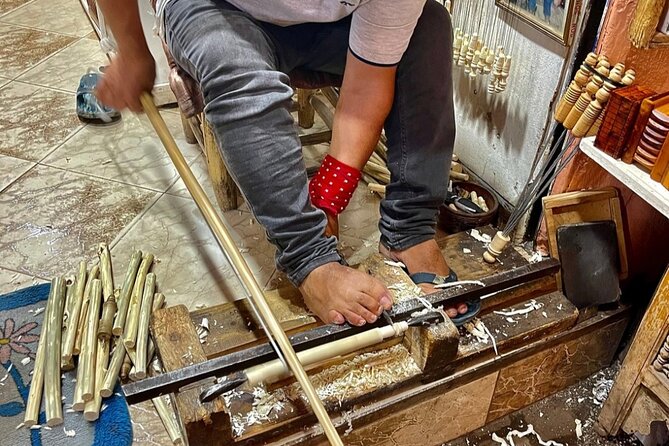
Then you continue into Souk Haddadine, where you walk through blacksmith workshops. This is one of the stops that tends to stick with people, because it puts metalwork and craft skill back in the center.
If you’re shopping later, this section can change what you buy—and how you judge quality. You’ll understand why certain items have specific shapes and construction methods. Even if you skip shopping, you’ll still feel the difference between artisan work and imported, mass-made items.
Rahba Kedima Square and the Spice Market: Smell First, Shop If You Want
At Rahba Kedima Square, you’ll visit a spices market area referred to as place des épices. Visiting a spice stall is optional, which is a good setup. You can take in the smells and colors without being pushed into buying.
This is also a practical break from deeper lanes. It’s a chance to slow down, reset your senses, and decide if you want spices now or later.
Souk Semmarine and the Return to the Square
Finally, you move through Souk Semmarine, described as the most famous and busiest part of the souks. The goal isn’t to shop all day—it’s to connect the dots between the quiet lanes and the main market flow.
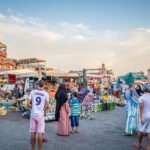
You end at Jemaa el-Fnaa, where you’ll see the kinds of performances that make the square so iconic: snake charmers, musicians, storytellers, and more. It’s a fitting finish because you started with a gate and end at the medina’s loudest public stage.
What the Guide Adds (And Why Small Groups Matter)
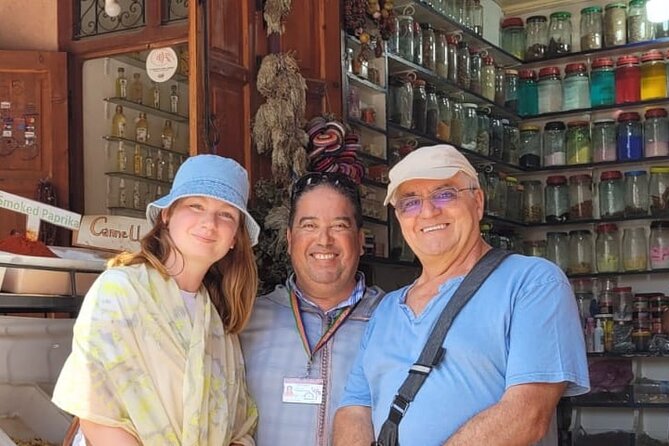
The best part of this tour isn’t a checklist. It’s the person walking beside you.
Guides like Mohamed and Azim are praised for taking their time, explaining what you’re seeing, and helping with practical city skills like when prices are too high and how bargaining tends to work. That doesn’t mean you have to bargain hard, or buy anything. It means you can walk into the medina with your eyes open.
Small group size—up to 6 travelers—also changes the experience. You can hear stories while you’re moving, not after you’ve drifted into a random corner. And you’re less likely to get separated when the lanes narrow.
Food, Water, and Staying Comfortable
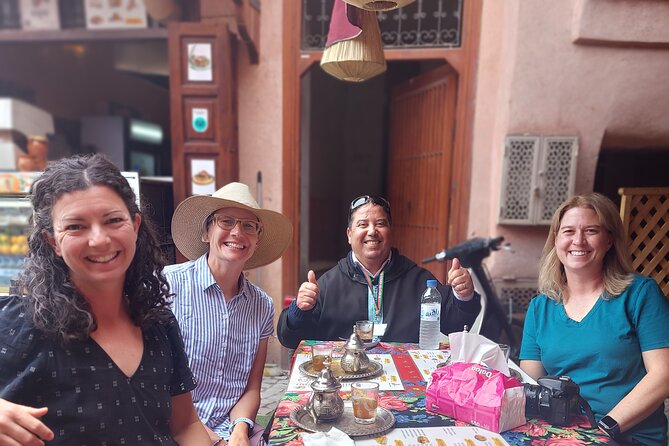
You get bottled water included, which I think is a big deal in Marrakech. You’ll be walking through streets where it’s easy to lose track of time and hard to find a simple, reliable bottle when you’re tired.
Food and drinks are not included, so come with a plan. If you want breakfast, do it before the 10:00 am start. If you want to snack on the way, you can, but don’t expect the tour price to cover that.
Also, even when a stop involves food culture—like the bakery and Tangia oven—this isn’t presented as a formal meal. Think of it as culture through place, not a buffet.
Value: Is $39 a Good Deal?
For $39 per person, you’re paying for three things: a guided walk in a complex area, access to a series of historic and craft-related stops, and included bottled water. You’re also getting free admission tickets for the listed sights, which removes one common cost headache.
Compared with tours that only cover the main monuments, this route saves you the most valuable thing you have in Marrakech: time. It’s designed to help you get your bearings before you spend hours trying to work out which streets go where.
If you’re the kind of traveler who wants one morning that makes the rest of your trip easier, this is strong value.
Watch-Out: When Hidden Sights Feels Like a Walk
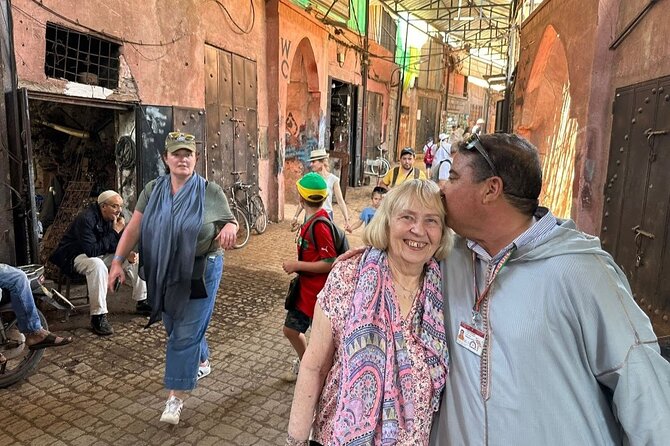
Here’s the one balanced point to keep you realistic. The title can sound like you’ll be led to secret, unmarked locations. In practice, it’s a guided walk through the medina’s lesser-visited areas and real working spots.
If you’re expecting totally off-map discoveries with no overlap to the medina’s core street world, you might feel slightly let down. But if you like context—how gates connect to souks, how ovens connect to meals, how crafts connect to trade—then you’ll likely find the tour does what it promises.
In other words: it’s hidden in the sense that you go where most people don’t wander first. You’re not being promised a magic door to an empty alley.
Who Should Book This Tour?
This tour is best if you:
- Want an orientation to the Medina without getting lost
- Love crafts and daily-life stops more than monument photos
- Prefer a guide who helps with how to navigate and bargain respectfully
- Are traveling in a small group and want a gentle pace
It may be less ideal if you:
- Want mostly museums or big marquee sights
- Don’t want walking and prefer driving between stops
- Expect places that are so secret you’d never even see hints of them
Should You Book Hidden Sights of Marrakech?
I’d book it if you’re arriving in Marrakech and want one morning that gives you street confidence. The combination of gates, mosques, a caravan inn, a Tangia oven, craft workshops, spices, and the finish at Jemaa el-Fnaa creates a strong “whole-city” feeling in just a few hours.
If you can handle a walk and you value local context, this tour is a smart first move—especially with a guide like Mohamed or Azim who focuses on practical, real explanations. Just go in with the right expectation: it’s hidden by routing, not by sci-fi secrecy.
FAQ
How long is the Hidden Sights of Marrakech tour?
The tour runs about 3 to 4 hours.
What is included in the price?
It includes bottled water and guided help from a local guide and a professional guide.
What isn’t included?
Food and drinks are not included, and there’s no lunch included. Hotel pickup and drop-off are also not included. Masks are not included.
Where do we meet for the tour?
You meet at Café restaurant Argana, located in the Jamaa el-Fna square area (Number 18, Znikat Rahba, Marrakech 40000, Morocco).
Does the tour include hotel pickup and drop-off?
No, hotel pickup and drop-off are not included. The meeting point is in the main square area, and the tour ends back at the meeting point.
How many people are in the group?
The maximum group size is 6 travelers.
Do I need a printed ticket?
No. The tour uses a mobile ticket.
Is this tour suitable for children or mobility limits?
You should have a moderate physical fitness level. Children must be accompanied by an adult.
Can I cancel for a full refund?
Yes. Free cancellation is available if you cancel up to 24 hours in advance for a full refund. If you cancel less than 24 hours before the start time, the amount paid is not refunded.