Fez can feel secret until Mouanis cuts through it. This private 3 to 4 hour Medina of Fez tour strings together UNESCO sights, free shrines, and craft stops inside the car-free warren of Fes el Bali, with time to watch artisans at work. I like that you’re not just checking boxes; you’re learning why these places matter, from the oldest university to the tomb of a city founder.
I especially love the practical pacing and routing. Mouanis helps you move through the maze without wasting your morning, and you get hands-on context around trades, not just photos. I also like the craft focus: stops around historic workshops and a carpet shop comparison make the shopping part feel less random and more informed.
One possible drawback: this is a walking-style medina route, and a couple of stops are not free. Also, the Chouara Tannery stop can mean strong smells—worth it, but plan your patience and stay close to your guide.
In This Review
- Key highlights you will actually feel
- Fez el Bali, a UNESCO maze you can navigate with confidence
- Al-Qarawiyyin Mosque and University: the learning story starts here
- Nejjarine Museum of Wooden Arts: craft you can see, not just buy
- Cherratin Medersa: the rope makers’ school and Fez’s trade brain
- Zaouia of Moulay Idriss II: why the city feels founded, not just old
- Chouara Tannery: the smell stop that teaches scale and tradition
- Berber carpet shop: compare Arab and Berber rugs before you buy
- Medina of Fez: the big UNESCO picture after the small details
- Sidi Ahmed Al-Tijani Zawiya: Sufi space for education and remembrance
- Price and logistics that affect your day
- Is this the right tour for you?
- Should you book this Fez medina tour?
- FAQ
- How long is the Hidden historical sites at Medieval City of Fez tour?
- What is the group size for this private tour?
- What does the tour cost?
- Is this tour only in the medina area of Fez?
- What is included in the price?
- Are admission tickets included for all stops?
- Where do we meet and when does the tour start?
- Is there a mobile ticket?
- What happens at the carpet stop?
- What is the cancellation policy?
Key highlights you will actually feel
- A private group up to 6 for $29.04 per group, with a schedule that fits real sightseeing time
- UNESCO-listed Fes el Bali plus multiple free-entry religious and historic stops
- Craft workshops and a Berber carpet comparison that teaches you what you’re looking at
- Two paid-entry stops (you just budget for them) without losing the flow of the walk
- Moulay Idriss II and Sufi zawiyas that show Fez as a living faith center, not only a museum town
Fez el Bali, a UNESCO maze you can navigate with confidence
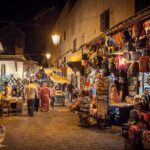
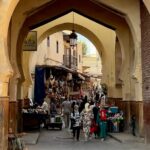
Fes el Bali is the old walled core of Fez, founded as the Idrisid capital between 789 and 808 AD. It’s big, car-free, and famously complicated: the medina is often described as a huge web of around 9,400 streets and alleyways. That’s exactly why a good guide makes a difference. Without one, you can spend half your time figuring out where you are.
With Mouanis, the day feels structured. You still get that authentic medina texture—doors opening to small courtyards, local life spilling onto the walkway—but you’re not stuck in endless backtracking. And because the tour is private, you can ask questions on the spot and adjust your pace rather than being rushed along by a larger group.
One more detail I appreciate: the stops are close enough that you spend your energy on the experience, not on long transfers. This matters in Fez, where the roads outside the medina and the alleys inside it can feel like different worlds.
You can also read our reviews of more city tours in Fez

Al-Qarawiyyin Mosque and University: the learning story starts here
Your first major stop is the Mosque and University of al-Qarawiyyin (Jāmiʻat al-Qarawīyīn). It’s a centerpiece of Fez’s religious and educational life, founded as a mosque by Fatima al-Fihri between 857 and 859.
This isn’t just a “pretty building” stop. It gives you a big clue about why Fez has long been a center of teaching and scholarship. When you understand that this place began as a mosque with education at its core, the rest of the medina makes more sense: medrasas, zawiyas, and shrines aren’t random stops. They’re part of a connected system.
Good news for your budget: admission here is listed as free (ticket free). You’ll likely want to arrive with respectful clothing and a calm mindset, since this is an active spiritual site. Even if you’re not deeply religious, the sense of continuity is hard to ignore.
Nejjarine Museum of Wooden Arts: craft you can see, not just buy
Next is the Nejjarine Museum of Wooden Arts & Crafts, in the historic funduq called Funduq al-Najjarin. This used to function as a caravanserai—an inn where traders and goods moved through—so it already carries “work and commerce” in its bones.
This stop is not included in the tour admissions, so you’ll pay your own entry fee here. The value is that the museum gives you a visual baseline before you hit real-world craft spaces later. You get to notice how woodwork traditions translate into style, decoration, and practical design.
If you’re the type who likes to understand materials before spending money, this is a smart pause. It helps you slow down and see patterns instead of treating everything as souvenirs.
Cherratin Medersa: the rope makers’ school and Fez’s trade brain
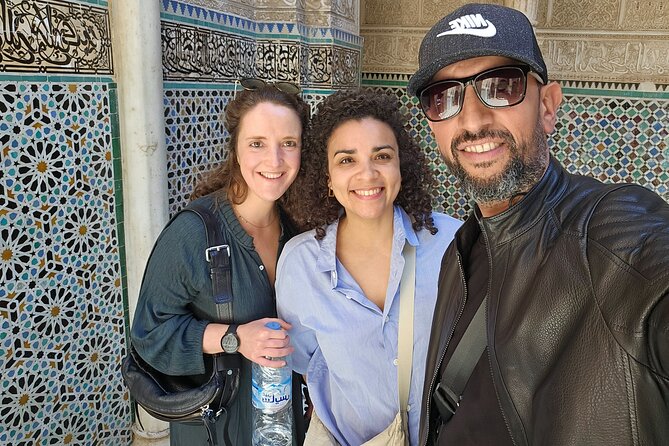
The route continues to Cherratin Medersa (also called Er-Rachidia Madrasa or Ras al-Cherratine Madrasa). The name matters: it’s associated with the school of the rope makers.
This madrasa was built in 1670 by the Alawi sultan Moulay al-Rashid. Even without a deep background in Islamic architecture, medrasas are easy to read as educational hubs—places designed for study and community life. And the trade reference (rope makers) is a reminder that Fez’s learning wasn’t sealed off from everyday work. It was intertwined.
Like the museum, the admission for this stop is not included. Plan a small extra budget so you can enjoy the site without stress. Time-wise, you’re there about 20 minutes, which is enough to orient yourself and take in the key details without turning it into a long, indoor detour.
Zaouia of Moulay Idriss II: why the city feels founded, not just old
Then you hit one of the most important names in Fez: the Zaouia of Moulay Idriss II. This is a zawiya, meaning an Islamic shrine and religious complex, and it houses the tomb of Idris II (often called Moulay Idriss II).
Idris II ruled from 807 to 828 and is considered the main founder of Fez. That fact changes how you look at the medina. You start to treat the streets as routes between spiritual and communal anchors, not random twists that happen by accident.
This stop is listed as free (ticket free). It’s also short—about 10 minutes—which is just right in a walking tour. You get the meaning and then keep moving, instead of losing the momentum of the day.
You can also read our reviews of more historical tours in Fez


Chouara Tannery: the smell stop that teaches scale and tradition
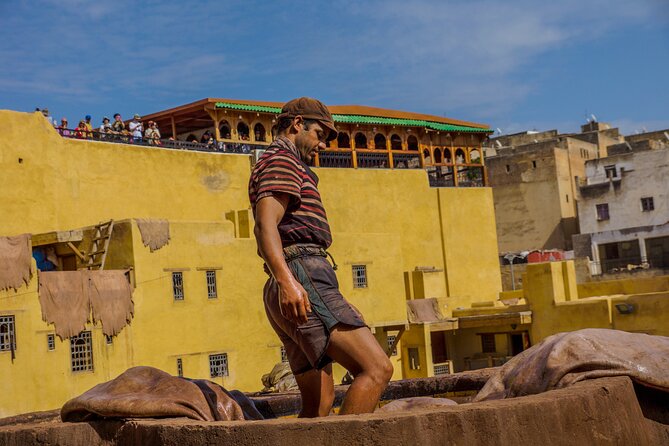
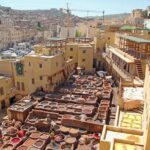
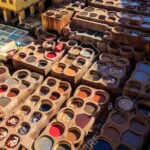
The tour includes the Chouara Tannery, one of Fez’s three tanneries and the largest and oldest among them. It sits in Fes el Bali near the Saffarin Madrasa along the Oued Fes.
Here’s the practical reality: this is not a quiet museum corner. It’s a working craft site. The work involves leather tanning processes, which can mean strong smells. Your nose will make its opinion known. If you hate harsh odors, you might need a quick approach—stay close to your guide, look where they indicate, and don’t linger longer than your comfort allows.
Why include it then? Because it shows the scale of historical industry in the medina. It’s easy to underestimate how much of Fez’s “old world” function is tied to production, not only architecture. Even with a short visit (about 30 minutes), the tannery can give you a clear sense of how Fez supports artisans and livelihoods.
Admission here is listed as free (ticket free). That helps you get a major highlight without adding cost.
Berber carpet shop: compare Arab and Berber rugs before you buy
Next comes a carpet shop focused on seeing the creative process and understanding the difference between Arab and Berber carpets. The tour frames this as important during a Fez visit, and it’s a good call.
A lot of carpet shopping in medinas feels like a sales sprint. This stop is better when you treat it like a lesson. Ask your guide to explain what you’re seeing: materials, weaving style, and the visual differences between regional traditions. The point isn’t to become a carpet expert in an hour. The point is to shop with your eyes open so you can recognize quality and understand pricing logic.
This stop is listed as free (ticket free), which is another value win. You’ll also likely want to keep your wallet ready, but your decision should come after you’ve seen what makes one rug different from another.
Medina of Fez: the big UNESCO picture after the small details
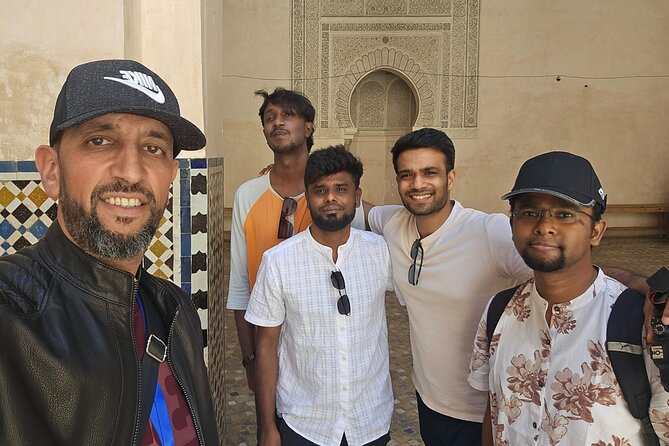
After the individual sites, you step back into the larger context: Fes el Bali, the UNESCO-listed Medina of Fez. Founded as the Idrisid capital, it’s the oldest walled part of Fez and one of the most intact historic cores in Morocco. UNESCO recognized it in 1981 under the name Medina of Fez.
This “big picture” segment lasts about an hour and is listed as free (ticket free). I like that the tour doesn’t stop at single monuments. You need the overview so the religion, education, and crafts connect in your mind.
If you’re the kind of person who wants to understand why a street feels like a pathway between important places, this is where it clicks.
Sidi Ahmed Al-Tijani Zawiya: Sufi space for education and remembrance
The final shrine stop is the Sidi Ahmed Al-Tijani Zawiya, also known as Zawiya Tijaniya Al Koubra. This is a Sufi zawiya, a religious complex used for education and commemoration.
It’s about 10 minutes and listed as free (ticket free). Even if you only skim the details, it adds a different color to the day. Early stops focused on scholarship and founding figures; this one rounds out the picture by showing how devotional life continues in specific spaces within the medina.
If you want Fez to feel like a living city, not a set of attractions, these short religious visits do that work quietly.
Price and logistics that affect your day
Let’s talk value, because the number is unusually friendly. The price is $29.04 per group (up to 6 people) for a private tour lasting about 3 to 4 hours. That means the cost per person drops fast if you’re traveling as a small group or family.
What’s included is simple: bottled water. What’s not included includes things like restaurant meals (listed range $15 to $25), and small additional costs for admissions and local expenses. The data also lists transport fees around $20, plus parking and cafe costs in small amounts.
Two stops have admission not included: the Nejjarine Museum and Cherratin Medersa. It also lists an attractions admission fee amount of $2 and similar small line items. Practically, you should expect to pay a bit extra on the day, but it doesn’t sound like a huge budget-buster.
One more practical note: the tour starts at 10:30 am with a meeting point at 8 Rue Sidi El Khiyat, Fez 30110 and ends at Rue Talaa Sghira (plus code 3269+V44). It’s noted as near public transportation. If your plan depends on getting back quickly, the mid-morning start gives you the rest of the day free for souqs and your own wandering.
You’ll also use a mobile ticket, which keeps paperwork low. Less time hunting for vouchers inside the medina is a small win that adds up.
Is this the right tour for you?
This tour is best for people who want real navigation help in Fez’s car-free maze and want more than a basic highlights walk. If you enjoy learning the “why” behind sites—education, shrines, and trade—this fits well.
It also works nicely for shopping-minded visitors, because the carpet stop and workshop focus are built into the route. You’ll be more prepared to tell the difference between materials and styles instead of shopping on pure impulse.
If you hate walking or scents from working industries, you might find the tannery stop a challenge. Also, since two admissions aren’t included, you need a little flexibility in your day and budget.
Should you book this Fez medina tour?
If your priority is to see Fes el Bali’s hidden historical sites and understand how crafts and faith shaped daily life, I’d say yes. The biggest reason is value: a private tour for a group of up to 6 at a low per-group price, with a route that touches UNESCO context plus working craft spaces.
Book it if you want your medina time to feel organized, respectful, and useful—especially if you’re worried about getting lost. Skip or consider alternatives if you strongly dislike crowds of active religious areas, cannot handle strong smells, or only want fully free sites.
If you’re visiting Fez for a few days, this is a smart first-or-second day activity. It gives you orientation fast, so the rest of the medina feels less chaotic.
FAQ
How long is the Hidden historical sites at Medieval City of Fez tour?
It runs about 3 to 4 hours.
What is the group size for this private tour?
It’s private, and the group size is up to 6 people.
What does the tour cost?
The price is $29.04 per group.
Is this tour only in the medina area of Fez?
Yes. The route focuses on multiple stops within Fes el Bali, the old medina quarter.
What is included in the price?
Bottled water is included.
Are admission tickets included for all stops?
No. Some stops are listed as ticket free, while the Nejjarine Museum of Wooden Arts & Crafts and the Cherratin Medersa have admission not included.
Where do we meet and when does the tour start?
The meeting point is 8 Rue Sidi El Khiyat, Fez 30110, and the start time is 10:30 am.
Is there a mobile ticket?
Yes, the tour uses a mobile ticket.
What happens at the carpet stop?
You’ll visit a carpet workshop and see the creative process, including differences between Arab and Berber carpets.
What is the cancellation policy?
Free cancellation is available up to 24 hours before the experience start time for a full refund. If you cancel within 24 hours, there is no refund.