REVIEW · MARRAKECH
From Marrakech: 3-Day Tour To Magical Desert Merzouga
Book on Viator →Operated by Sahara Tours Marruecos · Bookable on Viator
Desert magic starts with an early Atlas drive. I love how this trip handles all transport from Marrakech to the desert and back, with a driver-guide who coordinates the route and timing. You also get luggage service, so you’re not juggling bags while the group is moving.
I also really like the built-in rhythm of the desert stay: sunset and sunrise camel treks over Erg Chebbi, plus a night in a Berber-style tent with drums, music, and dinner. For the price, it’s a solid way to buy the expensive parts in one go.
One consideration: it’s a shared tour, so expect long driving days and the occasional communication or schedule hiccup, especially if your language doesn’t match the guide’s.
Key highlights at a glance
- High Atlas start: early departures, scenic breaks, and a stop at the Tizi Ntichka pass area
- UNESCO Ait Ben Haddou: a walled Kasbah that’s also been a famous film set
- Dades to Todra routing: fortified valleys, then the palm-shaded Todgha Gorge walk
- Merzouga dunes time: camel trek at dusk, then camp entertainment with dinner
- A second camel morning: sunrise ride, breakfast, and time for a quick reset
- Small group size: maximum 16 travelers, shared but not huge
In This Review
- Leaving Marrakech Fast: High Atlas Views and Real Breaks
- Tizi Ntichka and Ait Ben Haddou: UNESCO Kasbah Stops That Feel Like Movie Sets
- Ouarzazate to Dades: Skoura, Roses, and the Valley-of-Route Reality
- Dades Gorges at Golden Time: Fortified Views and a Comfortable Reset
- Todgha Gorge and Rissani: Palm Shade Walks and Caravan-Route Dates
- Merzouga and Erg Chebbi at Dusk: Camels, Dunes, Sandboarding, and Drums
- Sunrise on Erg Chebbi: The Second Camel Ride and Camp Breakfast
- Erfoud Fossils and the Return to Marrakech: Big Road Time, One More Stop
- Price and Value: What $115.98 Covers (and What It Doesn’t)
- Who This Tour Suits Best (and Who Should Rethink It)
- A Few Smart Questions to Ask Before You Go
- Should You Book This Marrakech to Merzouga Tour?
- FAQ
- How long is the Marrakech to Merzouga tour?
- What’s included in the price?
- Are lunches included?
- What desert activities are included in Merzouga?
- Do I get transport back to Marrakech after the desert?
- How big is the group?
- What happens if the weather is bad?
Leaving Marrakech Fast: High Atlas Views and Real Breaks
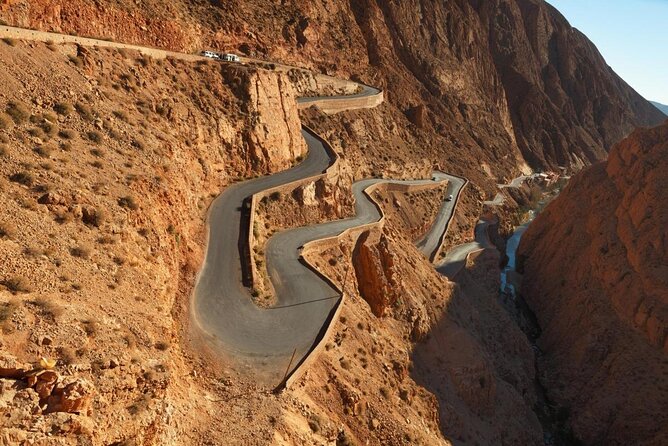
This tour starts early in Marrakech and points you east toward the High Atlas Mountains. The drive isn’t just “sit and suffer.” You get pauses to stretch your legs, grab photos, and sip coffee, which matters when you’re spending most of the day on a road trip.
The first big value here is that you’re not hunting down transport, figuring out where to switch vehicles, or trying to stitch together hotel and desert camp plans by yourself. The route is set up as a guided loop with pickup and return included, so your days feel like a schedule instead of a collection of separate bookings.
Still, be realistic. Even with breaks, it’s a long corridor of driving and roadside stops. If you’re prone to getting restless in vans, plan to download music/podcasts and keep a small routine (water, quick snacks, and eye breaks) to make the day smoother.
Practical note: lunches and drinks aren’t included. That means you’ll want to budget for meals on your own during the day.
Tizi Ntichka and Ait Ben Haddou: UNESCO Kasbah Stops That Feel Like Movie Sets
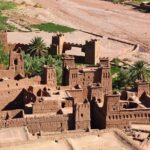
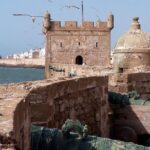
One of the easiest “yes” moments on the itinerary is Ait Ben Haddou. You drive over winding roads toward the Tizi Ntichka area, then arrive at the famous Kasbah Ait Ben Haddou, a UNESCO World Heritage Site. It’s also known as a filming location for big productions like Kingdom of Heaven, Lawrence of Arabia, and Gladiator.
What makes this stop work on a short 3-day trip is that it’s not just a quick viewpoint. You’re given time to see the walled settlement and get your bearings in a place that feels preserved but also “used,” in the sense that it’s part of Morocco’s living tourism economy.
The potential drawback is timing. These desert tours run on a route, not on your curiosity pace. If you want to slow down and really study the kasbah, you may need a more flexible schedule than a day-trip stop. There is also an optional local guide at Ait Ben Haddou for an extra charge of 2,5€ per person, which can help if you want stories about the buildings and how the site is laid out.
If you’re the kind of traveler who likes to understand what you’re looking at, this optional local guide is where your money can turn into real “I get it now” moments.
A few more Marrakech tours and experiences worth a look
Ouarzazate to Dades: Skoura, Roses, and the Valley-of-Route Reality
After Ait Ben Haddou, you continue toward Ouarzazate, where you explore main sights. After lunch at a local café, the trip keeps rolling through the region: Dades Valley, Skoura Oasis, and Klaa Mgouna, known as the Valley of the Roses and for its artisanal rose-water distillation facilities.
Here’s what I think is smart about this part of the route: it turns a “transfer day” into a map of Morocco’s textures. You’re not only looking at desert. You’re seeing how towns and oases sit in the valley systems, how trade routes shaped settlement patterns, and how rose-water production fits into local life.
The trade-off is attention span. When you stack stops, you need to let some places be “pause and admire,” rather than expecting every stop to feel like a museum visit. If you try to treat every stop as a deep dive, you’ll end up rushed.
When you reach Boumalne Dades in the late afternoon, you finally slow down. You’ll arrive at your hotel in Dades, then dinner and an overnight stay are included. That dinner is part of the value equation here: you’re not left searching for food when you’re tired from hours on the road.
Dades Gorges at Golden Time: Fortified Views and a Comfortable Reset
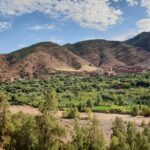
Dades Gorges is the kind of stop that makes the whole drive feel worth it. The road follows the Dades River through areas with fortified kasbahs along the route, and you arrive later in the day. Even if you only get a short window to take photos and walk a bit, the setting does something important: it breaks the long “straight-line” driving and gives you a real sense of geography.
For some people, this is the first moment where Morocco stops feeling like “a route” and starts feeling like “a place.” The gorges area is all about shape: walls, bends, and a river line you can follow visually even when you’re in a vehicle.
The practical downside is that you arrive late and the group has to move as one. That means you’ll want to keep your expectations flexible. Don’t plan a big solo detour when you get to the hotel. Your energy will go toward dinner and resting.
This is also where a shared-tour setup helps: you don’t need to figure out dinner locations, because it’s arranged. And when you’re tired, that matters more than you think.
Todgha Gorge and Rissani: Palm Shade Walks and Caravan-Route Dates
Day 2 has two big “character” stops: Todgha Gorge and Rissani.
You start with the route toward the oasis of Tighir, then branch onto a road down toward Todgha. At Todgha, you pause for a walk in the oasis under the shade of palm trees and then continue to the gorge area. This is the kind of stop where your legs get a chance to work again, and it’s also one of the few times you move more slowly, because you’re walking rather than riding.
After some free time (including lunch), you head toward Rissani, a town known for its dates market. You’ll also get the sense that this is a starting point for historic commercial caravan routes that crossed toward the Sahara.
What I like about pairing Todgha and Rissani is that it makes the desert transition feel logical. Todgha is water and greenery; Rissani is trading and bulk movement. Together, they explain why desert travel mattered beyond just tourism.
Then you head for Merzouga, where the route shifts into rocky desert countryside. You might not notice the change until you arrive, but once you do, everything starts to feel quieter and more open—perfect setup for what comes next.
Merzouga and Erg Chebbi at Dusk: Camels, Dunes, Sandboarding, and Drums
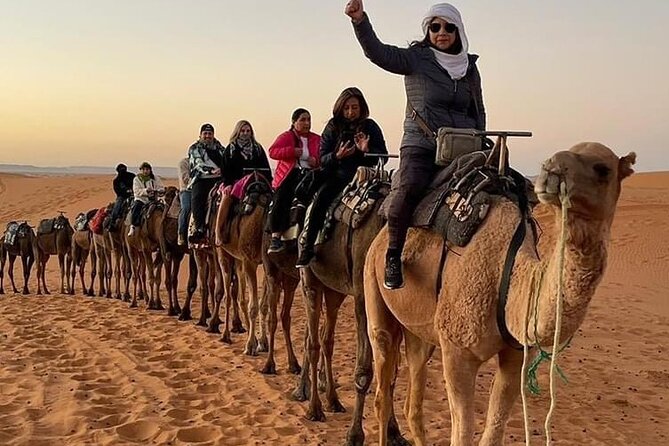
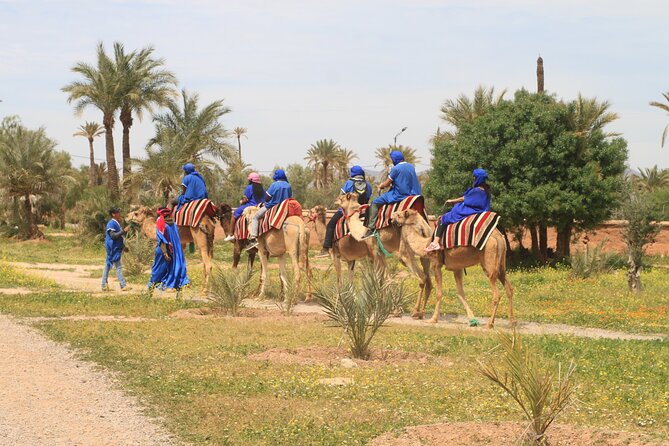
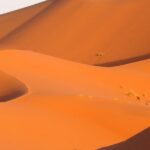
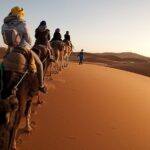
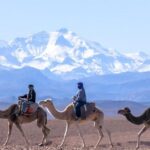
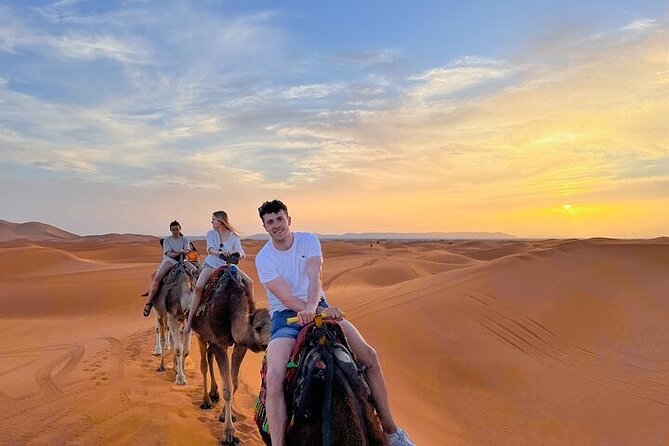
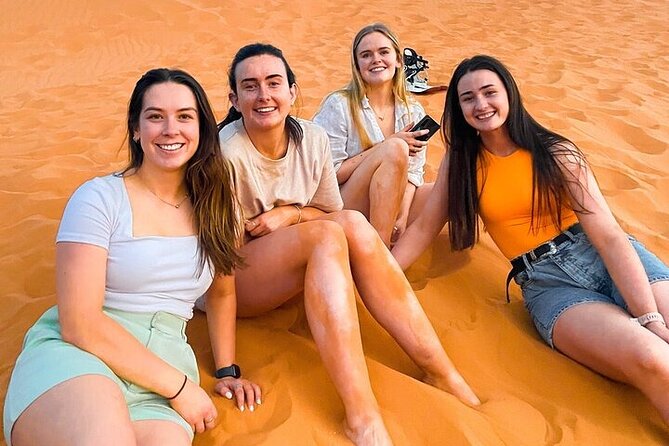
When you reach Merzouga, you’ll have time to cool down (there’s a refreshing pool), and then you move into the signature desert experience. Meet your camel caravan and ride across Erg Chebbi dunes as the sunset shifts the sand’s colors.
This is the heart of the tour, and it’s why it’s priced the way it is. You’re paying for:
- transport to the desert zone
- the camel trekking at dusk
- the logistics of getting you from vehicle to camp without stress
This part can be physically a bit bumpy and slow, but it’s also the moment where the “wow” factor hits. The dunes are a huge visual, and being on a camel makes the experience feel like more than a photo stop.
Back at camp, you get Berber drums and music, plus a dinner included with entertainment. Some camp programs also include sandboarding (it’s listed as one of the tour features), so you should expect time for that kind of fun if the schedule and group flow allow.
A balanced tip: enjoy it without rushing. The schedule is built around sunset, and that means if you’re chasing every single activity, you’ll feel behind. Choose what matters most to you—camel ride, dunes, or camp show—and let the rest be bonus.
Sunrise on Erg Chebbi: The Second Camel Ride and Camp Breakfast
Day 3 starts earlier than you might like, but that early timing is the point. You do an early morning camel journey over Erg Chebbi to catch the dunes in the softer morning light. This is the second camel trek, and I like that the tour doesn’t treat sunrise as optional.
After you return, you meet at the camp operator’s lodge for breakfast. You’ll also have access to a shower, and there may be time for a quick dip in the lodge pool if the timing works.
The most practical thing I’d tell you here is to plan your energy. Sunset night in the dunes means you’ll likely sleep differently than you’re used to. Sunrise is worth it, but go easy on the late-night camp energy so you’re not dragging for the ride back.
This is also where the “value” becomes clear. If you tried to DIY a Merzouga stay from Marrakech, getting both sunrise and sunset camel time inside one package would cost you extra in planning and transport alone.
Erfoud Fossils and the Return to Marrakech: Big Road Time, One More Stop
After breakfast, you meet your driver and car and begin the return drive toward Agdz and Ouarzazate, with a stop in Erfoud. If you’re interested, you can check out Erfoud fossils.
This isn’t the kind of stop that’s guaranteed to be a life highlight for everyone, but it’s a nice “last Morocco flavor” before the long homeward day. It also gives you something to focus on besides just the road.
Then it’s back to Marrakech via the High Atlas Mountains. The tour ends around 19h00, so you’ll arrive at the end of a long loop with that mixed feeling: happy you did it, ready for a shower you don’t have to schedule, and ready for your own bed.
One caution: the final day’s main work is getting you home on time. If you need to make plans immediately after arrival, keep them flexible.
Price and Value: What $115.98 Covers (and What It Doesn’t)
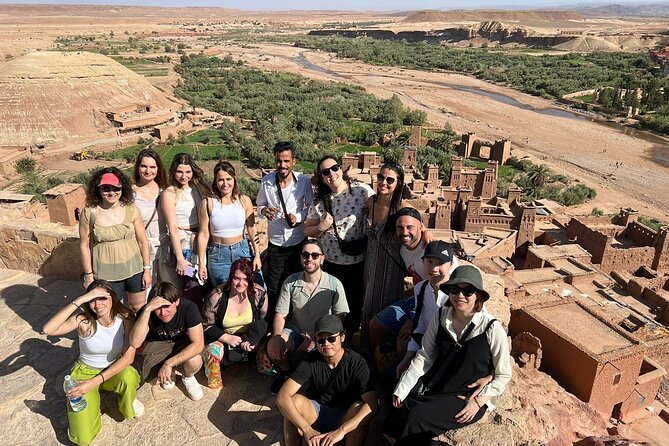
At $115.98 per person, this shared tour is trying to solve the biggest cost and hassle blocks of desert travel: long-distance transport, camel logistics, and the desert night package. With group size capped at 16 travelers, you’re not paying for a private driver and private camp alone.
Here’s what you’re getting included:
- pickup and return from Marrakech
- air-conditioned minibus or minivan transport
- driver-guide
- camel trekking at sunset and sunrise in Erg Chebbi
- luggage service
- Berber drums and music experience
- dinner (2) and breakfast (2)
What you’re not getting:
- lunches
- drinks
That “meals gap” is the main hidden cost you’ll want to budget. If you tend to eat expensive or you want drinks with every meal, your final spending can climb.
Quality can also vary in small ways. Some people love their hotel and camp setups; others have flagged problems like uneven comfort in the first night accommodation. The desert experience itself tends to land, but your hotel details may not be identical to someone else’s.
So my value verdict is simple: this is a strong deal for the desert portion if you’re flexible on non-desert comfort.
Who This Tour Suits Best (and Who Should Rethink It)
This is a good match for you if you:
- want a structured 3-day route out of Marrakech without planning every leg
- like seeing multiple regions in a short time: Atlas mountains, UNESCO kasbah, gorges, palm oasis, dunes
- don’t mind group travel and a packed schedule
- care about doing both sunset and sunrise camel treks
You may want to rethink it if you:
- need a quiet, slow travel pace
- hate being herded along tight timing
- are very sensitive to language barriers in a group (guides may communicate more comfortably in certain languages)
- expect the same level of comfort everywhere, every night
One smart move: before booking, decide what you want most. If it’s the dunes and the camels, this tour is built around that. If it’s comfort-first lodging and lots of free time, you might prefer a different format.
A Few Smart Questions to Ask Before You Go
To avoid the most common annoyances, ask questions that protect your comfort and your understanding of the plan:
- Which languages will the guide use during the trip?
- How much time is typically spent at each stop like Ait Ben Haddou and Todgha?
- Are you clear on what’s included at the camp (especially activities like sandboarding)?
- What hotel category should you expect for the first night?
- If you’re offered any camp upgrades, ask what changes and whether comfort features like air-conditioning are actually part of the upgrade
These questions aren’t nitpicking. They’re how you keep the “I’m excited” feeling from turning into “I’m annoyed” midway through Day 1.
Also, bring patience. This is a shared tour. Even when it runs smoothly, the pace comes from group timing.
Should You Book This Marrakech to Merzouga Tour?
Book it if you want the practical shortcut: transport, guiding, camel treks at sunset and sunrise, and the desert night experience all handled for you. At this price point, you’re paying to remove planning stress and to secure the desert activities that are hard to DIY efficiently.
Pass or choose a different style if your top priority is slow travel, lots of downtime, or guaranteed comfort across every stop. And if you’re sensitive to language or you want deep context at UNESCO sites like Ait Ben Haddou, consider arranging an optional local guide there or making sure your questions are answered before departure.
FAQ
How long is the Marrakech to Merzouga tour?
It runs for about 3 days.
What’s included in the price?
Pickup and return, air-conditioned shared transport, a driver-guide, camel trekking at sunset and sunrise in Erg Chebbi, luggage service, Berber drums and music experience, dinner (2), and breakfast (2).
Are lunches included?
No. Lunches are not included, and you’ll also need to plan for drinks since drinks aren’t included.
What desert activities are included in Merzouga?
You’ll do camel trekking at sunset and at sunrise. The tour also includes desert camp entertainment, and sandboarding is listed as one of the tour features.
Do I get transport back to Marrakech after the desert?
Yes. The tour ends back at the meeting point in Marrakech around 19h00 on Day 3.
How big is the group?
The group is capped at a maximum of 16 travelers.
What happens if the weather is bad?
This experience requires good weather. If it’s canceled due to poor weather, you’ll be offered a different date or a full refund.