REVIEW · FEZ
Fez Highlights Half-Day Tour: Unveiling the Best of the Medina
Book on Viator →Operated by Discovering The Medina Tours · Bookable on Viator
Fez feels like a living maze with a guide. I like how this private half-day packs the big sights into a sensible walking loop, and I also like the stop-by-stop guidance that makes Fez feel navigable instead of overwhelming. One catch: a few major buildings (like some madrasas and the Nejjarine museum) charge extra entry on the spot, and certain religious spaces have Muslim-only access.
I’m also drawn to the practical setup: pickup and drop-off from your riad or hotel, plus coffee or Moroccan tea built into the experience. Guides for this route are often named Hicham, and I’ve seen real praise for guides like Abdul going out of their way to help beyond the scheduled sights. Just plan for real walking inside the old lanes, so comfy shoes matter.
In This Review
- Key things that make this Fez Medina tour work
- The real value: a guided route that makes the Medina make sense
- Start at Bab Boujloud: the gate that sets your bearings
- Al-Attarine Madrasa: learning in Fez, plus a small entry fee
- Cherratine Medersa: another school, built in 1670
- The Medina of Fez craft loop: where handmade work is the point
- Zaouia of Moulay Idriss II: a sacred stop with access limits
- Kairaouine Mosque area: historic names you can connect to the streets
- Place R’cif: a practical midpoint for sensing daily life
- Chouara Tannery: leather-making you can smell, plus a lot to process
- Place Seffarine: brass and copper artisans in action
- Museo Nejjarine at Funduq al-Najjarin: architecture inside a riad-like setting
- Timing and walking reality: how to prepare so you enjoy the full 4 hours
- Who this tour suits best (and who might want a different pace)
- Should you book this Fez highlights half-day tour?
- FAQ
- What is the duration of the Fez highlights half-day tour?
- What time does the tour start?
- Is pickup and drop-off included?
- Is coffee or tea included?
- Does the tour include tickets to all sites?
- Are meals included?
- Is this tour private?
- Are there any access restrictions at religious sites?
- What if I bring a service animal?
- What is the cancellation policy?
Key things that make this Fez Medina tour work
- A true private guide means you set the pace and ask questions without feeling rushed
- Bab Boujloud + Mellah + major viewpoints in one tight start makes orientation easy
- Madrasas you can see, including Al-Attarine and Cherratin (extra entry applies)
- Craft stops that focus on process: tiles, pottery, brass/copper, and leather dye work
- Tannery and metalwork squares are timed in a way that helps you keep momentum
- About 3h30 in sights + ~30 minutes moving keeps the afternoon from dragging
The real value: a guided route that makes the Medina make sense
Fez’s old medina is UNESCO-listed, but that doesn’t mean it’s automatically easy to explore. The main win here is that you’re not just touring buildings—you’re moving through the city in the order that helps you understand where things connect: gates, neighborhoods, learning centers, workshop areas, and the places locals treat as everyday landmarks.
The tour runs for about 4 hours with roughly 3.5 hours inside sights and about 30 minutes between points. That timing matters. In a place where streets can twist and loop, having a planned flow saves you from spending most of your time just trying to find the next turn.
You’ll also get a private local professional guide, which is a big deal in Fez. Even if you like wandering, a guide helps you read what you’re seeing: why a gate looks the way it does, what a school once trained people to do, and why certain craft areas ended up where they did. If you’re a solo traveler—especially if you’re a woman—having someone walk with you reduces the odds of dealing with unwanted attention. It keeps your energy for enjoying the day.
A few more Fez tours and experiences worth a look

Start at Bab Boujloud: the gate that sets your bearings
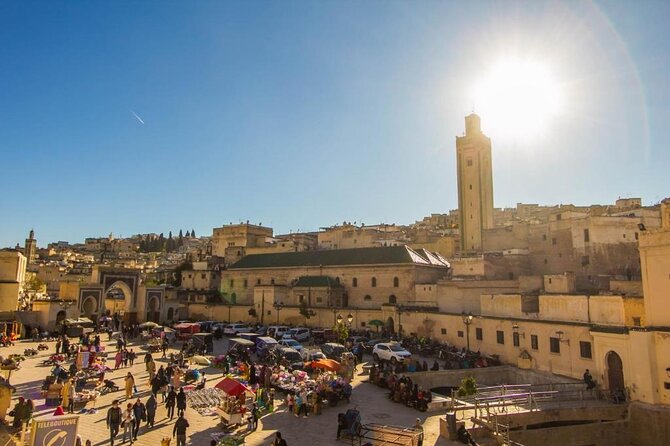
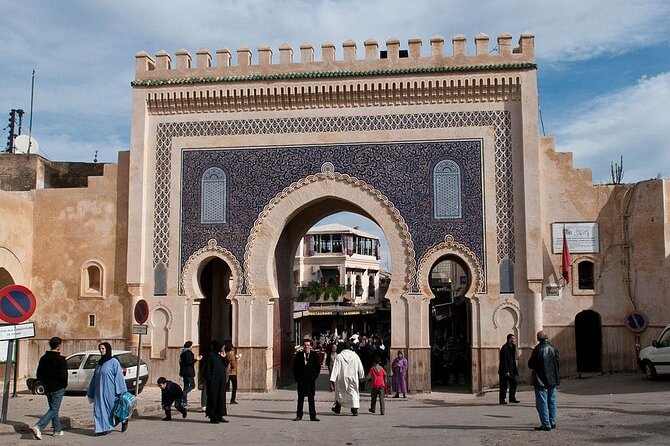
You begin at Bab Boujloud, one of Fez’s best known entrances to the old medina. The big visual lesson here is how the city uses color and craft as identity. You’ll see the famous green and blue ceramics and get your first taste of how Fez looks when it’s at its most decorative.
From here, your guide also points out major nearby references that help you orient fast, including the Mellah, the Ibn Danan synagogue, and the Kings Palace. You’ll also get viewpoints over the Merinides Tops plus Borj North and Borj South. The point isn’t to treat these as quick photo stops; it’s to link the skyline and landmark names to the streets you’re about to walk.
There’s also a ceramic factory stop included here. Even if you don’t buy anything, watching how ceramics are made can put the gate’s look into context. Ceramic work isn’t just decoration—it’s part of how the city expresses skill, patience, and local style.
Tip: If you’re prone to getting tired early, this is where you slow down. Bab Boujloud is a “reset moment.” Take it in before the lanes narrow.
Al-Attarine Madrasa: learning in Fez, plus a small entry fee
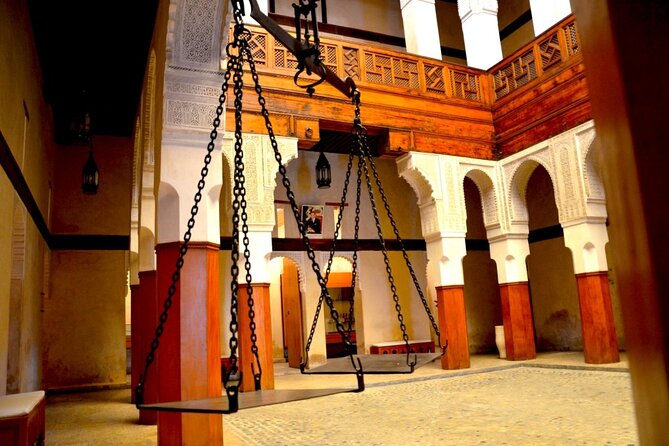
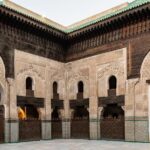
Next is Al-Attarine Madrasa, founded in 1325 near a famous area associated with spices and perfume. This madrasa was an important school for high-achieving male scholars, and many students went on to Kairaouine University.
From a visitor’s perspective, madrasas are a way to understand that Fez wasn’t only markets and street life. These were organized education hubs. The architecture also helps you feel the quieter side of the city, even while everything around it stays active.
Practical note: Al-Attarine charges 20 DH, and it’s listed as not included. So decide in advance whether you want to spend time inside versus viewing from the outside. If you’re the kind of person who likes to see how places were built for study, this stop is worth paying for.
Cherratine Medersa: another school, built in 1670
The tour continues to the Cherratin Medersa, also known as Er-Rachidia or the Ras Cherratine Madrasa. It was built in 1670, during the reign of Sultan Al-Rashid Ben Ali Al-Charif.
This stop adds texture because it’s a different era than Al-Attarine. You’ll see how education buildings evolved while still serving the same basic purpose: training and preserving knowledge. Even if you don’t read Arabic inscriptions, the layout and attention to detail communicate a lot.
Practical note again: there’s a 20 DH entrance fee, not included. If you’re keeping your budget tight, you can treat this as a shorter “must-see overview” rather than a long interior visit.
The Medina of Fez craft loop: where handmade work is the point
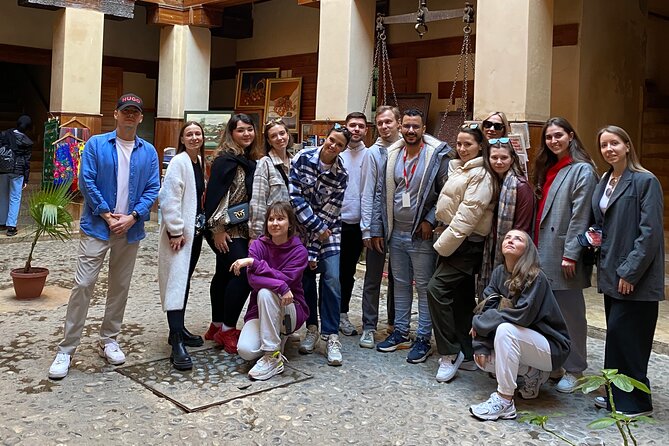
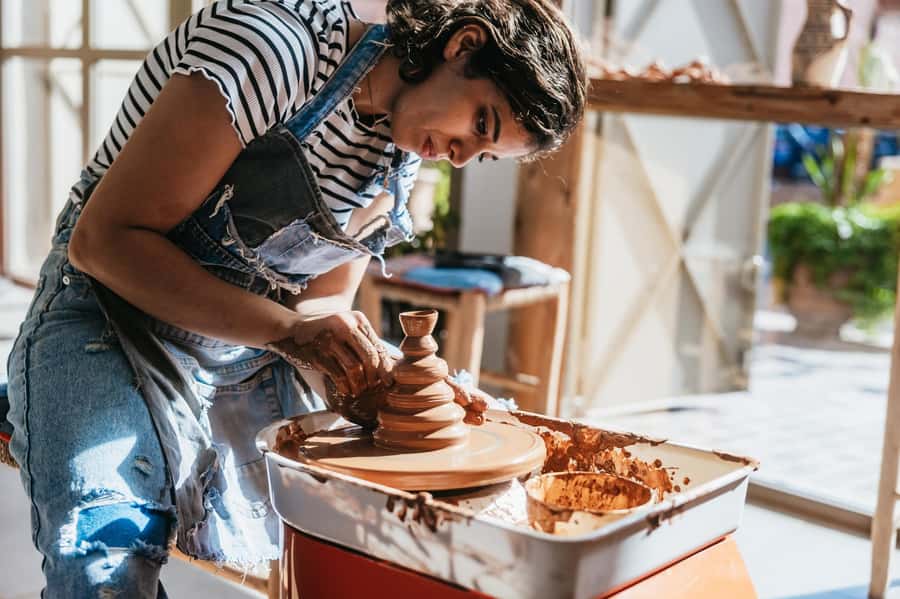
One of the tour’s best uses of time is the craft-focused Medina of Fez segment. You don’t just get to stand and look; you get guided connections to what you’re seeing in workshop areas where artisans create everyday objects.
Depending on the day and what the guide routes you through, you may see process-based work such as:
- making mosaic tiles
- weaving textiles
- molding pottery
- etching brass
This is also one place where a guide pays off. Without context, it’s easy to only see items on shelves. With context, you notice technique: the order of steps, why tools look the way they do, and why Moroccan patterns follow specific design logic.
Practical note: This section can include shops where purchases are part of the environment. You’re not required to buy. Treat it like a studio visit—ask questions, watch for a moment, then move on at your pace.



Zaouia of Moulay Idriss II: a sacred stop with access limits
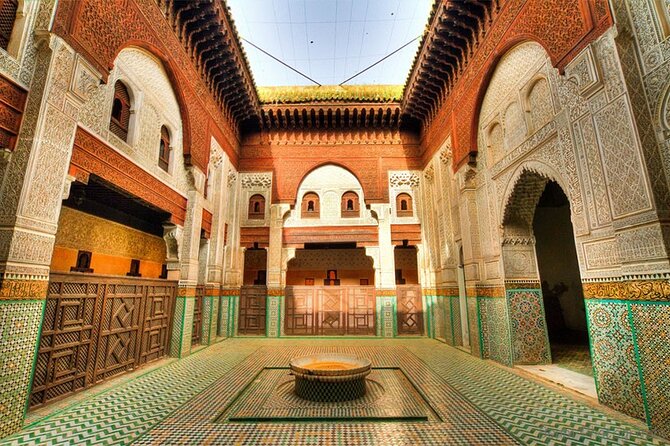
Next comes the Zaouia of Moulay Idriss II in Fes el-Bali. It’s a sanctuary that contains the tomb of Idris II, who is credited with helping shape Fez at its beginnings.
This stop comes with a clear access rule: access is exclusive to Muslims. That means your experience may be more about learning what the place represents and seeing it from the visitor-allowed area rather than entering fully.
Even with restricted access, it’s meaningful. In Fez, religion isn’t something separate from daily life. It shapes where people gather, how neighborhoods are organized, and which sites carry long-term significance. Having your guide explain that context turns the stop into something more than a brief glance.
Kairaouine Mosque area: historic names you can connect to the streets
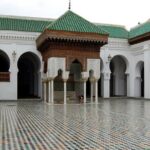
Your route also includes the Kairaouine Mosque area, where you’ll encounter the Quaraouiyine Mosque and get views around the Andalusian Mosque.
Here are the anchor facts your guide will help you place:
- The Quaraouiyine Mosque is founded by Fatima el Fihri in 859.
- The Andalusian Mosque traces roots to 860.
- Entrance to certain mosque areas is exclusive to Muslims, so you may see viewpoints and the surrounding setting rather than stepping inside.
The value here is learning how a city can have multiple layers of sacred architecture, tied to specific founding stories. Even if you can’t enter, standing in the area and understanding the names makes Fez feel less like random travel photos and more like connected space.
Place R’cif: a practical midpoint for sensing daily life
After the mosque area, you head toward Place R’cif—a central plaza in the medina. It’s the kind of space where the city shows you its rhythms: shops, markets, and the everyday movement of people doing regular things.
This stop helps you regroup. It’s not just scenic; it’s logistical. A plaza like this is a natural place to pause, check your bearings, and reset your energy before the sensory intensity of the tannery area.
Chouara Tannery: leather-making you can smell, plus a lot to process
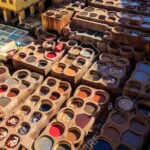
Then comes Chouara Tannery, one of Fez’s most famous leather-making sites. Expect what the name implies: an older, expanded tannery area where leatherwork happens through an active, multi-step process, and the famous part is the scale and the color.
This is a stop that can feel intense at first because of the combination of sights and smells. But it’s also one of the most real-world connections to Fez’s craft identity. You’re not learning about leather from a museum label—you’re seeing how a city’s production works.
Practical tip: Don’t treat this as a quick glance and move on. Give yourself a minute or two to adjust, then ask your guide how the dyeing and sorting works at a high level. You’ll “see more” after you know what you’re looking for.
Entry is listed as free, which is another reason this stop tends to justify its time.
Place Seffarine: brass and copper artisans in action
From leather to metal. Place Seffarine is known for brass and copper work, and it’s a great pairing with the tannery because both are traditional trades that shape daily life in Fez.
Here, the experience is about watching hands at work. You’ll see artisans crafting metal objects, and because it’s in a workshop-square setting, it’s easier to picture the work as a living trade rather than a one-time craft demonstration.
Again, no pressure to buy. The real win is understanding that these artisan areas developed for practical reasons—nearby materials, customer flow, and the concentration of skill. Your guide helps connect the dots while you’re standing right in the middle of it.
Museo Nejjarine at Funduq al-Najjarin: architecture inside a riad-like setting
To cool down after the intense sensory stops, the tour ends with Museo Nejjarine, located at Funduq al-Najjarin. This is described as a private museum showing the architecture of riads and the craftsmanship behind them.
This is one of the tour stops that feels like a pause: you can step away from the street noise and focus on details and design. If you enjoy interiors and architectural spaces, this is a smart way to finish.
Practical note: Admission is 20 DH per person and is not included. If you’ve already spent extra on the madrasas, you might decide how much time you want here. Still, it’s one of the few parts of the route that shifts the focus from markets and workshops to a protected indoor setting.
Timing and walking reality: how to prepare so you enjoy the full 4 hours
This is a walking tour through narrow medina streets. The route is built so you spend about 3.5 hours at stops and about 30 minutes moving between them, but you’ll still cover uneven ground and tight lanes.
My practical advice:
- Wear closed-toe, grippy shoes. You want comfort for the stop-and-go rhythm.
- Dress for sun and shade. Even in shaded lanes, you’ll feel heat when you pause at open squares.
- Bring a small amount of cash for the 20 DH entrances where listed.
- If you need bathroom breaks, let your guide know. You’ll move faster with a plan than trying to hunt in the moment.
If you’re sensitive to crowds, the private format helps because the group is only your party. If you’re booking ahead, this tour is often reserved well in advance (around 46 days), so plan early if your dates are fixed.
Who this tour suits best (and who might want a different pace)
This half-day format is ideal if you:
- want a guided orientation to Fez el-Bali without committing to a full day
- enjoy craft and artisan trades alongside landmarks
- prefer private pacing over getting swept along in a large group
- want pickup/drop-off so you’re not navigating the medina on your own first thing
It may not be ideal if:
- you strongly dislike paying small extra fees mid-route
- you want long indoor museum time at the expense of walking through craft areas
- you need fully flexible religious access (some stops are Muslim-only for entry)
Should you book this Fez highlights half-day tour?
I think you should book it if you want Fez to feel understandable within a few hours. The biggest reason is the structure: you start at Bab Boujloud, you hit education sites, you move through artisan areas, then you end with a calmer indoor stop. That flow makes the medina feel like a connected story instead of separate landmarks.
Two reasons to keep expectations realistic: some entries cost extra (20 DH at the madrasas and the Nejjarine museum), and religious sites have access limits for non-Muslim visitors. If you’re okay with that and you’re prepared for walking, this is a solid value at $20 per person, especially because pickup, drop-off, and coffee or tea are included.
If your priority is maximum museum time only, you might prefer a different format. If your priority is understanding Fez through streets, crafts, and iconic sights, this half-day plan is a smart way to start.
FAQ
What is the duration of the Fez highlights half-day tour?
It runs for about 4 hours.
What time does the tour start?
The start time is 10:00 am.
Is pickup and drop-off included?
Yes. Pickup and drop-off are included from your hotel or riad.
Is coffee or tea included?
Yes. You get coffee or Moroccan tea.
Does the tour include tickets to all sites?
Not all. Some stops are free, while places like Al-Attarine Madrasa, Cherratin Medersa, and Museo Nejjarine list a 20 DH admission fee that is not included.
Are meals included?
Lunch is not included.
Is this tour private?
Yes. It’s a private tour/activity, meaning only your group participates.
Are there any access restrictions at religious sites?
Yes. Access to the Zaouia of Moulay Idriss II is exclusive to Muslims, and some mosque entrances are also limited to Muslims.
What if I bring a service animal?
Service animals are allowed.
What is the cancellation policy?
Free cancellation is available. You can cancel up to 24 hours in advance for a full refund.