REVIEW · FES
Fes: Attarine Madrasa, Museum, Tannery, Souk and Medina Tour
Book on GetYourGuide →Operated by Moments in Morocco - Tour Agency · Bookable on GetYourGuide
Fes feels like a living maze. This guided walk ties together Marinid tilework, the oldest living medieval city, and the leather-dye spectacle of Chouara so you understand what you’re seeing, not just where to point your camera.
Two things I really like: first, the way the stop at Al Attarine Madrasa turns pretty decoration into a clear story about Marinid-era design and religious learning. Second, the craftsmanship show at Chouara Tannery, where you can actually watch natural-dye work and see why this trade has endured for centuries.
One drawback to consider is that the base price is low, but you still need to budget extra for monument entry tickets, and the medina lanes mean a fair amount of walking on uneven ground.
In This Review
- Key things to know before you go
- Fes Medina, planned so you don’t get lost
- Starting at Hotel Batha and stepping into Bab Boujloud
- Al Attarine Madrasa: Marinid artistry you’ll recognize once explained
- Karaouine Mosque and University: why the exterior still matters
- Nejjarine Fondouk and the Museum of Wooden Arts & Crafts
- Chouara Tannery: the main event, seen the practical way
- Souks and the Medina maze: textiles, spices, and metalwork rhythm
- Zellige and pottery workshop time: where the designs become practical
- Price, value, and what to budget beyond the $12
- Who this tour suits best
- Final call: should you book it?
- FAQ
- How long is the tour?
- What is included in the price?
- Are monument tickets included?
- Do I need transportation?
- Where does the tour meet?
- Do you pick up from inside the Medina?
- Where does the tour end?
- What language is the guide?
- What should I bring?
Key things to know before you go
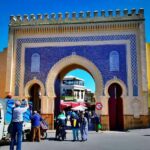
- Bab Boujloud Blue Gate sets the tone fast: you start right at the entrance to Fes Medina and get oriented.
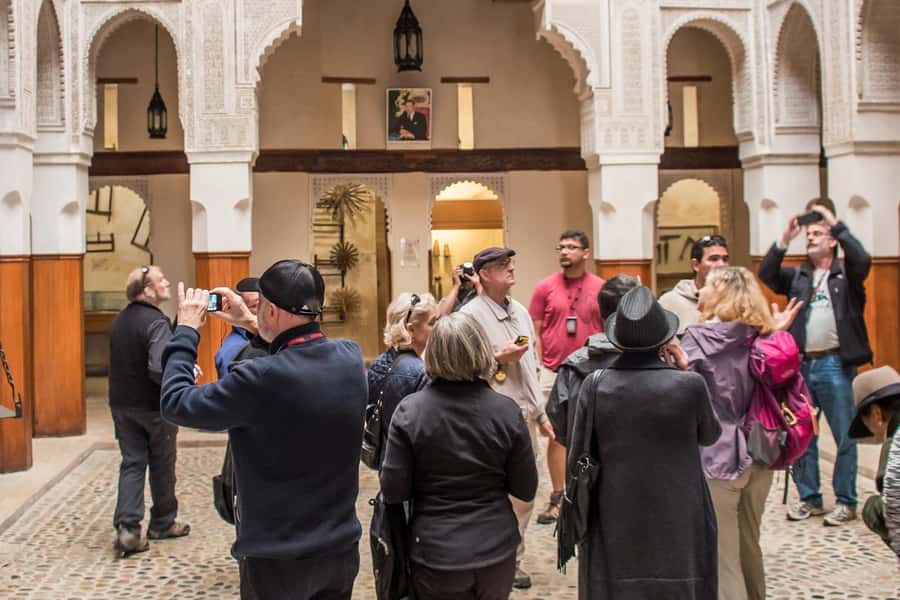
- Al Attarine Madrasa is more than photos: zellige tilework, carved cedarwood, and marble details make the learning-school story click.
- Karaouine University context helps: you see the mosque and learn why it matters historically.
- Wood carving and furniture at Nejjarine: the museum sits in a restored caravanserai setting.
- Chouara Tannery is the sensory highlight: view dye pits from a terrace and see natural dyes in action.
- Souk shopping is optional, not required: spices, textiles, pottery, and zellige stops are built into the walk.
Fes Medina, planned so you don’t get lost
Fes Medina is famous for being a maze. The alleys are narrow, the turns appear random, and landmarks can hide around corners. That’s exactly why this kind of guided route is worth it. With a local guide leading the path, you can spend your energy looking up at doors, tiles, and craftwork instead of constantly hunting for the next turn.
This tour also makes a smart choice: it doesn’t only hit big-name sights. You’ll move through medina streets, enter craft-focused stops, and pause often enough to actually absorb what you see. The pace is built for a 4-hour window (about 210 minutes), which is a sweet spot if you want the highlights without losing your whole day.
The other thing I like is the guide’s role goes beyond “here’s a monument.” You get explanations and practical context so sites feel connected. Guests have specifically praised guides for clear directions through the labyrinth, plus patient handling of different paces (for example, guides named Houssine and Amin have been called out for being friendly, organized, and good at keeping the group moving).
You can also read our reviews of more museum experiences in Fes
Starting at Hotel Batha and stepping into Bab Boujloud
You’ll meet your guide outside Hotel Batha on Ave de la Liberté. If your riad is inside the Medina, pickup may be available from your accommodation reception in the private option. Either way, the goal is the same: you start at the edge of the old city and step into it with momentum.
From there, the tour heads to Bab Bou Jeloud (Blue Gate), one of the most iconic entrances to Fes Medina. Even if you’ve seen photos, being there in person helps. The gate becomes a reference point, so when you later feel like you’ve been turned around, you can still picture where you entered the labyrinth.
Quick reality check: medina streets can be busy, and the terrain can be rough. Bring comfortable shoes and water. If you’re the type who likes to stop and stare, do it. That’s part of the point here.
Al Attarine Madrasa: Marinid artistry you’ll recognize once explained
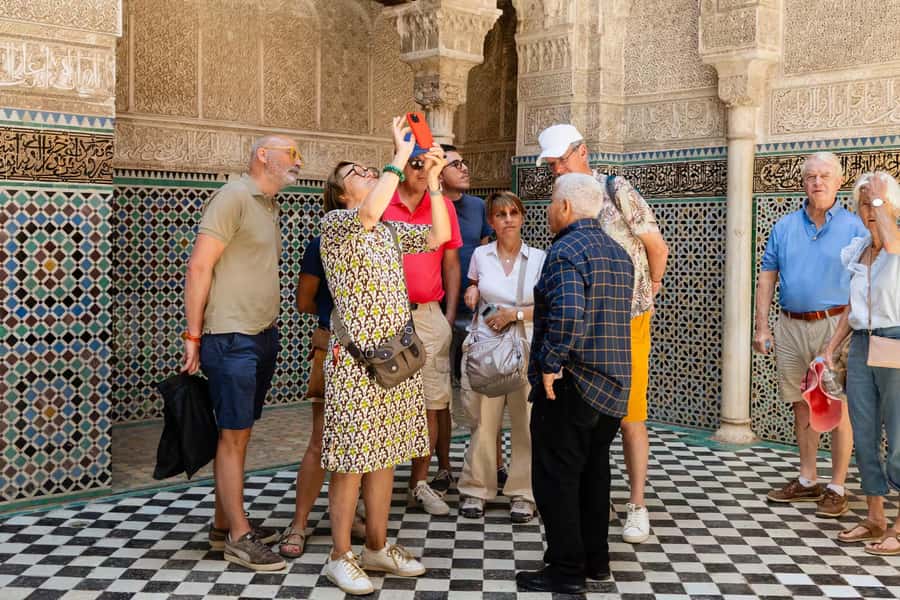
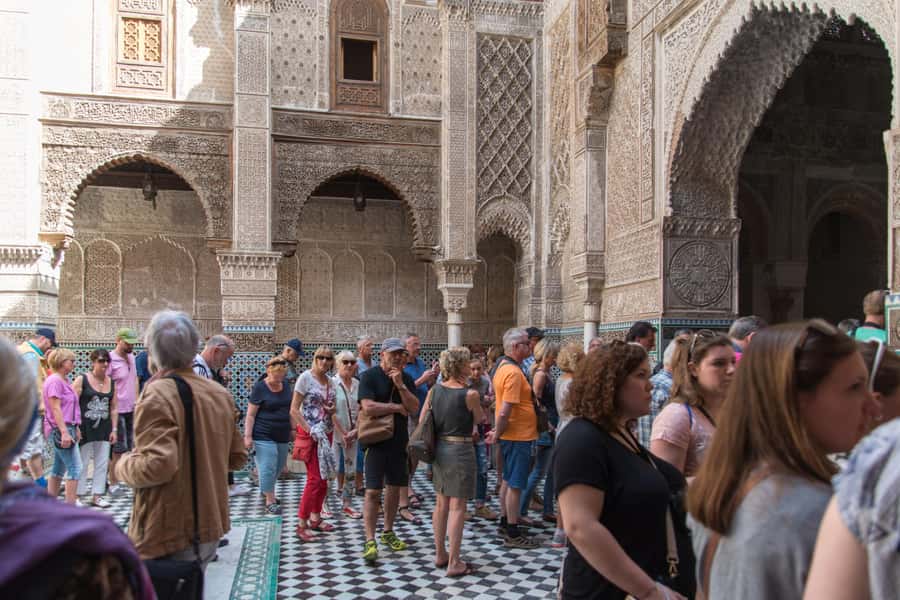
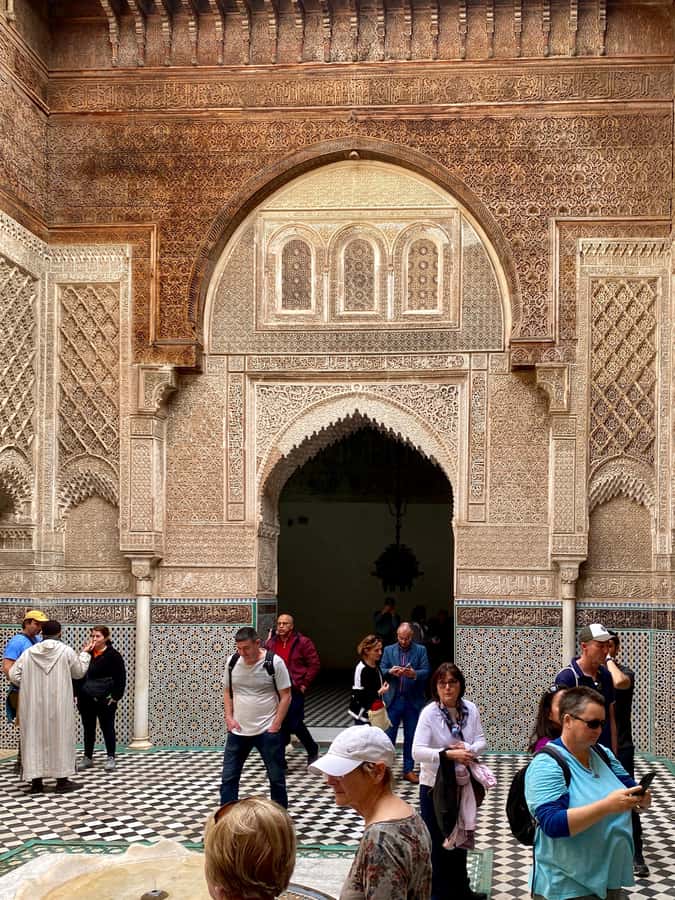
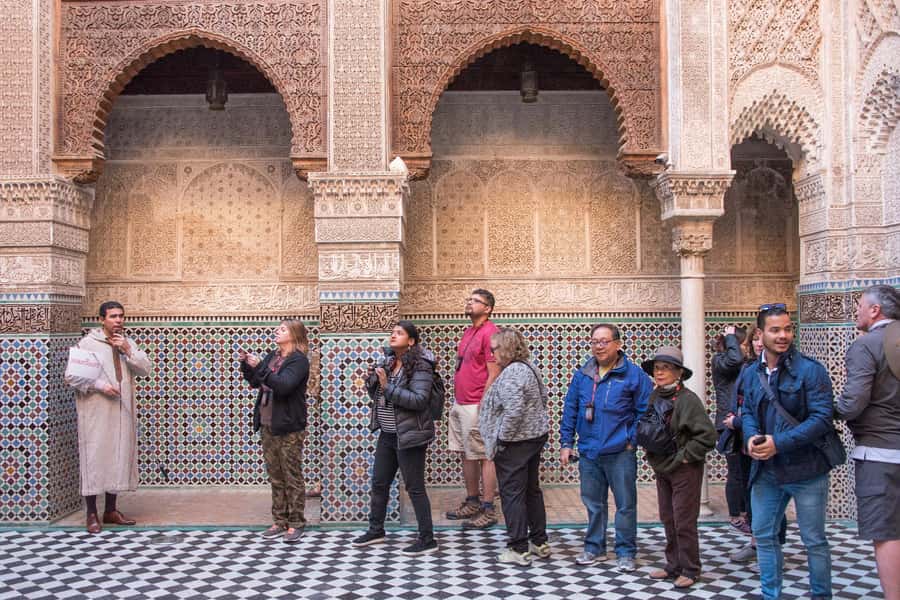
Next up is Al Attarine Madrasa, a 14th-century school tied to the Marinid dynasty. The standout is that you’re not just looking at a pretty building. You’re seeing how architecture signaled learning and status.
Here’s what tends to make this stop land: your guide will point out details like zellige (the intricate tilework), carved cedarwood, and marble columns. Once someone gives you the “what to look for” list, the madrasa stops being random ornament and starts reading like a designed message.
There’s also practical value in visiting at a guided pace. You’ll get skip-the-line access to selected monuments, and you’ll have some free time to photograph and look around without feeling rushed. That balance matters in Fes, where a location can look calm from the outside but feels complex once you’re inside.
Cost note you should plan for: entry tickets for Al Attarine Madrasa are listed separately (20 MAD per adult). If you budget only the tour price, you might get a surprise at this first major stop.
Karaouine Mosque and University: why the exterior still matters
You’ll then visit the Karaouine Mosque and University area. The tour includes a photo stop plus time to see the site with guidance. Even when you’re viewing mostly from the outside, this one is important because of what your guide will tell you about its origins and role.
The university is connected to Fatima al-Fihri, with the foundation dated to 859. That makes it one of the world’s oldest universities. In other words, you’re seeing a place where religious practice and education have long shaped the city’s identity.
What I like about this stop is how it connects to earlier sights. A madrasa is about structured learning. Karaouine represents learning at a larger scale and for a longer timeline. When your guide ties those threads together, Fes stops feeling like a list of landmarks and starts feeling like a single living system.
Nejjarine Fondouk and the Museum of Wooden Arts & Crafts
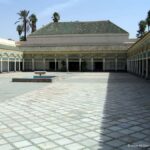
From the study and worship spaces, the tour shifts into craftsmanship with a visit to Nejjarine Fondouk and the Museum of Wooden Arts & Crafts. This museum is housed in a restored caravanserai. That matters because the setting supports the theme. It’s not a random room of objects. It’s closer to how the city historically stored, traded, and displayed goods.
Inside, you’ll get to see wood traditions such as wood carving and marquetry, plus antique-style examples of furniture. If you’ve ever walked through Moroccan streets and wondered how the same design language shows up in doors, ceilings, and decorative panels, this is where you start connecting the dots.
Entry tickets for the museum are extra (20 MAD per adult). I consider that ticket price reasonable because you’re paying for more than an “object wall.” You’re paying to learn how the woodwork tradition actually looks and how it’s constructed.


Chouara Tannery: the main event, seen the practical way
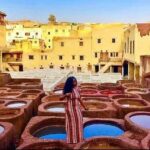
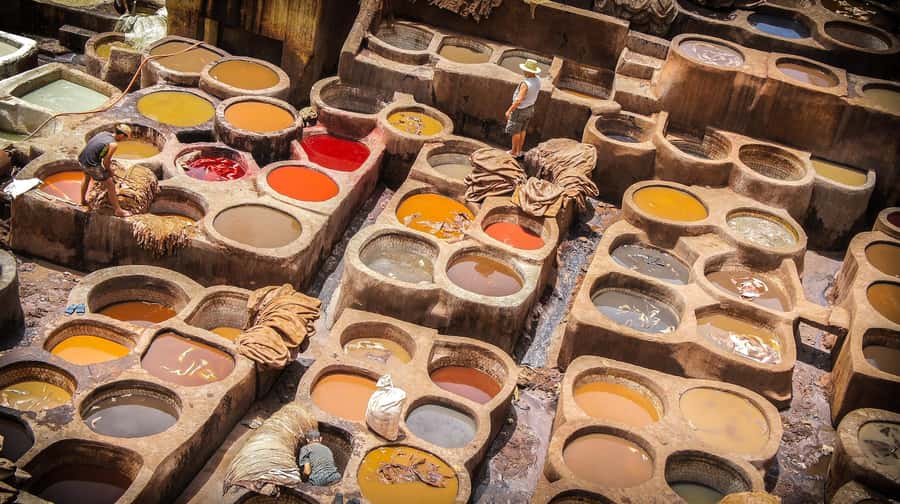
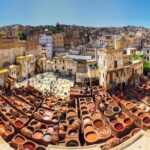
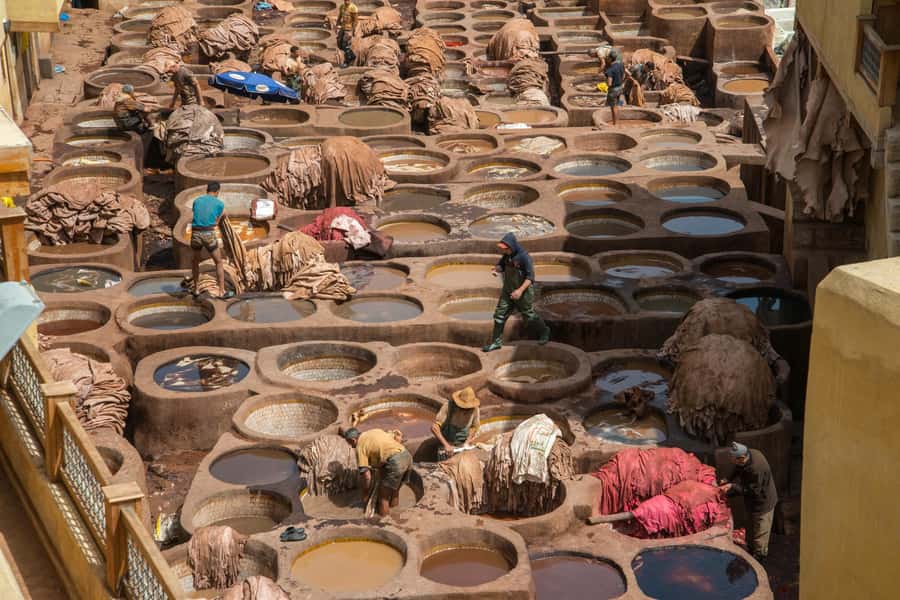
If I had to pick one stop that most strongly justifies this tour format, it’s Chouara Tannery. The dyebaths and leather workshops are famous for a reason, and they’re still operating in a way that feels rooted in older methods.
Here’s what you’ll likely notice: the work happens around natural-dye processes using materials like saffron and indigo. Your guide will explain the steps in a way that helps you interpret the colors, the pits, and the physical work happening around you.
One practical tip built into the experience: you can often view the tannery from a panoramic terrace, which makes the scene easier to follow than trying to crowd the lower lanes. For photos, that higher view is also more manageable.
Smell and heat are part of the tannery reality. Bring water and be ready for sensory intensity. If you’re sensitive, you’ll still be able to enjoy the craft process, but you may want to spend a shorter time on-site and use your free time wisely.
Souks and the Medina maze: textiles, spices, and metalwork rhythm
After the tannery, the tour moves into the market side of Fes Medina. This is where your guide’s navigation skills matter again. The route typically takes you through key souks such as:
- Souk Sabaghine for handwoven textiles and traditional fabrics
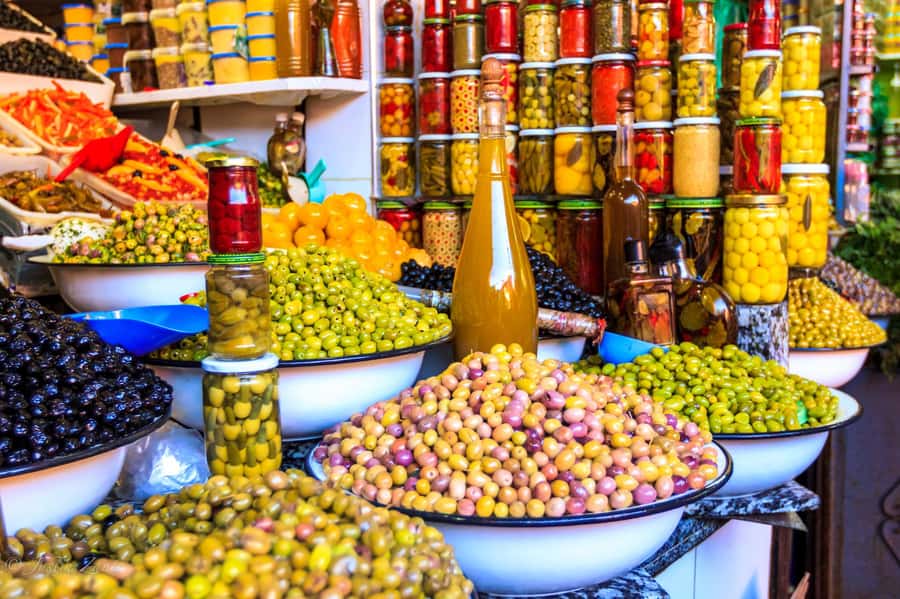
- Souk El Attarine for spices, perfumes, and herbal remedies
You’ll also have time around other craft-focused stops. One highlight described in the experience is Hammam Seffarine, known for the sound and work of coppersmiths. Even if you don’t buy anything, watching the rhythm of metalworking shows you what used to be essential to everyday life.
A smart way to use the shopping time: don’t aim to buy at every stop. Instead, pick one category you genuinely want to understand, like textiles, spice mixes, or zellige tile. Then compare what you see across the souks. This turns the medina from a shopping trap into a craft education.
If you’re traveling with kids or older family members, you’ll probably appreciate how guides often adjust pace. Guests have praised guides for being patient and interactive, and that can matter in crowded lanes where everyone’s attention level drops.
Zellige and pottery workshop time: where the designs become practical
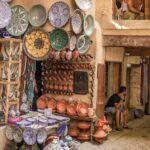
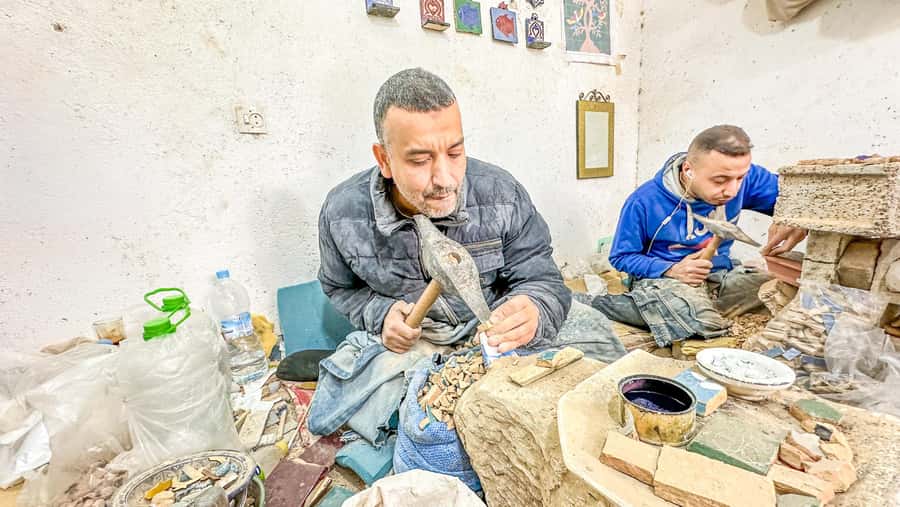
Later in the walk, you’ll see a pottery and zellige tilework workshop. This is a useful stop because it turns what you saw on buildings into something you can picture being made by hand.
You’ll watch artisans handle processes like molding clay and hand-painting ceramics, plus cutting delicate tile pieces to create mosaic designs. Zellige is often described as beautiful, but it’s more convincing when you see how the pieces are arranged and cut.
This is also a good spot for questions. If you’re curious about how patterns stay consistent across crafts, ask. If you care more about buying than learning, you can still focus on materials and finishing rather than getting lost in technical talk.
Price, value, and what to budget beyond the $12
The headline price is about $12 per person for a roughly 4-hour guided experience. That’s strong value in a city where a good guide can save you time and stress. You’re paying for a licensed guide, a structured route, and skip-the-line access to selected monuments.
The “gotcha” is that two major entries cost extra:
- Al Attarine Madrasa: 20 MAD per adult
- Museum of Wooden Arts & Crafts (Nejjarine): 20 MAD per adult
You’ll also want cash on hand, since the tour data specifically asks you to bring it. Transportation and food aren’t included, so plan to budget for your own snacks or a later meal.
In practice, I’d think of the $12 as the “guide and route fee,” and then treat the museum and madrasa tickets as expected add-ons. Even with those included, this can still work out well if you value interpretation over wandering alone.
Who this tour suits best
This tour is ideal if you:
- Want a guided overview of Fes Medina’s top landmarks and craft traditions
- Like history, but also want craft detail you can picture after the fact
- Prefer structured free time so you can pause for photos without feeling rushed
- Are okay walking through narrow, uneven medina lanes
It may be less ideal if you:
- Have mobility limitations, since the experience includes medina walking and is also listed as not suitable for people with mobility impairments (even though wheelchair accessibility is mentioned). If this matters for you, ask directly before booking.
Final call: should you book it?
Yes, I’d book this tour if you want the best of Fes without turning your day into a navigation puzzle. The combination of Al Attarine Madrasa, Karaouine’s educational legacy, Nejjarine’s woodwork, and the Chouara tannery gives you both the symbolic and the practical sides of the city.
If you want a medina day where someone else handles the route and you can focus on what you’re seeing, this is a good value choice. Just go in with two expectations: be ready to walk, and bring some extra cash for the separate monument tickets.
FAQ
How long is the tour?
It runs about 210 minutes, or roughly 4 hours.
What is included in the price?
You get a licensed local guide, a private or small-group walking tour (based on your selected option), skip-the-line access to selected monuments, and free time to explore at each stop. A WhatsApp reminder with meeting details is also included.
Are monument tickets included?
No. Entry tickets for Al Attarine Madrasa (20 MAD per adult) and the Museum of Wooden Arts & Crafts at Nejjarine (20 MAD per adult) are not included.
Do I need transportation?
Transportation is not included. You’ll be walking through the Medina area.
Where does the tour meet?
The guide waits in front of Hotel Batha on Ave de la Liberté, Fes.
Do you pick up from inside the Medina?
Pickup is optional. If your accommodation is inside the Medina, the guide will pick you up from your riad reception. If you’re outside the Medina, you meet at Hotel Batha.
Where does the tour end?
It finishes at Hotel Batha.
What language is the guide?
The tour is offered in English and French.
What should I bring?
Bring comfortable shoes, sunglasses, a sun hat, water, and cash.