REVIEW · MARRAKECH
Cycling Adventure in Marrakech
Book on Viator →Operated by Pikala Bikes · Bookable on Viator
Marrakech looks different from a bike. I like that this Pikala Bikes ride turns the usual sightseeing loop into real neighborhood time, and I especially like the local-guide storytelling that connects daily life with what you’re seeing. You also get built-in breaks for snacks and photo stops, which keeps the pace fun instead of frantic. One thing to consider: this isn’t a gentle cruise—on some days the streets can feel intense, so you should be comfortable biking in busy traffic.
The tour is built around moving through both worlds: the maze of the Medina and the wider streets of Gueliz. Along the way, you pass big names like the Koutoubia, the Kasbah, and the Agdal gardens, then you also hit places most people skip—like a public bakery, a hammam, a zellij workshop, and stops tied to local markets and the tomb of one of the seven Saints of Marrakech. Your guides are young Moroccans trained by Pikala, and they’ll talk about family, religion, and modern life as you ride.
In This Review
- Key Takeaways Before You Pedal
- Riding From the Medina Maze Into Gueliz Reality
- Pikala’s Guides: The Best Part of the Whole Ride
- Koutoubia to Kasbah to Agdal: Landmarks, Plus the Stops Most People Skip
- Bakery, Hammam, and a Cafe Clock Stop That Feels Like Local Life
- The Tomb Stop and the Sense of Place Around Marrakech’s Saints
- Traffic, Bike Comfort, and When to Choose the Right Day
- How the 3-Hour Format Works (and What You Won’t Miss)
- Price and Value: Why $33 Feels Like More Than a Bike Ride
- Who Should Book This Marrakech Bike Tour
- Should You Book Pikala Bikes in Marrakech?
- FAQ
- How long is the bicycle tour?
- Where does the tour start?
- What parts of Marrakech will we see?
- Is the tour suitable for most people?
- What’s included during the ride?
- Can I cancel for a full refund?
Key Takeaways Before You Pedal
- Local guides trained by Pikala share daily-life context, not just site dates
- Medina to Gueliz contrast makes the route feel like two cities in one
- Practical snack and water stops keep energy up during the ride
- Old and everyday Marrakech: bakery, hammam, zellij, and market atmosphere
- Traffic + bike comfort matter; it’s best if you’re a confident rider
Riding From the Medina Maze Into Gueliz Reality
This is a bike tour that makes sense of Marrakech fast. In about three hours, you’ll go from narrow lanes where pedestrians, motorcycles, and carts all seem to negotiate space without anyone asking permission, to areas where roads open up and you can breathe. That shift—Medina first, then newer Gueliz—helps the city click in your head.
You’ll also be riding through neighborhood streets, not just hugging the perimeter of the most famous sights. That’s why the whole experience feels more like learning the city than checking off landmarks. Even if you’ve walked parts of the Medina already, biking gives you a wider “map in your body” sense of direction.
There’s also a nice group-size feel here: the tour caps at 20 people. That doesn’t sound small, but in a place like Marrakech it matters. A tighter group means fewer bottlenecks when you stop and start.
You can also read our reviews of more cycling tours in Marrakech



Pikala’s Guides: The Best Part of the Whole Ride
One of the strongest reasons to choose this tour is the human element. Pikala works with a local non-profit model, and the bicycle guides are young Moroccans trained to lead rides and explain daily life. Expect conversation that goes beyond monuments.
From the guide names people report, you might ride with leaders such as Yasser, Hamit, Kaula, Zouhair, Mo, Hamid, Achmed, or Khawla. Different people mean different styles, but the common thread is the same: they connect what you see with how people grow up, how family shapes life, and how religion and modernity show up day to day.
I like tours where the guide helps you “read” the city while you’re moving. Here, you’re not only getting answers. You’re also learning how to ask better questions—things like why certain spaces matter socially, or what daily routines look like from the inside.
Koutoubia to Kasbah to Agdal: Landmarks, Plus the Stops Most People Skip
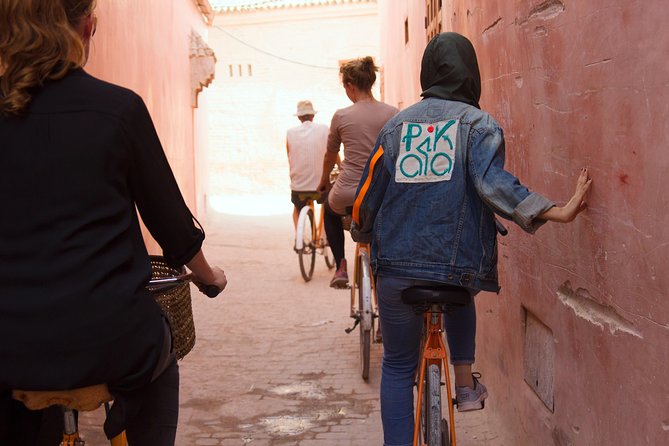
The route includes the big highlights—specifically the Koutoubia, the Kasbah, and the Agdal gardens. You’ll pass these sights and get context as you ride, which is a smart way to see them without turning your day into an endless walking marathon.
But what makes this tour worth it is the promise of “the parts you wouldn’t normally come.” Instead of only focusing on famous façades, the ride aims for the everyday Marrakech. That’s where you start to feel the city’s rhythm: the way people move through market streets, how trades show up near where people live, and where everyday errands happen.
One practical perk: the tour includes plenty of stops for photos. In Marrakech, you can’t always safely stop wherever you want. Having planned pauses means you get pictures without feeling like you’re holding up traffic or breaking the flow.
Bakery, Hammam, and a Cafe Clock Stop That Feels Like Local Life
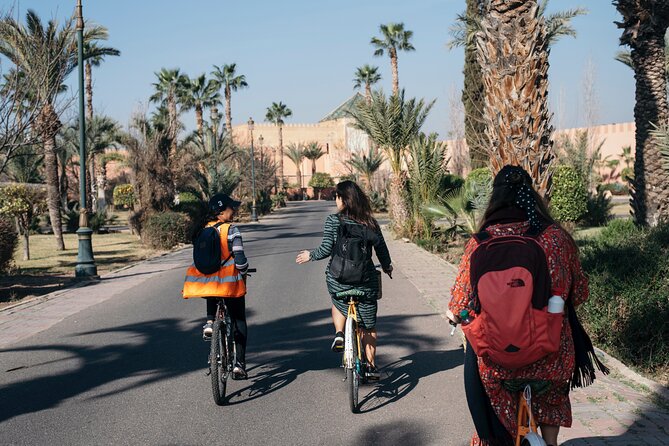
This ride doesn’t treat food and culture as an add-on. It builds them into the schedule.
You’ll visit a local public bakery, which is the kind of stop that changes how you picture the city. Bread isn’t just a souvenir here; it’s daily routine. You also get a stop at a special cross-cultural café called Cafe Clock, where juice and sweets are included. It’s the type of break that lets the group regroup and lets you sit for a moment instead of pushing through nonstop.
Then there’s the hammam. The tour includes a visit to an old traditional bathhouse called the hammam, which is a reminder that public bathing has always been more than “cleaning.” It’s social space, routine, and architecture all in one. Even if you’ve read about hammams before, seeing one in person through the flow of the neighborhood makes the experience feel real.
If you’re curious about crafts, you may also see a zellij workshop demonstration. One review specifically mentions a tile-making demo, and that fits the broader theme of seeing trades tied to local life, not only tourist landmarks.
The Tomb Stop and the Sense of Place Around Marrakech’s Saints
Near the end, the tour includes a visit to the tomb of one of the seven Saints of Marrakech. This kind of stop can deepen your understanding fast because it reframes what you’re seeing: buildings and walls aren’t only scenery. They’re part of how people mark meaning, memory, and community.
The value here isn’t just the location. It’s the way the guide connects it with daily values and local norms you’ve been hearing about since the start. If you’ve been wondering how religion and tradition show up outside formal tourist settings, this portion helps answer that.



Traffic, Bike Comfort, and When to Choose the Right Day
Let’s talk about the part that needs the most honesty. Several reports describe the ride as not for the faint-hearted. Marrakech streets can be chaotic, and the group needs to stay alert. You’ll be cycling in real street conditions, not a traffic-free course.
Bike condition also matters. A review notes the bikes may not be in great shape and advises only joining if you’re a very competent cyclist who can handle a bike that might not suit perfectly. Another review echoes the same theme: it’s a ride that requires confidence, especially when traffic is coming from multiple directions.
So here’s the simple decision rule I’d use:
- If you’re comfortable in busy street environments and you can stay focused for a while, you’ll likely find this exhilarating.
- If you get nervous around cars or you rarely ride on street traffic, skip it or choose a gentler tour option.
Timing can help. One report suggests avoiding summer because it’s busier, and choosing off season when the streets feel less intense.
How the 3-Hour Format Works (and What You Won’t Miss)
This experience runs about 3 hours and loops back to the start point. That time window is part of the value equation. You get:
- landmark context (Koutoubia, Kasbah, Agdal gardens),
- neighborhood cycling through Medina and Gueliz,
- and cultural stops (bakery, hammam, Cafe Clock, craft/market moments),
without feeling like your entire day disappears.
Because the tour includes snacks, bottled water, and scheduled breaks, you’re less likely to run out of energy halfway through. It also helps that there are two departure choices—morning or afternoon—so you can match it to your overall Marrakech plan.
The starting point is 29 Rue Riad Laarous, Marrakesh 40000, and the activity ends back at that same place. It’s also listed as near public transportation, which is a practical detail if you’re bouncing between neighborhoods.
Price and Value: Why $33 Feels Like More Than a Bike Ride
At about $33.28 per person, the price is low for what you’re getting: a guided route, bike time through multiple neighborhoods, entry-type experiences like the bakery and hammam visit, plus juice, sweets, and snacks with bottled water during the tour.
But the bigger value angle is the social mission. Pikala is a local non-profit project, and the structure supports training and employing young local guides. That matters, because you’re not just buying a map. You’re helping power a community-based program that keeps local voices in the lead.
If you care about value, this tour also fits people who don’t want only big-photo stops. It’s for those who want everyday Marrakech—bread-making, bathhouse life, craft spaces, and market energy—wrapped into a ride you can actually cover.
Who Should Book This Marrakech Bike Tour
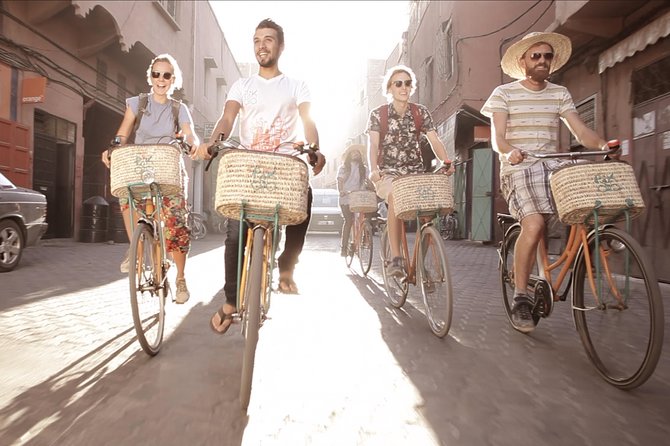
This is a strong match if you want:
- a high-impact way to see both Medina and newer parts of the city,
- meaningful conversations with local guides (family life, religion, modernization),
- cultural stops that are practical and real, like the bakery and hammam,
- and a ride that feels like you’re part of the city, not parked next to it.
It can also work well for couples. One report describes it as a favorite highlight, especially because the route connects old and new city with a real sense of community.
Just be strict with the bike confidence part. The tour can be described as intense in street traffic, so I’d only book if you can ride calmly when things feel busy.
Should You Book Pikala Bikes in Marrakech?
Book it if you want Marrakech through daily life, not only through famous monuments. I’d choose this tour when you have at least half a day and you’re ready to move. The guide-led storytelling, the contrast between Medina and Gueliz, and the mix of hammam, bakery, and Cafe Clock snacks make it feel like real access.
I’d skip it if you’re uneasy on busy streets or if you know you struggle with bike control for long periods. Also, consider season. If you’re planning peak summer days, the streets may be more demanding than you want.
If you’re a confident cyclist and you want a cultural bike tour with a social mission behind it, Pikala Bikes is one of the most satisfying ways to get your bearings fast.
FAQ
How long is the bicycle tour?
The tour lasts about 3 hours.
Where does the tour start?
The meeting point is 29 Rue Riad Laarous, Marrakesh 40000, Morocco. The tour ends back at the meeting point.
What parts of Marrakech will we see?
You’ll cycle through neighborhoods including the Medina and Gueliz, and you’ll pass highlights such as the Koutoubia, Kasbah, and Agdal gardens. The route also includes stops like a local public bakery and a hammam, plus a visit to the tomb of one of the seven Saints of Marrakech.
Is the tour suitable for most people?
Most people can participate, and the tour notes that most travelers can join. That said, some feedback warns it’s not for the faint-hearted due to street conditions and bike comfort.
What’s included during the ride?
The tour includes juice and sweets at Cafe Clock, plus bottled water and snacks during the experience.
Can I cancel for a full refund?
Yes. Free cancellation is available up to 24 hours before the experience start time for a full refund. If you cancel less than 24 hours before, the amount paid is not refunded.