REVIEW · MARRAKECH
BEST Marrakech to Fes desert tour 3 days
Book on Viator →Operated by Morocco Fabulous travel · Bookable on Viator
That first camel ride moment can still feel unreal. This Marrakech to Fes desert tour strings together Morocco’s big-hitters (High Atlas drives, UNESCO Ait Ben Haddou) with the real payoff: Erg Chebbi dunes at sunset and a luxury camp experience. I especially like the small group size (max 10) that keeps the pace human, and I like the mix of famous sights plus hands-on moments like camel time, sandboarding, and Berber drumming around the campfire. The main thing to consider is the driving: you’ll spend a lot of time in the vehicle over three days, so this is less for you if you hate long transfers.
A recurring theme in the kind of feedback this tour gets is guidance that feels personal. Names like Hassan, Ayoub, Mustapha, and Mubarak come up, and the praise often points to thoughtful stops and clear explanations. Just be aware that the itinerary can be flexible depending on timing, especially around the Dades Gorges viewpoints.
In This Review
- Key highlights I’d circle first
- Marrakech to Fes by way of Atlas roads (and real desert time)
- Day 1: High Atlas drives, Berber villages, and Ait Ben Haddou
- Day 2: Todra Gorge walking, Merzouga arrival, and your camel-to-camp switch
- The desert night: sunset dunes, sandboarding, and drumming that feels hands-on
- Day 3: Sunrise option, return by 4×4 or camel, and the road into Fes via Ifrane
- Price and value: why $388.49 can work well for the right traveler
- Guide quality and how the small-group format changes your day
- Who should book this Marrakech to Fes desert tour (and who should rethink it)
- Should you book? My practical take
- FAQ
- How long is the Marrakech to Fes desert tour?
- What group size is this tour?
- What does the tour include?
- What is not included in the tour price?
- Where do you meet and where do you end?
- Do you get a desert camp with private tents?
- Is sunrise included?
- Can I cancel for a full refund?
- Is this a mobile ticket?
Key highlights I’d circle first
- Max 10 travelers per departure for a calmer, more interactive ride across the Atlas.
- UNESCO Ait Ben Haddou with a guide-led visit to Morocco’s most filmed kasbah.
- Erg Chebbi camel ride + sunset on a tall dune, then on to a luxury camp with private tents.
- Camp evening with nomad music and drumming, including hands-on drum teaching.
- Optional sunrise morning at the dunes if you can handle early starts.
- Fes approach via Ifrane and cedar forest, with a chance to spot Barbary apes.
Marrakech to Fes by way of Atlas roads (and real desert time)
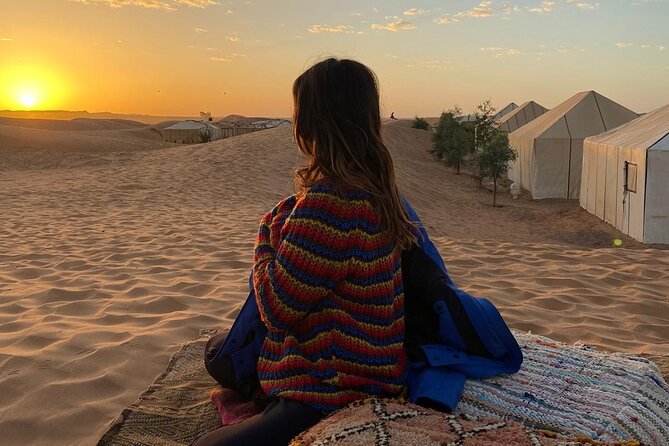
This is a classic “big distance, big contrasts” Morocco route: city energy at the start, mountain passes and kasbahs in the middle, then sand and stars before landing in the maze of Fes. The structure matters because it avoids the most common problem with long-distance tours: you get forced into seeing only one kind of place. Here, you move through multiple zones—High Atlas, kasbah country, canyon valleys, then Erg Chebbi.
The small group size (10 max) is not just marketing. It’s what makes those roadside stops feel less like a bus tour and more like a road trip with a plan. In feedback, guides like Hassan and Ayoub are repeatedly praised for adjusting stops based on what the group wants to see, which is exactly what you hope for when the day is packed.
Value-wise, the price ($388.49 per person) makes sense when you compare what’s included: an air-conditioned vehicle, two breakfasts, two dinners, a camel ride, and the desert camp experience. What you’ll pay extra for is mostly basic stuff like lunches, drinks, and tips.
A few more Marrakech tours and experiences worth a look
Day 1: High Atlas drives, Berber villages, and Ait Ben Haddou
You start in Marrakech, meeting at Le Grand Balcon du Café Glacier near Jemaa el-Fna. That location is convenient if you’re already centered in the medina area, and the timing is set up so you leave Marrakech in the morning.
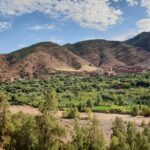
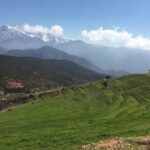
From there, the first day is about transition. You drive through the High Atlas Mountains, with short stops that give you quick mountain views and chances to see traditional Berber villages along the way. These pauses are brief, but they help break up the long route and keep the day from feeling like straight highway miles.
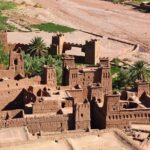
Then comes Ait Ben Haddou, the UNESCO kasbah you don’t want to rush. The visit is guided and focused on Moroccan architecture, with plenty of context for why it’s so famous. It has shown up in major films and TV productions such as Gladiator, Kingdom of Heaven, Babel, and Game of Thrones—so even if you don’t care about movies, you’ll recognize why directors love it.
After the kasbah, the trip continues to Ouarzazate, often described as a gateway to the Sahara. You’ll make time for Atlas Studio from the outside (good for photos without turning the day into a theme park), then pass through the valley of roses.
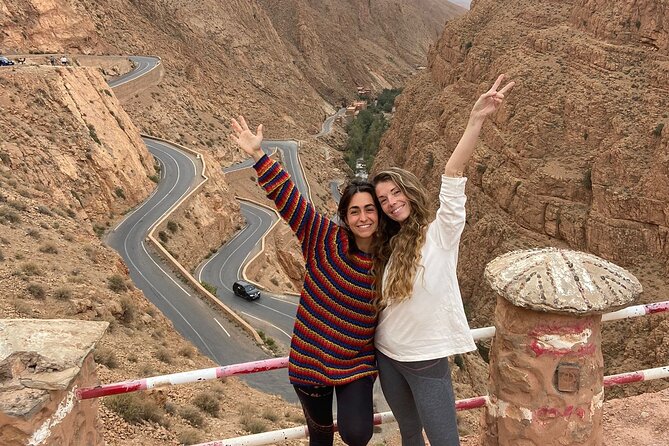
The day’s final stop depends on timing: you may reach Dades Gorges to see monkey toes and the famous zig-zag road. If you don’t have enough time, those Dades viewpoints are shifted to the next morning. Either way, you’re building toward the canyon-and-rock scenery that makes the following day feel even sharper.
Practical consideration: Day 1 is long. Even with comfortable transport, you’re sitting a lot. If you’re someone who gets restless on road trips, bring a little routine—water, sunglasses, and something to keep your phone charged.
Day 2: Todra Gorge walking, Merzouga arrival, and your camel-to-camp switch
Breakfast sets up the day nicely, because you start with fuel instead of rushing out hungry. Then you drive toward Todra Gorge, going through Tinghir and along the Todra Valley, which is lined with palm trees. It’s the kind of scenery that feels like a reset button after mountain roads.
In Todra, you get a walk in Todra Canyon. A canyon visit changes your perspective because you see scale up close—walls towering, light shifting as you move. This is also where the trip starts to feel less like “driving to the desert” and more like exploring a real region.
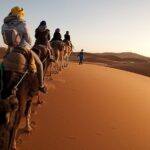
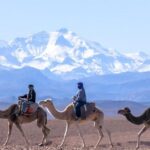
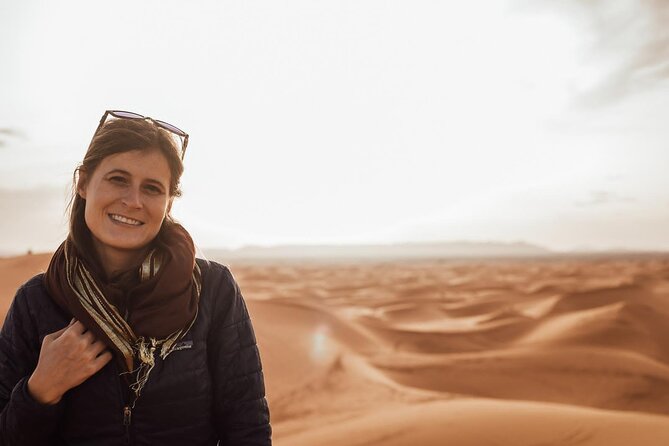
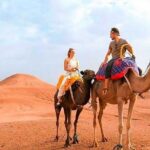
From there, you continue to Merzouga, where the day pivots hard into desert mode. In the afternoon, your camels are ready for the ride across the Erg Chebbi dunes. This isn’t a quick photo stop. It’s a proper camel ride, followed by a trek onward to camp after a sunset moment.
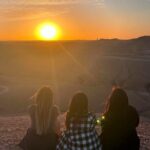
Sunset is built in. You’ll stop on a tall dune to watch the light change, then continue trekking to the camp once the sun goes down. That timing is key. It’s the difference between seeing dunes as scenery and experiencing them as an environment.
Camp experience details are set up to make you comfortable. Staff welcome you with tea, you’re guided to a private tent, and you can relax—there’s mention of having time for a shower before dinner. After dinner, you get the cultural part in a direct, social way: Berber music and drumming around a campfire, and the crew even teaches you how to play drums. That last bit is the kind of inclusion that turns a “watching” evening into an actual activity.
One more thing: lunches and drinks aren’t included, so budget for them. Most people end up finding something small to eat during breaks, but you won’t want to rely on lunches being part of the package.
The desert night: sunset dunes, sandboarding, and drumming that feels hands-on
Erg Chebbi is the headline, but the way this camp day is structured is what makes it memorable. You don’t just arrive at camp and go to sleep. The trip gives you a sequence: camel ride, sunset on a dune, then camp life.
The camp evening includes nomad music and drumming, plus sandboarding time is mentioned in the experience overview. Even if you’re not a fearless sports person, sandboarding is one of those activities where you try it once and immediately understand why it’s fun. It also gives you something to do that’s not just sitting and taking photos.
The drumming component is especially valuable because it’s not vague cultural entertainment. You’re learning something. In feedback, guides are praised for being flexible and upbeat, and the drum teaching fits that vibe: active, playful, and easy to join even if you’re not a musician.
What to consider: Desert evenings can be unpredictable in feel, depending on time of year. Since the itinerary doesn’t spell out clothing recommendations, I’d plan for layers you can adjust. Also, get enough rest if you want sunrise—because Day 3 rewards early birds.
Day 3: Sunrise option, return by 4×4 or camel, and the road into Fes via Ifrane
Day 3 starts with a choice that affects the whole mood of your trip: sunrise. Waking early is highly recommended for a calm, beautiful sunrise over the dunes. If you do it, breakfast comes afterward at the camp.
Then you head back to Merzouga using 4×4 vehicles. There’s also an alternative option: you can choose to return on camels again. That’s a nice touch for people who feel they didn’t get enough camel time (or for those who want a slower, more traditional rhythm back).
Once back on the road, the route becomes more forest-and-city feeling as you approach Fes. You drive through Ziz Valley, with a quick stop at an oasis you can take in without rushing. Next you travel through the Middle Atlas Mountains and Ifrane.
Along the way, there’s a chance to stop near Ifrane in a cedar forest to look for Barbary apes, if you’re lucky. After that, you make a final break in Ifrane, known as the Switzerland of Morocco.
Then comes the landing: the tour ends in Fes, with drop-off at the closest location accessible to your riad/hotel. That detail matters because Fes can be tricky for vehicles, and being dropped near a reachable point makes the difference between a smooth finish and a stressful scramble.
Price and value: why $388.49 can work well for the right traveler
Let’s talk money in a way that helps you decide. At $388.49 per person for about three days, you’re paying for more than sightseeing. You’re paying for transportation across big distances, the included meals, and the desert infrastructure that many DIY travelers underestimate.
Here’s what’s included:
- Air-conditioned vehicle
- Camel ride
- Two breakfasts
- Two dinners
- Desert camp experience (private tent setup is described)
Not included:
- Lunches
- Tips
- Drinks
So the decision comes down to your comfort with paying for convenience and “someone else handles it” logistics. If you want to coordinate hotel in the Atlas Mountains and a desert camp, plus camel logistics, plus the multi-day driving, this package can feel like good value. If you prefer total control, DIY might look cheaper on paper—but the time cost (and stress) is usually higher than people expect.
Also, you’re booking an experience that runs with a maximum of 10 travelers, and most departures are filled far ahead of time (average booking is about 54 days in advance). That means you’re not just buying the dunes. You’re buying a small-group format that helps keep the day from turning into a stampede.
Guide quality and how the small-group format changes your day
A desert tour lives or dies by the guide’s control of timing and the driver’s road sense. The names that pop up most often—Hassan, Mustapha, Ayoub, Mubarak, Ali, Zaid, and Mohamed—are tied to the same kind of praise: people felt looked after, stops felt purposeful, and the trip stayed flexible when needed.
In feedback, Hassan is praised for taking care of the group and suggesting good local restaurant ideas. Mustapha is praised for fun facts about camels, smooth driving, and for pulling over when the group wanted to see camels up close. Ayoub and driver Mohamed are praised for punctual pickup, a comfortable van with air conditioning, and a respectful, attentive style. Mubarak gets credit for making the trip feel comfortable and stress-free.
You should still know this: not every day is perfectly predictable. Timing affects whether you do both Dades Gorges photo spots on Day 1 or shift them. The good part is that the tour is set up to handle that with common-sense swaps rather than losing the experience.
If you have needs (diet, pace, extra stops), this is the kind of tour where you should speak up early. The small group size gives your request a better chance of being possible.
Who should book this Marrakech to Fes desert tour (and who should rethink it)
This tour fits you if:
- You want a classic Morocco route with a real desert night, not just a day trip.
- You like small-group energy and don’t want to feel herded.
- You enjoy guided history at Ait Ben Haddou, but you also want active parts like camels and campfire drumming.
- You’re okay with a lot of driving in exchange for big variety.
You might rethink it if:
- You hate long transfers and prefer shorter hops between stops.
- You only want one highlight and don’t care about multiple regions (Atlas, canyons, Ifrane).
- You’re traveling with a tight schedule and can’t handle early-morning sunrise if you choose to do it.
Also, it’s listed as “most travelers can participate,” which helps, but it doesn’t mean it’s built for every mobility need. If that’s a concern for you, I’d ask the provider directly how they handle desert terrain and camel transitions.
Should you book? My practical take
If you’re looking for a 3-day Marrakech to Fes desert experience that balances famous sights with real desert time, I’d say this is a strong option. The key strengths are the small group size, the structured cultural stops (Ait Ben Haddou), and the way the desert night includes more than one activity (camel ride, sunset dune, camp setup, drumming, and sandboarding time).
Book it if you want a guided plan that still feels personal, and you don’t mind the “road trip” factor. Skip it or compare other options if you want a lighter pace or you’d rather spend those hours walking around towns instead of riding between regions.
One last tip: if you’re sensitive to early starts, decide now whether you’ll do sunrise at the camp. It’s recommended for a reason, and it’s one of the few choices on this route that genuinely changes how you remember the trip.
FAQ
How long is the Marrakech to Fes desert tour?
It’s listed as 3 days (approx.).
What group size is this tour?
The experience has a maximum of 10 travelers.
What does the tour include?
Included items are an air-conditioned vehicle, camel ride experience, 2 breakfasts, and 2 dinners.
What is not included in the tour price?
Lunches, tips, and drinks are not included.
Where do you meet and where do you end?
The start point is near Le Grand Balcon du Café Glacier place Jamaa el fana in Marrakech. The end is Fes El Bali, and drop-off is described as the closest accessible location by car to your riad.
Do you get a desert camp with private tents?
The itinerary describes arriving at a luxury camp with staff welcome, and your tent is described as private.
Is sunrise included?
A sunrise experience is recommended, with an early start suggested on Day 3. The itinerary says you’ll have breakfast at the camp before leaving.
Can I cancel for a full refund?
Yes. The policy says you can cancel up to 24 hours in advance for a full refund.
Is this a mobile ticket?
Yes, it’s listed as mobile ticket.