REVIEW · CASABLANCA
7-Day Imperial Cities – Private Group
Book on Viator →Operated by Wanderlust Voyages · Bookable on Viator
Morocco’s royal cities move fast. This private 7-day route strings together Casablanca, Rabat, Fez, Meknes, and Marrakech with a guide in your corner and plenty of room to match the pace to your energy. I love the Hassan II Mosque visit (non-Muslims are allowed inside) and the Volubilis Roman ruins tour with mosaics you can actually appreciate. You also get key tickets handled, so you spend more time seeing and less time figuring out.
The trade-off is time management: this is a lot of ground in a single week, so you’ll do long drives and several heavier walking stretches in the medinas and at big sites. If you’re sensitive to busy streets or want a slower rhythm, plan for breaks and good shoes.
In This Review
- Key takeaways before you commit
- Casablanca first: Hassan II Mosque and a smooth arrival
- Rabat’s imperial anchors: Hassan Tower and Mohammed V Mausoleum
- Volubilis Roman ruins: mosaics that make sense in real life
- Meknes: Bab Mansour, Royal Stables, and Moulay Ismail
- Fez medina with a private guide: palace doors, Mellah, views, pottery
- Marrakech at night and in daylight: Jemaa el-Fnaa, Koutoubia, Bahia Palace
- Your free Marrakech day: museums, Majorelle Garden, hammam
- Getting back to Casablanca for your flight
- Price and value: is $1,485 fair for 7 days?
- Who should book this private imperial cities tour
- Should you book this 7-day Imperial Cities private group?
- FAQ
- FAQ
- What cities are included on the 7-day private group tour?
- Are any major attractions admissions included?
- Is accommodation included?
- How are meals handled during the tour?
- Do I need to arrange my own transportation between cities?
- When does the tour start and how does it end?
Key takeaways before you commit
- Private guide, full support: you’ll have a guide with you and can tailor the days to your pace.
- Hassan II Mosque access: included entry for one of Morocco’s most famous modern masterpieces, open to non-Muslims.
- Volubilis with a real site guide: Roman context plus well-preserved mosaics, best appreciated up close.
- Imperial cities beyond photos: Rabat, Fez, and Meknes each come with landmark stops tied to specific rulers and eras.
- Marrakech after dark, on purpose: you’re built in for Jemaa el-Fnaa when it comes alive.
- A practical free day: you choose museums, a hammam, gardens, or just wandering on your own terms.
Casablanca first: Hassan II Mosque and a smooth arrival
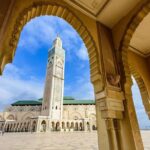
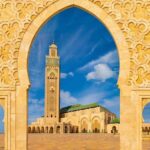
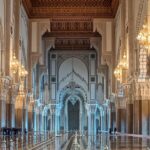
You’ll start in Casablanca, with an easy handoff from your driver at the airport (or your hotel, if that’s simpler). The big win on day one is Hassan II Mosque. It’s the largest mosque in Morocco, and non-Muslims can enter, which makes it a rare “you can actually go inside” moment for many visitors. The scale is serious—up to 105,000 people—so even if you know the basics, you still feel small in the best way.
Practically, this stop sets you up for the rest of the trip. You get a strong visual reference for Moroccan craftsmanship right at the start: lots of skilled work, done by craftspeople from across the country. You’ll also have admission handled, which matters because a mosque visit can otherwise turn into a last-minute ticket scramble.
A small heads-up: after a flight and an intro visit, your energy may drop. I’d plan for a lighter evening afterward, and let the guide handle the timing while you decompress.
You can also read our reviews of more private tours in Casablanca
Rabat’s imperial anchors: Hassan Tower and Mohammed V Mausoleum
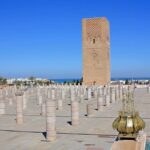
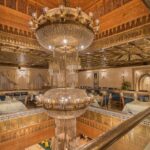
From Casablanca you head to Rabat, where the tone shifts from modern grandeur to unfinished ambition and royal legacy. The Hassan Tower is the kind of landmark that feels like a story you can read in stone. It began as the minaret for a grand mosque project commissioned in the 1190s, and then stopped when the sultan passed away in 1199. What’s left is a physical reminder of what didn’t happen—columns, outer walls, and a partially finished minaret.
Standing opposite is the Mohammed V Mausoleum, with white walls and a green-tiled roof. This is one of those places where the setting helps: the tower’s emptiness makes the mausoleum look even more intentional and composed. Admission is included, so you’re not juggling paperwork while your eyes are busy.
If you like architecture that hints at power struggles and changing plans, Rabat delivers. If you’re only into nightlife, Rabat can feel quieter—but that’s the point. This part of the week is about context.
Volubilis Roman ruins: mosaics that make sense in real life
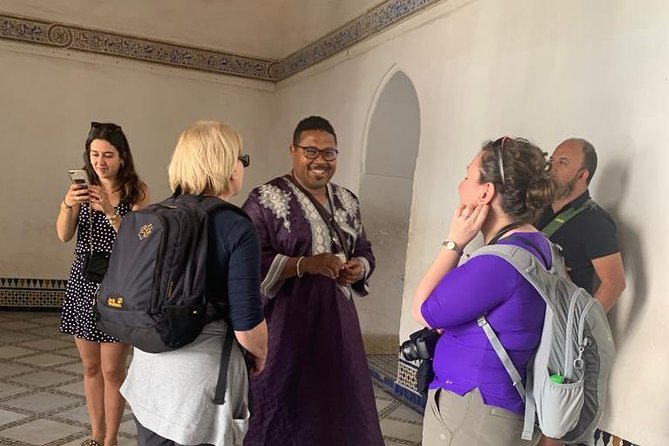
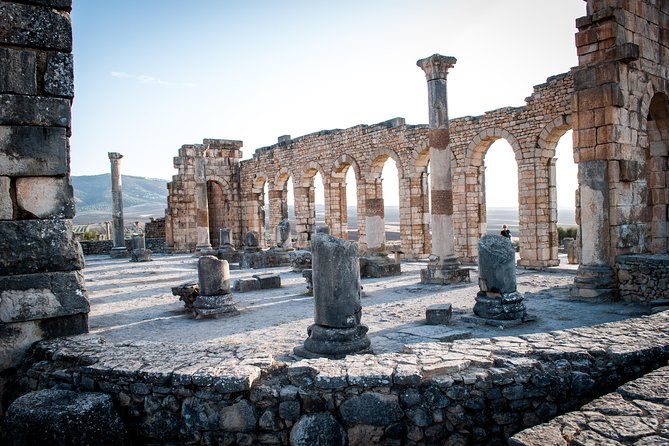
Volubilis is one of those sites where a guide changes everything. You get a structured walk through the ruins, and that’s key because the place is old enough to blur together without direction. Volubilis goes back to around 3 BCE as the center of the kingdom of Mauretania, then Roman rule began in the 1st century CE, continuing until the 3rd century.
The Roman layers show up in the obvious pieces, like the triumphal arch that still stands. But the real wow is the mosaics. Some mosaic floors are still in place, and the guide points out why their colors can look especially striking when wet. That’s not a “marketing fact”—it’s a practical tip that helps you judge details instead of just taking general pictures.
You’ll spend about three hours here with admission included. That’s a good window: long enough to see the main areas and mosaics clearly, but not so long that you feel fried. If you’re visiting in warm weather, pace yourself and hydrate—bottled water is included on the tour, which helps a lot.
Meknes: Bab Mansour, Royal Stables, and Moulay Ismail
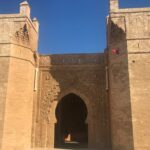
Meknes often gets overlooked compared with Fez and Marrakech, but it’s a strong stop if you like imperial scale. You’ll visit Bab Mansour, a monumental gate built with marble columns taken from nearby Volubilis. That detail is more than trivia—it links the Roman site to Moroccan imperial ambition, and it gives your whole route a sense of continuity.
Next come the Royal Stables, which were once built to hold 12,000 horses. The description includes each horse having its own groom and attendants, and it helps you picture a court that wasn’t small or casual. Even if you can’t fully imagine that operation, the scale of the complex gives you the right mental model.
Then you’ll visit the Mausoleum of Moulay Ismail, an active Moroccan shrine where non-Muslims may enter. Moulay Ismail ruled from 1672 to 1727, and the tour frames him as remembered for peace and prosperity, alongside his role in driving out Spanish and British forces. That blend—admiration plus acknowledgment of hard edges—is what makes Meknes more than decorative sightseeing.
Admission is included for the shrine, and other major stops on this portion are marked as no extra ticket needed in the tour schedule. That reduces hassle and keeps you moving.
Fez medina with a private guide: palace doors, Mellah, views, pottery
Fez is where you’ll feel the medina up close, and you’ll be grateful for a guide. The tour uses a mix of walking and some transportation between spots, which is helpful because Fez can eat time if you’re trying to navigate without help.
You’ll start around the royal palace area, including the significance of the seven golden doors—ornate details that matter because they show how power gets represented through craft. From there you visit the Mellah, the Jewish quarter built next to the palace for protection. That shift in neighborhood function helps you understand Fez as a living city shaped by decisions, not just old buildings.
Then you get a payoff view from Borj Sud, a former fortress and lookout where you can spot landmarks across the city. If you’ve been walking through tight streets, a view like this helps your brain map the chaos into something structured.
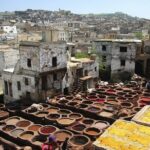
One of my favorite practical stops is the pottery co-op. You’ll see how Fes pottery is made and how mosaics are crafted—skills that also show up across Morocco. It’s not just shopping. It’s the process behind the look, and it helps you buy with confidence instead of guessing.
If you want one tip before you go: wear shoes that can handle uneven ground and take short rest breaks when you can. Fez rewards patience.
A few more Casablanca tours and experiences worth a look



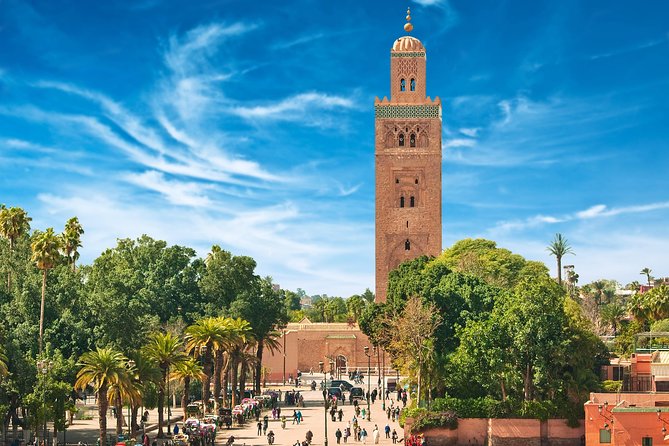
Marrakech at night and in daylight: Jemaa el-Fnaa, Koutoubia, Bahia Palace
Marrakech is a switch flipped from morning travel mode into a city that wants your attention. You’ll check into your riad in the medina area, then head out to explore Jemaa el-Fnaa as evening arrives. This is where street performers show up and the square becomes the center of gravity. You’ll have included access connected to Jemaa el-Fnaa, which helps you jump in without extra planning.
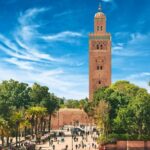
The next guided block hits major landmarks. First is the Koutoubia minaret, completed in 1199. It’s the tallest minaret in Marrakech, and the city rules historically limited buildings so none would go taller than it. Even if you’re not counting measurements, this kind of design control tells you how the city organized its skyline.
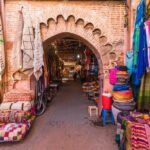
You’ll also stop at a Berber Apothecary shop. The tour focuses on medicinal uses of common spices and herbs still used across Morocco for everyday treatments. It’s not as visually loud as a spice pile in the souk, but it’s useful because it gives you a framework for what you’re seeing in markets.
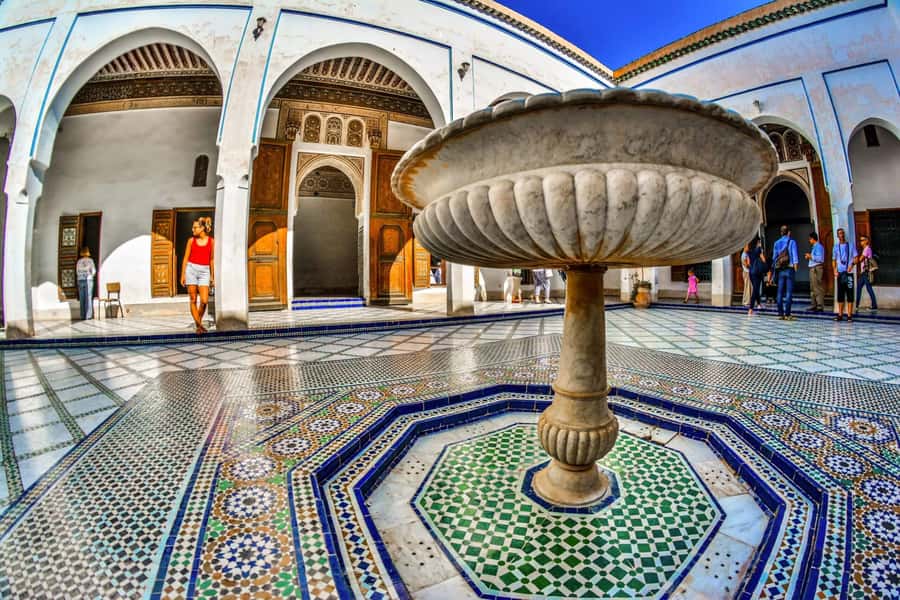
Then there’s Bahia Palace, built in the late 19th century for the grand vizier, named for his favorite wife. The palace includes multiple rooms and sits in a garden setting, described as a large stretch of space. This stop is a nice contrast to the narrow lanes of Fez: more open, more composed, and easier to slow down.
On this week, Marrakech is the emotional peak. It’s where you feel Morocco not as history lessons, but as daily theater.
Your free Marrakech day: museums, Majorelle Garden, hammam
One thing I really like about this tour is the built-in freedom. Day six is yours to explore Marrakech without a packed list. You can choose museum time, like the Yves Saint Laurent Museum and the Berber Museum, and add the Majorelle Garden if you want a ticketed break from street life.
If you’d rather reset with a local ritual, you can do a traditional hammam. The tour describes the steps clearly: you get covered in black beldi soap, scrubbed with an abrasive kessar mit to remove dead skin, then unwind in the steam room. That’s a full sensory reset, and it’s often more satisfying than guessing at what to do on your own.
Or you can do the simplest option: roam souks, people-watch from street-side cafes, and let your feet lead. Because this is a private setup, you’re not trapped in someone else’s group tempo.
If you tell me what you enjoy—art, food, crafts, architecture—I can suggest how to split that free day. But even without preferences, the choice itself is good value.
Getting back to Casablanca for your flight
After your Marrakech time, you’ll return to Casablanca for departure. The tour routes you back after breakfast, which is the kind of planning that reduces stress. When you’ve spent the week hopping between imperial cities, it’s nice to have the final step set up without last-minute problem solving.
This end matters because travel days can be the hardest part. By keeping the final morning straightforward, you’re more likely to have enough buffer for airport timing.
And if you need one comfort thought: your driver-guide relationship is part of what makes this work. People often come away praising the continuity of being supported from start to finish. Names that show up in past experiences include Omar and Ibrahim as driver-guide types who handled logistics smoothly, and Kalid for connecting visitors with local guides and then returning everyone to Casablanca for the handoff.
Price and value: is $1,485 fair for 7 days?
At $1,485 per person for a 7-day private group, you’re paying for three things that are hard to DIY well in Morocco: private transportation, guided admissions, and six nights of lodging in double occupancy.
Here’s what’s covered in the tour’s package basics:
- 6 nights accommodation (double occupancy)
- All taxes/fees/handling charges
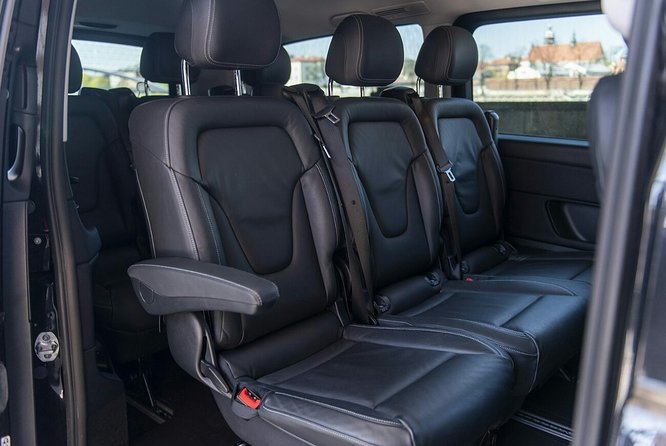
- Driver/guide and professional guidance
- Bottled water
- Breakfasts (6) and lunch included
- Admissions called out as included (including Hassan II Mosque, Volubilis, and Jemaa el-Fnaa)
What’s not included is also important: food and drinks beyond the specified meals. So if you plan to eat a lot of extra lunches or do lots of drinks, budget for that.
I look at it like this: the cost per day lands around the low-$200s, but the big savings isn’t just money. It’s mental load. You’re not coordinating multiple guides, hunting down ticket options across cities, or losing hours to transit surprises. You’re also not stuck in a rigid group schedule; the tour notes the ability to tailor your day to your pace and energy levels.
If your priority is deep guidance at major stops and low friction, this price starts to look reasonable.
Who should book this private imperial cities tour
This tour fits best if you:
- Want the classic imperial circuit: Rabat, Fez, Meknes, Marrakech
- Prefer a guide to handle timing and context
- Like a mix of architecture, markets, and hands-on craft moments (like pottery)
- Would rather spend your energy looking and learning than planning logistics
It’s less ideal if you:
- Want a super slow pace with minimal driving
- Hate medina walking and narrow streets
- Don’t want structured visits at major landmarks
Also, it’s a good match for first-time Morocco visitors. Past experiences mention that the guide and driver setup can be flexible, and it’s sometimes the difference between a chaotic trip and a calm one. In one case, a planner named Megan helped adjust the plan by adding an extra night elsewhere; the takeaway is that customization may be possible beyond the standard route.
One more practical note: the start time is 9:00 am, so don’t book yourself into late mornings at the beginning. The week runs on momentum.
Should you book this 7-day Imperial Cities private group?
If you want a guided route that hits Morocco’s most important cities without turning your trip into a logistics project, this is a strong choice. I’d book it if Hassan II Mosque, Volubilis, and a guided Fez medina are high on your list and you’re comfortable with a week that includes long travel legs.
But if you’re hoping for maximum downtime, this may feel like a lot. In that case, consider extending your stay in fewer cities so the medina experience can breathe.
If your dates are uncertain, it’s also reassuring that you can cancel up to 3 days in advance for a full refund under the tour’s stated rules.
FAQ
FAQ
What cities are included on the 7-day private group tour?
The tour covers Casablanca, Rabat, Fez, Meknes, and Marrakech.
Are any major attractions admissions included?
Yes. Admission is included for Hassan II Mosque, Volubilis, and Jemaa el-Fnaa. Other stops are listed as free in the tour schedule.
Is accommodation included?
Yes. 6 nights of accommodation are included (double occupancy).
How are meals handled during the tour?
The tour includes breakfasts for 6 days and lunch. Food and drinks are not included unless specifically stated.
Do I need to arrange my own transportation between cities?
No. Private transportation is included, along with a driver/guide.
When does the tour start and how does it end?
It starts at 9:00 am. After breakfast on the final day, you return to Casablanca for your departure flight.
If you tell me your travel month and whether you prefer more museums, more markets, or more architecture, I can suggest a smart way to use that free Marrakech day.