REVIEW · MARRAKECH
3-Days Morocco Desert Tour from Marrakech to Marzouga
Book on Viator →Operated by Marrakech City Travel · Bookable on Viator
Desert done the easy way. This 3-day Marrakech to Merzouga group tour strings together Morocco’s biggest hits—Ait Benhaddou, Todra Gorge, then Erg Chebbi with a camel ride and a night in a Berber camp. It’s built for people who want the logistics handled and the desert memories delivered.
I particularly like the way the day-by-day route balances culture stops with real time in the dunes. I also like that dinners and breakfasts are included, so you’re not constantly budgeting mid-journey. One thing to keep in mind: this is a group tour with a full schedule and long driving days, so you’ll want patience (and good expectations) about timing and explanations.
In This Review
- Key things I’d zero in on before booking
- Is a group tour the right route for Marrakech to Merzouga?
- Day 1: Ait Benhaddou kasbahs, Ouarzazate studios, and the Rose Valley detour
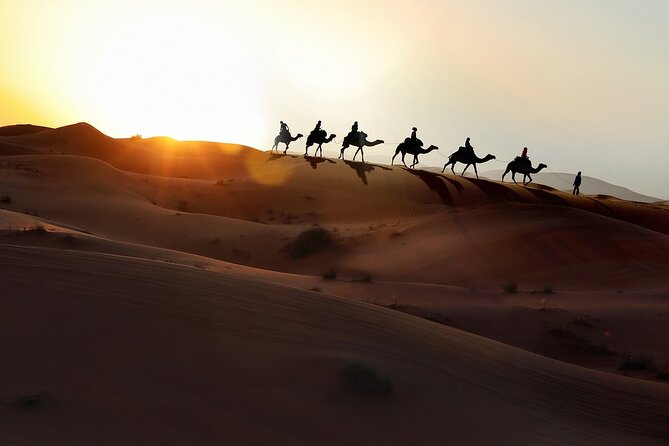
- Day 2: Todra Canyon on foot, then camel trek into Erg Chebbi at sunset
- Day 3: Sunrise on the dunes, camel return, and the road back via Rissani
- Money matters: what you pay for and what you get included
- Pace and comfort: why some people feel rushed (and how to handle it)
- Which desert camp option fits your style: standard shared or luxury private?
- Should you book this Marrakech to Merzouga desert tour?
- FAQ
- FAQ
- How long is the Marrakech to Merzouga desert tour?
- What’s the price per person?
- What’s included in the tour price?
- Are pickup and transfers included?
- Do I need to pay for lunch?
- What kind of desert camp will I sleep in?
- Are entrance fees included?
- Does the tour include camel rides both ways?
- Can I cancel and get a full refund?
Key things I’d zero in on before booking
- Ait Benhaddou UNESCO kasbahs plus Ouarzazate cinema sights on Day 1
- Todra Canyon walk with a local guide in Tinghir (not just a drive-by)
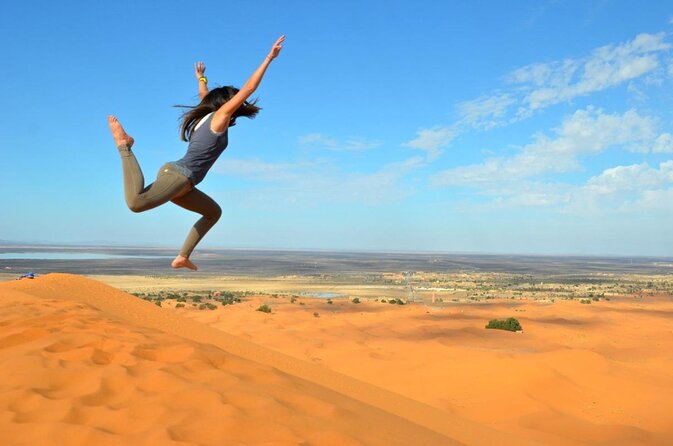
- Camel caravan at sunset and a night in a Berber tent under a real stargazing sky
- Camp choice matters: standard shared tent vs luxury private tent
- Long road time with possible schedule tightness at stops
- Cash helps at lunch stops and places that may not take card
Is a group tour the right route for Marrakech to Merzouga?
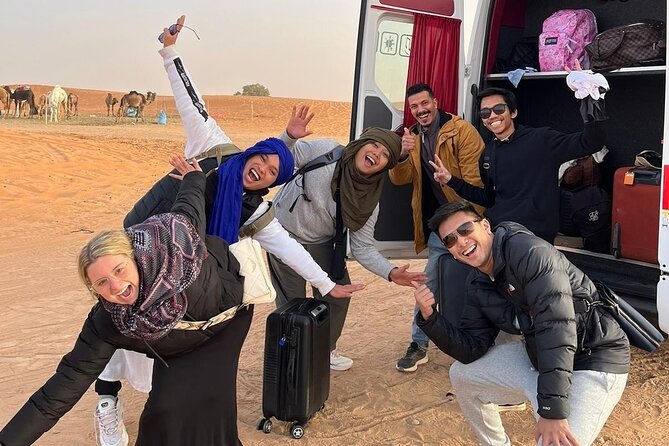
If your goal is the dunes fast, a group tour like this is often the smart move. You get round-trip pickup and drop-off in Marrakech, air-conditioned transport, entrance fees handled for key stops, and the desert overnight set up for you.
At about 3 days and priced around $102 per person, you’re buying simplicity more than luxury. You’ll be in a vehicle most of the time between the highlights, but once you reach Merzouga, the experience shifts gears quickly—from road-trip sightseeing to slow desert moments.
This tour also makes a practical promise: you don’t have to stitch together transport, camel logistics, and camp bookings yourself. That’s valuable when you’re in Morocco for a short window and don’t want to spend your time figuring out which gate or who-to-call.
You can also read our reviews of more tours and experiences in Marrakech.
Day 1: Ait Benhaddou kasbahs, Ouarzazate studios, and the Rose Valley detour
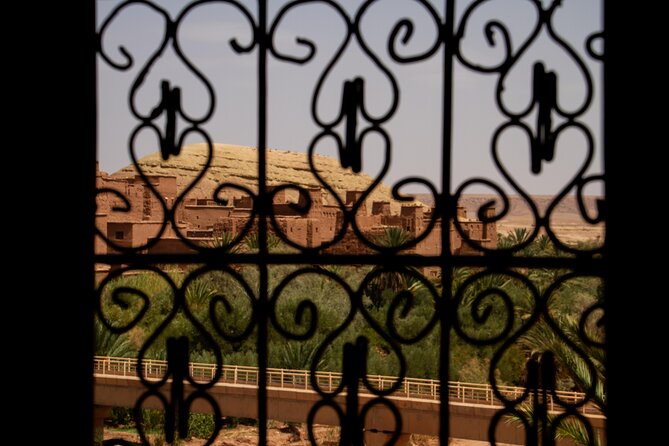
Day 1 starts by working your way south from Marrakech toward the kind of Morocco you see in films. Your first major stop is Ait Benhaddou, a UNESCO kasbah built with clay and adobe. You get a guided walking tour with time to absorb how the village is arranged on the earthen structure, and then you’ll have lunch in a local restaurant (that part is not included).
Ait Benhaddou is also a movie maker magnet, tied to international productions. Even if you’re not chasing movie trivia, this is still one of the most visually gripping stops on the whole route, because it’s lived-in architecture, not a theme park.
From there, you continue to Ouarzazate, where you’ll see Kasbah Taourirte. Ouarzazate is also where people often expect “cinema stops,” and this tour gives you access to that side too. You may visit the Atlas cinema studios area and see what’s been used as production backdrops. Just note that the exact time inside studio areas can vary based on access and schedules.
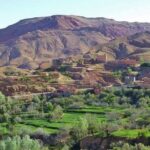
Then you shift gears to a less famous but very Moroccan pause: the Valley of Roses. You’ll stop along the road through the rose valley and visit a local cooperative that produces rose products. If you’re traveling around May, there can be a festival-of-roses moment if the timing lines up, which adds a seasonal buzz to an otherwise quick stop.
You’ll finish Day 1 arriving in Boumalne Dades and checking into your hotel overnight, after a long stretch of road time.
Day 2: Todra Canyon on foot, then camel trek into Erg Chebbi at sunset
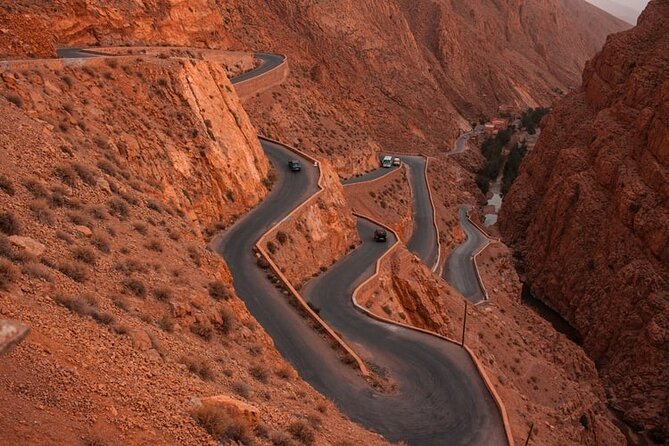
Day 2 is the “transition day,” moving from dramatic gorges into sand-country. After breakfast in Boumalne Dades, you head toward Tinghir and the Valley of Todra.
The highlight here is a guided walking tour through Todra Canyon with a local guide. This is one of those stops where you’ll be glad it’s not just a bus viewpoint. The canyon walls feel close, the light changes quickly as you walk, and it’s a nice contrast to the earlier clay kasbah shapes.
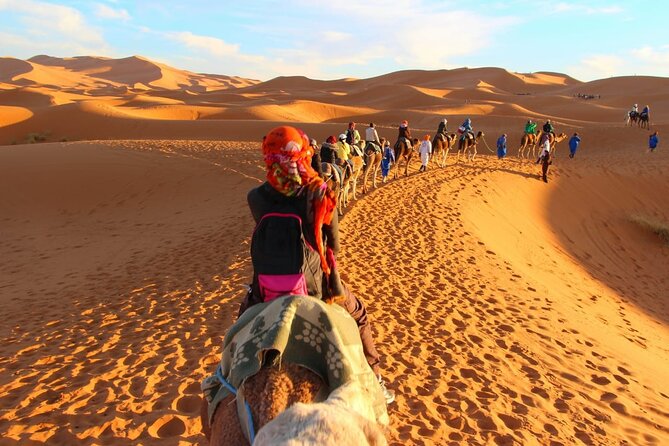
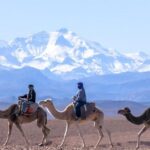
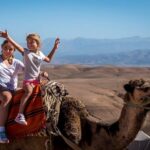
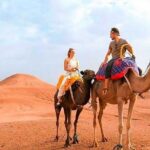
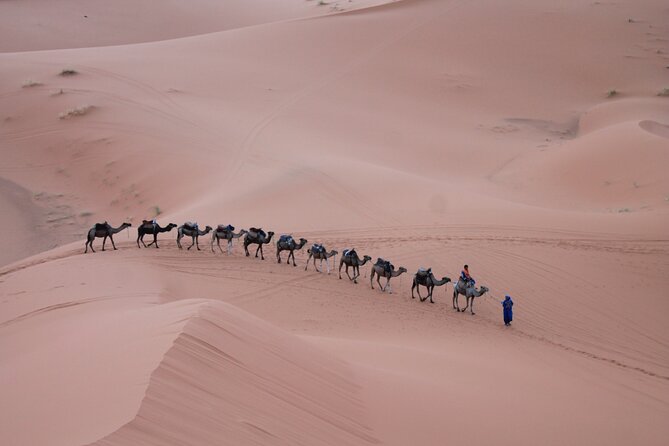
After Todra, the pace starts to build toward the desert. When you reach Merzouga, you’ll get a mint tea welcome, then start the big moment: the camel caravan toward the dunes.
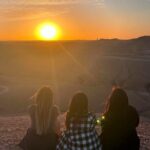
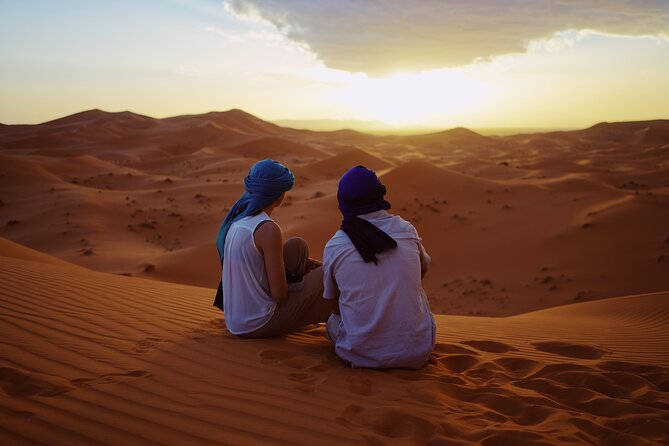
The camel trek is scheduled for about 1.5 hours, and the whole point is to time it with the desert’s light. You’ll reach the camp at the foot of the Great Dune area, then settle in as the sunset turns the dunes into orange-gold ridgelines.
At the camp, you’ll have dinner and sleep in a Berber tent for the night. Camp setup depends on the option you choose:
- Standard camp: typically a shared tent
- Luxury desert camp: usually a private tent
This is where the experience tends to win people over hardest. From the stars overhead to the way the desert stays quiet after the sun drops, this is the part you’ll remember when you’re back in Marrakech.
Day 3: Sunrise on the dunes, camel return, and the road back via Rissani
The morning starts early for a reason: desert light. You’ll wake up to catch sunrise over the golden dunes, then ride camels back to the hotel area to meet your driver.
The camel ride back is about 1 hour in the schedule. After that, you’ll have breakfast and then begin the drive back toward Marrakech.
The route includes the palm grove of Tafilalet and a stop through Rissani, which is tied to the Alaouite dynasty and known for its markets and caravan-trade history. This part matters because it shows that the desert route isn’t just “sand”—it’s connected to towns, trade, and local life along the way.
Day 3 is still long driving time compared with the two Morocco stops at the front end. So if you’re sensitive to road fatigue, plan to manage that. Bring water snacks if you tolerate that kind of travel day, and keep your expectations realistic about stop length.
Money matters: what you pay for and what you get included
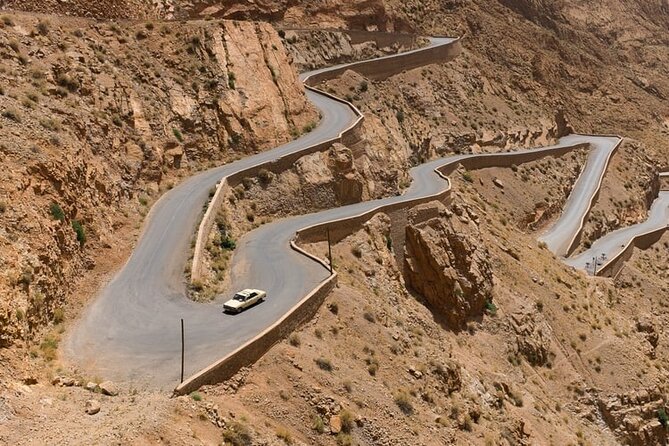
The headline value is simple: this tour includes the major costs that usually trip people up when traveling independently. You get an air-conditioned vehicle, a professional driver, the camel ride, plus two dinners and two breakfasts.
Entrance fees for key sights are also handled in the trip structure, which helps keep the day smooth.
What’s not included is where you need to plan. Lunches and drinks are not included, and lunch stops can feel pricey compared with eating where locals eat. A common practical tip: keep some cash on hand, since cards aren’t always accepted at lunch stops.
You should also budget for optional extras if you decide to go for them on-site. Some camps and operators offer add-ons like 4×4 rides or quad time, and you may also see options tied to sand activities. These aren’t required to get the core desert experience, but they can add cost fast.
And finally, tips are mentioned as not included for the local guide. Even if you never tip big, it’s wise to have a small amount ready.
Pace and comfort: why some people feel rushed (and how to handle it)
This is one of those trips where your comfort level will depend on how you handle group logistics. The overall schedule packs a lot into a short time: kasbahs, studio sights, rose cooperative time, canyon walking, then the desert itself. That’s exciting, but it also creates fewer “stretch your legs slowly” moments.
In some departures, the driver may also act as your main point person, and that can affect how much explanation you get at each stop. When the guide is strong and conversational—people named Mossif, Ayoub, Abdul, Youssef, Ali, and Moncef have been praised—you’ll feel the drive less like transport and more like a moving tour.
But the downside shows up when communication is unclear or when you’re rushed back to the van at each stop. Some departures also faced issues like delays related to camel availability, which can push back the camel start time and shrink the golden-hour window you were hoping for. In at least one case, people were upgraded for the inconvenience, which helped, but it still matters.
Comfort-wise, the tour uses an air-conditioned vehicle, yet you should not assume modern comforts. One review flagged an older bus with limited features like no Wi-Fi and weak seating conveniences, and also mentioned a seatbelt issue. If you care about that stuff, you’ll be happier with your expectations set before you go.
Which desert camp option fits your style: standard shared or luxury private?
The camp is the emotional core of this tour, and you’ll want to choose based on how you like to sleep. The standard option is shared tent, which can be totally fine if you’re tired from a busy day and you mainly want the stargazing and the desert vibe.
If you prefer quieter space, the luxury desert camp option is typically where you get a private tent and upgraded comfort. Some people liked the hot-water and shower setup in the luxury camp, and described the camp atmosphere as a big part of why the desert felt special.
Here’s the honest tradeoff: luxury camp can still be basic compared with a hotel back home, because you’re in the desert. The ground, the facilities, and the vibe are part of the point. If you expect five-star beds, you may be disappointed. If you want a peaceful private sleeping box after a sunset camel trek, it’s easier to feel satisfied.
Should you book this Marrakech to Merzouga desert tour?
Book it if you want maximum highlights with minimal planning. This tour is a strong fit for first-timers who want Ait Benhaddou, Todra Canyon, and the Erg Chebbi desert in one packaged route, with camel time and an overnight camp that’s already arranged.
Skip or rethink if you know you hate tight schedules, long driving days, and group “let’s get moving” energy. If you also care a lot about thorough explanations at every stop or you need consistent language support, you should confirm expectations before you go.
My rule of thumb: if the desert night is your priority and you’re okay with a road-heavy itinerary, this is one of the easier ways to do it from Marrakech without turning your trip into a logistics project.
FAQ
FAQ
How long is the Marrakech to Merzouga desert tour?
It runs for about 3 days (approx.).
What’s the price per person?
The price is listed at $102.19 per person.
What’s included in the tour price?
You get an air-conditioned vehicle, a professional driver, camel ride, dinner (2) and breakfast (2). The tour also includes several meals and pickup.
Are pickup and transfers included?
Pickup is offered, and return transfers from Marrakech are included for ease.
Do I need to pay for lunch?
Lunches and drinks are not included, so you’ll pay for lunch during the stops.
What kind of desert camp will I sleep in?
You’ll sleep in a Berber tent in the desert. You may choose between a standard camp (shared tent) or a luxury desert camp (private tent).
Are entrance fees included?
Entrance fees are handled as part of the trip setup, and many listed sights show admission as free in the plan.
Does the tour include camel rides both ways?
Yes. There’s a camel trek to the desert camp at sunset on Day 2, and you ride camels back on the morning of Day 3.
Can I cancel and get a full refund?
You can cancel up to 24 hours in advance for a full refund.