REVIEW · CASABLANCA
11 Days Adventurous Must-Do Morocco Cultural Tour from Casablanca
Book on Viator →Operated by MSITravels · Bookable on Viator
Morocco hits different when the logistics are handled for you. On this 11-day private route, you get major sights plus real on-the-ground moments, from Chefchaouen’s blue lanes to a night in the Sahara.
I especially like the combo of included big-ticket magic (the hot air balloon ride over Marrakech) with the kind of day that feels hands-on and personal, like camel riding and sleeping in a Bedouin-style tent. And the itinerary has smart variety: medinas and monuments one day, rock gorges and desert light the next, with stops timed so you still get breaks to breathe.
One thing to consider: this tour is active and fast-paced. You’ll rack up lots of road time, and the balloon depends on good weather, so you need flexibility (and a willingness to start early).
In This Review
- Key reasons this Casablanca-to-Casablanca tour makes sense
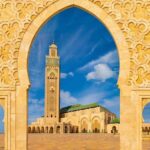
- Casablanca’s Hassan II Mosque: marble, zellige, and a 210-meter minaret
- Rabat and Chefchaouen: political capital shortcuts and the Rif’s blue maze
- Fez with a private medina guide: 9000 alleys, tanneries, and a real sense of how it works
- Ifrane, Ziz Valley dates, and Merzouga dunes: cedar forests to big-sky desert
- Erfoud fossils, Todra walls, and Dades Gorge’s 2-hour hike
- Ouarzazate and Tizi n’Tichka: movie sets, rose-and-dagger valleys, and High Atlas roads
- Marrakech from above: sunrise hot-air balloon plus Medina treasures
- Essaouira: Atlantic ramparts, tree goats, Mellah, and fish by the sea
- El Jadida’s Portuguese fortress coast, then back to Casablanca
- Price and value: what your $3,611.50 covers (and what it doesn’t)
- Should you book this 11-day Casablanca-to-Casablanca adventure?
- FAQ
- Where does the tour start and end?
- Is hotel pickup included?
- How long is the tour?
- Is this tour private or group-based?
- What’s included in the price besides transportation?
- Does the itinerary include desert activities?
- Are there meals included?
- Are any entry tickets included, or should I expect extra fees?
- What happens if the balloon can’t fly?
- What is the cancellation timeline?
Key reasons this Casablanca-to-Casablanca tour makes sense
- Hot air balloon over Marrakech: nearly an hour in the air, with sunrise views over red city tones and the High Atlas behind it.
- Sahara camel ride + Bedouin tent night: you’ll do sunset, then wake up for sunrise from the dunes.
- Women cooperative visits: a cultural stop that connects you to local livelihoods, not just landmarks.
- Dades Gorge hike built in: a scheduled 2-hour hike through dramatic rock formations.
- Fes guided walk through the medina maze: you get a born-and-bred guide to help you find the important spots without getting lost.
- Home-cooked meals with local families: it’s one of the easiest ways to slow down and taste Morocco beyond street food.
Casablanca’s Hassan II Mosque: marble, zellige, and a 210-meter minaret
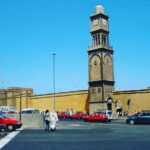
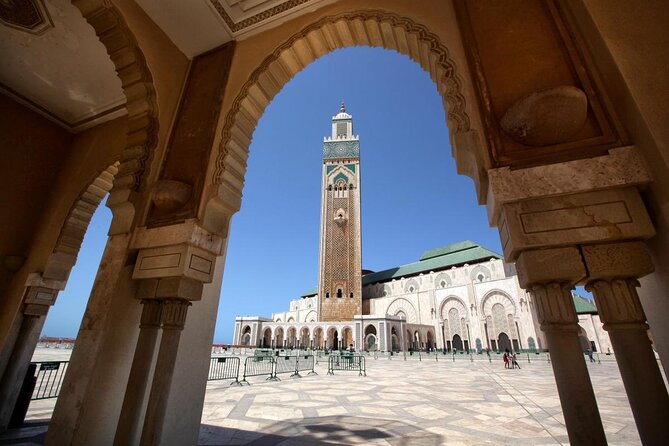
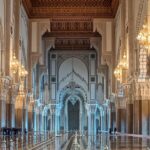
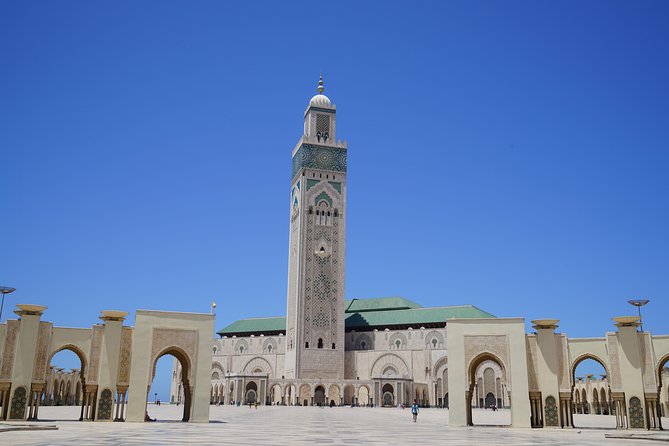
Your trip starts in Casablanca, and it’s a great choice because you hit a wow-factor landmark right away. If your arrival lines up, you can stretch your first day walking around the Hassan II Mosque area. This place is big by any standard: a huge esplanade, a minaret that towers around 210 meters, and a finish built from marble plus emerald zellige details.
Even if you only have a short window, go at a calm pace. People gather here for strolls, so it feels like a living part of the city rather than a museum stop. If you arrived late the day before, you may revisit Hassan II in the morning, which works well because the light is usually kinder for photos and for spotting the intricate tilework.
The practical note: you’ll likely be outside and walking. Wear comfortable shoes, and don’t over-plan your first evening. Morocco can be surprisingly energetic right after a flight, and you’ll want your legs fresh for the next driving days.
You can also read our reviews of more historical tours in Casablanca
Rabat and Chefchaouen: political capital shortcuts and the Rif’s blue maze
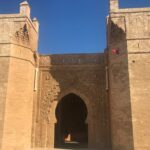
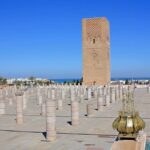
After Casablanca, the route includes Rabat, Morocco’s political and administrative center. Rabat isn’t the place for one single signature monument, but it has key history anchors. You’ll see the Hassan Tower area and the remnants connected to the 1755 earthquake, and you’ll also visit the nearby royal mausoleum grounds.
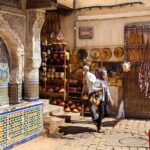
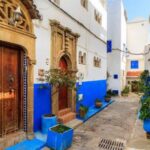
Then comes Chefchaouen, the Blue Town perched beneath the Rif Mountains. You get a free morning here, which is exactly what you need in a place designed for wandering. The medina’s blue-washed walls and Andalusian-style tilework create a surreal, calming look, and the Kasbah sits above the main square of Outa Hmam. The best strategy is simple: pick a direction and let the streets do the work.
You’ll later head toward Fez, which is smart because Chefchaouen is small enough to soak in briefly, but Fez rewards more time and a guide. One consideration: Chefchaouen’s charm can make you want to move slower than the itinerary. If you tend to get stuck taking photos, build in a little buffer so you don’t feel rushed before departure.
Fez with a private medina guide: 9000 alleys, tanneries, and a real sense of how it works
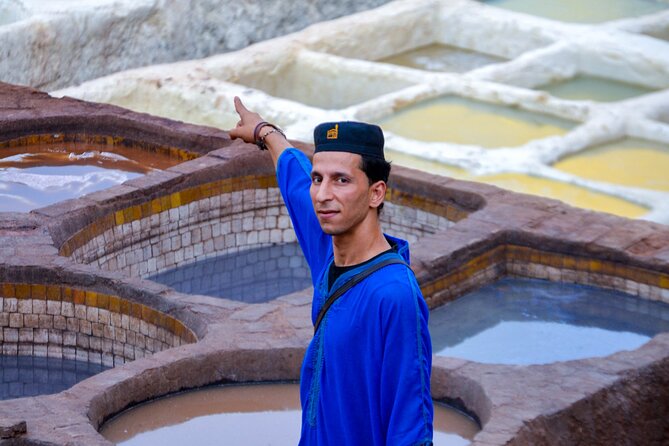
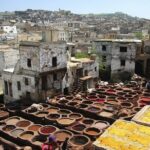
Fez is where this tour proves it’s more than a checklist. In the medina, you’re walking through a UNESCO-protected living maze, and you don’t want to wander blindly for hours. Here, a private Fez guide helps you hit major sites and understand what you’re seeing, including the way the medina supports crafts and learning.
You’ll cover key landmarks like the America Fondouk, Nejjarines, the tanneries, and major religious-education sites such as the Medersa and Karaouine, noted as the first established university in the world. Your guide is also there to connect the dots with stories and context—useful because Fez can feel overwhelming if you’re not sure what you’re looking at.
One detail I like: after the medina time, you’ll head out of Fez and stop for house-made food at Lalla Fatiha’s place in Sefrou. That’s a smart reset. You trade constant street activity for a meal with a calmer pace, and it sets you up for the next stage toward the desert.
The main drawback to plan for here is physical: Fez medina walking is nonstop. It’s doable for most people, but if you’re not used to uneven sidewalks and long stretches on foot, consider bringing shoes with solid grip.
Ifrane, Ziz Valley dates, and Merzouga dunes: cedar forests to big-sky desert
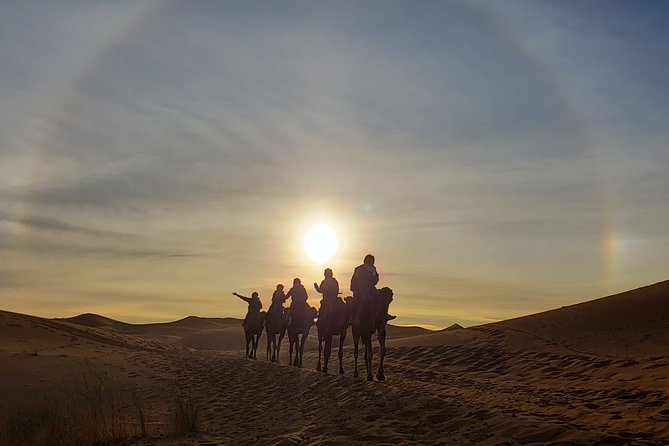
Leaving Fez toward Merzouga, you pass through scenic stops that make the drive feel like part of the experience. The route includes Ifrane, often called the Switzerland of Morocco, where cedar forests can make you feel like you’ve stepped into a cooler climate. If conditions align, you might spot Barbary macaques along the way near Midelt.
Then it’s on to the Ziz Valley, known for date production and a long stretch of palm oasis scenery. This part matters because it changes the visual rhythm. Instead of medina alleys or stone canyons, you get open valleys, palms, and road views that slowly build toward the Sahara.
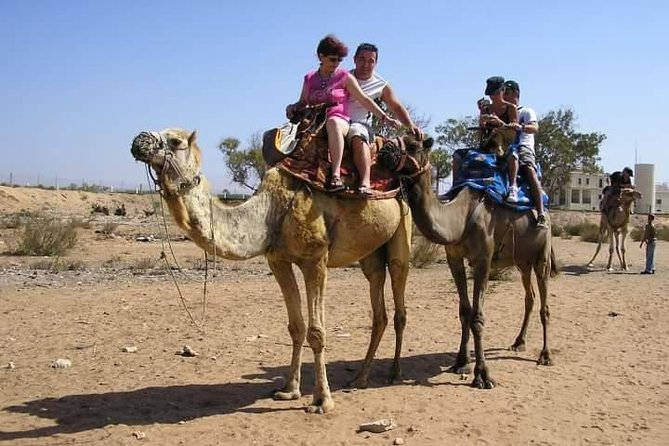
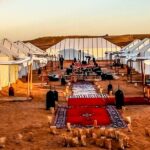
When you reach Merzouga, the tour switches into desert mode. You store baggage and pack an overnight bag, then head out by camel with a guide in the classic blue-turban style. The ride is about an hour before sunset views settle over the dunes, and then you spend the night in a Bedouin-style tent.
My practical advice: pack for temperature swings. Desert nights can cool down quickly even when days feel warm. Bring a light layer you can actually tolerate sleeping in.
Erfoud fossils, Todra walls, and Dades Gorge’s 2-hour hike
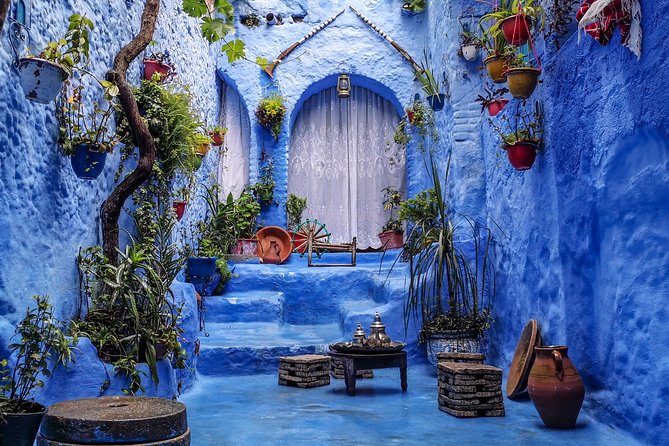
The next morning begins with sunrise over the dunes, plus the kind of quiet breakfast setup that makes the whole Sahara stop feel worth it. After that early desert time, you’ll ride back on camel for about an hour, then drive toward Erfoud.
Erfoud is where you get a special add-on: fossil viewing at Fossiles d’Erfoud, described as million-year-old finds. If you like nature facts, this is one of those stops that makes the scenery feel bigger than you thought.
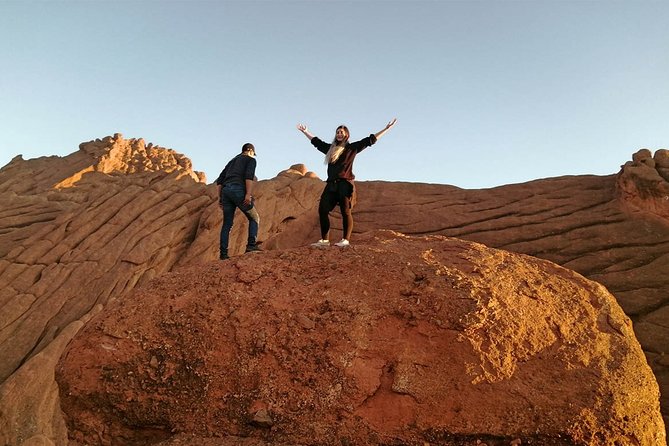
From there, you move to Todra Gorge, where you’ll be squeezed between massive rock walls. This is a strong photo stop and also a good moment to just stand and feel the canyon air.
Finally, Dades Gorge brings color and terrain. You’ll pass through a valley of Berber villages, plus ruins and ksours, with rock formations referenced as monkey fingers. The tour includes a 2-hour hike in Dades Gorge, which is one of the most active segments in the whole trip. Wear good shoes and plan for uneven ground.
If you’re the type who loves easy sightseeing but not physical time, know that this is built for walkers. It’s still not a technical climb, but you’ll want steady footing and energy.
Ouarzazate and Tizi n’Tichka: movie sets, rose-and-dagger valleys, and High Atlas roads
Your route continues north through central Morocco’s dramatic scenery. Ouarzazate is on the itinerary, and it’s more than a convenient driving town. You’ll travel via the valley of roses and daggers, then reach a UNESCO-protected red mud-brick ksar connected to major film backdrops like Lawrence of Arabia and others mentioned in the program.
In Ouarzazate, you have time for Taourirt Kasbah and the Ouallywood studio area. Whether you’re a film buff or not, it helps you understand why this region became a set location: the landscapes are so strong they can stand in for other places on screen.
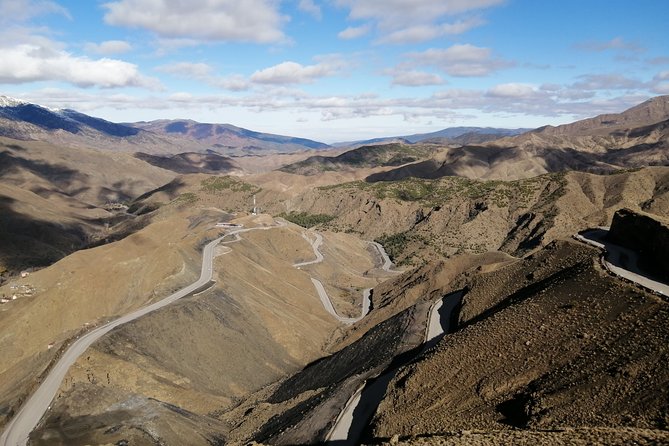
Next comes one of the biggest driving days: the Tizi n’Tichka pass across the High Atlas, with Berber villages along the road. The altitude and twists can feel long, but you’re moving through the kind of scenery that makes the hours feel justified.
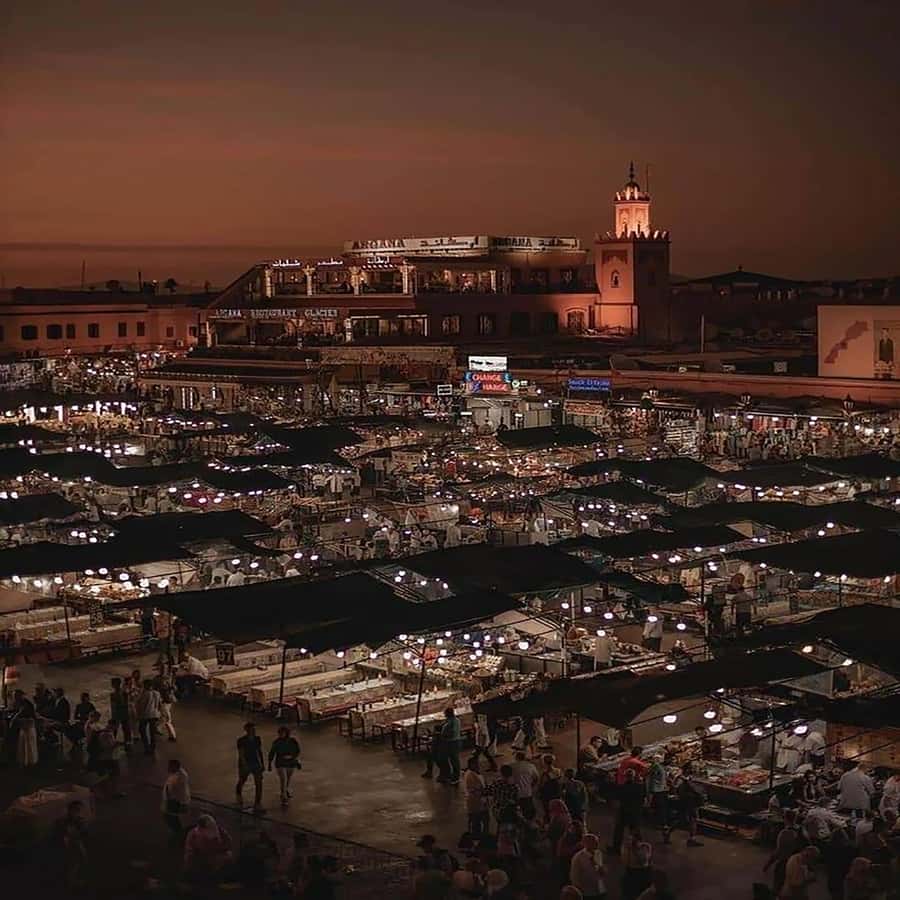
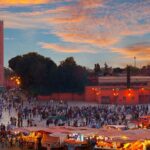
You’ll arrive in Marrakech for an evening of Medina energy. Jamaa El Fnaa is the anchor here: musicians, snake charmers, storytellers, and constant action around the square. You’ll explore with your guide, so you’re not only watching from a distance—you’ll also be pointed toward sites worth the effort.
Marrakech from above: sunrise hot-air balloon plus Medina treasures
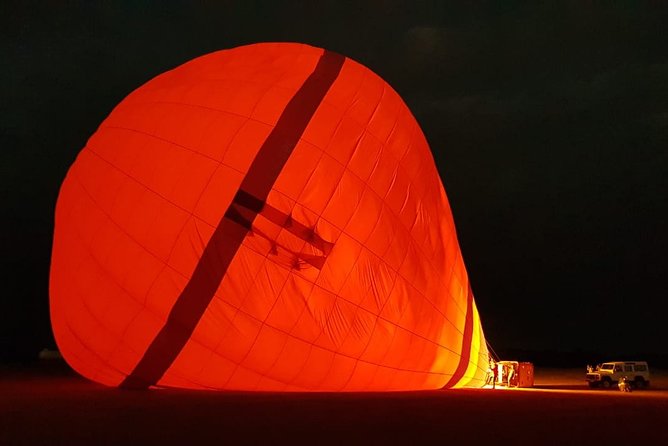
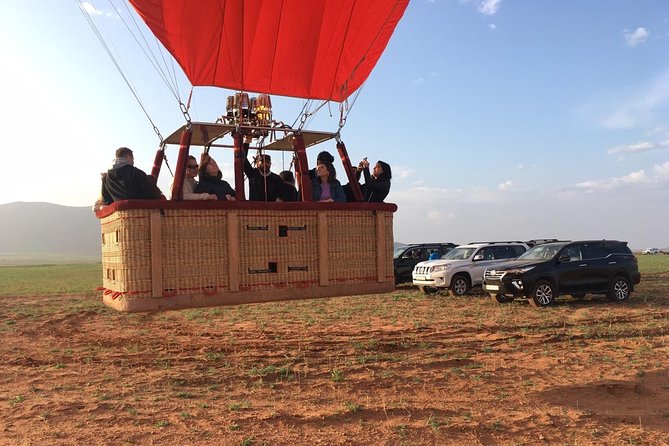
Marrakech is where the tour adds its brightest “wow” moment. Today starts early to catch your hot air balloon ride, described as nearly an hour in the air. From above, you’ll get sweeping views over the red city tones and the High Atlas Mountains in the background, plus a sunrise look over red dust, palm groves, and open landscapes.
A balloon morning changes your whole mood for the day. Even if you’re not obsessed with photography, the scale of the region hits hard from the sky.
After breakfast, you’ll explore the Marrakech Medina with a private guide. Expect stops tied to major palaces and tombs, including Bahia and El-Badii Palace and Saadien’s Tombs. Then you’ll also do an outside-Medina route that can include Majorelle Garden, Museum Saint Laurent, and the Berber Museum.
And yes, the square scene repeats nightly: Jemaa El Fnaa stays active after dark with storytellers and performers, plus the real Marrakech mix of motorcyclists and horse-carts weaving through the area.
The only real consideration here is logistics around early start and weather. The program notes the balloon depends on good weather, which is why it’s built into the schedule with alternatives if conditions aren’t right.
Essaouira: Atlantic ramparts, tree goats, Mellah, and fish by the sea
After breakfast, you head to Essaouira around 08:00. En route, you may see the tree goats phenomenon—another of those quirky Morocco moments that sounds random until you actually spot it.
Essaouira is described as Jimi Hendrix’s town, and the vibe matches: you’ll feel the laid-back mix of sea air and music culture, with Gnawa connections showing up in the streets. You’ll have time to roam on your own, which is key because Essaouira is best explored with freedom rather than being rushed.
You can choose to focus on the ramparts and forts around the Medina of Mogador, and then go inside to visit the Mellah, the former Jewish quarter. The program also points out Essaouira as Morocco’s third fishing port, so you’ll likely want a fish meal while you’re there.
If you’re active, Essaouira also serves kite surfing schools, so this is a good stop if you want a break from medinas and desert road time.
Wear a light jacket if you’re sensitive to wind. Atlantic breezes can cool you down even when the sun feels strong.
El Jadida’s Portuguese fortress coast, then back to Casablanca
On the way back, you stop at El Jadida, formerly Mazagan, a 15th-century Portuguese fortified city now known as El-Jadida. It’s nicknamed the Deauville of Morocco, and the reason is clear once you see the Portuguese structures: the ramparts and sea-facing defense layout make the coast feel structured and European in style.
This is also a UNESCO World Heritage area, and you’ll spend about a couple of hours exploring before driving back to Casablanca for your final night.
Ending where you started is more than convenience. Casablanca has a different tempo than the inland cities, so the last night feels like a reset before you fly out. Plus, you won’t have that final-day stress of changing cities and figuring transportation.
Price and value: what your $3,611.50 covers (and what it doesn’t)
At $3,611.50 per person for an 11-day private tour, you’re paying for three things: transport, timing, and included experiences that are annoying to coordinate yourself.
On the “why this can be worth it” side, the package includes private transportation and an air-conditioned vehicle, parking fees and fuel surcharge, and WiFi on board. You also get a strong food foundation: home-cooked meals with local families, plus a set count of breakfasts, lunches, and dinners listed in the program. That matters because in Morocco, eating well often takes time to hunt down, and you lose hours when you’re trying to do it alone.
Big experiences are also included: the hot air balloon ride, camel riding, a Bedouin-style tent night, a women cooperative visit, and the 2-hour Dades Gorge hike. Fossils in Erfoud are included too, which is a nice “non-obvious” cultural add-on.
On the other hand, some admissions are specifically marked as not included in parts of the day-by-day plan, such as the Marrakech Medina time block. So you should budget a bit for site fees and any extras that aren’t explicitly covered.
This tour is best value if you want the major route—Casablanca, Rif and Chefchaouen, Fez, desert dunes, gorges, Marrakech, and the Atlantic coast—without the daily admin headache.
Should you book this 11-day Casablanca-to-Casablanca adventure?
Book it if you want variety and you like a guided rhythm: desert sunrise, a real medina guide in Fez, rock canyon hiking, and a balloon morning that makes Marrakech feel bigger than you expected. It also fits well if you’re traveling with family groups or mixed ages, because you’re not only driving; you’re also given structured cultural moments like women cooperative visits and local-family meals.
Skip it (or at least reconsider your expectations) if you hate early starts, long road days, or you want a totally self-paced itinerary with minimal structure. This is private, but it’s still an itinerary-heavy road trip.
For most first-time Morocco visitors, though, I’d call this a strong “get it right” route: you’ll see the headline places and still get the kind of human-scale stops—meals, cooperative visits, and tent-night desert time—that usually take extra planning when you travel on your own.
FAQ
Where does the tour start and end?
It starts in Casablanca and ends back in Casablanca at the end of the 11 days.
Is hotel pickup included?
Pickup is offered as part of the tour.
How long is the tour?
The duration is 11 days (approximately).
Is this tour private or group-based?
It is private. Only your group participates.
What’s included in the price besides transportation?
The package includes things like the hot air balloon ride, camel ride, visits to women cooperatives, home-cooked meals with local families, and a 2-hour hike in Dades Gorges.
Does the itinerary include desert activities?
Yes. You’ll ride camels into the dunes and spend a night in a Bedouin-style tent, with sunrise and sunset activities.
Are there meals included?
Yes. The tour lists breakfasts, lunches, and dinners included.
Are any entry tickets included, or should I expect extra fees?
Some admission tickets are listed as included while others are listed as not included (for example, parts of the Marrakech schedule). It’s smart to budget for possible entry fees.
What happens if the balloon can’t fly?
The experience requires good weather. If it’s canceled due to poor weather, you’ll be offered a different date or a full refund.
What is the cancellation timeline?
You can cancel up to 6 days in advance for a full refund. If you cancel 2–6 days before, you get a 50% refund. Less than 2 days before is not refunded.