REVIEW · CASABLANCA
8 Days Private Historical Tour in Morroco
Book on Viator →Operated by Good Travelling In Morocco · Bookable on Viator
Morocco gets intense fast, then turns magical on the desert days. This private 8-day route connects Hassan II Mosque, the old Medina of Fez, and the Sahara in a way that feels both structured and flexible. I especially love the mix of guided city time and big-views travel days, plus the way the plan layers major sights with real local flavor. A heads-up: it’s a lot of ground to cover, so expect early mornings and long car rides.
My other big win is the human factor: this trip is private, with a guide/driver, and past travelers highlight guides such as Rachid and Moha for keeping things smooth and answering quickly before you go. The camel sunset day also lands the right kind of memorable: mint tea, dune time, and a desert-camp night with dinner. The one possible drawback is that entrance fees and lunches aren’t included, so your total cost will creep up unless you plan for it.
In This Review
- Key Highlights at a Glance
- Hassan II Mosque to Rabat: Getting Oriented Fast in Casablanca
- Volubilis, Meknes, and Moulay Ismail’s Shrine: Imperial Morocco in One Stretch
- Fez Old Medina and Al Qarayyin University: Where the Past Feels Close
- The Long Desert Build-Up: Ifrane, Cedar Forest, Ziz Valley, and Merzouga Camel Sunset
- Fossils, Todra Gorge, and Dades Valley: The Real Morocco Feet-First Day
- Road of a Thousand Kasbahs: Ait Ben Haddou and Ouarzazate’s Film-Set Vibe
- Marrakech Medina with a Local Guide: Koutoubia to Bahia and Majorelle Gardens
- Sahara Camp Night: What the Desert Part Is Really Buying You
- Price and Logistics: Does $1,529.02 per Person Feel Fair?
- Who This Tour Fits Best (and Who Might Want a Different Style)
- Should You Book This 8-Day Private Historical Tour?
- FAQ
- FAQ
- What is the start time of the tour?
- Do I get hotel or riad pickup and drop-off?
- Where does the tour begin and where does it end?
- How many nights are spent in Fez?
- What are the main inclusions during the trip?
- Are lunches and drinks included?
- Are entrance fees included?
- What desert experience is included?
- Is this a private tour?
- What is the cancellation window?
Key Highlights at a Glance
- Hassan II Mosque on day one in Casablanca, with time for the big-scale landmark
- Fez with a local guide focused on major stops like the Mellah and Al Qarayyin University
- A sunrise-to-sunset style desert day with Ifrane, cedar forest, and camel dunes near Merzouga
- ATV transfer time before reaching the fossil region and gorge walking
- Ait Ben Haddou film sets plus Ouarzazate stops on the Road of a Thousand Kasbahs
- Marrakech Medina tour with a local guide covering Koutoubia, Bahia, Saadian tombs, and more
Hassan II Mosque to Rabat: Getting Oriented Fast in Casablanca
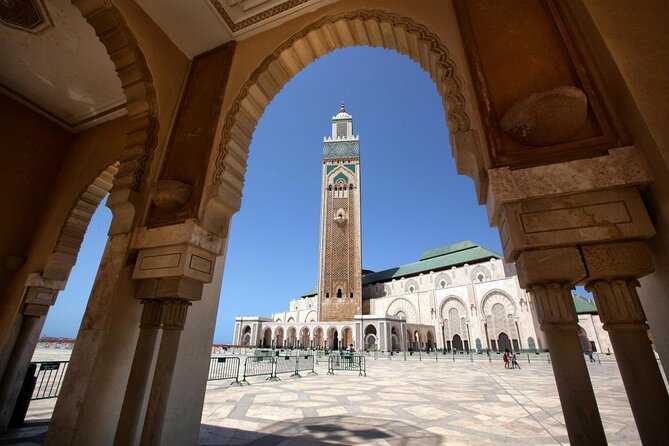
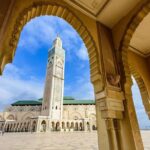
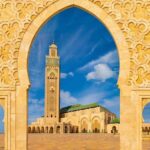
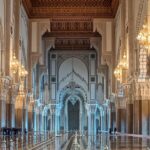
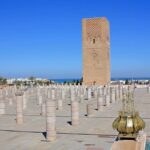
Day 1 starts with airport pickup and a drive into the heart of Morocco’s coastal rhythm. You’ll spend time at Hassan II Mosque, described in the plan as Morocco’s largest mosque. It’s a strong first-day choice because it gives you a clear visual anchor for the trip: impressive architecture, serious atmosphere, and instant context for what comes next.
After Casablanca, you head toward Rabat, the capital. You’ll overnight there with breakfast, which matters because it breaks up the travel load. Rabat is also a good reset point after arrival—less chaotic than some city centers, and easier to sleep after a long day of flights and driving.
One practical thing to expect: this day blends city sightseeing with drive time. You’ll want comfortable shoes and clothes that work for mosque visits (and that also handle a car ride without fuss). And since entrance fees are not fully covered for every stop, it’s smart to keep small change for ticket lines if anything isn’t free on the day.
You can also read our reviews of more private tours in Casablanca
Volubilis, Meknes, and Moulay Ismail’s Shrine: Imperial Morocco in One Stretch
Day 2 is built like a history sampler. You start by driving toward Volubilis to see the Roman ruins. Even if you only know Morocco through modern cities, this stop reframes the story—showing how far back the layers go.
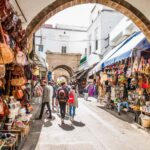
Then the plan moves to Meknes, one of Morocco’s imperial cities, and it includes time in the Medina. The itinerary calls out Bab El Mansour, plus the big UNESCO Medina focus in the schedule. You also stop for lunch in Meknes and then visit Moulay Ismail’s shrine before continuing on.
After that, you drive to Fez, where you’ll stay in a riad for the next part of the trip. This is a meaningful upgrade compared to just hotel-to-hotel travel because a riad helps you feel the old-city vibe right away. If you care about atmosphere—courtyards, late-night sounds, that “inside the walls” feeling—this is one of the best decisions in the whole plan.
A consideration: the day is packed, and not every stop gives you hours. If you’re the type who needs slow museum time, you might want to keep your expectations realistic. The tradeoff is you get a wide range of historic sites without repeating the same kind of sightseeing all week.
Fez Old Medina and Al Qarayyin University: Where the Past Feels Close
Fez is the star city on this route, and the plan treats it that way. You start with breakfast, then a local guide takes you through the Medina’s key landmarks over a long morning-to-afternoon block.
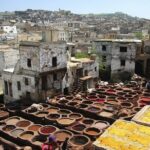
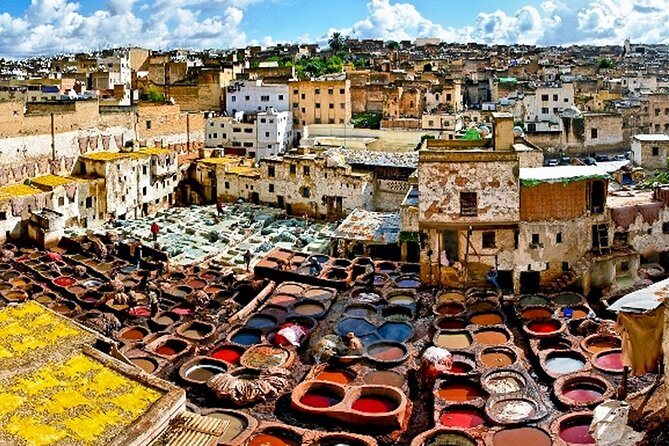
The schedule includes a real list of “must-see” Fez stops: the Royal Palace Gate, the Jewish quarter, the first Mellah built in Morocco, and Al Qarayyin University (called the oldest university in the world in the tour description). You’ll also see the tanneries, the Attarine museum, and Moulay Idriss mausoleum.
This is one of those days where a guide actually matters. Fez is famous for being confusing on your own, and the itinerary’s structure makes it feel guided rather than stressful. If you like history but also want to understand what you’re looking at—who lived where, why certain quarters developed—you’ll get more out of the day with the guide’s routing.
After lunch, the plan adds a creative stop with tiles cooperative time, then a panoramic view over the whole Medina from a tower. That view portion is smart: it gives you a map in your head so you can look at narrow streets later without feeling lost.
Practical tip: this is the kind of day where your feet do the sightseeing too. I’d plan for layered comfort, water, and a bag you can keep close while moving through crowds.
The Long Desert Build-Up: Ifrane, Cedar Forest, Ziz Valley, and Merzouga Camel Sunset
Day 4 is a full-on travel day, but it’s designed to keep you seeing things, not just riding. You leave at 8:00 AM from your riad/hotel and head through the Middle Atlas Mountains. The plan frames Ifrane as the Switzerland town of Morocco, then you drive to the biggest cedar forest in Africa to see Barbarian Apes (monkeys).
After that, you go over the Tizi N talghamt pass toward Midelt, then along Ziz Gorges carved through volcanic rock. The key idea here is variety. You get mountain scenery, then valley views, then you slowly transition toward the desert area around Merzouga.
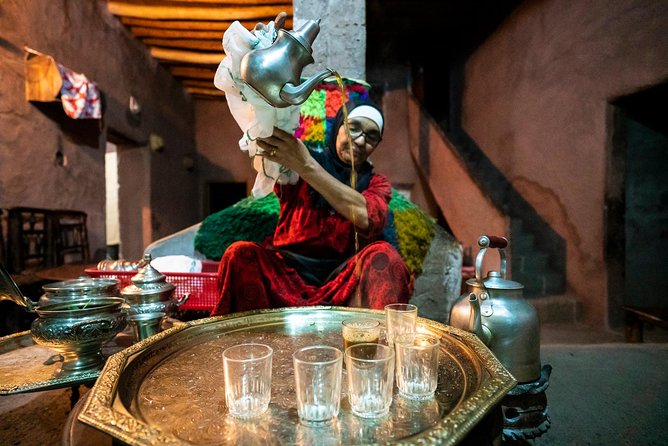
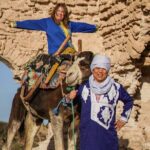
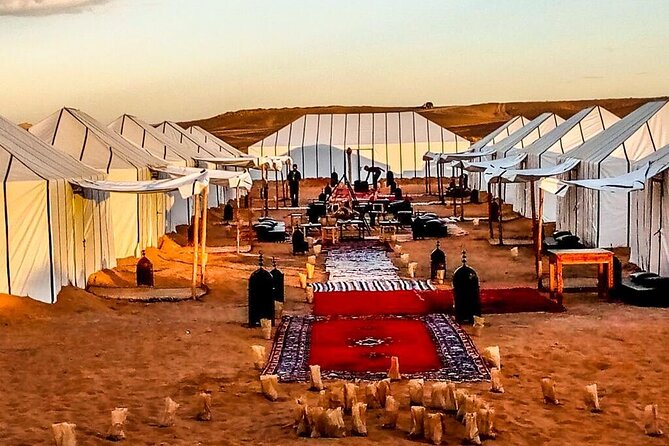
As you arrive, the tour includes a glass of mint tea and then you cross dunes by camel, with stops to catch the sunset from the top of a dune. This is where the whole day’s long driving pays off. The desert doesn’t just look dramatic—it changes your pace. Camel travel is slower than a car, so you feel the space.
One consideration: this is a day with a lot of moving parts. You may feel you’re always in transit, even though you do see stops along the way. If you’re sensitive to long drives, this day is the one to mentally prepare for.
Fossils, Todra Gorge, and Dades Valley: The Real Morocco Feet-First Day
Day 5 shifts from mountains and dunes to rock formations and walking. You start by driving back to the meeting point and include 30 minutes by ATV. That ATV block breaks the “just driving” rhythm, and it also helps you get to the next stage with energy.
You then travel toward Erfoud, described as the capital of fossils. The plan says you can discover fossils and minerals in the area, including ammonites, trilobites, and star fishes. Whether you’re a science nerd or just love weird-but-cool facts, it’s a memorable kind of stop because it ties the region to something you can picture in geology.
In the afternoon, you continue to Tinghir, noted as having been considered the capital of Moroccan Jewish life, and the plan includes panoramic views over the Todra valley. Then you reach Todra Gorge, where you’ll do walking inside cliffs that are described as 300 meters high.
Finally, you head to Dades valley for the night, and that night includes dinner and breakfast. That’s important because it turns the gorge walk into something you can recover from, not just a quick stop.
A practical note: gorge walking can mean uneven ground and warm sun. Wear shoes with grip and plan for the day to be physically active, even if the route overall is “historical.”
You can also read our reviews of more historical tours in Casablanca
Road of a Thousand Kasbahs: Ait Ben Haddou and Ouarzazate’s Film-Set Vibe
Day 6 is all about southern Morocco cinema-meets-history energy. After breakfast, you drive toward Kalaa M’gouna and Ouarzazate using the road described as the road of a thousand kasbahs.
You stop in Kelaat Mgouna, described as Rose’s town, with an annual festival in May. That detail matters because it gives you a sense of why the place gets attention beyond tourism.
Then you reach Ouarzazate, called the Hollywood of Africa in the tour description. The plan lists big international films shot here—Gladiator, The Mummy, and Kingdom of Heaven—and that’s backed up by the next stop: Ait Ben Haddou village, described as the largest and famous kasbah village in Morocco.
You’ll visit Ait Ben Haddou, which the overall tour summary also ties to UNESCO filming locations (the description mentions Game of Thrones and Scorpion). Even if you don’t remember every scene, the visual style is hard to ignore: these aren’t just ruins, they feel built for stories.
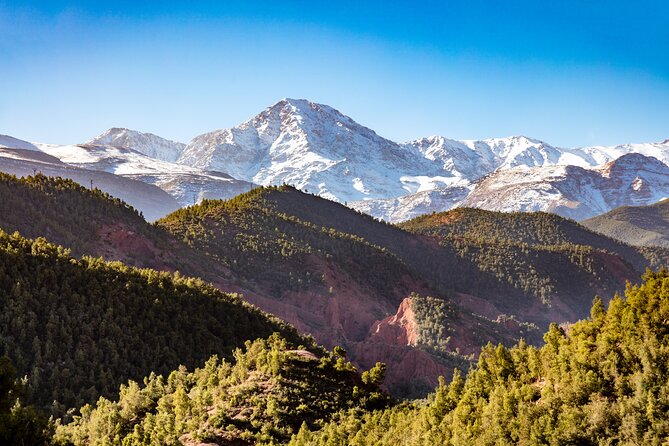
Then you cross the High Atlas Mountains, described as the highest mountains in Africa at 4167 m, with a stop around 2260 m on the way, plus views of Berber villages and changing landscapes. That’s the day where you watch the country’s geography change in real time—green to rocky to desert-edged.
You end the night back in Marrakech, with breakfast included. It’s a smart staging move because Marrakech is best enjoyed with at least one night to settle in.
Marrakech Medina with a Local Guide: Koutoubia to Bahia and Majorelle Gardens
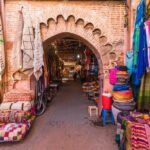
Day 7 is your guided Marrakech day, and it’s set up to help you avoid the common Marrakech mistake: wandering without a sense of what’s important. You get a private guided tour with a local guide, and the itinerary names the core stops you won’t want to miss.
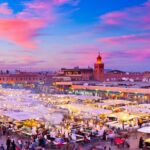
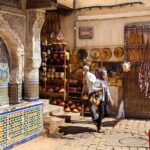
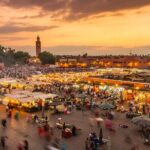
Expect to see Koutoubia Mosque, the Medina, and the souks. The plan also includes Ben Youssef madrassa, the Saadian tombs, and Bahia Palace. It finishes with Majorelle gardens, which gives you a break from the stone-and-spice intensity and lets you cool down visually.
After sightseeing, the plan drives you to Casablanca for the next leg. This is why the Marrakech day feels full: it’s both a sightseeing day and a transfer day. So if you’re planning evening plans of your own, keep them loose.
Sahara Camp Night: What the Desert Part Is Really Buying You
The desert portion is usually why people book this kind of 8-day plan, and here it’s handled with clear “real time” experiences rather than vague promises.
You’ll travel from the mountains and valleys into the Merzouga area, drink mint tea, then do camel trekking across dunes with stops to watch sunset from the top of a dune. That matters because you’re not just passing through sand—you’re doing the activity in the moment when the light changes.
Then you sleep in a desert camp with breakfast and dinner included. Having dinner and breakfast already handled is a real value play. In remote areas, it saves time and removes decision fatigue, which makes the whole evening more relaxing.
If you’re deciding whether the camel trek is worth it, I’d think about comfort and patience. Camels move at a pace that makes you slow down and take in the surroundings. That’s great if you want a slower memory. If you hate waiting around, you might feel restless—though the sunset stops give you natural breaks.
Price and Logistics: Does $1,529.02 per Person Feel Fair?
At $1,529.02 per person for about 8 days, the value comes from what’s included and how much ground you cover with private transport.
What you get:
- Pickup and drop-off at your hotel or riad
- Private touring (only your group)
- A guide/driver plus 4×4 car or small van
- Nights with breakfast in Rabat, Casablanca, Fez (2 nights), desert camp, Dades Valley, and Marrakech
- Dinner at the desert camp and in Dades Valley (2 dinners total)
- Local guided sightseeing in Fez and Marrakech
- Camel trekking
- ATV for 30 minutes before the gorge day
- A mobile ticket
What costs extra:
- Lunches, drinks, and tips
- Entrance fees for historical monuments, listed as about 10 euros each day (and not included in the main price)
So is it worth it? For me, the biggest “yes” is that you’re not paying extra for the guide time in Fez and Marrakech, and you’re getting the desert night with meals rather than just sleeping in a hotel and hoping dinner exists. If you compare this to doing it on your own, the private logistics save you time and stress—especially around the Sahara route.
The main caution is the extra costs. If you don’t plan for lunches and entrance tickets, the trip can feel pricier than it first appears.
Who This Tour Fits Best (and Who Might Want a Different Style)
This tour suits you if you want:
- A first trip to Morocco that hits major historical stops without you mapping everything
- A balance of guided time in old cities (Fez and Marrakech) and big scenic travel days
- The Sahara experience, including a desert camp night and a camel sunset moment
- Morocco with a film fan angle, thanks to Ouarzazate and Ait Ben Haddou
It may not fit as well if you want:
- Total slow travel. The days are packed, and you’ll be on the move.
- Lots of free time in each city. This plan prioritizes coverage and flow.
Based on the guide names that show up in past feedback—Rachid and Moha—this also seems like a good match if you appreciate a guide who communicates well and keeps things organized from the start.
Should You Book This 8-Day Private Historical Tour?
I’d book it if you want a structured Morocco loop that still keeps the key moments human: a riad stay in Fez, a guided Medina day with specific stops, a camel-sunset desert night, and film-set scenery at Ait Ben Haddou. The private transport and the guide time in Fez and Marrakech are the strongest value pieces, and they help you get more meaning out of each location.
I’d pause and rethink if you hate long car days or you’re counting on low extra spending for lunches and monuments. With entrance fees running about 10 euros per day and lunches not included, you’ll want a buffer.
FAQ
FAQ
What is the start time of the tour?
The tour starts at 8:00 AM.
Do I get hotel or riad pickup and drop-off?
Yes. Pickup and drop-off at your hotel or riad are included.
Where does the tour begin and where does it end?
It begins with airport greeting and driving toward Casablanca and Rabat. It ends on Day 8 with a drive to the airport from Casablanca.
How many nights are spent in Fez?
The plan includes 2 nights in Fez with breakfast.
What are the main inclusions during the trip?
You get private transportation (4×4 car or small van), a guide/driver, breakfasts throughout, a desert camp night with breakfast and dinner, and dinners also in Dades Valley. The tour also includes local guided sightseeing in Fez and Marrakech, camel trekking, and 30 minutes ATV.
Are lunches and drinks included?
No. Lunches, drinks, and tips are not included.
Are entrance fees included?
No. Entrance fees are not included, and the tour notes an estimated total of 10 euros each day.
What desert experience is included?
You’ll enjoy mint tea, then do camel trekking across the dunes with stops to enjoy sunset from a dune top, plus an overnight desert camp stay with dinner and breakfast.
Is this a private tour?
Yes. It’s private, meaning only your group participates.
What is the cancellation window?
You can cancel up to 24 hours in advance for a full refund.