REVIEW · TANGIER
Tangier Cooking Class With a Local Family
Book on Viator →Operated by Tangier Private Tours&Activeties _Day Trips · Bookable on Viator
Food lessons in Tangier start with smells, not recipes. This private class with Bilal and his family turns you loose in the market first, then follows with a quick stop at a traditional Berber pharmacy to understand how Moroccan spices work together, including a lesson on argan oil.
I especially like that you get hands-on time in the home kitchen: you cook your own tagine, learn about khobz (traditional bread), and finish by sharing a meal with mint tea. One thing to consider: the experience is about 4 hours and includes walking and shopping in the medina area, so plan for a bit of steady movement.
In This Review
- Key things to know before you go
- A home-cooked Tangier lesson, starting in the medina market
- Meeting logistics and timing: what the 4-hour window really means
- The Berber pharmacy stop: spices, argan oil, and how blending changes everything
- From khobz to mint tea: the home-kitchen skills that matter
- Cooking your own tagine
- Couscous and the rhythm of Moroccan meals
- Khobz: bread as a cooking lesson
- Mint tea: the finish that teaches pacing
- What you’ll eat at lunch (and why sides matter)
- The family factor: why this class feels different from a studio lesson
- Price and value: is $87.11 a good deal?
- Who should book this class (and who might not love it)
- Practical tips to get the most out of your day
- FAQ
- FAQ
- How long is the Tangier cooking class with a local family?
- Where does the experience start and end?
- Is pickup included?
- Is this a private tour?
- What will I cook during the class?
- Is lunch included?
- What’s included in the price?
- Are tips included?
- What’s the booking timeline?
- What is the cancellation policy?
- Should you book this cooking class with Tangier’s local family?
Key things to know before you go
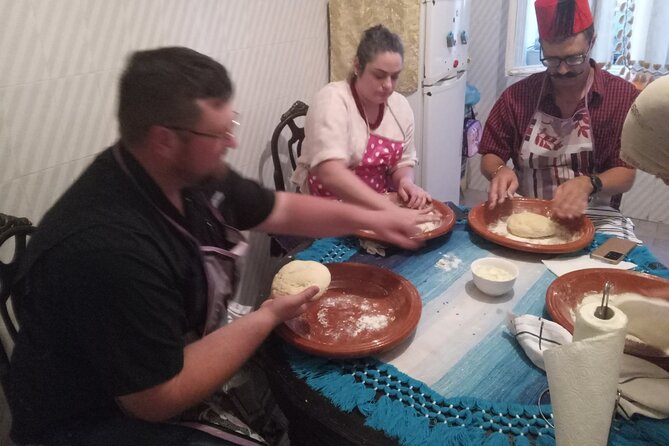
- Market shopping first: you start by selecting fresh ingredients used in your meal.
- Berber pharmacy spice stop: you learn how Moroccan spice blends are built and used.
- Cook your own tagine: the class focuses on technique, not just watching.
- Bread and tea are part of the lesson: khobz and mint tea teach the rhythm of a Moroccan meal.
- Family-table lunch: you eat what you helped prepare, including traditional sides.
- Private and flexible feel: it’s just your group, and the family can adapt when you’re the only participant.
A home-cooked Tangier lesson, starting in the medina market
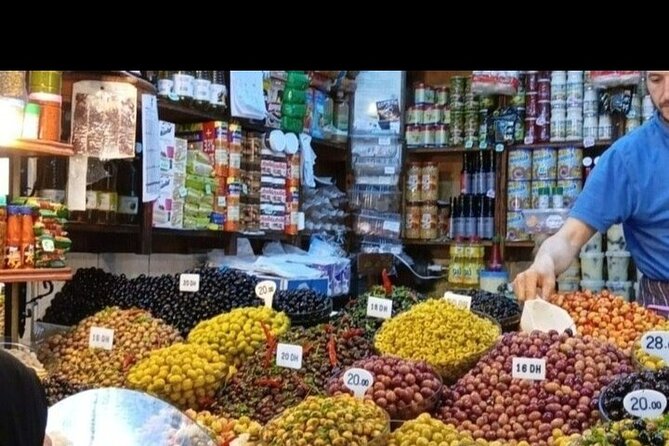
Tangier can be a sensory overload—in a good way. This class gives you a practical reason to pay attention: you’re not wandering for wandering’s sake. You’re going out with Bilal to shop for the exact ingredients that will end up on your table later.
The market time matters because it’s where Moroccan cooking starts. You learn what “fresh” looks like right there in front of you: vegetables with real color, herbs that still smell alive, and the kinds of items families buy for daily cooking. Even if you’ve cooked before, this part helps you understand why Moroccan meals taste the way they do. It’s not only spices. It’s also ingredient quality and timing.
And yes, you’ll likely hear Tangier stories while you’re walking. Bilal’s the kind of guide who connects ingredients to the place and the people who use them. That personal context makes the class stick—because you remember why you bought something, not just what you cooked.
You can also read our reviews of more cooking classes in Tangier

Meeting logistics and timing: what the 4-hour window really means
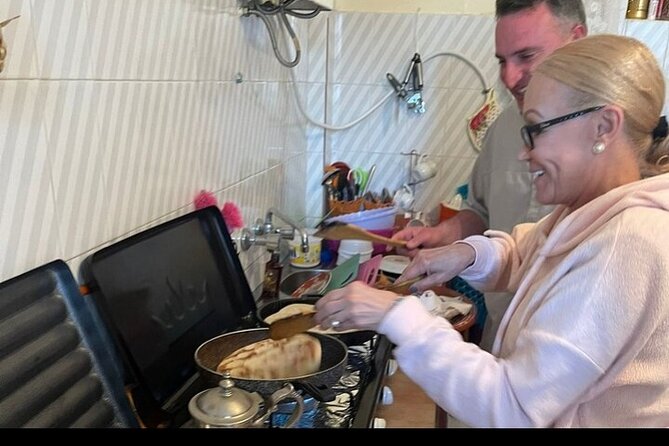
This experience runs about 4 hours, and it includes private transportation plus a private guide. That’s a big deal in Tangier, where getting around can feel more complicated than it looks on a map. Having transport handled means you can focus on the day instead of negotiating details.
Pickup is offered, and the activity starts at Place 9 Avril 1947 (near public transportation). It ends back at the meeting point, so you’re not left figuring out how to get home once the food is done.
Here’s the practical takeaway: a 4-hour cooking class isn’t just cooking time. It’s shopping time, learning time, and eating time all folded into one. Wear comfy shoes. You’ll want your hands free for browsing and carrying small items, and you’ll appreciate the ability to move at a normal pace through the market streets.
The Berber pharmacy stop: spices, argan oil, and how blending changes everything
One of the coolest parts is the traditional Berber pharmacy visit. It isn’t a generic sales stop. It’s framed as a place where people learn how to use spices—what they’re for, and how mixing them creates the flavors Moroccan cooks rely on.
You’ll get a “big picture” understanding of the spices most used in Moroccan cooking, plus a specific highlight: argan oil comes up as part of that broader flavor logic. Even if you’re not buying anything extra, the lesson helps you cook smarter after you go home.
Spice blending is the difference between food that tastes good and food that tastes Moroccan. Many home cooks treat spices like a sprinkle. Moroccan cooking often treats them like a system: you toast or bloom aromatics, balance heat and sweetness, and use spice blends to create a base flavor that carries through the whole dish.
So when you’re later standing at your workstation, you’ll have context for what you’re adding and why. That turns the class from hands-on fun into something you can repeat.
From khobz to mint tea: the home-kitchen skills that matter
After the market and spice lesson, you move to the family home, where the class shifts from shopping to execution. This is where you become, in effect, the cook.
Cooking your own tagine
Tagine is the headline dish, and it’s taught step-by-step. You’ll follow the chef’s guidance while using the spices you learned about—so the earlier shopping and Berber pharmacy stop actually pay off.
What I like about tagine as the centerpiece is that it teaches patience. You’re not just assembling. You’re working through the flavors and texture that come from slow cooking. The goal isn’t to make a perfect restaurant version on your first try. The goal is to understand the method.
A few more Tangier tours and experiences worth a look
Couscous and the rhythm of Moroccan meals
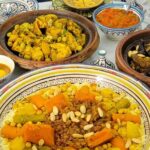
Couscous is included, and it rounds out the plate in a way that feels genuinely Moroccan, not just a side. Moroccan meals often build toward balance: warm stew-like flavors plus something that absorbs them well.
If you’re someone who wants to recreate an authentic plate at home, this is a good pairing to learn. Tagine alone can be a bit of a specialty dish for home cooks. Add couscous and the flavors become a complete meal system.
Khobz: bread as a cooking lesson
One of the details I really appreciate here is the inclusion of traditional bread, khobz. Bread in Morocco isn’t an afterthought; it’s part of how people eat. Learning it means you’re not only making a dish—you’re learning how the dish is meant to be handled.
Mint tea: the finish that teaches pacing
Then there’s mint tea, the classic Moroccan drink you don’t just taste—you learn to make it as part of the meal. Mint tea is also a pacing lesson. It signals you’re done cooking and time to eat, talk, and relax.
In a class like this, the tea matters because it bridges the learning phase and the eating phase. It makes the meal feel like a real family moment, not a timed demonstration.
What you’ll eat at lunch (and why sides matter)
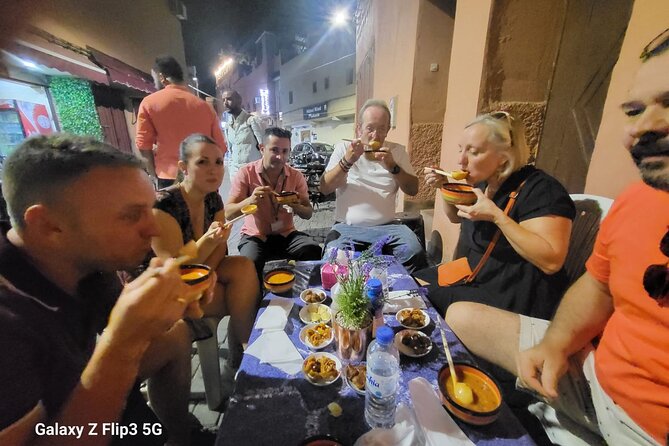
Lunch is included, along with coffee and/or tea plus soda/pop. You’ll enjoy everything you prepare, which is exactly what you want from a cooking class: less performance, more sharing.
Menus can vary a bit, but the core is consistent: tagine, couscous, khobz, and mint tea. On some class days, you may also see extra dishes beyond those basics—like an eggplant dish prepared by Sanae and a fresh salad of cucumber, onion, and tomato.
Why does that matter? Because Moroccan plates often work in layers: a warm spiced main, a starchy base, and bright fresh elements to keep the whole meal from feeling heavy. Those extra sides help you build a complete flavor profile when you cook later.
The family factor: why this class feels different from a studio lesson
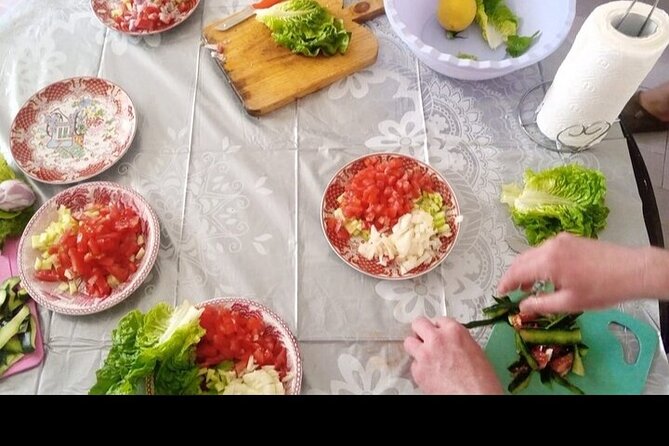
This isn’t a big classroom with identical aprons for a hundred people. It’s a home setting with a real family rhythm. You get the sense that Bilal and Sanae want you to feel comfortable, ask questions, and leave with something more than a recipe.
One standout pattern from the experience style is how the family adapts if the class is smaller. If you’re the only participant, the family still keeps the lesson warm and social. That matters because the biggest failure in some cooking classes is feeling like you’re interrupting the host’s day. Here, you’re integrated into it.
Also, if you like learning culture through normal daily life, this is where it happens. You’re not only learning ingredients. You’re learning how a Moroccan meal fits together: shopping, cooking, serving, eating, then slowing down with tea.
Price and value: is $87.11 a good deal?
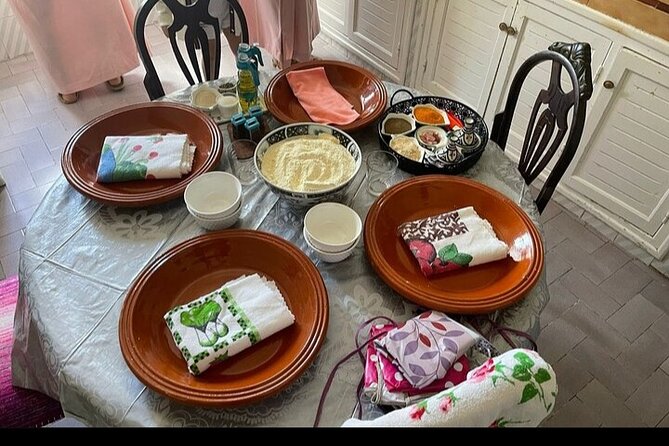
At $87.11 per person for about 4 hours, this is not a budget street-food snack tour. It’s a private, home-based cooking lesson with several built-in costs covered.
You’re getting:
- Private transportation
- A private guide
- A guided daily market component
- A stop at a traditional Berber pharmacy
- Lunch
- Coffee and/or tea plus soda/pop
- All fees and taxes
Tips and extras aren’t included, so you’ll still want to plan a little for that. But the overall package is strong because so many “hidden” costs (transport, entrance fees where applicable, guide time) are already included.
For me, the value comes down to this: you’re paying for access—access to a family home kitchen and access to local knowledge about spices and how Moroccans build meals. If you’ve ever done a cooking class where you felt like you cooked a little and spent the rest of the time waiting, this format feels more focused. You’re actually doing.
Who should book this class (and who might not love it)
This is a great fit if you:
- Want a more authentic Tangier experience than a tour-only checklist
- Like learning by doing, not just watching
- Prefer a private setting over large groups
- Enjoy markets and food culture enough to spend time there
It might be less ideal if you:
- Hate any walking at all, since the market component and shops take time on your feet
- Want a purely technical cooking class with no cultural stops (this experience includes market and spice learning)
Still, the good news is it’s described as recommended for everyone, and it’s built as a flexible family experience rather than a strict class with rigid rules.
Practical tips to get the most out of your day
A few things will help you get better results and better photos, without turning the day into work:
- Bring a water bottle if you get thirsty while walking between stops.
- Wear shoes you can handle on uneven market streets.
- Come with curiosity, especially for the spice blending part. The earlier lessons make your later cooking easier.
- When you’re eating, ask questions. The best learning often happens during the meal, not at the stove.
If you’re hoping to recreate this at home, take notes on what you add and when. Moroccan cooking often hinges on timing and balance.
FAQ
FAQ
How long is the Tangier cooking class with a local family?
It lasts about 4 hours.
Where does the experience start and end?
It starts at Place 9 Avril 1947 (Tanger) and ends back at the meeting point.
Is pickup included?
Pickup is offered, and private transportation is included.
Is this a private tour?
Yes. It’s private, so only your group participates.
What will I cook during the class?
You’ll cook your own tagine and couscous, and you’ll also prepare traditional khobz bread and mint tea.
Is lunch included?
Yes. Lunch is included, along with coffee and/or tea and soda/pop.
What’s included in the price?
Included are private transportation, coffee and/or tea, lunch, soda/pop, a private guide, the Berber pharmacy stop, and all fees and taxes.
Are tips included?
No. Tips and extras are not included.
What’s the booking timeline?
On average, it’s booked about 7 days in advance.
What is the cancellation policy?
You can cancel for a full refund up to 24 hours in advance. If you cancel less than 24 hours before the start time, no refund is provided.
Should you book this cooking class with Tangier’s local family?
If you want a Tangier day that feels like real life—market shopping, spice education, then cooking and eating at home—this is a strong choice. The main selling point is the flow: you learn why ingredients matter, then you cook with that knowledge, then you sit down to a meal built around what you made.
If you enjoy food culture more than big attractions, and you’re open to a little walking in the medina area, you’ll likely love this. And if you’re traveling solo, it still works well since the family can run the class for small groups and keep the experience personal.