REVIEW · TANGIER
Morocco Imperial Cities – 7 Days
Book on Viator →Operated by Morocco Tour Marrakech · Bookable on Viator
Seven days in Morocco, and your camera stays busy. This tour strings together Chefchaouen with the country’s imperial-city circuit, mixing guided medina time with Roman ruins and Atlantic views. I like the way the route balances chaotic markets with calmer pauses, and I love having the big cultural moments grouped so you’re not guessing your way between them. One drawback to plan for: the days are full, and lunches are not included.
I also like that Day 1 isn’t just a sit-and-stare city start. You get a real outdoor break on the Rif side with a hike to Cascades d’Akchour (2–3 hours), which is a nice change from stone alleys. The air-conditioned vehicle helps you reset between stops, especially when the walking and slopes kick in.
You’ll also eat with less stress. Breakfast and dinner are included for the full 7 days, and you overnight in a riad inside the Fez medina area.
In This Review
- Key highlights from this Morocco Imperial Cities 7-day route
- Tangier to Chefchaouen: start with the Strait, then go blue
- Chefchaouen: where the streets climb and the light does the work
- The Grand Mosque and the Spanish Mosque viewpoint
- Akchour waterfalls: a morning reset from medina chaos
- Volubilis and Meknes: Roman ruins and a calmer medina before Fes
- Volubilis: mosaics you can walk among
- Meknes: a big medina feel, with fewer sales tactics
- Arriving in Fes: panoramic views before you get lost
- Fes the hard way (in the best sense): medina quarters, car-free streets, and a guide
- Fes el Bali and Fes el Jdid: two old quarters plus the French Ville Nouvelle
- A guided half-day: history that makes the streets make sense
- Practical note: where you stay changes everything
- Fes, Rabat, and Chellah: tilework time, then an Atlantic capital with breathing room
- Rabat: where the Atlantic and the river shape the city
- Chellah Necropolis: Roman and Islamic ruins together
- Kasbah des Oudaias and Andalusian Gardens
- Casablanca’s Hassan II Mosque: a modern icon with real access
- Non-Muslim access: a clear advantage on this tour
- Marrakech from Jemaa el-Fna to Bahia Palace: markets, gardens, and courtyards
- Start with orientation: Jemaa el-Fna as your compass
- Ville Nouvelle and Majorelle Gardens
- Bahia Palace: quiet time at the end
- Price and value: what you’re really paying for
- Who should book this tour (and who should skip it)
- Should you book Morocco Imperial Cities – 7 Days?
- FAQ
- How long is the Morocco Imperial Cities tour?
- Where does the tour start and what time does it begin?
- Is pickup offered?
- Is this tour private?
- What meals are included?
- Which major Moroccan cities are visited?
- Can non-Muslims enter the mosques on this itinerary?
- What is the cancellation and weather situation?
Key highlights from this Morocco Imperial Cities 7-day route
- Chefchaouen’s blue medina walk plus views from the Spanish Mosque at sunset
- Cascades d’Akchour hike for waterfalls and lush scenery early on
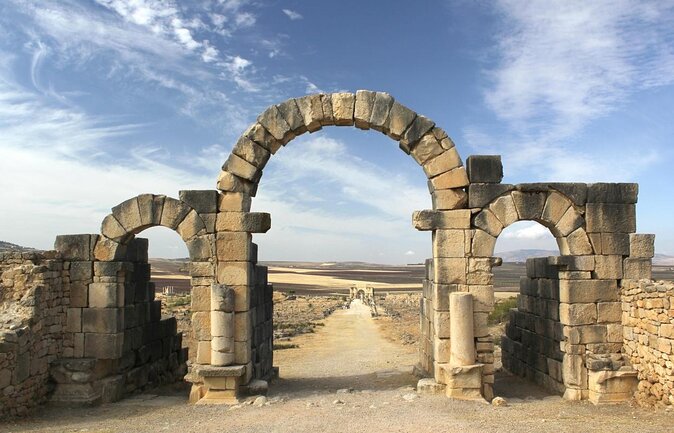
- Volubilis UNESCO Roman ruins with mosaics and the well-preserved merchant homes
- Fes medina orientation with a guide, covering both old quarters and the French-era Ville Nouvelle
- Rabat’s Chellah Necropolis and Andalusian Gardens for history that feels less rushed
- Hassan II Mosque in Casablanca with morning access that allows non-Muslims
Tangier to Chefchaouen: start with the Strait, then go blue
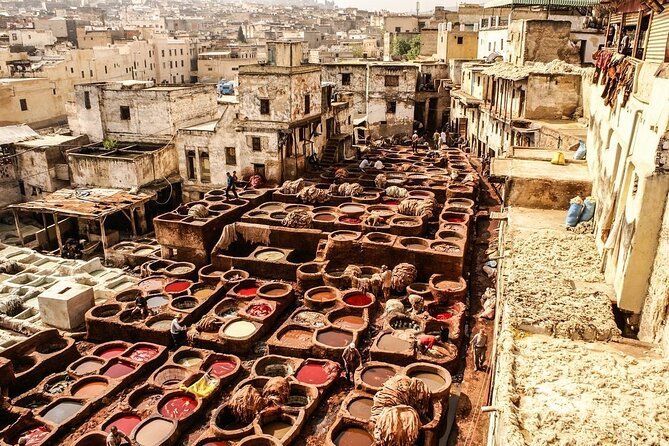
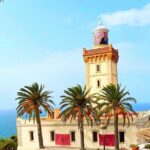
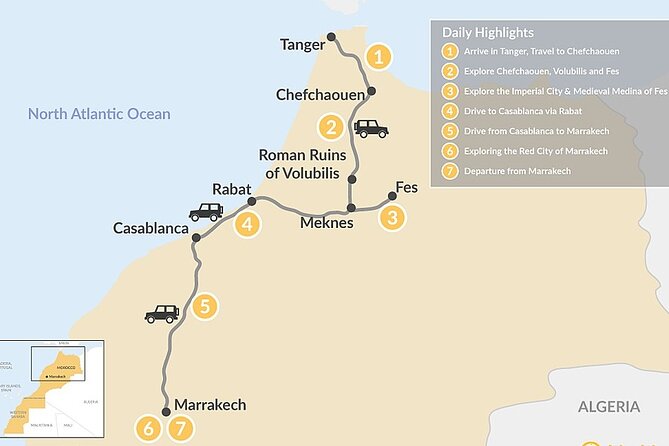
Your trip kicks off in Tangier, the port city at the gateway between Africa and Europe. This matters, because Tangier has that “in-between” feeling right away: you’re close to Europe, but the culture is distinctly Moroccan, and the Strait gives you a sharp sense of geography.
On Day 1, you get a choice: either spend time exploring Tangier, or continue on toward Chefchaouen in the Rif Mountains. If you like momentum and want the classic blue city early, you’ll probably appreciate getting there the same day.
A few more Tangier tours and experiences worth a look
Chefchaouen: where the streets climb and the light does the work
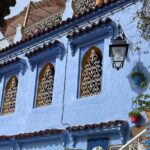
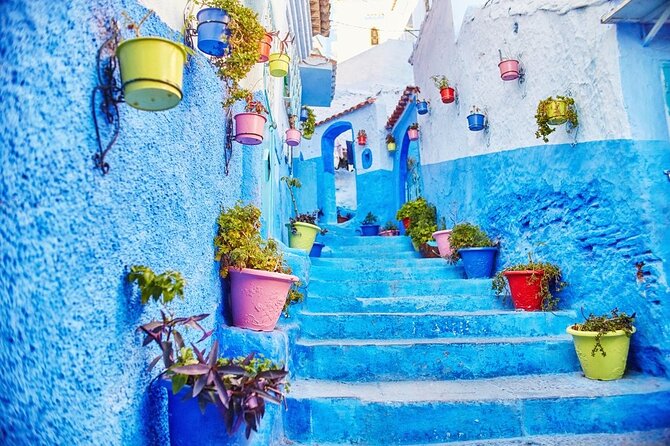
Once you reach Chefchaouen, you’ll want comfortable shoes. The medina clings to a hillside, and you’ll be up and down narrow alleys. Start at Place Outa el Hammam, the main square tied to the number of public hammams that used to surround it. Then wander. This is one of those places where you don’t need a strict checklist. The buildings, doorways, and wall textures give you something to look at every few steps.
A highlight on this day is the Kasbah area, where you can visit spaces like a garden, a museum, and even old prison cells. I like that this adds layers beyond photos and storefronts.
The Grand Mosque and the Spanish Mosque viewpoint
Chefchaouen’s Grand Mosque (built in 1560) is important to understand, but here’s the practical part: non-Muslims can’t enter. The value is still there. You can see the area from outside, and that’s enough to appreciate the site.
As evening approaches, you’ll follow the path toward the Spanish Mosque, about a 20 to 30 minute walk. The payoff is the wide view over the town and mountains as the light changes. This is one of the best parts of Chefchaouen if you enjoy sunsets more than shopping.
Akchour waterfalls: a morning reset from medina chaos
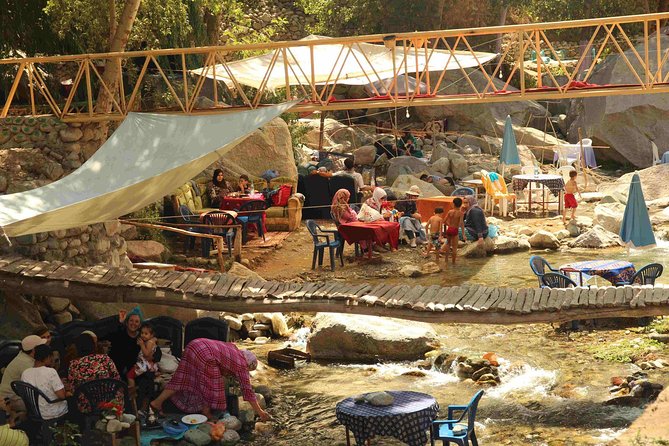
If you go the Akchour route on Day 1, you’re in for a different kind of Morocco. You’ll hike for about 2–3 hours through lush vegetation and small pools to reach Cascades d’Akchour. This is valuable because it changes your trip rhythm early. After that, Chefchaouen feels like a cultural rest stop instead of your only experience.
Volubilis and Meknes: Roman ruins and a calmer medina before Fes
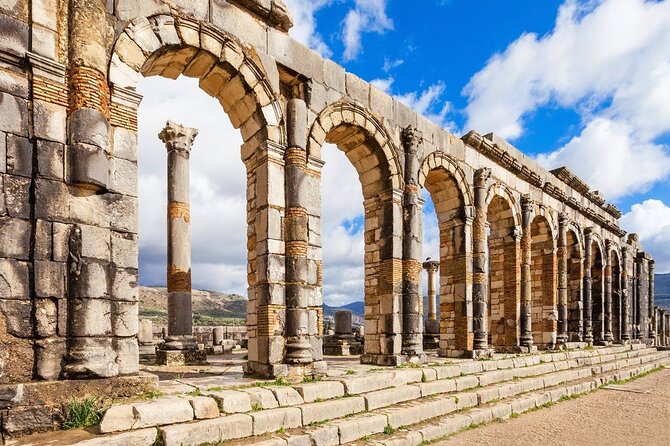
Day 2 is where the trip widens. You leave Chefchaouen and head toward Fes, but you stop at Volubilis first. If you like visible history, this is a major win.



Volubilis: mosaics you can walk among
Volubilis is a UNESCO site and one of those places where you can slow down because the ruins are spread out. Founded in the 3rd century BCE and abandoned in the 11th century, the complex is remarkably well preserved.
What I’d focus on first:
- The merchant homes and visible heating systems underneath
- The temples
- The mosaics still in place, including the Labors of Hercules
Photography is easier early. You’ll rise early enough to wander before crowds and catch better light. Just note the tour marks Volubilis admission as not included, so you’ll want to check your final booking details.
Meknes: a big medina feel, with fewer sales tactics
Then you hit Meknes, a smaller, calmer cousin of Fes. The tour plan keeps it manageable by targeting the Ville Impériale (Imperial City) plus the medina.
One subtle but real benefit: shopkeepers are described as not as pushy here. That’s not just about comfort. It changes how you experience the medina. You can look, ask questions, and browse without feeling like you’re constantly negotiating attention.
Arriving in Fes: panoramic views before you get lost
The day ends with Fez. Before going into the medina, the plan includes visiting the ruins of the Merenid Tombs and a panoramic view. I strongly recommend using that viewpoint moment. Fez can be overwhelming, and having a mental map before you start walking helps.
Fes the hard way (in the best sense): medina quarters, car-free streets, and a guide
Fes is the big one. It’s the oldest of Morocco’s imperial cities, and its medina is UNESCO-listed. The medina is also one of the world’s largest urban car-free areas, which is a big deal for how you move and how it feels. You’re not dodging traffic. You’re just following people, smells, and sound.
Fes el Bali and Fes el Jdid: two old quarters plus the French Ville Nouvelle
Your time in Fes is structured so you’re not only trapped inside alleyways. The medina includes two old quarters:
- Fes el Bali
- Fes el Jdid
And there’s also the Ville Nouvelle, built during the French colonial era (1912–1956). This contrast helps you understand the city’s layers instead of treating it like one endless bazaar.
A guided half-day: history that makes the streets make sense
You’ll meet your guide and spend about half a day learning about the history and culture as you navigate the narrow streets. This is the part that makes Fes feel less like a maze and more like a story.
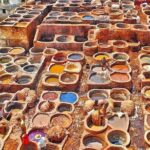
Without guidance, you might see beautiful craft shops and old doorways but not understand what you’re looking at. With a guide, you get context, and you’ll probably remember more than just the smell of cinnamon and leather.
Practical note: where you stay changes everything
You’ll sleep in a riad in the medina, with an interior courtyard garden. That matters because it reduces friction. You can start early and end late without commuting across the city. Plus, the courtyard is where you actually breathe for a minute.
Fes, Rabat, and Chellah: tilework time, then an Atlantic capital with breathing room
After your first Fes day, you get another piece of the puzzle before moving to Rabat. The plan includes time for a ceramics and tilework collective, where you can see tile masters making mosaics. If you like craft, this is a strong use of time. It’s one thing to admire tiles in a courtyard; it’s another to watch the process.
Rabat: where the Atlantic and the river shape the city
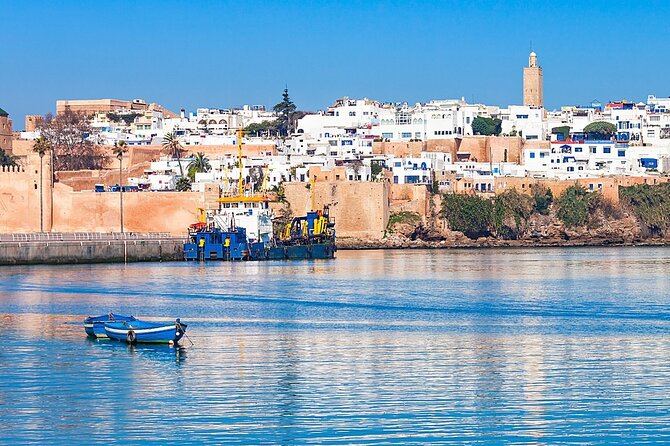
Rabat sits on the Atlantic coast and the Bou Regreg River. That geographic setting can make the city feel calmer than inland medina-heavy days. The plan also keeps the schedule full but not frantic.
Chellah Necropolis: Roman and Islamic ruins together
Chellah is a fortified medieval site that includes Roman and Islamic ruins. It’s the kind of place that gives you space to wander at your own pace while still seeing major history.
Kasbah des Oudaias and Andalusian Gardens
You’ll enter through the grand door of the Kasbah des Oudaias. Today it’s mostly residential, which adds an everyday feel. You get the white-and-blue washed streets, but without the sense that everything is only built for visitors.
Then you’ll visit the Andalusian Gardens. It’s a quieter counterbalance to the heavier medina days. If you’re the kind of traveler who needs a pause between big sites, you’ll appreciate having garden time rather than stacking another long stretch of monuments.
Casablanca’s Hassan II Mosque: a modern icon with real access
Even if Casablanca isn’t your main focus, this day gives you a serious landmark: the Hassan II Mosque.
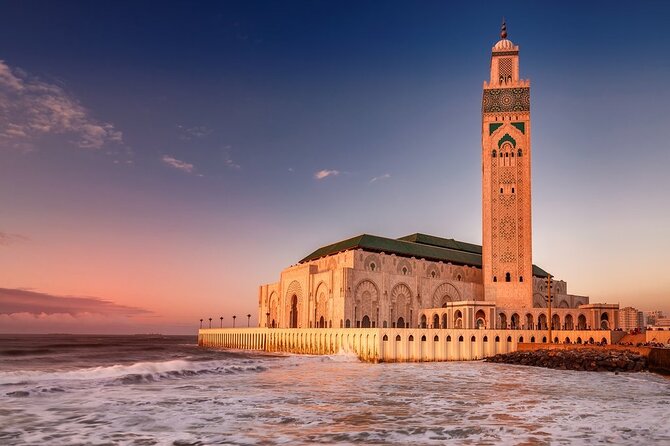
It sits by the sea, and the minaret is huge—210 meters (about 690 feet), the tallest in Morocco and the tallest minaret in the world. That scale is worth seeing in person.
Non-Muslim access: a clear advantage on this tour
Here’s an important practical detail from the plan: non-Muslims are permitted to enter the Hassan II Mosque. That’s not universal across Morocco’s mosques, so this is one of those moments where the route is designed with different visitors in mind.
You’ll join a morning tour and see fine artisanship, including:
- Hand-carved stone and wood
- Intricate marble floor detailing
- Gilded ceilings
If architecture is your thing, this is the day to slow down and look up.
Marrakech from Jemaa el-Fna to Bahia Palace: markets, gardens, and courtyards
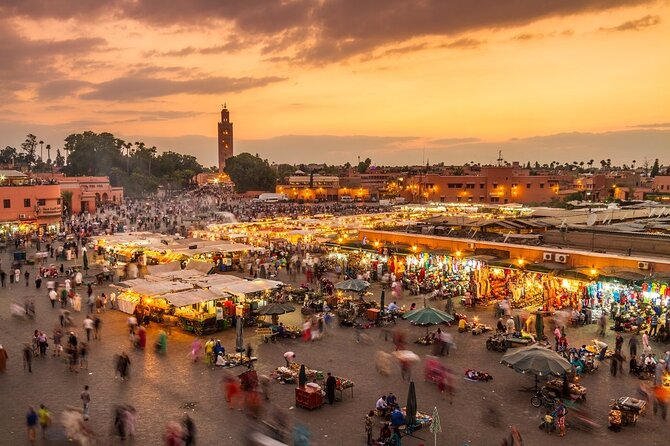
After Rabat, you head to Marrakech, a different kind of history than Fes. The plan emphasizes Berber roots and its role as a trading capital for Atlas tribes. Today it’s a major economic center, and you feel that in the street life.
Start with orientation: Jemaa el-Fna as your compass
In Marrakech, you’ll get your bearings around Jemaa el-Fna Square. From there:
- Souks are north
- Koutoubia Mosque and Gardens are west
- The Kasbah area is south
That orientation helps. Marrakech can feel like one huge blur if you don’t anchor yourself.
In the Kasbah area, you’ll connect to major sites including:
- Saadian Tombs
- Bahia Palace
- El Badi Palace
Ville Nouvelle and Majorelle Gardens
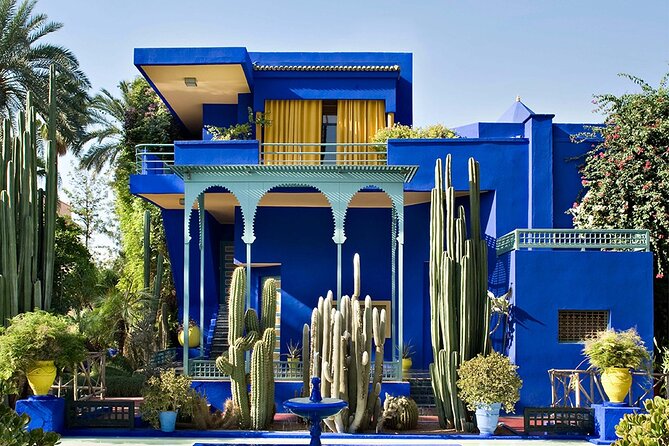
You’ll also spend time in the Ville Nouvelle, where you can visit the Majorelle Gardens. The value here is the contrast. Marrakech isn’t just loud markets. You get a more controlled, designed environment where you can cool down and reset.
Bahia Palace: quiet time at the end
Day 7 is your flexible wrap-up. You can do last-minute shopping, or return to Marrakech’s sights. The plan suggests revisiting Bahia Palace for the calmer, contemplative option.
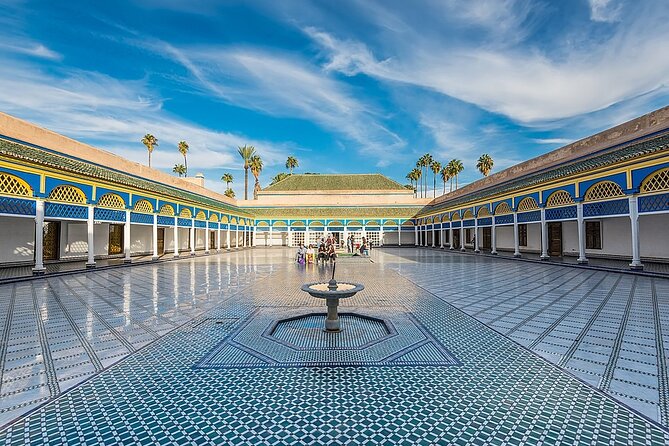
Bahia Palace was built in the 19th century and showcases Islamic and Moroccan architecture. The palace covers about eight hectares (10,000 square meters) and includes a garden with rooms opening onto courtyards. Even if you’re not a palace person, this is a good way to end the trip because it gives you a slower mood after days of walking and negotiating.
Price and value: what you’re really paying for
The price is $1,646.64 per person for about 7 days. That can sound steep until you translate it into what the tour handles.
Here’s what you’re getting for your money, based on the tour inclusions:
- Air-conditioned vehicle for transfers
- All fees and taxes (with one notable caveat below)
- Breakfast and dinner included for all 7 days
- Pickup offered
- A private tour/activity, meaning it’s just your group
Those are not small perks. In Morocco, transport and meal planning can eat time and energy. Having breakfast and dinner handled reduces the daily logistics scramble.
One key caveat to verify before you lock it in: Volubilis is marked as not included for admission in the day plan. So even if many costs are covered, you should confirm exactly what’s covered for each entry on your final confirmation.
Also, private tours usually cost more than group bus tours. But for an itinerary that includes steep medina walking and multiple cities, private format can save frustration. You’re not forced to move at the pace of strangers.
Who should book this tour (and who should skip it)
I’d book this if you:
- Want a structured route through major imperial cities without doing separate bookings
- Like a mix of architecture, crafts, and historical sites (Roman to Islamic to artisan workshops)
- Appreciate a tour that includes both city energy and lighter outdoor time (Akchour hike)
- Don’t want to handle daily meal hunting while you’re moving between cities
I’d hesitate if you:
- Hate walking in old medinas and uphill streets (Fez and Chefchaouen are not designed for wheel-chair-flat sightseeing)
- Prefer a slower trip with fewer transitions between towns
- Expect lunches to be included by default (they aren’t)
Should you book Morocco Imperial Cities – 7 Days?
If you want Morocco’s highlights in one efficient week, this is a strong fit. The route is well-balanced: you get Chefchaouen’s blue medina, Volubilis for Roman-scale history, Fes with guided orientation, and the Atlantic-meets-stone feel of Rabat and Casablanca.
My main reason to recommend it: the tour doesn’t only throw you into monuments. It gives you practical context (guided time in Fez and tilework exposure) and then adds variety (Akchour hike, garden time in Marrakech). If you’re okay with a full schedule and planning your lunches, this can be a very efficient and enjoyable way to see Morocco’s imperial cities.
FAQ
How long is the Morocco Imperial Cities tour?
It’s approximately 7 days.
Where does the tour start and what time does it begin?
It starts in Tangier, with the meeting time at 8:00 am.
Is pickup offered?
Yes, pickup is offered.
Is this tour private?
Yes. It’s listed as a private tour/activity, meaning only your group participates.
What meals are included?
Breakfast and dinner are included for 7 days. Lunches are not included.
Which major Moroccan cities are visited?
Tangier, Chefchaouen, Meknes, Fes, Rabat, Casablanca, and Marrakech.
Can non-Muslims enter the mosques on this itinerary?
Chefchaouen’s Grand Mosque cannot be entered by non-Muslims, but Casablanca’s Hassan II Mosque allows non-Muslims to enter.
What is the cancellation and weather situation?
Cancellation is free up to 24 hours before the experience starts for a full refund. The tour requires good weather, and if it’s canceled due to poor weather you’ll be offered a different date or a full refund. It also requires a minimum number of travelers.