REVIEW · MEKNES
Meknes: Guided city Tour
Book on GetYourGuide →Operated by Morocco-Fez-tours · Bookable on GetYourGuide
Meknes rewards slow wandering with royal scale. This guided city walk gives you a clear route through Morocco’s imperial footprint, with photo stops that make the architecture feel personal—especially Bab Mansour Gate. You’re not just seeing landmarks; you’re learning how Meknes works as a living city.
I really like the pairing of the monumental and the everyday: El Hedim Square is where you feel local rhythm, then your guide steers you into the Medina’s souks so you know what you’re looking at. I also appreciate the attention to Moulay Ismail’s world, where the story behind the mausoleum actually helps the details click.
One thing to plan around: parts of the royal complex can be affected by renovation work. When that happens, the stop for places like the Royal Stables may not go as expected, and timing or the final return flow can shift.
In This Review
- Key highlights to look for
- Meeting at Meknès Train Station: the 3-hour rhythm
- Bab Mansour Gate: the imperial entrance that earns your photos
- El Hedim Square and the souks: learning Meknes by walking it
- Mausoleum of Moulay Ismail: calm architecture with political gravity
- Royal Stables and Granaries: amazing design, but check access first
- Lunch at a local restaurant: possible stop, not included
- Price and value: what $56 covers (and what it doesn’t)
- Guide quality can make or break the experience
- Who this Meknes tour is best for
- Should you book the Meknes Guided City Tour?
- FAQ
- Where does the tour start and end?
- How long is the Meknes guided tour?
- How much does the tour cost?
- What languages are available for the guide?
- Is lunch included in the tour price?
- Are entrance fees included?
- Is transportation included?
- Is this tour suitable for wheelchair users or people with mobility impairments?
Key highlights to look for
- Bab Mansour Gate photo stop with clear explanations of the design
- El Hedim Square orientation point for understanding daily Meknes life
- Moulay Ismail Mausoleum for intricate architecture and a calmer pace
- Meknes Medina souks where a guide helps you navigate without getting lost
- Royal Stables & Granaries worth confirming are accessible on your day
- Private group format with an English/French/Spanish-speaking guide
Meeting at Meknès Train Station: the 3-hour rhythm
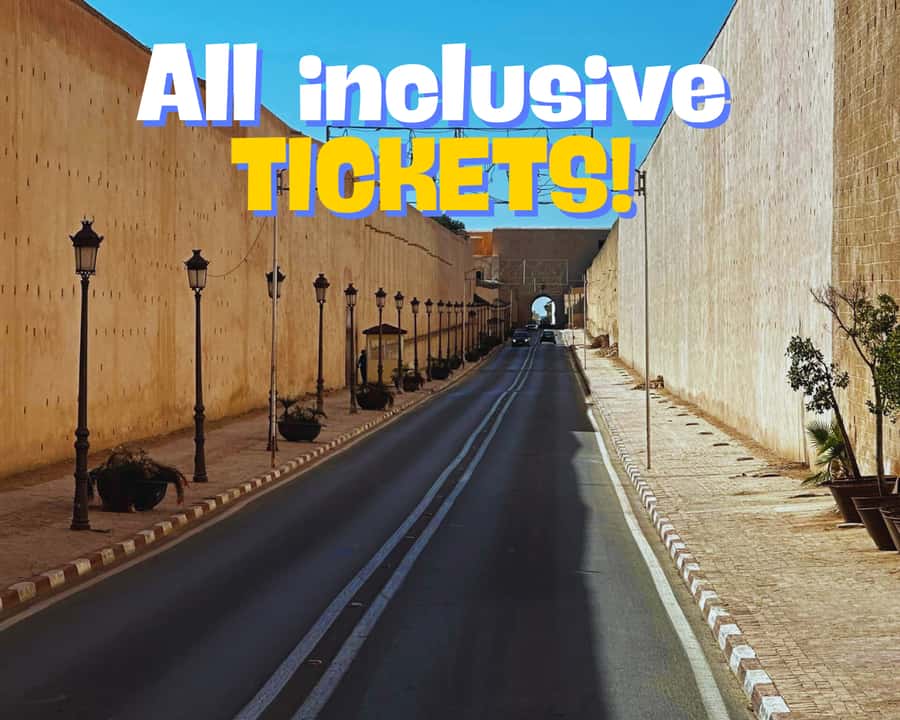
This tour is built around one simple idea: start at a clear landmark and keep moving through the city’s main sights without wasting time. Pickup and drop-off are at Meknès Train Station, so you can arrive, meet your guide, and have a plan for how the day moves forward.
The total time is about 3 hours, which sounds short until you’re in the Medina area. Streets tighten, people flow, and you’ll want time to stop and look. In a focused tour like this, you’ll typically get a good mix of “stop and stare” moments (big architecture) and “walk and learn” moments (Medina streets and souks).
You’ll also be doing real city walking. Come with comfortable shoes and water. If you’re expecting a slow, sit-down experience, this isn’t that kind of tour. It’s more like a guided route you can actually finish—without spending your whole afternoon negotiating streets on your own.
You can also read our reviews of more tours and experiences in Meknes.
Bab Mansour Gate: the imperial entrance that earns your photos
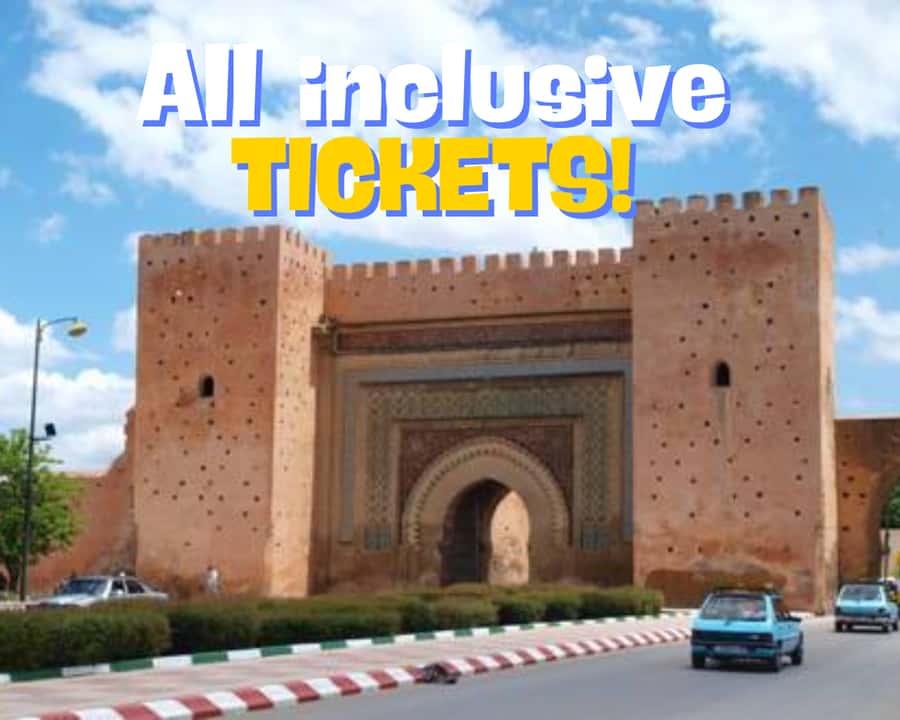
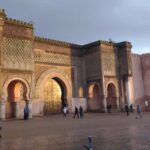
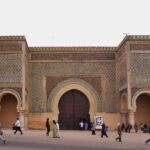
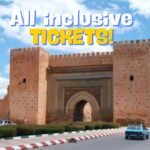
Bab Mansour Gate is the headliner, and for good reason. This isn’t just a pretty wall you pass by; it’s one of Meknes’ most iconic statements of power and craftsmanship. When your guide points out what you’re seeing—materials, scale, and how the gate functions as an entry point into a royal world—the place becomes way more than a snapshot.
Here’s what I think you’ll enjoy most: the gate is visually dramatic from multiple angles. Even if you only have a short time in that area, you’ll learn how to position yourself for better views and why the design is built to impress. If you like architecture, this stop is the kind that makes you start noticing details everywhere else in town.
Also, the tour is designed to help you avoid the usual drag of ticket lines. That matters most when you only have a few hours total. You’ll still want to be ready to pay any entrance fees on-site if applicable, since they’re not included in the tour price—but at least the process should be faster with a guide.
El Hedim Square and the souks: learning Meknes by walking it
After the big royal architecture, the tone shifts. El Hedim Square is the lively center where city life shows up in layers—people meeting, shopping, and moving through daily routines. Your guide uses this area as a kind of orientation hub, so the Medina doesn’t feel like an endless maze.
From there, you move into the Medina and its souks, where the experience becomes about interaction and context. It’s one thing to see stalls. It’s another to understand what’s being sold and why certain streets develop specialties. A good guide helps you see patterns fast: what the market is known for, how vendors present products, and what kinds of goods you’ll realistically spot in this part of Meknes.
A practical note: souks are great for photos, but they’re also busy and close. If you’re carrying a camera, keep water accessible and manage your bag so you can move without bumping into people. If you tend to get overwhelmed in crowded spaces, the private-group format helps—your guide can pace you and redirect you when you start to feel lost.
And about shopping: this tour doesn’t promise a buying spree, but you’ll be in the right place to browse intelligently. Ask questions, take your time, and don’t feel pressured to commit on the spot. If you want souvenirs, this is where you can make your own choices with your own eyes.
Mausoleum of Moulay Ismail: calm architecture with political gravity
The Mausoleum of Moulay Ismail is where the tour slows down in a good way. Even if you’re not a hardcore history fan, the site helps you understand why Meknes became a capital and how that power was expressed through religious and architectural spaces.
You’ll be walking into a setting that feels different from the market streets. The atmosphere tends to shift: fewer distractions, more focus on design. Your guide’s job here is to translate ornament into meaning—how layout and decoration work together, and why the sultan linked his legacy to places like this.
In a short tour, this stop matters because it adds depth. Without it, Meknes can feel like just a photo tour of gates and walls. With it, you get the quiet side of the city’s imperial story.
If you’re someone who likes to “read” buildings, pay attention here. Notice how your line of sight changes, how transitions from street to sacred space affect your perception, and how the architecture holds your attention without needing crowds.
Royal Stables and Granaries: amazing design, but check access first
This is one of the most interesting parts on paper: the Royal Stables and Granaries, designed with serious engineering thinking. The idea is that you’re looking at architecture that was meant to function at scale—built to support the daily machinery of power.
But here’s the reality to plan for: renovation work has affected access in the past. If part of this complex is closed on your date, the tour may adjust. That can mean skipping a section, shortening the stop, or moving you to another location earlier than you expected.
So I recommend you do one simple thing before you go: confirm that your day’s main royal stops are accessible. If they aren’t, don’t panic. You’ll still learn about Meknes from the guide and see the major landmarks—but you’ll get a different “shape” to the walk.
When these kinds of closures happen, the tour’s value depends on how well the guide adapts. This is also where private-group format can help, since your guide can keep you oriented and prevent you from feeling stranded.

Lunch at a local restaurant: possible stop, not included
The experience often includes time for a traditional Moroccan lunch. Here’s the catch: lunch is not included in the price, and that matters for budgeting. If you want lunch, plan on paying for it separately.
Why I think this is still useful: when your guide controls the timing, you’re less likely to end up eating too late or choosing something far from the main route. Also, having a suggested local place beats trying to find a good spot mid-walk.
But be smart about expectations. If the tour’s royal complex stops are affected by renovations, the lunch stop may become the “default” time filler. That’s not automatically bad, but it can mean the meal experience is more tourist-friendly than you might hope.
If you’re picky about food, keep it practical: order what you can confidently identify, ask what’s included, and avoid getting carried away with add-ons you didn’t plan for. And if you’d rather eat on your own, this tour still gives you enough sightseeing to keep the day moving.
Price and value: what $56 covers (and what it doesn’t)
At $56 per person for about 3 hours, this tour sits in the “good value if you care about context” category. You’re paying for a guide, a structured route, and help navigating key sites—plus skip-the-ticket-line support when tickets apply.
What’s not covered is important: entrance fees and transportation aren’t included. That means your real total cost can be higher once you add site tickets, and you’ll need to carry a payment method for it. It’s also why you should avoid assuming everything is fully included when you’re deciding.
That said, the tour’s design is efficient. It starts and ends at the train station, hits the big landmarks, and brings you into the Medina without you spending half your energy figuring out where to go next. In Meknes, that kind of time-saving is genuinely worth paying for.
Also, you’re not limited to one language. The tour offers a guide who can work in English, French, and Spanish, which helps if your group’s comfort varies. If you’re traveling with mixed-language buddies, this reduces awkward gaps in explanations.
Guide quality can make or break the experience
This tour’s core strength is the human element: the guide connects the dots between architecture, power, and daily city life. Different guides have different styles, but the common thread is that well-run tours keep you moving while explaining enough that the stops feel meaningful.
Some guides are known for being especially attentive and well-prepared, including guides like Madiha, Mustafa, and Abdull. If you’re offered any of those names, it’s a positive sign for clarity and friendliness. Even if your guide isn’t one of them, look for the cues that matter: clear meeting points, smooth pacing, and explanations that help you understand what you’re seeing.
One more practical angle: when renovations affect sites, the guide’s plan for rerouting becomes your real “tour product.” That’s when good guides save the day by keeping you on track instead of leaving you to figure things out.
Who this Meknes tour is best for
You’ll likely enjoy this tour if you want:
- A short, structured way to see major Meknes landmarks in a few hours
- A guide to help interpret Bab Mansour Gate, El Hedim Square, and the Moulay Ismail mausoleum
- A smoother route through the Medina and souks than you’d manage alone
You might want to skip it if:
- You need a wheelchair-friendly route. The tour is not suitable for wheelchair users or people with mobility impairments.
- You prefer long, slow exploration with lots of free time. This is a paced walk, not a wandering afternoon.
If you’re an active traveler who likes walking, photography, and learning how places work, this is a strong fit—especially if you’re using Meknes as a stop between bigger Moroccan cities.
Should you book the Meknes Guided City Tour?
I’d book this tour if you want a guided route that hits Meknes’ key imperial sights without turning your day into a logistics puzzle. The best value comes from the combination of Bab Mansour Gate, El Hedim Square, and Moulay Ismail, plus the guided help in the Medina.
Just don’t go in blind about possible access issues. If the Royal Stables and Granaries are closed due to renovations on your date, your route may change. If that matters to you, confirm access before you commit, or treat that stop as a bonus rather than a guarantee.
If you’re flexible, comfortable walking, and you like getting the story behind the stones, this is an efficient and enjoyable way to experience Meknes in a few focused hours.
FAQ
Where does the tour start and end?
Pickup and drop-off are at Meknès Train Station in Meknes.
How long is the Meknes guided tour?
The duration is 3 hours.
How much does the tour cost?
The price listed is $56 per person.
What languages are available for the guide?
The guide is available in English, French, and Spanish.
Is lunch included in the tour price?
No, lunch is not included.
Are entrance fees included?
No, entrance fees are not included.
Is transportation included?
No, transportation is not included.
Is this tour suitable for wheelchair users or people with mobility impairments?
No, it is not suitable for people with mobility impairments or wheelchair users.