REVIEW · MEKNES
From Rabat: Volubilis and Meknes Full-day Tour
Book on GetYourGuide →Operated by IKTICHAF TRAVEL · Bookable on GetYourGuide
Roman ruins, then a real imperial city.
This day tour stacks Volubilis and Meknes into one efficient outing, with guided time in both places. You start with Morocco’s best-preserved Roman site, famous for mosaics still in place, then switch gears to the old Medina lanes and royal landmarks in Meknes.
I especially like the air-conditioned van and pickup included from your hotel or riad, because that cuts down stress on a long travel day. I also liked the focus on key sights: Volubilis’ major structures and mosaics, then Meknes’ museum stop and major monuments like Bab Al Mansour Gate.
One thing to consider: you’re spending a big chunk of the day in transit (drive time is built in), and the day can feel more transport-heavy than you expect at a premium price point unless the sites are exactly what you want to see.
In This Review
- Key things that make this tour worth your time
- Why Volubilis and Meknes is a smart pairing from Rabat
- The Rabat-to-Volubilis drive: comfort, timing, and what it means for your day
- Volubilis Roman city: mosaics, baths, oilery, and the valley views
- Meknes after lunch: medina lanes plus major royal landmarks
- Dar Jamaï Museum: a calm courtyard break in the middle of the day
- Guides, languages, and how to get the best experience
- Price and value: what you’re paying for at $284 per person
- Practical tips to make the day feel smoother
- Should you book the Rabat: Volubilis and Meknes Full-day Tour?
- FAQ
- What time does pickup happen in Rabat?
- How long is the tour?
- Which places are included in the day?
- Is lunch included?
- What languages are available for the live guide?
- Are entrance fees and transportation included?
Key things that make this tour worth your time
- Volubilis mosaics in situ: you’re not just looking at ruins from the outside—you see the decorative floor art where it was preserved.
- Air-conditioned transport + hotel pickup: easier start from Rabat, fewer coordination headaches.
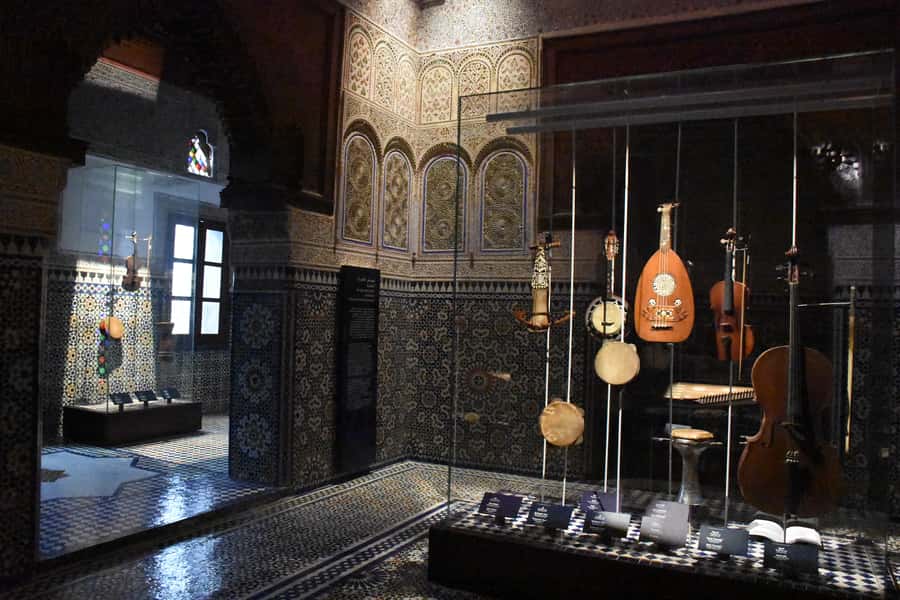
- Dar Jamaï Museum visit: built by the Jamaï family in 1882, with a collection tied to ceramics, jewelry, textiles, and cedarwood craft.
- Meknes Medina time: markets and narrow streets, not only a quick photo stop.
- Royal showpieces in Meknes: Bab Al Mansour Gate plus the royal stables and main square as your day’s big monuments.
- Professional guidance across languages: live guide available in English, French, Spanish, and Arabic.
Why Volubilis and Meknes is a smart pairing from Rabat
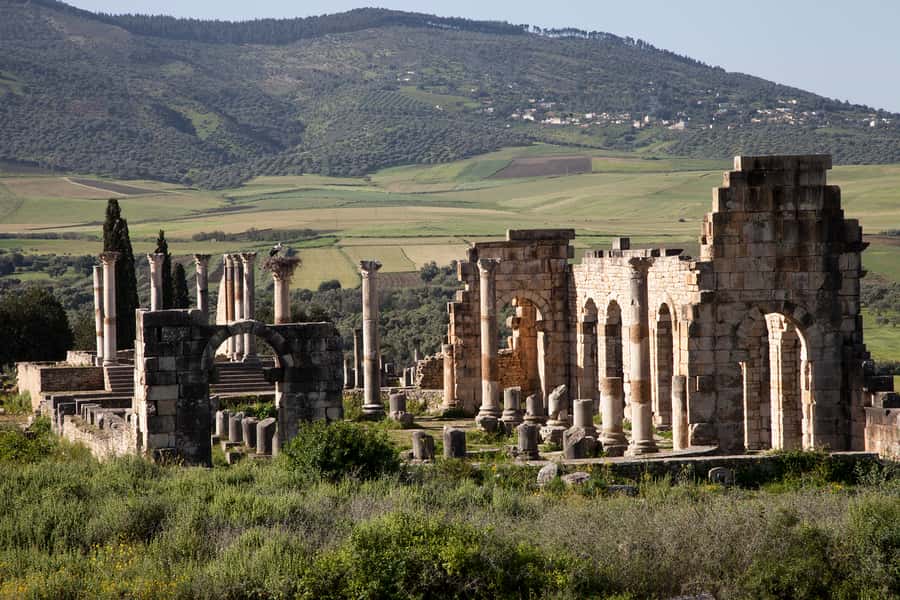
This route works because it moves from one kind of “Morocco you don’t forget” to another. Volubilis gives you the Roman layer—streets, houses, baths—set in a fertile plain where the ruins still feel rooted in the landscape. Then Meknes brings you back to lived-in Morocco, with medina lanes and imperial-era architecture.
I like that the day is built around two clear anchors. You’re not wandering random corners all day. You’re seeing the sites for what they are: a UNESCO-listed archaeological experience first, then a guided look at Meknes’ historic core and major landmarks.
If you’re short on time and want both a “wow ancient” stop and a “real old city” stop, this format makes sense. It’s also a good choice if you’d rather pay for guidance than try to piece together rides and tickets on your own.
A few more Meknes tours and experiences worth a look
The Rabat-to-Volubilis drive: comfort, timing, and what it means for your day
Pickup is at 9:00 from your hotel or riad (the guide meets you at the reception area up to 30 minutes before departure). Then you head out for roughly 1.5 hours to reach Volubilis, which matters because it sets the pace for everything after.
The upside is comfort. The trip includes an air-conditioned van, so you start the day feeling less worn out. That’s important because Volubilis rewards slow looking—especially when you want time with the mosaics and larger ruins.
The trade-off is that you will feel the schedule pressure. This is an 8-hour day tour, and the time split between driving and sight time is real. If you hate being in transit, plan to enjoy the early start and treat the day like a full outing, not a relaxed stroll.
Volubilis Roman city: mosaics, baths, oilery, and the valley views
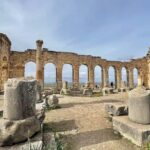
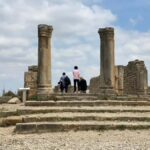
Volubilis is Morocco’s best-preserved Roman archaeological site, and the reason is obvious once you’re inside. The most striking feature is the mosaic floors preserved in place—not moved to a museum, not just “decorations you pass by,” but details you can actually stand next to and study.
During the visit, you’ll move through the parts that explain how the Roman city functioned: houses, baths, an oilery area, and government buildings. That mix matters. It’s not only about looking at columns; it’s about understanding daily life—where people ate, bathed, worked, and traded.
You’ll also get scenic viewpoints over the valley. That’s a practical plus because it gives your eyes a break from close-up ruin details. You can step back, orient yourself, and then return to the mosaic areas with fresh attention.
One note on pacing: some guides keep a faster tempo. Even when the information is good, you may finish earlier than you planned or wish for a slightly more unhurried walkthrough. If you like lots of questions and lingering, go in ready to point out what you want to focus on—mosaics, building types, or the city layout.
Meknes after lunch: medina lanes plus major royal landmarks
After Volubilis, the drive to Meknes is about 40 minutes, and you’ll stop for lunch before your guided exploration of the old town. Lunch is not included, so you’ll want to budget for it and choose a place that matches your energy level—quick and simple if you’re running on sightseeing steam, longer if you want to slow down.
Once you’re in Meknes, the day shifts into older street life. You’ll explore markets and narrow Medina lanes, which is where the city feels most Moroccan in the everyday way. This is also where the tour’s guide-based value shows: the same streets can feel chaotic without someone helping you connect what you’re seeing.
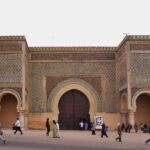
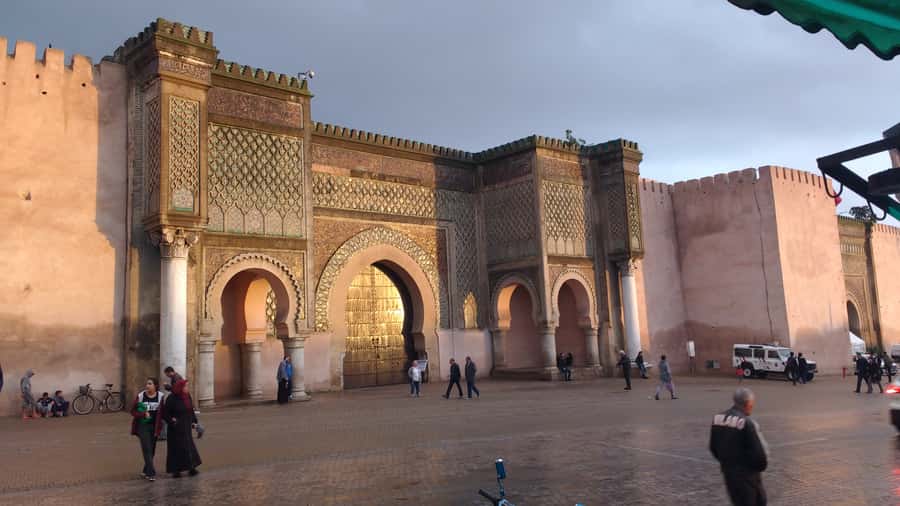
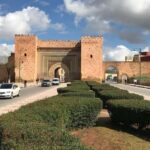
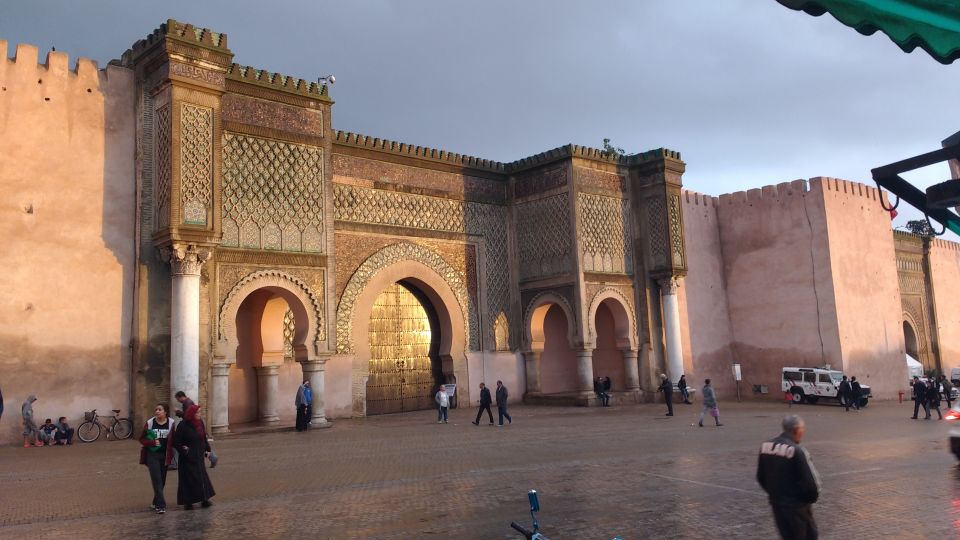
The itinerary also includes several headline sights: the royal stables, Bab Al Mansour Gate, and the main square. Seeing these with context matters. Bab Al Mansour isn’t just a beautiful gate you snap and move on—it becomes part of a story when you understand what Meknes wanted to project as an imperial city.
Dar Jamaï Museum: a calm courtyard break in the middle of the day
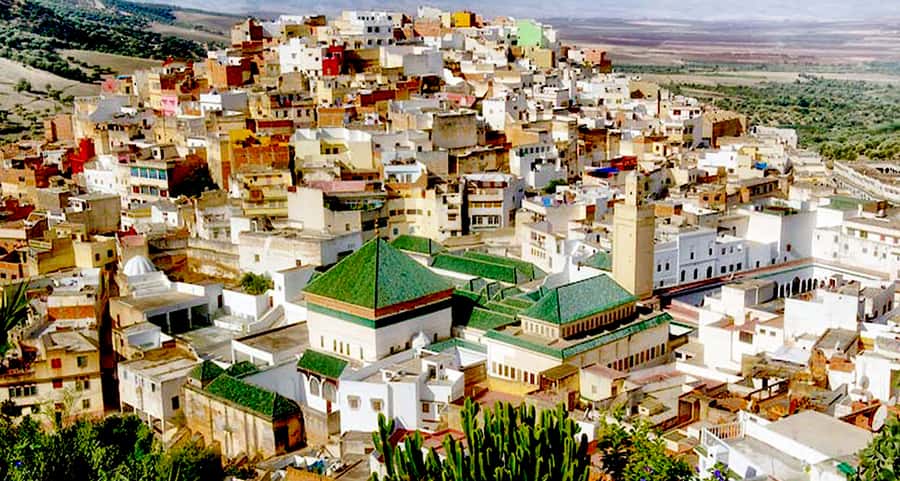
One of the best parts of the Meknes segment is the Dar Jamaï Museum. This is a palace building that was built in 1882 by the powerful Jamaï family. Two members served as viziers to Sultan Moulay Al Hassan I, and the palace has been a museum since 1920.
What you’ll get here is a breather from street motion. The museum includes an Andalusian garden and courtyard with shade and orange trees, which is a small but meaningful detail when you’re out for most of the day. It’s the kind of place where you can regroup, take photos in calmer light, and then head back to the exterior monuments with better focus.
The collection leans into traditional arts and materials: ceramics, jewelry, textiles, and cedarwood craft. If you like handmade details, this stop adds variety beyond the big-architecture photos.


Guides, languages, and how to get the best experience
This tour runs with a live guide in English, French, Spanish, or Arabic, which is a big deal because the sites change meaning when you have an explanation. You’ll hear the story of Volubilis and the meaning of Meknes’ key buildings and spaces.
I’m also paying attention to guide behavior because it affects how the day feels. For example, one Volubilis guide experience sounded more like memorized delivery and fast pacing, which can shorten the time you spend actually looking. On the Meknes side, guides have been described as friendly and detail-oriented, including time for questions.
A couple of tour support details also stand out. You may have a helper who makes sure you don’t get lost in the Medina streets after pickup, including support that starts right from where you are in Rabat. That kind of practical help can turn a stressful transfer into a smooth transition.
If you care about depth, bring one or two specific questions with you—like what to look for in the mosaics or what symbols connect to the royal sights in Meknes. It gives the guide a clear target and usually leads to better answers.
Price and value: what you’re paying for at $284 per person
This tour costs $284 per person for an 8-hour outing. That’s not a low price, so you should check the value math.
Here’s what’s included: a tour guide, entrance fees, and air-conditioned transportation, plus hotel pickup. You also skip the ticket line. Those pieces reduce friction. You’re not spending your day negotiating tickets or figuring out logistics between sites.
What’s not included: lunch, drinks, and personal expenses. That’s common, but it matters because it can add up. If you buy drinks frequently or choose a sit-down lunch, your final day cost rises.
So the real question is: do Volubilis and Meknes feel like “must-see” priorities? If yes, the guided structure can feel worth it because you’re getting entry coverage and time-efficient routing. If you’re mainly curious about one site, you may end up paying for the whole package even if one half is the priority.
That’s echoed by a key practical reality: sometimes the guide pacing and transportation time can make it feel like you spend a lot of the day on wheels. If you’re sensitive to that, make sure you’re genuinely excited about both cities.
Practical tips to make the day feel smoother
A few simple moves can improve your experience a lot on a long, guided day.
- Wear shoes you can walk in comfortably. Roman ruins and medina streets both involve uneven ground and stone pathways.
- Bring sunglasses and a hat. You’ll be outdoors at Volubilis, and gardens at Dar Jamaï still benefit from sun protection.
- Have a plan for lunch. Since lunch isn’t included, decide how you want it to feel: fast and easy, or a proper break.
- Use the guide time on purpose. If mosaics are your focus, ask early for which areas are most worth slowing down for.
- Keep photo expectations realistic. You’ll have time, but you’ll also be on a schedule, so prioritize the few shots that really matter to you.
Also, remember that the tour languages are covered (English, French, Spanish, Arabic). If your language is one of those, you’ll likely get the full benefit of the explanations.
Should you book the Rabat: Volubilis and Meknes Full-day Tour?
I’d book it if you want a well-structured day that combines Roman archaeology and imperial city landmarks without wrestling with logistics. The included guide, entrances, and air-conditioned transport reduce decision fatigue, and the key sites are strong choices: Volubilis mosaics plus Meknes’ medina, Dar Jamaï Museum, and Bab Al Mansour Gate.
I would think twice if you feel the price is steep compared to what you personally care about. If your heart is only in Volubilis (or only in Meknes), you may wish you had a more one-site option. And if you dislike car time, treat this as a full-day sightseeing commitment, not a quick excursion.
If your goal is to see Morocco in two historical eras in one shot—Roman floors and imperial gates—this is a solid pick.
FAQ
What time does pickup happen in Rabat?
Pickup is at 9:00 from your hotel or riad reception area, with the guide meeting you up to 30 minutes before departure.
How long is the tour?
The tour lasts about 8 hours.
Which places are included in the day?
You visit the Roman ruins of Volubilis and then explore Meknes, including the Dar Jamaï Museum, the royal stables, Bab Al Mansour Gate, and the main square.
Is lunch included?
No, lunch isn’t included, and you’ll have a break for lunch during the Meknes portion of the day.
What languages are available for the live guide?
The live guide is available in English, French, Spanish, and Arabic.
Are entrance fees and transportation included?
Yes. The tour includes a tour guide, entrance fees, and air-conditioned transportation, plus hotel pickup.