REVIEW · MARRAKESH
Marrakech: Ben Youssef Medersa, Le Jardin Secret & Souk Tour
Book on GetYourGuide →Operated by Moments in Morocco - Tour Agency · Bookable on GetYourGuide
A maze is the point here. This 4-hour Marrakech medina tour strings together three top sights plus two souk stops, so you get both the architecture and the everyday hustle. I love that it also builds in quiet relief at Le Jardin Secret, right inside the medina walls. One thing to factor in: monument entrance fees are extra, on top of the $18 tour price.
What makes it work is the contrast. First you get Ben Youssef Madrasa, with its zellij tilework, cedarwood carving, and stucco details made for a Quranic school that once taught hundreds of students. Then you step out of noise and into shade, where the “Khettara” underground irrigation system explains how the medina kept its gardens alive—guided by people like Ismail, Mouhssine, and Omar, who are repeatedly praised for pacing and clear explanations.
The route is also very practical. You start at Café de France in Jemaa el Fna, you get photo stops at big landmarks like Koutoubia, and you still have free time inside each site. The only downside I’d flag up front is logistics: the medina streets and the main meeting square can feel chaotic at the start, so it helps to arrive a few minutes early and keep an eye on your guide’s name message on WhatsApp.
In This Review
- Key points worth your time
- A smart way to see Marrakech without getting lost
- Starting at Café de France: the meeting point that sets the tone
- Jemaa el Fna photo stop: a quick snapshot before the slow beauty
- Ben Youssef Madrasa: 16th-century tilework with real educational weight
- Medina walking: where craft workshops and everyday life overlap
- Souk Semmarine and Souk El Attarine: shop smart, smell everything
- Souk Semmarine: leather and garments
- Souk El Attarine: spices, perfumes, and natural products
- Le Jardin Secret: the medina’s quiet pocket and the Khettara lesson
- Dar El Bacha Museum: Thami El Glaoui’s palace interiors (if time allows)
- Koutoubia Mosque photo stop: a landmark moment outside the densest lanes
- Price and value: $18 plus entrance tickets, but time saved
- What to bring so the day stays pleasant
- Who this Marrakech medina tour fits best
- Should you book this Marrakech: Ben Youssef, Secret Garden, and Souk Tour?
- FAQ
- Are entrance fees included in the tour price?
- How long is the tour?
- Where do I meet the guide?
- Is hotel pickup available?
- Is the tour private or small-group?
- What languages are the guides?
- Can I skip the ticket lines?
- What should I bring?
- Is transportation included?
- Is the tour suitable for people with mobility impairments?
- What does the tour cover if time allows?
Key points worth your time
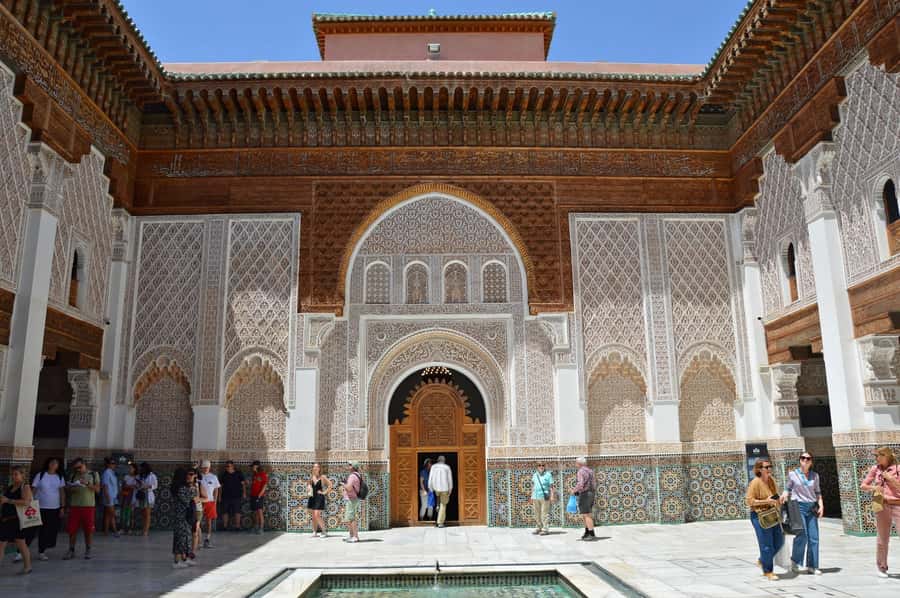
- Ben Youssef Madrasa: Morocco’s largest historic Quranic school, with standout craftsmanship throughout.
- Le Jardin Secret calm: a true pocket of peace inside the medina, powered by the historic Khettara irrigation.
- Souk Semmarine + Souk El Attarine: garments, leather, spices, perfumes, and the smells you can’t get elsewhere.
- Dar El Bacha Museum timing: added if there’s enough time, for a look at palace life tied to Thami El Glaoui.
- Small-group or private format: depending on your option, you’ll walk with a guide who keeps the group together.
- Skip-the-line access: you still pay entrance fees separately, but you save time at the monuments.
A smart way to see Marrakech without getting lost
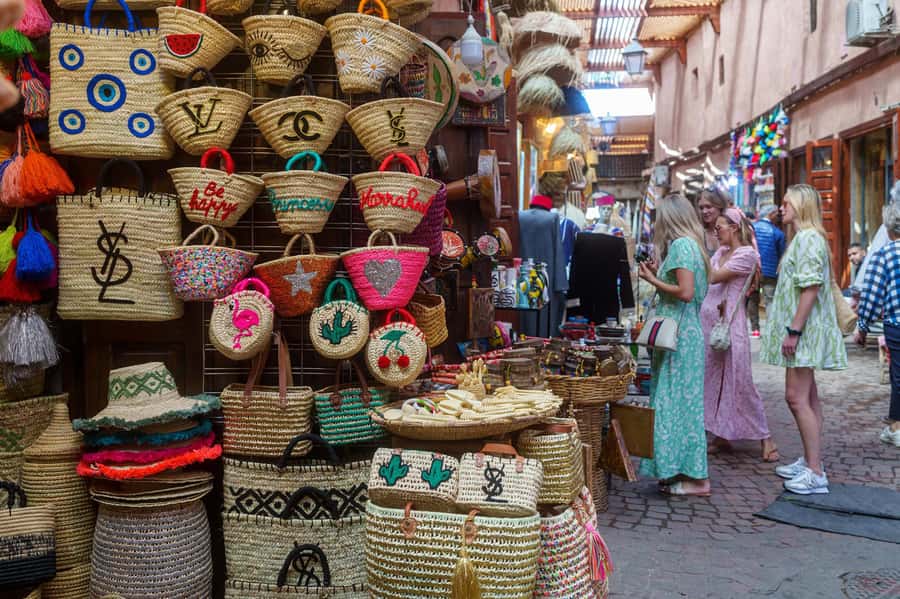
Marrakech can hit you fast: bright alleys, market chatter, motorbikes weaving in tight spaces, and the constant sense that you could turn the wrong corner and never find your way back. This tour is built to solve that problem with a clear sequence of stops, plus a guide who knows how to move through the medina while keeping you oriented.
The big win for me is balance. You don’t just bounce from one “famous place” to another. You get a sequence that alternates between quiet beauty (Ben Youssef and the garden) and real market life (the souks), with a stop at Dar El Bacha for palace-level context if timing allows.
And because it’s only about 4 hours, it suits first-time visits when you want a strong introduction but don’t want to burn a whole day walking. You’ll still cover the essentials: Jemaa el Fna area, Ben Youssef Madrasa, Le Jardin Secret, the souks, and a Koutoubia photo moment.
You can also read our reviews of more tours and experiences in Marrakesh.


Starting at Café de France: the meeting point that sets the tone
You’ll meet your guide in front of Café de France in Djemaa el Fna. That’s not just convenient—it matters. This square is one of the loudest, busiest anchors of the medina, so having a consistent, easy-to-find reference point helps you start confidently instead of wandering for 20 minutes with a map you can’t read in motion.
The tour operator includes a WhatsApp reminder with the guide’s name and helpful tips the day before. I strongly recommend you save that message and check it again right before you leave. In the medina, the difference between a smooth start and a stressful one is often as simple as spotting the correct person fast.
Also: bring comfortable shoes and water. This isn’t a museum-only day with seating breaks every ten minutes. You’ll walk. You’ll stop. You’ll backtrack slightly at times because medina routes aren’t straight lines.
Jemaa el Fna photo stop: a quick snapshot before the slow beauty
Right after the meetup, you get a Jemaa el Fnaa photo stop and sightseeing (about 20 minutes). This is your chance to get oriented visually: the square’s energy, the main axes leading into the medina, and the sense of where the day is going.
I like this placement. Starting with a quick look at the square helps your brain map the city before you enter the tighter lanes. If you try to jump straight into the souks without a first visual anchor, the medina can feel like a full-on maze with no landmarks.
Ben Youssef Madrasa: 16th-century tilework with real educational weight
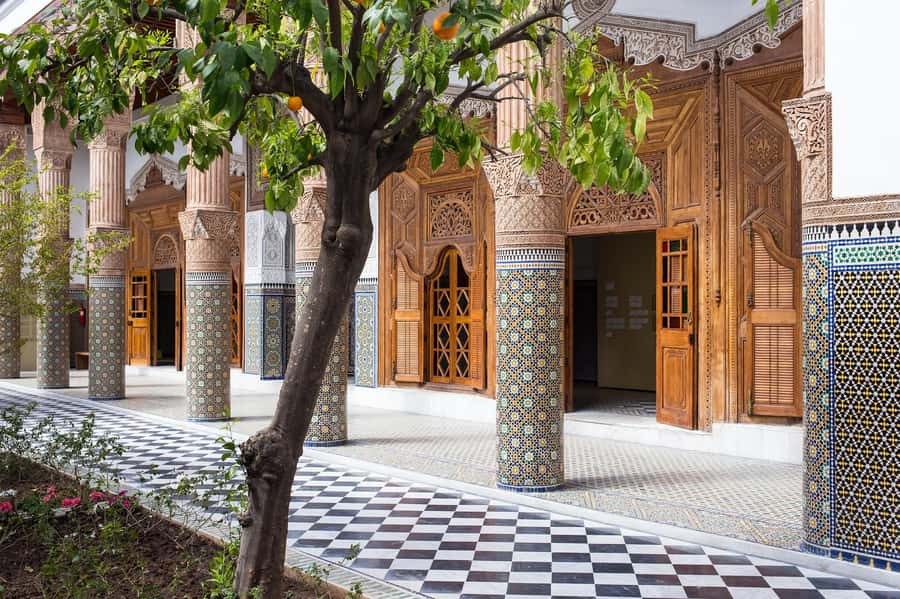
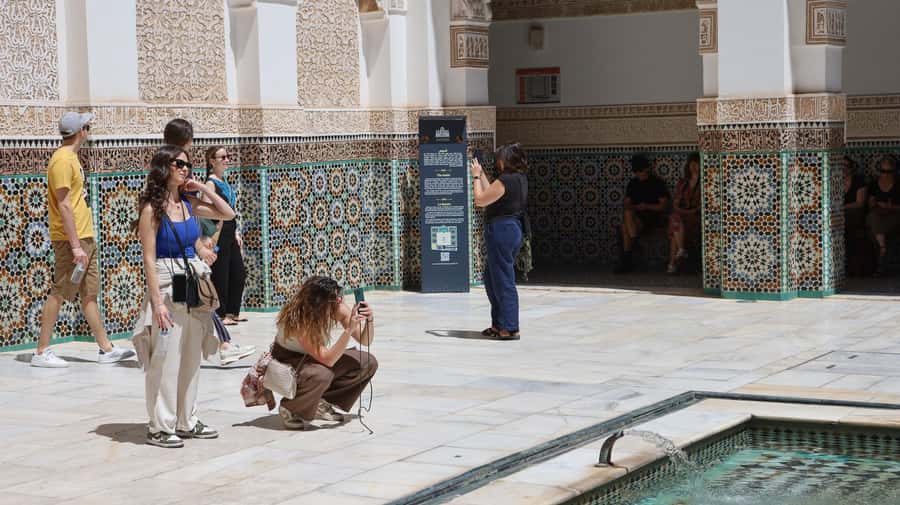
The Ben Youssef Madrasa stop is the centerpiece for a reason. You’ll visit for about 45 minutes, with guided time and photo moments built in. This was a historic Quranic school, and the scale is the first thing that lands: it’s described as Morocco’s largest historic Quranic school, designed for around 800 students.
What I love about this place is how the architecture tells a story you can actually see. The guide points out details like:
- zellij tilework (the geometric patterns that cover walls and courtyards)
- carved cedarwood
- intricate stucco work
- the overall layout that reflects how religious learning was organized
There’s also a practical advantage: the tour includes skip-the-line access for monuments. Entrance fees for Ben Youssef are not included, so plan for that extra cost, but the line-time savings are still meaningful in a place that can get crowded.
One consideration: give yourself a little patience. The madina can feel busy even inside calm spaces, and the beauty here rewards slow looking. Good guides give you free time to explore at your own pace, not just a quick “look and go.”
Medina walking: where craft workshops and everyday life overlap
After the medersa, you move deeper into the medina for guided sightseeing (around 45 minutes). This portion is where the tour earns its value, because it connects the formal art of the madrasa to the real economy of Marrakech.
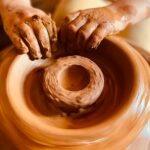
You’ll likely pass through areas associated with the medina’s craft traditions, including small workshop entries where you can see how items are made. The description specifically mentions workshops for things like:
- pottery
- metalwork
- carved wood
This is a good moment to ask questions. In Marrakech, most of the most interesting details are not written on a wall in English. A local guide can explain what you’re looking at and what materials and processes mean in the local context.


Souk Semmarine and Souk El Attarine: shop smart, smell everything
Next come two focused souk stops, and this is where your day starts to feel like Marrakech instead of just Marrakech-on-postcards.
Souk Semmarine: leather and garments
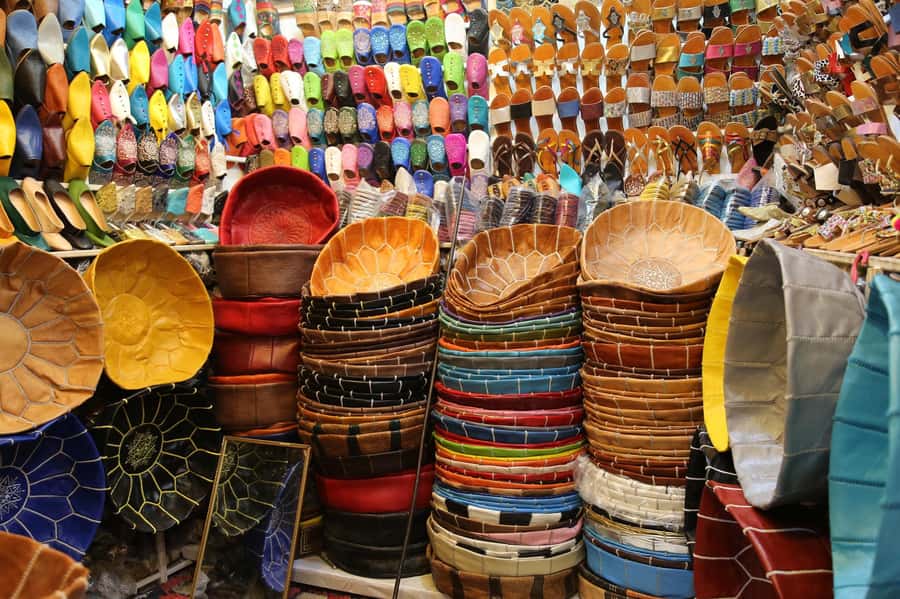
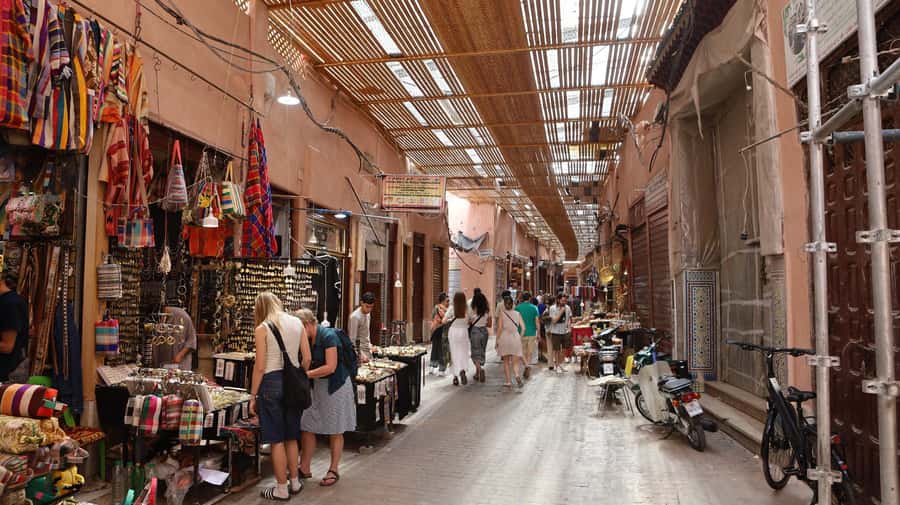
You’ll spend time around Souk Semmarine, where traditional garments and handcrafted leather goods fill the stalls. Expect lots of visual texture: fabrics, dyed materials, hanging goods, and shopkeepers who are used to negotiating.
I think this stop is best if you go in with a flexible mindset. Even if you don’t plan to buy, you’ll learn how sellers present quality—what to look for in leather, what different fabrics are used for, and why names and patterns matter.
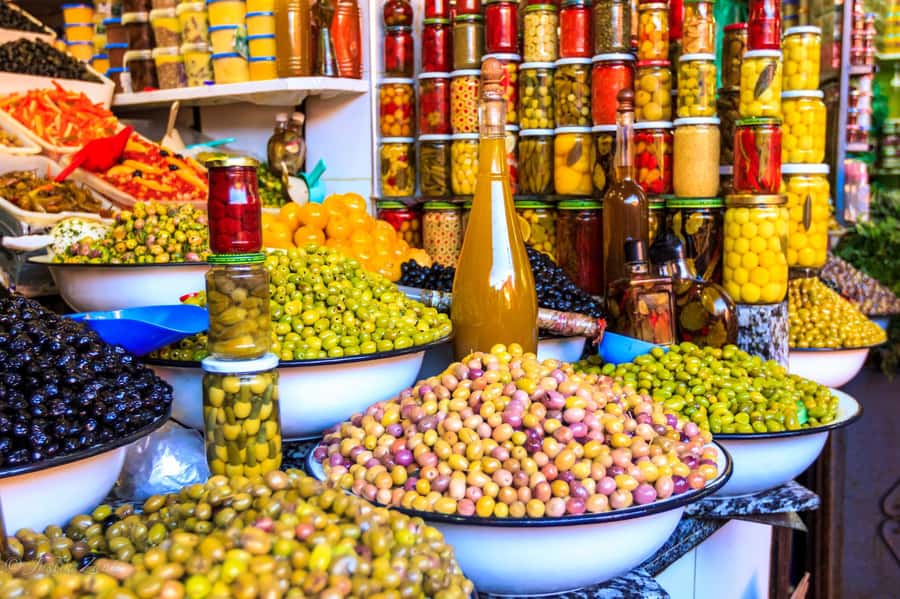
Souk El Attarine: spices, perfumes, and natural products
Then you shift to Souk El Attarine, known for spices, perfumes, and natural beauty products. This is an olfactory experience as much as a shopping one, which is why I recommend keeping your expectations grounded. You’ll smell a lot—good, interesting, and sometimes intense.
Your guide can help you navigate without getting swept into the full sales pitch. And if you want souvenirs, this is also where I’d start your comparisons, because you’ll understand the range of prices and presentation across stalls.
Also, some tours may include side stops in the souk network, such as a traditional pharmacy-style shop. Since that’s not guaranteed, don’t count on it—just be ready for small detours when your guide finds something that fits the story.
Le Jardin Secret: the medina’s quiet pocket and the Khettara lesson
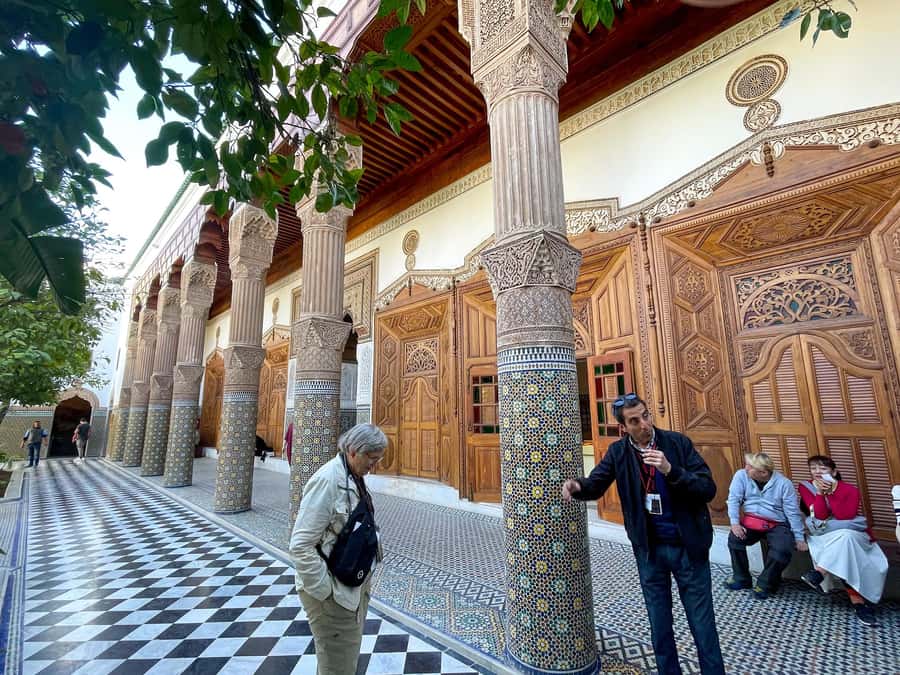
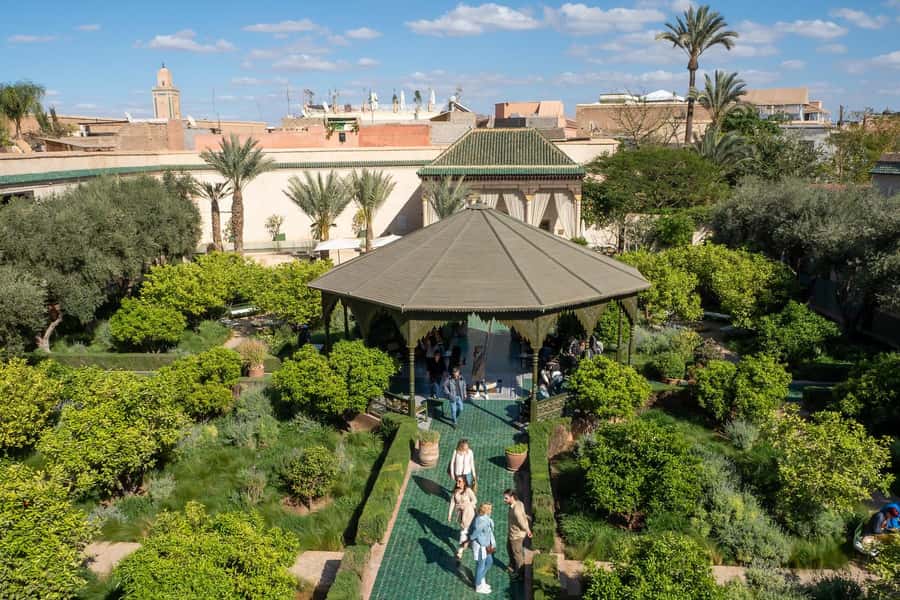
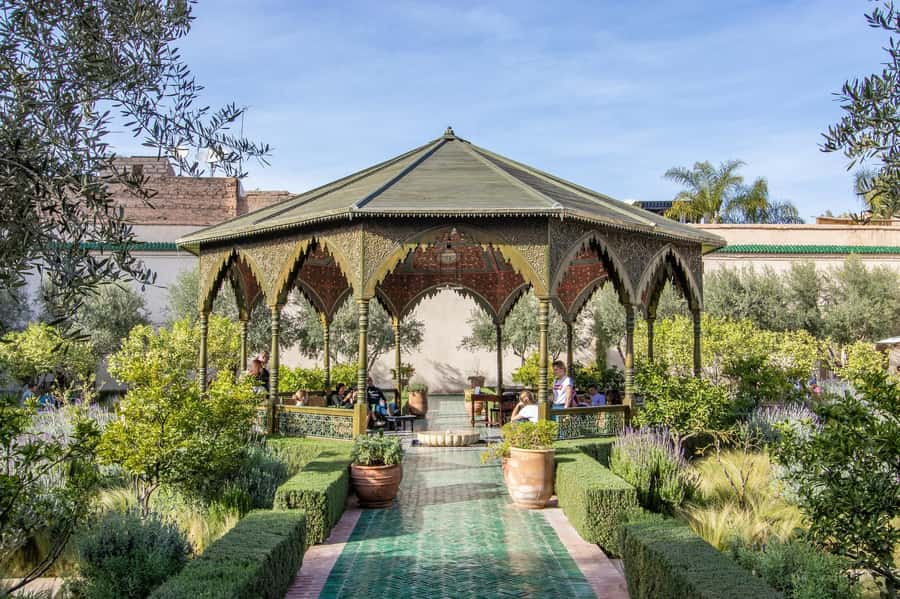
Then comes the tonal reset: Le Jardin Secret, with photo time, guided tour, and an extra shopping window (about 40 minutes total at the garden). This is the kind of place you can’t fake with a postcard—cool shade, interior walls that frame the space, and gardens arranged in an Islamic style that’s meant for contemplation.
What makes it especially worthwhile is the explanation of the Khettara, an underground irrigation system. Gardens in Marrakech aren’t just decoration; they’re survival technology. When you understand the water story, the garden stops being only pretty and becomes more meaningful.
Entrance fee for Le Jardin Secret is extra, listed at 100 MAD per adult, so factor that into your budget. The skip-the-line benefit helps with time, but the main value is that you’re guided through both the aesthetics and the function of the site.
If you’re sensitive to heat, this stop can also become a lifesaver. Even if it’s not cold inside, it’s usually noticeably calmer than the streets outside, and that makes the rest of the walk easier.
Dar El Bacha Museum: Thami El Glaoui’s palace interiors (if time allows)
If timing works out, you may continue to Dar El Bacha Museum, once the palace of Thami El Glaoui, Marrakech’s last Pasha. The tour description frames it as a refined blend of Moroccan art and architecture within elegant interiors.
This is a great add-on for two types of visitors:
- You want a break from the medina shopping streets and a more structured interior experience.
- You want historical context beyond religious education and everyday craft—specifically palace culture tied to late-era power.
The tour schedule says this stop is conditional on time, and the guided time there is shorter (about 30 minutes). So treat it as a bonus, not a promise. If it’s included, you’ll leave with a broader view of how wealth, architecture, and Moroccan design show up in different settings.
Entrance fees for monuments are not included in the tour price, but the data you provided only lists explicit ticket costs for Ben Youssef and Le Jardin Secret. Plan for potential extra payment for Dar El Bacha as well.
Koutoubia Mosque photo stop: a landmark moment outside the densest lanes
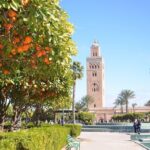
You finish with a Koutoubia Mosque photo stop and a brief guided segment (about 20 minutes). Even if you don’t go inside the mosque, this is valuable because it gives you a skyline anchor. Koutoubia is one of the visual markers that helps you reorient after hours of narrow alleys.
It’s also a practical closer. You’re not walking until your legs fall off; you’re getting a “last look” landmark moment before your drop-off points in the medina area and near Café de France.
Price and value: $18 plus entrance tickets, but time saved
The tour price is listed at $18 per person for about 4 hours. That’s a low base cost for a guided route that hits Ben Youssef, Le Jardin Secret, souks, and potentially Dar El Bacha—especially with skip-the-line access included.
The catch: monument entrance fees are not included. Based on the provided prices, you should budget at least:
- 50 MAD for Ben Youssef Madrasa (per adult)
- 100 MAD for Le Jardin Secret (per adult)
So the real question isn’t just whether $18 is cheap. It’s whether the guide saves you enough time and confusion to make the day flow. For me, the answer is yes, because the medina can wear you out quickly. Paying for a guide is often less about learning facts and more about getting your bearings, seeing the right spots, and not spending hours guessing.
Included value you’ll feel:
- a licensed local guide
- skip-the-line at monuments
- time to explore at your own pace
- insider tips
- WhatsApp reminder so you find your guide easily
Not included:
- entrance fees (as discussed)
- food and drinks
- transportation
What to bring so the day stays pleasant
The essentials from the tour info are simple: comfortable shoes, sunglasses, sun hat, and water. I’d add one more mindset tip: dress and behave like you’ll be walking through a working neighborhood, not just sightseeing.
If you plan to shop in the souks, bring a small tote or bag that can handle a few items. The tour includes a shopping window at Le Jardin Secret, but the souks themselves invite purchases, and you’ll want a plan for carrying things.
Who this Marrakech medina tour fits best
This is a strong choice for:
- First-time Marrakech visitors who want a structured introduction
- People who like architecture and design details as much as shopping
- Travelers who prefer a guide to handle navigation through narrow alleys
- Anyone who wants a 4-hour itinerary that doesn’t swallow the whole day
It may be less ideal if you hate walking or if you’re expecting a very slow pace. This is medina walking with photo stops and guided segments, not a sit-down tour.
On the accessibility note, the information provided includes a contradiction: it says wheelchair accessible, but it also says not suitable for people with mobility impairments. If accessibility affects your decision, you should confirm directly with the provider before booking.
Should you book this Marrakech: Ben Youssef, Secret Garden, and Souk Tour?
If you’re short on time, I’d book it. The mix of Ben Youssef Madrasa (craft and education), Le Jardin Secret (peace plus the Khettara water system), and two souks (Semmarine for leather/garments, El Attarine for spices/perfume) gives you a well-rounded picture of Marrakech in just 4 hours.
I’d especially recommend it for your first or second day in the city. Starting in Jemaa el Fna and ending with a Koutoubia landmark gives you a map in your head, and that makes the rest of your Marrakech days easier.
The main reason to pause is budget planning for entrance fees, plus the reality that the meeting square can feel hectic at the start. If you arrive early, read the WhatsApp guide reminder, and wear comfy shoes, you’ll be set.
FAQ
Are entrance fees included in the tour price?
No. Entrance fees to monuments are not included. Ben Youssef Madrasa and Le Jardin Secret have listed adult prices, and you may also need to pay for any additional monuments depending on time.
How long is the tour?
The tour duration is 4 hours.
Where do I meet the guide?
You meet your guide in front of Café de France in Djemaa el Fna square.
Is hotel pickup available?
Pickup from your riad within the Medina is optional and is listed as available for the private option only. Otherwise, the meeting point is in front of Café de France.
Is the tour private or small-group?
It can be private or a small-group walking tour, depending on the option you select.
What languages are the guides?
The tour offers live guiding in English and French.
Can I skip the ticket lines?
Yes. The tour includes skip-the-line access to monuments, though entrance fees are still extra.
What should I bring?
Bring comfortable shoes, sunglasses, a sun hat, and water.
Is transportation included?
No. Transportation is not included.
Is the tour suitable for people with mobility impairments?
The provided information includes both that the activity is not suitable for people with mobility impairments and that it is wheelchair accessible. Check directly with the provider to confirm what that means for your situation.
What does the tour cover if time allows?
Dar El Bacha Museum is listed as an optional/add-on stop depending on time, along with a Koutoubia Mosque photo stop toward the end.