REVIEW · MARRAKECH
Explore Marrakech Medina: Private Tour Including Bahia Palace Visit
Book on Viator →Operated by Intrepid Urban Adventures - Morocco · Bookable on Viator
Follow the smells into the medina.
This half-day private walking tour is a smart way to see the key faces of old Marrakech, starting in Djemaa el-Fna and threading through the souks to major sights like Bahia Palace and the Marrakech Museum of Photography. You’ll get a local English-speaking guide to help you read the city in real time, not just stand in front of it.
What I like most is how the walk turns into practical orientation. You’re not just browsing stalls; you’re learning why the markets work, how locals bake bread, and what a tanjia oven is for. And the Bahia Palace visit is a major payoff, with mosaics, courtyards, and fountains that feel like a movie set from Morocco’s own design language.
One thing to consider: it’s still a walking tour through uneven streets. Bring good footwear, and keep in mind the schedule can run long in real-world conditions, which can make the day feel more tiring than the 4-hour label suggests.
In This Review
- Key highlights you’ll feel on the ground
- Entering Djemaa el-Fna: the square that teaches Marrakech
- Souks with a guide: how you avoid getting worn down
- Bahia Palace: more than pretty rooms
- Saadian Tombs: a short stop with big context
- Bread at a communal bakery and the tanjia oven moment
- Marrakech Museum of Photography: seeing the city across time
- Time, pace, and where the tour finishes
- Price and value: what $81.84 per person buys you
- Who should book this medina walk with palace visits
- Should you book it? My honest take
- FAQ
- How long is the Marrakech Medina private tour?
- Where do you meet for the tour?
- What time does the tour start?
- Is this a private tour?
- Which major sights are included?
- Are entrance tickets included?
- Is bread and food included?
- Will I see tanjia ovens during the tour?
- Do I need hotel pickup?
- How is the tour delivered in terms of eco impact?
- Cancellation question
Key highlights you’ll feel on the ground
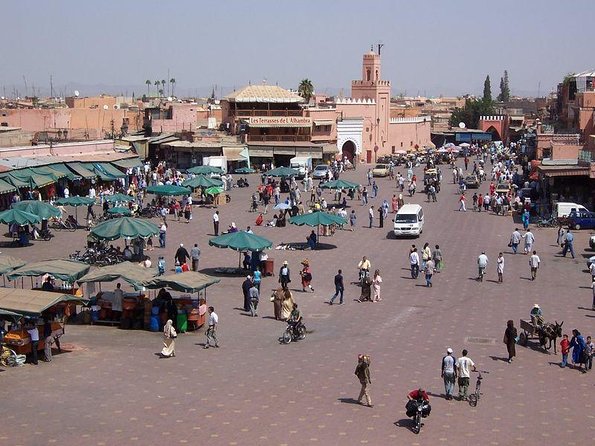
- Djemaa el-Fna as a starter: Meet at the square and watch the energy roll in as vendors, storytellers, and performers set the tone.
- Souk navigation without stress: A guide helps you move through alleys and shop fronts without losing time or your patience.
- Bahia Palace courtyards and details: Expect Andalusian-flavored Moroccan architecture and a lot to look at beyond the main halls.
- Saadian Tombs for context: A compact history stop tied to the Saadian dynasty, placed near the Kasbah area.
- Bakery bread plus tanjia ovens: A food-focused moment where you see how locals prepare and cook.
- Eco-minded delivery: The operator is eco-certified and the tour is described as carbon neutral.
Entering Djemaa el-Fna: the square that teaches Marrakech
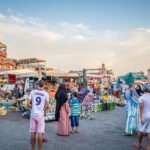
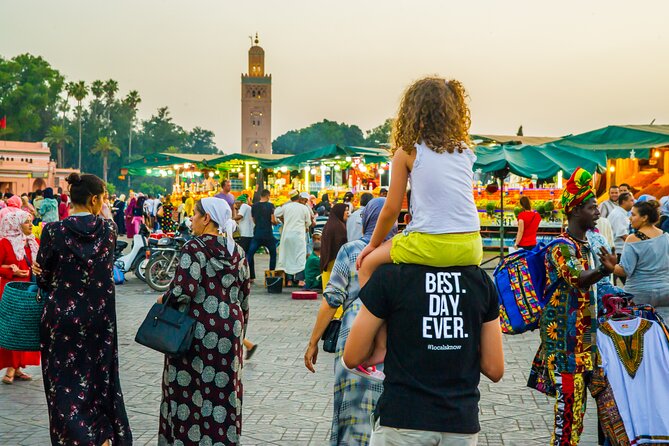
Your morning starts at Hôtel Restaurant Café de France, in the heart of Jemaa el-Fna. This matters because you’re not meeting at a random landmark or edge of town. You’re right where Marrakech’s old-city life spills out, with the square acting like a living map: food stalls, performers, and vendors all orbit the same center.
The best part is that you begin with the atmosphere first, then you go inward. In practical terms, it helps you understand what you’re seeing later in the souks and palaces. You’ll also get a short window of time here (the experience lists 30 minutes with an included ticket), which is long enough to soak it in without turning into a full morning detour.
If you’re doing Marrakech on a tight schedule, starting at the square also gives you options. Some people prefer to finish the tour and immediately continue exploring on their own after the walk ends back at the same meeting point.
You can also read our reviews of more private tours in Marrakech


Souks with a guide: how you avoid getting worn down
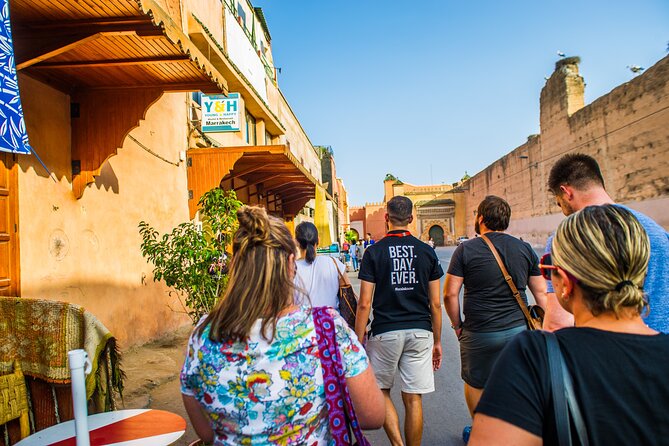
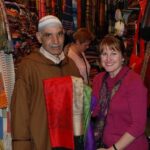
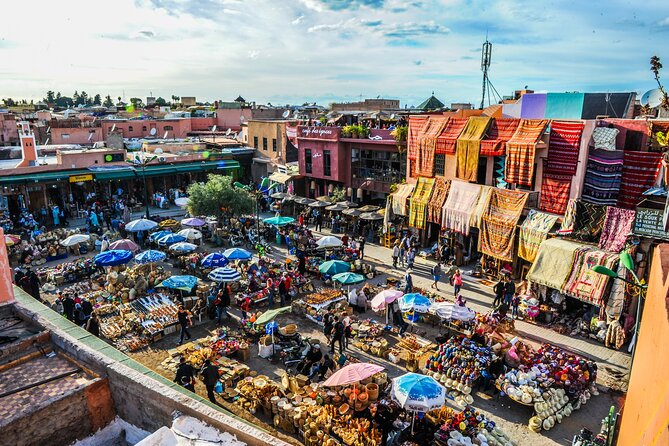
Marrakech’s medina is famous for being a maze. The tour doesn’t try to sugarcoat that. Instead, it gives you a local guide to steer you through the warren of neighboring souks around the square, where you’ll see everything from textiles and carpets to spices and metalwork.
This is where the private format helps. With only your group, you can ask questions in the moment, not squeeze them into a group rhythm. Reviews include guides like Ali, Mustapha, Mohammed, Abdul, and Youssef Rouissi, and the common theme is clear communication and the freedom to ask for explanations while you’re walking.
Here’s the practical benefit for you: the guide’s presence usually means you spend less time negotiating your way out of confusion, and more time noticing details. People often struggle in medina streets because they keep stopping, backtracking, and accidentally wandering into the wrong lanes. A good guide helps you keep moving and gives you a mental model for where things are in relation to each other.
Also, you’ll notice something helpful for planning photos. When you’re inside the souks with a person who knows how the streets flow, you’re more likely to catch interesting angles without feeling like you’re being “pulled” from stall to stall every few steps.
Bahia Palace: more than pretty rooms

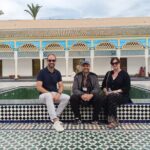
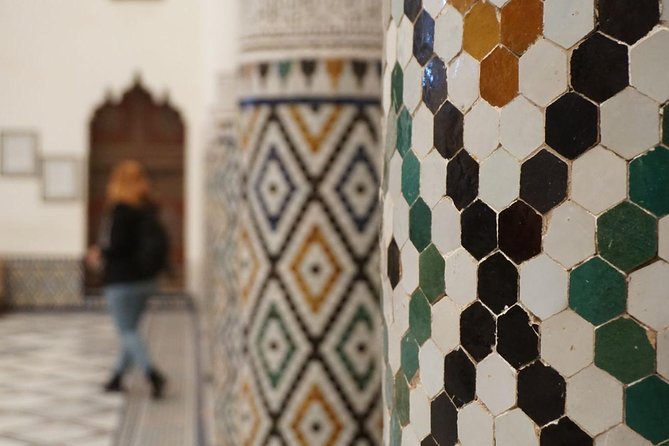
The Palais de Bahia stop is one of the biggest reasons to book this tour. This palace was built in the 19th century and is tied to Minister Ahmed bin Musa and his wife Bahia, and the visit focuses on the opulence you’d expect from a grand Moroccan residence: halls, mosaics, courtyards, and fountains.
What I’d plan for when you go in: this isn’t just one main room to see and leave. The palace experience is about moving through spaces that each tell you something. The courtyards and architectural details can feel like they’re designed for lingering, and the guide’s storytelling makes the layout easier to understand.
A fun detail that came up in past experiences: you may spot storks nesting on the pillars in front of the palace, which can be a great photo moment if you’re ready for it. Inside, you might also see cats roaming around, because Marrakesh animals have a way of showing up in the most charming places.
The included entry ticket is a real value point here. Bahia Palace is one of those sights where you don’t want to arrive with “we’ll see” energy and then realize you missed entry or timed it badly.
Saadian Tombs: a short stop with big context
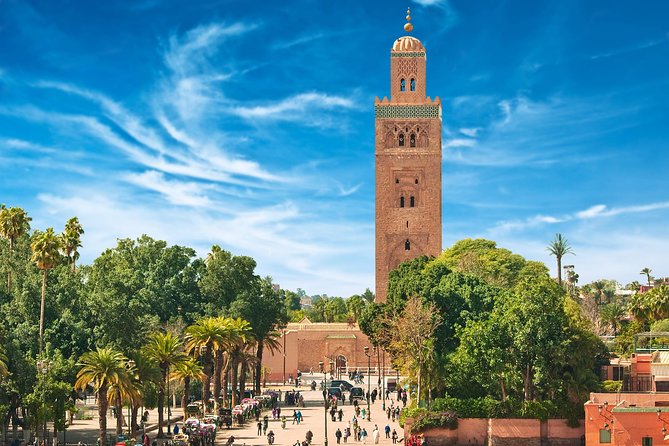
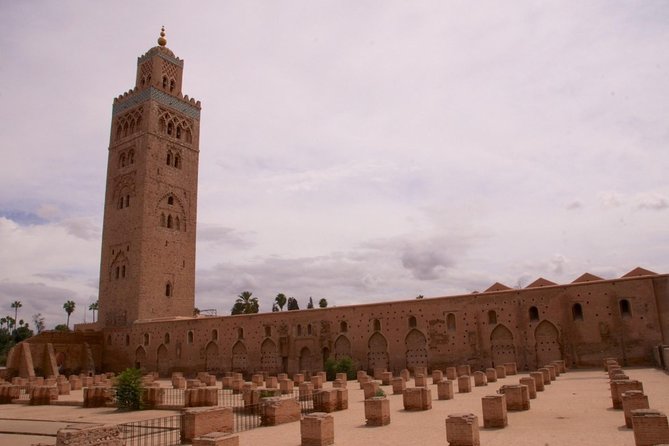
After the palace, the tour keeps moving through the medina’s layers, adding a stop at the Saadian Tombs near the mosque in the Kasbah area. This is one of the only surviving traces of the Saadian dynasty’s golden age (1524 to 1659), and the story is tied to how later rulers tried to erase evidence of earlier power while still preserving the graves.
If you like history that doesn’t feel like a textbook, this is a good contrast to Bahia Palace. Bahia shows the splendor of a later era, while the tombs give you a sense of dynasties, control, and what happens to monuments when politics changes.
Time-wise, the stop is listed at about 1 hour with an included ticket. That’s long enough to see what’s there, listen to the explanations, and still keep the tour from turning into a long slog.
Bread at a communal bakery and the tanjia oven moment
Food stops are what make a medina tour feel human instead of like a checklist. Here, you follow the aroma of freshly baked bread to a traditional bakery. You’ll learn how locals bring prepared dough to be baked, and you get to sample warm bread.
Then comes one of the most “I get it now” moments in Marrakech cooking: the tanjia oven. These clay-pot stews cook for locals, and seeing the oven approach helps you understand why Marrakech food tastes the way it does. It also gives you something to talk about later when you’re ordering tagines and stews and trying to remember what you learned.
Two practical notes for you:
- You’ll want to approach this with an appetite. The tour includes tastings, but additional food and drinks are not included.
- Bring water or plan to buy it nearby. The route includes multiple walking segments and you’ll be on your feet for hours.


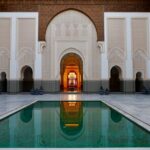


Marrakech Museum of Photography: seeing the city across time
The final major stop is the Marrakech Museum of Photography and Visual Arts. Instead of only showing old photographs as nostalgia, the museum uses photography to show daily life and people—portraits of locals and Moroccan villagers, plus contemporary works from around the world.
This stop is included with an entry fee, and it’s listed as the last ticketed experience before you return to Jemaa el-Fna. For many people, it’s a useful breather from the street noise. Even if photography isn’t your top interest, it’s a strong way to connect what you saw in the medina streets to how Marrakech changed over the last century and how it still works today.
That said, it won’t hit the same for everyone. Some visitors found it less satisfying than the other stops, which is fair—palaces and souks are physical and loud, while museums ask for a slower pace. If you prefer hands-on experiences to exhibits, this is the stop where you should mentally expect a different energy level.
Time, pace, and where the tour finishes
The tour runs about 4 hours (half-day). The schedule includes multiple walk segments plus three ticketed sights. You’ll start at 9:00 am, which is a good time to beat some of the heat and catch the medina before it fully swells.
Wear shoes you can trust. One common practical tip from people who did the walk is to bring good footwear, because the medina streets can be uneven and the walking adds up even when the tour description feels “half-day.”
Also, private tours are only private in your group size. The streets still require patience: if anyone is late, it can stretch the day. So I recommend you build your next plan with buffer time, especially if you have a dinner reservation later.
At the end, the tour returns back to the meeting point at Café de France, and your guide can provide directions back to your hotel or help you continue exploring independently.
Price and value: what $81.84 per person buys you
At $81.84 per person, this isn’t the cheapest way to see the medina. But the value equation looks better when you break it down.
You’re paying for:
- A private walking format (only your group, guided through a maze)
- Included admission tickets for Bahia Palace, the Photography museum, and the square stop
- Included bread tasting, plus the tanjia oven viewing moment
- An eco-certified, carbon neutral approach from the operator
- A guide who can tailor the walk to your interests, based on what’s mentioned in past experiences
The real value is time saved and confusion avoided. Marrakech medina exploration is fun, but it’s also easy to waste energy backtracking. A guide turns that effort into learning and better use of daylight hours.
If you’re traveling as a couple or small group and you want a first-day overview that doesn’t feel like wandering, this price can be fair to strong value. If you love solo navigation and already feel comfortable reading medina street patterns, you might question the cost. But for most visitors who want a guided entry into the city’s logic, it tends to feel worth it.
One more practical point: the tour is often booked about 37 days in advance on average. If you’re traveling in a busy season, booking earlier is a smart move.
Who should book this medina walk with palace visits
This tour fits well if you:
- Want a first or second day in Marrakech where you get your bearings fast
- Prefer guided walking over self-guided puzzle solving
- Care about architecture and cultural context, not just shopping
- Appreciate a food moment that explains what you’re seeing
It may feel less ideal if you:
- Hate walking through uneven streets
- Know you’re not interested in museum stops at all (the photography museum is included, and it’s a slower pace)
- Are very strict about the day running exactly 4 hours, because street timing can shift
If you’re traveling with kids, the experience is described as child-friendly, and children under 6 can join free.
Should you book it? My honest take
I’d book this if your goal is a guided, high-yield introduction to Marrakech’s medina with at least one big “wow” sight. Bahia Palace plus the museum gives you variety, and the bread/tanjia moment gives you a taste of daily life rather than only monuments.
If you’re the type who wants to move fast between highlights and you don’t like walking much, you might feel the effort. But if you’re okay with a solid stroll and you want help figuring out where you are and what you’re looking at, this tour is a strong choice—especially with a guide like Ali, Mustapha, Mohammed, Abdul, or Youssef Rouissi, who are specifically called out for their English and pacing.
FAQ
How long is the Marrakech Medina private tour?
It runs for about 4 hours.
Where do you meet for the tour?
The meeting point is at Hôtel Restaurant Café de France on Rue des Banques, in Jemaa el-Fna.
What time does the tour start?
The start time is listed as 9:00 am.
Is this a private tour?
Yes. It’s listed as a private tour/activity, so only your group participates.
Which major sights are included?
You’ll visit Bahia Palace and the Marrakech Museum of Photography and Visual Arts, plus you start at Jemaa el-Fna and also include a stop at the Saadian Tombs.
Are entrance tickets included?
Yes. Admission tickets are included for the stops listed with tickets, including Bahia Palace and the photography museum (and the experience includes the square stop as well).
Is bread and food included?
You get to sample fresh-baked bread at a local bakery. Additional food and drinks aren’t included.
Will I see tanjia ovens during the tour?
Yes. The experience includes a tanjia oven stop where local clay-pot stews are cooked.
Do I need hotel pickup?
No. Hotel pickup and drop-off are not included.
How is the tour delivered in terms of eco impact?
The tour is described as carbon neutral and organized and led by an eco-certified tour operator.
Cancellation question
Can I cancel for a full refund?
Yes, you can cancel up to 24 hours in advance for a full refund. If you cancel less than 24 hours before, the amount paid is not refunded.