REVIEW · ESSAOUIRA
Essaouira: Moroccan pastry workshop
Book on GetYourGuide →Operated by l'Atelier Essaouira · Bookable on GetYourGuide
A sweet smell and a hot cup of mint tea. That’s the mood at this Essaouira Moroccan pastry workshop, where you’ll practice traditional techniques while learning the mint tea ceremony you’ll be tasting alongside your own baking. I especially like the hands-on pace (you make two pastry types) and the fact the class is taught in French, English, and/or Arabic. One consideration: there’s no hotel pickup, so you’ll need to get yourself to the atelier on time.
This is built for real learning, not just watching. In a small group of up to 9, you get plenty of chances to ask questions while the instructors guide your shaping, baking, and tasting flow. Plus, you leave with a box of sweets, so the class doesn’t end the moment you walk out the door.
The timing is also very workable: it starts at 3:30 p.m. and runs about 1 hour 45 minutes, with the overall experience listed as 2 hours. It’s not suitable for kids under 8, so plan around that if you’re traveling with younger children.
In This Review
- Key highlights I’d plan around
- How an Essaouira pastry workshop really feels
- What you’ll make: gazelle horns and fruit-and-sesame cakes
- Gazelle horns: shaping, filling, and that classic bite
- Cakes with dried fruit and sesame seeds
- The tasting moment that makes everything click
- The mint tea ceremony: more than a drink
- Timing and pacing: 3:30 p.m. to take the edge off your day
- Small group learning in Arabic, French, and English
- Fresh ingredients and traditional method (and why you should care)
- Price and value: what 300 dhs buys you
- What to expect during the class (step-by-step flow)
- Tips for getting the most out of the workshop
- Who should book this pastry workshop (and who might skip it)
- Should you book the Essaouira Moroccan pastry workshop?
- FAQ
- What time does the Moroccan pastry workshop start?
- How long is the workshop?
- What pastries will I learn to make?
- Do I learn the Moroccan mint tea ceremony?
- What languages are the classes taught in?
- Is hotel pickup included?
- Will I get food to take home?
- How much does it cost?
Key highlights I’d plan around
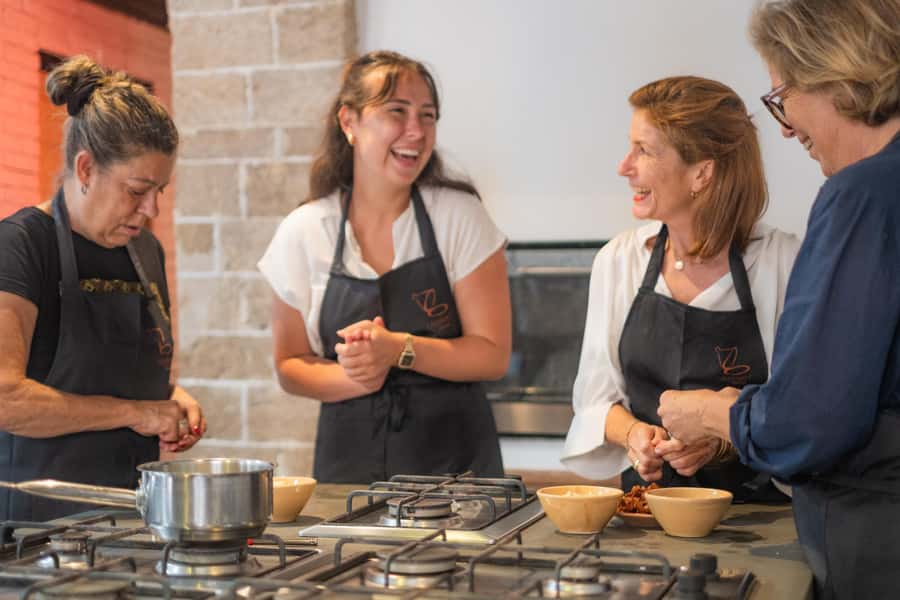
- Small group format (max 9) keeps attention focused and questions welcome
- Two pastries made by you: gazelle horns plus cakes with dried fruit and sesame seeds
- Mint tea ceremony included while you taste what you’ve created
- Multilingual instruction in Arabic, French, and English
- You take home a box so you can keep snacking (responsibly) later
How an Essaouira pastry workshop really feels
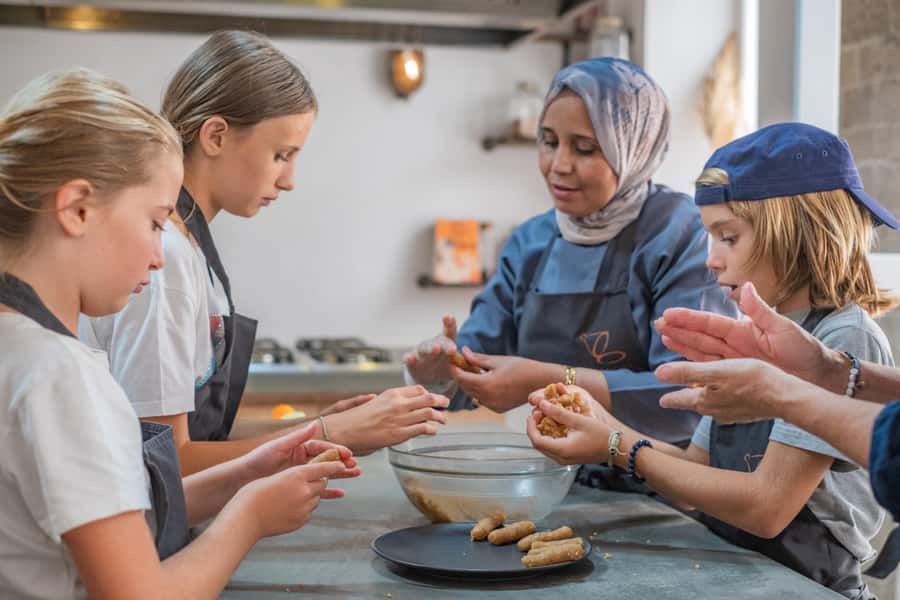
If you want a Moroccan food experience that’s more than a quick bite, this is a great pick. The atelier setup is designed around making pastries step-by-step, with instructors who stay patient as you work the dough and learn the rhythm of shaping. The result feels practical: you’re not just learning names of desserts—you’re building muscle memory for classic Moroccan sweets.
I like that the experience is anchored in local, fresh ingredients, because it makes the flavors easier to understand. Even if you don’t bake at home often, you’ll start to recognize how sugar, nuts or seeds, dried fruit, and spices balance in real recipes.
There’s also a cultural “why this matters” layer that comes through naturally. The mint tea ceremony isn’t treated like a separate show. It’s woven into the tasting, so you learn how Moroccans often pair sweetness with tea as part of everyday hospitality.
A few more Essaouira tours and experiences worth a look

What you’ll make: gazelle horns and fruit-and-sesame cakes
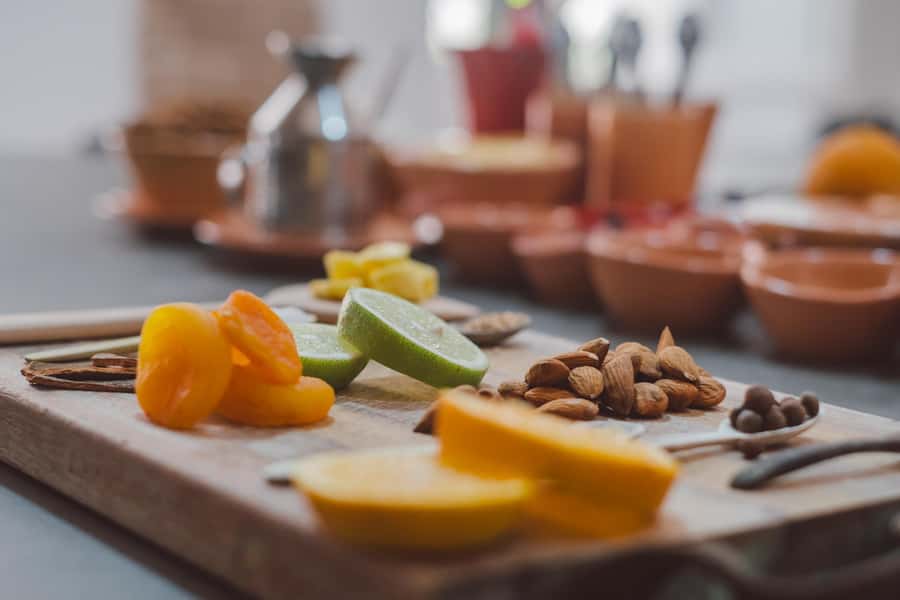
The class centers on two specific pastries, and that’s a big part of the value. You’re not trying to master five things in one afternoon; you focus on two styles and learn how each one behaves in the hands.
Gazelle horns: shaping, filling, and that classic bite
Gazelle horns are one of the most recognizable Moroccan sweets—crisp, delicate, and filled. In the workshop, you’ll practice the method of preparing the pastry and then shaping those signature horn-like pieces. The teaching style is hands-on, with instructors guiding the process so your work looks like more than a classroom attempt.
What you’ll walk away with: a better sense of how Moroccan pastry texture is built. Even without being a baker, you’ll understand the difference between dough that’s too soft, too dry, or too hard to shape. That’s the kind of “real cooking knowledge” that sticks.
Cakes with dried fruit and sesame seeds
The second pastry is a cake style that leans on dried fruit and sesame seeds. This part helps you see how Moroccan sweets aren’t only about pastries you shape by hand. Here you’re learning a different structure—how the flavors hold together and how the sesame adds that nutty finish.
This combination of one shaped pastry and one cake-style sweet is smart. It gives you variety in what you taste later and more options for what you might recreate at home.
The tasting moment that makes everything click
Half the fun is tasting your creations during the class. That’s when you learn what the instructors were aiming for—sweetness level, texture, and how the pastry and tea play together. I like that the class ends with you eating the fruits of your effort, instead of rushing out right after the final step.




The mint tea ceremony: more than a drink
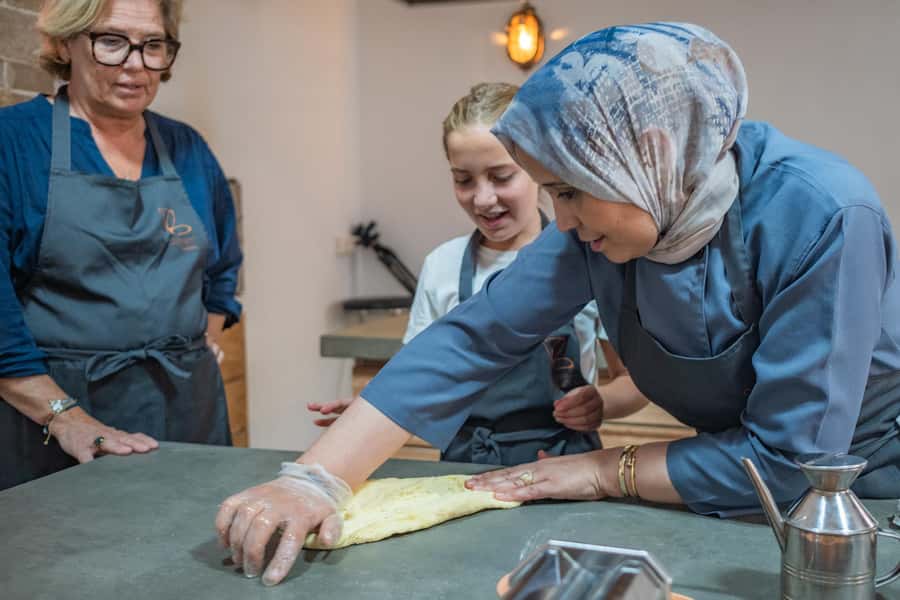
Moroccan mint tea is a whole ritual, and you get to learn it directly as part of the experience. You’ll share the ceremony while tasting your pastries, so you see how the tea functions as a palate partner: it cuts sweetness, refreshes your mouth, and makes the desserts feel lighter.
In practical terms, this is also great if you’re traveling with people who don’t want only “food prep” classes. The tea ceremony gives the afternoon a calm, social tempo. It turns the workshop into a proper break in your day.
And since it’s taught alongside the tasting, you don’t have to guess what to do with the ceremony once you’re home. You experience it as a complete pairing: sweet bite, sip of mint tea, then back for another.
Timing and pacing: 3:30 p.m. to take the edge off your day
This workshop starts at 3:30 p.m. and lasts about 1 hour 45 minutes (the full experience is listed as 2 hours). That late-afternoon timing is ideal if you want something hands-on without committing your whole day.
It also fits well with common Essaouira plans. Many people like to spend the morning exploring and then slow down later. This class becomes that “reset” block—something creative, local, and not overly long.
One practical consideration: since there’s no hotel pickup included, you’ll want to plan how you’ll reach the atelier. Build in a little buffer so you don’t walk in rushed, especially if you’re juggling language questions when you arrive.
Small group learning in Arabic, French, and English
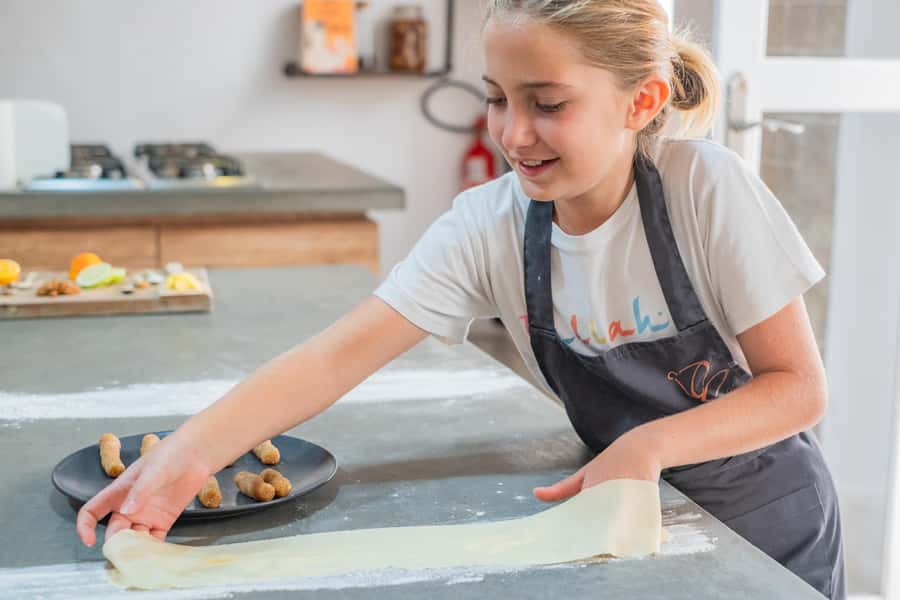
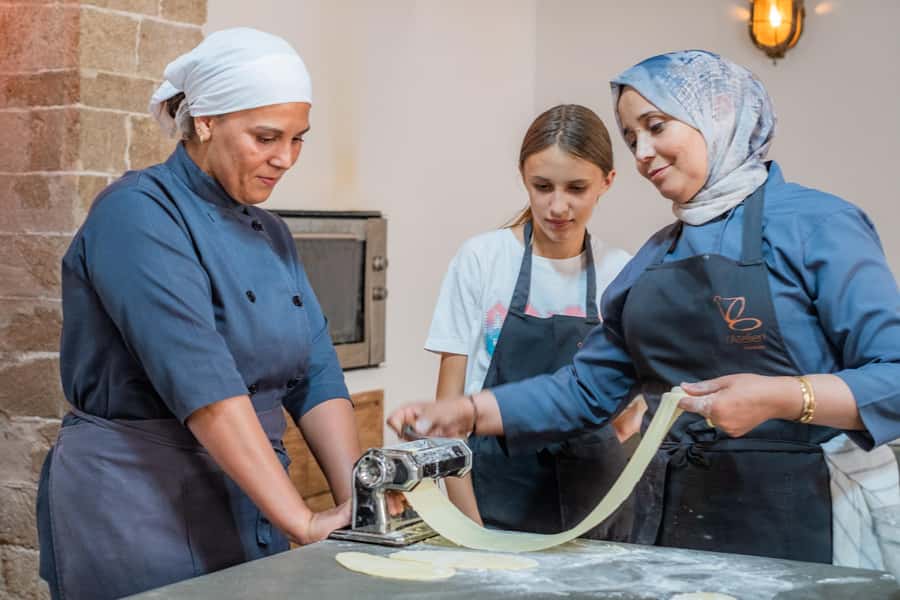
A key reason this workshop works is the group size. It’s limited to 9 participants, which means you’re not lost in a crowd. You’re close enough to see techniques clearly and to get quick help when something isn’t coming out right.
You’ll also be supported through instruction in Arabic, French, and English, depending on what’s used during your session. If your French is basic, don’t worry—at least one of these languages is available, and the teaching style is clearly built around step-by-step guidance, not just lectures.
From what’s consistently highlighted, the instructors are patient and very focused on helping you succeed. You can tell they want you to leave with pastries you’ll actually enjoy eating, not just a souvenir photo.
Fresh ingredients and traditional method (and why you should care)
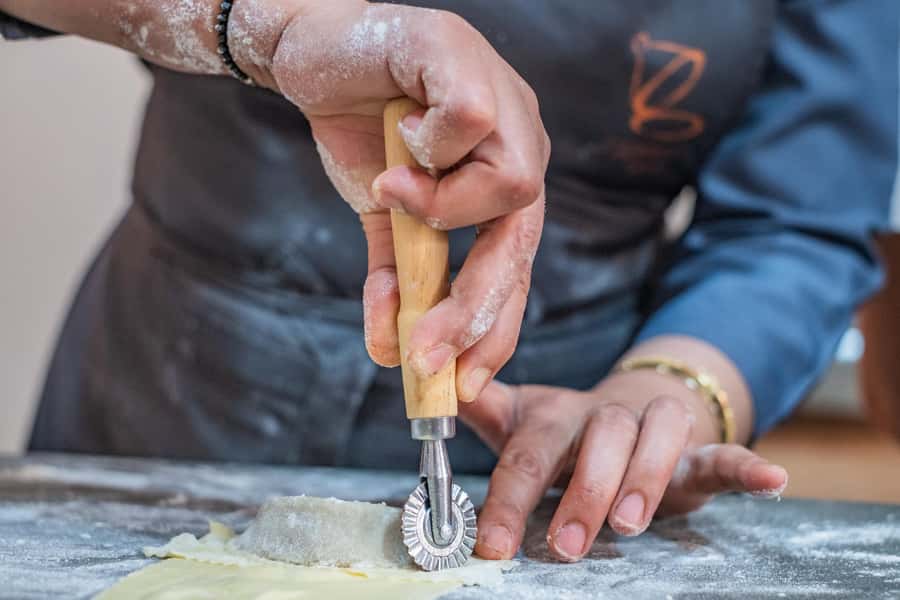
The workshop emphasizes fresh, local ingredients and traditional methods. That matters because it changes the kind of takeaway you get.
If you’ve ever tried to copy Moroccan sweets at home using random recipes, the results can be off—too sweet, too dry, or the texture just doesn’t match. Learning the traditional approach helps you understand why the dough or filling behaves the way it does. You’re less likely to treat the recipe like a math problem and more likely to treat it like cooking.
Another smart part: the workshop notes that you can find the recipes on their website after you get home. That turns your class experience into a real follow-up plan instead of a one-day event.
Price and value: what 300 dhs buys you
The price is 300 dhs per person, listed at about $34. For a hands-on pastry workshop, that’s not an impulse-buy price, so it’s fair to ask: what are you truly getting?
You’re getting three value pieces at once:
- Skill practice with two pastry types (gazelle horns and fruit-and-sesame cakes)
- Cultural instruction through the mint tea ceremony paired with tasting
- A take-home box, so the sweetness doesn’t end when the class ends
Also, the small-group cap helps justify the cost. Larger cooking tours can feel like you’re one of many; here the teaching attention is more likely to land on you.
And if you’re the type who likes to bring something home that’s not just a magnet, this is a practical win. You’ll have desserts ready for later snacking or sharing.
What to expect during the class (step-by-step flow)
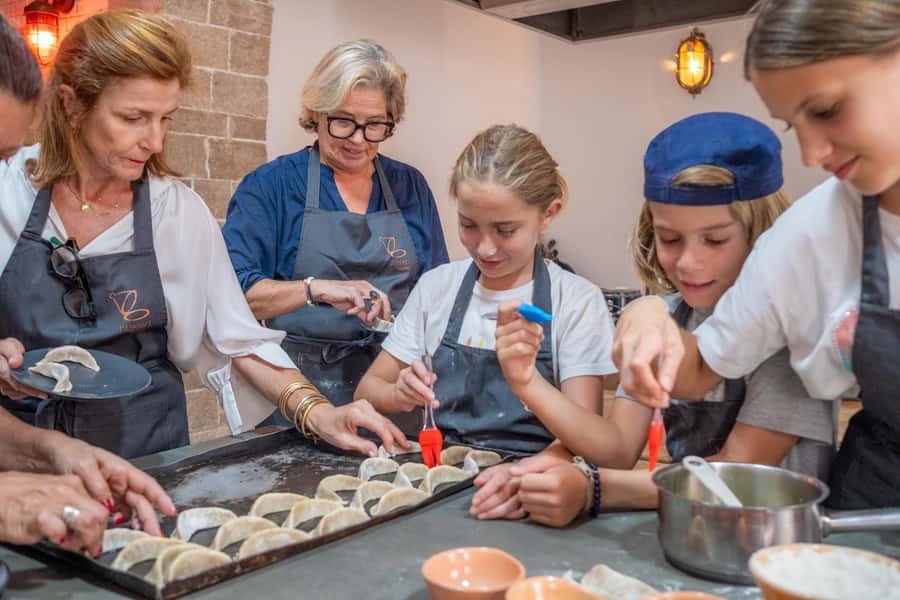
Here’s the rhythm of how the afternoon typically plays out:
First, you join the group and get started around the 3:30 p.m. session time. Then you move into pastry-making. You’ll work on gazelle horns first and then switch to the dried fruit and sesame cake component. During both stages, instructors demonstrate and guide you through the process so you can make the pastries yourself.
While you’re tasting along the way, the mint tea ceremony is taught and shared. The ceremony isn’t tacked on at the end; it’s paired with eating your results, so it feels like part of the lesson.
When everything wraps up, you take home a box of cakes. That’s a great practical touch: it means you’re not deciding on the spot whether you need to buy dessert elsewhere later.
Tips for getting the most out of the workshop
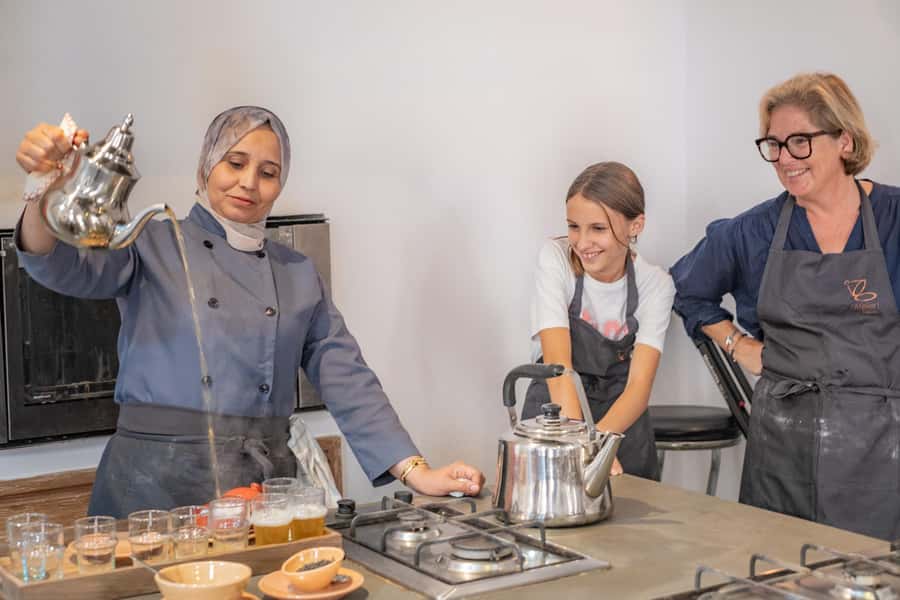
This kind of class goes best when you treat it like a skill-building session. A couple things help:
- Go with an appetite and expect you’ll eat more than you think. The tasting is part of the experience, not a tiny sample.
- Ask questions about texture and shaping, not just ingredients. Those are the details that make pastries come out right.
- Plan your arrival time carefully since pickup isn’t included. If you’re already tired from the day, don’t add stress.
Also, consider how you’ll use the recipes later. If you like cooking at home, the note about finding recipes online afterward is a big win. If you don’t bake often, the workshop still works because you’ll learn enough to understand what to look for when buying or tasting these sweets elsewhere.
Who should book this pastry workshop (and who might skip it)
Book this if you want a hands-on Moroccan sweets class that includes a real cultural element. It’s especially good for:
- Food lovers who like technique, not just tasting
- Travelers who want a smaller-group experience
- People interested in Moroccan hospitality traditions, not only desserts
Skip it if you’re looking for a long tour of multiple city sites. This is focused. You’re coming for baking and tea, not for bouncing between landmarks.
And if you’re traveling with kids: it’s not suitable for children under 8.
Should you book the Essaouira Moroccan pastry workshop?
Yes—if your ideal travel day includes learning by doing and eating what you make. The strongest reasons to book are the combination of two specific pastries, the mint tea ceremony tied to tasting, and the small-group setting that keeps instruction personal.
If you already have tight afternoon plans or need hotel pickup, that’s the main trade-off to weigh. But if you can get yourself to the atelier and you want a sweet, authentic, and genuinely useful experience for your memory (and your snack box), this workshop is a smart pick.
FAQ
What time does the Moroccan pastry workshop start?
The class starts at 3:30 p.m.
How long is the workshop?
It lasts about 1 hour and 45 minutes (listed as 2 hours for the experience).
What pastries will I learn to make?
You’ll make gazelle horns and cakes with dried fruit and sesame seeds.
Do I learn the Moroccan mint tea ceremony?
Yes. You’ll be taught the mint tea ceremony and share it while tasting your pastries.
What languages are the classes taught in?
Instruction is available in Arabic, French, and English.
Is hotel pickup included?
No. Pickup from your hotel is not included.
Will I get food to take home?
Yes. At the end, you leave with a box of cakes.
How much does it cost?
The price is 300 dhs per person (around $34).