REVIEW · CHEFCHAOUEN
Chefchaouen Private Cooking Class with Mountain View
Book on Viator →Operated by Chefchaouen Private cooking class mountains view · Bookable on Viator
Cook in Chefchaouen with a mountain-view backdrop.
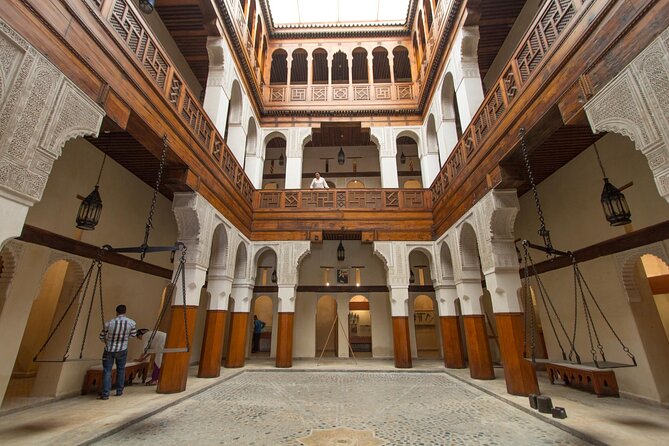
This private class takes place in a 480-year-old historic building, where you learn Moroccan cooking with an Andalusian-Moroccan flavor story inspired by the 1470 era. You’ll also be cooking with a real view of the mountains, not a window display.
I especially love how the lesson is paced: you start with traditional Moroccan tea and a sweet break, then you move step by step into the food. I also like that it’s truly private, so your group can ask questions without feeling rushed, and the hosts (often including Ibrahim, Abdel, and Ibrohim) clearly care about teaching.
One consideration: the menu is built around starters + one main + dessert, with choices for vegetarian/vegan/non-vegan. If you’re hoping for a longer, more varied tasting-and-cooking experience (more courses, more dishes), this may feel a bit focused.
In This Review
- Key points to know before you book
- A 480-year-old Chefchaouen setting with real mountain views
- Meeting at Rue Ibn Asskar and choosing your menu
- Moroccan tea lesson: the warm-up that sets the tone
- Cooking Andalusian-Moroccan dishes step by step
- Starters, main course, and dessert: how the menu choice plays out
- What you really learn: herbs, spices, and flavor balance
- Why the private format is worth it
- Price and value: what you’re paying for
- Timing and pacing: a realistic 3.5-hour plan
- Practical tips so you get more out of it
- Should you book the Chefchaouen private cooking class?
- FAQ
- Is this a private cooking class?
- How long does the cooking class last?
- Does the class include Moroccan tea?
- What kind of food will we cook and eat?
- Can the class accommodate vegetarian or vegan diets?
- Do they check for food allergies?
- Where do we meet, and where does it end?
- Is pickup offered?
- When is it available?
- What is the cancellation policy?
Key points to know before you book
- Tea first, always: you’ll learn how to make Moroccan tea before you start cooking.
- Choose your dietary style: vegetarian, vegan, and non-vegan options are supported.
- Andalusian-Moroccan theme: the cooking is framed around an older cultural blend from the 1470 period.
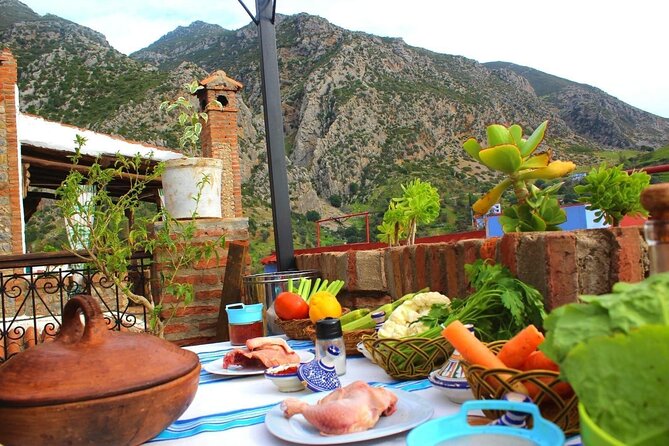
- Mountain views while you cook: a balcony and open sightlines are part of the experience.
- Private group energy: only your group participates, with step-by-step guidance.
A 480-year-old Chefchaouen setting with real mountain views
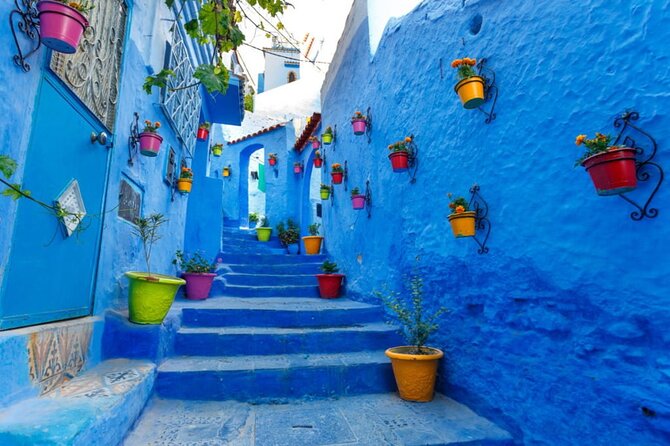
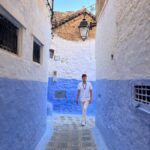
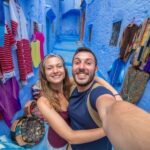
Chefchaouen is famous for its blue walls, but this experience adds something extra: you’re in an old building with serious character. The class runs in a historic structure tied to the migration of Moriscos from Andalusia to Chefchaouen, associated with Moulay Ali bin Rashid. That matters because it explains why the food leans Andalusian-Moroccan rather than just generic “Moroccan.”
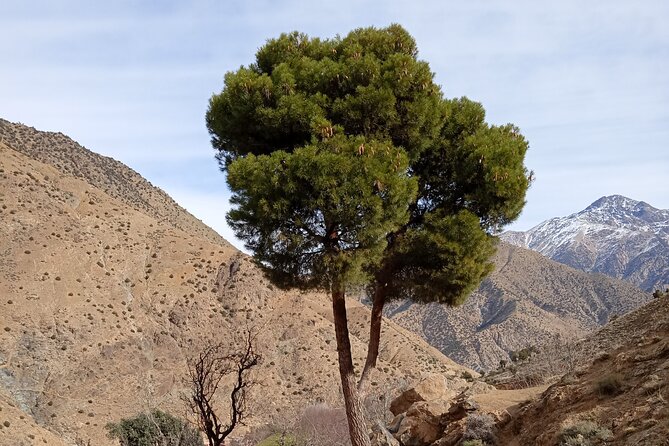
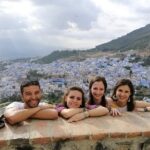
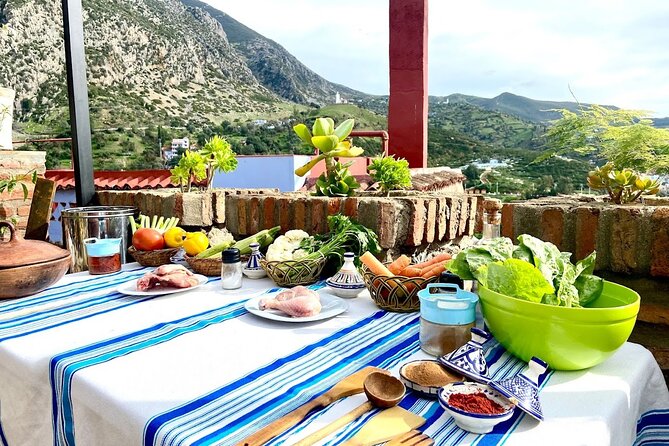
Then there’s the view. Several classes are hosted from a high balcony, and it changes the mood completely. You’re not just cooking in a cramped kitchen. You’re working while looking out over Chefchaouen and the surrounding mountains, so the whole afternoon feels lighter and more special.
You can also read our reviews of more private tours in Chefchaouen

Meeting at Rue Ibn Asskar and choosing your menu
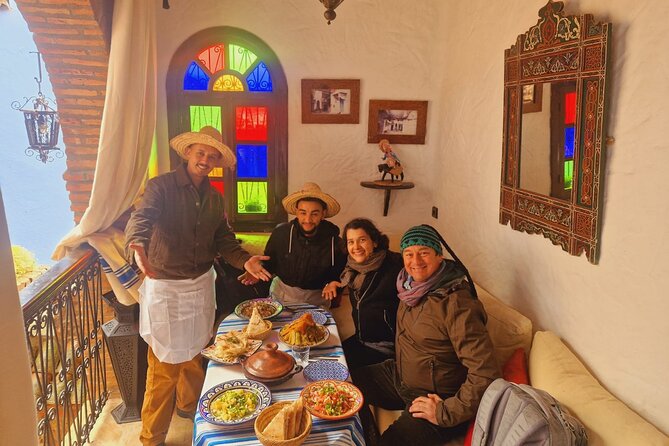
You meet at Rue Ibn Asskar, Chefchaouen. The ticket redemption point is at Riad Gharnata on the same street. Pickup is offered, so if you don’t want to navigate on foot, you should check how that’s arranged for your booking.
The first practical step happens right away: they check whether anyone has food allergies. That’s not just a formality. When a class is centered on spices and shared prep surfaces, getting this right early helps the cooking part go smoothly.
After that, you and your group choose the menu that fits everyone. The class supports vegetarian, vegan, and non-vegan needs, and the menu follows a consistent structure: Moroccan starters, one main dish, and dessert. This approach keeps the class focused and manageable in a 3.5-hour window.
Moroccan tea lesson: the warm-up that sets the tone
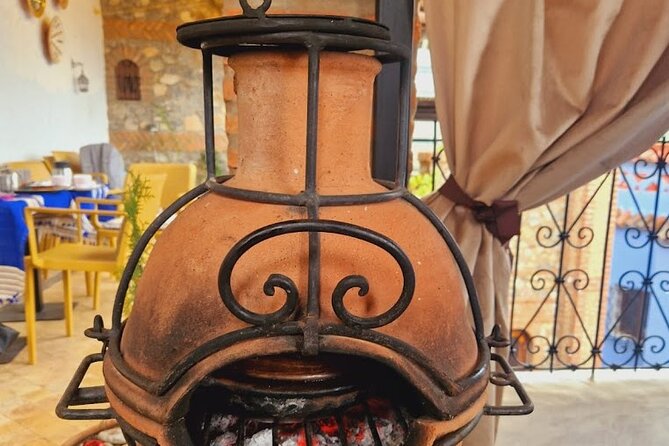
Before you touch ingredients, you’ll learn how to make traditional Moroccan tea. It’s not just about pouring hot water and calling it tea. The teaching is part of the experience: technique, timing, and how the drink should look and taste.
Once the tea is ready, you’ll have tea time with Moroccan cookies and cakes. This is a smart break. It gives you a moment to settle in, meet your hosts, and get comfortable with the pace of the class before the cooking gets hands-on.
And yes, this timing helps if you’re cooking with kids or if you’re traveling with a group that includes different food comfort levels. One family with two children (ages 10 and 12) described feeling welcomed and cared for, which lines up with the class starting gently and then building momentum.
Cooking Andalusian-Moroccan dishes step by step
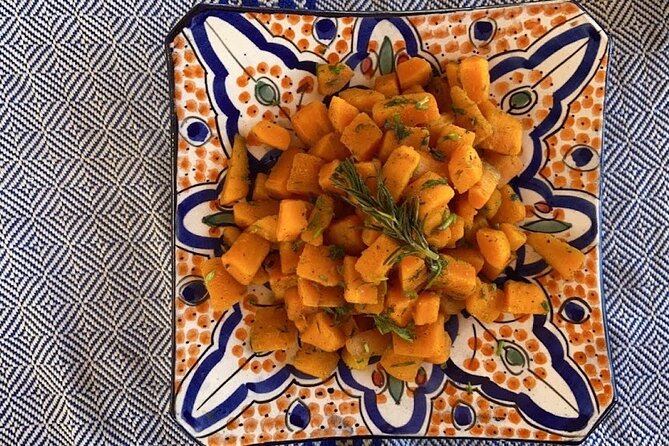
When the kitchen work begins, you don’t get left to figure things out on your own. The teaching is step by step, including the personal techniques the chef uses and the herb-and-spice choices that make the food taste like it belongs to this region’s traditions.
The class is designed around balancing flavors, and you’ll feel that right away. Moroccan cooking is layered: spice blends, aromatics, and finishing touches. The hosts guide you through the process so you understand why something is added now instead of later, rather than just copying a recipe.
You’ll also notice how the course selection stays “typical” while still feeling specific. The theme is Moroccan cuisine with Andalusian influence, reflecting an era described as one of peaceful coexistence between Jews, Christians, and Muslims. That background isn’t just trivia—it explains why you’ll see familiar North African foundations shaped by older Mediterranean-style spice and ingredient habits.
Starters, main course, and dessert: how the menu choice plays out
The class is structured around a set flow:
- Moroccan starters
- Main dish (all chosen by you)
- Dessert
That setup makes the class feel complete without dragging on. You aren’t doing an endless “try a little of everything” approach. Instead, you get enough cooking time to genuinely participate, then enough eating time to enjoy what you made.
A bonus from the kind of meals people commonly receive here: one dinner was specifically described as a tagine experience. Even if your exact main dish varies, tagine-style flavors are a very believable fit for this kind of chef-led menu in Chefchaouen—slow-cooked warmth with spiced depth.
You can also read our reviews of more cooking classes in Chefchaouen

What you really learn: herbs, spices, and flavor balance
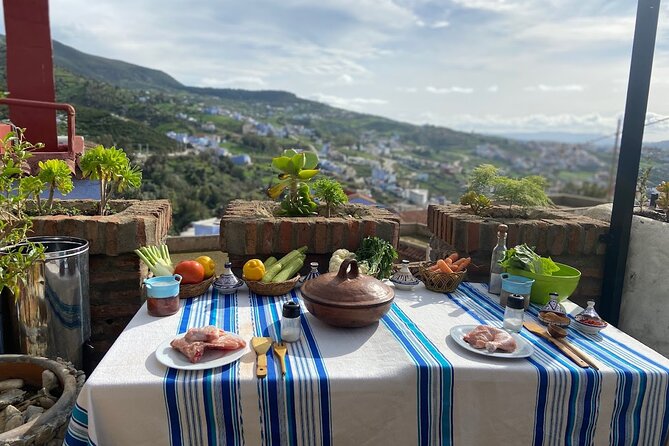
A lot of cooking classes teach you to follow steps. This one goes further by focusing on how the spice blends come together and how the flavors should behave as you cook.
The key takeaway I’d want for you: you’ll learn the thinking behind the cooking, not only the final plate. For example, you’ll practice balancing flavors in a way that’s practical at home. Once you understand how herbs and spices combine (and when you add them), you can adjust future dishes without guessing.
This is especially useful if you’ve tried Moroccan recipes at home and felt like the seasoning was either too heavy or not layered enough. The class format is designed to fix that by teaching your “spice logic”—how to build aroma, then flavor, then finish.
Why the private format is worth it
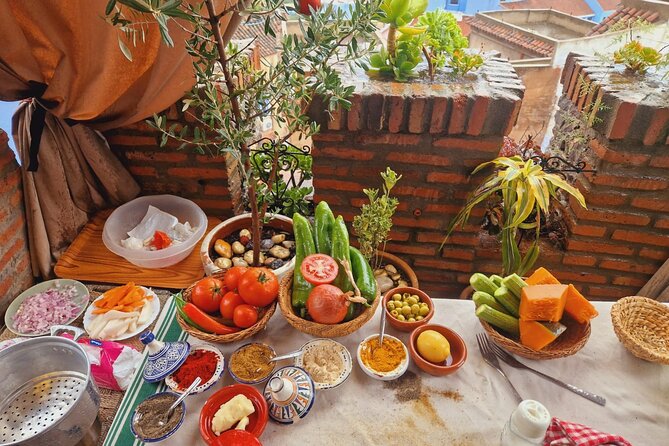
Chefchaouen cooking is not a factory line. The private nature means your group gets attention during the tricky moments—like adjusting seasoning, understanding texture, and handling timing when multiple people are cooking.
It also changes the social feel. You start with tea and conversation, then you settle into the cooking rhythm. Hosts like Ibrahim and his colleague, and also Abdel and Ibrohim in other groups, are described as welcoming and passionate about sharing. That kind of relaxed teaching is the difference between watching cooking and learning cooking.
If you’re traveling as a couple, a family, or a small group of friends, the private format usually delivers better value than a crowded class. You’re paying for more direct guidance, and in a spice-and-stove environment, that guidance matters.
Price and value: what you’re paying for
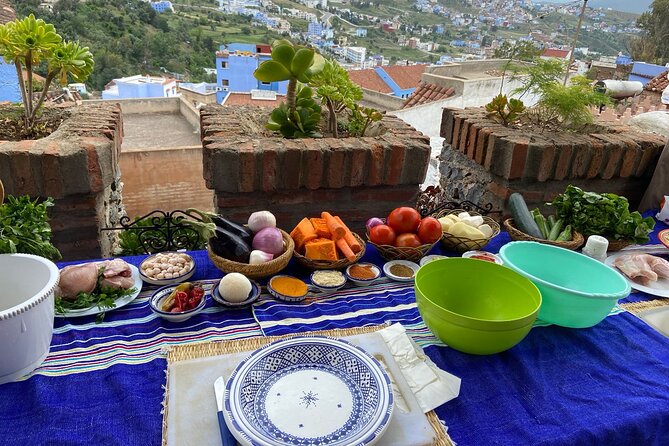
At $81.43 per person for about 3 hours 30 minutes, this isn’t the cheapest way to eat in Chefchaouen. But it’s also not “just a meal.” You’re paying for:
- A private group experience
- Step-by-step teaching
- A tea lesson plus cookies/cakes
- A full structure of food: starters, main, dessert
- A setting with mountain views in a historic building
You’re essentially buying a guided cooking workshop that ends with a meal you made. And since the class is described as booked on average 28 days in advance, it’s the sort of activity people plan ahead for—often because it’s one of the more satisfying “do something” experiences in Chefchaouen beyond walking the streets.
Timing and pacing: a realistic 3.5-hour plan
The class runs about 3 hours 30 minutes and ends back at the meeting point. That makes it easy to fit into your day. You can treat it as your anchor activity in the afternoon: start with tea, cook in a guided flow, then eat what you made.
Also, the class uses the full block of time well. It’s not a long wait with brief instruction. The tea break helps, and then the cooking moves quickly enough that you’ll feel productive by the time the dessert stage arrives.
Practical tips so you get more out of it
A few small moves will help you enjoy the experience more:
- Tell them about allergies up front. They check at the beginning, but you should still be specific about what you can’t have.
- Go hungry, but don’t show up starving. Tea and sweets come early, then you’ll cook and eat again.
- Be ready to choose your dietary option. Vegetarian, vegan, and non-vegan are supported, but you’ll pick a menu that matches your group.
- Plan for a scenic distraction. When you have a mountain view from a balcony, you’ll want photos, but keep an eye on your timing while cooking.
- If you’re traveling with mobility needs or small kids, focus on a calm pace. The experience is structured, and many families do well with that format, but you should still be prepared for a working kitchen environment.
If you’re the type who likes taking notes, bring your phone or a small notebook. The spice and technique parts are where you’ll want to remember what you learned so you can recreate it later.
Should you book the Chefchaouen private cooking class?
You should book if you want a hands-on Chefchaouen experience that combines tea teaching, a guided cooking rhythm, and a meal you helped create in a historic setting with mountain views. It’s especially a good choice if your group includes mixed dietary needs, since vegetarian, vegan, and non-vegan options are handled within the same class structure.
You might skip it if you’re looking for a broader food itinerary—like a market crawl plus cooking a long list of dishes—or if you only want to watch and don’t care much about learning technique.
My call: if you like Moroccan food and you want more than a casual dinner, this class is a strong bet. The setting, the teaching style, and the “tea to dessert” pacing add up to a memorable afternoon that feels worth the time and money.
FAQ
Is this a private cooking class?
Yes. It’s a private tour/activity, and only your group will participate.
How long does the cooking class last?
The duration is about 3 hours 30 minutes.
Does the class include Moroccan tea?
Yes. You’ll learn to make traditional Moroccan tea, then enjoy tea time with Moroccan cookies and cakes.
What kind of food will we cook and eat?
The menu includes Moroccan starters, a main dish, and dessert. You’ll choose the menu suitable for your group.
Can the class accommodate vegetarian or vegan diets?
Yes. The menu can be chosen to suit vegetarian, vegan, and non-vegan options.
Do they check for food allergies?
Yes. At the meeting point, they check whether anyone has food allergies.
Where do we meet, and where does it end?
You start on Rue Ibn Asskar, Chefchaouen. The activity ends back at the meeting point.
Is pickup offered?
Yes, pickup is offered.
When is it available?
The activity is listed with opening hours for the Monday time window shown, and it’s available within the date range listed.
What is the cancellation policy?
You can cancel for a full refund up to 24 hours in advance of the experience’s start time. Free cancellation is offered under that rule.