REVIEW · CASABLANCA
Best of Morocco Tour (15 days)
Book on Viator →Operated by Is Time Tours · Bookable on Viator
Blue tiles, desert dunes, and ocean walls.
This 15-day Best of Morocco Tour strings together some of Morocco’s most memorable regions in one plan, from Casablanca and Tangier to Erg Chebbi-style Sahara scenery, plus old medinas and Atlantic-side Essaouira. I like how it’s built around guides and transfers (so you’re not trying to stitch logistics together on your own), and I also like the mix of big-ticket sights with practical time on the ground. One thing to consider: the route involves lots of long road days and mountain passes, so it works best if you’re okay spending travel hours staring out windows more than taking lots of quick walks.
You’ll see medieval city texture in places like Fez and Marrakech, then switch gears to arid fortresses and movie-famous kasbah towns in the south. If you’re lucky enough to get a driver like Tarik/Tarek or Soukaina/Soukayna (names that show up in the feedback), you can expect a big focus on smooth timing and flexibility when plans need to shift. The only caution I’d flag is that the trip is packed with highlights, so you’ll want a calm pace mindset rather than expecting lots of free time every day.
In This Review
- Key highlights you’ll feel right away
- Casablanca to Tangier: starting on the Atlantic edge
- Chefchaouen and Fez: blue streets and a medina you can read
- Erfoud and the Sahara: why the 4×4 pickup matters
- Ouarzazate, Telouet, and Aït Ben Haddou: kasbah days that feel like cinema
- Marrakech’s medina and Kasbah du Toubkal: nights in Djemaa el Fna
- Essaouira’s walled Old Town: Atlantic pace with horseback and sailing
- Returning to Casablanca: closing with Hassan II Mosque morning calm
- Price and logistics: what the $4,270.38 per person buys you
- Who should book this Morocco best-of tour
- Should you book it?
- FAQ
- FAQ
- Where does the tour start and end?
- How long is the Best of Morocco Tour?
- Is pickup included?
- Is this a private tour?
- What cities are included on the route?
- Do I get a mobile ticket?
- Is service available for animals?
- What are the operating dates and hours?
- Can most people participate?
- If I cancel, do I get a refund?
Key highlights you’ll feel right away
- A single route that connects coast, mountains, and desert without you wrestling with transfers
- Sahara access via a 4×4 pickup from Erfoud for wide desert panoramas
- Kasbah stops tied to major film backdrops, including Aït Ben Haddou
- Marrakech’s Djemaa el Fna at night, with storytellers and classic street energy
- Essaouira’s walled Old Town by the Atlantic, plus an active day with beach horseback time
- Winery tasting at Val d’Argan, paired with the tour’s broader focus on local food craft (including goat-farm cheese)
Casablanca to Tangier: starting on the Atlantic edge
Day 1 sets the tone in Casablanca, where colonial-era Art Deco buildings sit alongside newer, more cosmopolitan streets. You arrive with a private guide and a transfer waiting, which matters here because it turns Day 1 from a slog into a smooth landing. The city also gives you a taste of Morocco’s everyday rhythms: sea air, palms along wide boulevards, and neighborhoods that feel both modern and rooted.
Day 2 pushes you north to Tangier, the gateway where the African coast faces the Strait of Gibraltar. I love this stop early in the trip because it helps you understand Morocco as a crossroads, not a single “theme.” You get morning food vibes right away, including Beghrir paired with sweet, creamy flavors. Then the day moves you into Tangier’s medina-and-walls feel, the part of town built for wandering and getting your bearings fast.
Consideration: Tangier and Chefchaouen are both old and compact, so your comfort depends on how you handle narrow streets and crowds. If that’s stressful for you, build in slower moments where your guide can steer you away from bottlenecks.
You can also read our reviews of more tours and experiences in Casablanca.
Chefchaouen and Fez: blue streets and a medina you can read
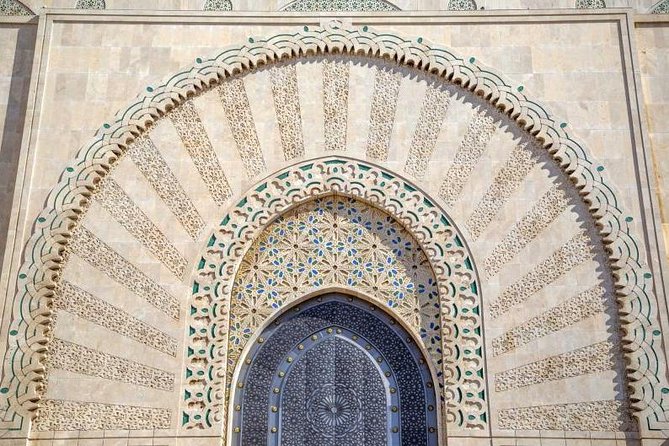
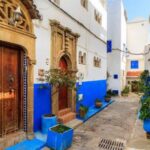
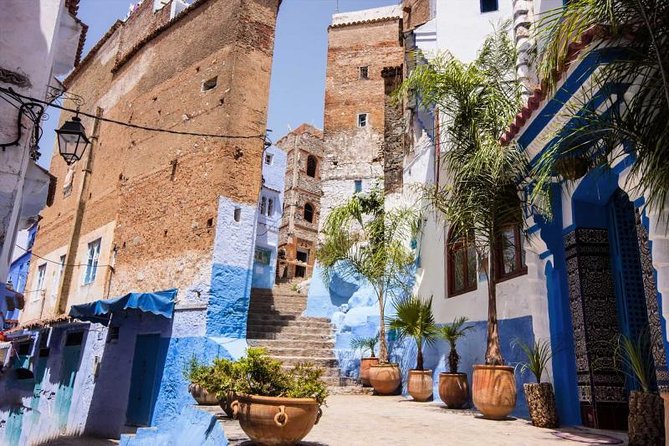
Chefchaouen (Day 3) is the kind of place where the colors do some of the explaining for you. The city sits at the edge of the Rif Mountains, and the streets climb in a way that makes the views part of the walking. The buildings are described as bright blue and white, and the whole scene feels like it’s been arranged for photos—but it’s still lived-in. I also like the way the day’s travel through plains and Rif foothills builds momentum before you even reach town.
Then the route swings into Fez via a stop in Meknes (Day 4). Meknes earns its place with its long wall system and a slower vibe. That’s not just scenery—it’s a palate cleanser before Fez’s medina intensity. You also get a stop that points you toward cultural depth, including Dar Jamaï Museum in the Fez portion of the day.
Fez (Days 4 and 5) is where the trip becomes “medina real.” You enter through Bab Bou Jeloud, the triple-arched gateway tiled in blue. The medina lanes here aren’t meant for fast sightseeing. You’re meant to follow trade routes, see craftsmanship in motion, and absorb how daily life and centuries-old methods overlap. Market time is a big deal in Fez: spices, stalls, and the sensory overload of a working old city.
Possible drawback: Fez can feel maze-like if you rush. This is one of those days where having a private guide isn’t a luxury—it’s how you avoid wasting hours going the wrong way.
Erfoud and the Sahara: why the 4×4 pickup matters
After Fez, the route heads toward Erfoud (Day 6), and this is where the geography shifts. The drive climbs through cedar forest and then into valleys like the Ziz Gorges, where canyon walls and the river cut through the mountains. The point of this segment isn’t to “drive past scenery.” It’s to get you to the desert with your eyes already trained for distance and scale.
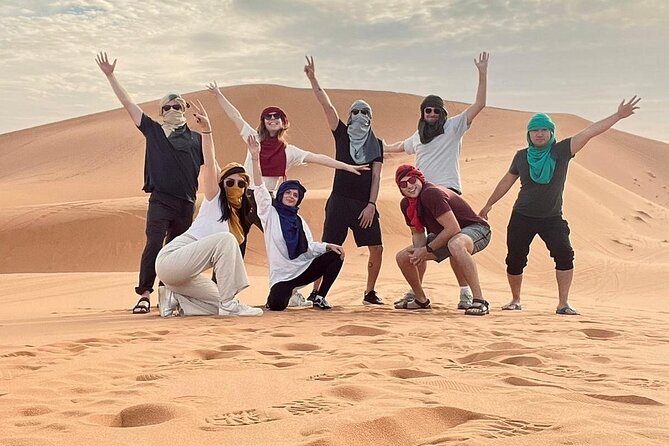
In Erfoud, a 4×4 pickup takes you into the Sahara for broad desert panoramas. Even if you’re not chasing extreme adventure, this kind of access changes how the dunes feel. You see why the desert has been a film favorite for decades: the lines are clean, the horizons are dramatic, and the color shifts with the light.
Practical tip (from how the day is structured): This is a day where timing and weather matter. If your plan includes early or late desert viewing, bring clothing you can adjust in layers. Higher elevations and desert evenings can feel different than midday warmth.
Ouarzazate, Telouet, and Aït Ben Haddou: kasbah days that feel like cinema
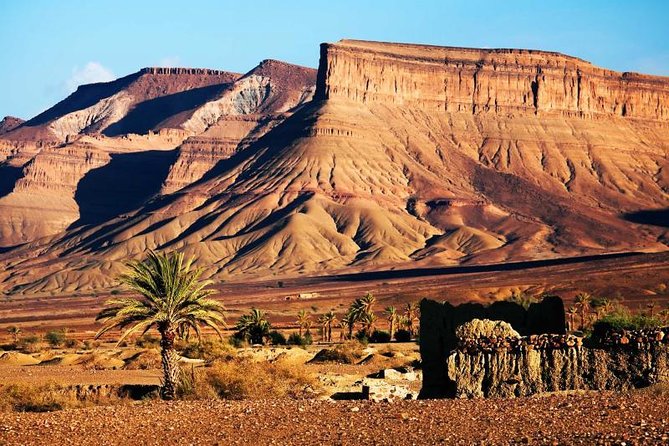
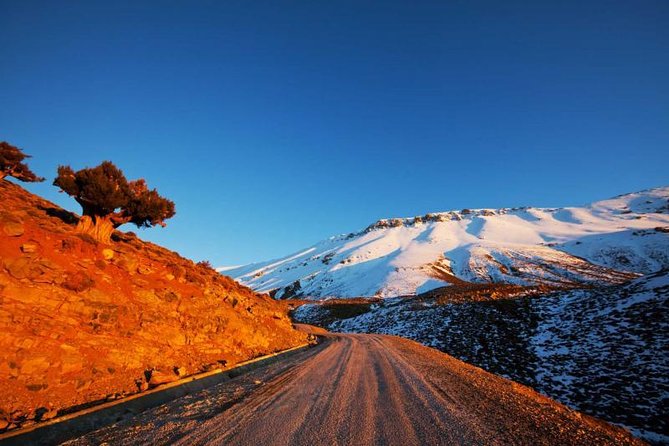
Days 7–9 move into Ouarzazate country, and the tone becomes “fortress and valley.” The route passes through areas like Dades and Todra Gorge, with canyon walls described as extremely high and long. I like these gorges because they’re the kind of natural feature that gives you scale without needing a strenuous hike.
From there, you enter the Valley of 1,000 Kasbahs area, then reach Skoura and remnants of older desert trading life. It’s a subtle lesson in how people used to survive and trade across difficult terrain. You’re not just seeing dramatic cliffs—you’re seeing the logic of settlement.
Day 8 includes Telouet, home to the “Lord of the Atlas” palace linked to the El Glaoui family. The outside sounds ruinous, but the inside is described as opulent, with hand-carved geometric woodwork and museum-style presentation. This kind of stop gives you something practical: it explains how power worked in this region, not just how it looked.
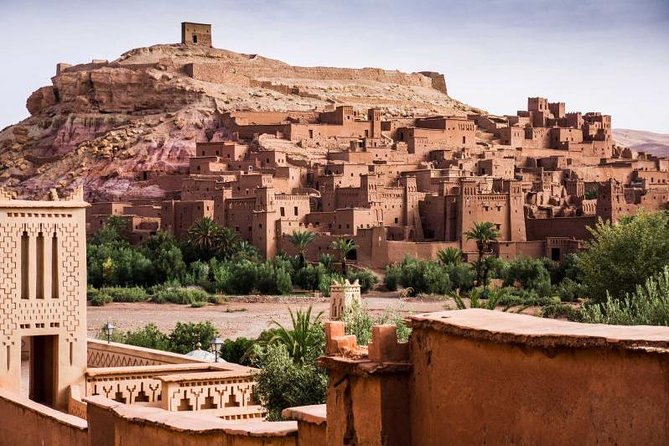
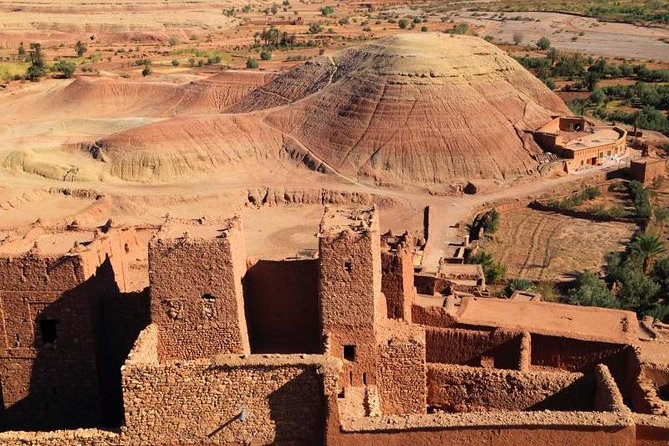
Then comes Day 9: Aït Ben Haddou, a UNESCO World Heritage site and a famous movie backdrop, including productions like Gladiator and The Mummy. The village inside the walls shifts from red to gold in the sun, and the earliest constructions date back to the 1600s. If you’ve ever wondered how film sets become real places, this is where that question turns into a walking route.
The day ends with travel onward to Marrakech, via the Tizi n’Tichka mountain pass. That pass is the last “big geography” beat before you drop into Marrakech’s streets again.
Consideration: Kasbah and medina days can blur together. If you want photos that look different, take a small break after each major stop and let your eyes reset.
Marrakech’s medina and Kasbah du Toubkal: nights in Djemaa el Fna
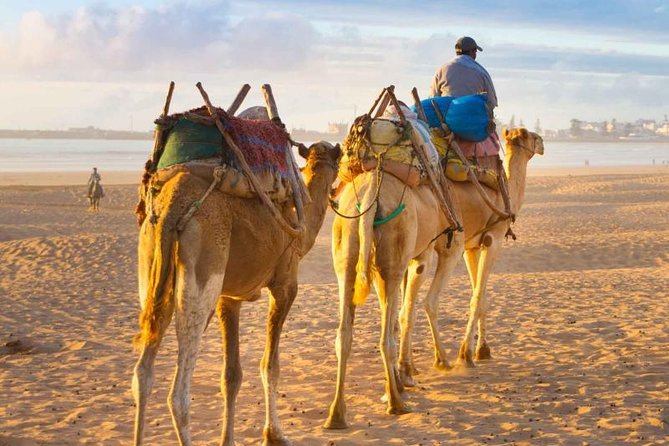
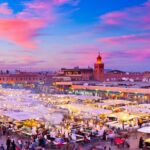
Marrakech (Days 10–11) is the pulse of historic Morocco, and the schedule leans into that reality. Day 10 centers on Djemaa el Fna Square, with snake charmers, storytellers, palm readers, and the smell of spices mixed with orange zest and mint tea. This is one of those places where the energy is the point. Even if you don’t buy anything, it helps you understand how public space works in Morocco.
You also get a guide-led visit to Koutoubia Mosque, a 12th-century landmark visible from much of the city. I like this pairing: a lively public square for atmosphere, then a calm, clear architectural reference point.
Day 11 switches to mountains. You head into the High Atlas Mountains with a private guide in the foothills and visit Kasbah du Toubkal, described as sitting above the tree line with mountain views and wildflowers in season. The elevation shift here is the reason I think this tour works better than a city-only plan. You see Marrakech’s contrast: loud streets one day, higher air and fortress views the next.
Practical note: This is where your comfort depends on how you handle altitude changes and car time. The day is about scenery rather than tough exertion, but expect to feel the mountains in the air.
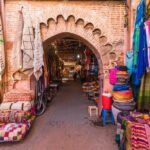
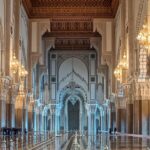
Essaouira’s walled Old Town: Atlantic pace with horseback and sailing
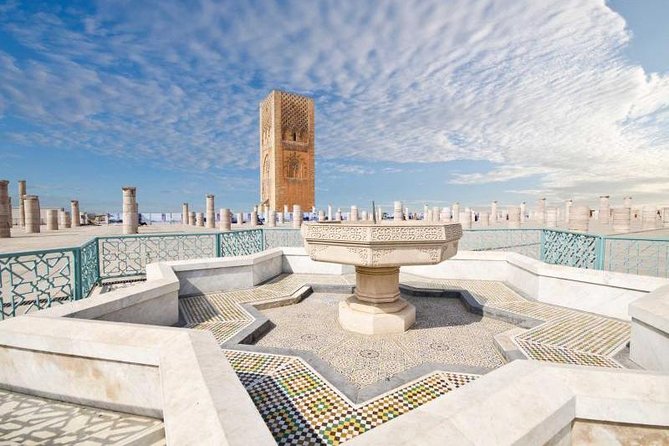
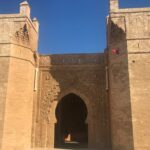
Day 12 brings you to Essaouira, a walled city pressed against the Atlantic Ocean. This stop feels different from Marrakech and Fez immediately. The Portuguese-built walls give structure to the place, and the medina lanes turn into a relaxed maze. I like Essaouira because it gives you time to be human again—slow wandering, sea breeze, and a town where you can actually pause.
You’ll see women in white veils and ocean views from red walls, plus the sense of a trading post that became a modern seaside town. It’s a good break after desert and kasbah intensity.
Day 13 is built for motion and variety. You can take horseback riding along the beach. Then there’s also time for fishing-boat scenery and a private sailing tour (with mention of the Alizé winds). The second half of the day includes a Val d’Argan winery tasting in the valley halfway toward Marrakech. The winery is described as producing some of the most celebrated wines in North Africa, and the tour’s overview also points to a nearby goat farm that makes its own cheese—which is a nice pairing idea if you enjoy food travel that goes beyond sightseeing.
Consideration: If you’re sensitive to sun and wind, plan your beach time carefully. Essaouira’s ocean breeze can feel good but still dries you out faster than you expect.
Returning to Casablanca: closing with Hassan II Mosque morning calm
The last stretch is all about contrast. Day 14 goes back to Casablanca, where the Art Deco and palm-lined streets feel like a return to order after medinas and deserts. You also get cultural time with Villa des Arts, housed in a 1930s Art Deco building, and a look at Parc de la Ligue Arabe where local kids play soccer.
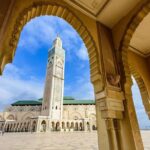
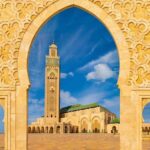
Day 15 is a quieter closer: the Call to Prayer echoes with the morning calm around Hassan II Mosque. The Atlantic is described as lapping against the shoreline, and your final day ends with a private transfer to the airport.
I like this ending because it doesn’t feel like a scramble. You’re stepping out of Morocco with your last sensory memory tied to sound, sea air, and a final meal.
Price and logistics: what the $4,270.38 per person buys you
At $4,270.38 per person for roughly 15 days, this isn’t a budget hop. But it’s also not paying only for sight names on a map. You’re paying for:
- Private guiding and transfers across multiple regions
- A packed route that reduces the headache of arranging separate transport segments
- Built-in stops that cover different “Morocco moods”: coast, mountains, medina, desert, and ocean town
- A private setup where your group only shares the itinerary with itself
One key value signal: the itinerary shows major cities and specific landmarks across many days (Casablanca, Tangier, Chefchaouen, Fez, Erfoud, Ouarzazate, Marrakech, Essaouira). That means you’re not just spending time in one style of place. It’s a coherent circuit.
If you’re the kind of traveler who hates logistical uncertainty and wants someone else to handle the timing, this price is easier to justify. If you’d rather build your own route, then this kind of “best-of” structure might feel like you’re paying for convenience you wouldn’t use.
Who should book this Morocco best-of tour
This tour is a strong fit if you:
- Want a guided, private route through multiple regions without piecing things together
- Care about major highlights but also want them explained (not just photographed)
- Like a rhythm that blends big iconic places with food and local market energy
It might not be your best choice if you:
- Want lots of downtime every day
- Hate long drives and mountain-pass travel days
- Prefer a slower, deep-local experience in one or two regions rather than a fast cross-country circuit
Should you book it?
Book it if you want Morocco’s headline scenes in one connected loop: medinas in blue and tile, canyon gorges, desert panoramas from Erfoud, kasbahs like Aït Ben Haddou, Marrakech’s evening square energy, and Essaouira’s Atlantic calm. The private setup and transfer focus make the route feel manageable rather than chaotic.
Skip it (or revise expectations) if you’re chasing a lighter schedule. This tour is highlight-heavy by design, so it rewards flexible, “go with the flow” energy.
FAQ
FAQ
Where does the tour start and end?
It starts in Casablanca, Morocco. The experience ends back at the same meeting point.
How long is the Best of Morocco Tour?
It runs for about 15 days.
Is pickup included?
Yes, pickup is offered.
Is this a private tour?
Yes. It’s described as a private tour/activity, with only your group participating.
What cities are included on the route?
The tour includes Casablanca, Tangier, Chefchaouen, Fez (and a stop in Meknes), Erfoud, Ouarzazate (with stops such as Telouet), Marrakech, and Essaouira.
Do I get a mobile ticket?
Yes. Mobile ticket is listed as a feature.
Is service available for animals?
Yes, service animals are allowed.
What are the operating dates and hours?
It’s listed as operating from 01/02/2025 to 01/01/2026, Monday through Sunday, 12:00 AM to 11:30 PM.
Can most people participate?
Yes. It says most travelers can participate.
If I cancel, do I get a refund?
Free cancellation is available. You can cancel up to 24 hours in advance for a full refund.