REVIEW · CASABLANCA
8D Morocco Luxury Private Tour From Casablanca By Imperial Cities
Book on Viator →Operated by DesertTrips · Bookable on Viator
Eight days across Morocco can feel effortless. This private route strings together the best-known sights with door-to-door comfort and a luxury desert camp with camel ride, so you spend less time planning and more time looking. One thing to budget for: monument entrance fees and tips are not included.
I like how it starts and ends in Casablanca, then keeps moving in a logical loop: Rabat, Chefchaouen, Volubilis, Meknes, Fes, Merzouga, Todra, Dades, Ouarzazate, Ait Benhaddou, and Marrakech. The trip is built around guides where you most want local context, plus real time for views in places like Chefchaouen’s medina and the dunes near Erg Chebbi.
The main consideration is the pace. You’ll be on the road more than you would on a slower Morocco trip, so pack for long drives and early starts, especially around the desert.
In This Review
- Key Points at a Glance
- Casablanca to Chefchaouen: a smooth start, then blue streets
- Chefchaouen’s blue day, plus Volubilis and Meknes en route to Fes
- Fes el-Bali: medina maze time, tannery sights, and where the tour guide matters
- High Atlas to Merzouga dunes: passes, cedar forests, and camel night
- Todra Gorge and Dades Valley: cliffs, kasbahs, and those famous rock shapes
- Ouarzazate film stops, Ait Benhaddou, and arriving in Marrakech at Jemaa el-Fna
- Marrakech medina with a private guide, Majorelle Gardens, and a second night at Jemaa el-Fna
- Final day in Casablanca: airport timing and a museum add-on
- Price and what $1,130.78 buys you in real-world value
- How the pace feels: comfort in the car, long days on the road
- Who this luxury Imperial Cities and Sahara tour suits best
- Should you book this 8-day luxury Imperial Cities and Sahara route?
- FAQ
- How long is the tour?
- Where does the tour start and end?
- Is this tour private?
- What’s included for transportation?
- Do I get help from guides in Morocco’s cities?
- Is the desert experience included?
- Are meals included?
- Are entrance fees included?
- Are airport transfers included?
- What happens if weather is poor near the desert?
Key Points at a Glance
- Casablanca pickup and drop-off to keep the “getting there” headache low
- Private air-conditioned vehicle with a driver and a restroom onboard
- Luxury desert night camp with a private tent that includes toilet and shower
- Local guides in Fes and Marrakech medina when you need the best context
- Planned scenic nature stops like Todra Gorge and the Dades Valley kasbahs
Casablanca to Chefchaouen: a smooth start, then blue streets
Your tour begins in Casablanca with pickup from pretty much anywhere convenient—hotel, riad, port, or apartment. That matters more than it sounds, because a private driver can shave off stress on travel days, especially after flights.
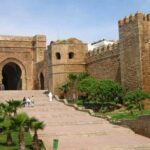
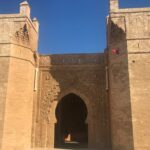
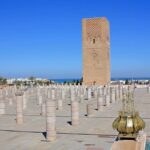
From there, the route heads north toward Rabat, with time to walk the Chellah Necropolis area and see the Bab Oudaia gate and the Kasbah des Oudaias. You also get the Hassan Tower and the Mausoleum of Mohamed V in the mix, which gives Rabat a strong “capital city” feel before you go hunting for postcards.
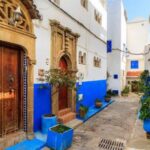
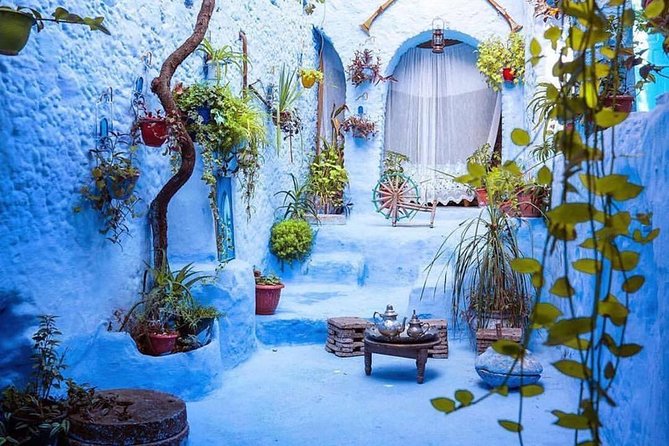
Then you shift into Chefchaouen, and yes, the blue is real—and it’s also more interesting than the color. The medina is steep and cobbled, so your time here feels like gentle exercise while you browse, pause, and take photos from viewpoints. I especially like the idea of a mint tea stop at Plaza Uta el-Hammam because it breaks up the wandering.
One practical note: some of the optional-feeling spots in Chefchaouen (like the kasbah area or viewpoints like the Spanish Mosque) can have entrance costs, and the tour doesn’t bundle all monument tickets. Your driver can help you decide what’s worth paying for once you’re standing right there.
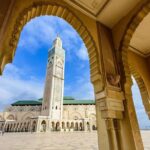
You can also read our reviews of more private tours in Casablanca
Chefchaouen’s blue day, plus Volubilis and Meknes en route to Fes
After breakfast, you spend more time in Chefchaouen with a focused stroll through the older medina lanes and squares. You’re also directed toward the natural spring water area (Ras In) and you get a sense of how Spanish and Moorish influence shows up in the town’s feel.
What I like here is that this isn’t only a color walk. You also get time for souks and to interact with locals, which helps Chefchaouen feel like a living town rather than a painted backdrop.
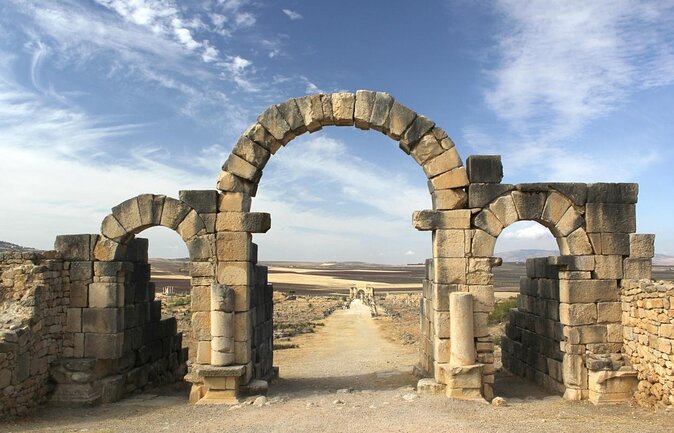
Next comes one of Morocco’s best “left turn” moments: Volubilis, the Roman ruins. You’ll walk through mosaic floors and key structures like the basilica, temple, and the triumphal arch—an important contrast after the medina blues. It’s also a big reminder that Morocco isn’t one story; it’s many layers in the same landscape, even if you only see them one stop at a time.
From Volubilis, you continue toward the holy town of Moulay Driss and then on to Meknes. In Meknes you’ll see major landmarks such as the huge gate of Mansour, the granary, and the Swani basin, plus time for the old medina and café breaks around Landim Square. That combination of sights and breathing room is what makes long itineraries feel manageable.
You finish the day arriving for an overnight stay in a traditional riad in Fes, which is a smart move. Riads help you feel the medina rhythm before you start your deeper Fes exploration the next day.
Fes el-Bali: medina maze time, tannery sights, and where the tour guide matters
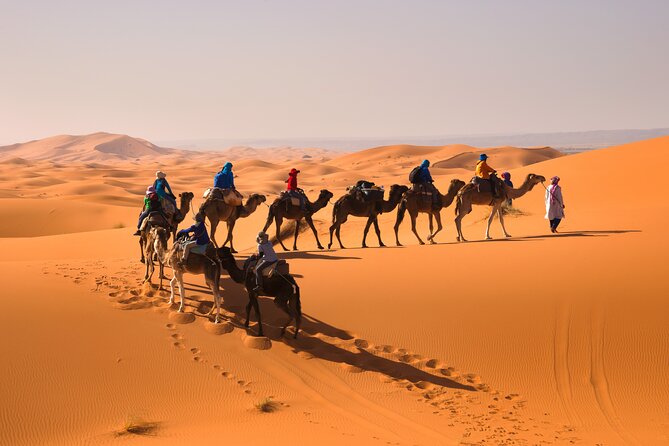
Fes el-Bali is the kind of place where a good guide can turn confusion into discovery fast. You’ll enter through major gateways like Bab Boujloud (the Blue Gate), then walk through souks and past mosques and markets that feel like a living city core.
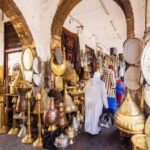
I like that the tour doesn’t treat Fes as a single highlight. You get both the busy shopping lanes (spices, rugs, jewelry, leather goods) and the deeper monuments.
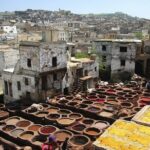
A standout stop is Chouara Tannery. Even if you don’t like the smell, it’s historically significant and visually hard to forget. After that, the tour moves you toward the Al-Qarawiyyin Mosque and University, described here as the world’s oldest continuously operating university—so you’re not just sightseeing; you’re seeing an institution that shaped learning for centuries.
You’ll also have time at either Bou Inania Madrasa or Al Attarine Madrasa, which are both Marinid-era schools with impressive architectural details. Then you shift toward Mellah, the Jewish district, and you can include stops like the Royal Palace of Fes or the Borj Nord museum, depending on what fits the day.
Food can be one of the tricky parts of medina days, because it’s easy to end up eating the wrong thing just from walking exhaustion. The tour includes time to stop at a restaurant for Moroccan cuisine, and there’s also an option to join a local family dinner if you want that extra cultural angle. Either way, you’re not left to figure out logistics alone in the maze.
A small detail that’s worth noting: the tour includes a fully licensed local guide in Fes Medina. That’s exactly where you’ll benefit most from having someone who knows how to move through crowds, choose the right side streets, and explain what you’re seeing.
High Atlas to Merzouga dunes: passes, cedar forests, and camel night
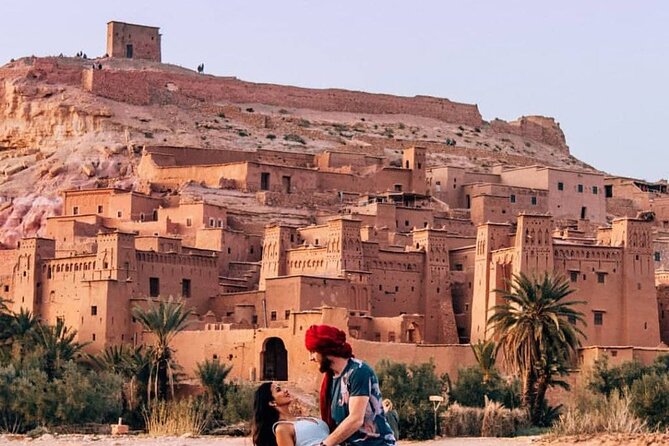
Day 4 is where the trip starts to feel like an adventure, not only a sightseeing circuit. You travel into the High Atlas mountains through alpine-style villages often associated with the “Little Switzerland” nickname, then climb higher via Col du Zad Pass.
You’ll get views from elevation and also the chance to spot Barbary macaques in cedar forests. Even if you don’t see them, the point is that the drive includes nature moments, not only road time.
You break for lunch in Midelt, then cross Tizi-n-Talremt Pass and head through the Ziz Valley, where oases and palm clusters show up and you can look for ksars—communal fortifications built to protect goods.
Then comes Erfoud, a market town tied to dates, fossil mining, and artisan work. One reason I’m glad this stop is included is that you get to see what happens to fossil-rich rock, transformed into items like tables, plates, and bowls—handicraft with a local material story behind it.
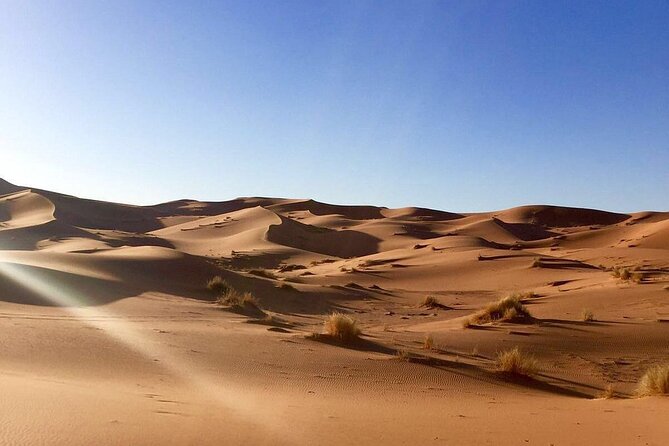
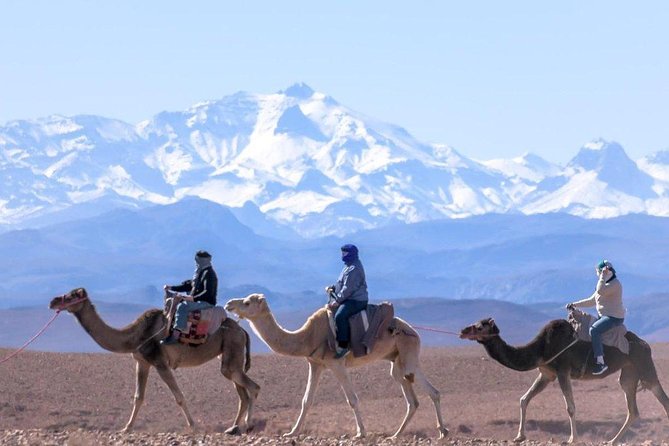
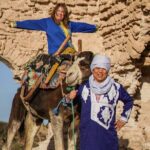
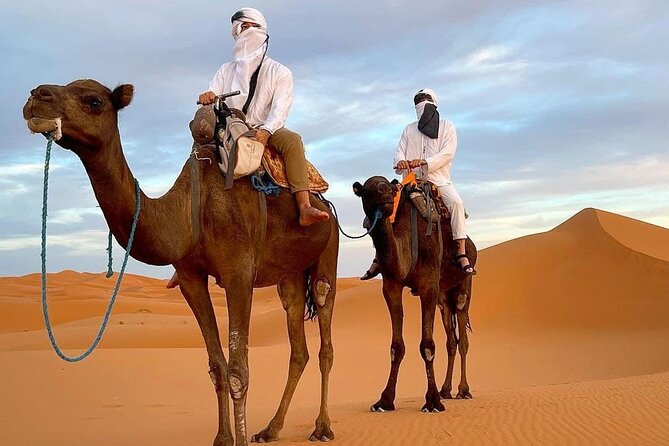
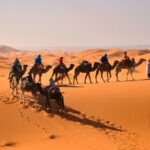
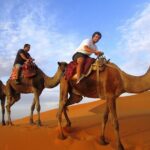
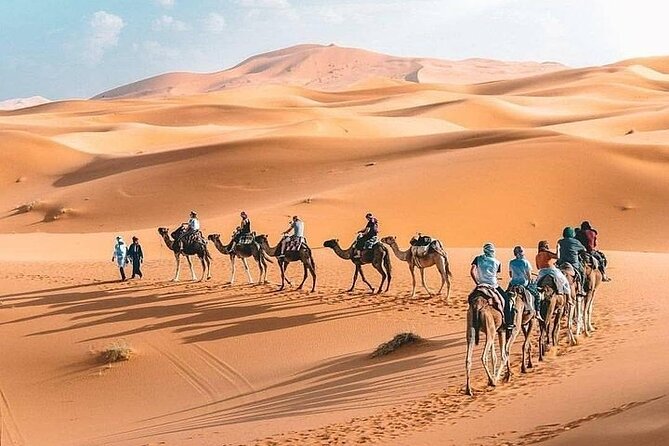
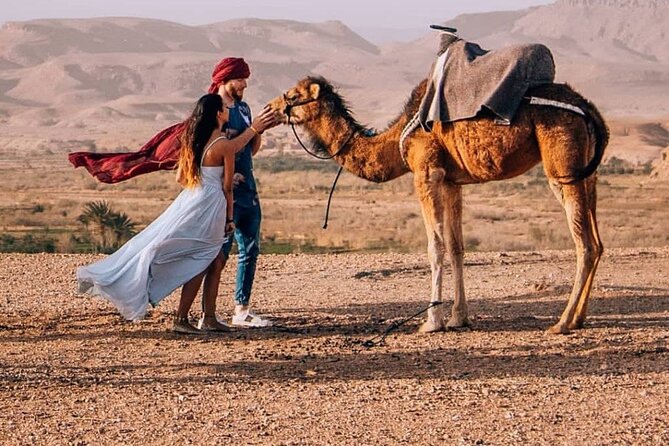
Finally, you reach the Erg Chebbi dunes near Merzouga and the plan moves into the “this is the point” section: your desert camp experience. You ride camels into camp, then watch the sunset from nearby dunes. Dinner happens around the campfire and you can hear traditional Berber music before stargazing time.
A past guest specifically praised the driver, Ahmad, as excellent throughout the long drives. That kind of consistency matters here because the desert day depends on timing—sunset and the sunrise are the big ticket items.
Todra Gorge and Dades Valley: cliffs, kasbahs, and those famous rock shapes
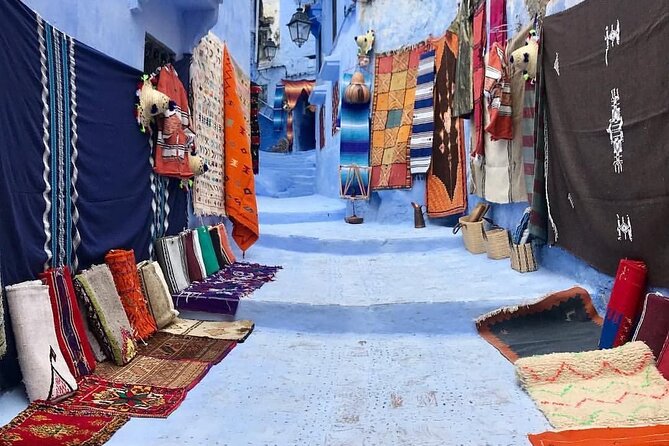
The next morning starts with a desert sunrise, then you move toward the palm grove of Dades. On the way, you stop in Rissani, including its busy market atmosphere and a livestock auction setting. You also have a craft stop at Maison Tuareg to see traditional arts like carpets, jewelry, and leather goods.
As you continue toward Tinghir, you get panoramic viewpoints and time to note the town’s Jewish quarter area as part of the broader regional picture. Then you reach Todra Gorge, where red-stained limestone cliffs rise to about 300 meters. The tour includes an easy walk or paddle opportunity in the cool water, which is a welcome break from driving and a good way to stretch before the next valley section.
After Todra, you pass through the Valley of a Thousand Kasbahs, stopping to watch for nomads tending animals and traditional farming scenes. Even without many formal explanations, these are the kinds of sights that make you understand why the Sahara edge feels different from the city centers.
You end the day in the Dades Valley, with rock formations described locally as “monkies fingers” and mud kasbahs. You sleep in a hotel overlooking the valley, which is the right setup for the next day’s drive toward Ouarzazate and Marrakech.
A few more Casablanca tours and experiences worth a look


Ouarzazate film stops, Ait Benhaddou, and arriving in Marrakech at Jemaa el-Fna
Day 6 turns the dial toward culture and big scenery. You head toward Marrakesh, but first you retrace through Dades Valley and stop at the Rose Collective if you didn’t catch it earlier. Ouarzazate then appears as the film-industry hub of Morocco, tied to productions you might recognize and supported by options like the movie studio or the Musée du Cinéma.
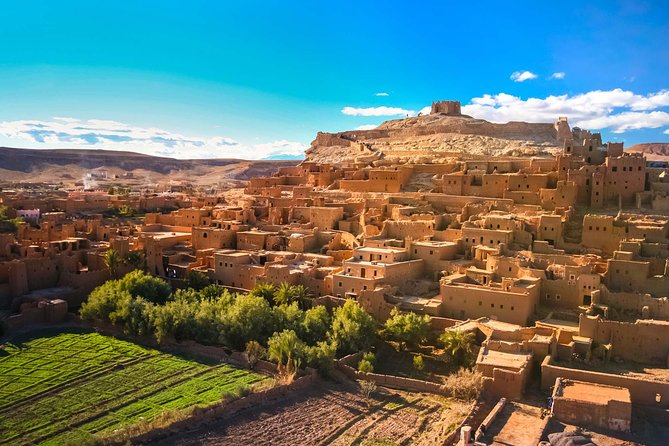
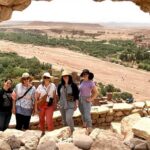
Then it’s back to “wow in a small time window”: Ait Benhaddou. You explore the UNESCO-listed medieval kasbah area, with a stop that also includes the Taourirt Kasbah as part of the broader fortified setting. After that, the route crosses Tizi n’Tichka Pass, where the views over the peaks are one of the classic road-trip highlights.
A quick detour adds a practical “Morocco economy” element: in Taddert, you visit an argan oil cooperative to see how argan nut oil is extracted for health, food, and cosmetic use. This is one of those stops where you can learn how a local product becomes global, without turning it into a sales pitch marathon.
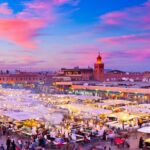
As you descend, you finally arrive in Marrakesh and settle into your accommodation. That evening, you head to Jemaa el-Fna, the city’s main square, where you can eat at food stalls and watch performers. It also helps you reset your brain after mountains and dunes: Marrakech is loud, human, and close.
The tour handles arrival-time pressure with time for you to settle, then enjoy the square before calling it a night.
Marrakech medina with a private guide, Majorelle Gardens, and a second night at Jemaa el-Fna
Day 7 is built for Marrakech structure. You meet a local private guide to explore the old city neighborhoods, including the souk areas and Mellah. This is where you’ll appreciate a real explainer, because Marrakech’s “maze” isn’t just about getting lost; it’s about understanding what you’re seeing and why.
In the afternoon, the tour shifts to major sites and gardens. You’ll see places such as the Bahia Palace and El Badii Palace, plus the Saadian Tombs, and you’ll spend time at Majorelle Gardens. The gardens are described as an iconic retreat built by French painter Jacques Majorelle and later inhabited by designer Yves Saint Laurent, and it’s a nice contrast to the street energy around it.
Then you return to Jemaa el-Fna for the evening atmosphere. You’ll see musicians, storytellers, acrobats, and snake charmers, with food stalls all around. If you want a calmer meal, there are also cafes above the square where you can eat while watching.
This second evening stop is smart. On a first visit, Jemaa el-Fna can feel like sensory overload. With time and daylight knowledge from earlier, you get to choose how you want to experience it.
Final day in Casablanca: airport timing and a museum add-on
On your last day, you switch back to the Casablanca end of the route. Depending on flight timing, you have options like last-minute gift and souvenir shopping or a visit to the Marrakech Museum (located in the 19th-century Moorish Dar Mnebbi Palace).
The driver ensures you get to the airport with enough buffer time for departure. That detail can be the difference between relaxing and stressing, especially when you’ve spent the whole trip on schedules for sunrise and sunset moments.
Price and what $1,130.78 buys you in real-world value
At $1,130.78 per person for eight days, this isn’t a budget-only tour. But it’s also not just “a driver and a car.” You’re paying for private transportation across long distances, multiple protected-city experiences in Fes and Marrakech with local guiding, and a specific kind of desert sleep.
Here’s what’s included that typically costs money on your own:
- Private air-conditioned vehicle with fuel and parking
- Licensed local guides in Marrakech and Fes medina
- Accommodation for 7 nights in hotels or traditional riads
- Desert adventure with camel ride plus a luxury night camp (private tent with toilet and shower)
- Water onboard, restroom onboard, and breakfast (6 mornings)
- Dinner (2 meals) included in the plan
What’s not included is also clear and important: entrance fees for monuments and tips. That means your final spending can creep up depending on how many paid sites you choose and how you tip. If you like seeing everything inside every ticketed doorway, you should budget extra from day one.
Bottom line: the “value” is strongest if you want a smooth private experience with a high-comfort desert night and local guidance where navigating is hardest—Fes medina and Marrakech’s old city.
How the pace feels: comfort in the car, long days on the road
This is a private tour with one group, so you control some pacing within the day, but you still move between regions daily. You’ll have early moments, especially around the desert sunrise and sunset, and some mountain-road travel that takes time.
The tour includes restrooms on board and bottled water, which makes those long transfers less annoying. You’ll still want to pack layers for temperature swings, sun protection for dunes and gorge walks, and comfortable shoes for cobbled medinas.
If you’re traveling with kids or you care about comfort consistency, this is one of the better formats because the logistics are handled. One family trip experience shared that the operator stayed flexible with scheduling when flights didn’t match the plan, and they listened to hotel and room preferences. That kind of flexibility matters if you want luxury without feeling locked in.
Who this luxury Imperial Cities and Sahara tour suits best
This tour fits best if you want:
- A private Morocco experience without constant map-checking
- Luxury comfort for the desert night, including a private tent with bathroom
- The big-name cities with real local guidance in the hardest-to-walk neighborhoods
- Nature stops that aren’t only “look from the road,” like Todra Gorge and Dades Valley
It’s also a solid choice for first-time visitors who want a complete sampler of Morocco: blue towns, Roman ruins, imperial cities, mountain passes, and the edge of the Sahara.
If you prefer slow travel, you might find the drive-heavy structure tiring. For that style, you’d likely want a fewer-region route with more days in each place.
Should you book this 8-day luxury Imperial Cities and Sahara route?
If you want the simplest version of a Morocco dream circuit—private car, guided medina walking, and a real luxury desert camp night—this is an easy yes. The biggest payoff is that you’re not negotiating logistics across five regions; you’re following a route designed for variety without leaving you stranded.
Book it if:
- You’re happy paying for private comfort and a desert camp with real facilities
- You want to see Chefchaouen, Fes, and Marrakech without figuring out transit between them
- You care about not missing key sights like Volubilis, Todra Gorge, Ait Benhaddou, and Majorelle Gardens
Skip it (or consider shortening) if:
- You hate long road days
- You prefer to self-plan museums and paid entrances, since monument tickets and tips are extra
- You want more days in each city for slower wandering
FAQ
How long is the tour?
It runs for about 8 days.
Where does the tour start and end?
It starts with pickup in Casablanca and finishes with transfers back in Casablanca for your flight or drop-off.
Is this tour private?
Yes. It’s a private tour, with only your group participating.
What’s included for transportation?
A private air-conditioned vehicle is included throughout the tour, along with fuel, parking fees, and a restroom onboard.
Do I get help from guides in Morocco’s cities?
Yes. The tour includes fully licensed local guides in Marrakech and in Fes Medina, plus a driver/guide for the rest of the route.
Is the desert experience included?
Yes. You get a camel ride and a luxury night camp experience with a private tent that includes a toilet and shower.
Are meals included?
Breakfast is included for 6 mornings, and dinner is included for 2 evenings. Other meals and all drinks are not listed as included.
Are entrance fees included?
No. Entrance fees for monuments are not included.
Are airport transfers included?
Yes. Airport arrival and departure or hotel pickup and drop-off in Casablanca are included.
What happens if weather is poor near the desert?
The tour requires good weather. If it’s canceled due to poor weather, you’ll be offered a different date or a full refund.