REVIEW · TANGIER
3 Days Private Luxury Tour Merzouga Desert Ending in Marrakech
Book on Viator →Operated by Fes City Travel · Bookable on Viator
One road. Two deserts of feeling.
This 3-day private luxury route pulls you from Fez through Atlas mountains and cedar forests, then drops you into the dunes around Merzouga for a luxury camp with camel time, sunset, and included dinners. I love the mix of comfort and real wandering: air-conditioned transport keeps the long days sane, and the desert camp experience feels special without forcing you into a rigid schedule. One thing to plan for: lunch and some monument entrances are not included, so you’ll want a little extra cash for food on travel days and any ticketed sites.
The best part is how the timing works. You get early starts for views (and cooler temps), plus a desert night that doesn’t feel like a compromise. In the reviews tied to this kind of service, names like Sufyan, Badar, and Pedro come up with the same theme: safe driving, clean vehicles, and a driver who actually pays attention to your questions. You’ll also have a Berber music and wood-fire evening to round out the day once you reach the dunes.
In This Review
- Key highlights you’ll remember from Fez to Merzouga to Marrakech
- Fez to the Middle Atlas: comfort-first starts with cedar-forest magic
- Ziz Valley to Erfoud: palm oases, canyon pauses, and fossil-country energy
- Into Merzouga: 4×4 transfer, luxury tent comfort, and the sunset payoff
- Day 2 morning in the desert: sunrise, breakfast, and the ride back to Merzouga
- Rissani market and Todgha Gorges: Berber commerce meets limestone canyon drama
- Dades Valley and rose country: feeling the variety between gorges and Ouarzazate
- Ouarzazate to Marrakech: Kasbah Taourirt, Ait Ben Haddou, and the Tizi n’Tichka pass
- Price and value: is $756.10 per person fair for what you get?
- Who this private luxury desert tour fits best
- Should you book the 3 Days Private Luxury Tour Merzouga Desert Ending in Marrakech?
- FAQ
- How long is the tour and how many nights are spent in the desert?
- Where does the tour start and where does it end?
- Is transportation included, and is it air-conditioned?
- What meals are included?
- Do you get a camel ride?
- How do you get from Merzouga to the luxury camp?
- Are monument entrance fees included?
- Is this tour private?
Key highlights you’ll remember from Fez to Merzouga to Marrakech
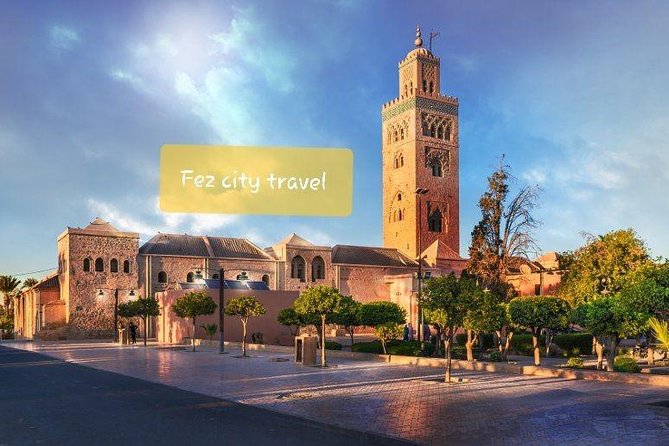
- Luxury camp in the Merzouga dunes with a private luxury tent and a true desert-feel night
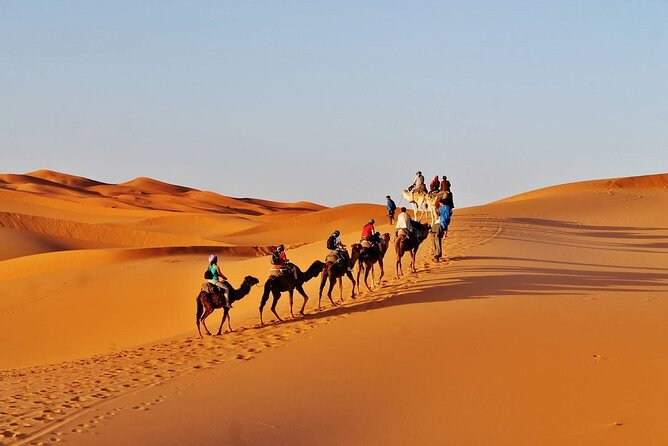
- Camel ride + sunset in the Erg Chebbi area, with the camp transfer handled by 4×4
- Cedar forest stop near Ifrane for a quick look at Barbary macaques and butterflies
- Todgha Gorges and the Dades Valley drive for dramatic canyon scenery and rose-growing country
- Ouarzazate + Ait Ben Haddou on the way to Marrakech, including a film-location stop
- Private-tour setup so you’re not stuck with strangers who turn everything into a loud group shuffle
Fez to the Middle Atlas: comfort-first starts with cedar-forest magic
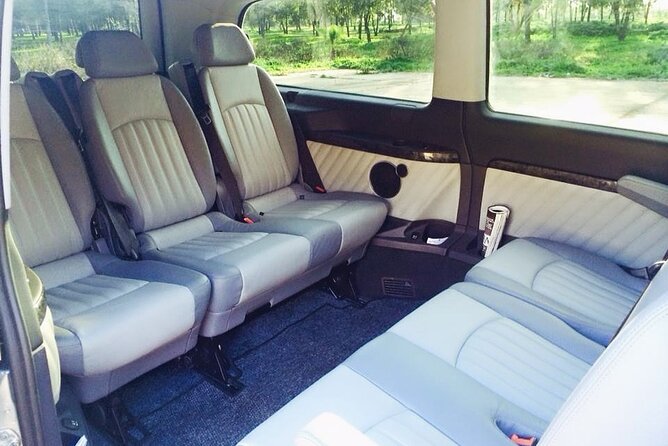
The day begins with pickup from your hotel in Fez around 7:30 a.m., then you’re rolling in an air-conditioned car or minibus. This matters more than you might think. The route is long, and you’ll feel the difference between arriving tired at a sight and arriving ready to look around.
Your early stops are designed like palate cleansers. You’ll pass through the Middle Atlas and stop in places that feel like a break from big-city Morocco. Ifrane is the quick one: a cold-weather vibe at altitude, famous for its Little Switzerland look. Even if you only have 15 minutes, it’s a good reality check that Morocco’s climate changes fast.
Next is the Cedre Gouraud Forest, a cedar zone where you may spot Barbary macaques. The timing is short, but this is one of those chances where a 30-minute pause can become the photo you didn’t expect. You may also see butterflies, which is a nice bonus when your brain is already in desert mode.
Then the route heads deeper into the Atlas rhythm with a stop in Midelt for lunch on your own. Midelt’s appeal is simple: it’s a real town stop, not just a service station. If you want something warm and local—tagine, couscous, or grilled options—this is the kind of break that keeps the journey enjoyable.
Why this part is valuable: it breaks up the big “Fez to Sahara” jump into manageable story beats. You’re not just traveling; you’re watching Morocco change in real time.
Watch-outs: your day includes a lot of driving. If you’re the type who needs constant coffee or snacks, bring some along. And remember lunch is not included in the tour package.
You can also read our reviews of more private tours in Tangier

Ziz Valley to Erfoud: palm oases, canyon pauses, and fossil-country energy
After the mountains, you’ll swing into a different world. The route includes a stop at the Ziz Valley, where palm groves give you shade and the scenery flips into a desert-canyon feel. This stop is short (around 25 minutes), but that’s enough time to step out, take in the river cuts through the canyons, and try local products like dates if they’re available.
Then you reach Erfoud, an oasis town tied to the Sahara fringe. The provided context here is worth noting: Erfoud is known for an oasis feel, palm trees, and even fossils and photo opportunities. If you like travel photos that don’t look like the usual postcard view, this kind of detail-driven stop helps.
Why this part is valuable: it tells you the Sahara isn’t just sand. It’s also water stories, palm shade, and human settlement patterns—oasis towns that act like living borders between climates.
Watch-outs: the itinerary gives time windows for stops, so you won’t have hours to wander. If you want longer exploration, consider booking an add-on excursion where offered by your provider once you confirm dates.
Into Merzouga: 4×4 transfer, luxury tent comfort, and the sunset payoff
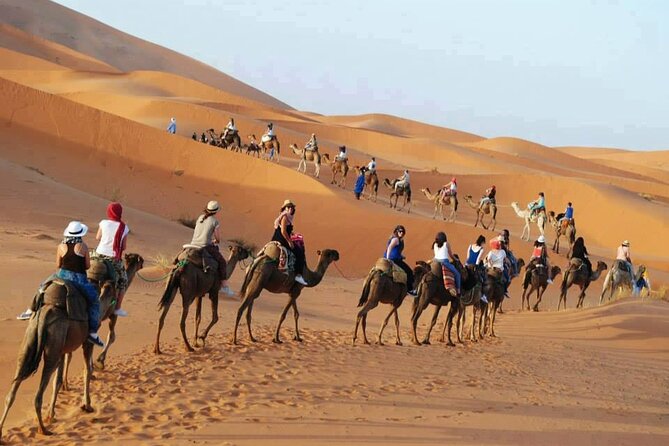
When you finally arrive in Merzouga, the tour switches gears. You’ll get a 4×4 jeep transfer to the luxury camp, which is the cleanest way to do this segment because it saves you from hauling gear through sand.
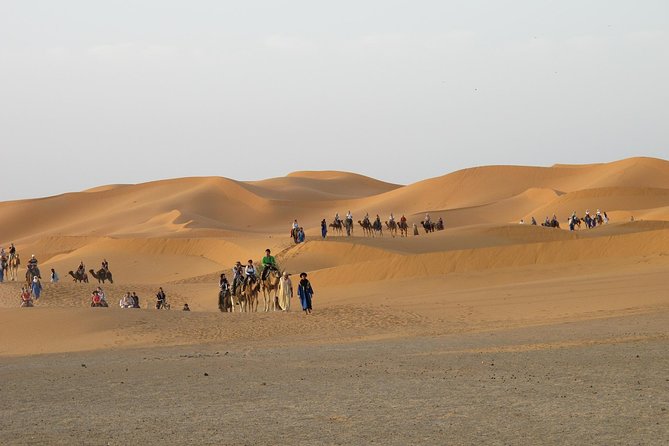
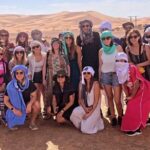
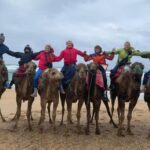
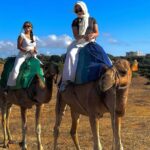
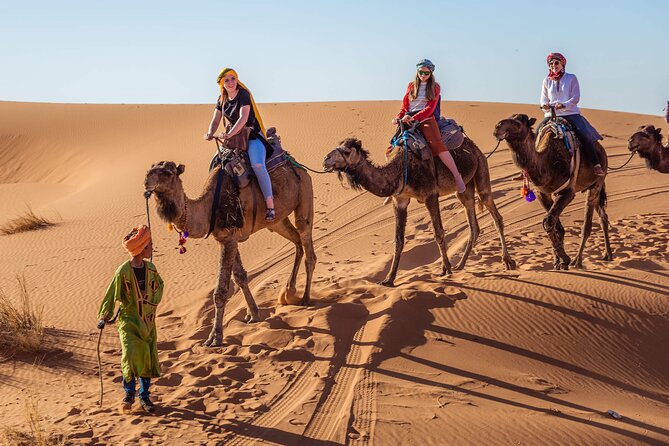
Once you reach camp, the magic happens fast. You’ll explore the dunes and then settle into the best timing window of the day: sunset. This is the part you’ll likely remember for years. The dunes shift color and texture, and your brain finally stops treating the desert like a destination you’re visiting and starts treating it like a place you’re inside.
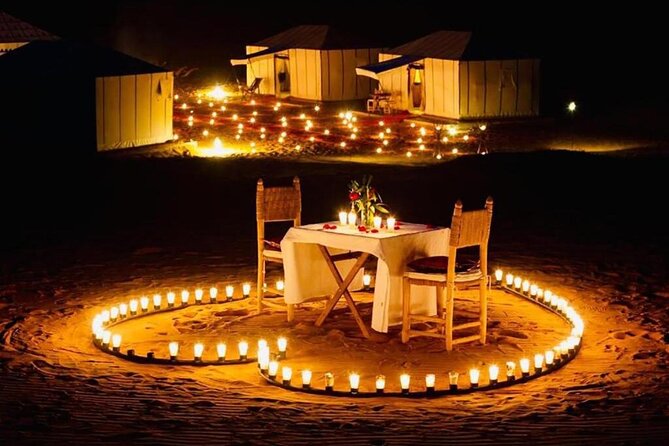
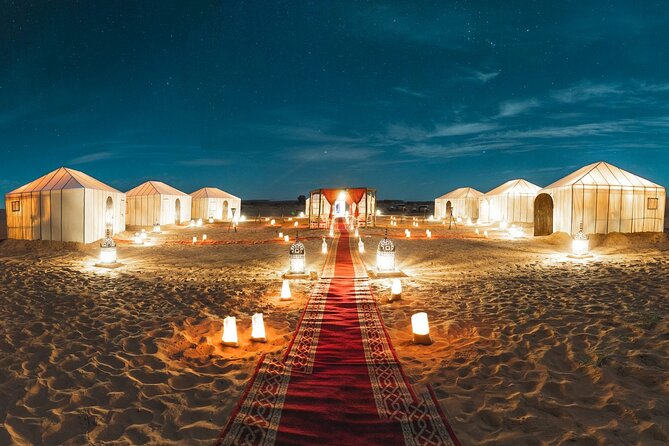
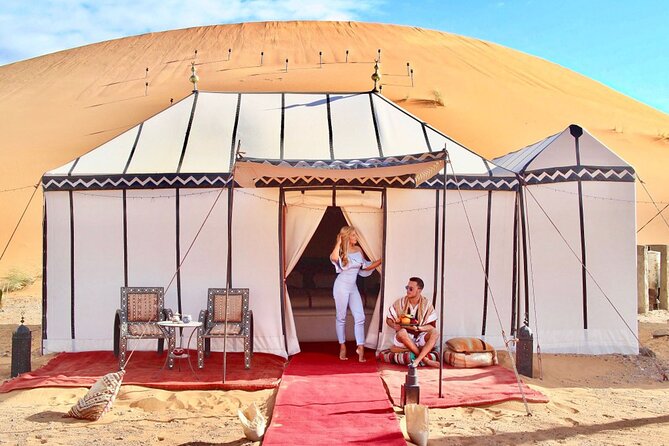
Your camp stay is a private luxury tent. That’s a big deal compared with basic desert stays. You’ll get cozy beds, neat furnishings, and the comfort you need after a long day of driving and a camel-focused evening. You’ll also have included dinner (2 dinners total across the tour), plus Berber music around a wood fire.
What you should plan for at night: desert nights can feel cooler than you expect. The tour includes the camp experience, but it doesn’t list specific temperature gear. Bring layers you can actually put on quickly.
Watch-outs: the tour includes camel ride, but it doesn’t say how long you’ll spend on the camels each way. The itinerary suggests a camel ride component both for the camp arrival timing and for the return the next morning. If you’re sensitive to saddle comfort, mention it during booking so your driver can guide you on what to expect.
Day 2 morning in the desert: sunrise, breakfast, and the ride back to Merzouga
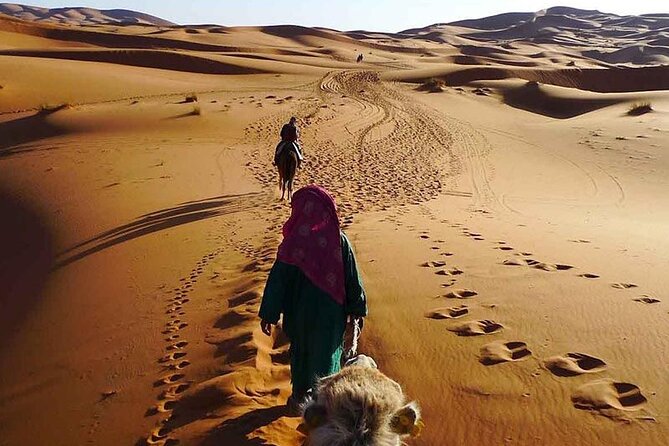
Day two is built around the early hours. You’ll wake up early to enjoy the sunrise and breakfast in the desert setting. Then you return to Merzouga by camel.
This is one of the best parts of the overall structure. A lot of Sahara trips do sunset well and then rush the morning. Here, the schedule flips it. You start with sunrise, then get the second half of the camel experience, and only after that do you move back into sightseeing.
Why this timing works: you’ll see the dunes in different light without feeling like you’re doing the same photo twice. Sunrise tends to soften shadows, and dust in the air can make the whole place look more cinematic.
Rissani market and Todgha Gorges: Berber commerce meets limestone canyon drama
After you’re back in Merzouga, the route continues to Rissani, where you visit the Berber market. This isn’t described as a long shopping stop—it’s an hour—so think of it as a chance to understand how people live nearby rather than a full-on bargain hunt.
Next come the Todgha Gorges (Gorges du Todgha) near Tinerhir. This is classic canyon country: limestone river canyons, or wadis, carved by water over time. The provided detail about carving over the last 40 kilometers gives you a useful mental picture. It means those cliff walls are not random rock shapes. Water pushed through and did the work long before anyone built a road.
The stop is short (about 30 minutes). That can be enough for photos and a walk to a viewpoint, but it’s not enough if you want hiking depth. Still, Todgha is one of those places where even a quick stop feels dramatic.
Watch-outs: canyon temps can differ from the desert and from the Atlas. Dress in layers so you don’t end up too hot in the sun and too cold in shade.
A few more Tangier tours and experiences worth a look

Dades Valley and rose country: feeling the variety between gorges and Ouarzazate
From Todgha, you head toward Vallee des Roses at the foot of the High Atlas, where rose irrigation supports cultivation around Kelaat M’Gouna. The tour stop is brief, but it adds a different Morocco flavor to the trip: agriculture, water management, and a landscape tied to scent and seasonal rhythms.
Then you continue to Boumalne Dades, in the Dadès Valley. This area is described as some of the most picturesque scenery in Morocco, and the key practical detail is the Dades River creating agricultural oasis zones. You’re essentially moving through Morocco’s “in-between” zones—where river valleys keep life going as the desert energy rises nearby.
Finally, you continue on to Ouarzazate or Boumalne Dades for a luxury hotel night. The plan includes relaxing by the pool and joining others for dinner and entertainment. Because dinners are listed as included in the package, this is likely where your second included dinner happens.
Why this part is valuable: it keeps the tour from being a one-note desert story. You get canyons, rose-growing areas, and the river valley contrast that makes the Sahara feel even more intense.
Watch-outs: pool and downtime assume you’ll have that energy after driving. If you tend to feel wiped after long drives, plan a simple evening: shower, relax, then early sleep.
Ouarzazate to Marrakech: Kasbah Taourirt, Ait Ben Haddou, and the Tizi n’Tichka pass
Day three is the return toward civilization—still with strong sights, just more “culture and architecture” than sand.
You start with Ouarzazate, described as the gateway to the Sahara. You’ll visit the Taourirt Kasbah, a historic fortified residence complex tied to local families and later expanded by the Glaoui family. The stop is short, and important for your planning: the admission ticket for Taourirt Kasbah is not included. So if you’re the type who hates surprises, keep a small budget aside for this one.
Ouarzazate is also connected to film work, and the tour includes a visit to a movie studio. This is a great add-on if you like seeing how Morocco’s sets and real locations overlap.
Then you move on to Ait Ben Haddou, a famous ksar—earthen buildings inside defensive walls with corner towers. This is the place where you can really feel why Morocco’s southern architecture looks the way it does. It’s compact, defensive, and designed for heat.
You get about an hour here. That’s enough time to walk, take photos, and appreciate how the village layout works. If you want deep exploration, you’d need more time than a half day gives.
On the road toward Marrakech, you’ll pass through Tizi n’Tichka, a High Atlas mountain pass. You only get about 20 minutes, but it’s a useful visual transition: from southern arid regions back toward the busier red-earth approaches that lead into Marrakech.
Why this part is valuable: it ends your desert chapter with iconic built-world Morocco. You don’t just leave the Sahara. You trade sand for fortress architecture and mountain driving drama.
Price and value: is $756.10 per person fair for what you get?
At $756.10 per person for roughly 3 days, this tour sits in the “pay for comfort” category—and the value comes from the big-ticket pieces being handled for you.
Here’s what you’re effectively buying:
- Private luxury tent in the desert (not a basic camp setup)
- 4×4 transfer to the luxury camp
- Air-conditioned vehicle for long driving days
- Camel ride
- English/French speaking driver
- Mineral water
- Two breakfasts and two dinners (lunch isn’t included)
If you try to DIY this route, you quickly run into the cost and time headaches of arranging separate transport, desert camp booking, and safe transfers. This package strings the route together in a way that saves you from coordinating multiple vendors.
The one “gotcha” for value: not everything is included. Lunch is not included, and entrance fees are not included either. Also, Taourirt Kasbah has a not-included admission fee. Those are common, but they matter when you’re budgeting.
So my practical take: this is worth it if you want the Sahara dream with fewer logistics headaches. If you’re a strict budget traveler who wants to eat only local snacks you choose yourself, you might find the included meals enough but not perfect.
Who this private luxury desert tour fits best
This tour is a strong match if you:
- Want a Sahara experience without sleeping in a basic camp setup
- Prefer private touring with just your group
- Like a packed route that still includes comfort breaks (cedars, canyons, market stop, rose valley)
- Enjoy cultural stops such as Ait Ben Haddou and Kasbah Taourirt, not only sand dunes
It may be less ideal if you:
- Hate driving days and want slower pacing
- Need very long time at each stop (most are timed for photo and viewpoint moments)
- Have a tight food budget, since lunch isn’t included and some entrances cost extra
Should you book the 3 Days Private Luxury Tour Merzouga Desert Ending in Marrakech?
Yes, if your dream is a Sahara night that feels comfortable, scenic, and well-timed. I like that the day-to-day plan is built around big moments: cedar forest detours, Ziz Valley shade, desert sunset, sunrise in the dunes, then the strong “ending act” of Ouarzazate and Ait Ben Haddou before Marrakech.
I’d book it with two conditions in mind: set aside money for lunch and a couple of entrances, and pack a few layers for morning and evening desert cool. If those points fit your style, this is one of those Morocco routes that feels like a full story with a clean finish.
FAQ
How long is the tour and how many nights are spent in the desert?
The experience runs for about 3 days (approximately), including 2 nights. You’ll spend the desert overnight in a luxury tent in the Merzouga area.
Where does the tour start and where does it end?
You’ll be picked up from your hotel in Fez around 7:30 a.m. The tour ends in Marrakech (via Ouarzazate and the drive through the Atlas).
Is transportation included, and is it air-conditioned?
Yes. The tour includes an air-conditioned vehicle, with pickup from your hotel and a driver who speaks English and French.
What meals are included?
Breakfast is included for 2 mornings and dinner is included for 2 evenings. Mineral water is also included. Lunch is not included.
Do you get a camel ride?
Yes. A camel ride is included, including time to enjoy the desert dunes and the ride back toward Merzouga in the morning.
How do you get from Merzouga to the luxury camp?
A 4×4 transfer takes you from Merzouga to the luxury camp in the dunes.
Are monument entrance fees included?
No. Entrance fees to monuments are not included. The Taourirt Kasbah admission is specifically listed as not included.
Is this tour private?
Yes. It’s described as a private tour/activity, meaning only your group participates.