REVIEW · TANGIER
Tangier Day Tour
Book on Viator →Operated by Tour Guide Benamar · Bookable on Viator
Tangier can feel like two coasts at once. This 6-hour day trip strings together Cap Spartel, the Kasbah, and the Medina so you get the big sights without wasting time. I especially like how the route mixes coastal scenery with street-level Tangier, and how the guide keeps the stops moving in a sensible order.
What I like most is the human scale: you ride in an air-conditioned vehicle, then step out for focused exploring with camel rides and guided walking. One thing to keep in mind is that this is a compact schedule, and the Medina walk can be more active than it looks, so plan for moderate walking.
In This Review
- Key things worth knowing before you go
- A 6-hour plan that actually fits Tangier
- Getting to Port de Tanger Ville and meeting your guide
- The drive to Cap Spartel: coast views with a purpose
- Parc Perdicaris: Tangier’s “mini countryside” feel
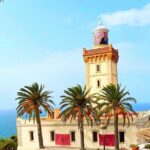
- Cap Spartel and the old lighthouse near the strait
- Hercules Caves: the sea opening and the Africa-shaped legend
- Tangier Kasbah: Portuguese fortress walls and narrow-street momentum
- Medina of Tangier: where the lanes make the story
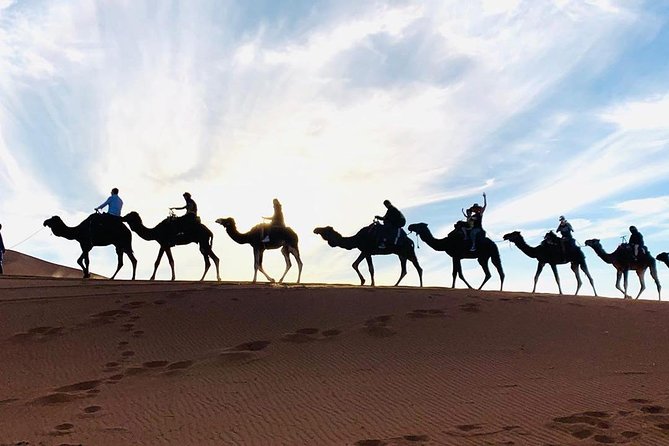
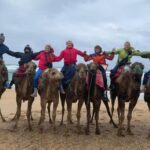
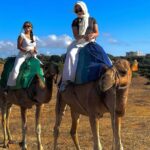
- Camel rides included: fun, quick, and very Tangier
- Price and value: $313.71 per group up to 6
- How to make this day trip feel easy (not rushed)
- Should you book this Tangier day tour?
- FAQ
- How long is the Tangier day tour?
- What does the $313.71 price include?
- Is pickup provided?
- Do I need to bring lunch?
- Is the tour private?
- Are tickets digital?
- Is the Hercules Cave entrance included?
- What’s the cancellation window?
Key things worth knowing before you go
- Private group time: only your group participates, which makes it easier to ask questions and keep your pace.
- Atlantic meets Mediterranean at Cap Spartel: you’ll get clear views of the strait’s dramatic split.
- Hercules Caves stop: includes the sea-and-land opening idea and the Africa-shaped viewing legend.
- Portuguese-built Kasbah: one of Tangier’s standout fortifications, with preserved architecture.
- Medina walking route: you start near Souk Barra and move through key lanes and landmarks like Saint Andrews Church and Sidi Bouabid Mosque.
- Camel rides included: a classic Tangier moment near the Atlantic, built into the day’s flow.
A 6-hour plan that actually fits Tangier
Tangier is the kind of place where time disappears fast. One moment you’re looking at the coastline, and the next you’re turning down a narrow lane in the Medina where you suddenly need good shoes and a cool head.
This tour’s strength is its structure. In about 6 hours, you get five distinct “moods” of Tangier: a park view, coastal viewpoints, caves, a fortress area, then the Medina souks and public places. If you’re on a cruise or you only have one full day, that’s exactly the right pace.
You’re also not stuck on a bus all day. You get a mix of vehicle time plus real walking, which is what makes a day trip feel like Tangier rather than just photos from the roadside.
You can also read our reviews of more tours and experiences in Tangier.



Getting to Port de Tanger Ville and meeting your guide
The meeting point is at Port de Tanger Ville on Blvd. Mohamed VI in Tangier. The tour ends back at the same place, which is handy when you’re timing a ferry, train, or cruise return.
Pickup is offered, but the meeting point is still the key reference. I recommend you plan to arrive a little early at the port area so you’re not juggling bags and crowds while trying to find your group.
The day runs on a guided format with a mobile ticket. That matters because Tangier can move at a different tempo than you expect, and a clear meeting process helps your day stay smooth.
The drive to Cap Spartel: coast views with a purpose
Between the port and the East Tangier area, you’re not just traveling—you’re building context. This part of the route sets up the big theme of the day: Tangier’s geography, where the Atlantic and Mediterranean feel like they’re in conversation.
On the way, you’ll move through the coastline area toward places like Cap Spartel. This is the part of the day where you’ll start to understand why Tangier has always drawn outsiders—traders, soldiers, and travelers all wanted a piece of this view.
You’ll also want to take a moment when you stop. The best photos aren’t just at the viewpoint. They’re when you pause, look, and realize the angles—what’s land, what’s sea, and how the strait frames everything.
Parc Perdicaris: Tangier’s “mini countryside” feel
Your first stop is Parc Perdicaris, about 30 minutes. The idea here is simple: you walk into a park that makes you feel like you got temporarily lost in Tangier’s countryside—especially with the R’mlilat forest feel and the way the park flows toward the water.
What makes this stop worth your time is how it softens the day. After the port’s bustle, you get vegetation that’s influenced by both the Mediterranean and the Atlantic. It’s not a museum stop. It’s a reset for your senses, and it helps later when you shift from green park tones to stone, sea, and old walls.
Drawback? It’s a short visit, so don’t expect long trails. If you love scenery and quick breaks, you’ll like it. If you prefer strictly “top sights,” you might see it as a palate cleanser.
Cap Spartel and the old lighthouse near the strait
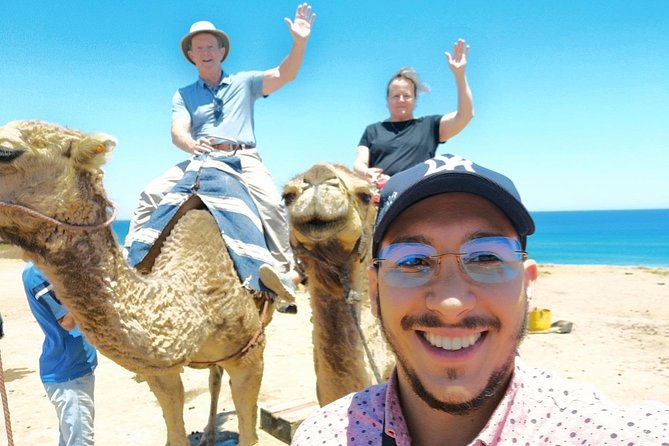
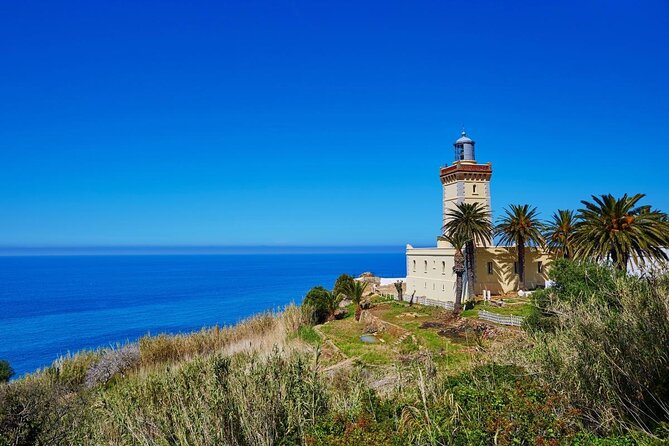
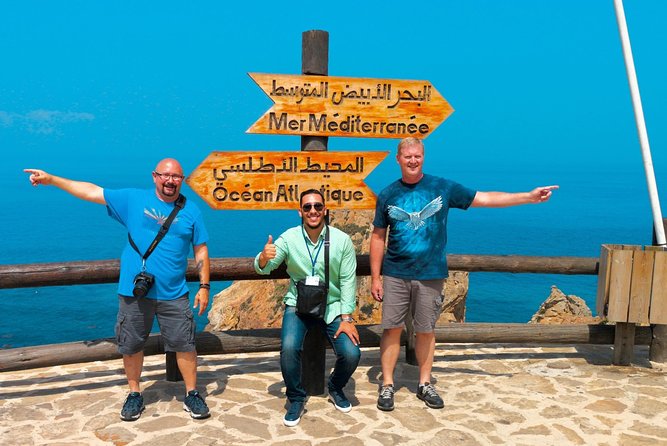
Next is Cap Spartel, also around 30 minutes, with admission included. This is one of the most photogenic ideas in Northern Morocco: the point where the Atlantic and Mediterranean energy comes together.
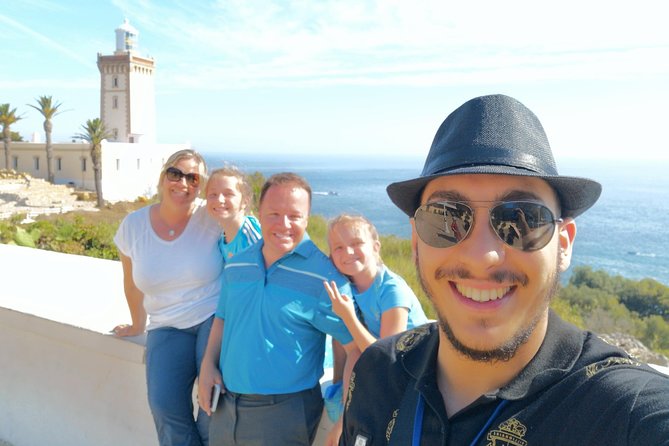
Cap Spartel is known for its lighthouse, described here as the oldest lighthouse in Africa, dating back about 150 years. Even if you don’t get caught up in the age trivia, the location is the star. You’re standing at a coastal boundary, and it changes how you see the whole region.
This stop is also a smart “breather” before the cave experience. You get big views, sea air, and a chance to regroup before you head into a more enclosed setting.

Hercules Caves: the sea opening and the Africa-shaped legend
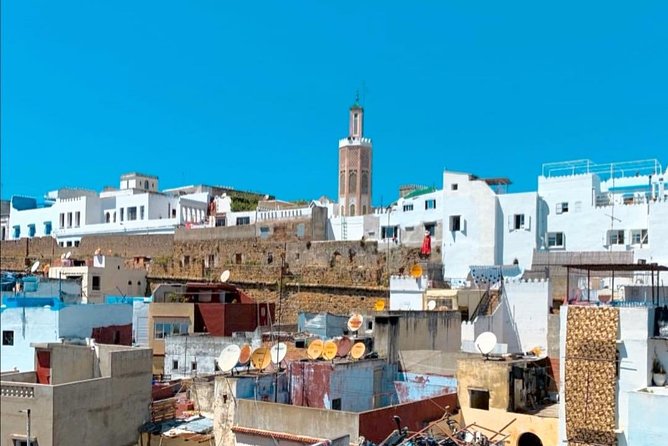
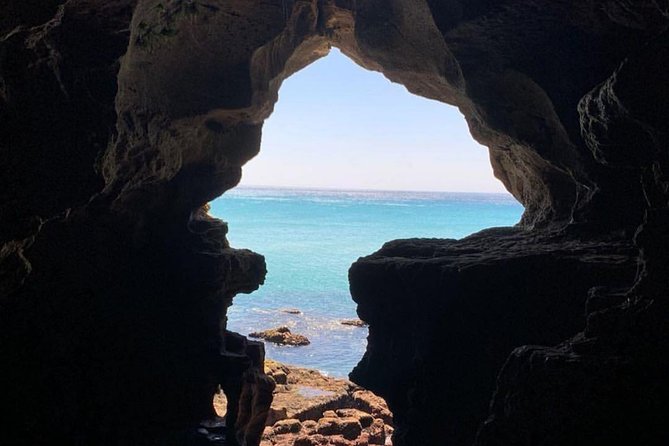
The Caves of Hercules are next, again about 30 minutes. The stop is described as archaeological and very old—back to around 2500 B.C.—and the cave complex has two openings: one toward the sea and one toward land.
Here’s what makes the experience feel more than touristy sightseeing. The sea opening is called the Map of Africa, and there’s a legend that the Phoenicians created that view-shape when looking from the sea. There are also references to markings on the wall, including eye-shaped designs linked to Phoenician belief.
Important note for your planning: the tour details list “Hercules Cave” as not included in the “Not Included” section, even though the itinerary describes admission ticket inclusion for this stop. That mismatch is worth checking when you book, so you don’t reach the entrance and realize you need extra payment.
Also, keep your expectations realistic for a single day. This isn’t a long underground exploration. It’s a short guided visit with a lot of story and context packed into a tight window.
Tangier Kasbah: Portuguese fortress walls and narrow-street momentum
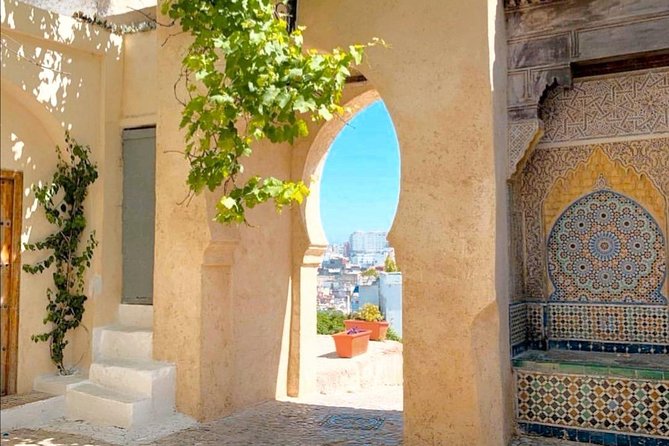
The Tangier Kasbah stop runs about 1 hour, with admission included. The Kasbah is described as a fortress built in the 15th century by the Portuguese, and it’s known for preserved original architecture—exactly the kind of “old stone that still feels alive” that you want on a short trip.
What I like about Kasbah time is the built-in transition. You go from sea-coast drama into walls, viewpoints, and old neighborhoods. You’re also starting the walking portion of the day through tight streets, where the history feels less like a textbook and more like your feet moving through it.
In this area, you can also expect key heritage landmarks such as a museum stop, and then Mendoubia Gardens and Saint Andrews Church are part of the day’s Kasbah/old-city sequence. That combination is great for variety: gardens for calm, church architecture for perspective, and then back to the Medina atmosphere.
One possible consideration: stone cities can mean uneven ground and stair steps. It’s usually manageable, but if you’re sensitive to walking on rough surfaces, wear shoes you trust.
Medina of Tangier: where the lanes make the story
The Medina is the big walking block: about 3 hours. This is where Tangier becomes real—commercial doors, food stops, small lanes, and public places that show how people live, not just what they built.
The Medina route is described starting near the Souk Barra roundabout, in front of the Tangier Cinematheque. From there, you pass by standout landmarks such as the Anglican Church of Saint Andrews, the Sidi Bouabid Mosque, and the Mendoubia Palace.
Then you move into the lanes behind gates like FAHS gate, where the walk breaks into different routes. One direction is focused on the traditional Moroccan market. Another area links to the small Socco, where you’ll find cafes and local storytelling tied to Tangier’s past.
A final geography note that matters: the route also references the imposing Jewish cemetery near Bab Mirican, and it points toward the Bni Idder district from that area. Even if you don’t catch every detail in a single pass, your guide’s pacing helps you understand how the Medina’s “pockets” fit together.
The main drawback is that Medina time can feel dense. You’ll want to keep water handy, expect street-level crowds in certain pockets, and be ready for lots of looking and turning. The payoff is that you’re not just standing at sights—you’re moving through them.
Camel rides included: fun, quick, and very Tangier
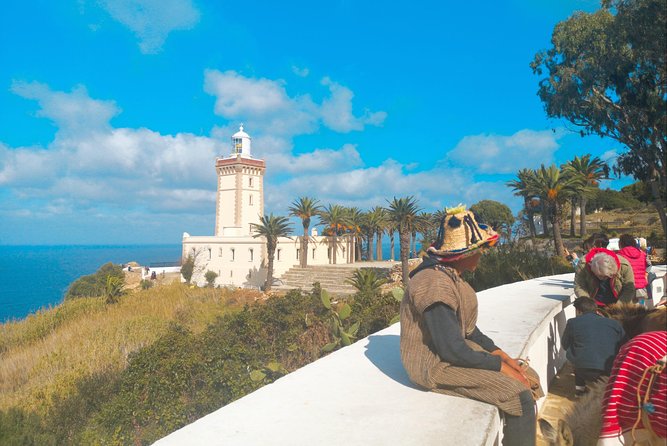
Camel rides are included, which is a major value add for a day trip. The ride is described as near the Atlantic Ocean, tying it to the coastal theme of Cap Spartel and the strait.
Just be practical about it. Camel rides can be short and staged for timing on a 6-hour schedule, so think of this as a memorable “one-time” moment rather than a long adventure. Also, if you prefer to avoid animals entirely, this is the part you’ll want to weigh against the rest of the itinerary.
If you’re okay with it, it’s the kind of experience that makes your photos and stories feel specific to Tangier.
Price and value: $313.71 per group up to 6
The price is $313.71 per group, up to 6 people. That’s where value gets interesting, because you’re paying for private guiding plus vehicle time plus camel rides and guided stops.
If you fill the group (six people), the per-person cost drops a lot compared with solo-style sightseeing. If you’re traveling as two or three, it’s still workable, but it becomes more of a “pay for convenience and guidance” choice.
What you’re buying isn’t just transport. You’re buying someone who can connect the dots between sights—coastline to fortress to Medina lanes. For a one-day window, that kind of direction is usually worth more than trying to stitch the day together yourself from taxi stops.
One more reason this price can feel fair: the visit includes multiple sites, with several admissions described as included. The only real “watch this” point is the Hercules Cave inclusion note I mentioned earlier. Double-checking that before you go is the best way to keep the math simple.
How to make this day trip feel easy (not rushed)
This tour has a tight schedule, so your success mostly depends on prep. Aim for comfortable walking shoes because you’ll do hours of mixed walking, including the Kasbah and Medina.
Bring a small day bag with water and sun protection. Even if some parts of the route are shaded, the coastal viewpoint time and Medina lanes can be exposed.
If you get motion sick, plan for the vehicle time. You’ll be driving between major points and making multiple stops, so it’s not constant stop-start, but it’s still a day with roads and turns.
And if you’re working around a ferry or cruise timetable, communicate clearly with your guide ahead of time. One reason this tour often goes smoothly is that guides are used to adjusting to timing realities in Tangier’s port area.
Should you book this Tangier day tour?
Book it if you want a guided one-day Tangier hit: coastline viewpoints at Cap Spartel, the Kasbah fortress area, and the Medina souks on foot, all in one organized flow. It’s also a good fit if you appreciate story-based sightseeing—places like Hercules Caves and the Kasbah are better when someone explains what you’re seeing.
Skip it or modify expectations if you want lots of free time to wander on your own for hours. This is structured. You’ll get guided pacing, not unlimited wandering.
One practical reason to feel comfortable booking: the tour notes free cancellation if you cancel at least 24 hours in advance for a full refund. That gives you breathing room while you lock in your overall Morocco schedule.
If Tangier is your only stop in the region, this is a smart way to see the “main poles” of the city without building your own route. If you’re returning to Morocco later, you’ll still come away with the coastline-to-Medina feeling that makes Tangier memorable.
FAQ
How long is the Tangier day tour?
It’s listed as approximately 6 hours.
What does the $313.71 price include?
It includes an air-conditioned vehicle, guiding service, and camel rides. The tour also notes that admission tickets are included for some stops, while others are listed as not included.
Is pickup provided?
Pickup is offered. The meeting point is Port de Tanger Ville on Blvd. Mohamed VI, Tanger, Morocco, and the tour ends back at the same place.
Do I need to bring lunch?
No. Lunch is not included.
Is the tour private?
Yes. It’s a private tour/activity, and only your group participates.
Are tickets digital?
Yes. You’ll use a mobile ticket.
Is the Hercules Cave entrance included?
The details show the Hercules Caves stop on the itinerary, but the Not Included section specifically lists Hercules Cave. I’d confirm with the operator what you’ll pay for on the day.
What’s the cancellation window?
Free cancellation is available up to 24 hours in advance for a full refund.