REVIEW · TANGIER
Private Chefchaouen Full Day Trip From Tangier
Book on Viator →Operated by LATIF Tours · Bookable on Viator
A single day can feel like a whole lifetime. This private trip from Tangier turns Chefchaouen’s winding blue medina into a guided, no-stress plan, with a private air-conditioned vehicle and a local guide who knows how to move you efficiently. I especially love the photo stops and flexible pacing—your driver can pause along the Rif Mountains route, and your guide can steer the walk so you’re not just wandering. One thing to plan for: you’ll do moderate walking on uneven lanes, and if you want lots of shopping time, you’ll need to say so early.
You also get the real value of a private day: you’re not stuck waiting for other people, and you can ask questions from the start—about Tangier, the Jbala region, or what you’re seeing in the medina. The route itself is part of the treat, too, with a scenic drive through the western Rif Mountains before Chefchaouen’s hills and blue buildings take over your senses.
In This Review
- Key Things You’ll Notice on This Chefchaouen Day Trip
- Tangier to Chefchaouen: The Ride Through the Rif Mountains
- Meeting Your Blue-City Guide: How the Day Gets Personalized
- Chefchaouen’s Blue Origins: What You’re Actually Seeing
- The Medinas’ Winding Alleys: How the Walk Works (and Doesn’t Feel Random)
- Bab El Ain to the Southern Gate: A Strong First Snapshot
- Outa El Hammam Square: Where the Town’s Social Life Happens
- Kasbah Museum and the Andalusian Garden: A Calm Pause Inside the Blue City
- The Great Mosque: Octagonal Minaret and Andalusian Influence
- Ras El Ma: The Everyday Water Spot Locals Actually Use
- Bouzafaar / Boujaafar Mosque: The Spanish Viewpoint Over Chefchaouen
- Timing, Pace, and What You Should Control
- Value for Money: Is $178.45 Per Person Worth It?
- Logistics You’ll Want to Get Right (Before You Leave Tangier)
- So, Should You Book This Private Chefchaouen Tour?
- FAQ
- Is this tour private?
- How long is the Chefchaouen day trip from Tangier?
- Does the tour include hotel pickup in Tangier?
- Do I need admission tickets for the main Chefchaouen sights?
- What about meals and drinks?
- Is there Wi-Fi and air-conditioning in the vehicle?
Key Things You’ll Notice on This Chefchaouen Day Trip
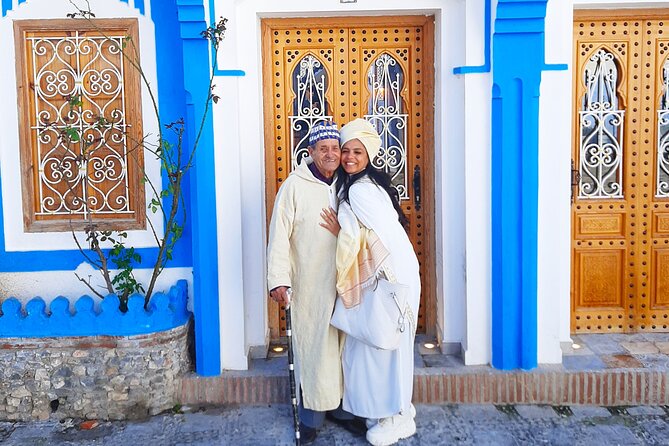
- Private vehicle with Wi-Fi and A/C for a smoother ride from Tangier and back
- A guide-led medina walk that targets key landmarks and photogenic lanes instead of random wandering
- Jbala region roadside moments, including traditional dress and organic produce/handicrafts sold en route
- Kasbah Museum + Andalusian Garden for a calm break from the street maze and Insta-alleys
- Ras El Ma water setting where locals gather, wash, and talk like it’s an everyday ritual
- Boujaafar (Spanish) Mosque viewpoint for sweeping city photos before you head back to Tangier
Tangier to Chefchaouen: The Ride Through the Rif Mountains
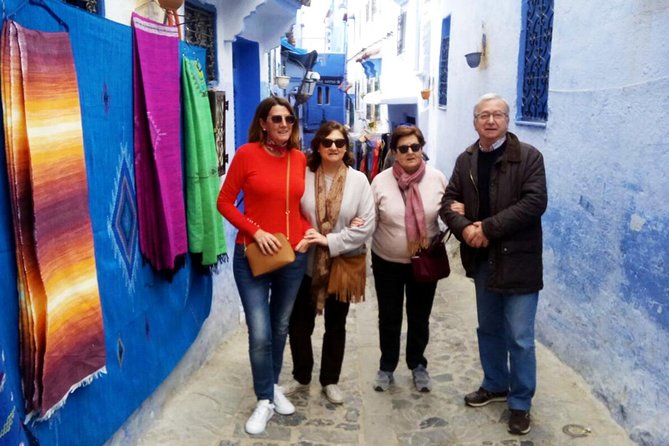
The best day trips don’t start when you arrive—they start when the road begins. After you’re welcomed at your accommodation in Tangier (or at the exit, depending on where you’re staying), you’ll climb into a comfortable car that’s air-conditioned and has Wi-Fi on board. It’s a small detail, but on a full day, the comfort matters. You’re not arriving to Chefchaouen already tired.
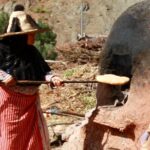
The drive to Chefchaouen is about 2 hours 30 minutes, and it runs through the western Rif Mountains. You’ll pass through a Jbala region, and that’s where the journey becomes more than transportation. You can often spot women and men in traditional dress selling organic produce and handicrafts, and your driver can stop if you want photos or a quick look.
Here’s the practical tip: if you have any must-do moments (a specific viewpoint, a scenic pause, or a quick snack stop), tell the driver early. The tour is private, so you’re allowed to steer the day a bit.
You can also read our reviews of more private tours in Tangier

Meeting Your Blue-City Guide: How the Day Gets Personalized
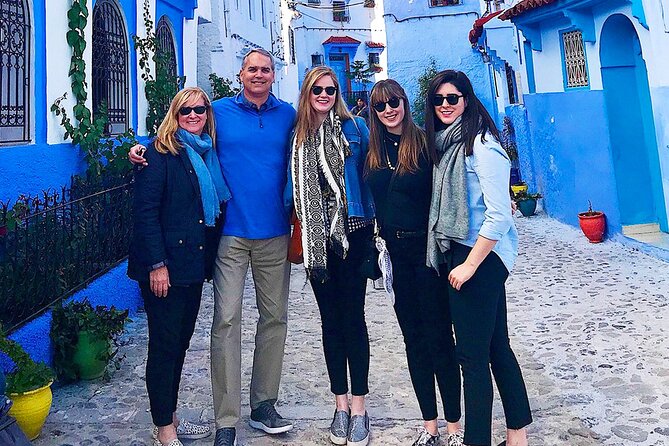
This is a private experience, meaning it’s just your group. That changes everything inside the medina, where a shared-group tour can feel chaotic. You’ll meet a local guide in Chefchaouen who leads you through the places that matter and helps you avoid wasting time on dead ends or overly crowded lanes.
In past days, guides have included older local personalities like Abdesalem and Salim (and sometimes other local names depending on the day). The common thread: they’re comfortable moving through the neighborhoods at a real walking pace. That’s good news if you want to see more than the first pretty alley, and it’s also a reminder to wear shoes you trust.
Language-wise, the tour is offered in English (and it may be operated by a multi-lingual guide). If you’re comfortable asking questions, this format pays off—your guide can point out what you’re actually looking at, not just recite general facts.
Chefchaouen’s Blue Origins: What You’re Actually Seeing
Chefchaouen was founded in 1471 as a kasbah (fortress), started by Moulay Ali Ibn Rashid Al-Alami to help defend northern Morocco against Portuguese pressure. Over the centuries, different communities settled here—Moriscos and Jews after the Spanish Reconquista—and that’s where the famous blue tradition comes in.
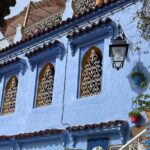
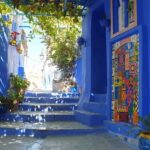
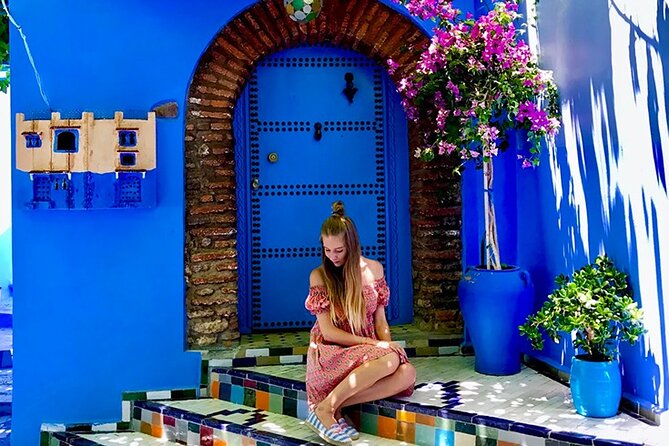
A key idea: the blue palette is linked to an older custom where houses were painted blue to express divinity. Over time, the blue spread beyond the Jewish quarter (the Mellah) into other parts of the medina. So when you’re walking through all those shades, you’re not just looking at decoration. You’re seeing a living result of centuries of culture layering on top of each other.
And yes, it’s photogenic. But the smarter move is to enjoy it slowly enough to notice the small variations: doorways, arch shapes, stairs, and the way light hits the paint at different angles.
The Medinas’ Winding Alleys: How the Walk Works (and Doesn’t Feel Random)
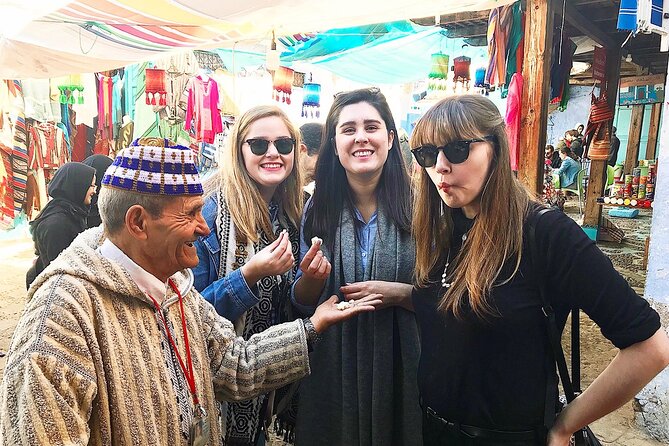
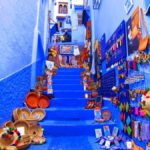
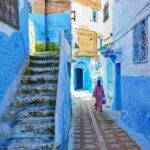
Once you arrive, the day shifts into slow steps and quick turns. Chefchaouen’s medina is UNESCO-listed in the broader context of the old city area, and it’s built on maze-like lanes painted in many shades of blue.
This is where the guide earns their keep. Your route is designed to include the major landmarks without you spending half the day trying to map your way back. You’ll typically walk through key zones such as:
- the Kasbah area and museum complex
- Hawta Square
- Ras El Ma (the water source)
- the Great Mosque area
- Outa El Hammam square
One thing to keep in mind: this isn’t a “sit and admire from a distance” kind of trip. The walking is described as moderate, but the streets include uneven stone lanes and lots of turns. If you’re easily worn down, build in breaks and tell your guide you want slower pacing.
If shopping is your goal, ask for it sooner rather than later. Some people wish they had more time to browse. On a private tour, you can often adjust, but you have to communicate your priorities.
Bab El Ain to the Southern Gate: A Strong First Snapshot
A great early photo stop is Bab El Ain, one of the main gateways into the historic 15th-century medina. It sits on the southern side of the old town near a cemetery. The façade is terracotta-colored stone, and the archway is relatively small, with small upper windows.
Why this stop matters: it gives you a clear “before you go in” landmark. After that, the medina lanes feel even more intense and magical because you can compare the gate’s solid structure with the winding blue streets that follow.
A few more Tangier tours and experiences worth a look
Outa El Hammam Square: Where the Town’s Social Life Happens
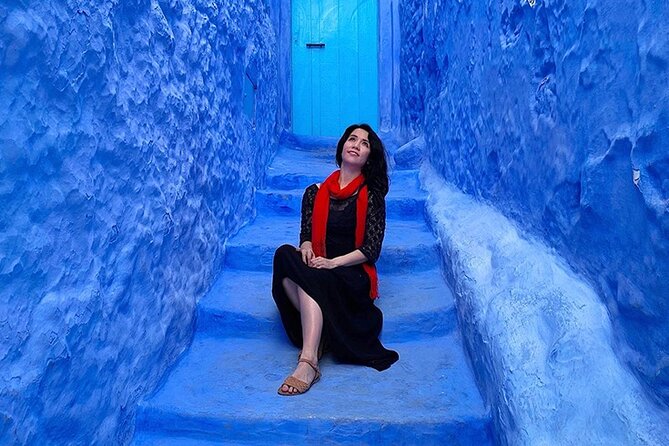
Chefchaouen’s squares are often where you feel the city’s rhythm. Place Outa El Hammam is one of the biggest and it’s a friendly mix of Moroccan and Spanish influences—something you can sense in the layout and the way food and street life gather around it.
This is a good zone to rest your feet for a bit. The name literally points to the flat ground where the hammam is, and the area sits near the hammam, the great mosque, and the kasbah complex nearby. Even if you don’t go into every building, the square helps you orient yourself spatially and mentally. From there, the mountains hovering over the town start to feel close.
For food: the tour doesn’t include meals by default, but a meal break is built in. Lunch is often a chance to try local favorites like chaouni-style food and mint tea. (If you have dietary needs, you’ll want to advise the team when booking.)
Kasbah Museum and the Andalusian Garden: A Calm Pause Inside the Blue City
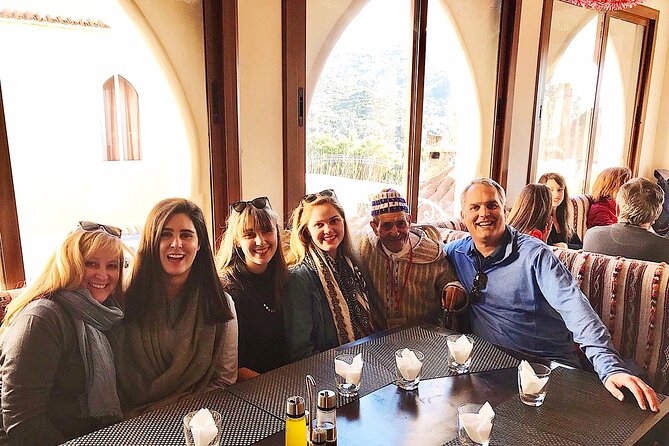
The Kasbah Museum sits next to the Great Mosque, and it’s more than a quick stop. Inside the kasbah is the Andalusian Garden, a green oasis where you can slow down before jumping back into the blue streets.
The ethnographic museum collections focus on the Chefchaouen region—artifacts ranging from pottery to musical instruments. There’s even a small art gallery. If you love photos, this place gives you a different kind of beauty: the contrast of calm greenery with the blue intensity outside.
What I like here for practical travelers: it’s a mental reset. It gives your feet a breather and helps you understand the city beyond the color.
The Great Mosque: Octagonal Minaret and Andalusian Influence
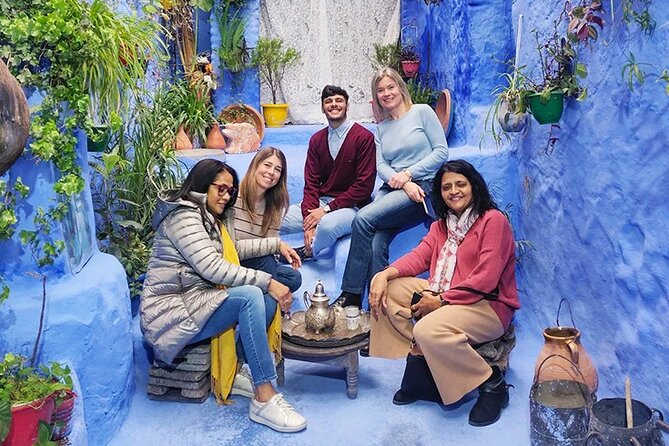
Chefchaouen’s Grande Mosque was built in the 15th century, on the orders of the founder’s son. The standout feature is the octagonal minaret, unusual compared to many other mosques that commonly use square minarets.
The shape is said to reflect Andalusian influence brought by Muslims from Spain. The mosque is also built with stone in shades of brown and beige, which makes the surrounding blue-and-white buildings feel even more dramatic.
Even if you’re only viewing from outside, this is one of those stops where you get a sense of place history—without needing to turn every moment into a museum lesson.
Ras El Ma: The Everyday Water Spot Locals Actually Use
Ras El Ma, meaning head of the water, is where fresh mountain water trickles into Chefchaouen. It’s a popular gathering place for locals, and this isn’t just sightseeing. People gather here to wash clothes and chat, creating a real window into daily life.
You also get a sense of how the town’s water system works. The water powers mills along the stream (called rhas). It’s not a grand waterfall scene designed purely for visitors. It’s more lived-in than that.
Tip: come ready for the “real city” vibe. If you want quiet, aim for a slower moment rather than the busiest hours.
Bouzafaar / Boujaafar Mosque: The Spanish Viewpoint Over Chefchaouen
At the end of the walking circuit, you’ll likely visit the Spanish Mosque, also known as Bouzafaar or Boujaafar Mosque. It’s perched on a hilltop, and from an outside terrace you get a view over Chefchaouen that makes all that blue feel larger than life.
Important detail: it was built in the 1920s by the Spanish. It never attracted local worshippers and later fell into disrepair. Restoration work has happened since, and because it is not a working mosque, visitors can usually peek inside.
The interesting backstory behind the name: “Boujaafar” refers to a Spanish official in charge of building the mosque, said to have had an unusually big mustache. That kind of detail makes the place feel human, not just historic.
Timing, Pace, and What You Should Control
A full day means you’ll be moving most of the time. The tour runs about 8 to 9 hours. You’ll spend time on the road, then a few hours in Chefchaouen, including museum and viewpoints.
One review-style theme you should take seriously: the day can be strenuous and exhausting if you don’t take breaks. The walking is described as moderate, but Chefchaouen’s streets are steep and full of steps. The fix is simple:
- wear comfortable shoes
- ask for photo stops when they make sense
- tell your guide early if you want longer shopping time
Also, plan your expectations around shops. Some tours include brief visits to artisan stores. Treat these as optional browsing time, not a forced agenda. If you want real crafts, go slow and ask questions. If you don’t want the “sales push,” be clear and move on.
Value for Money: Is $178.45 Per Person Worth It?
At $178.45 per person, this is not the cheapest way to do Chefchaouen. But it can be strong value because it bundles the big costs people usually underestimate:
- Private transportation in an air-conditioned vehicle
- Pickup and drop-off within the Tangier area
- A private guide in Chefchaouen
- Time-focused route planning so you don’t lose hours figuring things out
If you tried to do it DIY—driver or multiple taxis, figuring out where to park, then hiring a guide last minute—you’d likely spend time and money in a way that adds stress. Here, the structure is already handled.
Also, several stops note admission ticket free, which helps keep the day predictable. The major extra costs are meals (not included by default) and any optional add-ons.
If you’re traveling as a couple, a family, or a small group, the private format usually feels even better. You’re paying for control, and Chefchaouen rewards that control.
Logistics You’ll Want to Get Right (Before You Leave Tangier)
Pick-up and drop-off in Tangier are included within the Tangier area, and you’re picked up from two locations in Port de Tanger Ville: the ferry terminal and the port’s mosque. The company also notes pick-up from all hotels listed and from the train station.
The one caution is Tanger MED Port. There is no standard pick-up there. If you’re arriving at Tanger MED, pick-up is only available upon request and at an additional cost of €80 per booking. If you’re coming by ferry, you’ll want to plan around ferry schedules and where your pickup point actually is.
If you’re coming from cruise ports or ferry connections, double-check your exact location and timing. The tour is timed tightly to make the long drive worthwhile.
So, Should You Book This Private Chefchaouen Tour?
I’d book this if you want Chefchaouen without the hassle: comfortable ride from Tangier, a guide who knows the right stops, and enough structure to see the medina highlights in a single day. It’s also a good call if you care about photos but don’t want to spend hours hunting viewpoints on your own.
I’d think twice if you hate walking hills, get tired fast, or want an unstructured “shop until your heart’s content” day. You can still shop, but you’ll need to communicate that early so the schedule doesn’t drift toward sightseeing.
If you do book it, my best advice is simple: tell your guide what you want most—blue alleys, museums, views, or buying authentic crafts—and wear shoes that can handle old-stone steps. Then enjoy the day.
FAQ
Is this tour private?
Yes. It’s a private tour/activity, meaning only your group participates.
How long is the Chefchaouen day trip from Tangier?
The duration is about 8 to 9 hours.
Does the tour include hotel pickup in Tangier?
Pickup is offered within the Tangier area, including hotels listed by the provider and also pickup from the train station.
Do I need admission tickets for the main Chefchaouen sights?
For the listed stops, admission tickets are noted as free (including areas like the medina, museum stop, and key landmarks).
What about meals and drinks?
Food and drinks aren’t included, but the team says it can arrange an authentic Moroccan lunch for you if you want.
Is there Wi-Fi and air-conditioning in the vehicle?
Yes. The vehicle includes air-conditioning and Wi-Fi on board.