REVIEW · SAHARA DESERT MOROCCO
M’Hamid: 3-Day Sahara Trek & 4×4 Continuation to Erg Chigaga
Book on GetYourGuide →Operated by Sublime Desert · Bookable on GetYourGuide
Camels, stars, and big dunes in three days. This is a classic M’hamid to Erg Chigaga route, with two days on foot (or camel) plus nights in desert camps, timed for the light that makes Sahara photos look almost unreal. I especially like how the trek portion slows your pace down, then the 4×4 segment turns the volume up as you reach the dunes at Erg Chigaga.
The second thing I like: the care around comfort for a trip this remote. You’ll have shade breaks (including lunch under a tamaris tree), proper meals throughout, and the rhythm of sunrise and sunset that makes the desert feel like its own calendar. I also like that the experience is run as a private group, so the pace and small moments (like choosing between walking and riding at times) tend to feel more personal.
One consideration: day 3 moves quickly. You’ll wake early for sunrise, but you’re back around 10:30 a.m. in M’hamid El Ghizlane—so if you want a long, lazy desert morning, plan for a short finale.
In This Review
- Key Things That Make This Trek-Mix Worth Your Time
- From M’hamid To Erg Chigaga: What This 3-Day Mix Really Delivers
- Day 1: M’hamid Start, Shade Breaks, and a Mobile Camp at Erg Bartame
- Day 2: Sunrise Trek, Tamaris Lunch, and 4×4 to Morocco’s Highest Dunes
- Day 3: Early Dunes, Quick Return, and How to Plan Your Final Morning
- Camps, Food, and the Comfort-Level You Can Count On
- Guides and Animals: What Makes the Trip Feel Like More Than Transport
- Price and Value: Is $382 Reasonable for 3 Days in the Desert?
- Who Should Book This M’hamid Desert Trek (And Who Should Skip It)
- Practical Packing Checklist (So Your Desert Day Feels Easier)
- FAQ
- How long is the camel trekking part?
- What happens on day 2 after lunch?
- Where do you meet the group?
- What languages is the guide available in?
- What’s included with the ticket price?
- What should I avoid if I have health concerns?
- Should You Book This M’hamid Desert Trek and Erg Chigaga Continuation?
Key Things That Make This Trek-Mix Worth Your Time
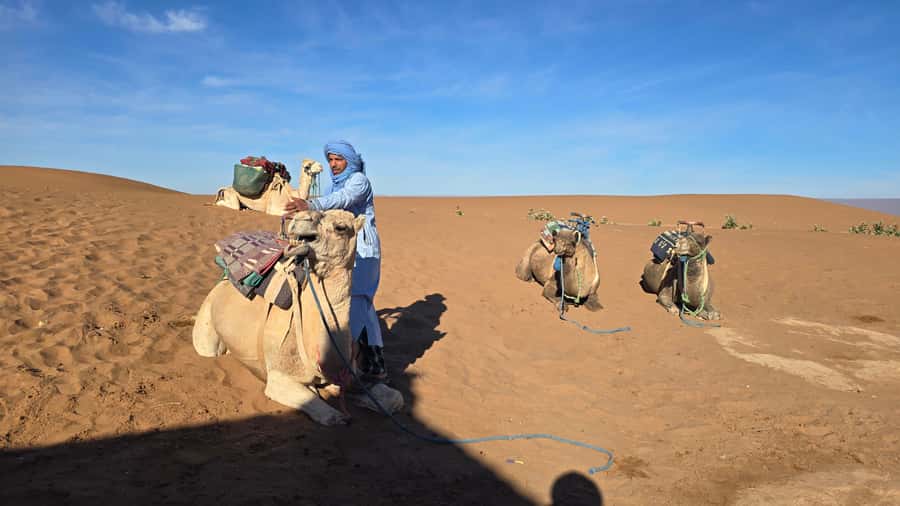
- Two full days camel trekking from M’hamid toward Erg Bartame, with real trek hours (not just a short promenade)
- Sunrise and sunset in the dunes timed so you’re not rushing light like on many quick tours
- Lunch stops with shade (including under tamaris) that make the walking more doable
- A night in a mobile desert camp far out in the open, where darkness feels dramatic
- 4×4 continuation to Erg Chigaga to reach the biggest dunes without adding more camel days
- Sandboarding in camp at Erg Chigaga, so you’re not just watching dunes—you’re playing on them
From M’hamid To Erg Chigaga: What This 3-Day Mix Really Delivers
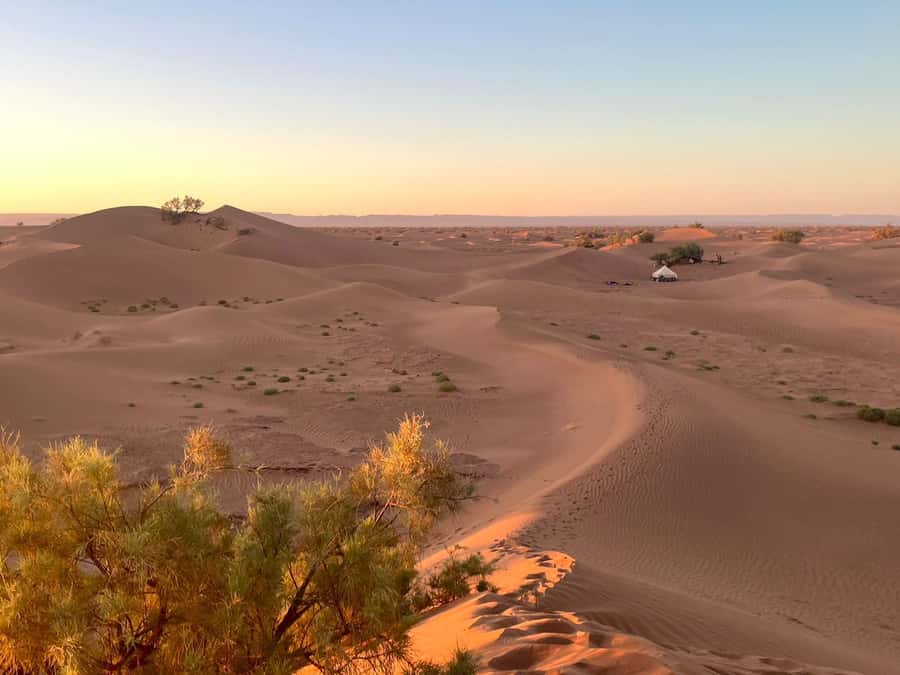
This isn’t one of those “watch the desert from the edge” days. The trip stitches together two different Sahara moods: slow, quiet movement on camel (day 1 and day 2 morning), then a faster transition by 4×4 to Erg Chigaga for the big-dune wow factor.
You start in M’hamid El Ghizlane, the last village before the Sahara feel really kicks in. From there, the route is built around time on the sand and time under a sky that goes from hot daylight to serious night darkness. It’s the kind of trip where you notice small changes: the way shadows shrink, how silence stretches, and how the “edge of the day” (sunrise/sunset) becomes the main event.
Value-wise, you’re paying for more than transport. For $382 per person, you’re also covered for: two camel trek days, two nights in desert camps (one mobile, one fixed camp at Erg Chigaga), and all meals. That matters because desert time is what costs—fuel, staff, animals, and getting set up away from normal lodging. If you tried to piece it together yourself, you’d likely spend comparable money just arranging the logistics.
The experience is described as a 3-day desert adventure with a private group and a live guide (English, French, and Arabic). In practice, that should mean you can ask questions and adjust the pace a bit, especially when you’re deciding whether to ride or walk during trekking.
You can also read our reviews of more tours and experiences in Sahara Desert Morocco.
Day 1: M’hamid Start, Shade Breaks, and a Mobile Camp at Erg Bartame
You’ll begin at 10:00 a.m. in M’hamid, meeting your team first. Then it’s into the desert with a camel trek that lasts about two hours before the first lunch break. The lunch stop is under a shadowy tree, which sounds small—until you’re actually walking in the Sahara heat and you realize shade can be the difference between “fine” and “I need to sit down right now.”
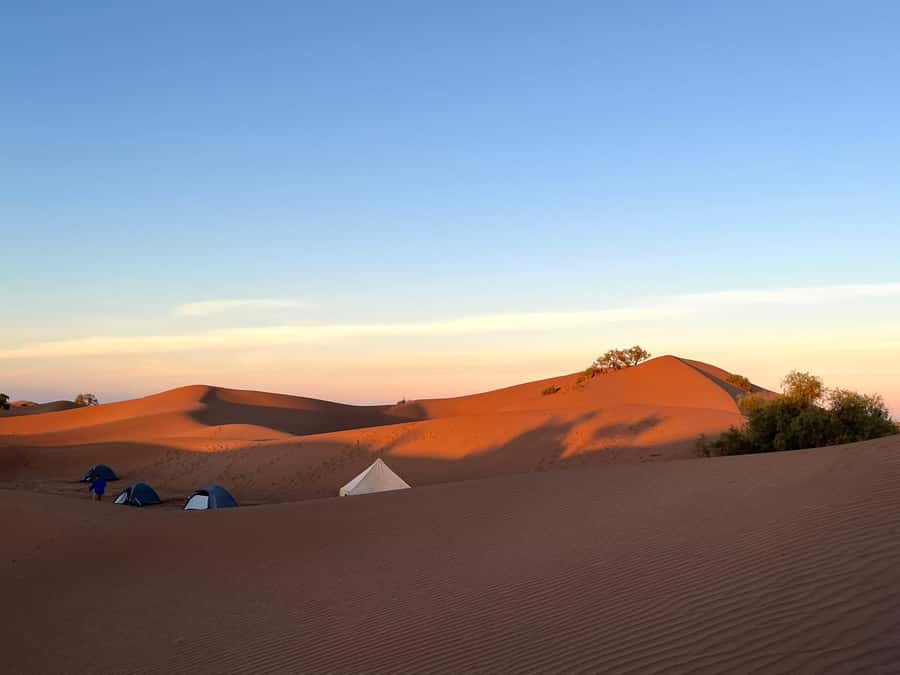
After lunch, you continue trekking for about two more hours to Erg Bartame, where you set up your mobile camp. This is the first night in tents, and it’s the one people remember most: you’re sleeping away from the usual tourist trail, with the stars doing most of the talking.
What to expect in real terms on day 1:
- You’ll have walking time layered with camel time. The camel isn’t just for show—it’s part of how the route stays comfortable enough for multiple days.
- Your body will feel the desert more than your brain does. Heat, sun angle, and footing matter. If you show up with good shoes and a hat, you’ll feel more in control.
- Evening is quiet in a way normal hotels never are. The sky is the main feature—bring warm layers because night temps in the desert can surprise you.
Day 2: Sunrise Trek, Tamaris Lunch, and 4×4 to Morocco’s Highest Dunes
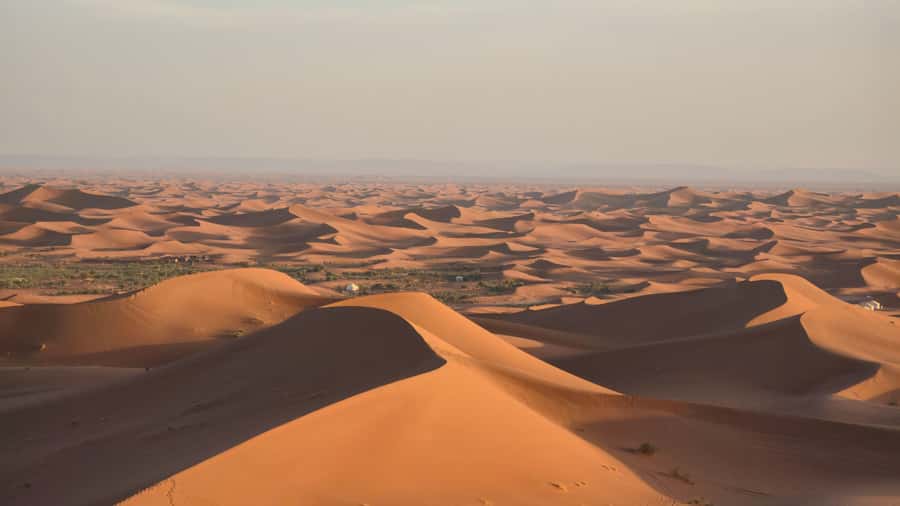
Day 2 starts early for sunrise over the dunes. After breakfast, you’re back on the move with another 2–3 hours of trekking, still working alongside the camels. This is the “calm” part of the day: not fast travel, just steady movement across sand.
Lunch comes again under shade—this time it’s described as a large tamaris tree. Then the route shifts gears. After lunch, you switch from camel trekking to a 4×4 ride toward the big dunes of Erg Chigaga.
And yes, Erg Chigaga is famous for its scale. You’ll reach the highest dunes in Morocco, which is where the desert stops being a “nice walk” and becomes a massive playground. The timing also matters: you’ll enjoy the sunset experience at the dunes, plus sandboarding at camp. Sandboarding is included, which is great because it turns the day from observation into action.
Then you sleep again in desert camp—this time described as Berber tents at Erg Chigaga, with dinner and breakfast included. Compared with the mobile camp night on day 1, this part feels more settled, built around the Erg Chigaga stop and the sunset/sunrise cycle.
A small practical note: if you’re hoping Erg Chigaga is just a long hangout, don’t. You’ll be moving through sunrise, trek time, 4×4, and then sunset/sandboarding. It’s full, which is usually what people want from a 3-day Sahara trip.
Day 3: Early Dunes, Quick Return, and How to Plan Your Final Morning
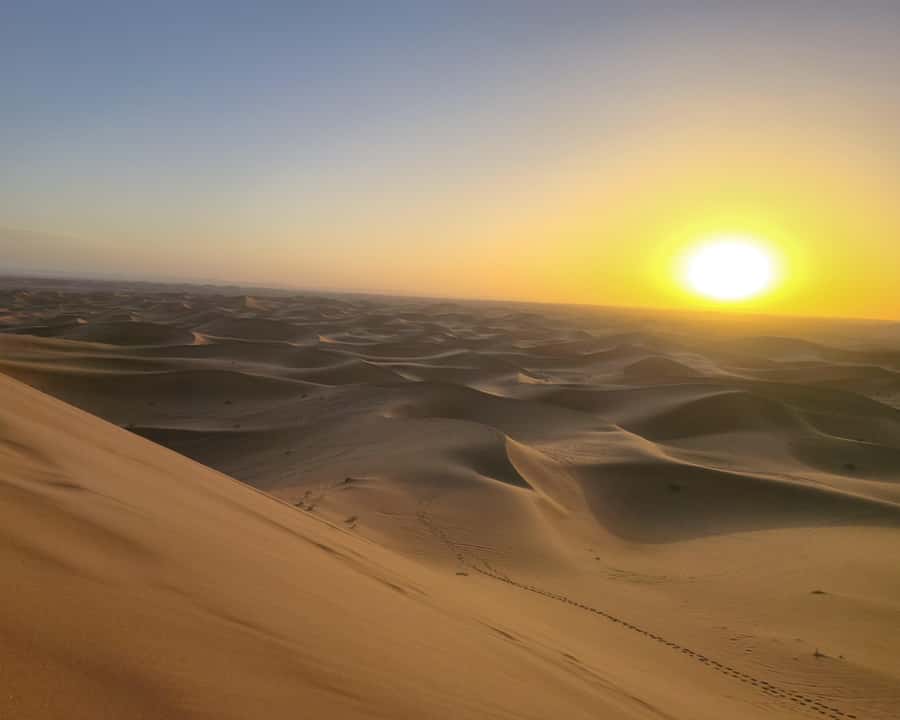
On day 3, you wake up early again for sunrise over the great dunes. Then it’s breakfast and off-road travel back toward M’hamid El Ghizlane, which you reach around 10:30 a.m. That timing is important.
If you love desert mornings, day 3 delivers—sunrise is built into the schedule. But if you’re imagining a slow, flexible “last day in the Sahara,” this itinerary doesn’t work that way. The payoff is that day 1 and day 2 are substantial, and day 3 is the clean cutoff: one last sunrise, then you’re back to civilization relatively soon.
What to do with this information:
- Plan any travel connections (bus/train/flight) with enough buffer. Even though the tour aims to finish by late morning, you’ll still be leaving a remote area.
- If you’re sensitive to early starts, pack for it. You’ll likely want warm layers, because desert mornings can feel cool even when afternoons get hot.
Camps, Food, and the Comfort-Level You Can Count On
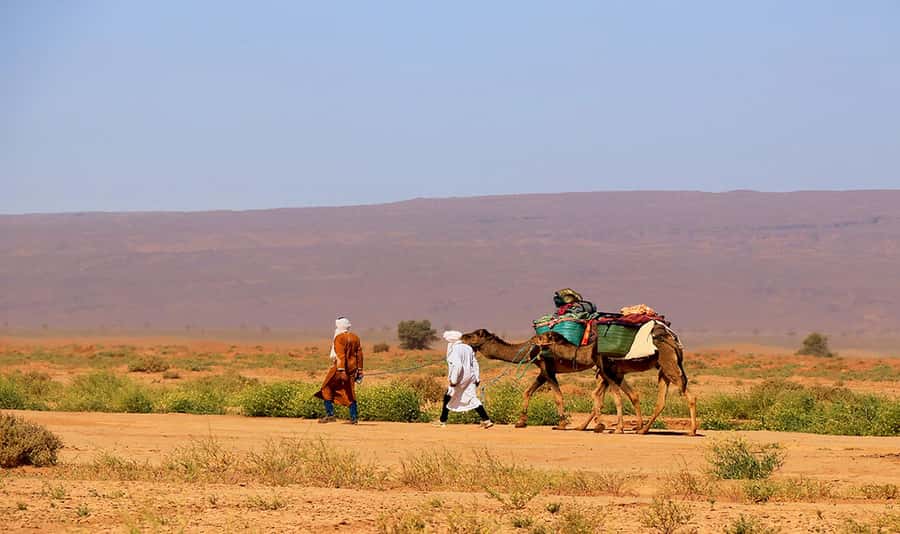
The camps are split into two styles:
- Night 1: a remote mobile camp at Erg Bartame in tents
- Night 2: a fixed desert camp at Erg Chigaga in Berber tents
That difference matters. The mobile camp night tends to feel more “out there,” with the desert doing the scenery work. The fixed camp night is usually easier on you logistically, and it’s where you’ll likely experience more structured activities tied to sandboarding and the dunes’ light.
Meals are included every day: breakfast, lunch, and dinner. That’s not just a convenience—it’s a quality-of-experience thing. In the Sahara, you want food that doesn’t require you to figure out logistics. Based on the way meals are described, lunch breaks are also a built-in recovery moment: tea and snack time appear as part of the rhythm, and meals are prepared in camp.
One thing I’m glad to see included: shade-lunch planning. Lunch under trees (shadowy tree on day 1, tamaris on day 2) is a smart touch. It means the trek is more sustainable and less punishing.
Guides and Animals: What Makes the Trip Feel Like More Than Transport
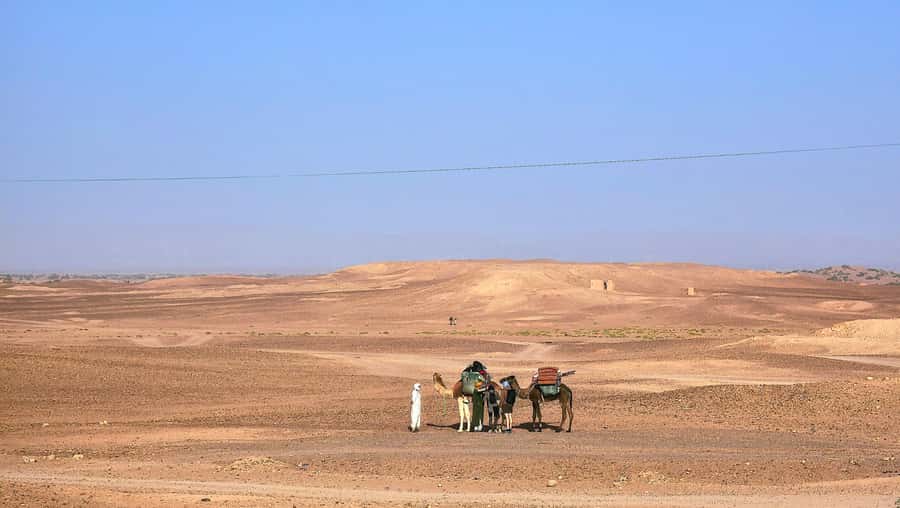
This is where the experience becomes human. The tour is guided live, and the language coverage is practical: English, French, and Arabic.
In the stories from the field, names like Zakaria, Hossein, Otman/Oteman, Hamza, Eyob, Omar, Hammadi, Bachir, and Osman/Osman come up. I don’t treat that as a guarantee of who you’ll get, but it tells you the operation relies on a real team—people who can explain desert life, traditions, and day-to-day choices while keeping the trek moving.
Camels are a core part of this route, and you’ll want them well handled. The camp setup, break timing, and the smooth rhythm of trekking all depend on trained animals and a team that knows the pace for your group. In past experiences, the camels are described as cared for and the riders as supported—important if you’re not used to camel trekking.
If you want a trip where conversation is part of the journey, this one has the right ingredients: guided explanation plus lots of time walking, cooking time around the fire, and space for questions. That’s also why a private group format can be a big win.
Price and Value: Is $382 Reasonable for 3 Days in the Desert?
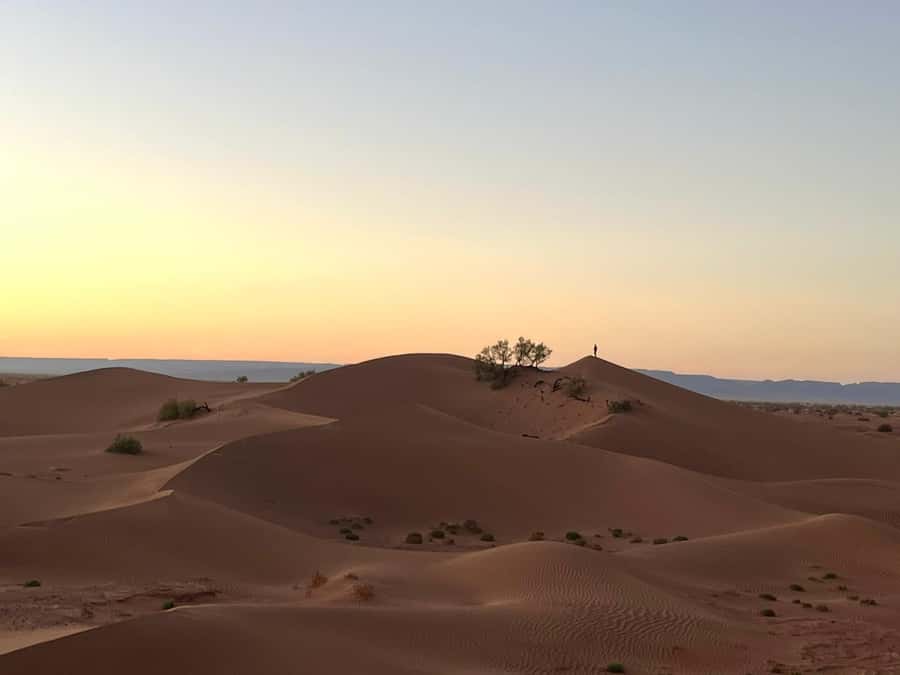
At $382 per person, you’re buying a bundle: trekking days (two days on camel), camp nights (one mobile, one fixed), all meals, a 4×4 ride into Erg Chigaga, plus sandboarding.
The value question really comes down to this: desert tours are expensive because getting away from roads costs money (vehicle support, animals, staff, and camp setup). When meals and camps are included, you’re not spending extra at remote locations, and your day stays simple. For many people, the “hidden cost” of desert travel is time and hassle—this reduces both.
You should still consider what you’re getting in time. You have a trek-heavy day 1 and day 2, then a dune-focused day 2 afternoon/evening with sandboarding, and a day 3 that ends around 10:30 a.m. That’s not a long, lingering retreat. It’s a focused desert route.
So: if you want a compact, high-impact Sahara experience that covers both camel trekking and the big dunes, the price feels aligned. If you want a long decompress-and-do-nothing desert stay, you might feel rushed by the day 3 cutoff.
Who Should Book This M’hamid Desert Trek (And Who Should Skip It)
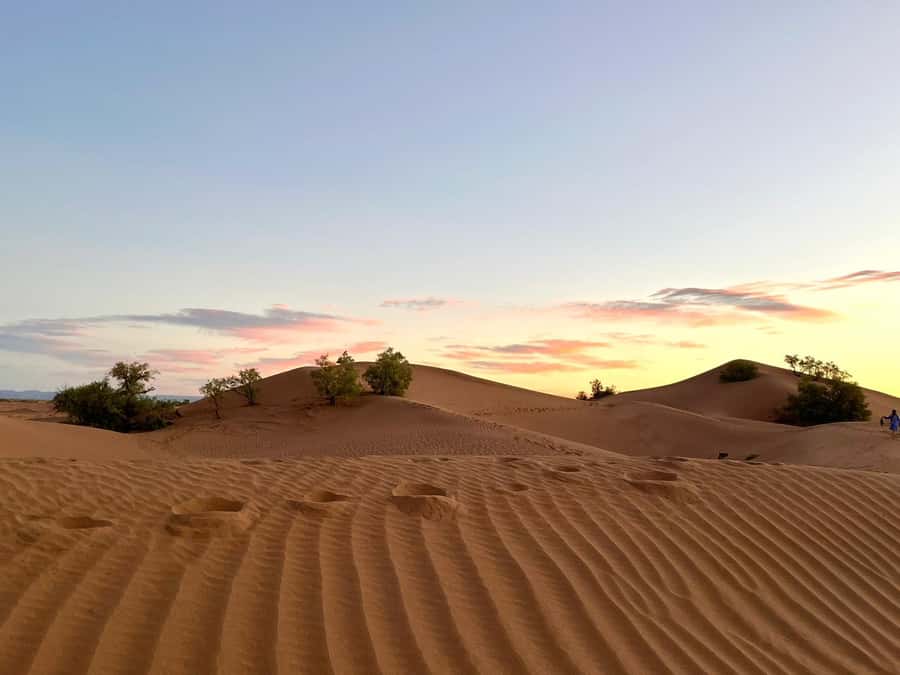
This trip fits best if you:
- Want camel trekking for two days, not just a short ride
- Care about sunrise and sunset timing in the dunes
- Prefer a private group pace with a guide who can answer questions
- Are fine with sleeping in tents and living on included camp meals
It may not fit if:
- You have back problems or heart problems. The trip explicitly says it isn’t suitable for these conditions.
- You’re very sensitive to walking time and desert heat. You can manage it with the right preparation, but the trek is still part of the deal.
If you’re traveling as a couple or small group and you want the “far from crowds” feel, the remote night approach is a strong point. If you’re traveling with a tight schedule and need a clear start/finish, the itinerary’s structure helps.
Practical Packing Checklist (So Your Desert Day Feels Easier)
The basics you’re told to bring are exactly what I’d recommend you follow:
- Comfortable shoes you can walk in for several hours
- Warm clothing and a sleeping bag for chilly desert nights
- Sunglasses and a hat
- Sunscreen
- Comfortable clothes for hot days
- Water planning. The trip notes hydration as a priority.
A small personal-trainer tip: wear what you plan to walk in. Don’t bring brand-new shoes that can rub. Sand turns everything into a grind.
FAQ
How long is the camel trekking part?
You have about two days of camel trekking: day 1 includes around two hours of trekking before lunch and about two more hours after lunch, and day 2 includes about 2 to 3 hours of trekking in the morning.
What happens on day 2 after lunch?
After breakfast and morning trekking, lunch is taken in the shade of a tamaris tree, then the group continues by 4×4 to the big dunes of Erg Chigaga. You’ll have the sunset experience and sandboarding in the camp area.
Where do you meet the group?
You meet at M’hamid El Ghizlane village. The exact meeting location is shared with you the day before departure.
What languages is the guide available in?
The live tour guide works in English, French, and Arabic.
What’s included with the ticket price?
Included are camel trekking for two days, two nights of camping (first night in remote tents, second night in a fixed camp at Erg Chigaga), all meals (breakfast, lunch, dinner), 4-wheel-drive continuation to Erg Chigaga, and sandboarding. Personal expenses are not included.
What should I avoid if I have health concerns?
The trip is not suitable for people with back problems or heart problems, based on the provided information.
Should You Book This M’hamid Desert Trek and Erg Chigaga Continuation?
I’d book it if you want a 3-day, well-timed Sahara route that combines two days of camel trekking, a remote-feeling first night, and then the big-dune scale of Erg Chigaga with sunrise/sunset and sandboarding. The price makes sense because your meals, camps, animals, and vehicle support are covered.
I wouldn’t book it if you need a slow, long desert stay or if walking and early mornings are a problem. Day 3 ends around 10:30 a.m., so the final day is more of a sunrise farewell than a relaxed linger.
If you’re prepared with the right shoes, sun protection, and warm layers, this is the kind of trip that leaves you with a strong sense of place—less “safari photos,” more a real rhythm of walking, cooking, stars, and dune light.