REVIEW · CASABLANCA
Morocco 11 Days Tour from Casablanca via Sahara Desert
Book on Viator →Operated by Tilila Travel · Bookable on Viator
Camels, blue towns, and desert stars all in one. This Morocco 11-day tour is built around the big contrast: sunrise camel rides into Merzouga’s Erg Chebbi dunes and a night in a traditional Berber camp. I also like the small group size (max 8) and the easy start, with a driver waiting for you at Casablanca airport for pickup to your hotel.
The trade-off is simple: you’ll cover a lot of ground. Some days are long drives through mountains and valleys, so this is best for people who enjoy motion and can stay flexible with timing.
You get structure without feeling boxed in. You choose your tour language (Arabic, German, English, Italian, French, or Spanish), and there are local guides in Fes and Marrakech so the walking time actually goes somewhere. Plus, you’re traveling in an air-conditioned vehicle, which matters once temperatures shift between coastal Morocco, the Atlas, and the desert.
In This Review
- Why This Casablanca to Sahara Route Feels Efficient
- Casablanca Starts Big: Hassan II Mosque and Straightforward Arrival
- Rabat and Oudaias Kasbah: A Pause Before the Blue City
- Chefchaouen Two Ways: First Walk and Then Slow Time
- Fes: The Medina Day That Actually Gives You a Map
- Atlas Transition: Ifrane Cedar Forest, Ziz Valley, and the Road Toward Merzouga
- Merzouga and Erg Chebbi: Camel Ride, Desert Camp, and Morning Magic
- Todra Gorge and Dades Valley: Canyon Drama and Rock Formations
- Kasbah Country to Marrakech: Rose Valley Stops and Tizi n’Tichka Pass
- Marrakech With Local Guidance: Gardens, Palaces, and Souk Time
- Essaouira: Coastal Reset, Argan Trees, and Safe Beach Time
- Price and Value: What $2,253.22 Buys in Real Life
- Who Should Book This Tour (and Who Might Not)
- Should You Book Morocco 11 Days From Casablanca via Sahara Desert?
- FAQ
- How do I get picked up when I arrive in Casablanca?
- What languages are available on this tour?
- How big is the group?
- Is a camel ride included in the Sahara?
- What meals are included?
- Do I need to pay for monument entrance fees?
- Is free cancellation available?
Why This Casablanca to Sahara Route Feels Efficient
- A small group (up to 8) means fewer delays and easier communication with your driver.
- Airport-to-hotel pickup in Casablanca reduces day-one stress, especially if you land late.
- Two guided blocks (Fes and Marrakech) help you hit the real highlights faster in the busiest medinas.
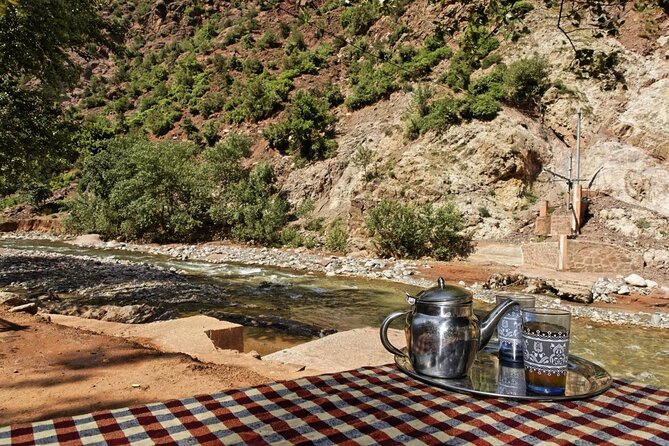
- Merzouga’s Erg Chebbi experience is the star: camel ride, mint tea welcome, sunrise trekking, and a night under the stars.
- Atlas-to-oasis scenery changes daily, from cedar forests and canyon views to desert dunes.
- Options for personalization show up in real-world service, with guides and drivers who help keep the pace comfortable for mixed groups.
Casablanca Starts Big: Hassan II Mosque and Straightforward Arrival
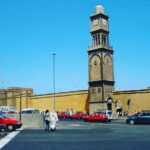
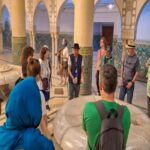
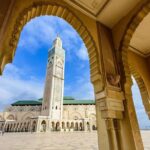
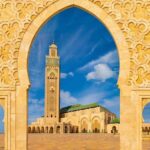
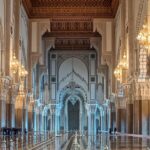
Most Morocco trips don’t begin with a wow-factor landmark, but this one does. Your first official stop is Hassan II Mosque in Casablanca, the big, famous one that anchors the city’s modern identity. It’s a great way to calibrate your trip early because everything after feels like it’s adding another layer.
Before sightseeing, you’re handled from the moment you arrive. A driver meets you at Casablanca airport with a sign and transfers you to your hotel or riad, then you sleep in place for an easier morning start.
What I like here is how calm it keeps the first day. Morocco can feel chaotic if you’re figuring out transportation while tired. Starting with an organized pickup means you spend your energy on the sights, not logistics.
You can also read our reviews of more tours and experiences in Casablanca.
Rabat and Oudaias Kasbah: A Pause Before the Blue City
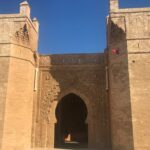
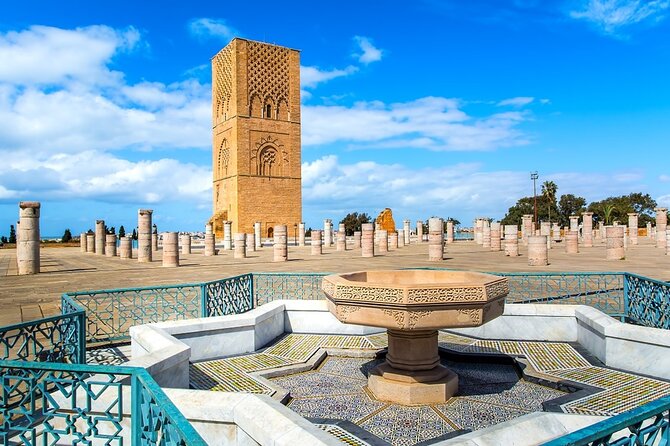
From Casablanca, you head toward Rabat, and the route makes sense: you’re moving toward history without immediately jumping into the deepest medina chaos. You’ll see Bab Challah, the Mausoleum of Mohammed V, and the Oudaya Kasbah area. Lunch is included at a local restaurant, which helps keep the day moving.
Rabat is also a good palate cleanser. It’s not as frenetic as Fes or Marrakech, and it gives you a breather before you go hunting for photo angles in the Rif Mountains.
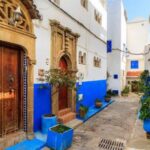
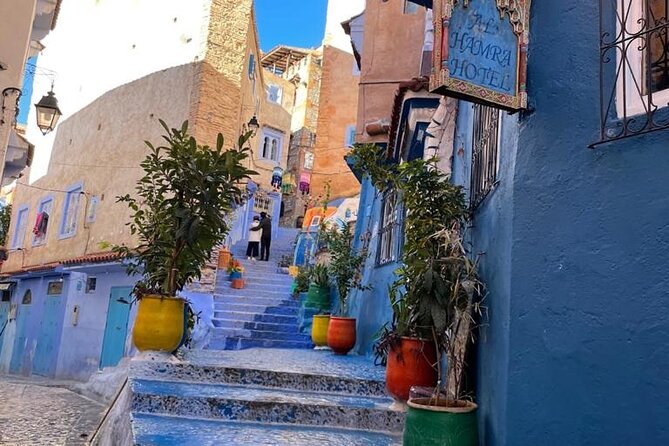
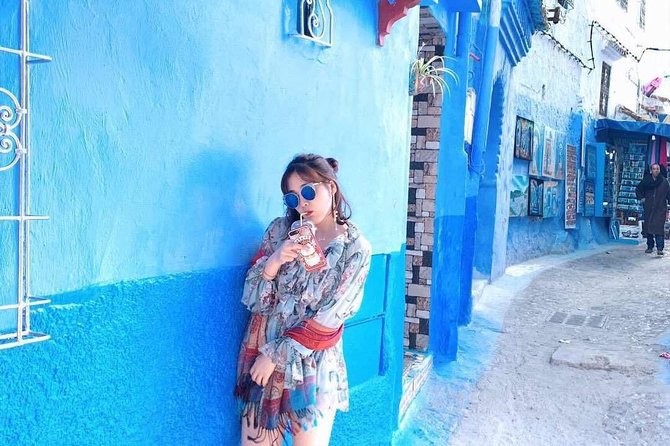
Then comes Chefchaouen. Driving through small towns on the way helps break up the day, and getting to Chefchaouen a bit early is smart. It gives you time to walk the blue alleys, take photos, and eat something simple in the medina before the day crowds build.
Chefchaouen Two Ways: First Walk and Then Slow Time
Chefchaouen is one of those places where the timing makes a difference. If you arrive earlier, you catch the town in a softer light, and the lanes feel more human-scaled. Here, you get an evening arrival and then a full morning with free time, which I think is the right mix.
On the second day, you can wander at your own pace through the blue buildings and steep cobbled streets. You’ll pass leather and weaving workshops, and there’s time to base yourself around the main square (Outa el Hammam) and the nearby casbah with red walls.
The view points and the local textures are the real payoff. You’re not just seeing color; you’re also seeing how daily craft lives inside the architecture.
A small consideration: Chefchaouen is hilly. If your knees aren’t friendly, build in slower breaks and plan for steps. It’s worth it, but don’t pretend it’s flat.
Fes: The Medina Day That Actually Gives You a Map
Fes is where guided time becomes essential. The medina is dense, and without context you can burn hours while still feeling like you just walked in circles.
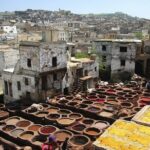
You start after breakfast from your Riad and begin with a structured walk. Key stops include the Royal Palace gate area and the Jewish quarter, followed by the Mellah, described as the first of its kind built in Morocco during the 14th century. You’ll also visit Al Qaraouine University, the Tanneries, and the Moulay Idriss mausoleum.
If you like details, this day gives you a lot to hold onto: history, crafts, and the physical feel of old Fes all in one route. Lunch is included, and there’s a panoramic view point over the Medina later, which helps you regain your bearings after the maze.
One of the best values here is the local guide in Fes. With the right guidance, you don’t just see the highlights—you understand why they matter and how they connect.
Atlas Transition: Ifrane Cedar Forest, Ziz Valley, and the Road Toward Merzouga
Once you leave Fes, the trip turns into a scenery montage through the Middle Atlas and toward the High Atlas. You travel via Midelt, and you’ll also stop around Ifrane—often called Switzerland of Morocco—where the mountain feel is obvious.
Then comes a stop at the cedar forest in the Middle Atlas, where you may see Barbary apes. This is one of those moments that feels refreshingly random compared to the medina days. You get animals, shade, and a calmer pace.
From Midelt you drive through the Tiz Ntalghamt pass and toward the Ziz Gorge. Panoramic viewpoints along the Ziz Valley help you understand how the country shifts as you move south-east—vegetation changes, the air feels drier, and the horizon starts hinting at desert terrain.
By the time you arrive in Merzouga, you’re fully in the build-up phase. You’ll get a mint tea welcome on arrival, which is a small thing, but it makes the moment feel like you’ve arrived rather than just passed through.
Practical note: these driving days are long. If you tend to get car-sore, pack what you need before you depart Fes.
Merzouga and Erg Chebbi: Camel Ride, Desert Camp, and Morning Magic
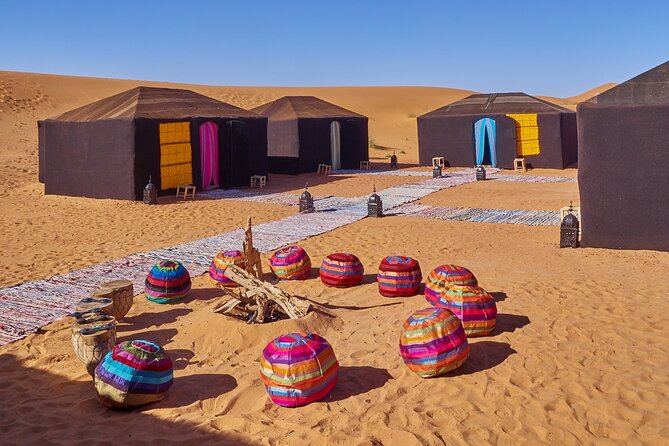
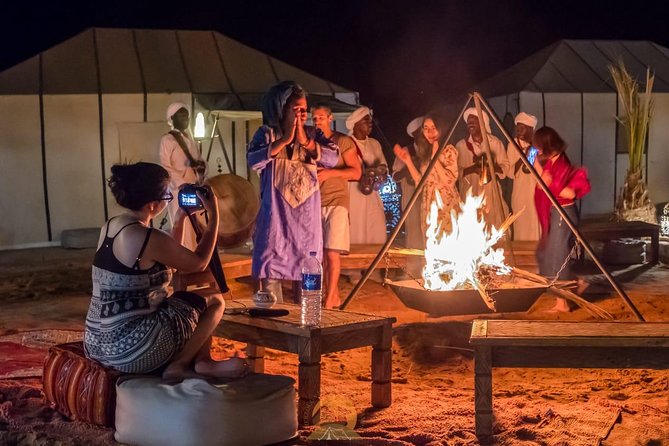
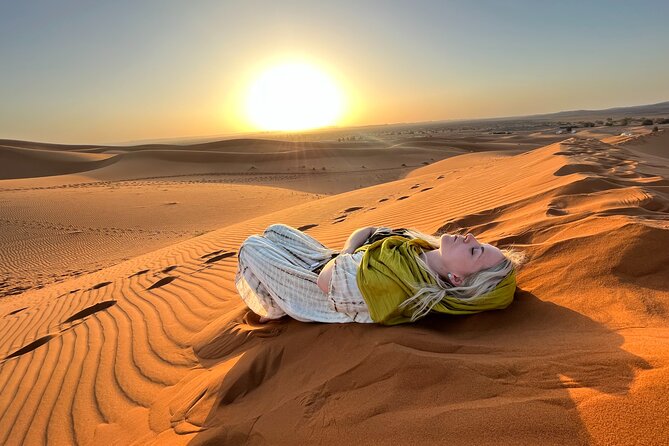
This is the heart of the trip, and it’s not just marketing. You take a camel ride into the dunes of Erg Chebbi to reach your camp for the night. That transition—leaving vehicle life behind—changes the whole tone of your day.
At camp, you’ll experience Berber music and the feeling of sleeping under stars. The desert night is a special kind of quiet, and it’s the kind of evening you’ll remember when you’re back in regular cities.
The next morning is even more iconic. Your camel guide wakes you early for sunrise, and you camel-trek back toward the village of Merzouga. The sand dunes change with the light as you move, so even if you think you’ve “seen desert photos,” you’re still getting a real sensory moment.
If you’re wondering whether this is worth it: for many people, yes, because it’s one of the few ways to experience Erg Chebbi that feels like living inside it, not just looking at it.
Todra Gorge and Dades Valley: Canyon Drama and Rock Formations
After breakfast and a hot shower, you drive from Merzouga back through the region toward Tinghir and the Todra Gorge. Todgha gorges are described as the highest and narrowest in Morocco, and you can feel that in the way the walls close in.
Then lunch and onward travel leads to Boumalne Dades, in the Dades Valley. This area is known for dramatic rock formations, including what’s called monkey toes—a set of peaks and shapes that look like they’re reaching upward from the canyon floor.
You also spend the night in a guest house overlooking the Dades Valley, with dinner and breakfast included. That “look back out the window” moment after a day of driving is a nice reset.
One consideration: gorge days are scenic but not short. You’ll be grateful for the included structure and vehicle comfort when the schedule tightens.
Kasbah Country to Marrakech: Rose Valley Stops and Tizi n’Tichka Pass
Heading onward from the Dades Valley, you get the famous “Way of a Thousand Kasbahs” stretch. It’s built for photos, but it’s also a useful travel lesson: you start seeing how communities used these hills and valleys for defense, trade, and agriculture.
You stop in Kalaat M’Gouna, center of the rose valley. If you want to buy rosewater, this is where you can do it. It’s also where you’ll see how local cooperatives turn seasonal crops into products with real shelf life.
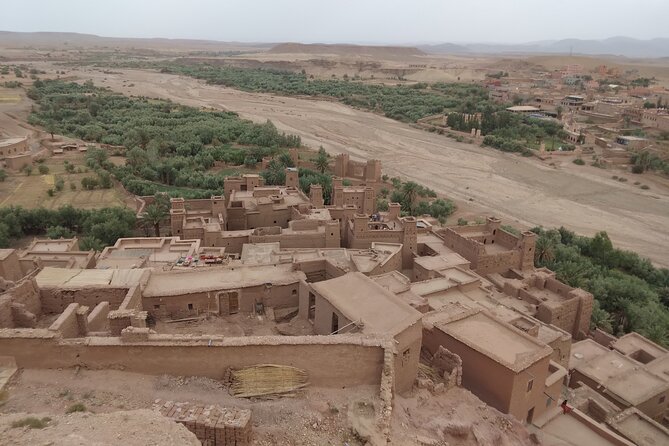
Next up is Ait Ben Haddou Kasbah, one of Morocco’s most visually striking fortified towns. The kasbah was built by Et Hami El Glaoui, and it’s easy to see why it became famous. You get time to enjoy it before continuing toward Marrakech.
The drive over the Tizi n’Tichka Pass (2260 m) is another big altitude moment. On the way, you also visit a cooperative focused on argan oil, where the production process is linked to Berber women’s work. Even if you don’t buy anything, it’s a meaningful glimpse of a craft that’s part of everyday Moroccan life.
After all that, arriving in Marrakech feels like the trip turns from scenery into city energy.
Marrakech With Local Guidance: Gardens, Palaces, and Souk Time
Marrakech is a different kind of focus: landmarks first, then the medina and souks at your own pace.
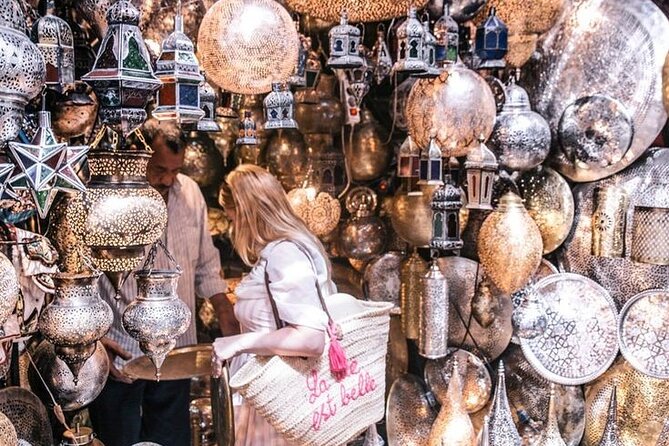
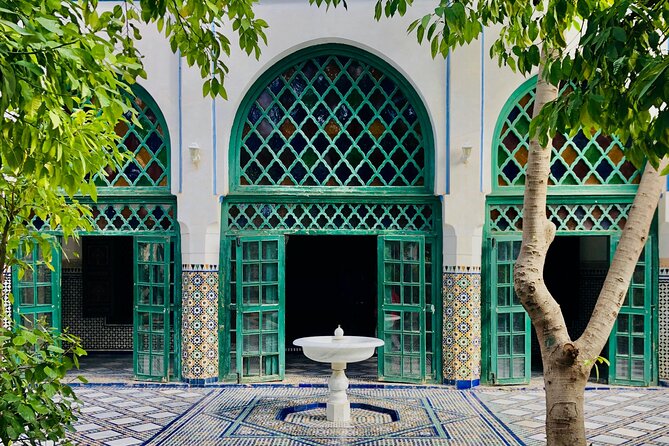
A guided day starts with major sights including Majorelle Gardens, the Koutoubia Tower, the Saadian tombs, and the Bahia Palace. You’ll also have lunch near the main square, then you head into the souks to see handicrafts up close.
The key is the balance. You get guided structure for the most important stops, and then you get free time to wander. In a city like Marrakech, that free time is where you decide what you actually want to spend more energy on—food, crafts, or just walking and people-watching.
You also get a second full day in Marrakech with no forced schedule. That’s useful if you want a hammam, massage, or spa time. You can also add nearby sights like valleys or waterfalls if you prefer a lighter pace than the medina.
If you’re sensitive to crowds, pick your walking times. The morning tends to be easier than late afternoon.
Essaouira: Coastal Reset, Argan Trees, and Safe Beach Time
After the Atlas and Marrakech, Essaouira is your reset. It’s a coastal town with a medina that blends history, cafes, and restaurants, plus a long promenade and sandy beach. The tour emphasizes that it’s a good place to relax, and it’s also described as safe for swimming.
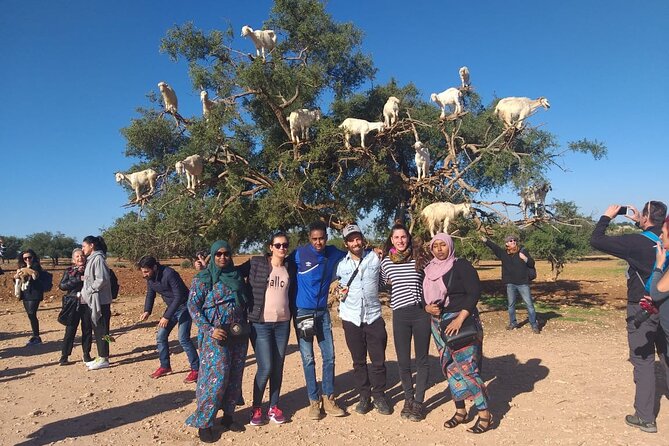
On the way, you can stop to see argan forest and a cooperative, and there are views of goats climbing argan trees. That’s a very specific, very Moroccan scene—something you won’t get in the desert cities.
Essaouira is also known for its fortified-town design from the late-18th century, influenced by European military architecture in a North African context. That gives the old walls a different feel than many other Moroccan cities.
This is a strong way to end the trip because it lowers the volume. You’re not chasing monuments anymore; you’re breathing sea air.
Price and Value: What $2,253.22 Buys in Real Life
At $2,253.22 per person, you’re paying for a lot more than “a driver and a list of places.” You get:
- an air-conditioned vehicle for long transfers
- camel ride in the Sahara
- accommodations for 10 nights
- breakfasts (10) and two dinners
- local guide time in Fes and Marrakech
What you don’t get is also clear: lunch and drinks aren’t included, and the tour flags fees to enter monuments. Some stops are listed as free entry, but you should still budget a bit for whatever requires payment on the day.
Where the price starts to feel fair is in the way the route is managed. The day-by-day structure means you’re not spending extra time arranging hotels, transfers, and guides across multiple regions. And with a max of 8 people, you’re not stuck in a massive group where schedules drag.
Also, pickup in Casablanca and airport-to-hotel transfer help prevent the most common travel tax: losing half a day to logistics. The tour is built to protect that time.
Who Should Book This Tour (and Who Might Not)
This tour is a strong fit if you want a full Morocco overview without the planning burden. It’s especially good for first-time Morocco visitors who want the big hitters—Casablanca, the blue city of Chefchaouen, Fes, the Atlas journey, the Sahara Desert via Merzouga, Marrakech, and Essaouira—connected into one clean flow.
It’s also great for people who enjoy guides and prefer not to guess in the medinas. Having local guidance in Fes and Marrakech is a real advantage.
You might choose something else if you hate long drives or if you’re looking for slower travel with lots of downtime. This route moves.
Should You Book Morocco 11 Days From Casablanca via Sahara Desert?
I’d book it if your dream includes Erg Chebbi dunes, a sunrise camel trek, and a desert camp evening with Berber music. The combination of North Africa cities plus canyon scenery plus coast time is the right mix for many first-timers.
I’d think twice if you get uncomfortable in long car days. This trip has motion built in, and you’ll want to treat transfers as part of the experience.
To make the decision easier, ask yourself one question: Do you want Morocco’s big contrasts packed into 11 days, or do you want a slower, more detailed pace in fewer places? If you want packed contrasts, this tour makes sense.
FAQ
How do I get picked up when I arrive in Casablanca?
A professional driver meets you at Casablanca airport with a sign showing your name, then transfers you to your hotel or riad in Casablanca.
What languages are available on this tour?
You can choose Arabic, German, English, Italian, French, or Spanish.
How big is the group?
This tour has a maximum of 8 travelers.
Is a camel ride included in the Sahara?
Yes. You’ll do a camel ride in the Sahara Desert of Merzouga and reach the desert camp for the night.
What meals are included?
Breakfast is included for 10 days, and dinner is included for 2 days. Lunch and drinks are not included.
Do I need to pay for monument entrance fees?
The tour lists fees to enter the monuments as not included. Some sights in the schedule note free admission, but it’s still smart to have some spending money for any paid entries.
Is free cancellation available?
Yes. You can cancel up to 24 hours in advance for a full refund. If you cancel less than 24 hours before the start time, the amount paid isn’t refunded.