REVIEW · MERZOUGA
Merzouga : 3 days desert tour with camp stay, camel & food
Book on GetYourGuide →Operated by Trip Spirit SARL AU · Bookable on GetYourGuide
That first camel sunset hits different. This 3-day route strings together Atlas views and Merzouga desert magic with a camp night, food, and guided stops along the way. The big win is you get real variety fast: mountains, kasbah towns, oases, then sand dunes.
One thing to plan for: it’s a long, road-heavy trip with early starts (sunrise is the star), and lunches plus drinks aren’t included. If you’re hoping for lots of free time, this one is more about moving from highlight to highlight.
In This Review
- Key things that make this tour worth your time
- Atlas Mountains, Tizi n Tichka, and Ait Ben Haddou’s clay city
- Ouarzazate, the Door of the Desert, plus Roses Valley stop
- Dades Gorges guest houses: where the trip “lands”
- Todgha Valley, Tinghir, and the palm groves + market rhythm
- Arfoud, fossil-and-date country, and the mint tea reset
- Camel ride at sunset in Merzouga dunes
- Camp night in Merzouga: dinner, traditional party, and real stars
- Sunrise camel ride at 6am: why it’s the payoff
- Price and value: is $82 actually a fair deal?
- Language, guides, and how to plan if your Spanish is limited
- Who this tour fits best (and who should think twice)
- Should you book the Merzouga 3-day desert tour with camp stay?
- FAQ
- What does the tour include?
- Do I need to pay extra for lunch?
- Is a local guide included at Ait Ben Haddou?
- How many nights do I stay in the desert?
- Are there camel rides in both the evening and the morning?
- What time does the sunrise day start?
- Is there dinner at the camp?
- What is included for meals besides dinner?
- What languages are offered on the tour?
- What should I bring?
Key things that make this tour worth your time
- Atlas Mountains pass: you ride over Tizi n Tichka (about 2260m) for big panoramic viewpoints
- UNESCO Ait Ben Haddou: see the earthen clay architecture and famous kasbah set
- Todra/Tinghir with a local guide: get practical context while you pass palm groves and market areas
- Camel ride at sunset + desert sunrise: two very different experiences, both timed for best light
- Overnight in a Merzouga camp: you get dinner plus breakfast and a traditional evening with music and dancing
Atlas Mountains, Tizi n Tichka, and Ait Ben Haddou’s clay city
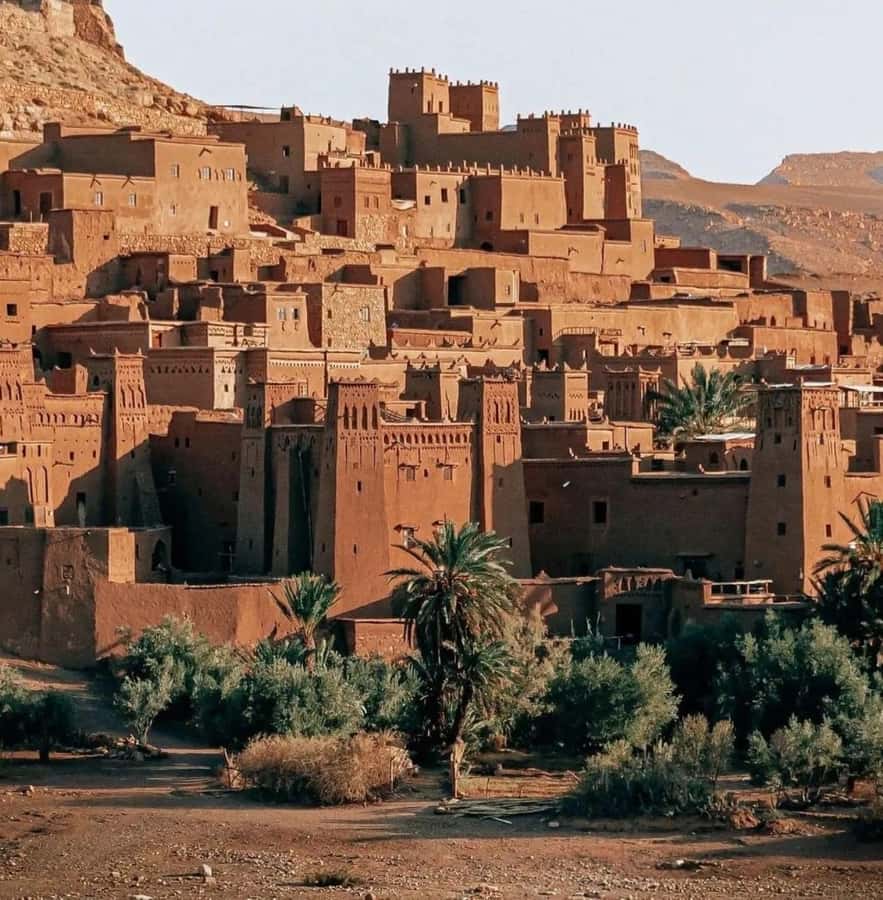
If you like Morocco when it changes by the hour, this is a good match. You start from Marrakech and head toward the High Atlas, with a major photo-and-view moment on the pass at Tizi n Tichka (around 2260m). From the vehicle, you’ll see how the terrain shifts, and you’ll understand why this corridor is such a classic route for people going between cities and the desert.
Then the day turns toward Ait Ben Haddou, a UNESCO site known for its earthen clay architecture. The best part here isn’t just the fact that it’s on the list—it’s the texture. Kasbah buildings look and feel different from modern stone structures. You also learn that Ait Ben Haddou has served as a backdrop for more than 20 international films, which helps you imagine how the place gets used visually on screen.
A practical tip: the kasbah visit is included, but the local guide inside Ait Ben Haddou costs about 3 euros extra. If you enjoy architecture and want the stories behind the walls, it’s often worth adding. If you’d rather keep it simple, you can still walk it and take in the shapes at your pace.
One small tradeoff: lunches and drinks aren’t included, so you’ll want to handle food breaks yourself on the day you’re there. The rest of the day is built around driving and sightseeing, so going in hungry can take the edge off the experience.
You can also read our reviews of more food & drink experiences in Merzouga
Ouarzazate, the Door of the Desert, plus Roses Valley stop
After Ait Ben Haddou, the route swings to Ouarzazate, nicknamed the door of the desert. This is the kind of stop that works well if you’re curious about how Morocco gets filmed and branded. You’ll see the area’s film connection in a tangible way, and you can use this time for a stretch, quick photos, and a calmer moment before the drive continues.
You’ll also visit Taourirt Kasbah, a major landmark in town. It’s the sort of place where you can look closely at how the buildings are laid out and how they’ve been used over time. Even if you don’t hire the most detailed guiding inside every corner, seeing it as part of a desert-route day helps you connect the dots between settled life and the caravan world.
Then you head toward Roses Valley for shopping related to rose products. This is a fun detour if you like small, locally made items—rose water, rose-based creams, or other common rose souvenirs. It’s also a good chance to do a quick reset before arriving in the Dades area for the night.
Dades Gorges guest houses: where the trip “lands”
By the end of day one, you’re sleeping near the Dades Gorges area in a guest house. This night stop matters more than it sounds. After long drives through mountain passes and kasbah towns, you want somewhere that helps you recover—warm shower, real bedding, and an easier pace.
The benefit of this structure is you’re not trying to do too much in one single day. You’ve already packed in Ait Ben Haddou and Ouarzazate, so the Dades stop becomes your buffer night before the oasis-and-desert shift.
Possible drawback: if you get motion sick, mountain driving can be rough. Bring whatever helps you normally (ginger, motion sickness bands, or meds you already trust). The route is in an air-conditioned minibus, which helps, but the roads still feel curvy.
Todgha Valley, Tinghir, and the palm groves + market rhythm
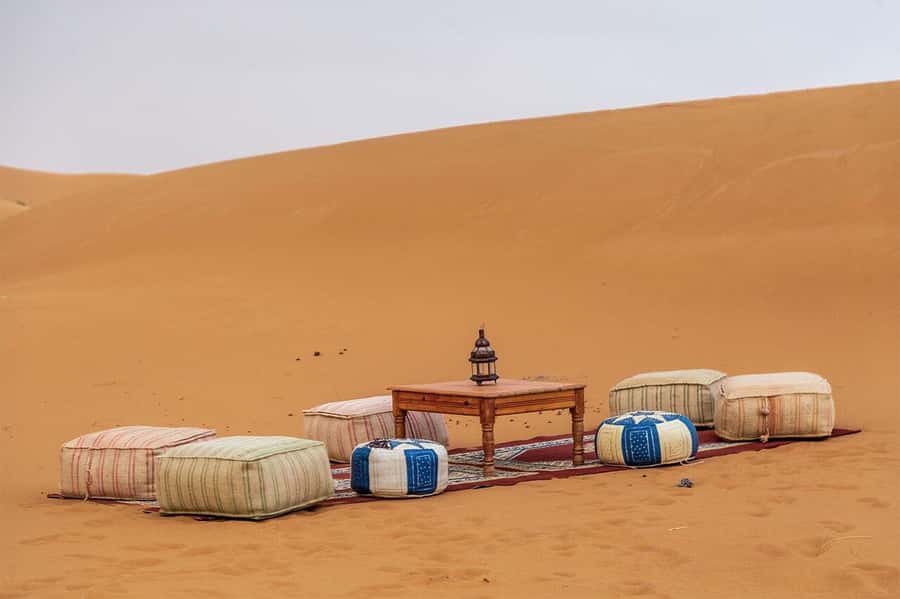
Day two begins with a new kind of scenery: valleys and green pockets that feel like a different Morocco. You start in the Todgha Valley area and visit palm groves and the local Berber market. Even without being a huge buyer, markets can give you context fast: what people trade, what locals prioritize, and what life looks like when the desert is nearby.
Next you move toward Tinghir gorges, where you’ll have lunch and continue exploring. A local guide is included here in Tinghir, which is a smart setup. A guide makes the gorge stop more than a scenic photo pull-off; you’re more likely to understand what you’re seeing and why locals care about the valley patterns.
This day is also where you’ll feel the pacing style of this tour: lots of short, focused stops, then road time again. If you love planning-free travel, it’s a relief. If you hate being in transit, you’ll want to manage expectations—this is a highlights-first route.
Arfoud, fossil-and-date country, and the mint tea reset
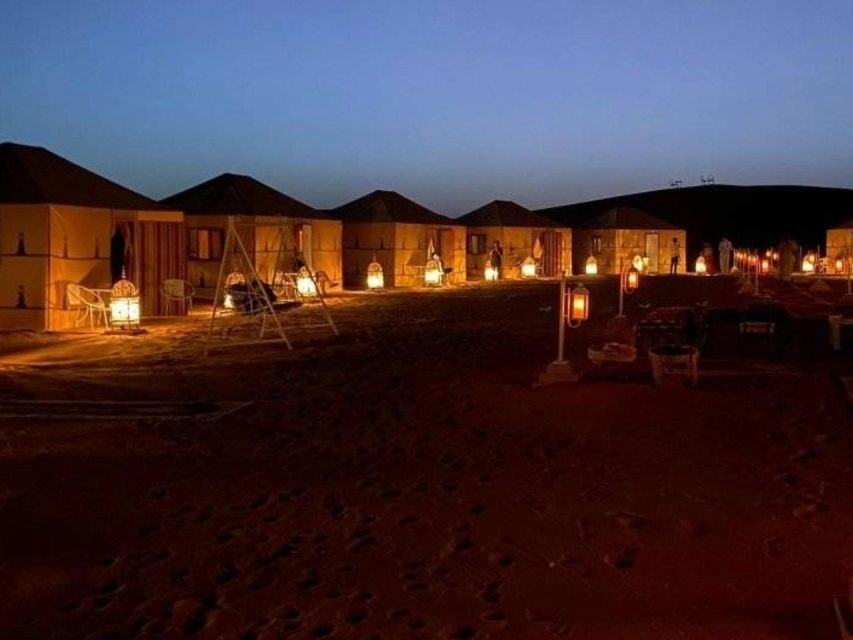
From Tinghir/Todgha, you continue toward Arfoud, often described as the capital of fossils and dates. That framing matters because it’s not random sightseeing. It’s tied to what the region is known for, and it helps you connect the desert to older geology and to agriculture at the edges.
Then you head to the Margouza desert area to rest and drink mint tea. That stop is one of the small but important moments. After hours on the road, mint tea is your built-in pause—warm drink, a chance to stretch, and a moment to feel the air change before the camel portion begins.
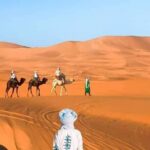
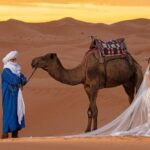
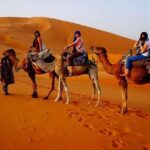
Camel ride at sunset in Merzouga dunes
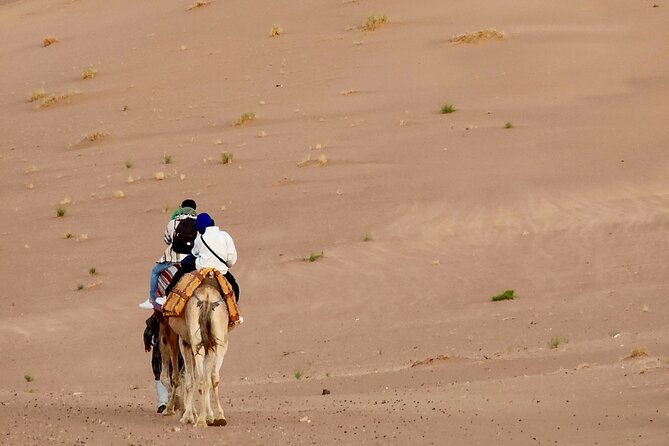
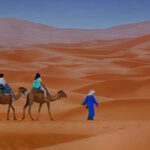
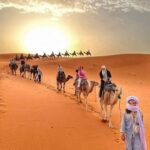
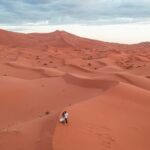
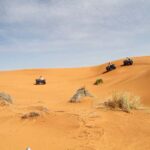
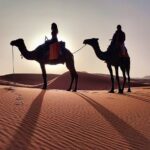
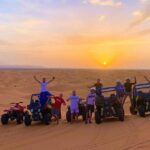
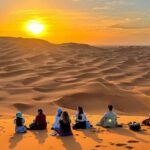
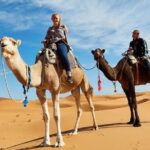
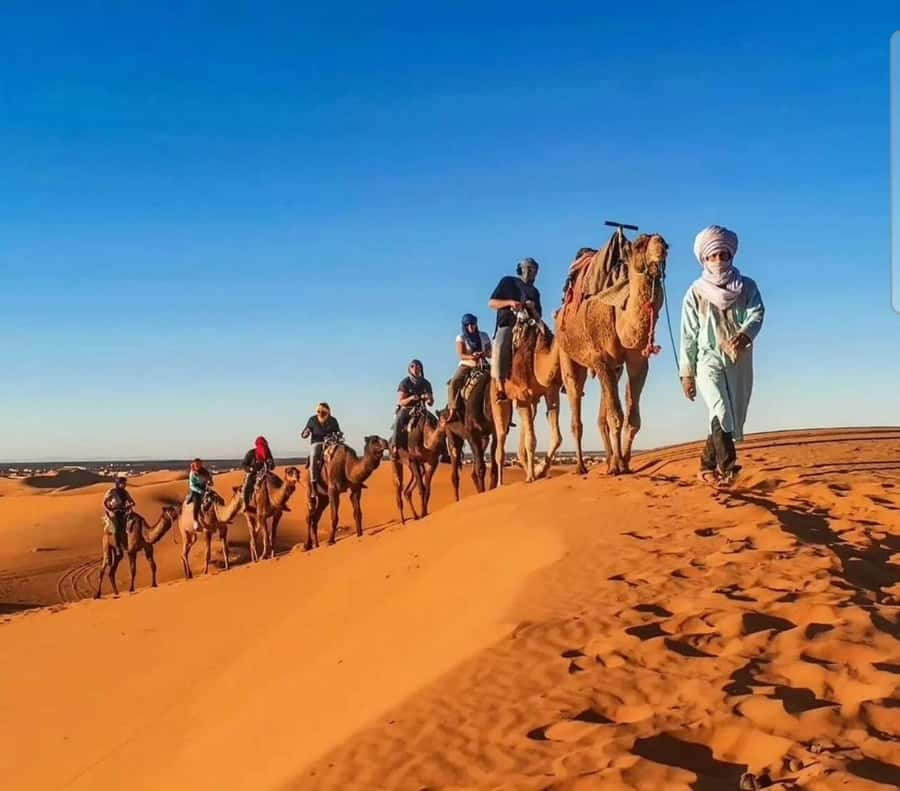
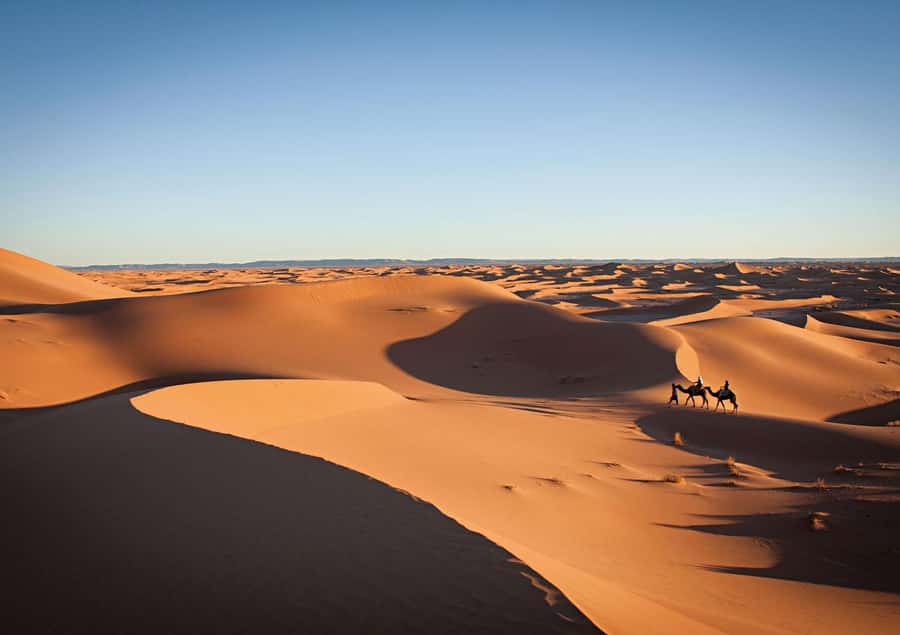
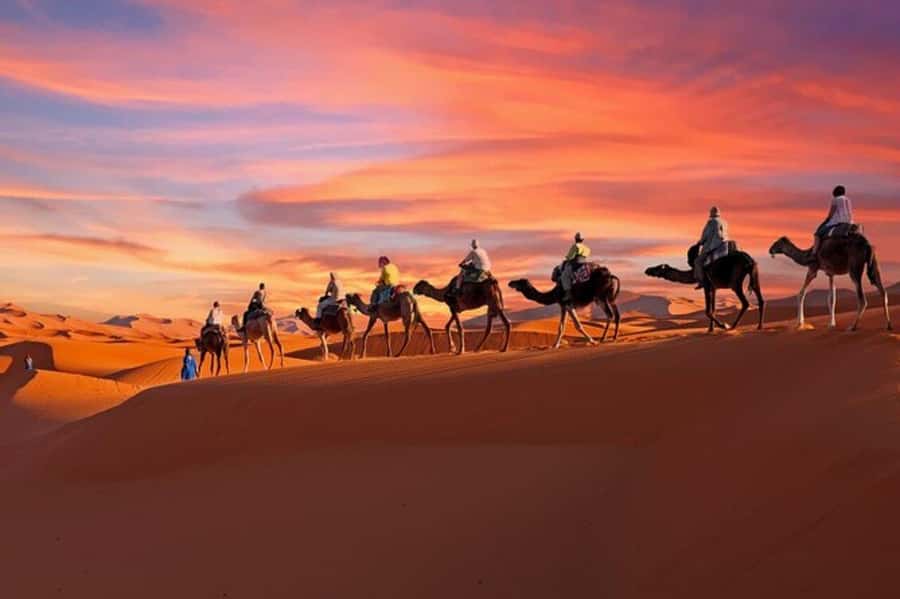
Once you reach the desert zone near Erg Chebbi / Merzouga, the tour switches from driving sightseeing to sand-time. You do a camel ride at sunset, and the timing is a big reason this experience ranks so high in people’s memories.
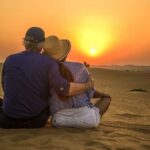
Sunset on dunes is about contrast: the camel motion, the soundscape (wind and soft footsteps), and the way the dunes keep changing color as light drops. You don’t need special desert skills. You just need patience and a willingness to sit still for a few golden minutes.
A small heads-up: if you’re sensitive to saddle discomfort, consider bringing what you can (thin scarf or small layer). The tour doesn’t promise anything about equipment details, so it’s best to be prepared.
Camp night in Merzouga: dinner, traditional party, and real stars
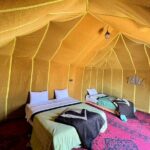
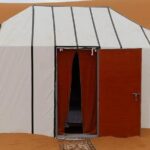
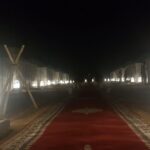
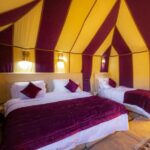
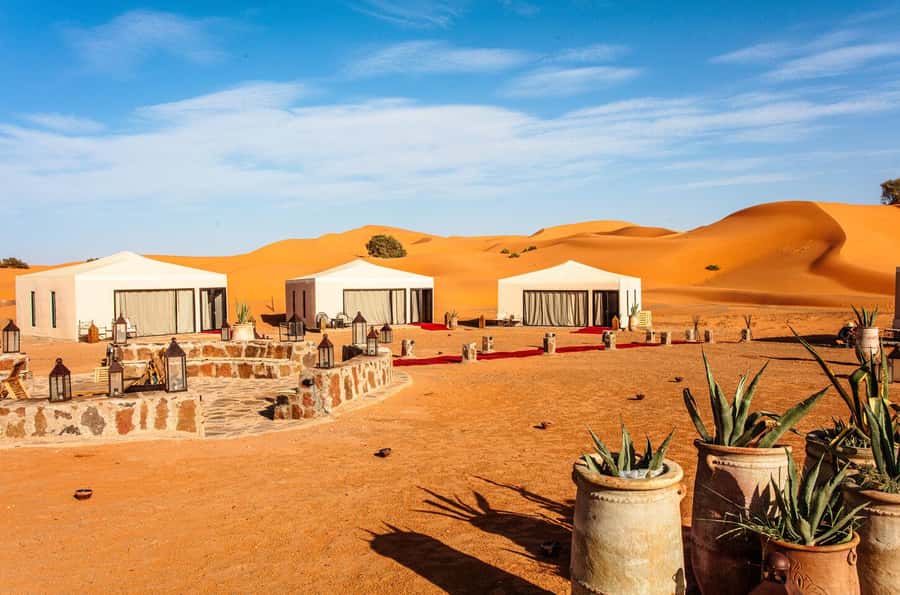
You spend the night in a local desert camp in Merzouga. Included with this is dinner and breakfast, and that’s a big value point. It’s not just a bed—it’s a full night experience: you’re not forced to hunt for a meal after sunset when you’re far from town.
One highlight from a guide-driver described as Abdul: he was attentive and flexible when the ride and plans hit unexpected moments, including helping with tea when someone got sick and taking care of small mix-up problems with bags so the trip kept moving with less stress. That’s the kind of service that makes the camp night feel safer and more welcoming.
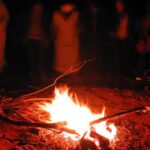
You’ll also enjoy a traditional party with music and dancing in the camp area. This is the “don’t overthink it” part of the trip. If you’re open to it, it’s a fun way to experience local-style evening entertainment in a setting that’s otherwise very quiet.
Sleeping in the desert isn’t for everyone. Temperatures can shift after dark, and camps typically aren’t the same as a city hotel. If you run cold, pack a warmer layer even if daytime felt mild.
Sunrise camel ride at 6am: why it’s the payoff
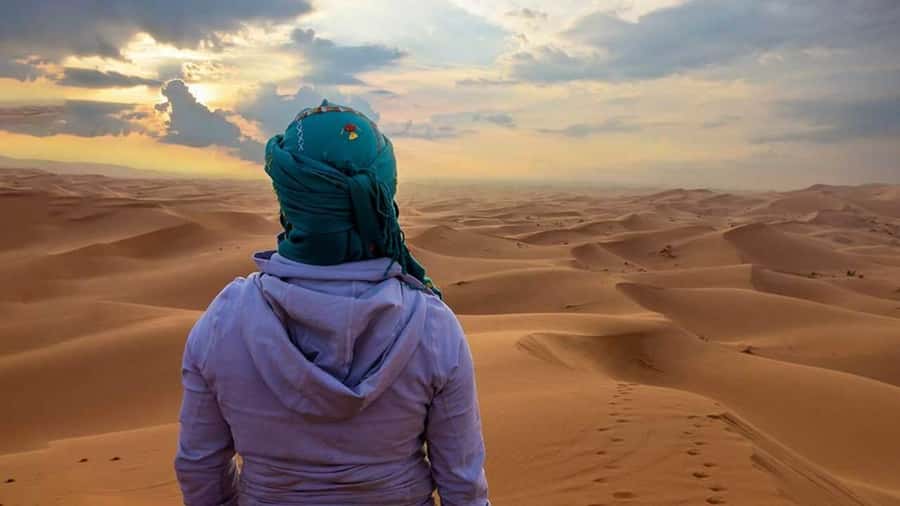
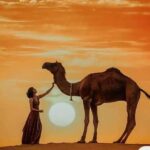
Day three starts with breakfast around 6am, then you ride camels again for sunrise. This is the main reason many people remember the tour long after the drive days blur together.
Sunrise on dunes isn’t just pretty. It’s also calming. The desert feels more empty, the air can be cooler, and you’re moving slowly—camel walking instead of vehicle speed. You get the contrast again: sunset was drama and color; sunrise is stillness and gradual light.
After the camel ride, you return by the same road for lunch, then the drive back toward Marrakech finishes the trip. It’s a long day, but the rhythm is clear: early payoff first, then return.
Price and value: is $82 actually a fair deal?
At $82 per person, this tour can be strong value—mainly because it bundles the expensive parts of desert travel: air-conditioned minibus transport, camel trek, and a desert camp night with dinner and breakfast.
Where you should budget extra: lunch and drinks are not included, and the Ait Ben Haddou local guide costs extra (around 3 euros). Also, some stops can feel like they’re set up for optional purchases—like rose products—so have some cash aside if you want to shop.
One practical note from experience shared with me: guides may suggest places that are a bit pricier, but there are often cheaper options next door. So if you see a restaurant menu that’s higher than you expected, you can usually ask to check alternatives nearby rather than feeling locked in.
So, is $82 fair? For the combination of transport + camp + camel rides + guided Tinghir segment, yes—if you’re okay covering your own lunches and you can handle early starts.
Language, guides, and how to plan if your Spanish is limited
The tour lists languages as Arabic, English, French, and Spanish. In practice, language coverage can be uneven day to day. One person found Spanish wasn’t consistently used across all stops, with Spanish support appearing mainly at the first hotel. If Spanish is essential for you, consider confirming the language request with the operator before you go.
If you’re flexible, English or French usually works across the route. And even when the whole group can’t be fully bilingual, the core experience is visual: mountains, kasbah walls, gorges, dunes, and the two camel rides.
Who this tour fits best (and who should think twice)
This tour is ideal if you want Morocco’s big themes without planning every leg. It suits you if you:
- enjoy a packed itinerary with guided viewpoints and short stops
- want a real desert camp night with included meals
- care about timing—sunset and sunrise are the big-ticket moments
It’s less ideal if you:
- hate early mornings (6am is part of the plan)
- want lots of free time in each stop
- expect all meals and drinks to be included
Should you book the Merzouga 3-day desert tour with camp stay?
I’d book it if you’re seeking a classic Morocco-to-desert experience and you like structure that still feels human. The standout strengths are the camel rides timed for sunset and sunrise, the camp dinner plus breakfast, and the way the route links Ait Ben Haddou, Ouarzazate, Tinghir/Todgha, and Merzouga into one clear story.
Skip or reconsider if you’re budget-tight on lunches/drinks, very sensitive to long driving days, or you need guaranteed Spanish-speaking support at every stop. A quick language check and an extra allowance for meals can solve most issues.
If you want one “main character” memory, it’s the sunrise. The rest of the trip is how you earn it.
FAQ
What does the tour include?
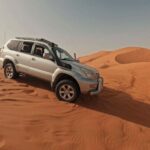
It includes hotel pickup and drop-off, transportation by air-conditioned minibus, a local guide in Tinghir, camel trek in the desert, an overnight in a Merzouga desert camp, and dinner plus breakfast.
Do I need to pay extra for lunch?
Yes. Lunch and drinks are not included.
Is a local guide included at Ait Ben Haddou?
A local guide at Ait Ben Haddou is not included, but there is an extra option (about 3 euros).
How many nights do I stay in the desert?
You stay for 1 night in a desert camp in Merzouga.
Are there camel rides in both the evening and the morning?
Yes. You ride camels at sunset and again at sunrise.
What time does the sunrise day start?
You have breakfasts at around 6am, then you do the camel ride for sunrise.
Is there dinner at the camp?
Yes. Dinner is included at the desert camp.
What is included for meals besides dinner?
Breakfast is included as well.
What languages are offered on the tour?
The tour lists Arabic, English, French, and Spanish.
What should I bring?
Bring your passport or ID card, a camera, and some cash.