REVIEW · MARRAKESH
Marrakech: Madrassa Ben Youssef, Secret Garden & Medina Tour
Book on GetYourGuide →Operated by Moments in Morocco - Tour Agency · Bookable on GetYourGuide
Marrakech hits you fast. I love how this tour pairs Ben Youssef Madrasa with the calm of Le Jardin Secret, then wraps it all inside the everyday chaos (in a good way) of the Medina.
Two things that really made the experience work for me: you get architectural detail you can actually picture, and you also learn how water and daily life connect—especially through the Secret Garden’s Khettara system. One drawback to plan for: it’s a walking tour with a lot of standing, so wear comfy shoes and expect weather to change the feel of the day.
In This Review
- Quick hits worth your time
- Entering Ben Youssef Madrasa: Marrakech’s Architecture Lesson
- Le Jardin Secret and the Khettara: The Quiet Half of the Medina
- Koutoubia Mosque Stop: A Fast First Impression That Helps You Orient
- Souk Semmarine and the Artisan Reality Check
- Hammam Mouassine and Communal Ovens: Food and Water Traditions
- Medina Alleys, Daily Life, and Why You Need a Guide
- Jemaa el Fna Square: Ending in the Most Human Place
- Timing, Meeting Point, and What to Expect from the Walk
- Value for $18 and the Two Ticket Extras
- Guides You Might Get: Why Their Style Changes the Tour
- Who This Tour Is Best For (and Who Should Rethink It)
- Should You Book This Marrakech: Madrasa, Secret Garden, and Medina Tour?
- FAQ
- How much does the tour cost?
- Are the entry tickets included?
- How long is the tour?
- Where do we meet the guide?
- What languages are available for the tour?
- Is the tour wheelchair accessible?
Quick hits worth your time
- Ben Youssef Madrasa skip-the-line entry means you spend less time queued and more time looking closely at zellij tile, cedar wood, and carved plaster.
- Secret Garden’s Khettara water system ties the gardens to how the Medina survived for centuries.
- Medina souks with practical artisan stops so you see how things get made, not just what’s for sale.
- Hammam Mouassine + communal oven context gives you a real feel for Moroccan daily rhythms, not just sightseeing.
- Flexible free time inside monuments so you can photograph, pause, and breathe.
Entering Ben Youssef Madrasa: Marrakech’s Architecture Lesson
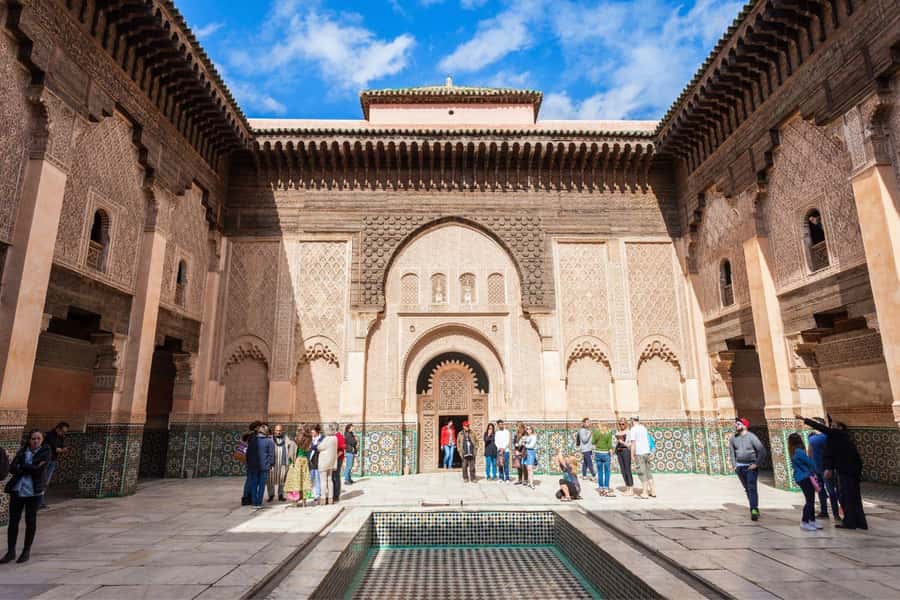
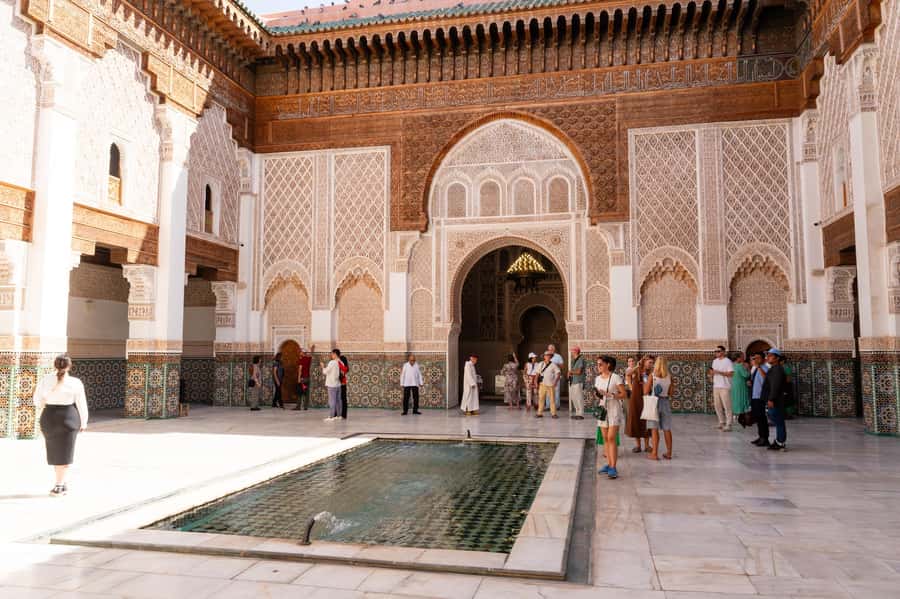
If you want one spot that tells you what Moroccan craft looks like up close, start at Ben Youssef Madrasa. This former Islamic school is famous for detail: zellij tilework laid in precise patterns, delicate stucco plaster, and carved cedar wood that makes the whole place feel warm even when it’s cool outside.
Your guide brings the building to life in plain language—what it was for, why it was built that way, and how art and function worked together. And because the guide goes inside with you, you’re not stuck guessing where to look or what you’re seeing.
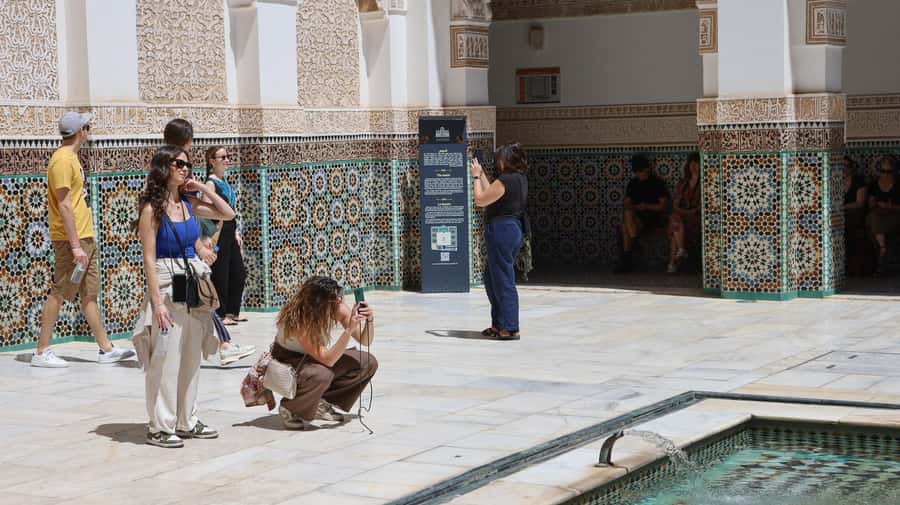
The best part is that you get guided time plus free time on your own afterward. I like that mix: you follow the story first, then you can wander your own way and take photos without feeling rushed.
You can also read our reviews of more tours and experiences in Marrakesh.


Le Jardin Secret and the Khettara: The Quiet Half of the Medina
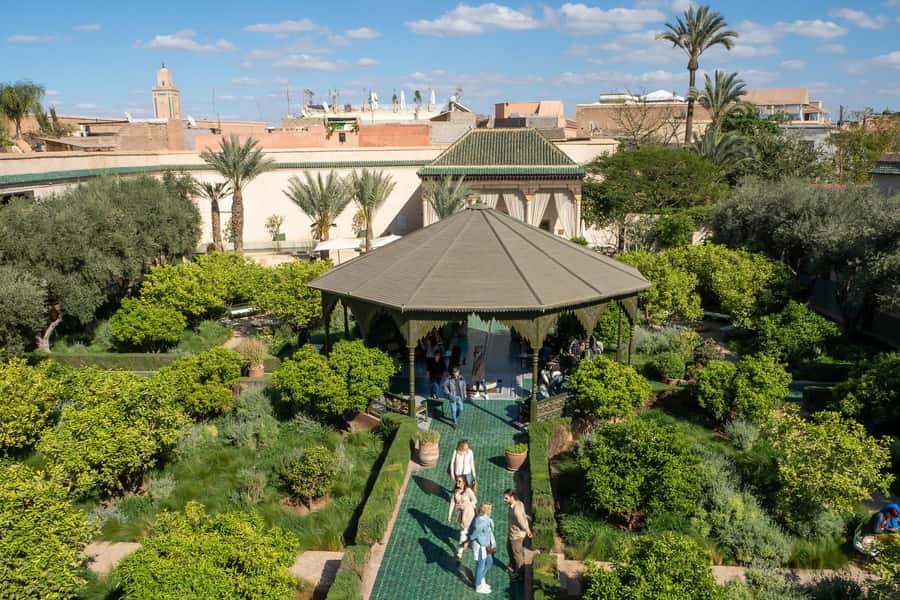
After the medina gets loud, Le Jardin Secret gives you a reset. You step into a restored Islamic garden linked to the Saadian era, with geometric design, fountains, and greenery arranged to feel balanced instead of decorative.
What I found most useful here is the way your guide explains the Khettara—an underground water channel system designed to limit evaporation and keep water available. It’s one of those facts that makes the whole city make more sense, because Morocco isn’t just about beauty; it’s about managing resources over time.
If you’ve ever wondered why a place like Marrakech could grow and thrive without modern plumbing, this stop is a strong answer. You don’t just see a garden—you understand the engineering behind it.
And yes, you get that welcome breathing room: time to stroll at your own pace inside the garden complex, not just point-and-stare from behind a guide.
Koutoubia Mosque Stop: A Fast First Impression That Helps You Orient
Before you get swallowed by the lanes of the Medina, you’ll make a photo stop at Koutoubia Mosque. Even if you can’t do a long visit in that moment, it’s a useful anchor point. It helps you remember where you are, especially later when alleyways start to look identical.
This is the kind of early stop that makes the rest of the day easier to navigate. When you come back to the area after, say, a shopping detour, you’ll recognize the skyline and feel less turned around.
Souk Semmarine and the Artisan Reality Check
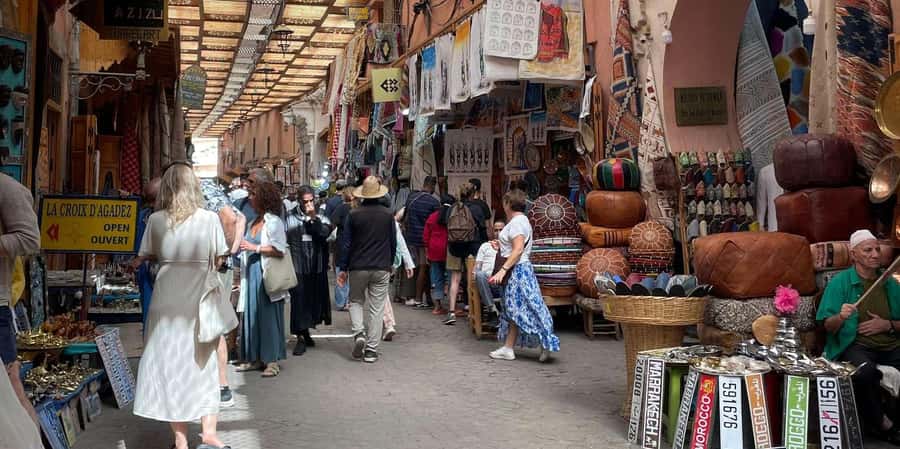
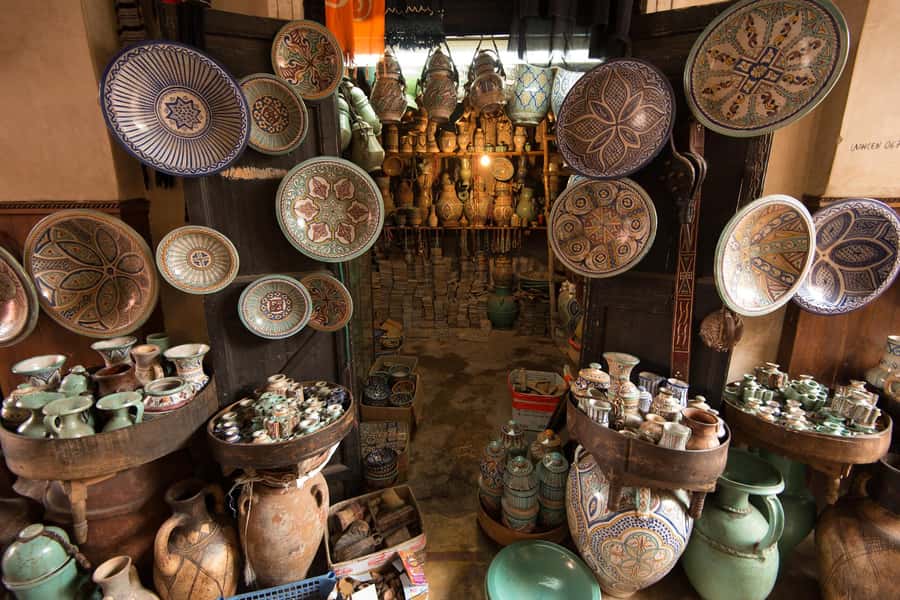
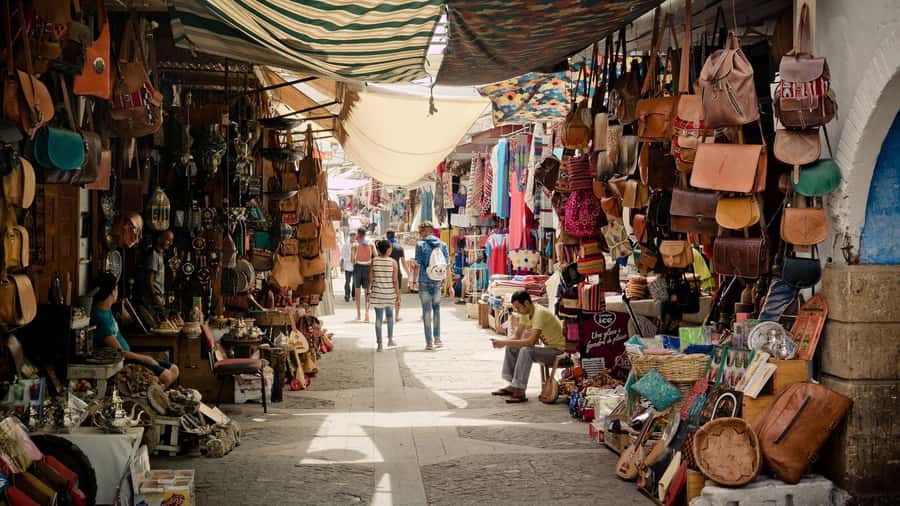
From the big landmark moments, you head into the souks—starting with Souk Semmarine. This is where you feel Marrakech as a working city: leather goods, garments, spices, perfumes, and the constant motion of bargaining and chatting.
But the value of this tour isn’t just walking through crowds. Your guide helps you read the shops and understand what’s being made, and you’ll also stop by local workshops where artisans craft items using techniques passed down through generations. You’re not only looking at products; you’re seeing process.
Practical tip: go in with a light plan. If you try to shop like you’re in a mall, you’ll lose time and patience. If you shop like you’re learning—asking what something is and who makes it—you’ll get more out of the experience, even if you buy nothing.
Hammam Mouassine and Communal Ovens: Food and Water Traditions
One of the best surprises here is how the tour connects hammam culture with the mechanics behind it. At Hammam Mouassine, you’ll get a guided look and context that explains why hammams matter socially, not just as a place to wash.
You’ll also learn about traditional communal ovens in the Medina. In some cases, you may even visit a communal oven stop where locals used old methods for baking bread. Based on guide stories from past tours, you might also get to see how the heating process works for hammam water and how traditional food preparation fits into the same daily system.
This is the part that can feel more meaningful than another souvenir stop. It gives you a sense of rhythm: the Medina isn’t frozen in time; it’s built on routines that repeat every day.


Medina Alleys, Daily Life, and Why You Need a Guide
The Medina walk is where Marrakech becomes real—and where a guide earns their fee. The alleys are tight and full of visual noise: signs in multiple directions, shop entrances that look like dead ends, and turns that feel random.
Your guide helps you move with confidence, and you’ll learn what different areas and lanes were traditionally used for. You’ll also get insight into handmade textiles, jewelry, and daily life as you pass spots that locals use every day.
A detail I really appreciate: the guide doesn’t rush you through. You get breaks and photo pauses, and you also get time to explore at your own pace while staying in the safe rhythm of the group.
Jemaa el Fna Square: Ending in the Most Human Place
You finish with a guided look around Jemaa el Fna. This is the square where you can feel Marrakech breathing—stalls, performers, vendors, and people moving with purpose.
The way to enjoy Jemaa el Fna is to treat it like a living stage. Your guide helps you understand what you’re seeing and how to avoid getting pulled in circles by every voice at once. Then you get enough time to stand back, watch, and decide what to do next.
If you’re starting your Marrakech trip, this ending works well. You leave with context, so the square isn’t just noise—it’s a readable part of the city’s culture.
Timing, Meeting Point, and What to Expect from the Walk
This tour runs about 210 minutes (around 4 hours). That sounds short until you’re walking through the Medina. Plan for time on your feet, and bring water and comfortable shoes. A sun hat helps even when it’s not peak heat.
Meeting point is Cafe de France in Djemaa el Fna. It can feel chaotic at first with multiple tours gathering, but the key comfort is that your guide organizes the group so nobody gets left behind.
Group size tends to be on the smaller side (some groups have been around six). That matters because in the Medina, smaller groups move faster and feel more personal—especially when you want to ask questions or take extra photos.
Value for $18 and the Two Ticket Extras
The price is listed as $18 per person, and that’s mainly for the guide, access handling, and the guided flow between major stops. The two monument entry tickets are not included: Ben Youssef Madrasa (50 MAD per adult) and Secret Garden (100 MAD per adult).
In my view, the math works if you care about two things:
1) you want to skip long lines at the busy sights, and
2) you want someone to explain what you’re looking at so your time feels earned.
If you’re traveling on a strict budget and you’re happy to wander without context, you could DIY it. But if you’d like your day to feel smoother—and more informative—the guide time turns into real value fast.
Guides You Might Get: Why Their Style Changes the Tour
One of the strongest parts of this experience is how different guides bring the same places to life. Past tours have included guides like Momo, Abdul, Ismail, Ayoub, and Hassan.
You’ll notice patterns in what works: guides are patient, explain at a pace that fits real questions, and help people navigate the Medina with confidence. Some guides even help with practical problems like maps not loading or people missing the meeting point—because in Marrakech, that stuff happens.
If you’re traveling with kids, the tour can work well too. Guides like Momo and Hassan have handled mixed ages while keeping the pace friendly and the explanations clear.
Who This Tour Is Best For (and Who Should Rethink It)
This is a strong first-day tour because it gives you a cultural map of Marrakech—religion, craft, water systems, and daily life—without needing you to be an expert on arrival.
You’ll also like it if you:
- want architecture and culture rather than just shopping,
- appreciate photo stops with context, and
- like walking through the Medina with a guide who can steer you away from dead ends.
Reconsider if:
- you hate walking and standing for long stretches, or
- your plan depends on moving slowly with frequent long breaks.
The good news is that guides have shown flexibility for mobility needs in past tours, including slower routing and regular sitting breaks. Still, it’s smart to bring your own comfort plan: shoes with grip, water, and a willingness to take short pauses.
Should You Book This Marrakech: Madrasa, Secret Garden, and Medina Tour?
Yes, if you want an organized intro that mixes major sights with real cultural context. The Ben Youssef Madrasa + Le Jardin Secret pairing is a rare combo: one day starts with craft and faith, then ends with water engineering and quiet garden design, all inside the living Medina.
Before you book, do two simple things:
- Budget for the two monument tickets (50 MAD + 100 MAD per adult).
- Bring the right walking gear, because you’ll earn the views by staying on your feet.
If you like Marrakech best when you understand what you’re seeing, this tour is a solid value—and a smart way to get oriented before you go exploring on your own.
FAQ
How much does the tour cost?
The tour price is listed as $18 per person.
Are the entry tickets included?
No. Monument entry tickets are not included. The Secret Garden is 100 MAD and Ben Youssef Madrasa is 50 MAD per adult.
How long is the tour?
The duration is about 210 minutes, or roughly 4 hours.
Where do we meet the guide?
You meet your guide in front of Cafe de France in Djemaa el Fna square.
What languages are available for the tour?
The live guide is available in French, English, Spanish, and Italian.
Is the tour wheelchair accessible?
Yes, the tour is listed as wheelchair accessible.