REVIEW · MARRAKECH
Marrakech Highlights : Majorelle , Bahía Palace , Mellah & Souks :Private Tour
Book on Viator →Operated by Sara Morocco Private Tours · Bookable on Viator
Marrakech can feel like a maze at first. This private half-day tour helps you sort the city fast while hitting the big sights like Jardin Majorelle and Bahía Palace with an air-conditioned driver and a real guide (I’ve heard guides such as Hassan and Rachid called out again and again). I especially like the way the medina stops connect landmarks to everyday life, plus the practical fast access that saves you time. The main thing to consider: the tour includes market and shop stops, so if you hate sales pressure, you’ll need to set firm boundaries early.
What I’d call the tour’s sweet spot is pacing. You get a tight route—garden, mosque, Mellah, palace, and souks—without spending your day stuck in transit or figuring out where to go next. You also get enough context to make the places feel more than just photos. One caution: entry tickets for Majorelle and Bahía Palace are not included, so plan ahead to avoid ticket-stress.
In This Review
- Key things to know before you go
- Marrakech highlights: what this private route does best
- Stop 1: Jardin Majorelle and the Berber Culture Museum
- Between the gardens and the medina: Koutoubia Mosque’s skyline trick
- The Mellah (Jewish Quarter): Marrakech history beyond the postcard
- Stop 3: Bahía Palace and its carved details
- The medina stops: ovens, hammam culture, and markets you can actually use
- Souk Haddadine: blacksmith workshops and strong photo angles
- Jemaa el-Fnaa: the square, the street theater, and your bearings
- Souk Semmarine: structure, specialties, and sensory overload (in a good way)
- What the private driver and pickup really change
- The main risk: shop pressure and the kind of tour experience you want
- How I’d judge the value for your money
- Who this tour suits best
- Should you book this Marrakech private highlights tour?
- FAQ
- How long is the Marrakech private highlights tour?
- What’s included in the price?
- Are monument entry tickets included?
- Where does the guide meet you?
- Is this a private tour for just your group?
- Can I cancel for a full refund?
- Does weather affect the tour?
Key things to know before you go
- Skip-the-line time-savers at major sites help you beat queue frustration.
- Jardin Majorelle + Berber Culture Museum connect art, plants, and Moroccan craft in one stop.
- Mellah (Jewish Quarter) adds a missing chapter to the usual Marrakech highlights.
- Souk Haddadine and Semmarine focus on crafts and street-market structure, not random wandering.
- Walking shoes matter—the medina portion is active even though the tour is “half-day.”
Marrakech highlights: what this private route does best
A good Marrakech day is equal parts landmarks and street-level reality. This tour is built around that balance. You’re not just ticking off famous places—you’re also moving through the medina’s rhythm with a guide who can explain why these neighborhoods look and function the way they do.
The other big win is comfort. Even when you’re walking in the medina, the tour’s transfers are handled in a private, air-conditioned vehicle. That matters in Marrakech heat and on days when you want your energy saved for the sights you paid for.
Price-wise, $186.10 per person is what you’d expect for a private guide plus vehicle and fast access. The value rises if you’d otherwise spend time negotiating, hunting for tickets, or joining a slower group tour. The value drops a bit if you show up without planning for the Majorelle and Bahía Palace entries, since those aren’t included.
You can also read our reviews of more private tours in Marrakech


Stop 1: Jardin Majorelle and the Berber Culture Museum
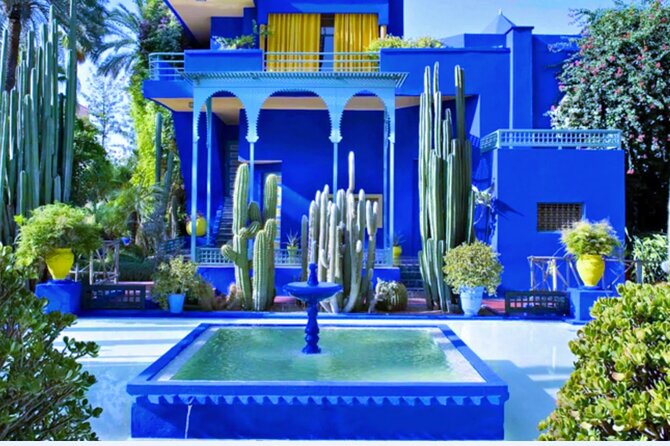
This is the star stop, and it earns it. The Jardin Majorelle was started in 1923 by French painter Jacques Majorelle, who built a villa there and expanded the property around his botanical collection gathered from around the world. After Majorelle’s death, the place fell into neglect. Later, Yves Saint Laurent and Pierre Bergé restored it, and the garden and house returned to life with the kind of care that shows in every path.
What you’ll like here:
- You get a designed garden experience—colors, plant collection, and architecture all working together.
- There’s a cultural layer inside the villa studio area: the Berber Culture Museum, which holds a selection of Yves Saint Laurent’s personal items connected to Berber culture, including hand-made silver jewelry, antique ceramics, rugs, and other craft pieces.
Time on site is about 30 minutes, so this is not a “wander all day” garden visit. You’ll want to enter with a plan: take your photos early, then slow down for details once you know where the best views are.
Ticket reality check: Majorelle entry isn’t included, so buy/secure tickets as soon as you book the tour. One visitor specifically warned that availability can run out. I’d treat that as gospel. Even if you arrive early, you don’t want the day to hinge on ticket luck.
Between the gardens and the medina: Koutoubia Mosque’s skyline trick
Next you’ll reach Koutoubia Mosque, with its iconic minaret rising over the medina. The mosque dates to the late 12th century. The minaret isn’t the tallest structure in the absolute sense, but a long-standing rule in the city limits how high other buildings can go—so the minaret dominates the skyline where you can see it from many points.
This stop is short—about 15 minutes—and that’s enough. You’re mostly there for orientation: the minaret acts like a compass for the city’s layout.
Also, it’s free to visit. That means you’re paying the guide time here, not monument fees.
The Mellah (Jewish Quarter): Marrakech history beyond the postcard
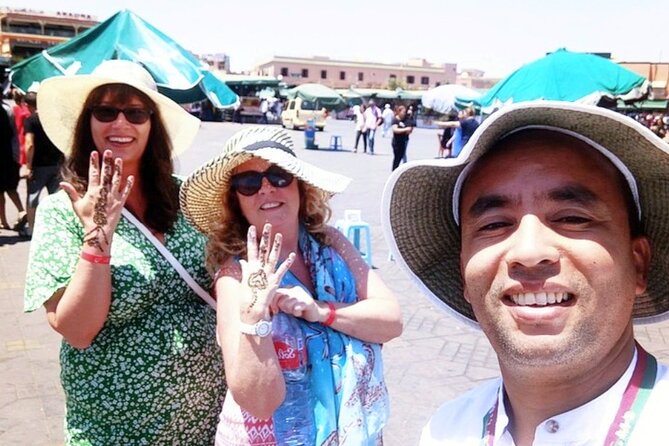
Then you shift into a different kind of Marrakech story: the Mellah, created in 1558 by Sultan Abdallah al-Ghalib of the Saadian dynasty. Historically, it sat outside the walls of El Badi Palace and became one of the major commercial areas of the old medina in the 16th and 17th centuries.
You’ll hear how Jewish residents lived and traded here—until expulsions from Iberia after the Reconquista changed the demographic story.
Even if you’re not there for a museum, the Mellah is valuable because it gives you context. Marrakech isn’t one single narrative; it’s layered. Having a guide explain why this quarter exists where it does makes the medina feel organized rather than random.
Stop 3: Bahía Palace and its carved details
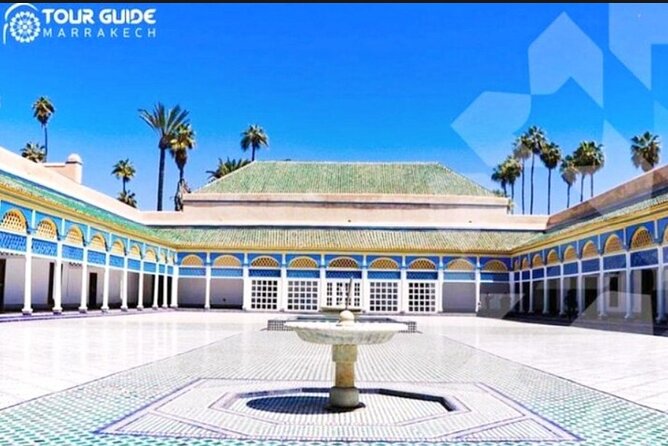
Bahía Palace is a late 19th-century palace famous for decoration. You’ll see carved stucco with Arabic calligraphy, geometric patterns, and arabesque designs. The ceilings include carved cedar wood from the Middle Atlas Mountains, and the floors are set with hand-made zallij tiles—colorful pieces originally linked to natural minerals and plants.
This is one of those places where you’ll either feel like you’re seeing “pretty walls” or you’ll start noticing craft logic: the way calligraphy and patterns create rhythm, and how materials travel—wood from mountains, tiles made from mineral sources.
Time on site is about 30 minutes. That’s enough to enjoy the palace without turning it into homework, as long as you pace yourself. Again, ticket entry for Bahía Palace isn’t included, so plan for that cost.
One practical note: there can be closures. In one case, when Bahía Palace was closed, the guide adjusted quickly and took visitors to another major spot instead (the mayor’s house). That’s the kind of flexibility you want from a private guide, especially when you’re paying for time efficiency.





The medina stops: ovens, hammam culture, and markets you can actually use
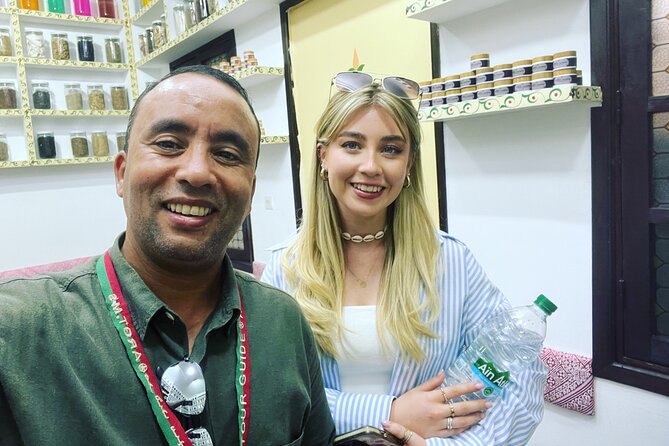
After the palace, the tour moves into the medina’s daily-life texture. Instead of only looking at monuments, you’ll experience small cultural functions and food-market structure.
You’ll visit:
- A communal oven (bakery), where you see how bread is tied to neighborhood rhythms.
- A farnachi, described as part of the Moroccan hammam experience.
- Local markets of fruits and vegetables and an olives market.
Admission is marked as included for these medina experiences. That’s a smart inclusion because it prevents you from paying surprise fees at each step and helps the guide keep things moving.
What I like about these stops is that they make Marrakech feel real. You start understanding why spices, oils, bread, and hammam culture belong in the same city story. It’s not just “look at the stalls.” It’s why the stalls exist.
One caution: these stops are shorter and more structured than independent wandering. If you’re hoping for deep shopping time, budget extra solo time before or after the tour.
Souk Haddadine: blacksmith workshops and strong photo angles
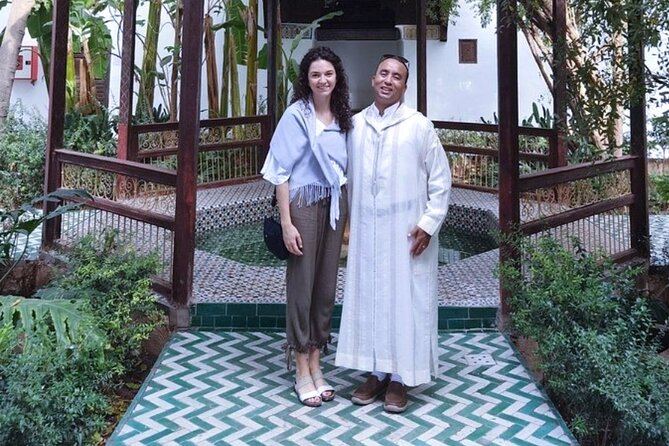
Next is Souk Haddadine, linked with blacksmith workshops. This is one of the more “watch what they do” souks, where the craft is the main attraction. You’ll also have a chance at panoramic photos—use the moment. In the medina, the best shots often depend on getting your angle before the crowd shifts.
Time here is about 15 minutes. If you love metalwork or you simply enjoy watching artisans at close range, you’ll appreciate how direct the stop is.
Admission for this part is marked as included, so you’re not paying extra just to step inside the working-souk zone.
Jemaa el-Fnaa: the square, the street theater, and your bearings
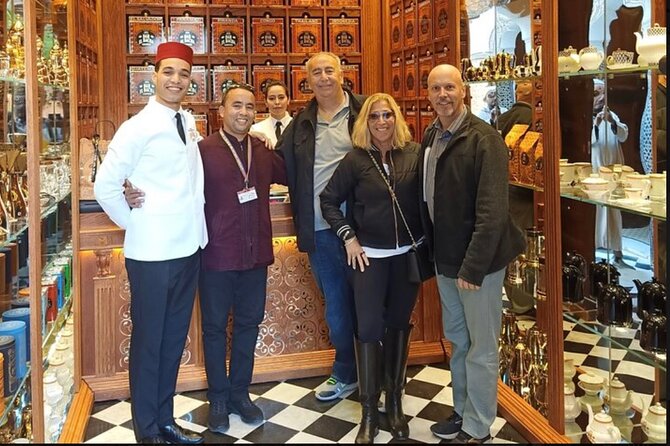
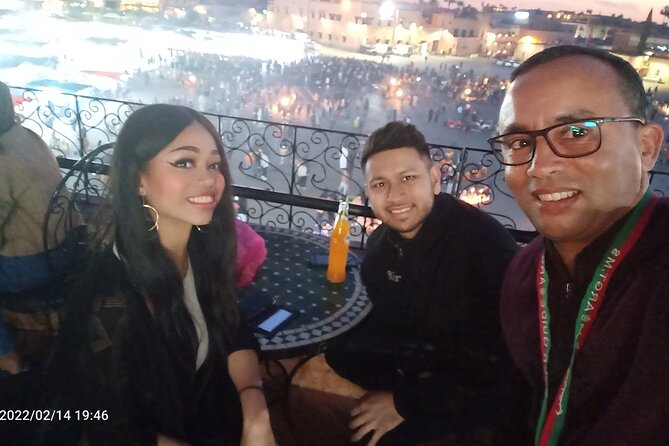
Then you’ll reach Jemaa el-Fnaa, Marrakech’s famous square and the traditional caravans meeting point. This stop is about 20 minutes, and the value is in understanding the history and why it became a hub.
Jemaa el-Fnaa is famous for energy. If you’ve ever walked a famous square late morning in Europe, you might think it’ll be similar. It isn’t. Here, the square is more like a living schedule—food, storytelling, and motion that changes throughout the day.
Tip: this is a great place to slow down and just watch—especially if you’re overwhelmed by the medina. A guide’s context helps you focus on what you see instead of getting lost in noise.
Admission is free, which is nice. You’re paying for the meaning and for help reading what’s happening.
Souk Semmarine: structure, specialties, and sensory overload (in a good way)
Finally, you’ll hit Souk Semmarine, centered around the alleys north of the central square. The layout is part of the story: shops cluster by specialty, so streets can feel like mini-industries.
This is the “this city runs on trades” stop. The souk is described as tightly packed—lots of shops in a small space—and you’ll move through about 50 minutes of it.
Admission here is free. The real value is the guide’s framing—how to understand what each area is for, and how to navigate without spending your mental energy on figuring out streets.
What the private driver and pickup really change
Pickup is offered at your hotel or riad (or even the airport). That means you skip the hassle of finding the starting point and waiting in the medina’s chaos with your phone battery dying.
You also get a private driver for farther sections. This cuts down on the number of times you’d normally say, “We’re walking again?” On a half-day tour, reducing fatigue is not a luxury—it’s part of value.
Also, you get free delivery of products to your hotel. That can be a big deal if you plan to buy anything practical like rugs or goods you don’t want to carry through crowds.
The main risk: shop pressure and the kind of tour experience you want
Here’s the balanced part. Some stops include shopping-style environments, and one visitor reported spending a large chunk of the day in shops where they felt uncomfortable with aggressive sales behavior. Their key complaint was that the guide didn’t intervene enough when shopkeepers pressured them.
That doesn’t mean it happens every time, but it does mean you should treat the shopping stops as optional in spirit. If you don’t want to buy, you need to communicate that clearly and early. A private guide can help you move through the shop stops efficiently, but you can’t expect a guide to fully control how every shopkeeper behaves.
If you want this tour for history and sights only, tell your guide at the start:
- You’ll look, but you’re not buying
- You prefer to move on quickly
- You’d rather spend more time at landmarks than in stores
This approach keeps the experience enjoyable.
How I’d judge the value for your money
Let’s make the numbers make sense.
You’re paying for:
- A private guide
- An air-conditioned vehicle
- Pickup
- Fast access / skip-the-line handling at key monuments
- Included admissions for some medina experiences and Souk Haddadine
- Free delivery of products back to your hotel
You’re not paying for:
- Entry tickets for Jardin Majorelle and Bahía Palace
- Food
So the value works best if you:
- Want the convenience of skip-the-line and a planned route
- Plan to visit both Majorelle and Bahía Palace anyway
- Prefer a guided explanation over solo wandering
- Want some medina culture without guessing your way around
It may not feel like a bargain if:
- You’re extremely selective and only care about one palace/garden
- You plan to do heavy independent exploring and don’t need a guide’s structure
- You want zero shopping influence—because parts of the medina route naturally connect to commerce
Who this tour suits best
This tour fits well if you’re:
- Short on time but want the essentials—Majorelle, Bahía Palace, the Mellah, Koutoubia, Jemaa el-Fnaa, and souks
- Visiting Marrakech for the first time and want help reading the medina
- Traveling as a couple or small group and want private pacing
- Interested in craft and culture, not only architecture
It’s also a strong fit for people who hate wasting time. The whole route is about efficiency without turning everything into a sprint.
Should you book this Marrakech private highlights tour?
I’d book it if you want a guided, efficient half-day that links the showy highlights (Majorelle, Bahía Palace) with the lived-in city (Mellah, ovens, markets, and the souks). It’s especially worth it when you factor in skip-the-line handling and private pickup.
I’d think twice if you dislike any shopping stops or you know you get stressed by sales pressure. If that’s you, go in with a clear no-buy mindset and communicate it right away.
Final practical move: after booking, prioritize getting tickets arranged for Jardin Majorelle quickly. That single step can protect the calm, enjoyable rhythm this tour is designed to give you.
FAQ
How long is the Marrakech private highlights tour?
It runs about 3 hours 30 minutes.
What’s included in the price?
You get a private guide and air-conditioned vehicle, pickup from your hotel/riad or the airport, fast access/skip-the-line at key monuments, and free delivery of products to your hotel. Some specific medina admissions (like the communal oven/bakery, the farnachi part of the hammam, and Souk Haddadine) are included too.
Are monument entry tickets included?
No. Entry tickets for Jardin Majorelle and Bahía Palace are not included. Other stops like Koutoubia Mosque and parts of the souks/square are free based on the tour description.
Where does the guide meet you?
The guide meets you at your hotel or riad, or at the airport.
Is this a private tour for just your group?
Yes. It’s a private tour/activity, so only your group participates.
Can I cancel for a full refund?
Yes. You can cancel up to 24 hours in advance for a full refund.
Does weather affect the tour?
Yes. The experience requires good weather. If it’s canceled due to poor weather, you’ll be offered a different date or a full refund.
If you want, tell me your travel dates and whether you’re more into gardens/architecture or markets/food. I can suggest an ideal order for your own extra time before or after this 3.5-hour tour.