REVIEW · MARRAKESH
Marrakech: Bicycle Tour with a Local Guide
Book on GetYourGuide →Operated by MoroccoToubkalAdventure · Bookable on GetYourGuide
Cars and bikes fight for space. So do you. This 3-hour Marrakech ride turns the confusing old city into something you can navigate, with a local guide and Medina by bicycle energy that feels like you own the streets. I like how the route mixes Gueliz and Hivernage with classic monuments, and I love that you pedal into the tight Medina lanes rather than just peeking from the outside.
The trade-off is real: you cycle through busy road conditions, with chaotic intersections where you need to stay sharp and follow your guide’s lead closely.
In This Review
- Quick hits before you book
- Why this bike tour is the smartest way to get your bearings
- Meeting your guide and bike setup at Morocco Toubkal Adventure
- Gueliz and Hivernage: modern Marrakech before you hit the Medina
- Koutoubia Mosque and the gardens behind it
- Saadian Tombs and Bahia Palace: imperial power on two wheels
- Jemaa el-Fnaa and the Kasbah red-clay maze
- Jewish Quarter alleyways and Medina traffic strategy
- Price and value: what $34 buys in Marrakech
- Who should book this bike tour, and who should skip it
- Should you book this Marrakech bicycle tour?
- FAQ
- How long is the Marrakech bicycle tour?
- How much does the tour cost, and what’s included?
- Where do I meet the guide?
- Which areas and monuments will I see?
- Are entrance fees included for monuments?
- What time does the morning tour start in winter?
- What languages are the live guides?
- What should I bring or wear for the ride?
Quick hits before you book
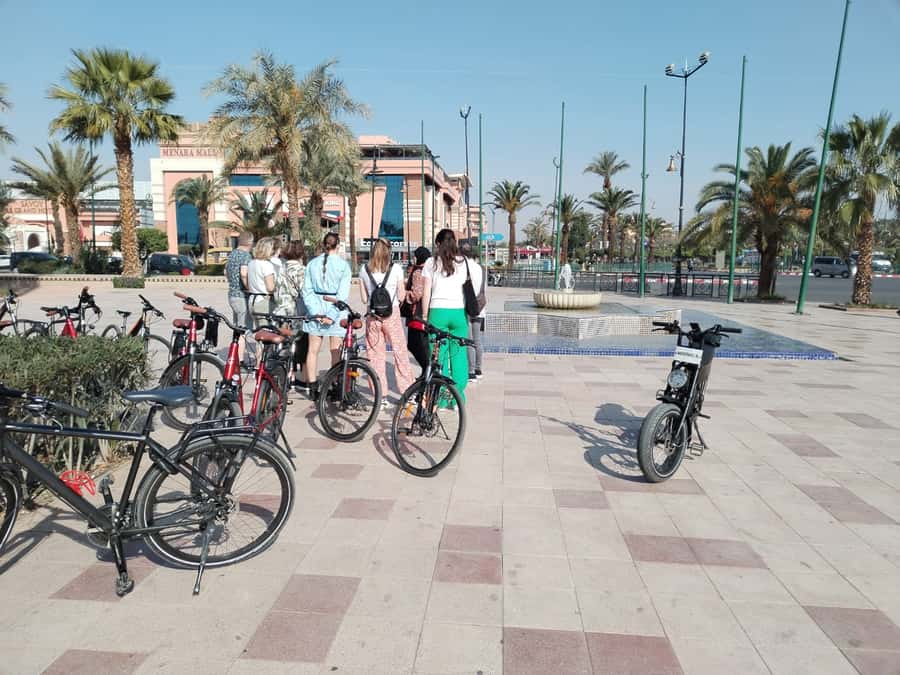
- Gueliz and Hivernage first: get your bearings in the newer parts before you tackle the Medina
- Koutoubia Mosque area plus gardens: a major landmark stop with relaxing space behind it
- Imperial stops on one loop: Saadian Tombs and Bahia Palace show up without turning the day into a museum marathon
- Kasbah and Jewish Quarter on bikes: you reach narrow streets that are hard to navigate on foot
- Jemaa el-Fnaa time on the route: you connect the square’s energy to what’s around it
- Safety comes from one habit: keep close to your guide when traffic gets intense
Why this bike tour is the smartest way to get your bearings
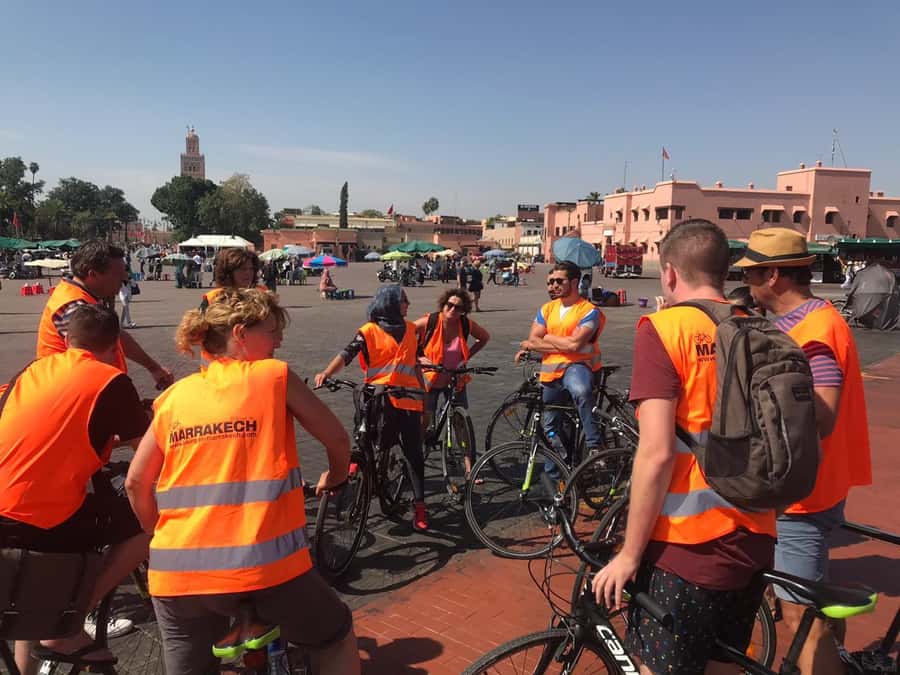
Marrakech can feel like two cities at once. The newer districts have wide roads and a faster pace, while the Medina is a maze of alleys, turns, and surprises. This tour works because it gives you both perspectives in a single morning ride—so you can come back later and actually recognize where you are.
I like tours that do more than point at monuments. This one helps you understand Marrakech’s layout. You ride past the medieval red-clay city walls, then work your way into the small Medina lanes where landmarks start making sense. That makes your next day easier, whether you’re shopping in the souks or trying to find your way back to your riad.
There’s also a practical benefit: cycling covers more ground than walking without turning into a long commute. In just three hours, you can see several big-name sights plus the in-between streets that give Marrakech its character.
You can also read our reviews of more guided tours in Marrakesh

Meeting your guide and bike setup at Morocco Toubkal Adventure
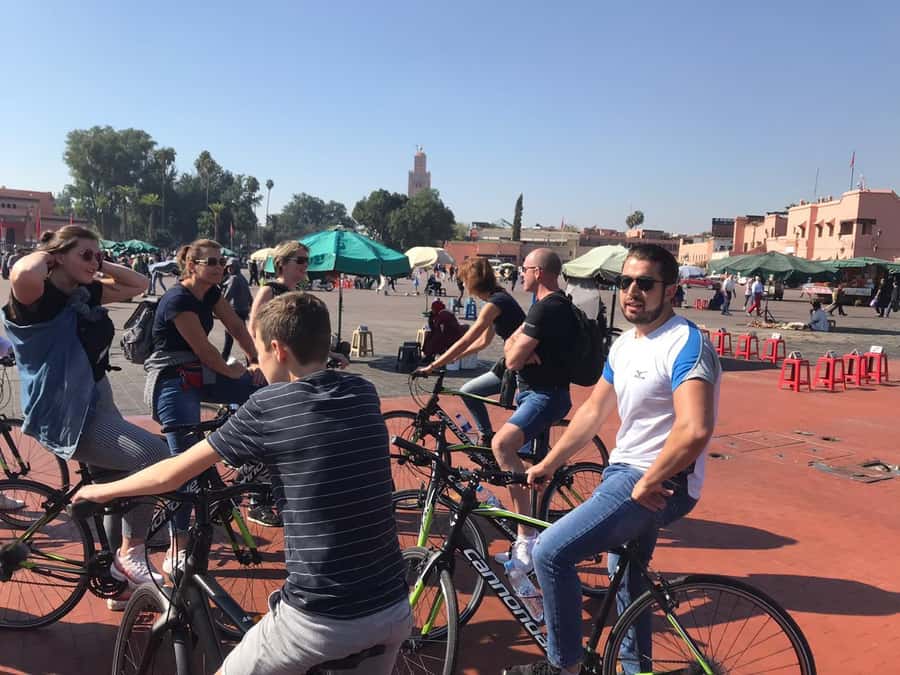
You meet your guide at the Morocco Toubkal Adventure shop. In some cases, there are starting-point options (including 22 Rue Oum Errabia), but the key thing is to show up at the correct shop location for your time slot.
The tour is about 3 hours on the bike with a local guide. Guides speak Dutch, English, French, Spanish, and German, so you should have no trouble getting explanations. If you’re choosing a morning tour, note that from November 1 to March 31, the morning start is 10:00 AM, with meeting time at 9:45 AM.
Bike basics matter here. The tour includes a bike, but your bike won’t have baskets, so you need to bring a backpack. Also, the tour isn’t for people who can’t ride a bike—so be honest with yourself about your comfort level before you sign up.
One small point that can help: reviews mention guides like Ziad, Miriam, Maream, Tarik, Salma, and Hanan for friendly, question-friendly guiding. You shouldn’t worry about being left in the dark on what you’re seeing.
Gueliz and Hivernage: modern Marrakech before you hit the Medina
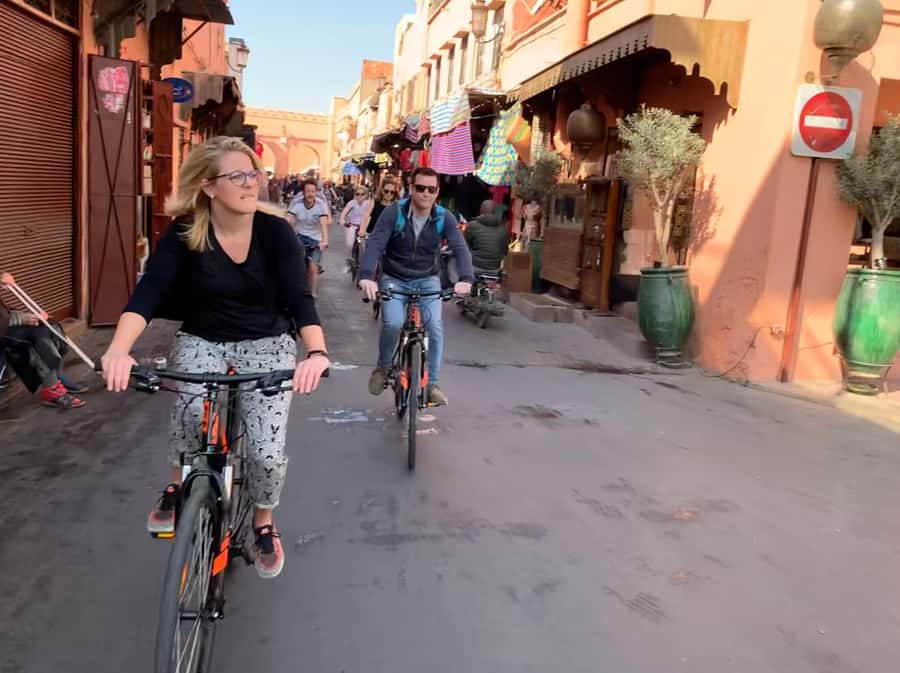
The tour starts by shifting you into Marrakech’s newer areas first, including Gueliz and Hivernage. This is smart pacing. If you jump straight into the Medina on day one, you can end up with sensory overload and zero orientation. Starting in Gueliz lets you warm up, learn the rhythm of the traffic, and get comfortable on the bike before the narrow lanes take over.
This segment is also where you’ll start noticing how Marrakech is organized beyond the souk chaos. Roads feel more readable. You get a sense of distance between major areas. And you’re better prepared when the tour transitions toward landmarks like Koutoubia Mosque and the older neighborhoods.
Expect that the guide will manage movement through the city rather than treating every stop like a long pause. The ride is designed to keep you moving, with guided moments and photo opportunities woven in.
Koutoubia Mosque and the gardens behind it
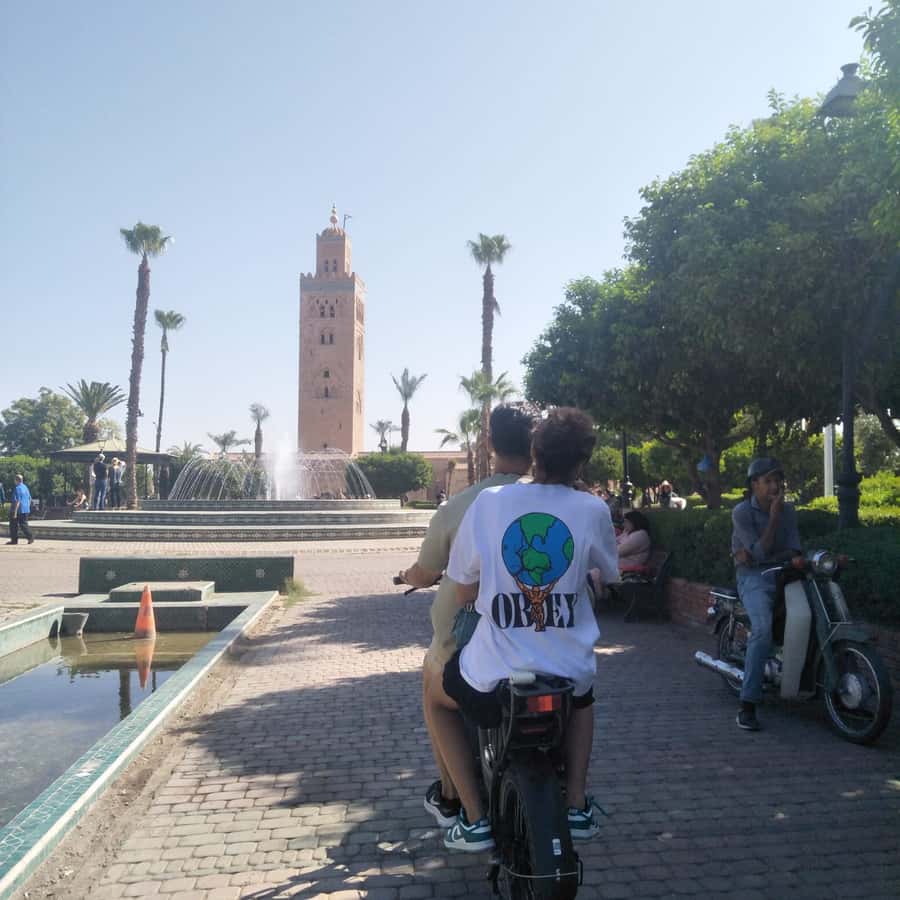
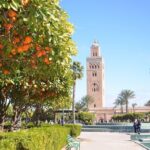
Next comes one of Marrakech’s visual anchors: the Koutoubia Mosque area. You’ll ride by it and take in the big landmark energy from street level—exactly the kind of sight that helps you orient the city once you step off the bike later.
What I like here is that the tour doesn’t only do a quick look at the mosque. It includes time for the gardens behind Koutoubia, which gives you a break from the traffic and offers a different mood. Even short garden time matters in Marrakech. It lets you reset your brain so the rest of the ride doesn’t feel like one long sprint.
After this stop, the tour begins to lean more “old city.” You’ll start to feel the shift: more turns, more pedestrians, and more of that old-street rhythm where the Medina’s layout starts to click.
Saadian Tombs and Bahia Palace: imperial power on two wheels
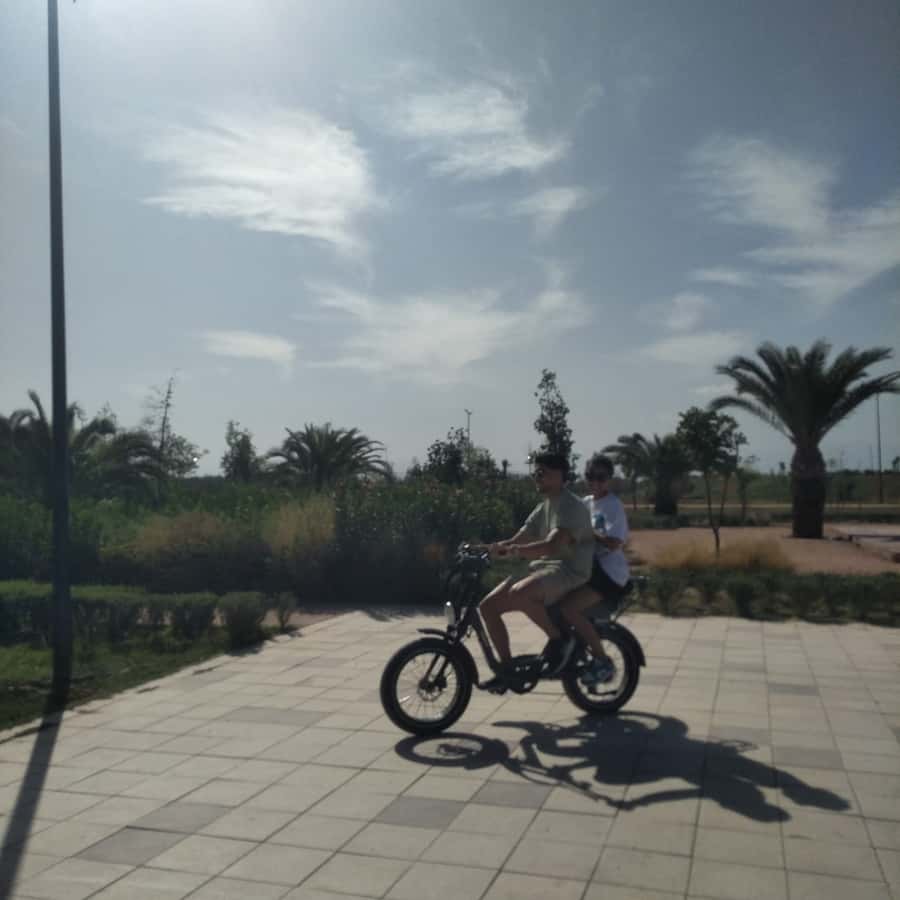
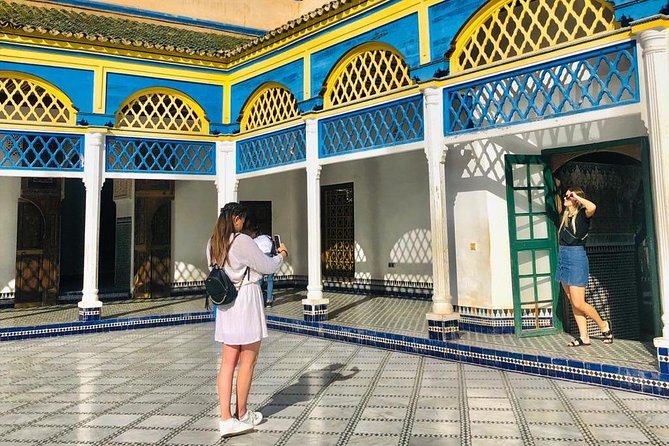
The tour includes rides past Saadian Tombs and Bahia Palace, each with time built in for you to see them from the bike route. Even if you don’t go inside, these stops help you connect Marrakech’s grandeur to its urban design.
Why this matters: Marrakech’s imperial story isn’t only found in museums. It’s in the walls, the courtyards, and the way major sites shape how neighborhoods grow around them. Seeing Saadian and Bahia-related areas back-to-back gives you a fuller sense of the city’s scale and ambition.
A practical note: entrance fees for historical monuments are not included, so if you want to go in, you’ll need to plan for tickets separately. The tour still does its job without inside access, but deciding ahead of time can save you stress. If you think you might want to enter, arrive with a plan for where you’ll spend that extra time.
Also, bring your patience for “in-between” viewing. On a bike tour, you get the best version of monument sightlines at street speed: not museum-stop time, but real city context.



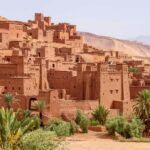
Jemaa el-Fnaa and the Kasbah red-clay maze
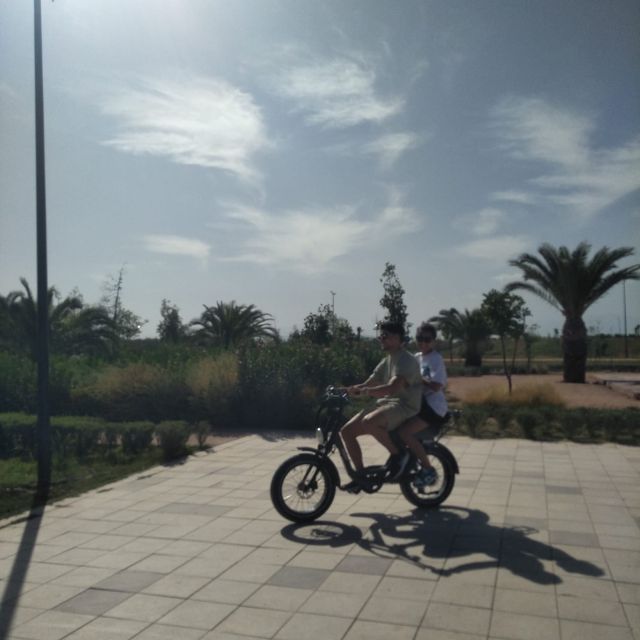
After the palace-and-tombs stretch, the route moves toward Jemaa el-Fnaa, Marrakech’s famous square. This is where the city’s energy is loud and obvious. On two wheels, you don’t just watch from afar—you approach it as part of the street network, which makes it easier to understand where the square sits in the larger city.
From there, the tour heads into the Kasbah district, including photo stops along the way. The Kasbah area is one of those places where you feel the weight of Marrakech. The red-clay walls and the maze-like streets make the city feel lived-in and historical at the same time.
One drawback to be aware of: the Medina and Kasbah connections involve narrow streets and heavy movement around intersections. You’ll want to stay switched on, not daydream. The good news is that your guide is there to manage the timing and keep you grouped.
If you’re coming to Marrakech to take photos, you’ll likely appreciate the way this tour mixes big landmark views with street-level angles. You get the wide shots, then you get the “this is where people actually move” frames.
Jewish Quarter alleyways and Medina traffic strategy
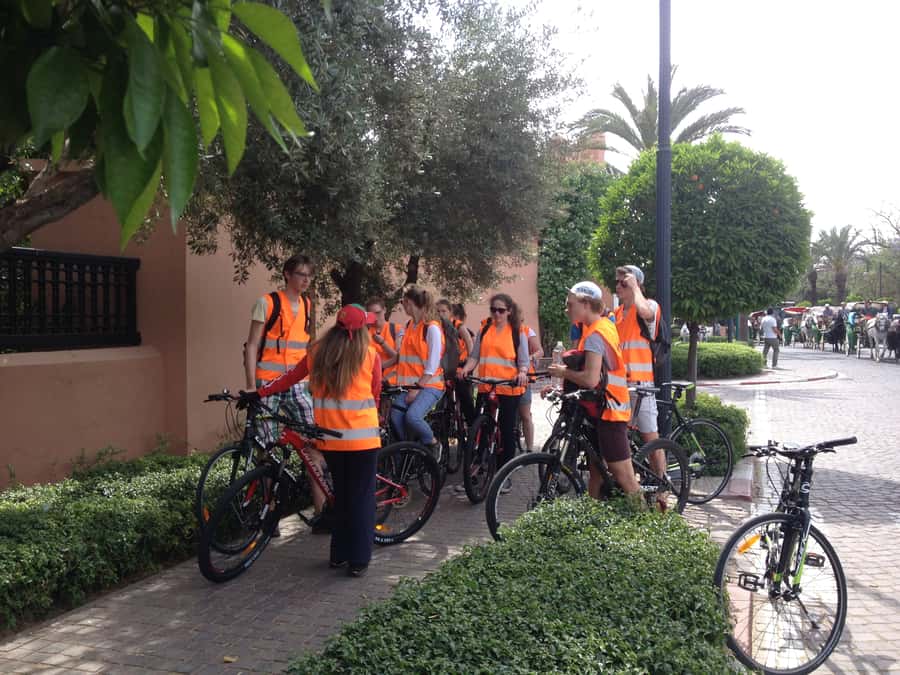
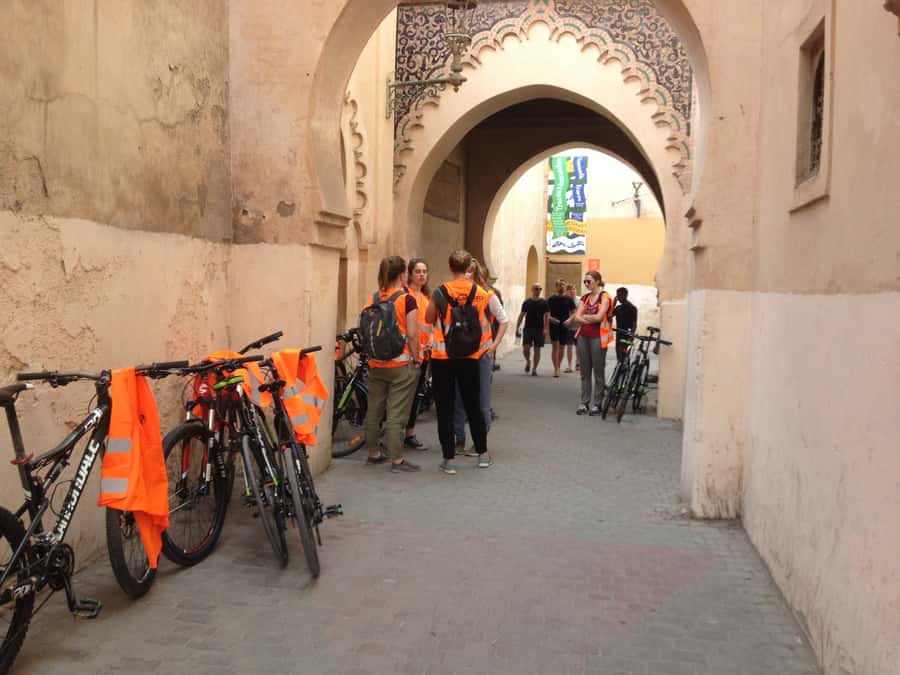
The tour doesn’t treat the Medina like a single straight line. You’ll also visit the Jewish Quarter, plus ride through small alleyways of the Medina. This is where the bicycle really pays off. Walking through some of these lanes is possible, but it’s slower and harder to get a sense of the street connections. On a bike, you see more while still feeling close to daily life.
Still, here’s the reality check. Multiple guests note that parts of the tour can feel intense because you’re surrounded by cars, other bicycles, motorbikes, horse carriages, tour buses, and donkey carts. Intersections can feel harrowing. This isn’t a slow cruise where you pedal in total calm.
So what do you do? You follow the basic safety habit: stay close to your guide. Reviews also mention that sometimes your guide’s visibility (like wearing a colored vest) can make it easier to keep track in chaos—so if you’re worried, keep your eyes on your guide and don’t lose the line.
Helmets are another practical issue. Helmets are not listed as included, and some guests say they were not offered. If you prefer extra protection, consider bringing your own helmet before you go. And if you’re comfortable but cautious, use that mindset: go steady, signal naturally, and don’t rush through intersections faster than the group.
Group size can matter here. One review mentions a group around 14 people, which can feel challenging in narrow lanes. The fix is the same: keep your spacing and let the guide control the pace.
Price and value: what $34 buys in Marrakech
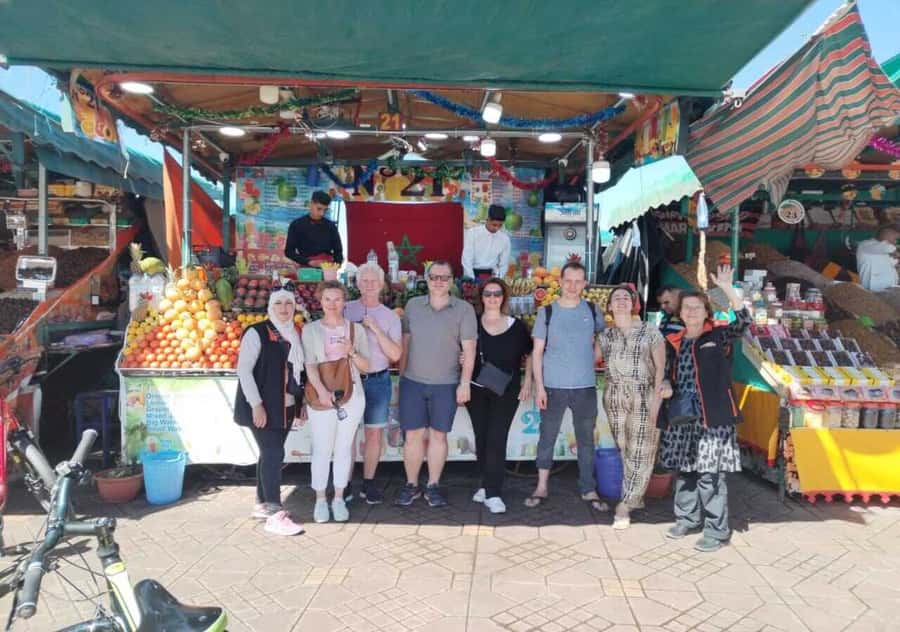
At $34 per person for about 3 hours, this tour is good value if your goal is orientation plus real street experience. You’re not just buying access to monuments. You’re buying transportation, a guide who can point out what matters, and a route that gets you into the Medina efficiently.
Here’s what’s included: the bike and a local guide. What’s not included: entrance fees and beverages. That’s a typical model for city tours, but you should factor it in when budgeting. If you want to enter Saadian Tombs or Bahia Palace, plan for tickets separately. If you want a drink during the ride, bring money so you’re not stuck thirsty.
I also think about value in “future you” terms. After this tour, you’ll have a mental map. You can return to places you liked, and you’ll waste less time trying to guess directions. That time savings is worth something in Marrakech, where getting lost can be part of the adventure, but not always part of your schedule.
If you want a low-commitment first-day activity that helps you navigate the rest of your stay, this price-to-time ratio makes sense.
Who should book this bike tour, and who should skip it
This tour is best for you if you:
- can ride a bike confidently (the tour is not suitable for non-riders)
- want a first-day orientation to the Medina and the newer districts
- enjoy street-level sightseeing—souks, alleyways, and landmarks as part of real traffic
- like learning from a local guide and asking questions (multiple guests mention guides who are friendly and responsive, with names like Ziad and Miriam standing out)
It’s not the best match if you:
- don’t want to ride near heavy traffic or anxious intersections
- struggle with the physical demands of cycling through narrow, busy areas
- feel uneasy in environments with pedestrians, motorbikes, and carts
Dressing matters too. Short skirts are not allowed, and in winter mornings the temperature can be chilly, so dress appropriately. Also remember the backpack rule: the bikes don’t have baskets, so you’ll need a way to carry essentials.
Should you book this Marrakech bicycle tour?
Yes, I’d book it if you want a fast, practical way to get your bearings and you’re comfortable with lively street conditions. The best part is that you don’t just see Marrakech—you learn how it’s put together, including the Medina alleys, the Kasbah area, and the Jewish Quarter route, plus major monuments like Koutoubia, Saadian Tombs, Bahia Palace, and the approach to Jemaa el-Fnaa.
But if the idea of chaotic intersections makes you tense, choose a different style of tour and prioritize calm sightseeing. This one is for people who want motion, not just still photos.
If you go, do one thing that really helps: stay close to your guide and treat the first minutes as training wheels for the whole city.
FAQ
How long is the Marrakech bicycle tour?
It lasts 3 hours.
How much does the tour cost, and what’s included?
The price is $34 per person. It includes the bike and a local guide. Entrance fees for historical monuments and beverages are not included.
Where do I meet the guide?
You meet at the Morocco Toubkal Adventure shop. The tour also lists starting options that may include 22 Rue Oum Errabia.
Which areas and monuments will I see?
You ride through Gueliz and Hivernage, visit the Koutoubia Mosque area and gardens behind it, pass by Saadian Tombs and Bahia Palace, ride toward Jemaa el-Fnaa, and explore areas including the Kasbah district and the Jewish Quarter, plus small Medina alleyways.
Are entrance fees included for monuments?
No. Entrance fees are not included.
What time does the morning tour start in winter?
From November 1 to March 31, the morning tour starts at 10:00 AM, and you meet your guide at 9:45 AM.
What languages are the live guides?
The live tour guide is available in Dutch, English, French, Spanish, and German.
What should I bring or wear for the ride?
Bring a backpack, since the bikes do not have baskets. Dress appropriately for chilly winter mornings, and note that short skirts are not allowed. Helmets are not listed as included, so plan accordingly.