REVIEW · MARRAKESH
From Marrakech: Imlil Day Trip & lunch in Local Family house
Book on GetYourGuide →Operated by Trekking Morocco · Bookable on GetYourGuide
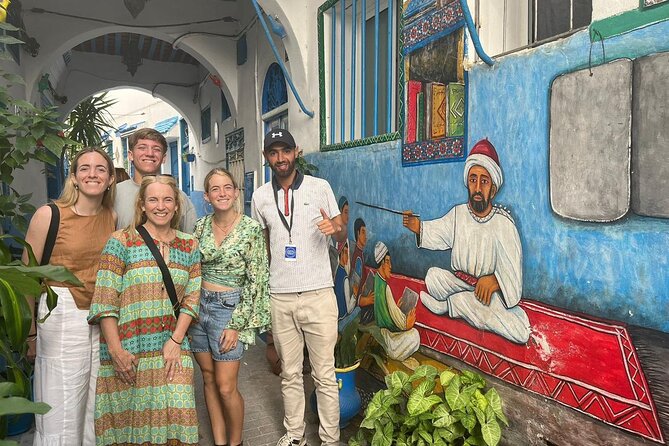
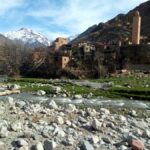
Atlas mountains, in one day, from Marrakech. This Imlil day trip is built around walking paths between Amazigh villages, then rewarding you with big Toubkal views and a proper lunch in a local home. Along the way, you’ll learn how people live here—work, crops, customs, and village economics—without feeling like you’re watching from behind a fence.
I especially like the human pace of the day: the hike is described as 1–2 hours (not hard) and can be adjusted by fitness and age, plus your guide can redirect the route if needed. I also like that lunch isn’t a quick “tour meal”—you eat in a family house in the Imlil area, with mint tea and time to sit and look at the mountains.
One thing to keep in mind: there’s some rocky going. The first stretch can feel more rugged, and in cooler months you might hit patches that are slick underfoot.
In This Review
- Key things I’d circle before you book
- From Marrakech to Imlil: the drive you don’t skip
- Imlil Valley hike: how the route stays doable
- Mzzik mint tea: a small stop that teaches a lot
- Waterfalls and Toubkal ascent views: the payoff window
- Ait Souka lunch in a family house: what makes it worth the walk
- Argan oil cooperative and Asni Market: optional stops with real value
- The guides and drivers: why the day feels smooth
- What to bring (and what to wear) for real comfort
- Price and value at about $27: what you’re really paying for
- Who this Imlil day trip suits best
- Should you book this Imlil day trip with lunch at a local family house?
- FAQ
- How long is the Imlil day trip from Marrakech?
- Do I get picked up from my hotel in Marrakech?
- How much hiking is involved?
- Is there a mule option?
- What will I eat during the lunch?
- Will the tour be guided in English?
- Do you stop at Asni Market or an argan oil cooperative?
- What should I bring for the hike?
Key things I’d circle before you book
- Pickup that actually works from the medina, with a fallback meeting point if your hotel can’t be reached by car
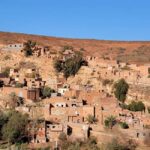
- A guided village hike through Arghen, Mzzik, and toward Ait Souka with flexible pacing
- Mint tea in Mzzik Village, plus a chance to meet local hosts and hear daily-life stories
- Waterfalls and Toubkal ascent views, the “why we came” moment for most people
- Lunch in a local family house after the walk, often described as the best part of the day
- Saturday options like Asni Market and a women’s argan oil cooperative stop in Tahnaout
From Marrakech to Imlil: the drive you don’t skip
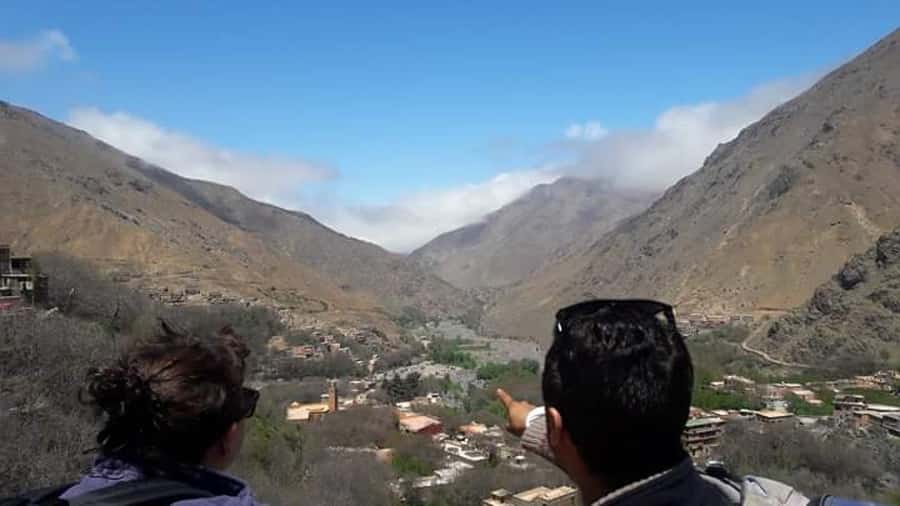
Marrakech to the Atlas isn’t just a transfer—it’s part of the experience. You’ll ride by van for about an hour plus (plan roughly 75 minutes to Imlil, but total timing can stretch with photo stops and viewpoints), passing through dramatic valleys on a guided scenic drive.
On the way, the route goes along the Righaya Valley, with a photo stop and sightseeing time, and it can include highlights like Moulay Ibrahim gorges. This matters because your eyes adjust fast: Marrakesh’s streets give way to countryside, then to mountain villages. By the time you start walking, you’re already in “Atlas mode.”
You’ll also get a quick safety briefing and the basic plan for the day. If you’re sensitive to motion, keep this in mind: some mountain roads are bendy, and if your seats don’t face forward, it can be a factor for motion sickness. Bring ginger chews or whatever usually works for you, and sit where you feel best.
A few more Marrakesh tours and experiences worth a look
Imlil Valley hike: how the route stays doable
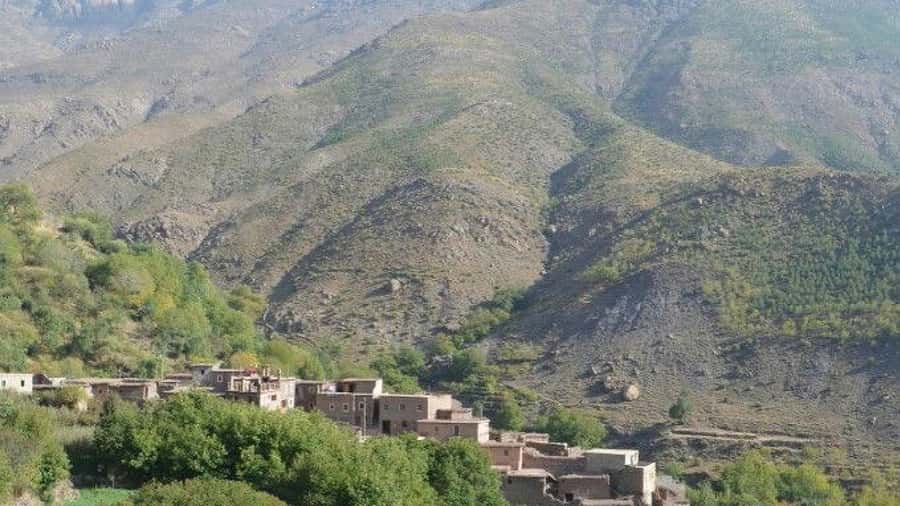
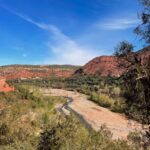
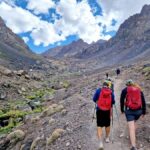
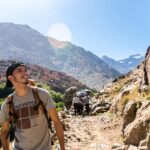
The heart of this tour is the hike through Imlil Valley and nearby Berber villages. The activity frames it as a 1 to 2 hour hike, described as not hard, but the reality is that “not hard” depends on your comfort with uneven ground. Expect a climb early on (often the most demanding part), then more level walking between villages and terraces.
The walk typically links several spots—starting near Imlil, then through Arghen and Mzzik (with a tea stop), continuing toward waterfalls, and later across fields and terraces with views back to the Atlas chain. You finish at Ait Souka, where lunch is waiting.
What I like for planning purposes is the built-in flexibility. The trekking can be shorter or longer based on fitness and age, and your guide can adjust. In practice, that means you’re not stuck “either you do it all or you don’t go.” You might be offered easier segments, or a chance to rest if steps get too much.
Mzzik mint tea: a small stop that teaches a lot
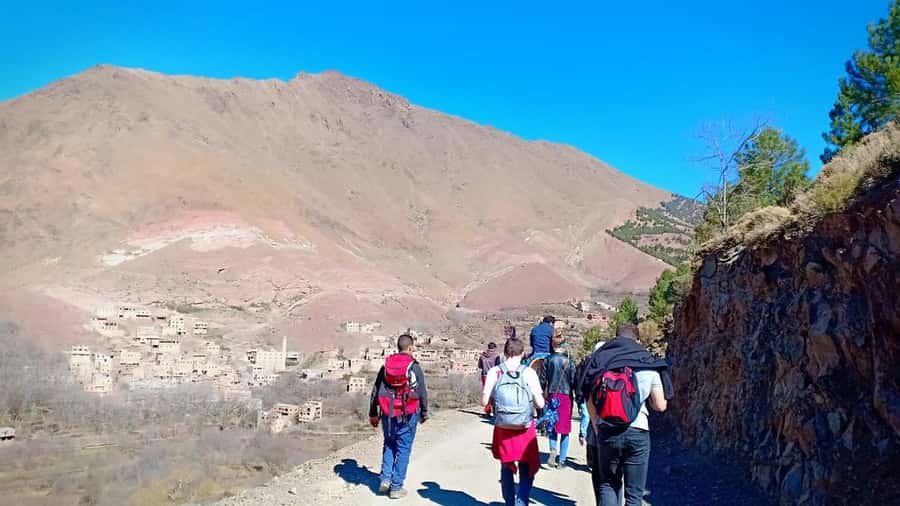
The mint tea stop in Mzzik Village is brief, but it’s one of those moments that changes your whole perspective. You’re not just watching the landscape; you’re sitting with people and seeing how hospitality works in daily life.
This is where you’ll learn more about village life and local customs and economy—how families organize work, what crops matter, and why certain traditions persist. You’ll also get a chance to meet hosts in a more relaxed setting than a roadside photo stop.
In some versions of this day, there’s also a visit connected to argan oil production and local education around it. Either way, your guide is the one connecting the dots: you’ll hear what you’re seeing and why it matters.
Pro tip: mint tea time is also a great moment to reset your energy. If you’ve been rushing from Marrakech, slow down here, drink water, and let your body catch up.
Waterfalls and Toubkal ascent views: the payoff window
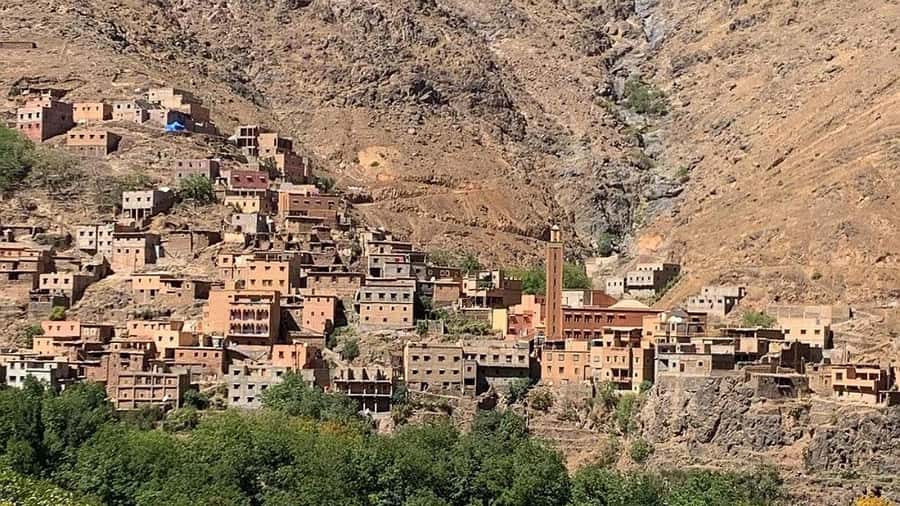
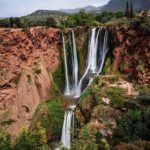
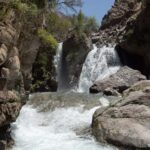
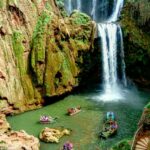
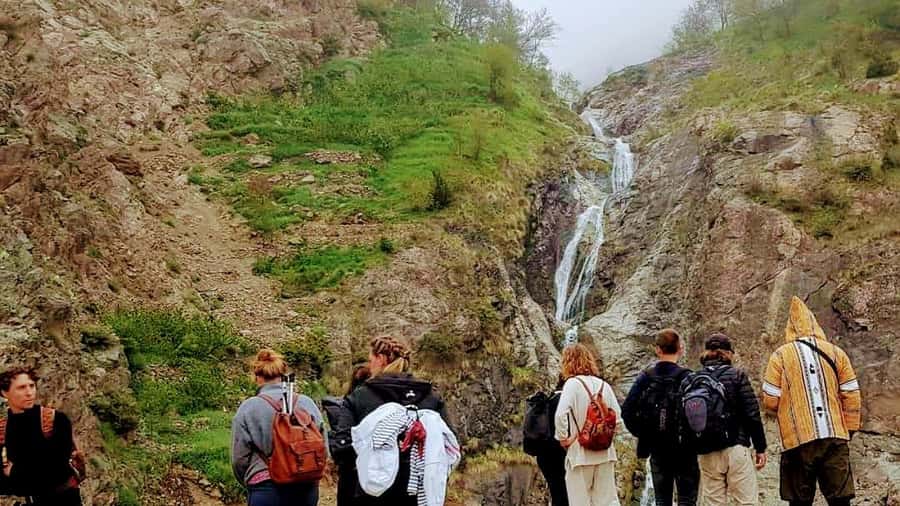
The hike includes time for waterfalls and views toward Mount Toubkal. This is the “payoff” portion of the day—the part most people will remember when they look back at photos later.
A couple things to plan for:
- Waterfalls and viewpoints can be crowded depending on the day and season, so arrive ready for a bit of foot-traffic near the busiest spots.
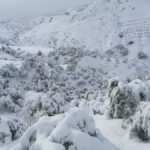
- Conditions change quickly in the Atlas. Cooler months can mean icy or slick patches in shaded areas.
If you’re visiting in winter or early spring, dress in layers. Warm clothing matters even if Marrakech feels warm the moment you leave.
And yes, you’ll likely be looking up at the Atlas for much of the walk. That’s part of what makes the day feel special: the mountains are close, and you’re not stuck with only distant silhouettes.
Ait Souka lunch in a family house: what makes it worth the walk
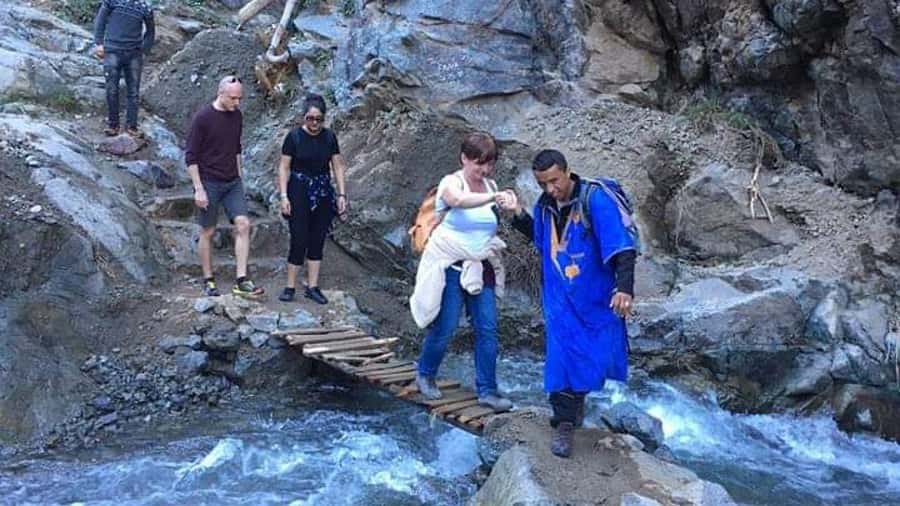
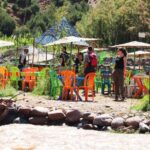
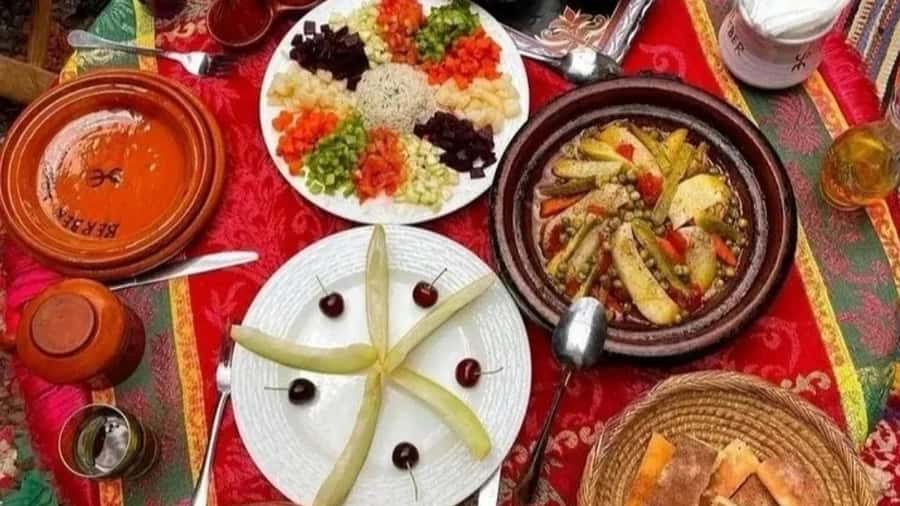
Lunch is the big reason this trip feels different from the “drive, one viewpoint, go” style of day tours. You reach Ait Souka after the hike, then eat a meal prepared by the local family—typically served with bread, tagine, salad (or similar side dishes), mint tea, and fruit.
Most days are described around tagine or similar Moroccan home-style cooking. Portion size can feel a bit modest at first, but the meal is generally satisfying and often includes follow-up bites like fruit.
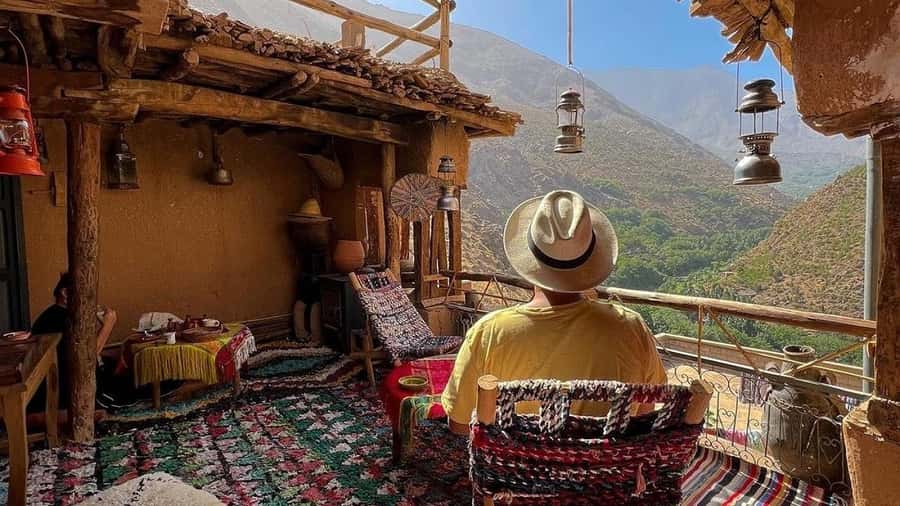
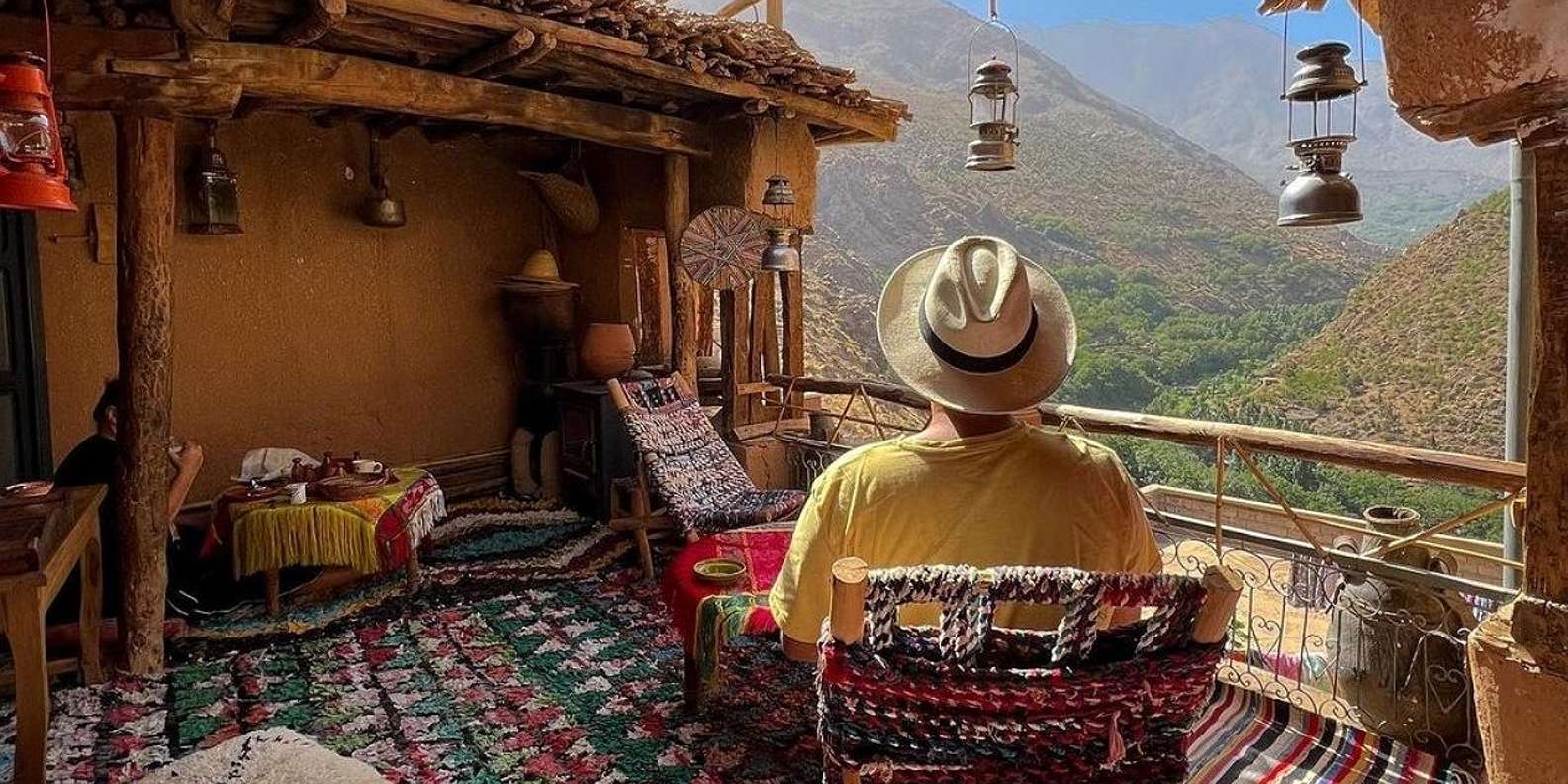
What matters most isn’t just the food—it’s where you eat. Dining facing the Atlas Mountain chain changes the meal. You’re not eating in a hurry; you’re pausing. This is when the day’s stories make more sense, too. After sitting and eating, the earlier bits about village life and customs land in a more personal way.
Diet note: vegetarian and vegan meals are available. If you have strict allergies, it’s smart to mention them clearly when you book (the tour data confirms vegetarian/vegan options, and guides/hosts often handle it attentively).
A few more Marrakesh tours and experiences worth a look


Argan oil cooperative and Asni Market: optional stops with real value
Depending on the day, your drive may include an argan oil cooperative, often linked to women’s cooperatives. If this stop is on your route, it’s not treated like a quick shop stop. You’ll typically hear how argan is produced and what the cooperative does, and there may be time for tea as part of the visit.
Another optional element is Asni Market on Saturdays. This is a chance to see local commerce in a mountain region, which gives contrast to the “hike and view” parts of the day. If you love markets, this is the kind of stop that helps the day feel like more than scenery.
If you’re choosing between options: I’d prioritize whichever stop matches your interest in everyday life—argan production for food/crafts, or Asni for market culture.
The guides and drivers: why the day feels smooth
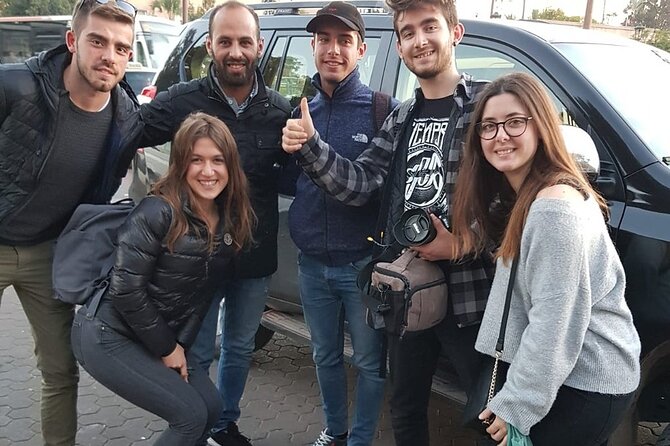
This trip runs well when the team is strong, and the guide role is a big part of that. You may meet guides like Ibrahim, Sabir, Hassan, Mohammed, Mohamed Larbi/Larby, Larbi, or others. Many are described as patient, communicative, and willing to explain local life in plain terms.
You’ll also ride with a driver who handles mountain roads and keeps the transfer comfortable and safe. Names that came up include Abdou, Abdul, Taib, Mustafa, Omar, and Yousef.
The practical takeaway: if you’re nervous about steps or pacing, say so early. The best guides will adjust the route and the rhythm, and they’ll help you find a pace you can actually enjoy.
What to bring (and what to wear) for real comfort
You’ll walk in the Atlas, often on uneven ground and sometimes in shade. The tour’s packing list is worth following closely:
- Comfortable shoes (sports shoes are ideal)
- Warm clothing (even in months when Marrakech is warm)
- Sunglasses and a sun hat
- Sunscreen and a camera
- Water if your guide doesn’t provide enough time for refills
Also: sandals or flip-flops are not a good idea. Some paths are rocky, and the “easy hike” still means you’ll plant your feet often on uneven surfaces.
If cold is likely, bring gloves or at least a warm layer you can access quickly. If you’re prone to motion sickness, sit where you feel best and consider bringing your usual remedy.
Price and value at about $27: what you’re really paying for
For about $27 per person for a 1-day outing, the value is strongest in three areas:
- Transportation and pickup from your hotel or a workable meeting point in the medina
- Local guide + lunch included, meaning you’re paying for an experience that doesn’t end at a viewpoint
- The day’s structure: drive through valley scenery, guided hike, tea stop, waterfalls, then a family lunch
If you’re comparing this to “half-day” tours that barely include food, this one has a full arc. You’ll walk, you’ll eat well, and you’ll learn what you’re seeing while you’re doing it.
The main cost to you is time and energy, not money. You’re giving up a full day, so plan it when you want a calmer pace away from Marrakech.
Who this Imlil day trip suits best
This is a great fit if you want:
- A walk with local villages and mountain views without committing to a full Toubkal climb
- A meal that feels like a real stop in someone’s life (not a picnic on the road)
- A guide-led day where pace can be adjusted
It may not be the best fit if you have:
- Severe mobility issues or balance problems
- Very young kids who can’t handle uneven steps (the tour is not described as a “baby stroller” kind of day)
- Health concerns that make rocky hiking risky—one older hiker flagged limited medical options and long distances to care, so if that’s a concern, plan carefully with your doctor
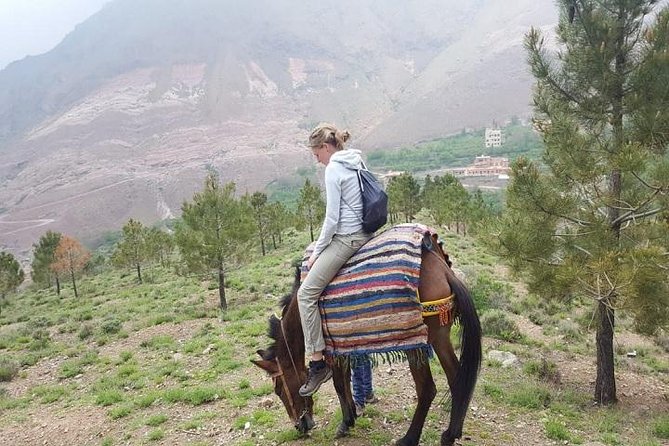
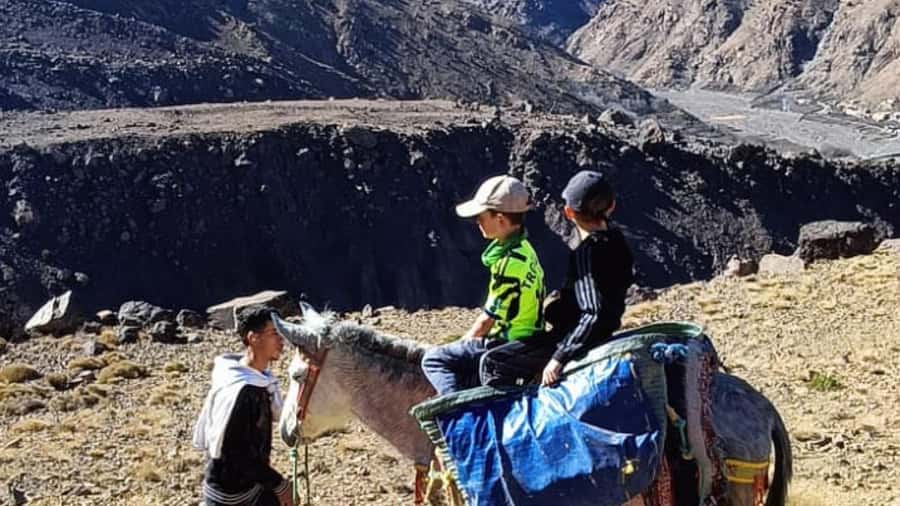
If you want extra help on the trail, there’s also a mule option for kids or people who need it: an extra 15€ per mule, paid locally, and it can be booked for you.
Should you book this Imlil day trip with lunch at a local family house?
Book it if you want a day that feels like it has a backbone: drive into the Atlas, hike through villages, tea and waterfalls, then a real sit-down lunch with mountain views. At roughly $27 and with pickup, you’re paying for a guided experience that’s more than a checklist.
Skip it or choose a gentler alternative if you know you struggle with rocky climbs or if the hike length and early incline sounds like more than you can handle. If you’re on the fence, ask your guide what pacing options exist for your group, and be honest about your comfort level.
If you’re visiting Marrakech and you want to see the mountains close-up, this is one of the most practical ways to do it in a single day.
FAQ
How long is the Imlil day trip from Marrakech?
It runs for one day, with the hike and stops taking up most of the schedule. The van ride is about 75 minutes each way, and total time can vary with photo stops and the day’s route.
Do I get picked up from my hotel in Marrakech?
Yes. You’ll get hotel pick-up if your accommodation is accessible by car. If not, the operator will arrange a meeting point in the medina.
How much hiking is involved?
You should expect about 1 to 2 hours of hiking. It’s described as not hard, but the route can be shorter or longer depending on your fitness and age.
Is there a mule option?
Yes. If you want to ride a mule, there’s an extra 15€ per mule, paid locally to the mule owner. The tour team can book it for you.
What will I eat during the lunch?
Lunch is included at a local family house after the hike. You’ll also have mint tea during the day. Vegetarian and vegan options are available.
Will the tour be guided in English?
The live guide is available in Arabic, English, French, and Spanish.
Do you stop at Asni Market or an argan oil cooperative?
Asni Market in Tahnaout is mentioned as an option for Saturdays, and a women’s argan oil cooperative in Tahnaout may be included depending on the route and day.
What should I bring for the hike?
Bring comfortable shoes, warm clothing, sunglasses, a sun hat, sunscreen, and a camera if you want photos. Layers help because temperatures can shift in the mountains.