REVIEW · MARRAKECH
From Marrakech: 3-Day, 2-Night Merzouga Dunes Desert Trip
Book on Viator →Operated by Morocco First Gate · Bookable on Viator
A real desert route is rare on short timelines, and this one does it in three days. I like that you get all-in transportation plus two overnights (a real hotel and then a desert tent). I also like the focus on big visual moments: the Atlas crossings and sunrise/sunset in the Erg Chebbi dunes. One thing to think about: you’re in a van for a lot of the trip, so if you hate long drives, this might feel like “many hours on the road” more than “many hours on the fun.”
What works especially well here is the structure. You leave Marrakesh early, hit standout stops along the way (including Ait Benhaddou), sleep in Tinghir, then do the camel-and-camp night in the sand. In the desert, the experience is handled for you: luggage gets managed with a small overnight bag, you ride one camel each, then settle into the camp for dinner, drums, and music under the stars. Still, the quality of the day-to-day can depend on how quickly camp logistics connect back to your car, so I’d plan for a bit of extra waiting if things run behind.
The tour is group-sized (up to 16) and priced to keep it realistic for a Marrakech-to-Sahara weekend. It’s a strong fit if you want the route without wrestling with buses, finding drivers, or trying to line up separate stays. If you want a totally relaxed pace with lots of free time at each stop, you may prefer a slower, private option.
In This Review
- Key highlights that matter on this route
- Why this 3-day Marrakesh–Merzouga route makes sense
- Day 1: Dades Gorges, Tichka Pass, and Ait Benhaddou’s film-still feeling
- Day 2: Merzouga dunes, camel time, and a night of drums in the sand
- Day 3: Sunrise dunes, shower time, and the long road back to Marrakech
- Getting value for your money (and who should book it)
- Guides and the human touch: what you can actually feel
- Small planning tips to make the desert part easier
- Should you book the Merzouga dunes trip from Marrakesh?
- FAQ
- What is the duration of the Marrakech to Merzouga dunes trip?
- What’s included in the price?
- Are meals like lunch and drinks included?
- Will there be time to see sunrise and sunset in the desert?
- Is there a camel ride and sandboarding?
- How far is the group size and what fitness level is needed?
Key highlights that matter on this route
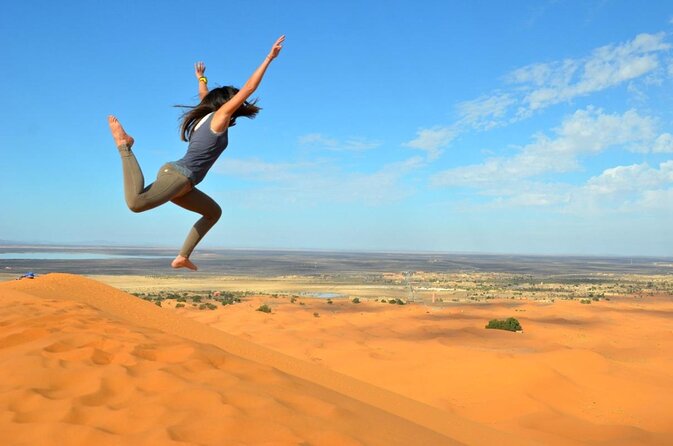
- Atlas Mountains + Tichka Pass (2260m): early views that feel like a reset from the city
- Ait Benhaddou UNESCO stop: a major “Morocco postcard” moment built into the drive
- Tinghir hotel overnight: you get a real shower and a proper bed before the desert night
- Erg Chebbi camel ride + sandboarding (if available): action in the dunes, not just a photo stop
- Desert camp at night: dinner by the fire area plus drums and music under the stars
- Small-group feel (max 16): easier than bigger caravans, still good value
Why this 3-day Marrakesh–Merzouga route makes sense
This trip is built for people who want the Sahara without turning the vacation into a logistics project. In three days, you cover enough ground that you’ll feel you actually traveled, not just “commuted to the desert and back.”
You also avoid the most common stress point: coordinating transport and sleeping plans on your own. Here, you’re placed in a schedule with hotel time in Tinghir and then a desert camp tent night. That matters, because Merzouga is the kind of place where arriving “just in time” can be messy—especially if you’re trying to book everything the day before.
Price-wise, $232.63 per person can look steep at first glance—until you tally what’s included. You’re paying for round-trip transport from Marrakesh, two meals (breakfast and dinner on the included days), camel ride support, and the desert tent night. Lunches and drinks are on you, but the big costs are handled.
The big tradeoff is the drive time. The itinerary includes a long day one (about 7 hours driving time), day two focused on the Merzouga approach (about 5 hours), and day three (about 10 hours driving time). That’s not unusual for Sahara routes, but it does mean you should come with a good attitude for road time.
You can also read our reviews of more evening experiences in Marrakech
Day 1: Dades Gorges, Tichka Pass, and Ait Benhaddou’s film-still feeling
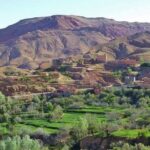
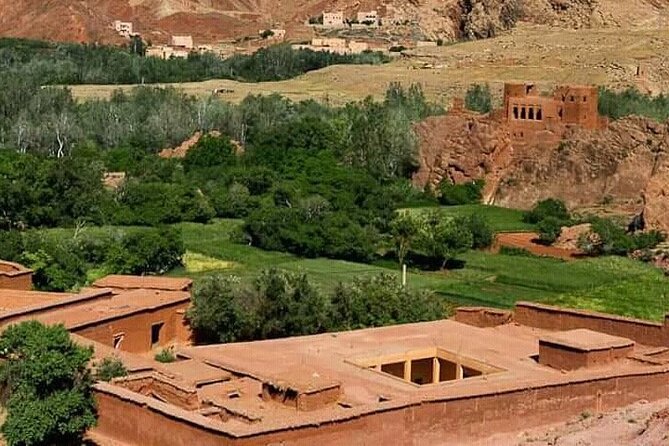
Day one starts early: departure from the Marrakesh meeting point at 7:00 AM. The schedule takes you toward Ouarzazate via the Tichka Pass (2260m above sea level). If you like mountain scenery and fast-changing views, this is where the trip starts earning its keep. The drive also threads through Berber villages below the Atlas Mountains, which helps you see Morocco beyond medina streets.
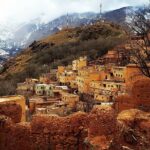
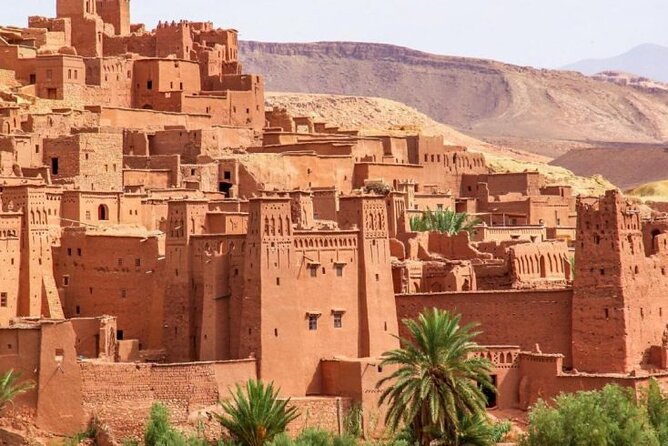
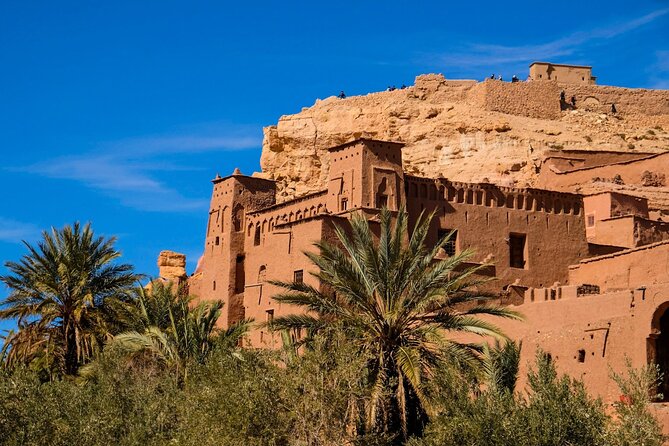
You’ll get a photo stop at Tichka, and then you move toward Ouarzazate. After that, you visit the Ksabah of Ait Benhaddou, a UNESCO World Heritage Site. Ait Benhaddou is one of those places that makes sense even if you don’t know the background history. The layout and the earthen structures give you a sense of how people built to survive heat, wind, and time.
A practical note: there’s an “optional” local guide for Ait Benhaddou listed at 3 euros. If you’re the type who likes to understand what you’re looking at—architecture, defensive village design, how the site works—you might find it worth it. If you’re purely here for the visuals and quick photos, you can still enjoy the stop without the add-on.
The day ends in Tinghir, where you stay in a standard hotel. The stop sequence includes the Skoura oasis and the Rose Valley on the way to Dades Gorges, so you’re not stuck with only rocky views. Still, by the end of the day you’ll likely be glad for the shower and bed—because day two is when the desert logistics kick in.
Potential drawback to consider from a pacing standpoint: the trip is packed with stops, and one review flagged that there can be too many hours on the road compared to the time spent visiting. If that’s your pet peeve, you might want to treat this tour as a “highlights plus travel” format rather than a slow stroll kind of itinerary.
Day 2: Merzouga dunes, camel time, and a night of drums in the sand
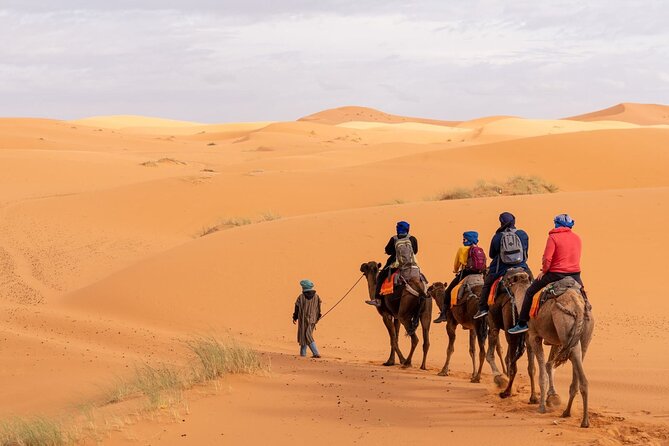
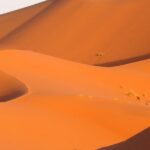
After breakfast, day two is all about reaching Erg Chebbi in Merzouga. Your route passes through Todora Gorges, oasis areas, Tinjdad, Jorf, and Erfoud—so you’re not just driving through blank desert until you arrive. You’re gradually transitioning through places that feel like the Sahara’s edge before it finally opens up into the dunes.
When you arrive in Merzouga, there’s a smart little step: you take some of your luggage in a small bag that’s meant for the desert night. That matters because it keeps your day organized. You won’t be lugging everything around while you switch from cars to camel riding and then to tent camp.
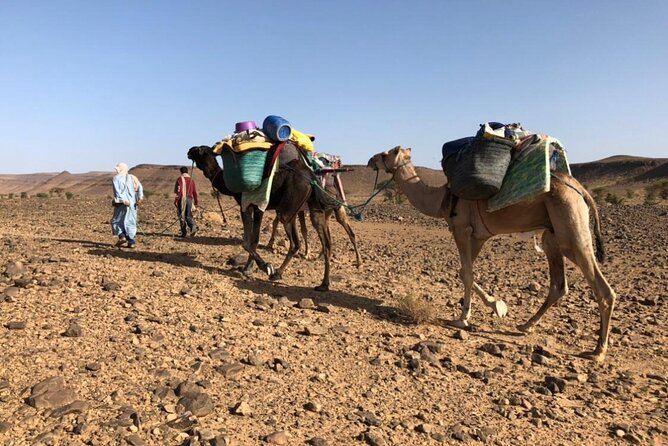
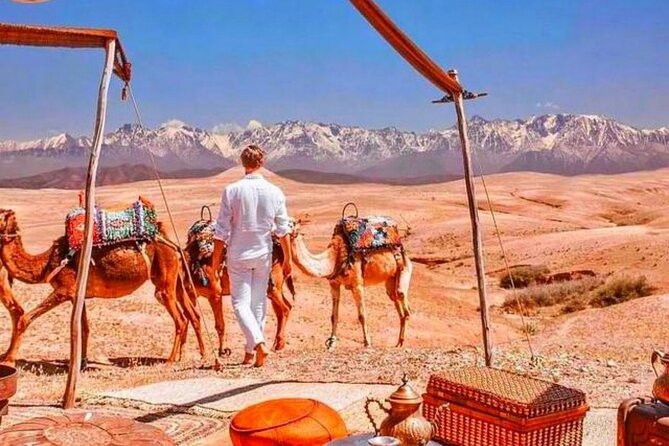
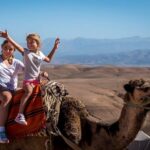
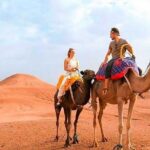
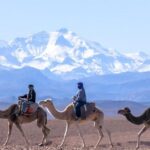
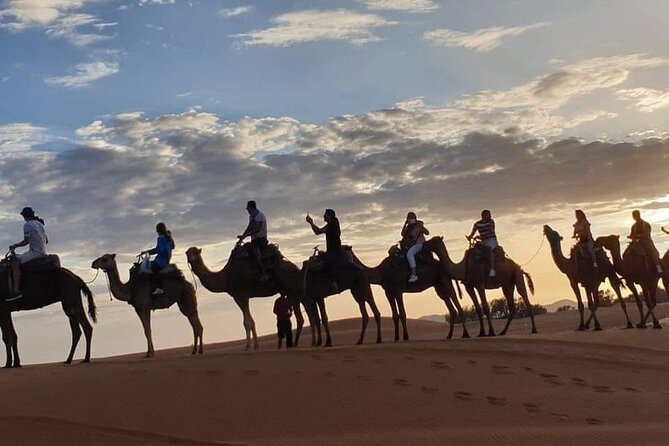
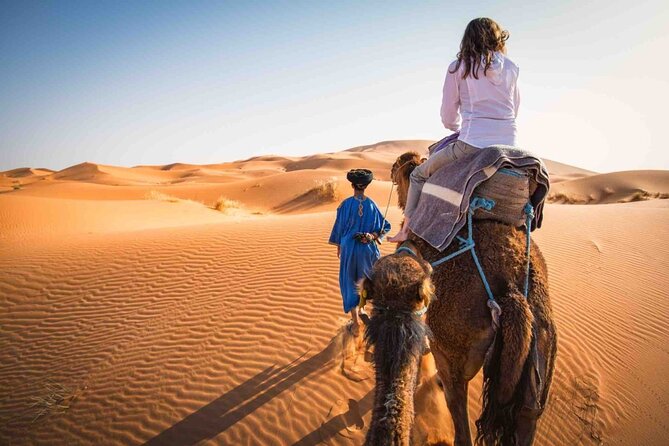
Then comes the part most people come for: the camel ride. This tour includes a camel ride with one camel each, so you’re not stuck sharing in a way that feels uncomfortable or slow. You’ll cross the Erg Chebbi dunes and then walk up toward the highest dunes for sandboarding if boards are available.
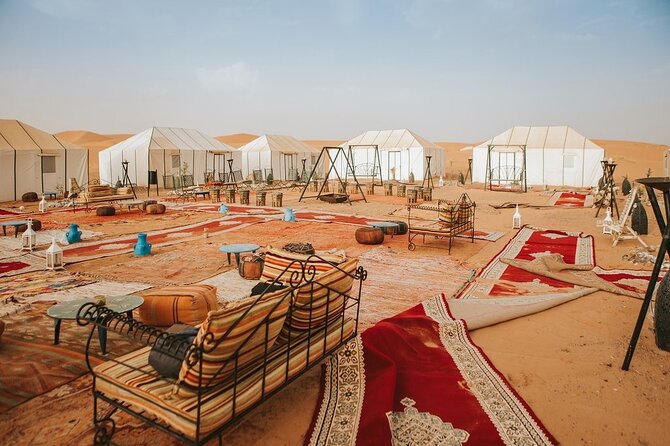
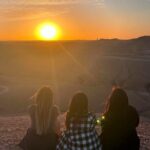
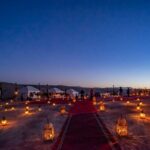
The timing also includes the “golden hour” moments. You’ll watch the sunset from the dunes area, and later you overnight in a standard tent in a desert camp with drums and music. This is where the Sahara stops being a destination and becomes a feeling: quiet between beats, the night sky overhead, and the sense that you’ve stepped into another rhythm.
One practical detail to keep in mind: desert camp transfers can get a little complicated. A review mentioned trouble with transfer from the camp to the car because the camp manager didn’t take care of booking quad or camel options. Even if you’re not planning extras like quads, it’s still worth knowing that camp-to-vehicle handoffs can be the one timing snag. If you want to minimize stress, keep valuables light, follow the group’s instructions closely, and expect a short wait if the camp is coordinating multiple guests at once.
Day 3: Sunrise dunes, shower time, and the long road back to Marrakech
Day three begins with the desert’s best trick: wake up for sunrise in the dunes. After that, you’ll have breakfast and a shower before you travel back toward Marrakesh.
Then the drive starts again, this time returning through Berber villages. You’ll reach Ouarzazate and continue onward until the tour ends around 7:30 PM. The drop-off is back at the meeting point or the nearest accessible point to your riad/hotel.
That evening arrival matters. For a lot of people, day three is the “keep it together” day: you’ll be tired from waking early, and you’ll spend the most time in the car. If you’re the kind of traveler who likes to recharge on the return trip, this itinerary fits well: your morning is special, and your late day is transportation mode.
Getting value for your money (and who should book it)
At $232.63 per person, this tour is trying to solve a specific problem: getting you from Marrakech to Merzouga with minimal planning while still giving you the full experience—camel ride, desert camp night, and scenic stops.
Here’s the value logic I’d use if I were choosing:
- If you want one booking that handles transportation and lodging, this is a bargain compared to piecing it together.
- If you’re okay with a group format and don’t mind a full itinerary, you’ll get the most out of the short timeline.
- If you don’t want to pay for a bunch of extras, you’ll appreciate that dinner and breakfast are included, plus the camel ride and tent night.
Who it suits best:
- First-time Morocco visitors who want a proper Sahara moment
- People who prefer group tours to keep costs down
- Travelers with moderate physical fitness who can handle camel riding and walking short distances in the sand
Who might want to skip or upgrade:
- Anyone who hates driving hours and wants more time on-site
- Travelers who are very sensitive to schedule shifts (desert camp logistics are weather and crowd dependent)
The group size cap of 16 travelers helps. It’s not a massive bus crowd, which usually makes the experience feel friendlier and easier to manage.
A few more Marrakech tours and experiences worth a look
Guides and the human touch: what you can actually feel
The route lives or dies by the people running it. Reviews highlighted guides and drivers by name, and that’s a good sign: it usually means you’ll get more than “we drove you here.”
I saw praise for guide Hossein and Mohammed for being pleasant and looking after the group. Another review singled out guide Hassan as the best kind of guide—jokes, riddles, and a vibe that keeps people comfortable. Salah was also mentioned alongside Hassan as a driver who helped make the experience feel smooth and fun.
Even if your specific guide isn’t the same names you’ve seen in reviews, this tour format tends to attract the type of guides who understand the balance: be organized, but also keep morale up when the dunes and the road can make the day long.
Small planning tips to make the desert part easier
A few practical steps can turn this into an easy trip instead of a “why didn’t I think of that” situation:
- Bring a small overnight bag you’re comfortable carrying. The tour moves luggage, but you still need what you’ll use at night.
- Pack for early starts. Day one is 7:00 AM, and day three starts with sunrise.
- Plan for lunch to be your choice. Lunches and drinks are not included, listed around 10 to 15 euros per menu, so don’t build your budget around included lunches.
- If you care about explanations at Ait Benhaddou, consider the optional local guide. It’s listed at 3 euros, and it’s usually the best way to connect what you see with why it matters.
Should you book the Merzouga dunes trip from Marrakesh?
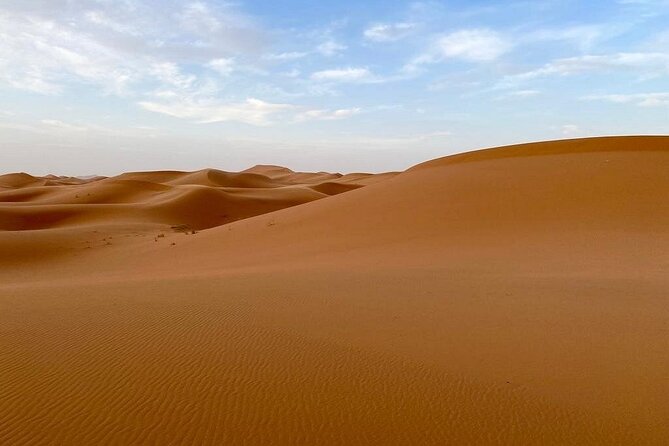
Book it if you want the Sahara on a tight schedule and you’d rather pay for a guided, structured route than manage transportation and lodging yourself. The combination of Atlas crossings, a stop at Ait Benhaddou, camel time in Erg Chebbi, and a desert camp night makes this a classic “do the big thing” itinerary without requiring advanced planning.
Consider another option if you’re extremely sensitive to long road days. This is a three-day highlights plan with serious driving time. One pace complaint shows up for a reason: you can feel the hours spent in transit.
If you can handle the schedule and you want a real desert night under stars, this is a strong choice—especially at a group size capped at 16.
FAQ
What is the duration of the Marrakech to Merzouga dunes trip?
The tour runs for about 3 days and 2 nights, with a typical schedule starting in the morning and ending in the evening on day 3.
What’s included in the price?
Transportation is included, along with hotel accommodation (standard), camel ride (one camel each), a standard tent in the desert, and breakfast and dinner on the included days.
Are meals like lunch and drinks included?
No. Lunches and drinks are not included, and lunch is listed at about 10 to 15 euros per menu.
Will there be time to see sunrise and sunset in the desert?
Yes. You’ll watch the sunset on day 2 and wake up for sunrise in the dunes on day 3.
Is there a camel ride and sandboarding?
There is a camel ride, and you’ll walk to the highest sand dunes for sandboarding if boards are available.
How far is the group size and what fitness level is needed?
The group size is capped at 16 travelers. You should have a moderate physical fitness level for the activities like camel riding and walking in the area.